Skip to Content Facebook Feature Image

Trump announces travel ban and restrictions on 19 countries set to go into effect Monday

News

Trump announces travel ban and restrictions on 19 countries set to go into effect Monday
News

News

Trump announces travel ban and restrictions on 19 countries set to go into effect Monday

2025-06-05 11:19 Last Updated At:11:30

WASHINGTON (AP) — President Donald Trump on Wednesday resurrected a hallmark policy of his first term, announcing that citizens of 12 countries would be banned from visiting the United States and those from seven others would face restrictions.

The ban takes effect Monday at 12:01 a.m., a cushion that may avoid the chaos that unfolded at airports nationwide when a similar measure took effect with virtually no notice in 2017. Trump, who signaled plans for a new ban upon taking office in January, appears to be on firmer ground this time after the Supreme Court sided with him.

Some, but not all, 12 countries also appeared on the list of banned countries in Trump's first term. The new ban includes Afghanistan, Myanmar, Chad, the Republic of Congo, Equatorial Guinea, Eritrea, Haiti, Iran, Libya, Somalia, Sudan and Yemen.

There will be heightened restrictions on visitors from Burundi, Cuba, Laos, Sierra Leone, Togo, Turkmenistan and Venezuela.

In a video released on social media, Trump tied the new ban to Sunday's terror attack in Boulder, Colorado, saying it underscored the dangers posed by some visitors who overstay visas. The suspect in the attack is from Egypt, a country that is not on Trump’s restricted list. The Department of Homeland Security says he overstayed a tourist visa.

Trump said some countries had “deficient” screening and vetting or have historically refused to take back their own citizens. His findings rely extensively on an annual Homeland Security report of visa overstays of tourists, business visitors and students who arrive by air and sea, singling out countries with high percentages of remaining after their visas expired.

“We don't want them,” Trump said.

The inclusion of Afghanistan angered some supporters who have worked to resettle its people. The ban makes exceptions for Afghans on Special Immigrant Visas, generally people who worked most closely with the U.S. government during the two-decade-long war there.

Afghanistan was also one of the largest sources of resettled refugees, with about 14,000 arrivals in a 12-month period through September 2024. Trump suspended refugee resettlement his first day in office.

“To include Afghanistan — a nation whose people stood alongside American service members for 20 years — is a moral disgrace. It spits in the face of our allies, our veterans, and every value we claim to uphold,” said Shawn VanDiver, president and board chairman of #AfghanEvac.

Trump wrote that Afghanistan “lacks a competent or cooperative central authority for issuing passports or civil documents and it does not have appropriate screening and vetting measures.” He also cited its visa overstay rates.

Haiti, which avoided the travel ban during Trump’s first term, was also included for high overstay rates and large numbers who came to the U.S. illegally. Haitians continue to flee poverty, hunger and political instability deepens while police and a U.N.-backed mission fight a surge in gang violence, with armed men controlling at least 85% of its capital, Port-au-Prince.

“Haiti lacks a central authority with sufficient availability and dissemination of law enforcement information necessary to ensure its nationals do not undermine the national security of the United States,” Trump wrote.

The Iranian government government offered no immediate reaction to being included. The Trump administration called it a “state sponsor of terrorism,” barring visitors except for those already holding visas or coming into the U.S. on special visas America issues for minorities facing persecution.

Other Mideast nations on the list — Libya, Sudan and Yemen — all face ongoing civil strife and territory overseen by opposing factions. Sudan has an active war, while Yemen’s war is largely stalemated and Libyan forces remain armed.

International aid groups and refugee resettlement organizations roundly condemned the new ban. "This policy is not about national security — it is about sowing division and vilifying communities that are seeking safety and opportunity in the United States," said Abby Maxman, president of Oxfam America.

The travel ban results from a Jan. 20 executive order Trump issued requiring the departments of State and Homeland Security and the Director of National Intelligence to compile a report on “hostile attitudes” toward the U.S. and whether entry from certain countries represented a national security risk.

During his first term, Trump issued an executive order in January 2017 banning travel to the U.S. by citizens of seven predominantly Muslim countries — Iraq, Syria, Iran, Sudan, Libya, Somalia and Yemen.

It was one of the most chaotic and confusing moments of his young presidency. Travelers from those nations were either barred from getting on their flights to the U.S. or detained at U.S. airports after they landed. They included students and faculty as well as businesspeople, tourists and people visiting friends and family.

The order, often referred to as the “Muslim ban” or the “travel ban,” was retooled amid legal challenges, until a version was upheld by the Supreme Court in 2018.

The ban affected various categories of travelers and immigrants from Iran, Somalia, Yemen, Syria and Libya, plus North Koreans and some Venezuelan government officials and their families.

Trump and others have defended the initial ban on national security grounds, arguing it was aimed at protecting the country and not founded on anti-Muslim bias. However, the president had called for an explicit ban on Muslims during his first campaign for the White House.

Follow the AP’s coverage of President Donald Trump at https://apnews.com/hub/donald-trump.

Amiri reported from the United Nations. Associated Press writers Rebecca Santana, Jon Gambrell, Ellen Knickmeyer and Danica Coto contributed to this report.

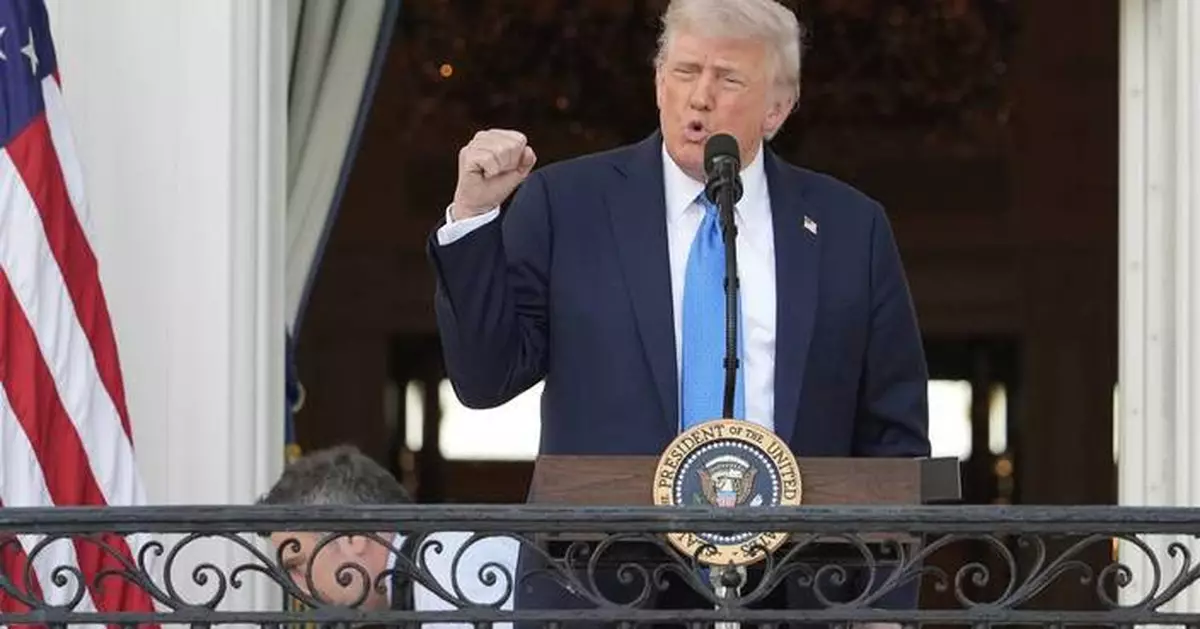
President Donald Trump speaks during a summer soiree on the South Lawn of the White House, Wednesday, June 4, 2025, in Washington. (AP Photo/Alex Brandon)
President Donald Trump speaks during a summer soiree on the South Lawn of the White House, Wednesday, June 4, 2025, in Washington. (AP Photo/Alex Brandon)
DUBAI, United Arab Emirates (AP) — U.S. President Donald Trump said Iran wants to negotiate with Washington after his threat to strike the Islamic Republic over its bloody crackdown on protesters, a move coming as activists said Monday the death toll in the nationwide demonstrations rose to at least 544.

Iran had no immediate reaction to the news, which came after the foreign minister of Oman — long an interlocutor between Washington and Tehran — traveled to Iran this weekend. It also remains unclear just what Iran could promise, particularly as Trump has set strict demands over its nuclear program and its ballistic missile arsenal, which Tehran insists is crucial for its national defense.

Meanwhile Monday, Iran called for pro-government demonstrators to head to the streets in support of the theocracy, a show of force after days of protests directly challenging the rule of 86-year-old Supreme Leader Ayatollah Ali Khamenei. Iranian state television aired chants from the crowd, who shouted “Death to America!” and “Death to Israel!”

Trump and his national security team have been weighing a range of potential responses against Iran including cyberattacks and direct strikes by the U.S. or Israel, according to two people familiar with internal White House discussions who were not authorized to comment publicly and spoke on condition of anonymity.

“The military is looking at it, and we’re looking at some very strong options,” Trump told reporters on Air Force One on Sunday night. Asked about Iran’s threats of retaliation, he said: “If they do that, we will hit them at levels that they’ve never been hit before.”

Trump said that his administration was in talks to set up a meeting with Tehran, but cautioned that he may have to act first as reports of the death toll in Iran mount and the government continues to arrest protesters.

“I think they’re tired of being beat up by the United States,” Trump said. “Iran wants to negotiate.”

He added: “The meeting is being set up, but we may have to act because of what’s happening before the meeting. But a meeting is being set up. Iran called, they want to negotiate.”

Iran through country's parliamentary speaker warned Sunday that the U.S. military and Israel would be “legitimate targets” if America uses force to protect demonstrators.

More than 10,600 people also have been detained over the two weeks of protests, said the U.S.-based Human Rights Activists News Agency, which has been accurate in previous unrest in recent years and gave the death toll. It relies on supporters in Iran crosschecking information. It said 496 of the dead were protesters and 48 were with security forces.

With the internet down in Iran and phone lines cut off, gauging the demonstrations from abroad has grown more difficult. The Associated Press has been unable to independently assess the toll. Iran’s government has not offered overall casualty figures.

Those abroad fear the information blackout is emboldening hard-liners within Iran’s security services to launch a bloody crackdown. Protesters flooded the streets in the country’s capital and its second-largest city on Saturday night into Sunday morning. Online videos purported to show more demonstrations Sunday night into Monday, with a Tehran official acknowledging them in state media.

In Tehran, a witness told the AP that the streets of the capital empty at the sunset call to prayers each night. By the Isha, or nighttime prayer, the streets are deserted.

Part of that stems from the fear of getting caught in the crackdown. Police sent the public a text message that warned: “Given the presence of terrorist groups and armed individuals in some gatherings last night and their plans to cause death, and the firm decision to not tolerate any appeasement and to deal decisively with the rioters, families are strongly advised to take care of their youth and teenagers.”

Another text, which claimed to come from the intelligence arm of the paramilitary Revolutionary Guard, also directly warned people not to take part in demonstrations.

“Dear parents, in view of the enemy’s plan to increase the level of naked violence and the decision to kill people, ... refrain from being on the streets and gathering in places involved in violence, and inform your children about the consequences of cooperating with terrorist mercenaries, which is an example of treason against the country,” the text warned.

The witness spoke to the AP on condition of anonymity due to the ongoing crackdown.

The demonstrations began Dec. 28 over the collapse of the Iranian rial currency, which trades at over 1.4 million to $1, as the country’s economy is squeezed by international sanctions in part levied over its nuclear program. The protests intensified and grew into calls directly challenging Iran’s theocracy.

Nikhinson reported from aboard Air Force One.

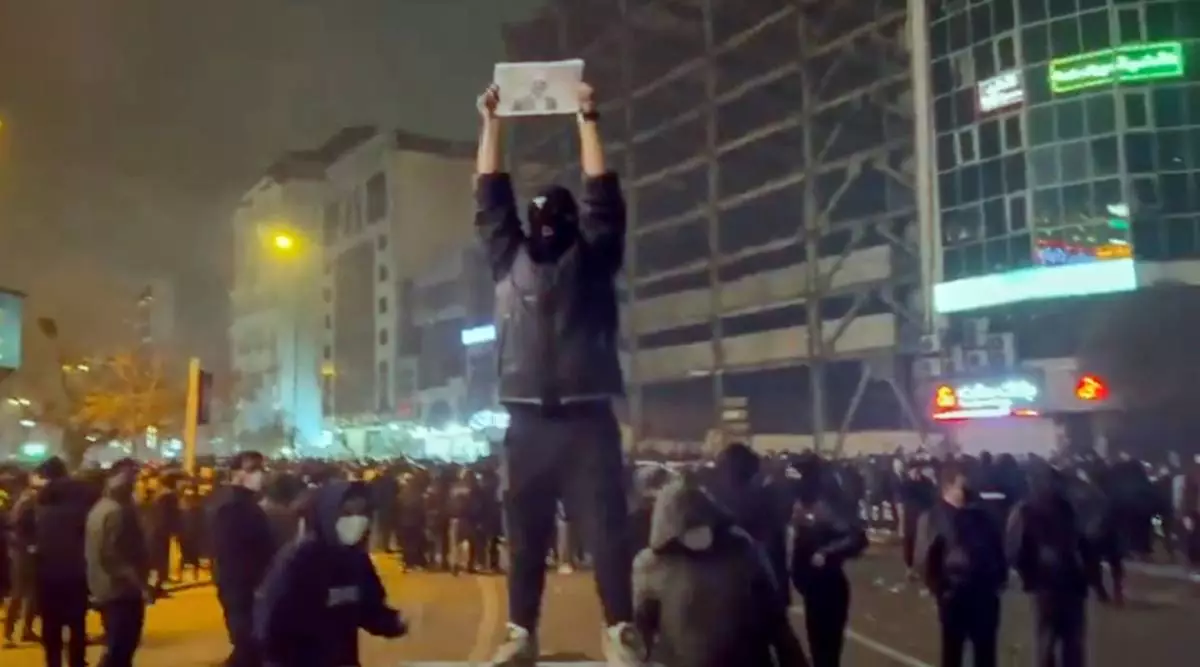
In this frame grab from video obtained by the AP outside Iran, a masked demonstrator holds a picture of Iran's Crown Prince Reza Pahlavi during a protest in Tehran, Iran, Friday, January. 9, 2026. (UGC via AP)

In this frame grab from video obtained by the AP outside Iran, a masked demonstrator holds a picture of Iran's Crown Prince Reza Pahlavi during a protest in Tehran, Iran, Friday, January. 9, 2026. (UGC via AP)

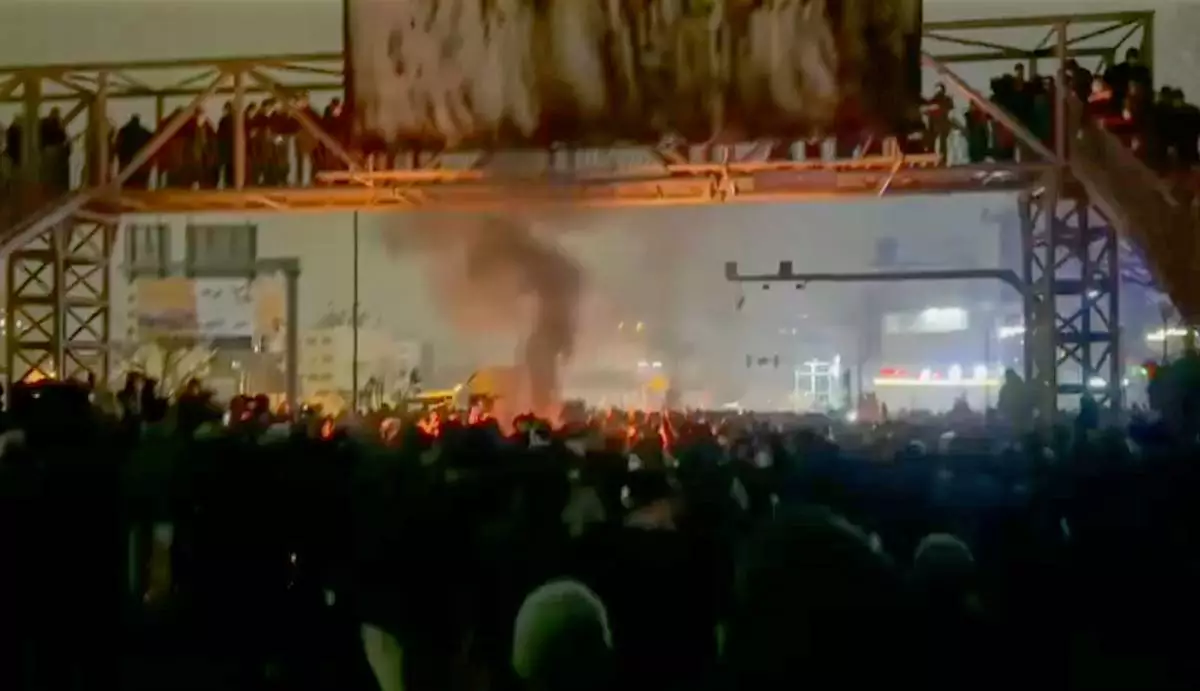
In this frame grab from footage circulating on social media from Iran shows protesters taking to the streets despite an intensifying crackdown as the Islamic Republic remains cut off from the rest of the world in Tehran, Iran, Friday, Jan. 9, 2026.(UGC via AP)

In this frame grab from footage circulating on social media from Iran shows protesters taking to the streets despite an intensifying crackdown as the Islamic Republic remains cut off from the rest of the world in Tehran, Iran, Friday, Jan. 9, 2026.(UGC via AP)

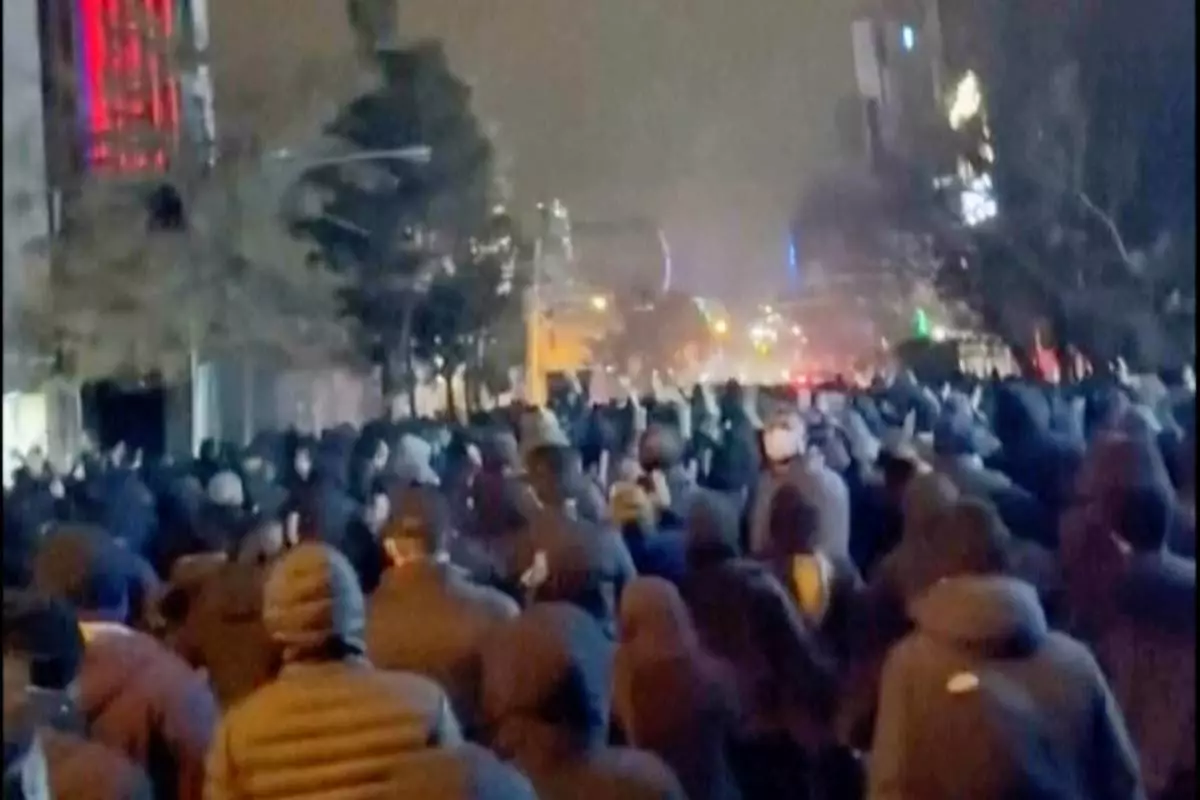
In this frame grab from footage circulating on social media from Iran showed protesters once again taking to the streets of Tehran despite an intensifying crackdown as the Islamic Republic remains cut off from the rest of the world in Tehran, Iran, Saturday Jan. 10, 2026. (UGC via AP)

In this frame grab from footage circulating on social media from Iran showed protesters once again taking to the streets of Tehran despite an intensifying crackdown as the Islamic Republic remains cut off from the rest of the world in Tehran, Iran, Saturday Jan. 10, 2026. (UGC via AP)

Recommended Articles