Skip to Content Facebook Feature Image

Election of Mexico's first Indigenous Supreme Court justice in 170 years raises hope and skepticism

News

Election of Mexico's first Indigenous Supreme Court justice in 170 years raises hope and skepticism
News

News

Election of Mexico's first Indigenous Supreme Court justice in 170 years raises hope and skepticism

2025-06-05 12:05 Last Updated At:12:31

MEXICO CITY (AP) — In his campaign for Mexico's Supreme Court, Hugo Aguilar sent a simple message: He would be the one to finally give Indigenous Mexicans a voice at one of the highest levels of government.

“It's our turn as Indigenous people ... to make decisions in this country,” he said in the lead up to Sunday's first judicial elections in Mexican history.

Now, the 52-year-old Aguilar, a lawyer from the Mixtec people in Mexico’s southern Oaxaca state, will be the first Indigenous Supreme Court justice in nearly 170 years in the Latin American nation, according to Mexican President Claudia Sheinbaum. He could lead the high court. The last Indigenous justice to do so was Mexican hero and former President Benito Juárez, who ran the court from 1857 to 1858.

For some, Aguilar has become a symbol of hope for 23 million Indigenous people long on the forgotten fringes of Mexican society. But others fiercely criticize his past, and worry that instead of representing them, he will instead stand with the ruling party, Morena, that ushered him onto the court.

Supporters cite Aguilar's long history of working on Indigenous rights, while critics say that more recently he's helped push the governing party's agenda, including former President Andrés Manuel López Obrador’s massive infrastructure projects, at the expense of Indigenous communities. Aguilar's team said he would not comment until after official results were confirmed.

“He’s not an Indigenous candidate,” said Francisco López Bárcenas, a distinguished Mixtec lawyer from the same region as Aguilar who once worked with him decades ago. He applauded the election of an Indigenous justice, but said “He’s an Indigenous man who became a candidate.”

Aguilar was elected in Mexico's first judicial election, a process that's been criticized as weakening Mexico's system of checks and balances.

López Obrador and his party overhauled the judicial system the populist leader was long at odds with. Instead of appointing judges through experience, voters elected judges to 2,600 federal, state and local positions. But the vote was marked by a very low voter turnout, about 13%.

López Obrador and his successor and protege President Claudia Sheinbaum claimed the election would cut corruption in the courts. Judges, watchdogs and political opposition called it a blatant attempt to use the party's political popularity to stack courts in their favor, and gain control of all three branches of Mexico's government.

While votes are still being counted in many races, the tally of results for nine Supreme Court justices came in first. The vast majority of the justices hold strong ties to the ruling party, handing Morena potential control over the high court. Aguilar's name was among those that appeared on pamphlets suggesting which candidates to vote for, which electoral authorities are investigating.

Aguilar scooped up more than 6 million votes, more than any other candidate, including three who currently serve on the Supreme Court. The victory opened the possibility of Aguilar not just serving on the court, but leading it.

Critics attributed his win to Mexico's highly popular president repeatedly saying she wanted an Indigenous judge on the Supreme Court in the lead up to the election. On Wednesday she said she was thrilled he was on the court.

“He is a very good lawyer,” she said. “I have the privilege of knowing his work not just on Indigenous issues, but in general. He has wide knowledge and is a modest and simple man.”

The Supreme Court has handed down decisions that, for example, establish the right of Indigenous people to be assisted by interpreters who speak their native language and defense attorneys in any legal process. But there remain significant outstanding issues like territorial disputes in cases of mega-projects.

Aguilar began his career in Oaxaca's capital, working for SERmixe, an organization advocating for Indigenous rights as a law student in his mid-20s.

Sofía Robles, a member of the organization remembers young Aguilar being passionate, choosing to be a lawyer to advocate for Indigenous communities often living in poverty and out of reach of the law.

“He had this conviction, and there were many things he wouldn’t conform with,” 63-year-old Robles said. “From the very beginning, he knew where he came from.”

Despite coming from a humble working-class family, he would work for the organization for free after his law classes. He later worked there as a lawyer on agrarian issues for 13 years. After the Zapatista uprising in 1994, a guerrilla movement fighting for Indigenous rights in southern Mexico, Aguilar worked to carry out constitutional reforms recognizing the basic rights of Mexico's Indigenous people.

Robles said she believes he will bring that fight she saw in him to the Supreme Court.

“He gives us hope,” she said. “Aguilar is going to be an example for future generations.”

But others like Romel González Díaz, a member of the Xpujil Indigenous Council in a Mayan community in southern Mexico, cast doubt on if Aguilar would truly act as a voice for their community.

Aguilar's work came under fire when he joined the government's National Institute of Indigenous Peoples at the beginning of López Obrador’s administration in 2018. It was then that he began to work on a mega-project known as the Maya Train fiercely criticized by environmentalists, Indigenous communities and even the United Nations.

The train, which runs in a rough loop around the Yucatan peninsula, has deforested large swathes of jungle and irreversibly damaged an ancient cave system sacred to Indigenous populations there. Aguilar was tasked with investigating the potential impacts of the train, hearing the concerns of local Indigenous communities and informing them of the consequences.

That was when González Díaz met Aguilar, who arrived with a handful of government officials, who sat down for just a few hours with his small community in Xpujil, and provided sparse details about the negative parts of the project.

González Díaz’s organization was among many to take legal action against the government in an attempt to block train construction for not properly studying the project's impacts.

The environmental destruction left in the project's wake is something that continues to fuel his distrust for Aguilar.

“The concern with Hugo is: Who is he going to represent?” González Díaz said. “Is he going to represent the (Morena) party or is he going to represent the Indigenous people?”
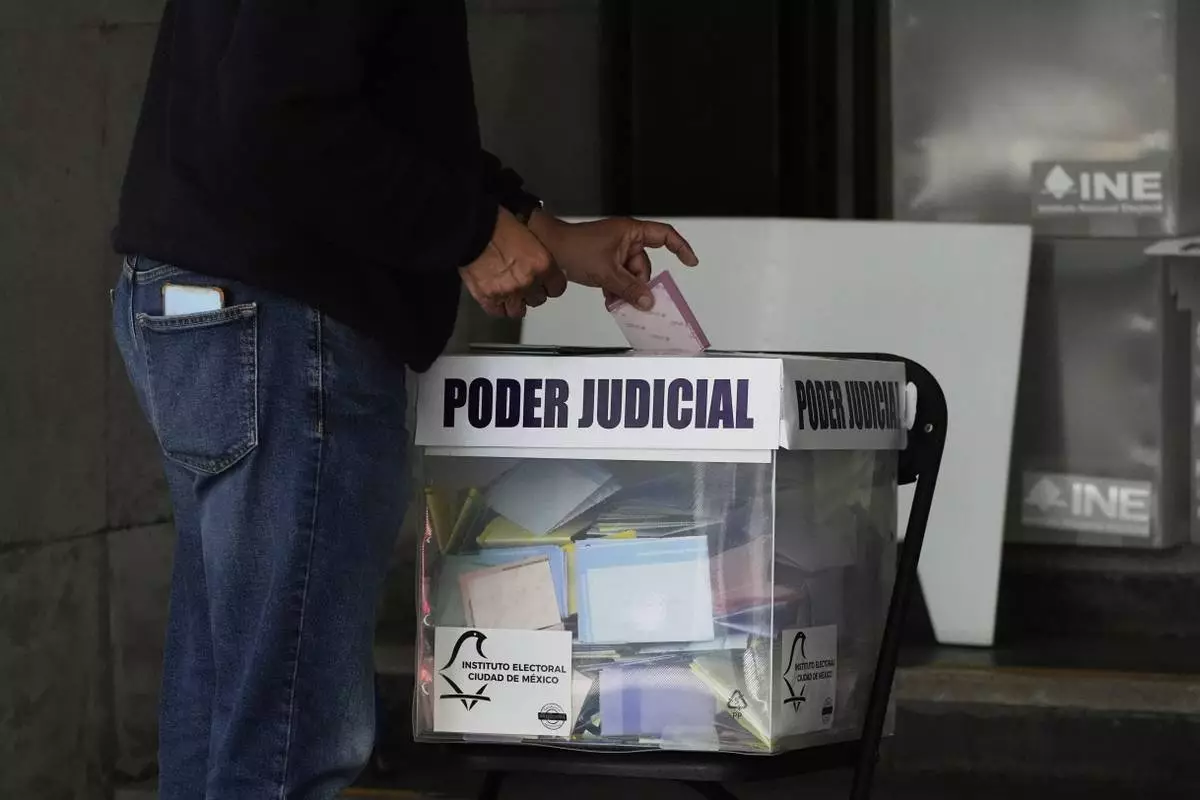
A voter casts their ballot in Mexico's first judicial elections, in Mexico City, Sunday, June 1, 2025. (AP Photo/Marco Ugarte)
A voter casts their ballot in Mexico's first judicial elections, in Mexico City, Sunday, June 1, 2025. (AP Photo/Marco Ugarte)
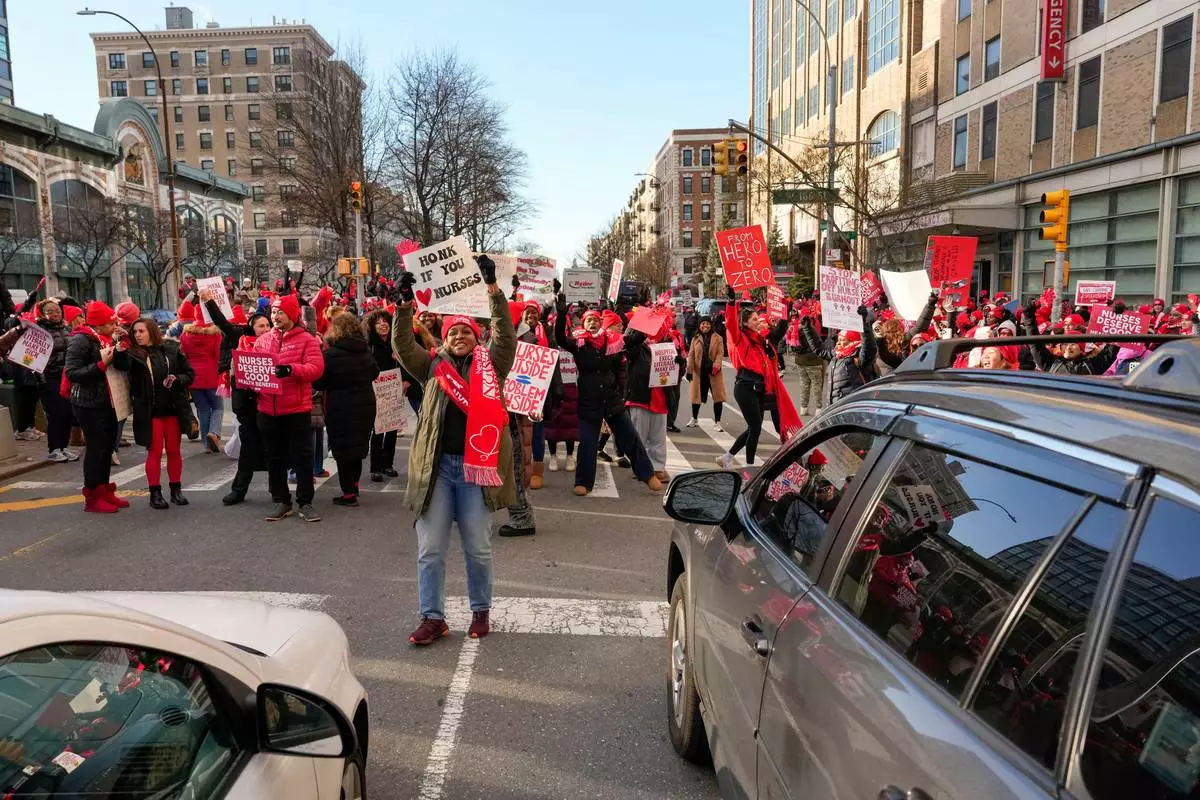
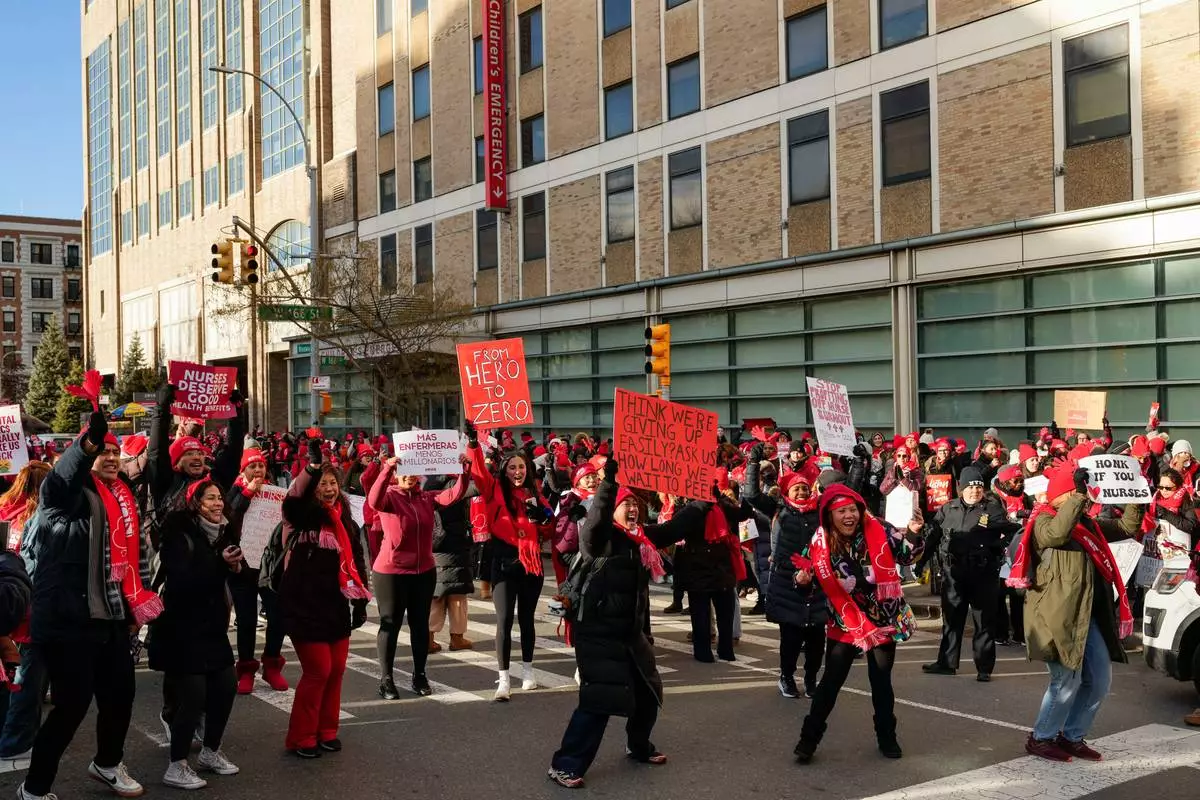
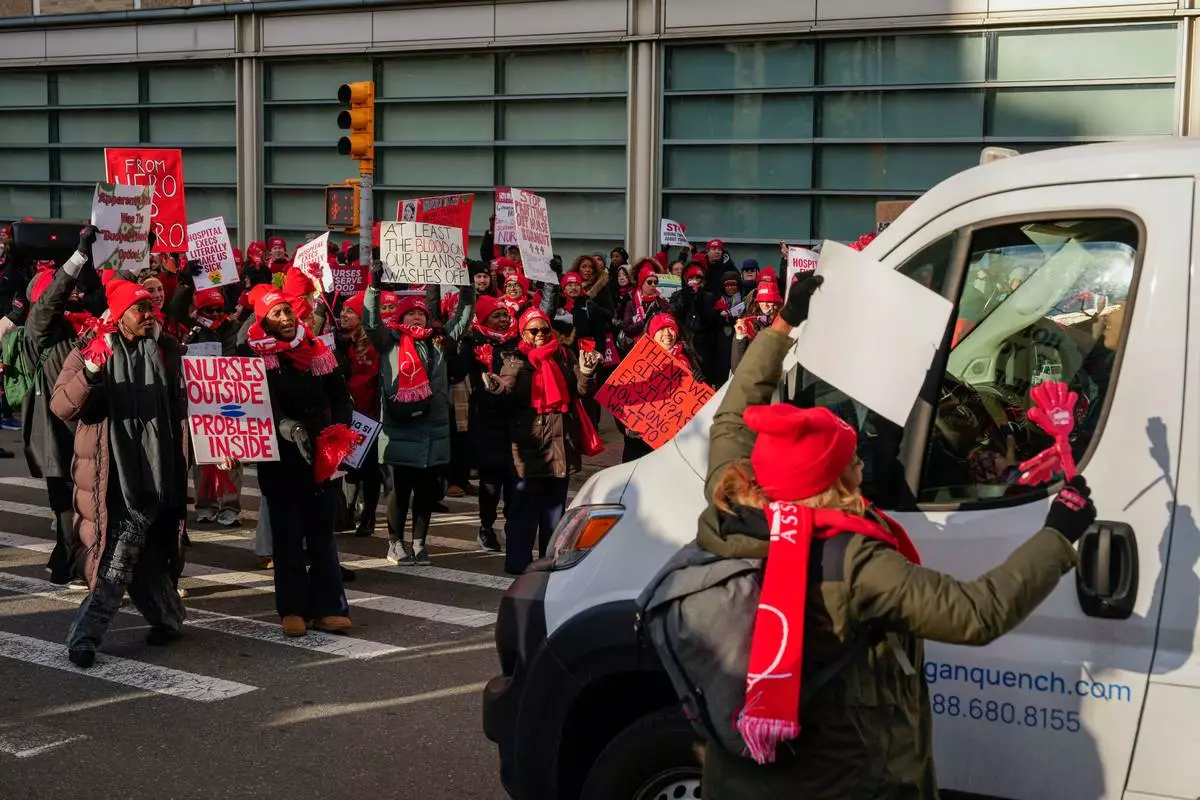
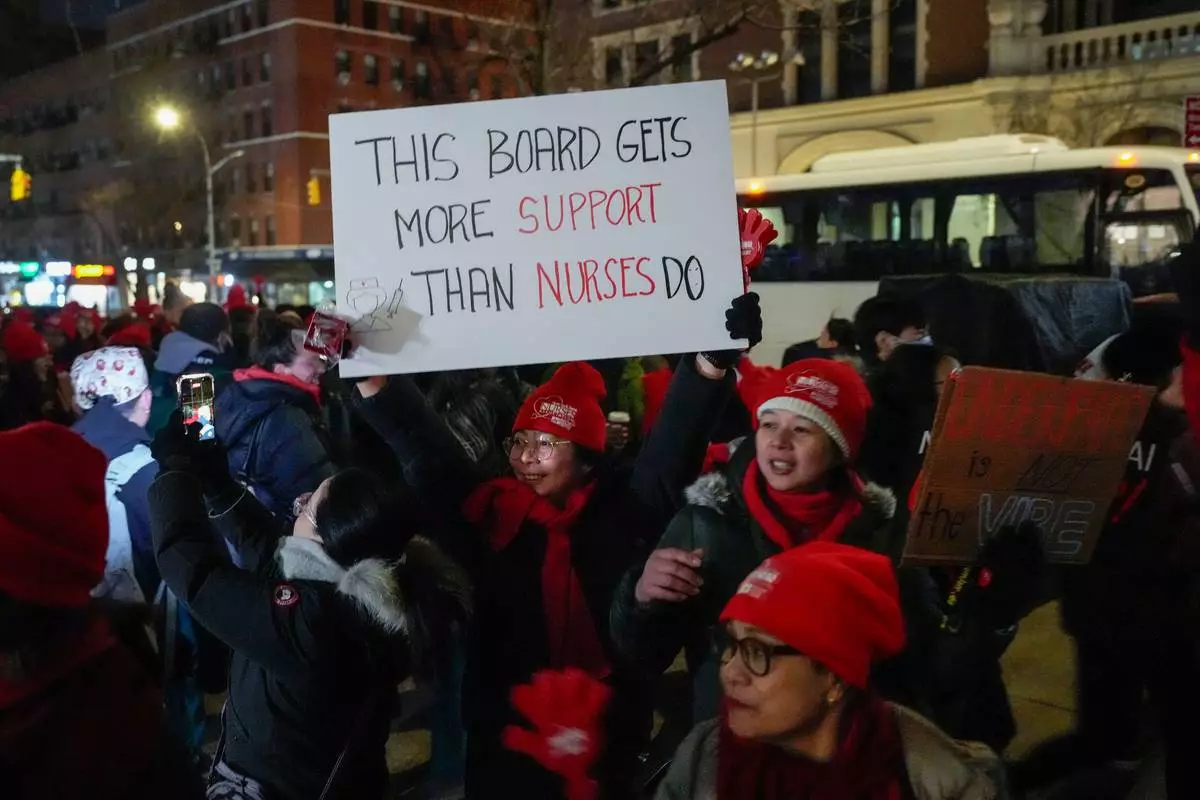
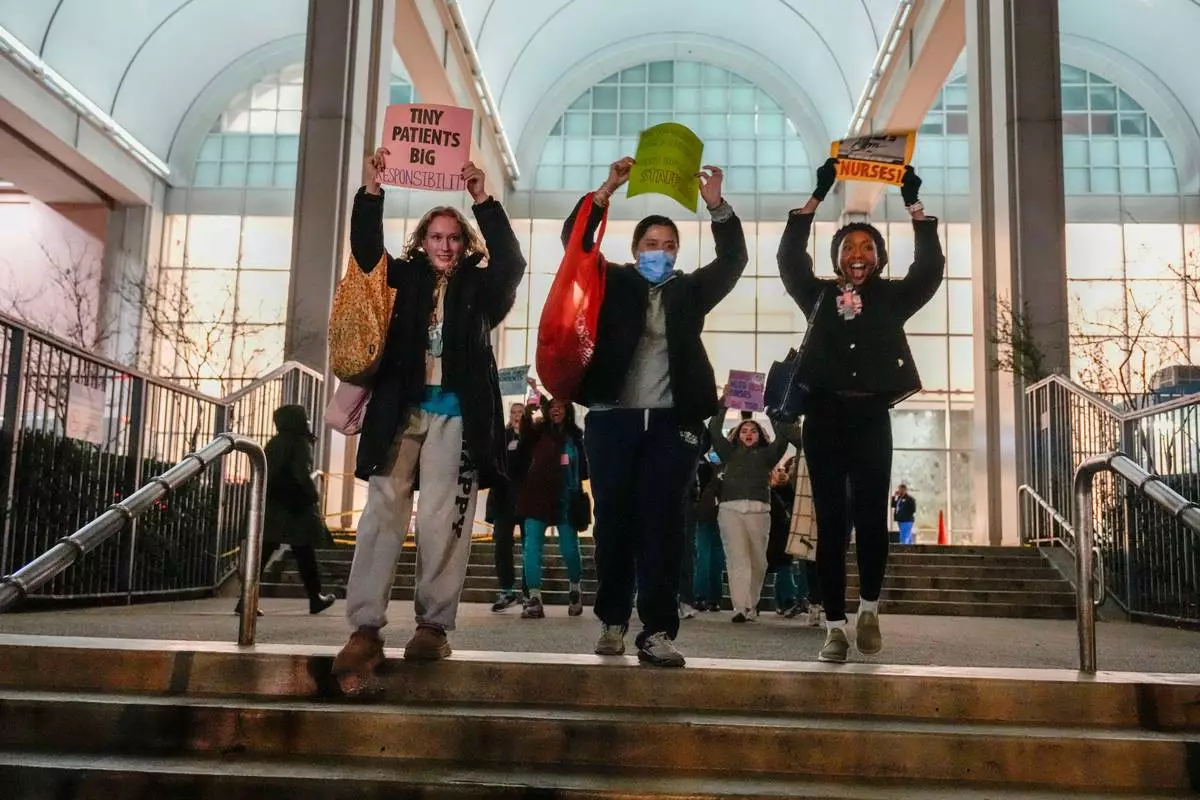
NEW YORK (AP) — Thousands of nurses in three hospital systems in New York City went on strike Monday after negotiations through the weekend failed to yield breakthroughs in their contract disputes.

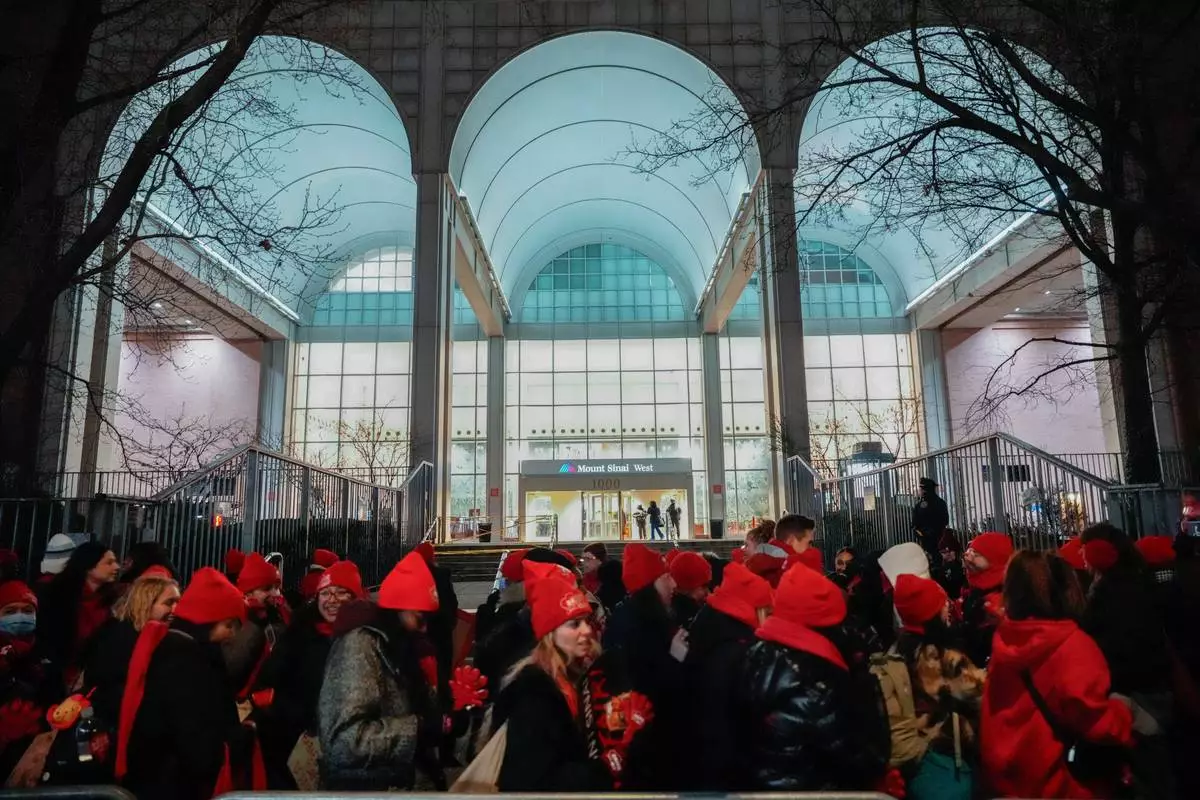
The strike was taking place at The Mount Sinai Hospital and two of its satellite campuses, with picket lines forming. The other affected hospitals are NewYork-Presbyterian and Montefiore Medical Center in the Bronx.

About 15,000 nurses are involved in the strike, according to New York State Nurses Association.

“After months of bargaining, management refused to make meaningful progress on core issues that nurses have been fighting for: safe staffing for patients, healthcare benefits for nurses, and workplace violence protections,” the union said in a statement issued Monday. “Management at the richest hospitals in New York City are threatening to discontinue or radically cut nurses’ health benefits.”

The strike, which comes during a severe flu season, could potentially force the hospitals to transfer patients, cancel procedures or divert ambulances. It could also put a strain on city hospitals not involved in the contract dispute, as patients avoid the medical centers hit by the strike.

The hospitals involved have been hiring temporary nurses to try and fill the labor gap during the walkout, and said in a statement during negotiations that they would “do whatever is necessary to minimize disruptions.” Montefiore posted a message assuring patients that appointments would be kept.

“NYSNA’s leaders continue to double down on their $3.6 billion in reckless demands, including nearly 40% wage increases, and their troubling proposals like demanding that a nurse not be terminated if found to be compromised by drugs or alcohol while on the job," Montefiore spokesperson Joe Solmonese said Monday after the strike had started. "We remain resolute in our commitment to providing safe and seamless care, regardless of how long the strike may last.”

New York-Presbyterian accused the union of staging a strike to “create disruption,” but said in a statement that it has taken steps to ensure patients receive the care they need.

"We’re ready to keep negotiating a fair and reasonable contract that reflects our respect for our nurses and the critical role they play, and also recognizes the challenging realities of today’s healthcare environment,” the statement said.

The work stoppage is occurring at multiple hospitals simultaneously, but each medical center is negotiating with the union independently. Several other hospitals across the city and in its suburbs reached deals in recent days to avert a possible strike.

The nurses’ demands vary by hospital, but the major issues include staffing levels and workplace safety. The union says hospitals have given nurses unmanageable workloads.

Nurses also want better security measures in the workplace, citing incidents like a an incident last week, when a man with a sharp object barricaded himself in a Brooklyn hospital room and was then killed by police.

The union also wants limitations on hospitals’ use of artificial intelligence.

The nonprofit hospitals involved in the negotiations say they’ve been working to improve staffing levels, but say the union’s demands overall are too costly.

Nurses voted to authorize the strike last month.

Both New York Gov. Kathy Hochul and Mayor Zohran Mamdani had expressed concern about the possibility of the strike. As the strike deadline neared, Mamdani urged both sides to keep negotiating and reach a deal that “both honors our nurses and keeps our hospitals open.”

“Our nurses kept this city alive through its hardest moments. Their value is not negotiable,” Mamdani said.

State Attorney General Letitia James voiced similar support, saying "nurses put their lives on the line every day to keep New Yorkers healthy. They should never be forced to choose between their own safety, their patients’ well-being, and a fair contract.”

The last major nursing strike in the city was only three years ago, in 2023. That work stoppage, at Mount Sinai and Montefiore, was short, lasting three days. It resulted in a deal raising pay 19% over three years at those hospitals.

It also led to promised staffing improvements, though the union and hospitals now disagree about how much progress has been made, or whether the hospitals are retreating from staffing guarantees.

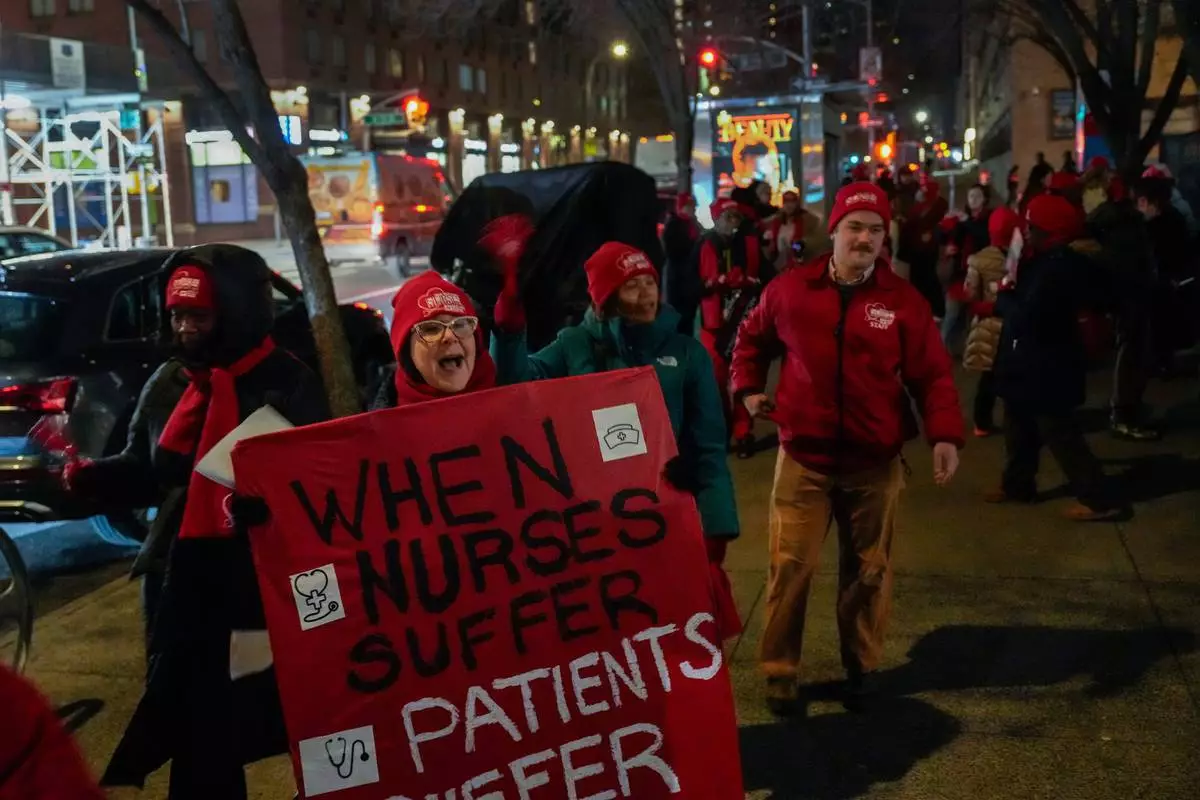
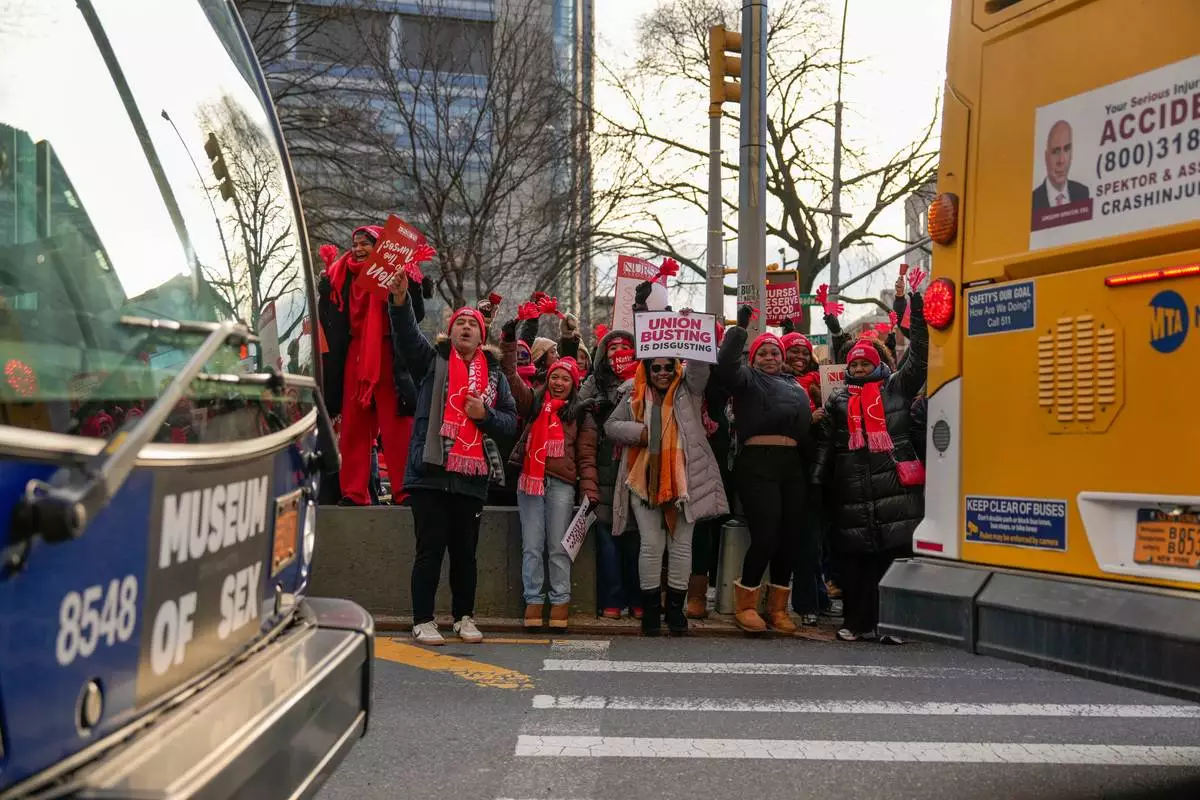
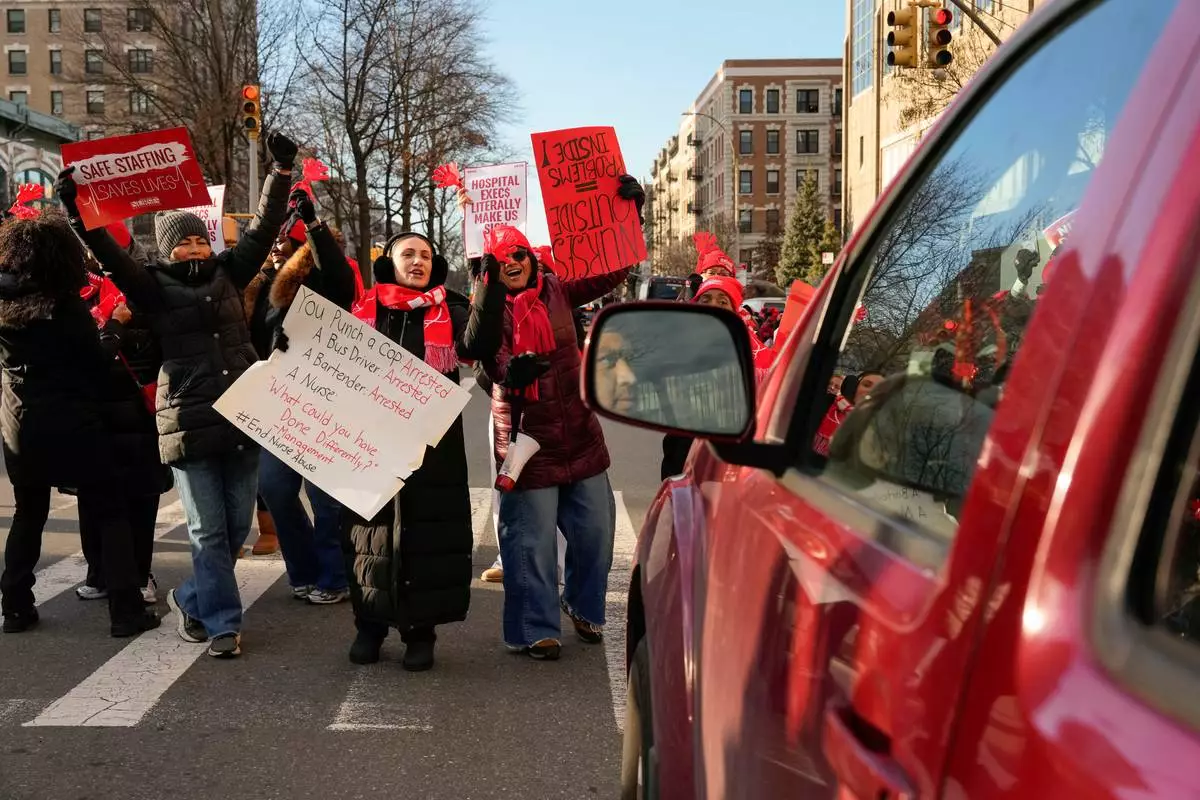
Nurses strike outside New York-Presbyterian Hospital, Monday, Jan. 12, 2026, in New York. (AP Photo/Yuki Iwamura)

Nurses strike outside New York-Presbyterian Hospital, Monday, Jan. 12, 2026, in New York. (AP Photo/Yuki Iwamura)

Nurses strike outside New York-Presbyterian Hospital, Monday, Jan. 12, 2026, in New York. (AP Photo/Yuki Iwamura)

Nurses strike outside New York-Presbyterian Hospital, Monday, Jan. 12, 2026, in New York. (AP Photo/Yuki Iwamura)

Nurses strike outside New York-Presbyterian Hospital, Monday, Jan. 12, 2026, in New York. (AP Photo/Yuki Iwamura)

Nurses strike outside New York-Presbyterian Hospital, Monday, Jan. 12, 2026, in New York. (AP Photo/Yuki Iwamura)

Nurses strike outside New York-Presbyterian Hospital, Monday, Jan. 12, 2026, in New York. (AP Photo/Yuki Iwamura)

Nurses strike outside New York-Presbyterian Hospital, Monday, Jan. 12, 2026, in New York. (AP Photo/Yuki Iwamura)

Nurses strike outside New York-Presbyterian Hospital, Monday, Jan. 12, 2026, in New York. (AP Photo/Yuki Iwamura)

Nurses strike outside New York-Presbyterian Hospital, Monday, Jan. 12, 2026, in New York. (AP Photo/Yuki Iwamura)

Nurses strike outside Mount Sinai West Hospital, Monday, Jan. 12, 2026, in New York. (AP Photo/Yuki Iwamura)

Nurses strike outside Mount Sinai West Hospital, Monday, Jan. 12, 2026, in New York. (AP Photo/Yuki Iwamura)

Nurses strike outside Mount Sinai West Hospital, Monday, Jan. 12, 2026, in New York. (AP Photo/Yuki Iwamura)

Nurses strike outside Mount Sinai West Hospital, Monday, Jan. 12, 2026, in New York. (AP Photo/Yuki Iwamura)

Nurses strike outside Mount Sinai West Hospital, Monday, Jan. 12, 2026, in New York. (AP Photo/Yuki Iwamura)

Nurses strike outside Mount Sinai West Hospital, Monday, Jan. 12, 2026, in New York. (AP Photo/Yuki Iwamura)

Nurses strike outside Mount Sinai West Hospital, Monday, Jan. 12, 2026, in New York. (AP Photo/Yuki Iwamura)

Nurses strike outside Mount Sinai West Hospital, Monday, Jan. 12, 2026, in New York. (AP Photo/Yuki Iwamura)

FILE - A medical worker transports a patient at Mount Sinai Hospital, April 1, 2020, in New York. (AP Photo/Mary Altaffer, File)

FILE - A medical worker transports a patient at Mount Sinai Hospital, April 1, 2020, in New York. (AP Photo/Mary Altaffer, File)

Recommended Articles