Speech by FS at S&P Global Market Intelligence Hong Kong Roadshow
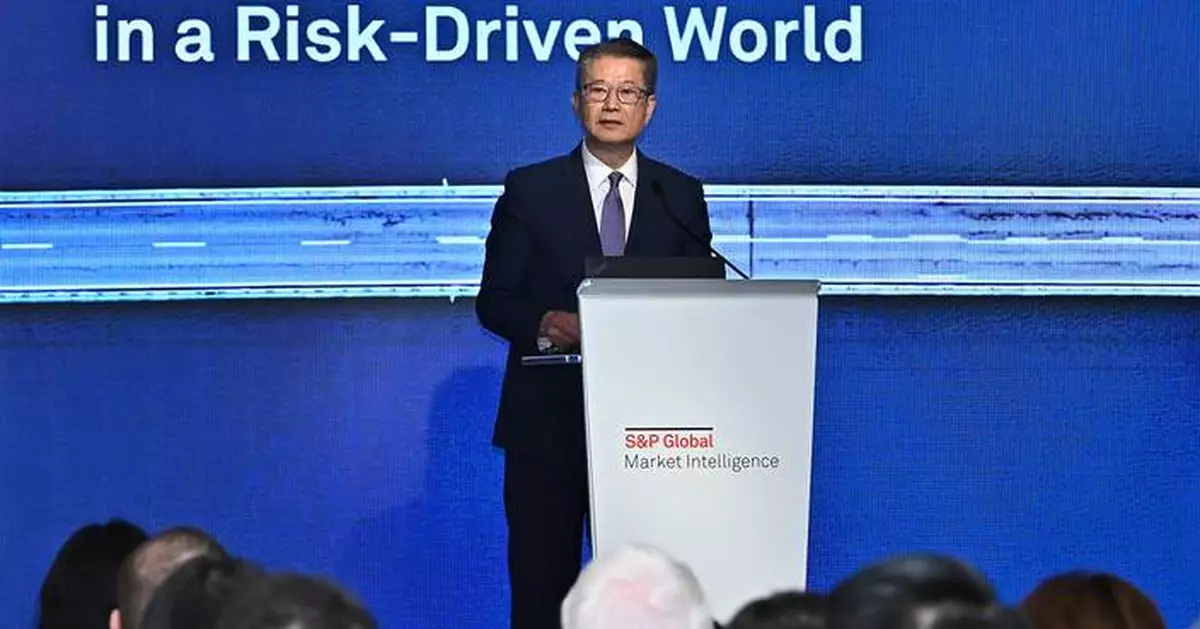
Following is the speech by the Financial Secretary, Mr Paul Chan, at the S&P Global Market Intelligence Hong Kong Roadshow today (June 5):
Louis (Regional head of the S&P Global Market Intelligence, Mr Louis Wong), Chris (Managing Director and Regional Practice Lead of Asia-Pacific of the S&P Global Ratings, Mr Christopher Lee), distinguished guests, ladies and gentlemen,
Good afternoon.
It is a pleasure to join you today at the annual S&P Global Market Intelligence Hong Kong Roadshow. Let me begin by thanking S&P Global for hosting this timely and important event in Hong Kong again, and for your enduring commitment to providing high-quality market intelligence for investors, policymakers and corporate leaders around the world.
A world in flux: risks and reordering
We gather at a time when the global economic and geopolitical landscapes are undergoing profound transformation, driven by both short-term shocks and long-term structural shifts.
In the near term, it is the tariff war and the drastic, flip-flopping policies of the Trump Administration which have contributed to great uncertainty and heightened market volatility. These developments have served as a wake-up call for global investors, who came to realise the need to reassess portfolio risks, diversify capital allocations and seek out growth markets that offer not only returns, but also resilience and long-term stability.
Beyond these immediate disruptions, we are witnessing deeper, more enduring trends that will shape the global order for the decade to come.
First, geo-economic fragmentation. We are seeing the emergence of regional blocs formed around shared political values, economic interests and security considerations. These regional groupings will foster closer intra-regional co-operation on trade, investment, industry and supply chains, while cross-regional collaboration is increasingly hindered by tariffs, sanctions, export controls and investment screening.
This is not the end of globalisation, but rather a reconfiguration, moving from a model focused on efficiency and global collaboration to one centred on resilience and regional networks.
Second, we are in the midst of a technological revolution of historic proportions. Artificial intelligence (AI), for example, has moved from future promise to a present force. Indeed, according to a recent IMF (International Monetary Fund) study, AI has the potential to boost global GDP (Gross Domestic Product) by up to 4 per cent over the next decade.
What's particularly striking is the divergence in development approaches. In the US (United States), AI development is driven by massive investments, large-scale models and frontier research. Meanwhile, Chinese open-source alternatives such as DeepSeek are carving a path that focuses on cost efficiency and practical, inclusive applications. With bifurcated technological ecosystems, we are likely to see intensifying competition over talent, markets, capital, and ultimately, technology leadership.
Third, and perhaps most existential, is climate risk. The year 2024 was the hottest on record. For many regions, such as the Pacific Islands, climate change is not a distant threat but an immediate crisis.
Compounding the challenge is a reversal of climate commitments by the US. Fortunately, the international community continues to support the pursuit of carbon neutrality. Still, the world faces a significant gap in green finance and green technologies. For example, the International Energy Agency estimates that we will need US$4.5 trillion in annual investments starting from 2030 in order to meet global net-zero targets.
A choice for the world
Ladies and gentlemen, in light of these converging challenges, the world stands at a historic crossroads. We are faced with a choice between consistency and unpredictability, between co-operation and coercion, and between shared prosperity and narrow self-interest.
This is not a high-sounding call. It carries real implications for investors, businesses and asset managers. For those seeking to safeguard capital while generating reasonable, sustainable returns, and for those looking to operate in environments with policy predictability and institutional trust, these choices matter.
Hong Kong: grasping the opportunities
This brings me to Hong Kong. We believe this is where international investors want to be.
In the past couple of weeks, all three major international credit rating agencies reaffirmed Hong Kong's strong credit standing, maintaining our ratings and assigning a "stable" outlook.
This optimism is underpinned by our robust fundamentals: large fiscal reserves, sound external balance sheet, resilient monetary system, and a track record of transparent and effective policymaking. Notably, S&P recognised improvements in our policy flexibility and effectiveness.
Investor sentiment has also strengthened. Our stock market rose by around 18 per cent last year and has gained over 15 per cent so far this year. IPO (initial public offering) fundraising has reached HK$77 billion, making Hong Kong the top IPO market globally year-to-date. Bank deposits grew by 7 per cent last year and an additional 4 per cent this year. They now exceed HK$18 trillion.
I believe this growing confidence reflects both what we have maintained and what we have changed.
We remain steadfast in the core values that define us: openness, rule of law and global connectivity. Under the "one country, two systems" framework, Hong Kong remains an open, international city; a free port with an unfettered flow of capital, information, goods and talent. We uphold the common law system and maintain a judiciary exercising powers independently. Our currency remains freely convertible, and our Linked Exchange Rate System continues to function effectively.
Let me stress that our country, China, values these defining characteristics of Hong Kong. As a two-way gateway connecting China with the world, Hong Kong's role is both unique and indispensable, for our own development, and for the good of our country as well.
The recent inflow of capital into Hong Kong has demonstrated that our fundamentals are robust and trusted by investors. We serve as a safe harbour for international capital.
At the same time, where we changed, we changed for the better. In the interest of time, I wish to highlight just a few recent developments.
First, bold reforms to deepen and diversify our financial markets, enabling capital to support new economy and technological innovation across the region.
These include, for example, launching a new listing regime allowing pre-commercial or pre-revenue specialist tech companies to list in Hong Kong two years ago. And as announced in my Budget this year, the Hong Kong Stock Exchange has introduced the "TECH" Channel to offer dedicated guidance and support for hard-tech and biotech companies, so that their listing process can be fast-tracked. These reforms build on a series of measures initiated in 2018 to welcome more "new economy" companies and to enhance our listing regime.
Our efforts have the staunch support of the Central Authorities, which encourage leading Mainland enterprises to list in Hong Kong. The IPO of CATL (Contemporary Amperex Technology Co Limited), the world's largest so far this year, is a shining example.
In response to the recent global developments, I have given clear directions to our SFC (Securities and Futures Commission) and the HKEX (Hong Kong Exchanges and Clearing Limited) to facilitate the potential return of Chinese Concept Stocks currently listed abroad.
Meanwhile, both the SFC and HKEX are advancing further reforms to enhance the competitiveness of our capital markets, such as optimising price discovery, broadening the investor base, improving the issuance mechanism for structured products, and more.
Besides, we are strengthening our offshore Renminbi (RMB) liquidity. Given the geopolitical risks and rising concerns over unilateral sanctions, global investors are increasingly mindful of currency diversification for conduct of transactions and asset allocation. The RMB is gaining global traction. As the world's leading offshore RMB hub, Hong Kong is advancing on three fronts. First, boosting the liquidity of RMB, such as encouraging more bond issuances, and expediting the inclusion of RMB counters in the Southbound Stock Connect. Second, enhancing the RMB infrastructure such as clearing and custodian services. Third, enriching RMB-denominated investment products and risk management tools.
We are also actively embracing financial innovation, including virtual assets, or VAs. Beyond establishing regimes for VA trading platforms and stablecoin issuers, we are moving ahead with the rules for over-the-counter trading as well as custodian services for VAs. The Government will soon release our second Policy Statement on VA development. Our focus will be integrating traditional financial services with innovation, expanding VA applications and enhancing its support for the real economy.
Finally, talent will determine our future.
In today's global environment, we must be more open than ever to attract and retain the world's best minds. Recent measures elsewhere in the world targeting universities and students have created a window of opportunity for Hong Kong. For example, in the field of AI where ethnic Chinese innovators play a leading role, Hong Kong's universities and vibrant AI ecosystem are especially attractive.
In fact, since launching our talent schemes in 2022, we have received over 470 000 applications, and more than 200 000 individuals have already arrived. And we are just getting started. Our goal is not just to build a talent pool, but to nurture a vibrant, diverse and innovation-driven community.
Concluding remarks
Ladies and gentlemen, much like the infamous "Death of Hong Kong" article published by Fortune Magazine in 1995, Hong Kong has experienced repeated doubts and dire predictions over the years. And yet, time and again, we have proven the pessimists wrong, and emerged stronger.
We do not underestimate the challenges ahead. But with the strong support of our country, our commitment to our core values: openness, credibility and global connectivity, and a people of agility and resilience, Hong Kong will not just weather the storm. We will prevail.
Thank you very much.
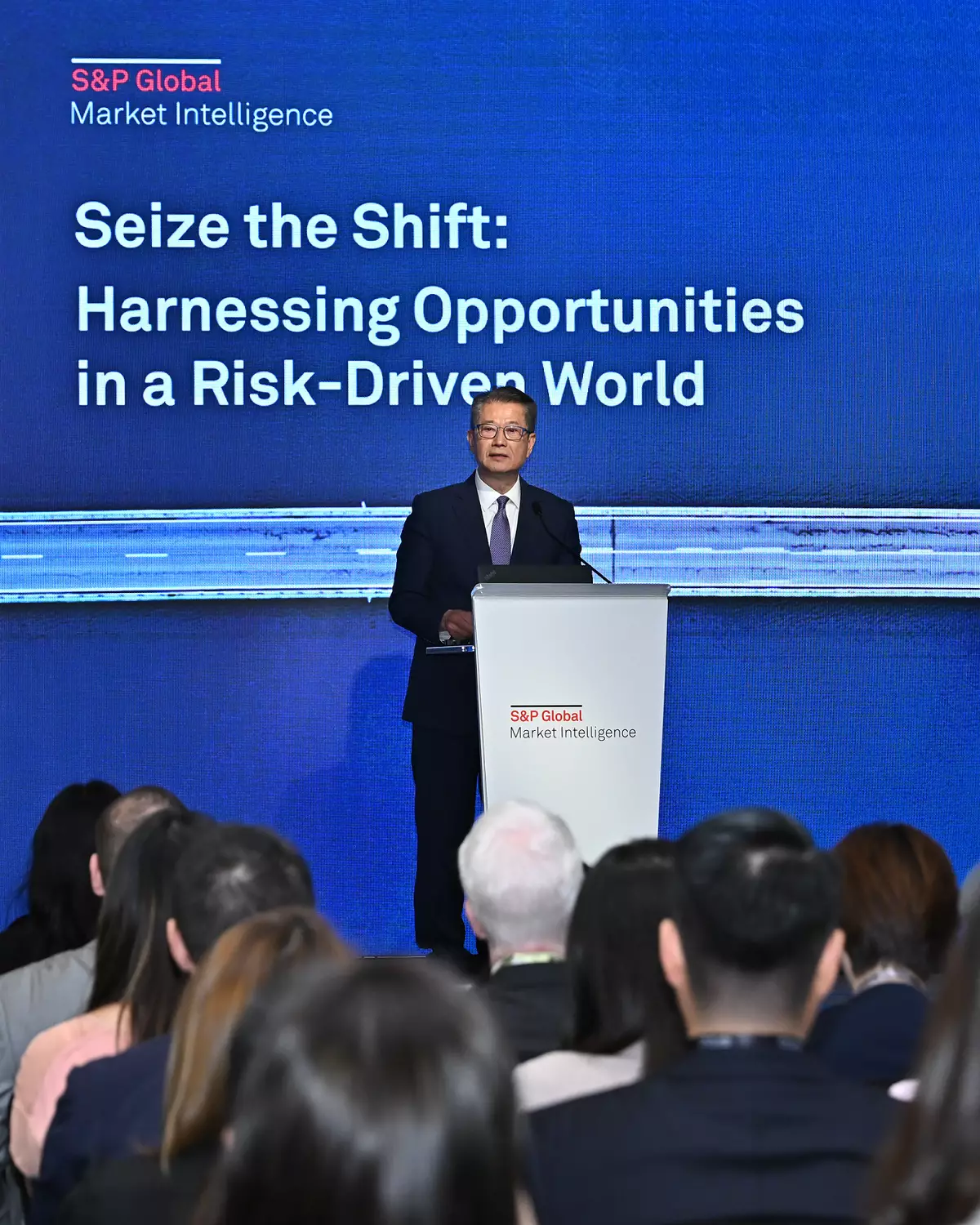
Speech by FS at S&P Global Market Intelligence Hong Kong Roadshow Source: HKSAR Government Press Releases