MOKWA, Nigeria (AP) — On May 29, Mallam Hassan Umar stood waist-deep and barefoot in muddy water, his eyes on the remnants of his Arabic school, now reduced to sludge and shattered wood by devastating floods.
The Islamic teacher, clutching only the threadbare clothes he escaped with, started shouting the names of the pupils he housed and might never see again.
Some pupils tried to escape with him through the back of the house, which also doubled as the school. But that attempt quickly turned perilous.
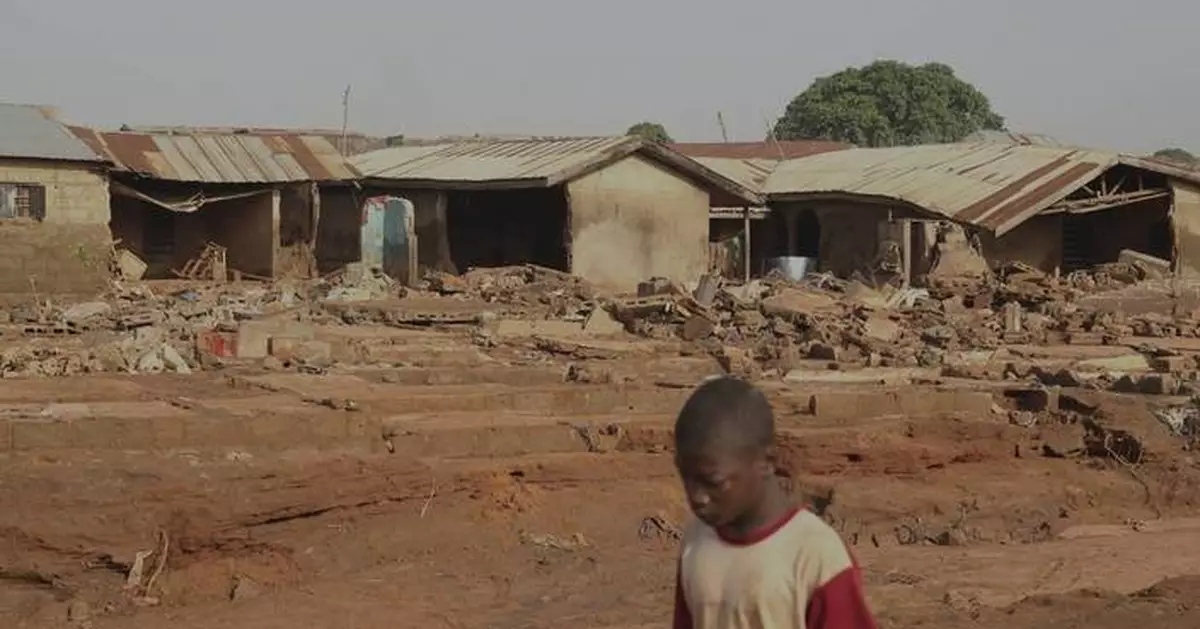
The tightly packed layout of the neighborhood, combined with the absence of a proper drainage system, made the floodwater quickly rise and surge through the maze of homes with violent force, leaving no clear path to safety.
In the chaos, he could only watch helplessly as the water overwhelmed some of the children, sweeping them away.
Mokwa, nearly 380 kilometers (236 miles) west of Abuja, Nigeria's capital, and a major trading and transportation hub where northern farmers and southern traders meet, has become a scene of mass mourning after torrents of rainfall early last Thursday unleashed devastating flooding.
Officially, the fatality count from the sudden and intense flood that built rapidly within five hours has crossed 200. Locals say the actual number could be far higher, with more than a thousand still missing.
Many were Almajiri, the poor boys sent far from their families to study the Quran under the care of Islamic teachers, living in packed, informal schools and often a common sight in northern Nigerian urban centers where they roam the streets for alms and food.
Haruna Yusuf lost 14 relatives — apart from 12 Almajiri children he helped his father teach — to the flood. Clutching a rosary, he prayed for them.
Among his deceased relatives was his brother Islamila, who had managed to swim against the flood tide. Seeing others drown, he decided to go back.
“He did not make it out again,” Yusuf said of his brother. “He was consumed by the water, while trying to save others.”
“In our house and school, we are still searching for 12 Almajiri pupils and 14 family members, including my brother, my uncle, and his pregnant wife and their three children,” he said.
In the Rabba community, near Mokwa, the collapse of a key bridge due to the flood has cut off access to two schools.
Pupils of Rabba Nursery and Primary School, like Salamatu Salihu and Hussaina Aliyu, must wait for a canoe to ferry them across a flood-swollen river.
Often, the boats don’t come. When they do, the children arrive at school drenched, late, and frightened.
Hussaina, 11, raised a red flag over safety.
“No life jackets,” she said. “Some days, we wait long for paddlers who may not come. I’m scared, but I still try to go.”
A teacher, Fatiman Alhassan, said that attendance has plummeted since the bridge collapsed. “Children arrive at 9 a.m., already behind in lessons. Many miss class altogether,” she said.
Abdulmueen Abdullahi, lost six family members, including his mother, elder brother and four other siblings.
He was not at home those “terrible early hours of Thursday,” when his surviving sister called him. “I met all our properties and my six family members washed away,” Abdullahi said, breaking down mid-interview, gripping a reporter's hand.
Isaac Koni stared quietly at the space where his photo lab once stood. Three days before the flood, his lab was redesigned and stocked with new photo material and equipment ahead of the Eid al-Adha celebration. Koni’s 12 staffers all survived, but his 30 million Naira ($19,000) investment was lost.
While the government has turned a local school into a camp for the displaced, the shelter is virtually empty. It was slow to be ready, and most of the survivors had already started taking shelter in the remains of their destroyed homes or moved in with relatives.
The government started distributing relief materials, including food items, on Monday.
UNICEF's Water, Sanitation and Hygiene specialist in Nigeria, Theresa Pamma, said the agency is on the ground to help survivors access basic healthcare and prevent disease outbreaks.
Mokwa is the latest in a series of communities across Nigeria devastated by seasonal flooding, worsened each year by climate change, poor drainage, and a lack of disaster preparedness.
Adebayo reported from Abuja, Nigeria.
For more on Africa and development: https://apnews.com/hub/africa-pulse
The Associated Press receives financial support for global health and development coverage in Africa from the Gates Foundation. The AP is solely responsible for all content. Find AP’s standards for working with philanthropies, a list of supporters and funded coverage areas at AP.org.

FILE - A boy walks past a flooded area after heavy rainfall in the market town of Mokwa, north-central Nigeria, Saturday May 31, 2025. (AP Photo/Usman Salihu Mokwa), File)
SIDON, Lebanon (AP) — Israel’s air force struck areas in southern and eastern Lebanon on Monday and early Tuesday, including in the country's third-largest city.
A strike around 1 a.m. Tuesday leveled a three-story commercial building in the southern coastal city of Sidon, a few days before Lebanon’s army commander is scheduled to brief the government on its mission of disarming militant group Hezbollah in areas along the border with Israel.
Lebanese President Joseph Aoun in a statement Tuesday condemned the attacks as counter to both international efforts to deescalate hostilities and Lebanon’s efforts to extend the government's authority into areas long dominated by Hezbollah and to disarm militants.
An Associated Press photographer at the scene in Sidon said the area was in a commercial district containing workshops and mechanic shops and the building was uninhabited.
At least one person was transported by ambulance and rescue teams were searching the site for others, but no deaths have been reported.
Israel's military said Tuesday they targeted weapons storage sites and infrastructure belonging to the militant groups Hezbollah and Hamas. They acknowledged the sites were located in civilian areas but blamed the groups for operating there.
The strikes were the latest in near-daily Israeli military action since a ceasefire signed more than a year ago that included a Lebanese pledge to disarm militant groups, which Israel says has not been fulfilled.
They took place nearly two hours after Israel’s military Arabic language spokesman Avichay Adraee posted warnings on X that the military would strike targets in two villages in the eastern Bekaa Valley and two others in southern Lebanon.
Lebanon's state-run National News Agency said a home struck in the village of Manara in the Bekaa Valley belonged to Sharhabil al-Sayed, a Hamas military commander who was killed in an Israeli drone strike in May 2024.
The areas were evacuated after Israel's warning. There were no reports of casualties in those strikes. Earlier Monday, Lebanon’s Health Ministry said a drone strike on a car in the southern village of Braikeh earlier Monday wounded two people. The Israeli military said the strike targeted two Hezbollah members.
The Lebanese army last year began the disarmament process of Palestinian groups while the government has said that by the end of 2025 all the areas close to the border with Israel — known as the south Litani area — will be clear of Hezbollah’s armed presence.
The Lebanese government is scheduled to discuss Hezbollah’s disarmament during a meeting Thursday that will be attended by army commander Gen. Rudolph Haikal.
Monday’s airstrikes were in villages north of the Litani river and far from the border with Israel.
The disarmament of Hezbollah and other Palestinian groups by the Lebanese government came after a 14-month war between Israel and Hezbollah in which much of the political and military leadership of the Iran-backed group was killed.
The latest Israel-Hezbollah war began Oct. 8, 2023, a day after Hamas attacked southern Israel, when Hezbollah fired rockets into Israel in solidarity with Hamas. Israel launched a widespread bombardment of Lebanon in September 2024 that severely weakened Hezbollah, followed by a ground invasion.
The war ended in November 2024 with a ceasefire brokered by the U.S.
Israel has carried out almost daily airstrikes since then, mainly targeting Hezbollah members but also killing at least 127 civilians, according to the office of the U.N. High Commissioner for Human Rights.
Mroue reported from Beirut. Associated Press writer Abby Sewell in Beirut contributed to this report.
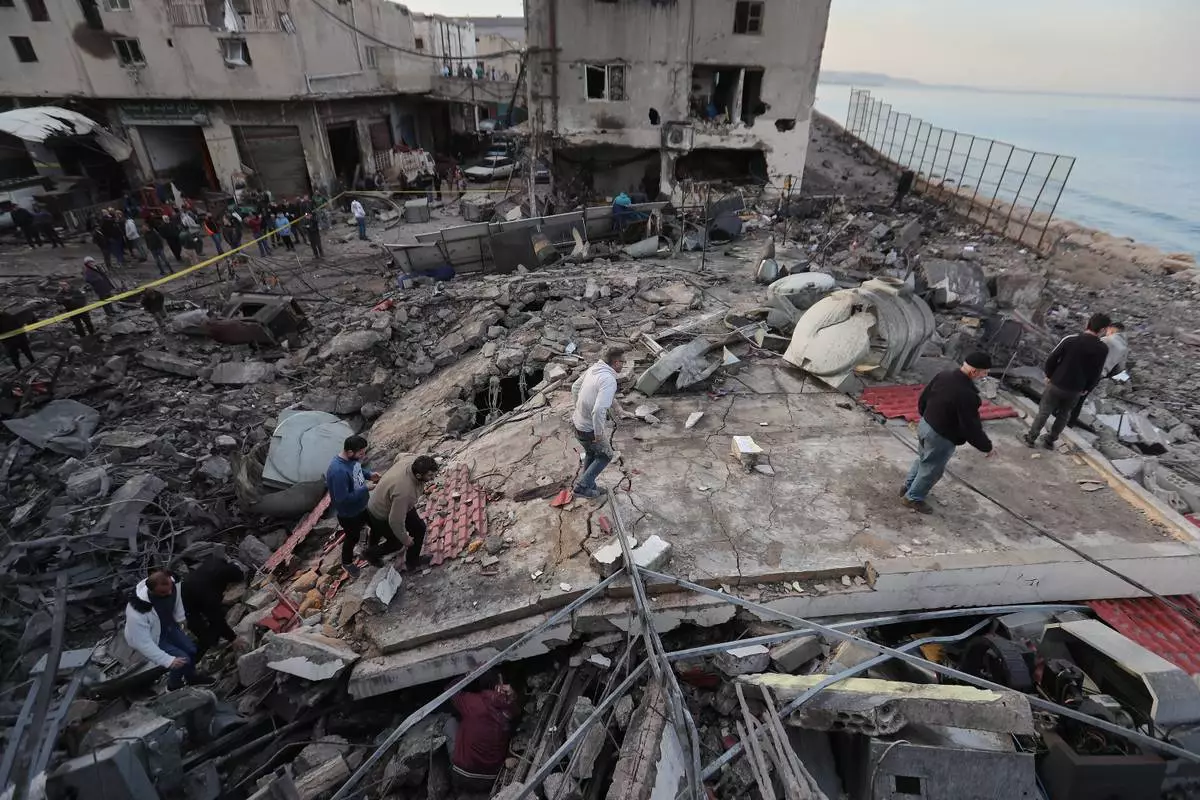
People check a destroyed building that was hit by an Israeli airstrike at a commercial district, in the southern port city of Sidon, Lebanon, Tuesday, Jan. 6, 2026. (AP Photo/Mohammed Zaatari)
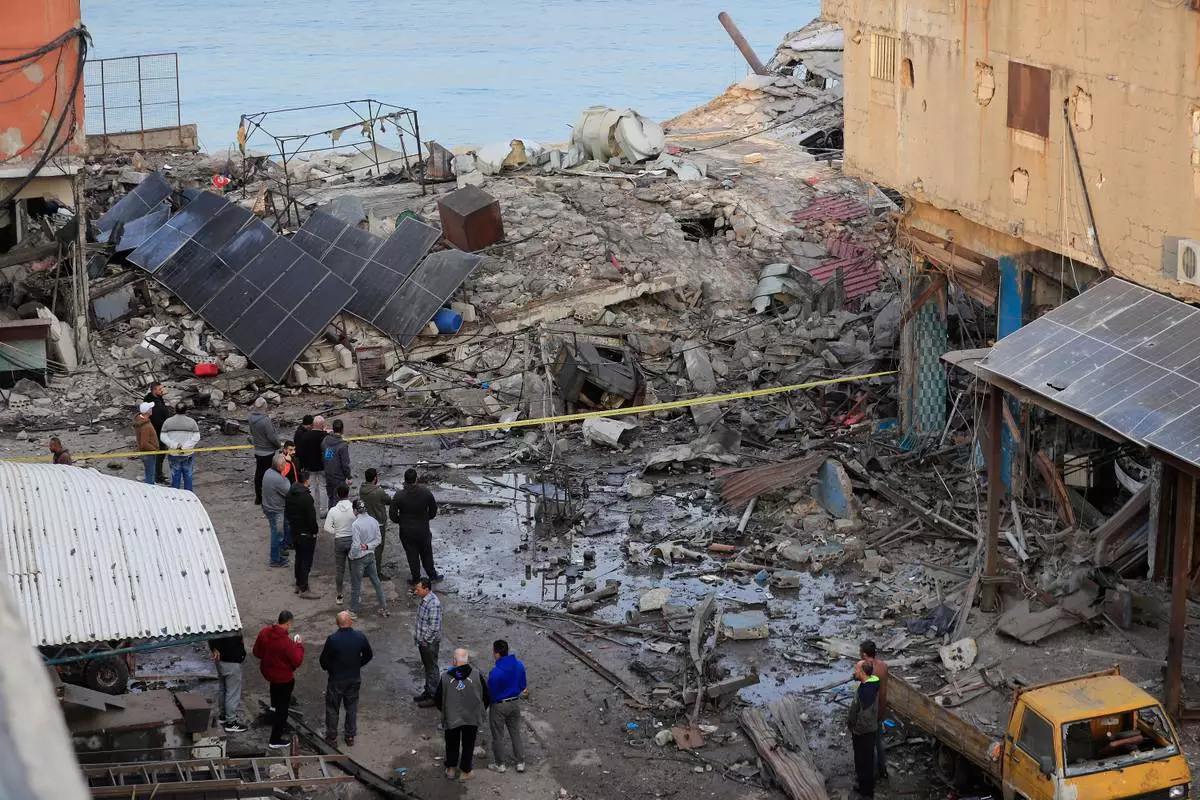
People check a destroyed building that was hit by an Israeli airstrike at a commercial district in the southern port city of Sidon, Lebanon, Tuesday, Jan. 6, 2026. (AP Photo/Mohammed Zaatari)
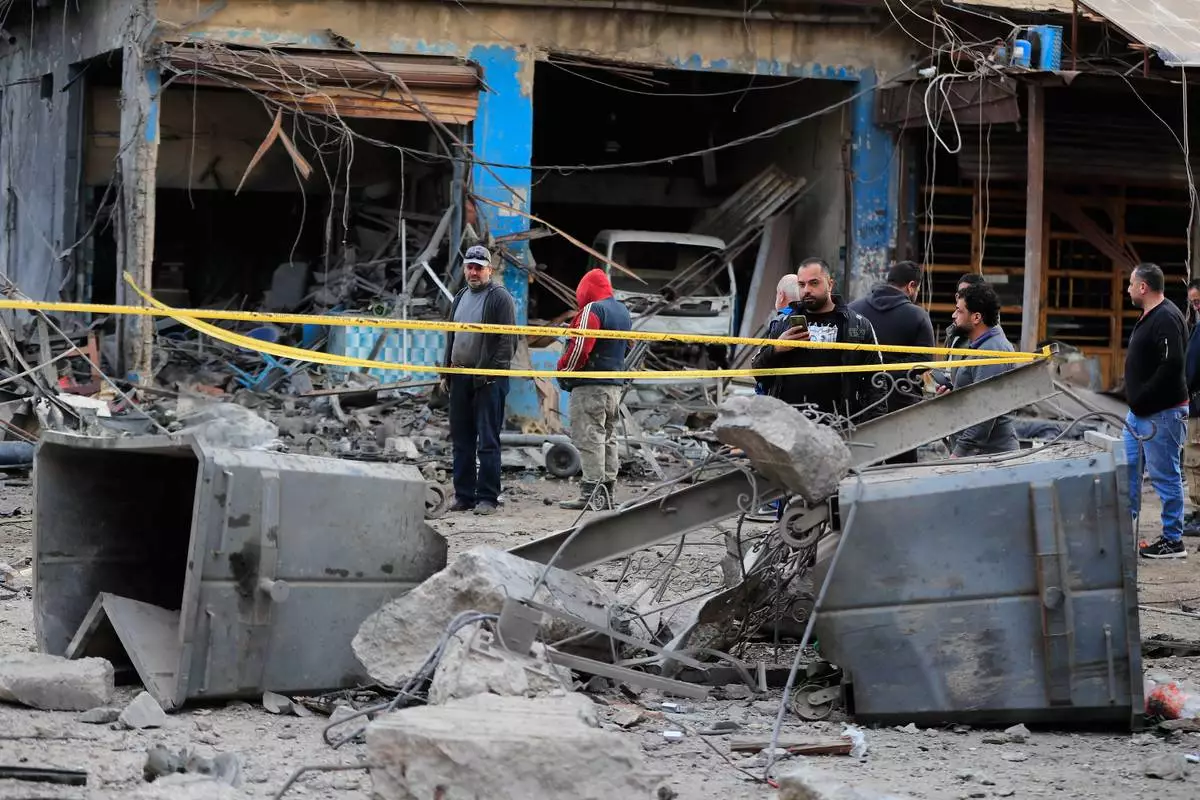
People check the site where an Israeli strike destroyed a building at a commercial district in the southern port city of Sidon, Lebanon, Tuesday, Jan. 6, 2026. (AP Photo/Mohammed Zaatari)
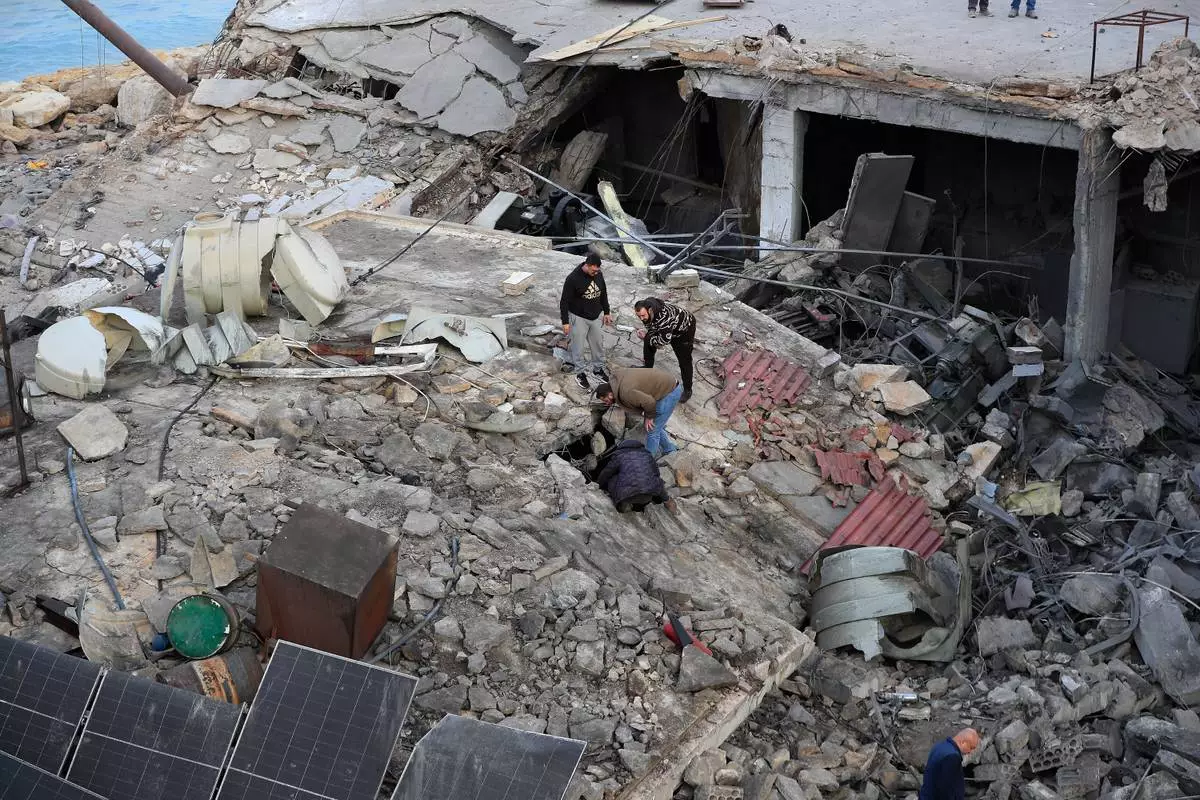
People look through the rubble of a destroyed building that was hit by an Israeli airstrike at a commercial district in the southern port city of Sidon, Lebanon, Tuesday, Jan. 6, 2026. (AP Photo/Mohammed Zaatari)
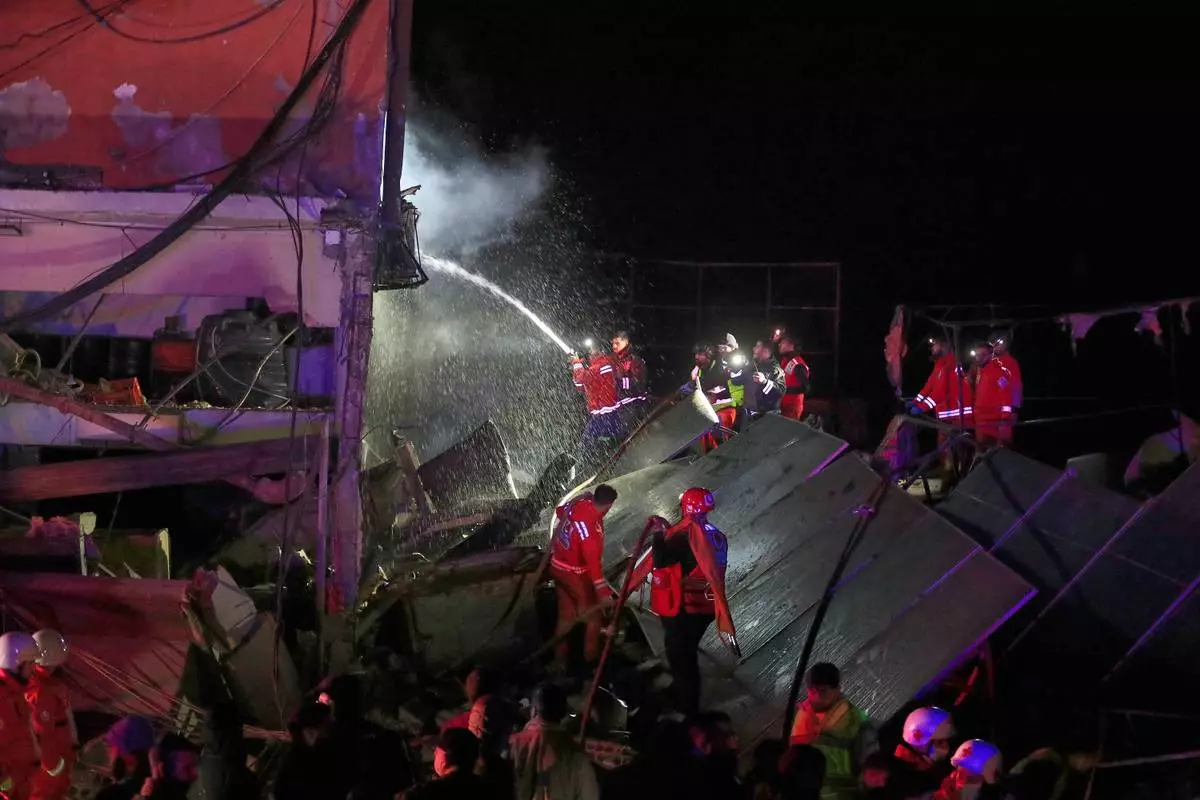
Lebanese fire fighter extinguish a building destroyed by an Israeli airstrike in the southern port city of Sidon, Lebanon, early Tuesday, Jan. 6, 2026. (AP Photo/Mohammed Zaatari)
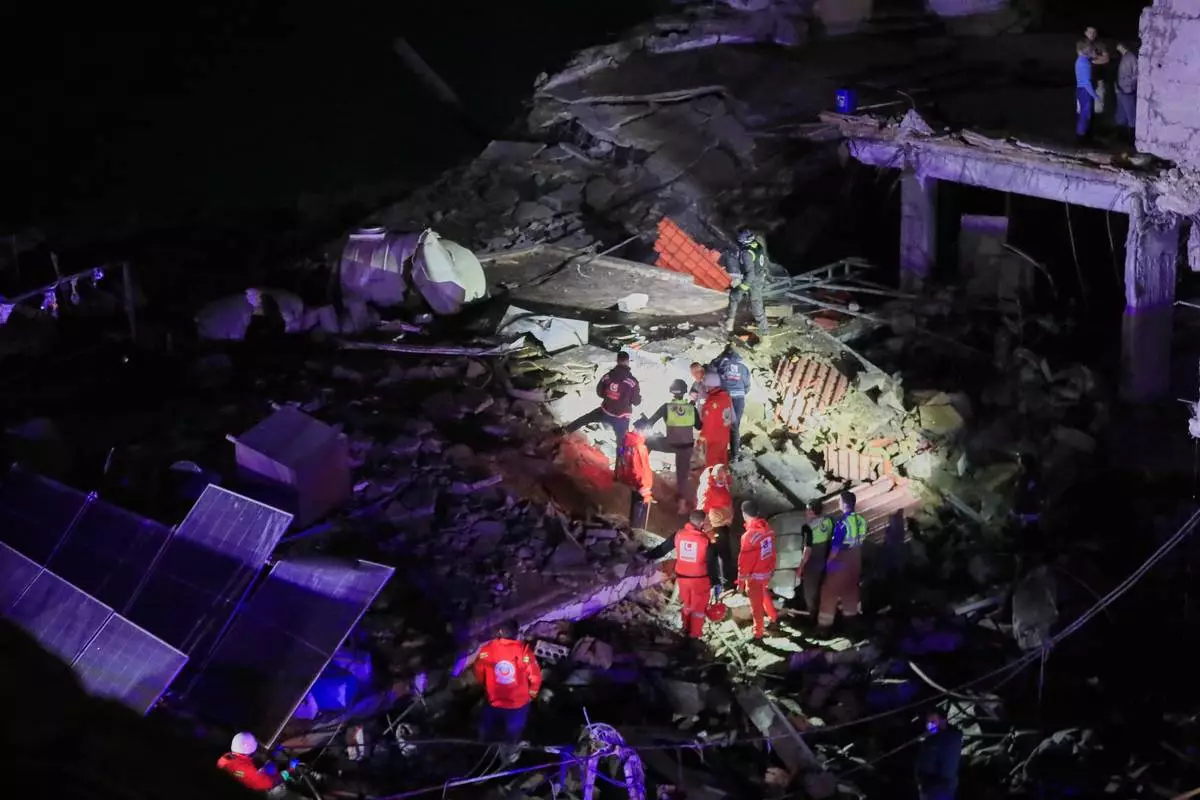
Rescue workers search for possible victims in a building destroyed by an Israeli airstrike in the southern port city of Sidon, Lebanon, early Tuesday, Jan. 6, 2026. (AP Photo/Mohammed Zaatari)
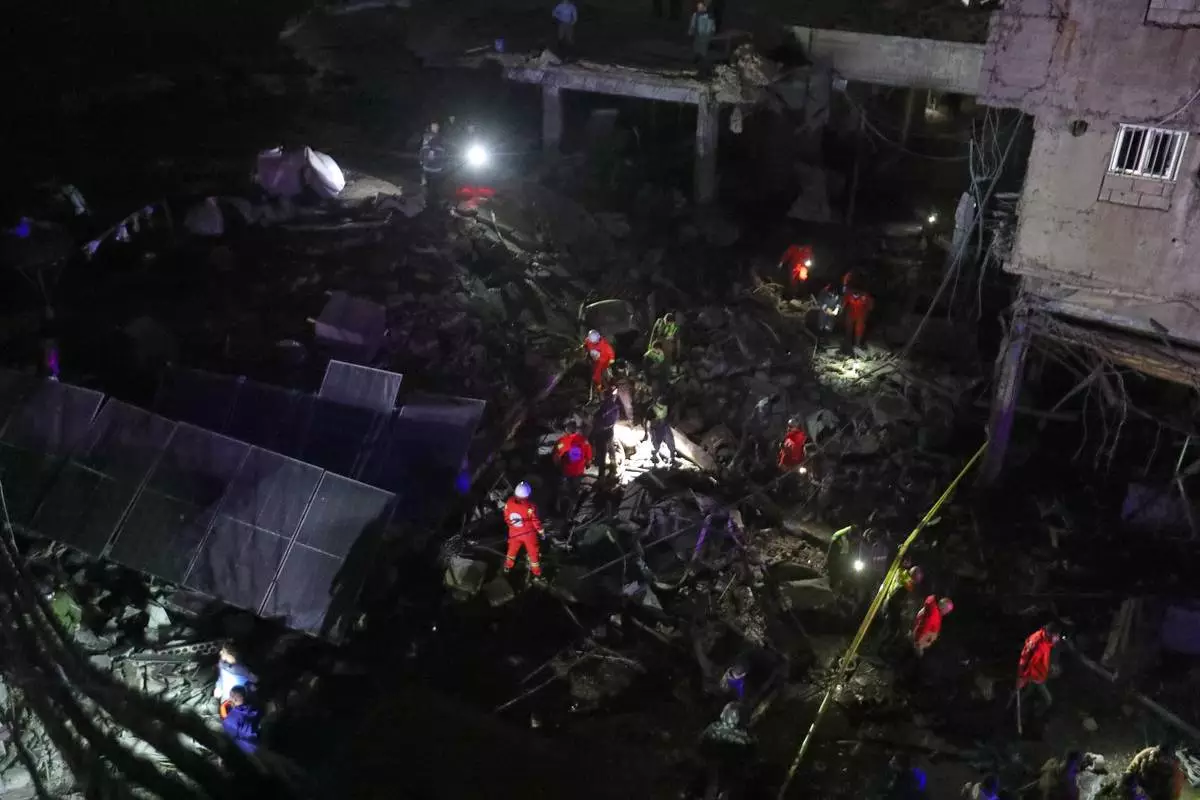
Lebanese Red Cross volunteers search for possible victims in a building destroyed by an Israeli airstrike in the southern port city of Sidon, Lebanon, early Tuesday, Jan. 6, 2026. (AP Photo/Mohammed Zaatari)