Skip to Content Facebook Feature Image

Who's in charge? CDC's leadership 'crisis' apparent amid new COVID-19 vaccine guidance

News

Who's in charge? CDC's leadership 'crisis' apparent amid new COVID-19 vaccine guidance
News

News

Who's in charge? CDC's leadership 'crisis' apparent amid new COVID-19 vaccine guidance

2025-06-06 03:55 Last Updated At:04:02

WASHINGTON (AP) — There was a notable absence last week when U.S. Health and Human Services Secretary Robert F. Kennedy Jr. announced in a 58-second video that the government would no longer endorse the COVID-19 vaccine for healthy children or pregnant women.

The director of the Centers for Disease Control and Prevention — the person who typically signs off on federal vaccine recommendations — was nowhere to be seen.

The CDC, a $9.2 billion-a-year agency tasked with reviewing life-saving vaccines, monitoring diseases and watching for budding threats to Americans' health, is without a clear leader.

“I've been disappointed that we haven't had an aggressive director since — February, March, April, May — fighting for the resources that CDC needs,” said Dr. Robert Redfield, who served as CDC director under the first Trump administration and supported Kennedy's nomination as the nation's health secretary.

The leadership vacuum at a foremost federal public health agency has existed for months, after President Donald Trump suddenly withdrew his first pick for CDC director in March. A hearing for his new nominee — the agency's former acting director Susan Monarez — has not been scheduled because she has not submitted all the paperwork necessary to proceed, according to a spokesman for Sen. Bill Cassidy, R-La., who will oversee the nomination.

HHS did not answer written questions about Monarez's nomination, her current role at the CDC or her salary. An employee directory lists Monarez, a longtime government employee, as a staffer for the NIH under the Advanced Research Projects Agency for Health.

Redfield described Kennedy as “very supportive” of Monarez’s nomination.

Instead, a lawyer and political appointee with no medical experience is “carrying out some of the duties” of director at the agency that for seven decades has been led by someone with a medical degree.

Matthew Buzzelli, who is also the chief of staff at the CDC, is “surrounded by highly qualified medical professionals and advisors to help fulfill these duties as appropriate,” Andrew Nixon, an HHS spokesperson said in a statement.

Adding to the confusion was an employee-wide email sent last week that thanked “new acting directors who have stepped up to the plate." The email, signed by Monarez, listed her as the acting director. It was was sent just days after Kennedy said at a Senate hearing that Monarez had been replaced by Buzzelli.

The lack of a confirmed director will be a problem if a public health emergency such as the COVID-19 pandemic or a rapid uptick in measles cases hits, said Michael Osterholm, an epidemiologist at the University of Minnesota.

“CDC is a crisis, waiting for a crisis to happen,” said Osterholm. “At this point, I couldn’t tell you for the life of me who was going to pull what trigger in a crisis situation."

At CDC headquarters in Atlanta, employees say Monarez was rarely heard from between late January – when she was appointed acting director – and late March, when Trump nominated her.

She also has not held any of the “all hands” meetings that were customary under previous CDC chiefs, according to several staffers.

One employee, who insisted on anonymity because they were not authorized to speak to the media and fears being fired if identified said Monarez has been almost invisible since her nomination, adding that her absence has been cited by other leaders as an excuse for delaying action.

The situation already has led to confusion.

In April, a 15-member CDC advisory panel of outside experts met to discuss vaccine policy. The panel makes recommendations to the CDC Director, who routinely signs off on them. But it was unclear during the meeting who would be reviewing the panel's recommendations, which included the expansion of RSV vaccinations for adults and a new combination shot as another option to protect teens against meningitis.

HHS officials said the recommendations were going to Buzzelli, but then weeks passed with no decision. A month after the meeting ended, the CDC posted on a web site that Kennedy had signed off on recommendations for travelers against chikungunya, a viral disease transmitted to humans by mosquitos. But there continues to be no word about a decision about the other vaccine recommendations.

The problem was accentuated again last week, when Kennedy rolled out recommendations for the COVID-19 vaccine saying they were no longer recommended for healthy children or pregnant women, even though expectant mothers are considered a high-risk group if they contract the virus. Kennedy made the surprise announcement without input from the CDC advisory panel that has historically made recommendations on the nation's vaccine schedule. The CDC days later posted revised guidance that said healthy kids and pregnant women may get the shots.

Nixon, the HHS spokesman, said CDC staff were consulted on the recommendations, but would not provide staffer's names or titles. He also did not provide the specific data or research that Kennedy reviewed to reach his conclusion on the new COVID-19 recommendations, just weeks after he said that he did not think “people should be taking medical advice” from him.

“As Secretary Kennedy said, there is a clear lack of data to support the repeat booster strategy in children,” Nixon said in a statement.

Research shows that pregnant women are at higher risk of severe illness, mechanical ventilation and death, when they contract COVID-19 infections. During the height of the pandemic, deaths of women during pregnancy or shortly after childbirth soared to their highest level in 50 years. Vaccinations also have been recommended for pregnant women because it passes immunity to newborns who are too young for vaccines and also vulnerable to infections. Nixon did not address a written question about recommendations for pregnant women.

Kennedy's decision to bypass the the advisory panel and announce new COVID-19 recommendations on his own prompted a key CDC official who works with the committee – Dr. Lakshmi Panagiotakopoulos – to announce her resignation last Friday.

“My career in public health and vaccinology started with a deep-seated desire to help the most vulnerable members of our population, and that is not something I am able to continue doing in this role,” she wrote in an email seen by an Associated Press reporter.

Signs are mounting that the CDC has been “sidelined” from key decision-making under Kennedy's watch, said Dr. Anand Parekh, the chief medical adviser for The Bipartisan Policy Center.

“It’s difficult to ascertain how we will reverse the chronic disease epidemic or be prepared for myriad public health emergencies without a strong CDC and visible, empowered director,” Parekh said. “It’s also worth noting that every community in the country is served by a local or state public health department that depends on the scientific expertise of the CDC and the leadership of the CDC director.”
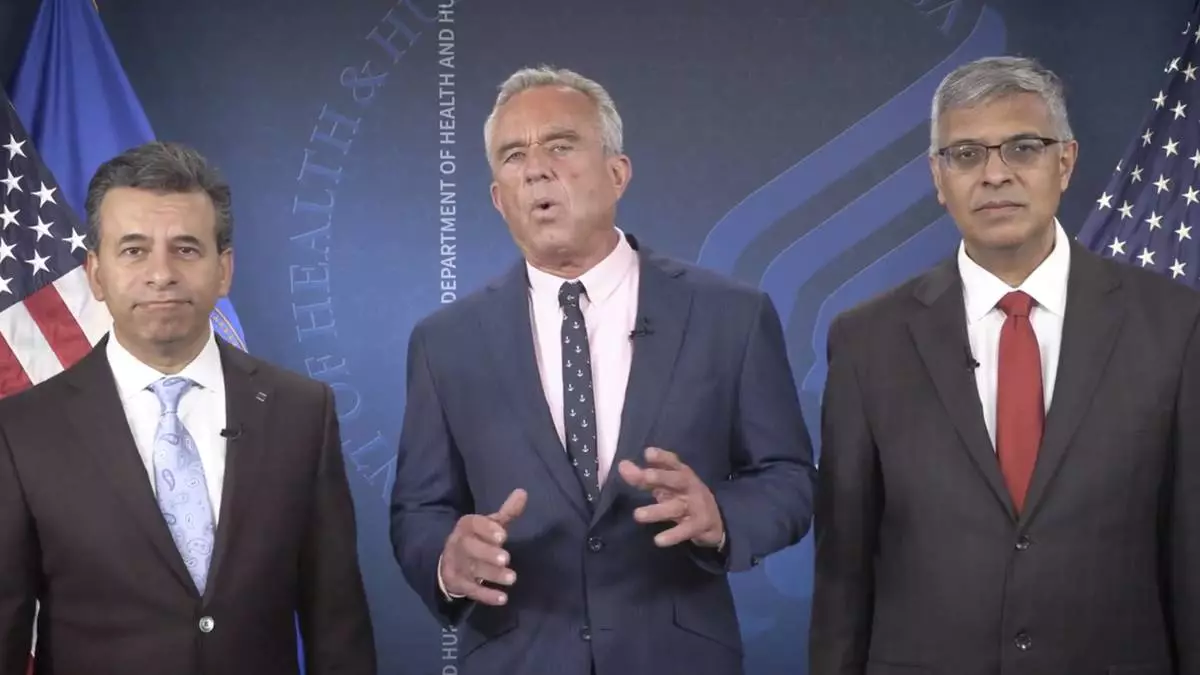
This image from video provided by the Department of Health and Human Services shows Health and Human Services Secretary Robert F. Kennedy Jr. speaking alongside Food and Drug Administration administrator Dr. Martin Makary, left, and Dr. Jay Bhattacharya, director of the National Institutes of Health, as they announce that the government would no longer endorse the COVID-19 vaccine for healthy children or pregnant women. (Health and Human Services via AP)
This image from video provided by the Department of Health and Human Services shows Health and Human Services Secretary Robert F. Kennedy Jr. speaking alongside Food and Drug Administration administrator Dr. Martin Makary, left, and Dr. Jay Bhattacharya, director of the National Institutes of Health, as they announce that the government would no longer endorse the COVID-19 vaccine for healthy children or pregnant women. (Health and Human Services via AP)

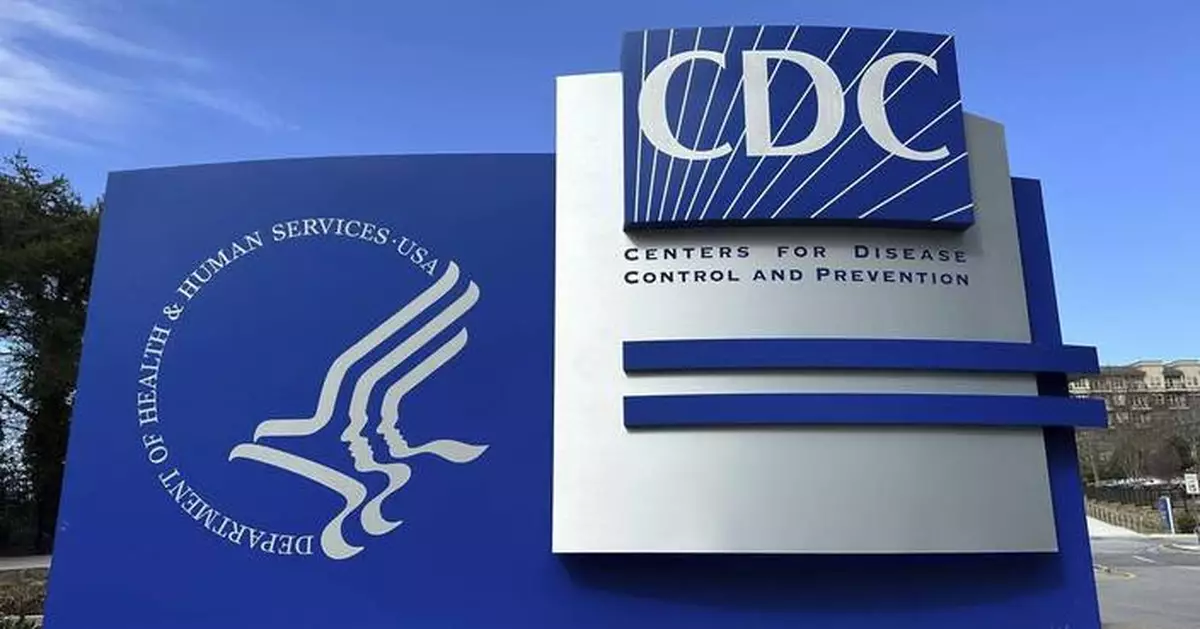
FILE - A sign stands at an entrance to the main campus of the Center for Disease Control and Prevention (CDC) in Atlanta, Georgia, Feb. 14, 2025. (AP Photo/Jeff Amy, File)
FILE - A sign stands at an entrance to the main campus of the Center for Disease Control and Prevention (CDC) in Atlanta, Georgia, Feb. 14, 2025. (AP Photo/Jeff Amy, File)
MINNEAPOLIS (AP) — Federal agents carrying out immigration arrests in Minnesota's Twin Cities region already shaken by the fatal shooting of a woman rammed the door of one home Sunday and pushed their way inside, part of what the Department of Homeland Security has called its largest enforcement operation ever.

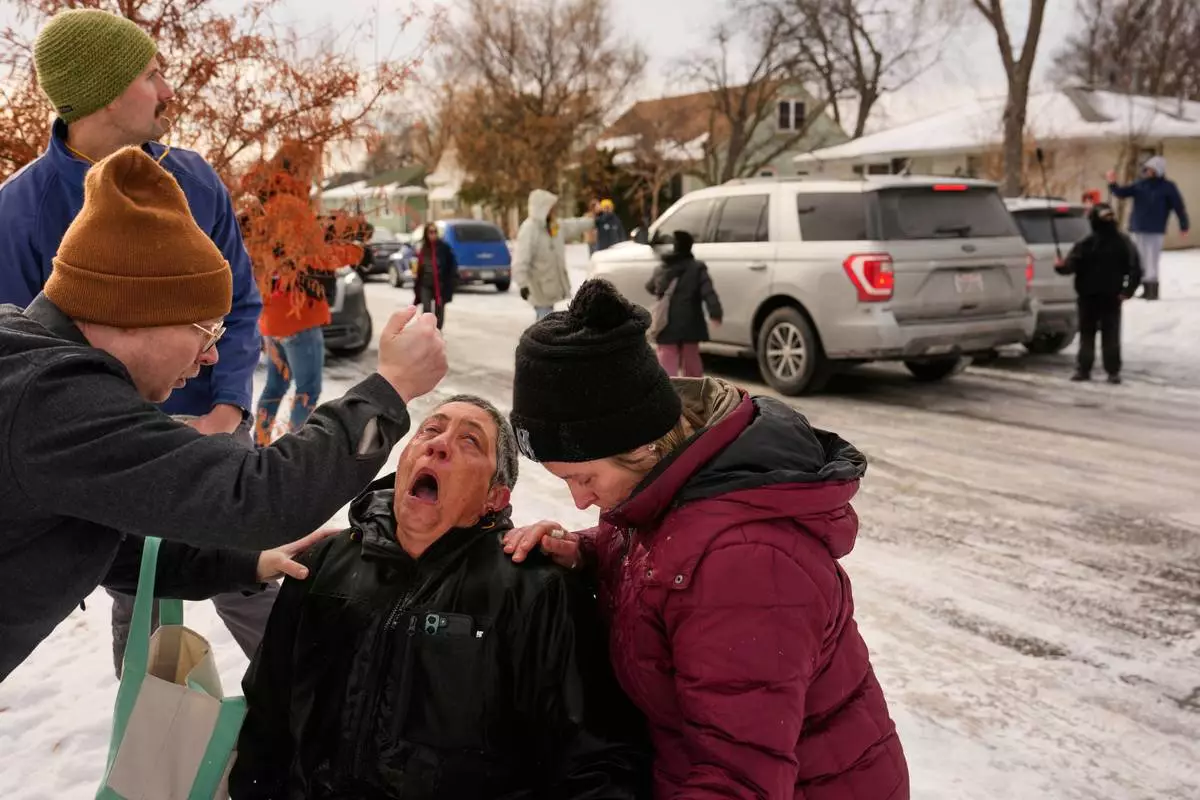
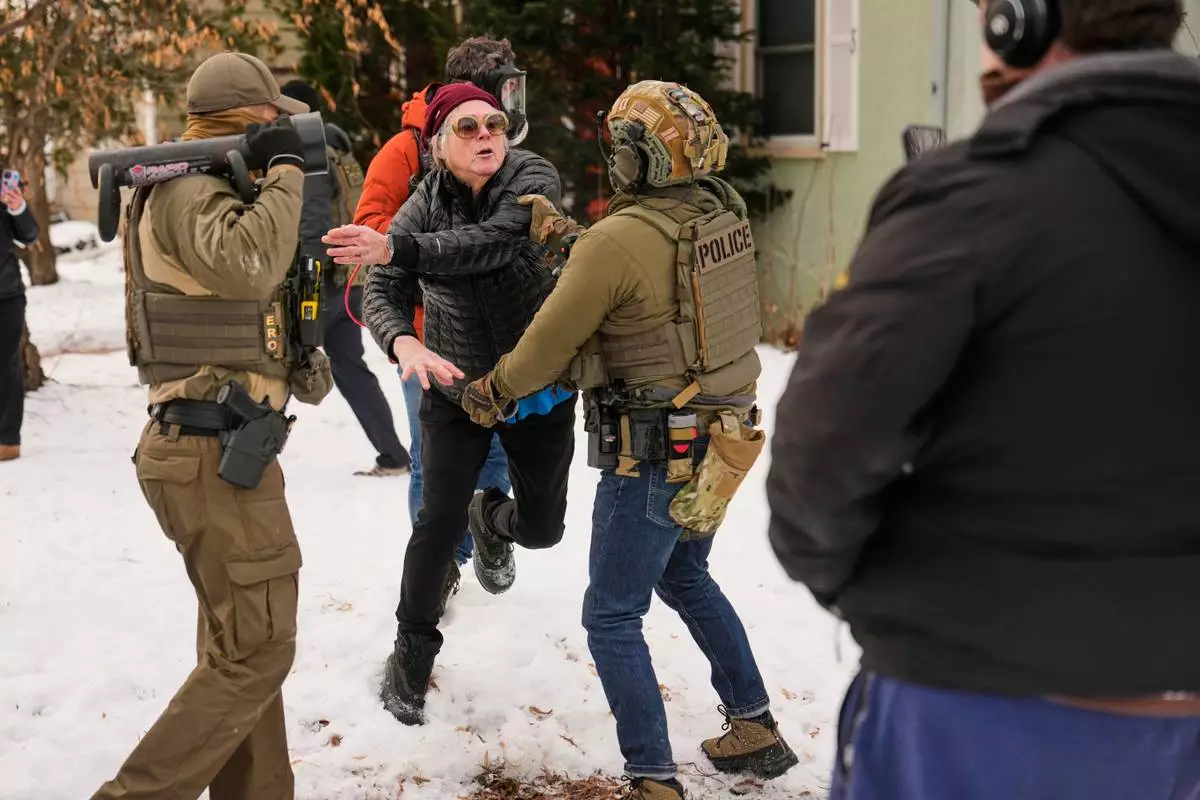
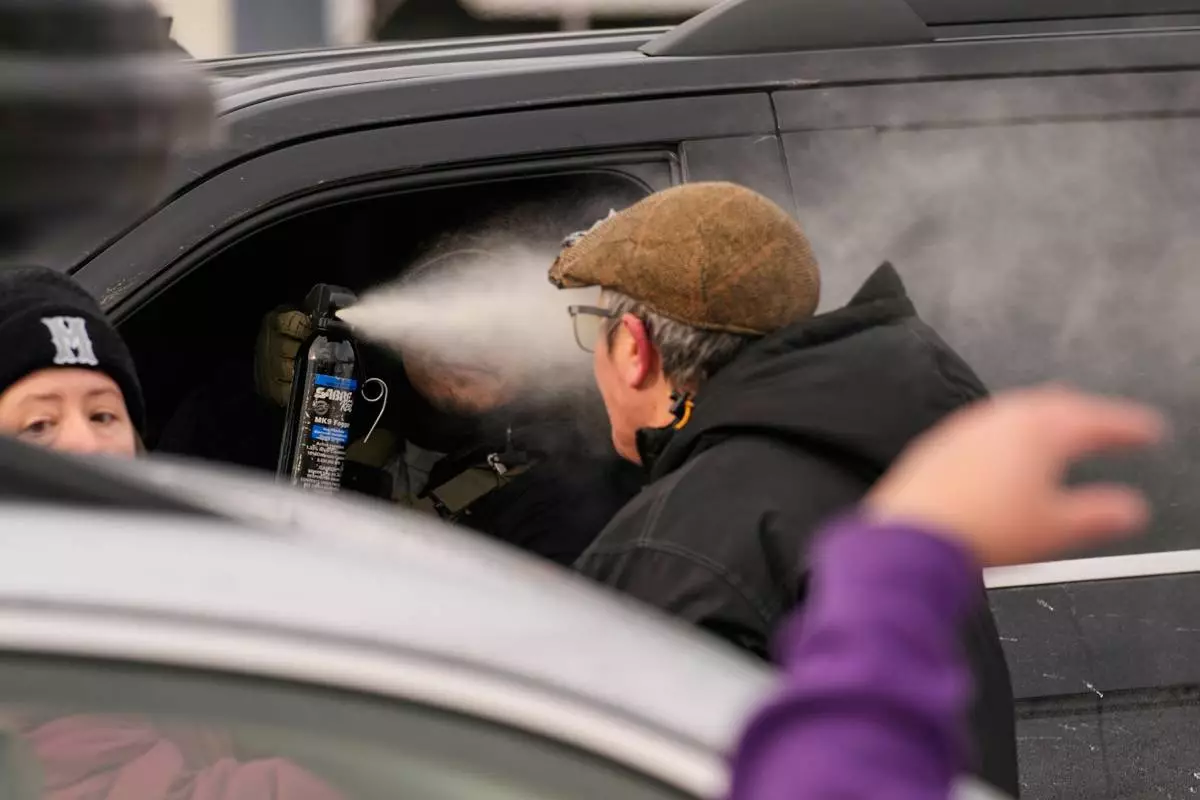
In a dramatic scene similar to those playing out across Minneapolis, agents captured a man in the home just minutes after pepper spraying protesters outside who had confronted the heavily armed federal agents. Along the residential street, protesters honked car horns, banged on drums and blew whistles in attempts to disrupt the operation.

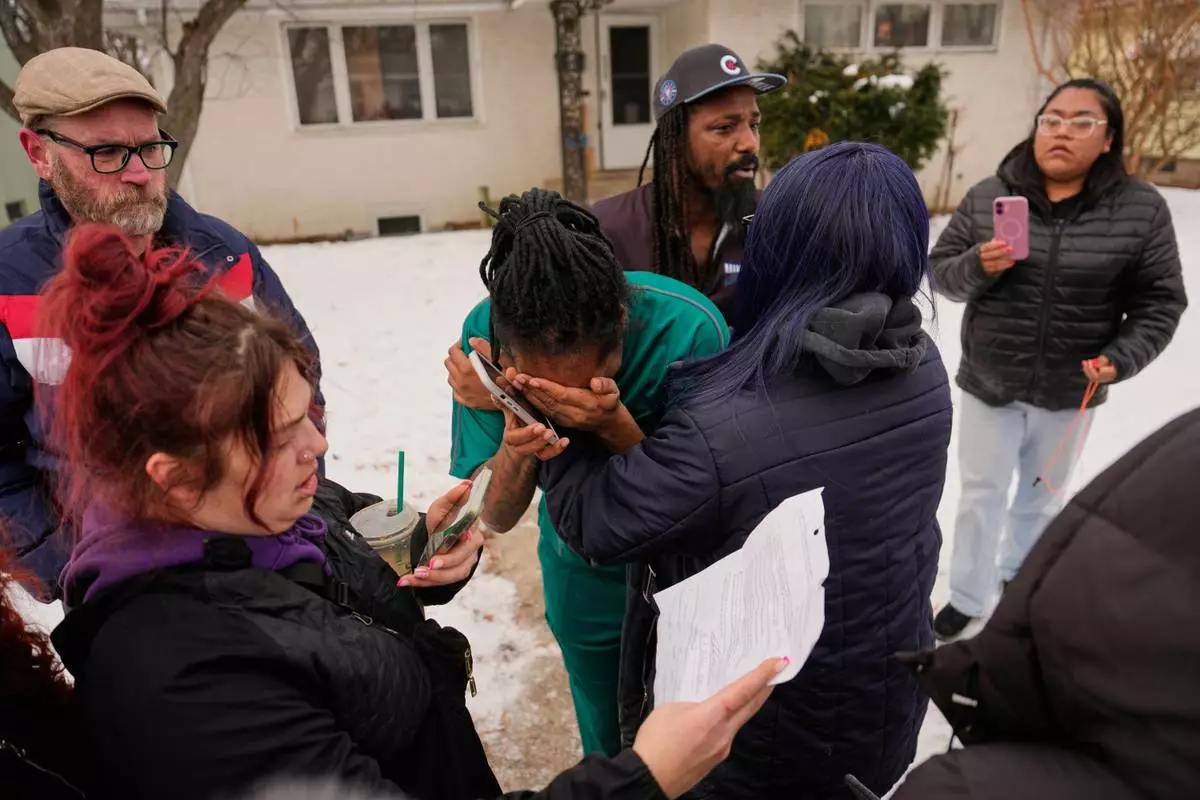
Video of the clash taken by The Associated Press showed some agents pushing back protesters while a distraught woman later emerged from the house with a document that federal agents presented to arrest the man. Signed by an immigration officer, the document — unlike a warrant signed by a judge — does not authorize forced entry into a private residence. A warrant signed by an immigration officer only authorizes arrest in a public area.

Immigrant advocacy groups have conducted extensive “know-your-rights” campaigns urging people not to open their doors unless agents have a court order signed by a judge.

But within minutes of ramming the door in a neighborhood filled with single-family homes, the handcuffed man was led away.

More than 2,000 immigration arrests have been made in Minnesota since the enforcement operation began at the beginning of December, said Homeland Security spokesperson Tricia McLaughlin.

Homeland Security Secretary Kristi Noem told Fox News on Sunday that the administration would send additional federal agents to Minnesota to protect immigration officers and continue enforcement.

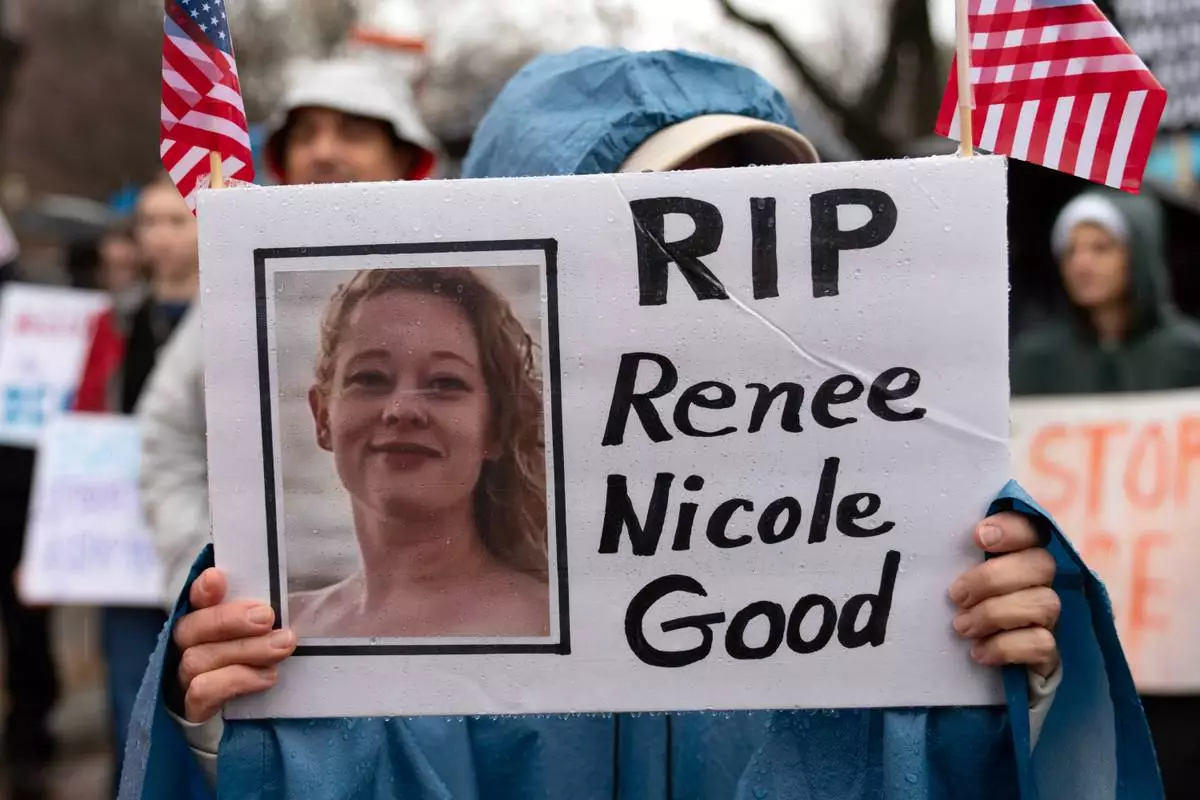
The Twin Cities — the latest target in President Donald Trump’s immigration enforcement campaign — is bracing for what is next after 37-year-old Renee Good was shot and killed by an immigration officer on Wednesday.

“We’re seeing a lot of immigration enforcement across Minneapolis and across the state, federal agents just swarming around our neighborhoods,” said Jason Chavez, a Minneapolis city councilmember. “They’ve definitely been out here.”

Chavez, the son of Mexican immigrants who represents an area with a growing immigrant population, said he is closely monitoring information from chat groups about where residents are seeing agents operating.

People holding whistles positioned themselves in freezing temperatures on street corners Sunday in the neighborhood where Good was killed, watching for any signs of federal agents.

More than 20,000 people have taken part in a variety of trainings to become “observers” of enforcement activities in Minnesota since the 2024 election, said Luis Argueta, a spokesperson for Unidos MN, a local human rights organization .

“It’s a role that people choose to take on voluntarily, because they choose to look out for their neighbors,” Argueta said.

The protests have been largely peaceful, but residents remained anxious. On Monday, Minneapolis public schools will start offering remote learning for the next month in response to concerns that children might feel unsafe venturing out while tensions remain high.

Many schools closed last week after Good’s shooting and the upheaval that followed.

While the enforcement activity continues, two of the state’s leading Democrats said that the investigation into Good's shooting death should not be overseen solely by the federal government.

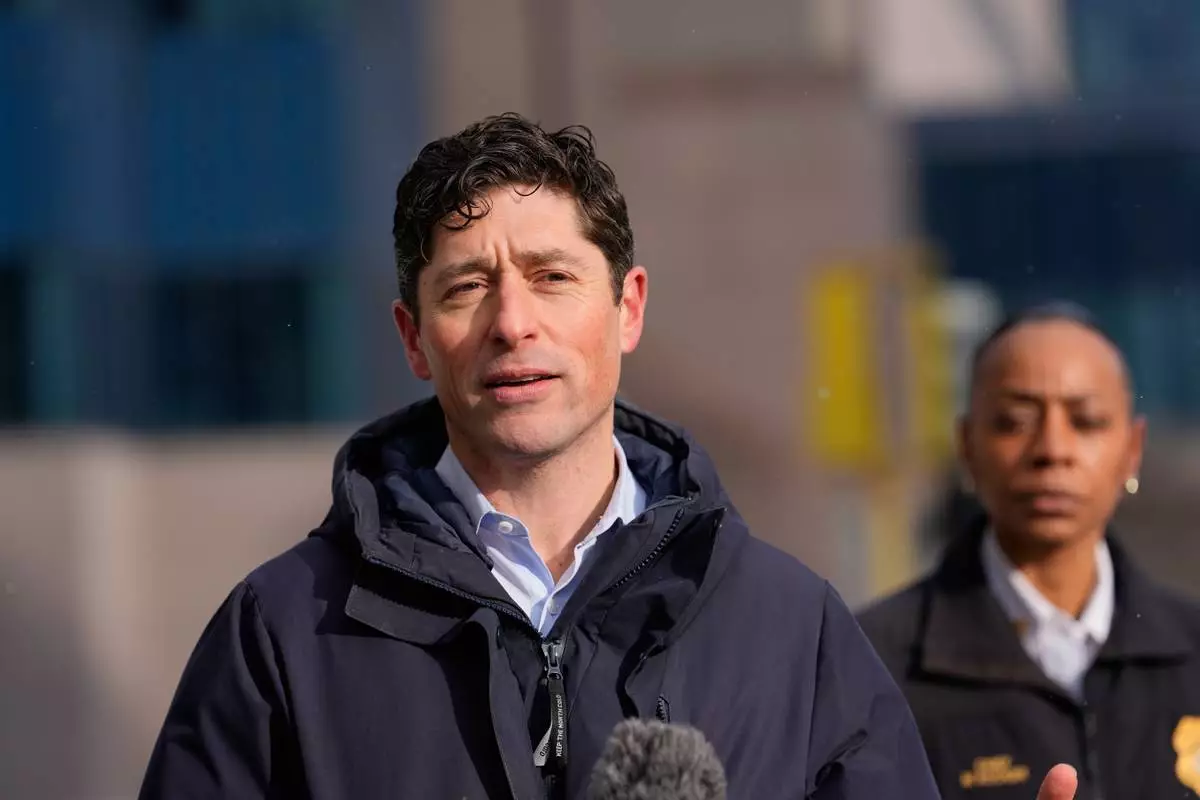
Minneapolis Mayor Jacob Frey and U.S. Sen. Tina Smith said in separate interviews Sunday that state authorities should be included in the investigation because the federal government has already made clear what it believes happened.

“How can we trust the federal government to do an objective, unbiased investigation, without prejudice, when at the beginning of that investigation they have already announced exactly what they saw — what they think happened," Smith said on ABC’s "This Week."

The Trump administration has defended the officer who shot Good in her car, saying he was protecting himself and fellow agents and that Good had “weaponized” her vehicle.

Todd Lyons, acting director of U.S. Immigration and Customs Enforcement, defended the officer on Fox News Channel’s “The Sunday Briefing.”

"That law enforcement officer had milliseconds, if not short time to make a decision to save his life and his other fellow agents,” he said.

Lyons also said the administration’s enforcement operations in Minnesota wouldn't be needed “if local jurisdictions worked with us to turn over these criminally illegal aliens once they are already considered a public safety threat by the locals.”

The killing of Good by an ICE officer and the shooting of two people by federal agents in Portland, Oregon, led to dozens of protests in cities across the country over the weekend, including New York, Los Angeles, Washington D.C. and Oakland, California.

Contributing were Associated Press journalists Giovanna Dell’Orto in Minneapolis; Thomas Strong in Washington; Bill Barrow in Atlanta; Christopher Weber in Los Angeles; and John Seewer in Toledo, Ohio.

A woman gets into an altercation with a federal immigration officer as officers make an arrest Sunday, Jan. 11, 2026, in Minneapolis. (AP Photo/John Locher)

A woman gets into an altercation with a federal immigration officer as officers make an arrest Sunday, Jan. 11, 2026, in Minneapolis. (AP Photo/John Locher)

A federal immigration officer deploys pepper spray as officers make an arrest Sunday, Jan. 11, 2026, in Minneapolis. (AP Photo/John Locher)

A federal immigration officer deploys pepper spray as officers make an arrest Sunday, Jan. 11, 2026, in Minneapolis. (AP Photo/John Locher)

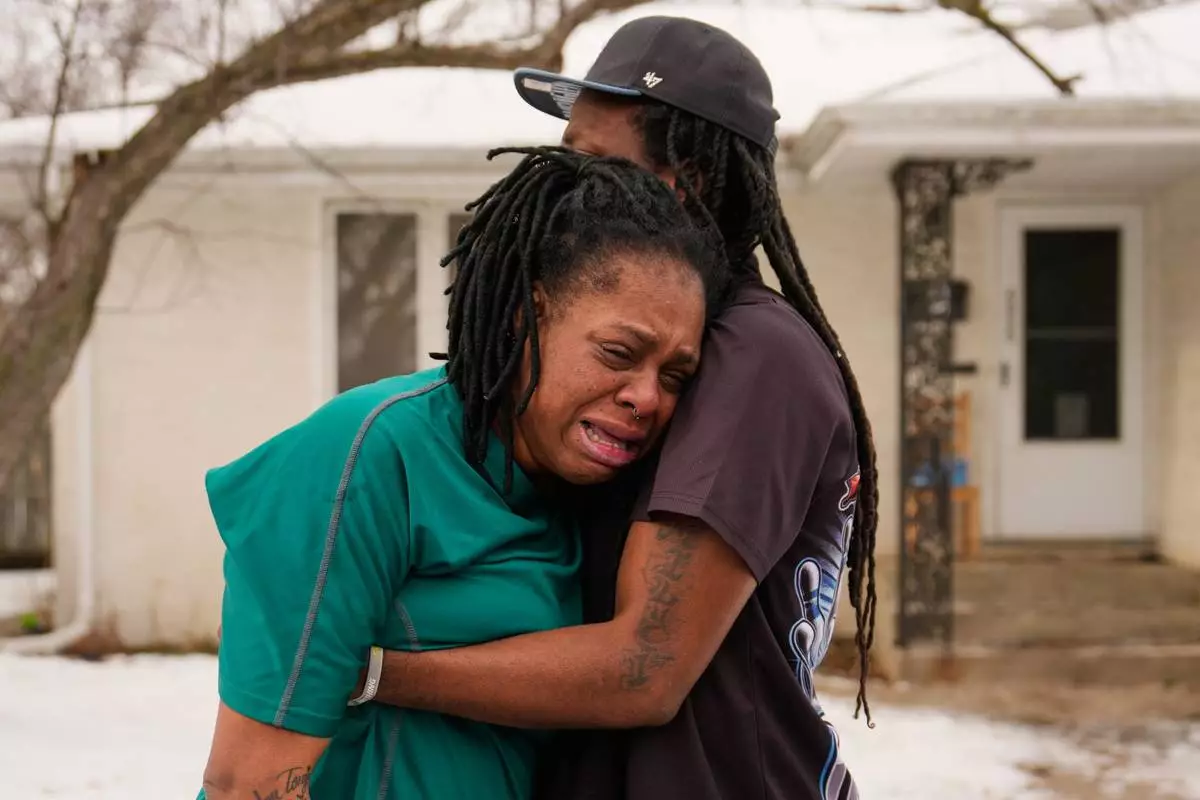
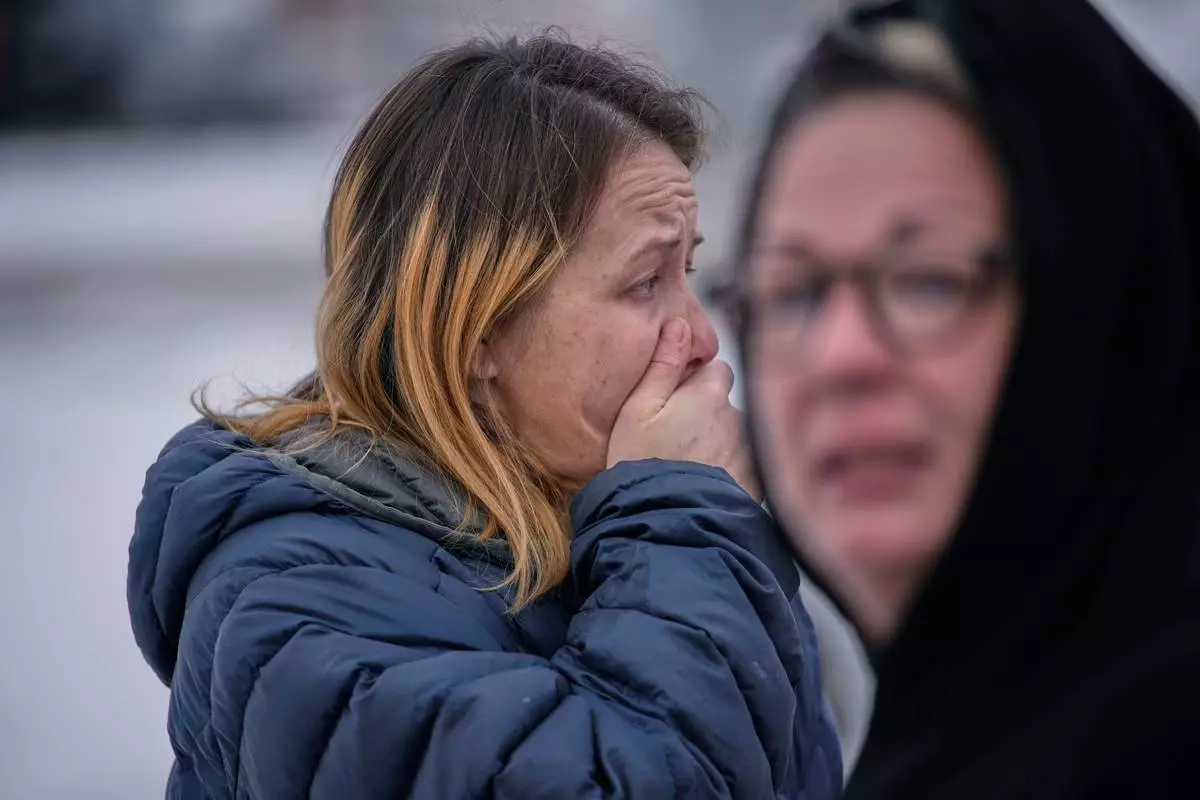
A family member, center, reacts after federal immigration officers make an arrest Sunday, Jan. 11, 2026, in Minneapolis. (AP Photo/John Locher)

A family member, center, reacts after federal immigration officers make an arrest Sunday, Jan. 11, 2026, in Minneapolis. (AP Photo/John Locher)

Bystanders are treated after being pepper sprayed as federal immigration officers make an arrest Sunday, Jan. 11, 2026, in Minneapolis. (AP Photo/John Locher)

Bystanders are treated after being pepper sprayed as federal immigration officers make an arrest Sunday, Jan. 11, 2026, in Minneapolis. (AP Photo/John Locher)

A family member reacts after federal immigration officers make an arrest Sunday, Jan. 11, 2026, in Minneapolis. (AP Photo/John Locher)

A family member reacts after federal immigration officers make an arrest Sunday, Jan. 11, 2026, in Minneapolis. (AP Photo/John Locher)

Federal agents look on after detaining a person during a patrol in Minneapolis, Minn., Sunday, Jan. 11, 2026. (Christopher Katsarov/The Canadian Press via AP)

Federal agents look on after detaining a person during a patrol in Minneapolis, Minn., Sunday, Jan. 11, 2026. (Christopher Katsarov/The Canadian Press via AP)

Bystanders react after a man was detained by Immigration and Customs Enforcement (ICE) agents during a traffic stop, Sunday, Jan. 11, 2026, in Robbinsdale, Minn. (AP Photo/John Locher)

Bystanders react after a man was detained by Immigration and Customs Enforcement (ICE) agents during a traffic stop, Sunday, Jan. 11, 2026, in Robbinsdale, Minn. (AP Photo/John Locher)

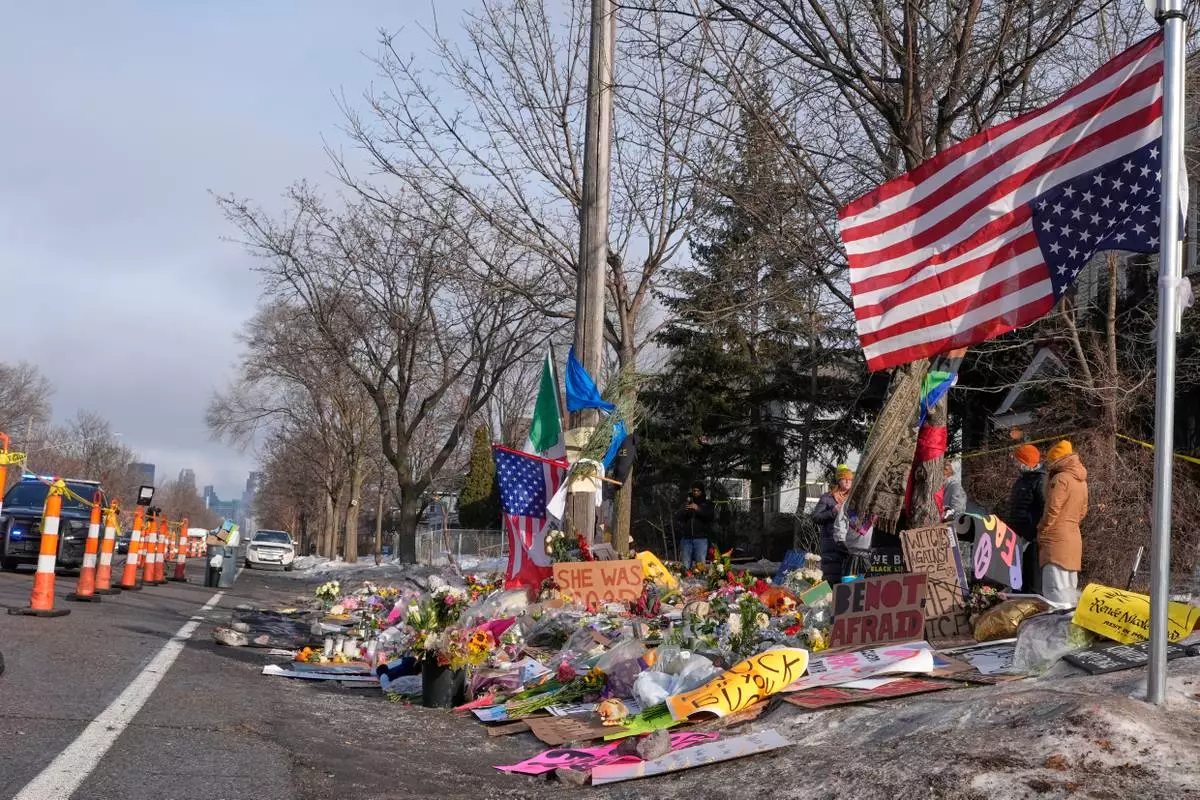
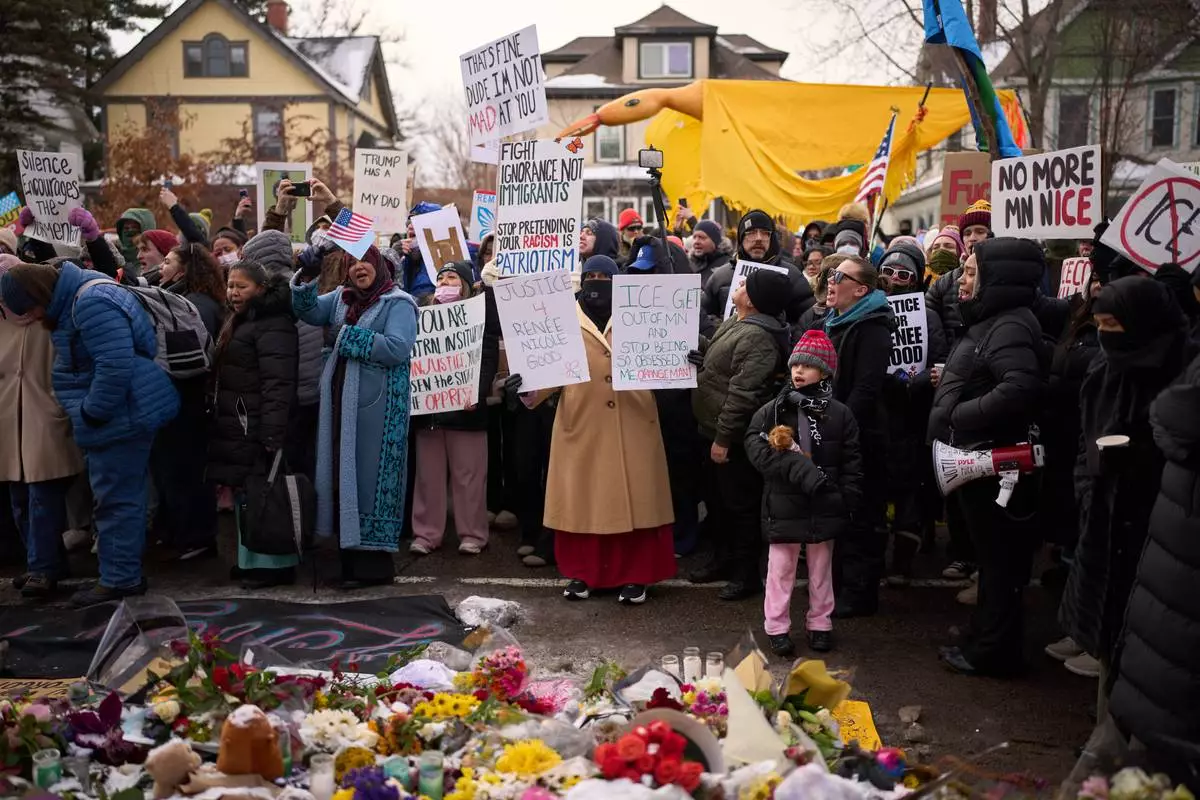
People stand near a memorial at the site where Renee Good was fatally shot by an ICE agent, Sunday, Jan. 11, 2026, in Minneapolis. (AP Photo/Jen Golbeck)

People stand near a memorial at the site where Renee Good was fatally shot by an ICE agent, Sunday, Jan. 11, 2026, in Minneapolis. (AP Photo/Jen Golbeck)

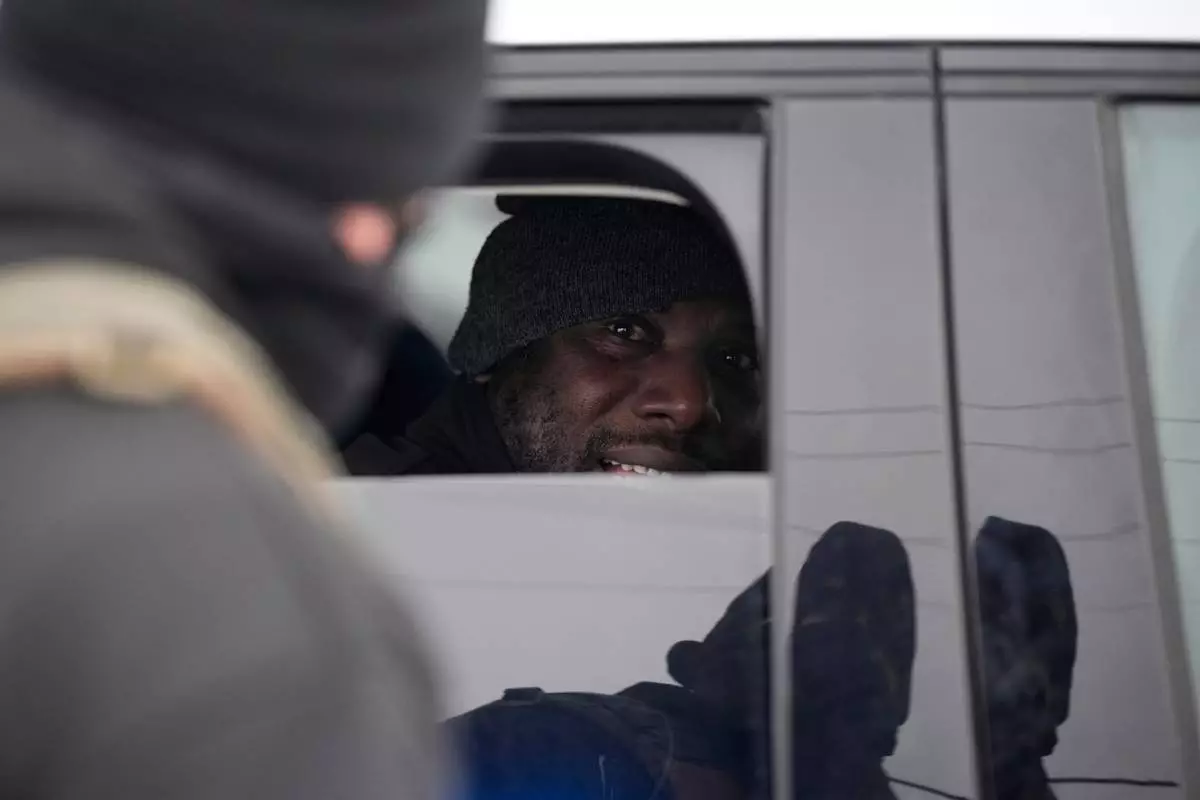
A man looks out of a car window after being detained by Immigration and Customs Enforcement (ICE) agents during a traffic stop, Sunday, Jan. 11, 2026, in Robbinsdale, Minn. (AP Photo/John Locher)

A man looks out of a car window after being detained by Immigration and Customs Enforcement (ICE) agents during a traffic stop, Sunday, Jan. 11, 2026, in Robbinsdale, Minn. (AP Photo/John Locher)

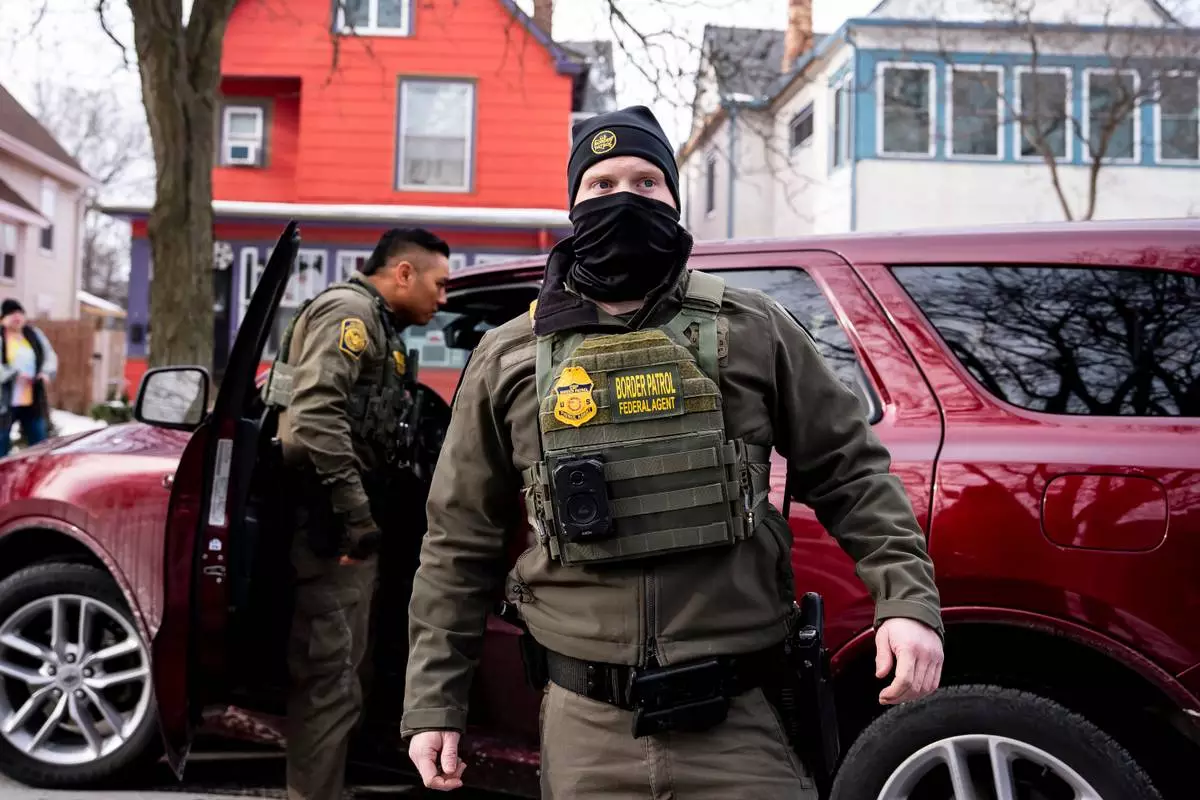
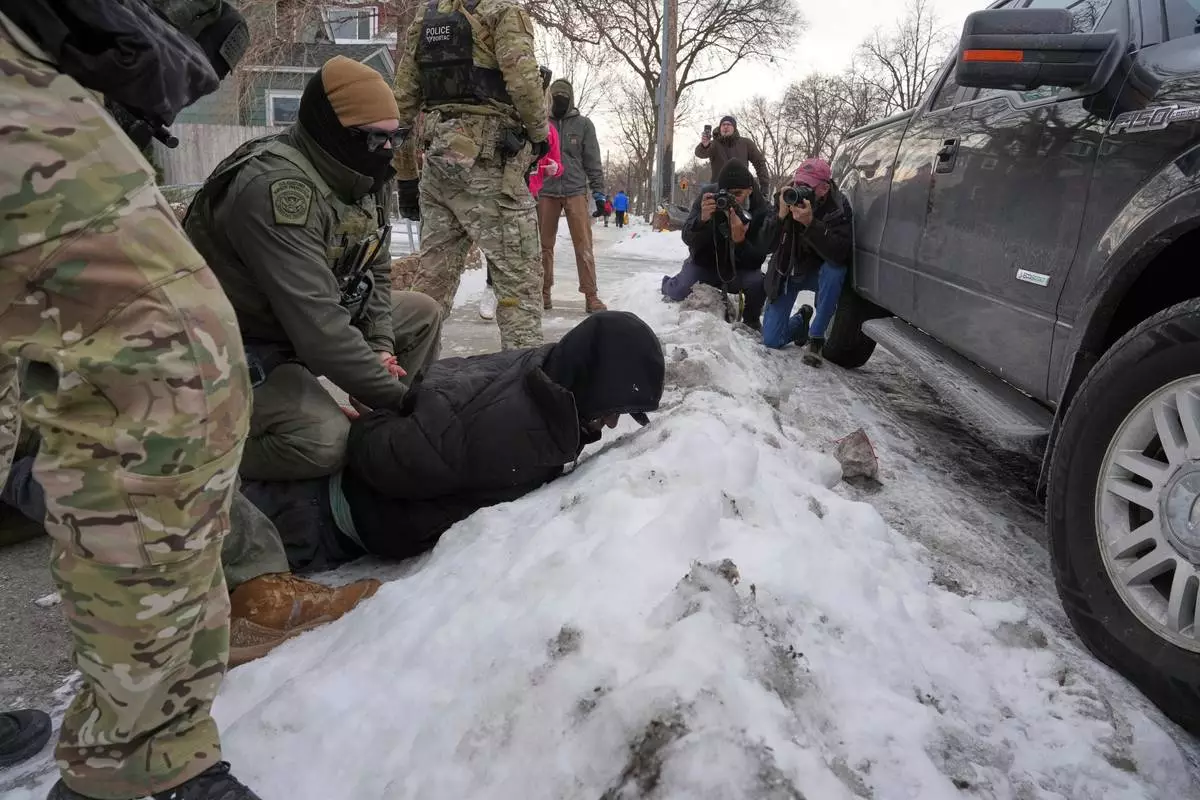
Border Patrol agents detain a man, Sunday, Jan. 11, 2026, in Minneapolis. (AP Photo/Adam Gray)

Border Patrol agents detain a man, Sunday, Jan. 11, 2026, in Minneapolis. (AP Photo/Adam Gray)

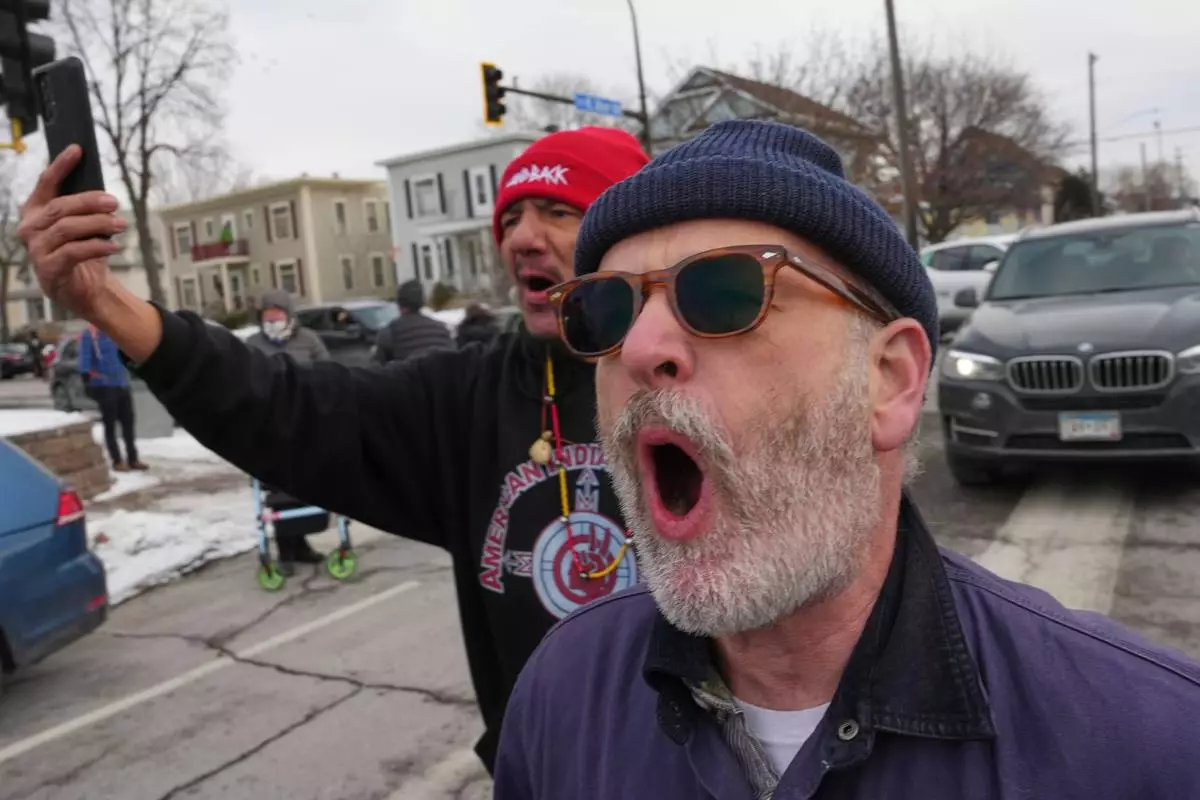
People shout toward Border Patrol agents making an arrest, Sunday, Jan. 11, 2026, in Minneapolis. (AP Photo/Adam Gray)

People shout toward Border Patrol agents making an arrest, Sunday, Jan. 11, 2026, in Minneapolis. (AP Photo/Adam Gray)

Demonstrators protest outside the White House in Washington, Saturday, Jan. 10, 2026, against the Immigration and Customs Enforcement agent who fatally shot Renee Good in Minneapolis. (AP Photo/Jose Luis Magana)

Demonstrators protest outside the White House in Washington, Saturday, Jan. 10, 2026, against the Immigration and Customs Enforcement agent who fatally shot Renee Good in Minneapolis. (AP Photo/Jose Luis Magana)

Minneapolis Mayor Jacob Frey holds a news conference on Saturday, Jan. 10, 2026, in Minneapolis. (AP Photo/Jen Golbeck)

Minneapolis Mayor Jacob Frey holds a news conference on Saturday, Jan. 10, 2026, in Minneapolis. (AP Photo/Jen Golbeck)

Protesters react as they visit a makeshift memorial during a rally for Renee Good, who was fatally shot by an ICE officer earlier in the week, Saturday, Jan. 10, 2026, in Minneapolis. (AP Photo/John Locher)

Protesters react as they visit a makeshift memorial during a rally for Renee Good, who was fatally shot by an ICE officer earlier in the week, Saturday, Jan. 10, 2026, in Minneapolis. (AP Photo/John Locher)

Recommended Articles