WASHINGTON (AP) — The Trump administration is slapping sanctions on four judges at the International Criminal Court over the tribunal’s investigation into alleged war crimes by Israel in its war against Hamas in Gaza and in the West Bank.
The State Department said Thursday that it would freeze any assets that the ICC judges, who come from Benin, Peru, Slovenia and Uganda, have in U.S. jurisdictions. The move is just the latest step that the administration has taken to punish the ICC and its officials for investigations undertaken against Israel and the United States.
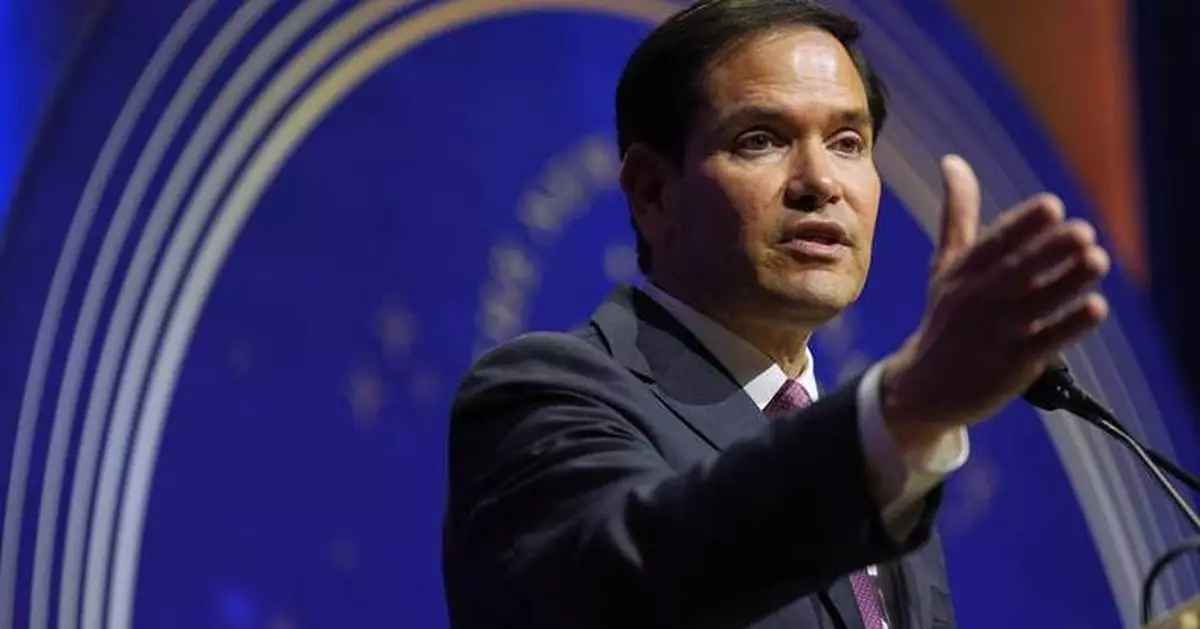
“As ICC judges, these four individuals have actively engaged in the ICC’s illegitimate and baseless actions targeting America or our close ally, Israel,” Secretary of State Marco Rubio said in a statement.
“The ICC is politicized and falsely claims unfettered discretion to investigate, charge, and prosecute nationals of the United States and our allies,” Rubio said. “This dangerous assertion and abuse of power infringes upon the sovereignty and national security of the United States and our allies, including Israel.”
In February, The Hague-based court’s chief prosecutor, Karim Khan, was placed on Washington’s list of “Specially Designated Nationals and Blocked Persons,” barring him from doing business with Americans and placing restrictions on his entry into the U.S. Khan stepped aside last month pending an investigation into alleged sexual misconduct.
Within minutes of the administration's announcement, the court condemned its actions. “These measures are a clear attempt to undermine the independence of an international judicial institution,” ICC spokesperson Fadi El Abdallah said in a statement.
The new sanctions target ICC Judge Reine Alapini-Gansou, who is from the West African country of Benin and was part of the pre-trial chamber of judges who issued the arrest warrant for Israeli Prime Minister Benjamin Netanyahu last year. She also served on the bench that originally greenlit the investigation into alleged Israeli crimes in the Palestinian territories in 2021.
The 69-year-old was also part of the panel of judges who issued the arrest warrant for Russian President Vladimir Putin in 2023. Last year, a court in Moscow issued a warrant for her arrest.
From Slovenia, Beti Hohler was elected as a judge in 2023. She previously worked in the prosecutor’s office at the court, leading Israel to object to her participation in the proceedings involving Israeli officials. Hohler said in a statement last year that she had never worked on the Palestinian territories investigation during her eight years as a prosecutor.
Bouth Luz del Carmen Ibáñez Carranza, from Peru, and Solomy Balungi Bossa, from Uganda, are appeals judges at the ICC. Each woman has worked on cases involving Israel.
Neither the U.S. nor Israel is a member of and neither recognizes the legitimacy of the court, which has issued an arrest warrant for Netanyahu for alleged war crimes over his military response in Gaza after the Hamas attack against Israel in October 2023. Israel strongly denies the allegations.
During his first term in office, Trump targeted the ICC with sanctions, voicing displeasure with probes into Israel and complaints about alleged war crimes said to have been committed by U.S. troops in Afghanistan. Those sanctions were rescinded by President Joe Biden’s administration in early 2021.
Rubio said the U.S. would continue to take action to protect its and Israel’s interests at the court. “The United States will take whatever actions we deem necessary to protect our sovereignty, that of Israel, and any other U.S. ally from illegitimate actions by the ICC,” he said.
Liz Evenson, international justice director at Human Rights Watch, said the Trump administration’s sanctions “aim to deter the ICC from seeking accountability amid grave crimes committed in Israel and Palestine, and as Israeli atrocities mount in Gaza, including with U.S. complicity.”
“U.S. sanctions on ICC judges are a flagrant attack on the rule of law at the same time as President Trump is working to undercut it at home,” Evenson said in a statement. “Sanctions are meant to put a stop to human rights violations, not to punish those seeking justice for the worst crimes.”
Quell reported from The Hague, Netherlands.
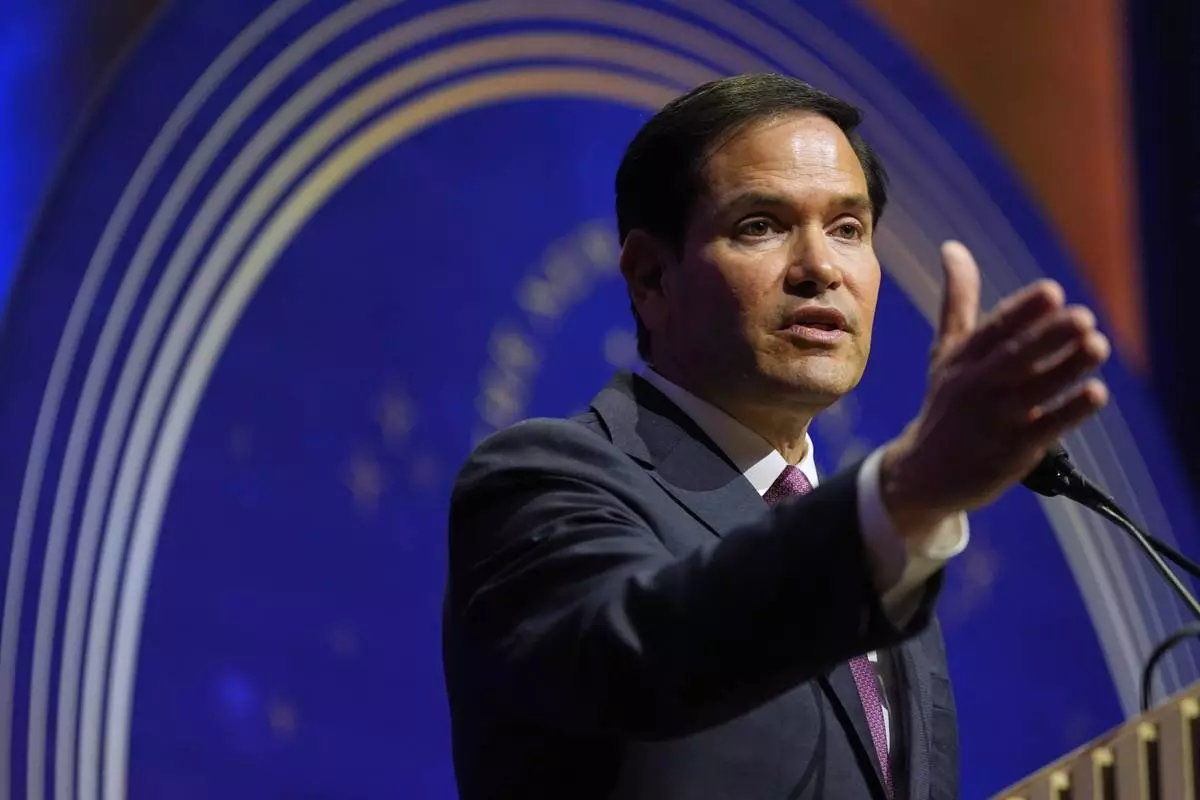
Secretary of State Marco Rubio speaks at the American Compass's The New World Gala in Washington, Tuesday, June 3, 2025. (AP Photo/Mark Schiefelbein)
MINNEAPOLIS (AP) — A judge on Thursday handed down an extraordinary prison sentence — nearly 42 years — to the former leader of a Minnesota nonprofit who was convicted in a staggering $250 million fraud case that helped ignite an immigration crackdown by the Trump administration.
Aimee Bock ran Feeding Our Future, which had claimed it helped provide millions of meals to needy children during the pandemic. The U.S. Justice Department, however, said she was atop the “single largest COVID-19 fraud scheme in the country.”
“I understand I failed. I failed the public, my family, everyone,” Bock said in federal court.
After the hearing, authorities held a news conference to announce charges against 15 more people accused of fraud in receiving federal payments for a variety of social services administered through Minnesota's state government. The FBI said one man jumped from a fourth-floor balcony to avoid arrest.
“We will claw back every dollar you have stolen from the American people,” Assistant Attorney General Colin McDonald said, noting that the government sent more prosecutors and agents to Minnesota this year.
President Donald Trump used the fraud cases against Bock and many others to initially justify a massive surge of federal officers to the Minneapolis-St. Paul area last winter to target immigrants, leading to pushback from residents and the deaths of two people.
Bock's nonprofit was at the center of a fraud network that included a web of partner organizations, phony distribution sites, kickbacks and fake lists of children supposedly being fed, prosecutors say. She had long proclaimed her innocence but was convicted last year of conspiracy, fraud and bribery.
Bock and co-conspirators enriched themselves with international travel, real estate purchases, luxury vehicles and other lavish spending, the government said.
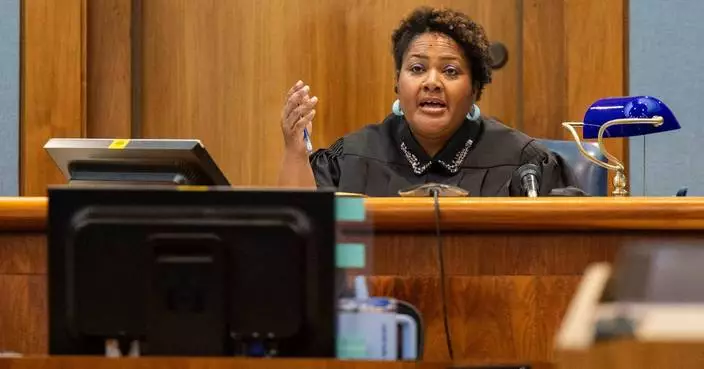
“This was a vortex of fraud and you were at the epicenter,” U.S. District Judge Nancy Brasel told Bock.
State auditors found that the Minnesota Department of Education received numerous complaints about Feeding Our Future, but often told the group to police itself. In January, Democratic Gov. Tim Walz said he would not run for reelection after being pounded by Trump about theft in programs that rely on federal cash.
Dozens of people, many from the state’s large Somali community, have been convicted in a series of overlapping food fraud cases that have spent years in the courts.
“This case has changed our state forever,” Joe Thompson, formerly the lead prosecutor in the case, said outside the courtroom. “Aimee Bock did everything she could to earn this long sentence.”
Bock’s lawyer, Kenneth Udoibok, argued for no more than three years in prison, saying she had provided key information to investigators. He argued that Bock had been unfairly painted as the mastermind and insisted that two co-defendants were responsible for running the scams.
In a fresh batch of criminal cases filed this week in Minnesota, the government said the alleged fraud involved $90 million across seven state-managed Medicaid programs.
The defendants include Fahima Mahamud, who was CEO of Future Leaders Early Learning Center, a childcare center in Minneapolis. Over three years, Mahamud’s organization was reimbursed approximately $4.6 million for services on behalf of people who didn’t make a required copayment, prosecutors allege.
A message seeking comment from her lawyer was not immediately returned Thursday. Mahamud earlier this year pleaded not guilty to fraud related to meals.
Two other people were charged with conspiring to get $975,000 in Medicaid subsidies for housing services that were not provided. They’re expected to plead guilty in June, according to a court filing.
Two additional people were accused of receiving $21.1 million by billing Medicaid for autism therapy that was either unnecessary or not provided. Investigators said the two paid families as much as $1,500 per child per month to add their names to the program and get reimbursement.
Trump, who has long derided Somalis, last year blasted Minnesota as “a hub of fraudulent money laundering activity.”
“Somali gangs are terrorizing the people of that great State, and BILLIONS of Dollars are missing. Send them back to where they came from,” Trump wrote on social media.
Bock is white and the U.S. Attorney’s Office says the overwhelming majority of defendants in the cases are of Somali descent. Most are U.S. citizens.
Trump's immigration enforcement surge led to repeated protests and confrontations between residents and federal officers and resulted in the killings of Renee Good and Alex Pretti.
AP reporters Scott Bauer in Madison, Wisconsin, and Ed White in Detroit contributed.
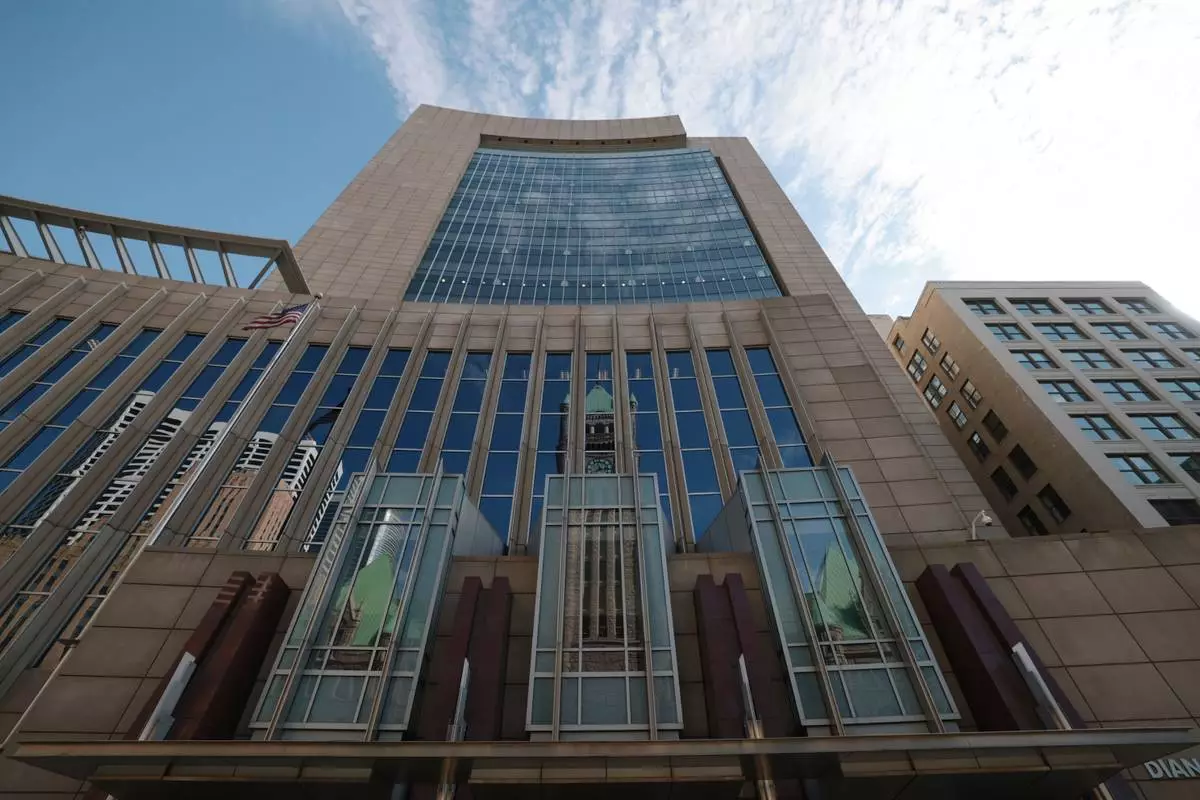
The exterior of Minneapolis federal courthouse on Thursday, May 21, 2026 in Minneapolis, Minn. Feeding our Future founder Aimee Bock is sentenced at the United States District Court in Minneapolis. (Carlos Gonzalez/Minnesota Star Tribune via AP)
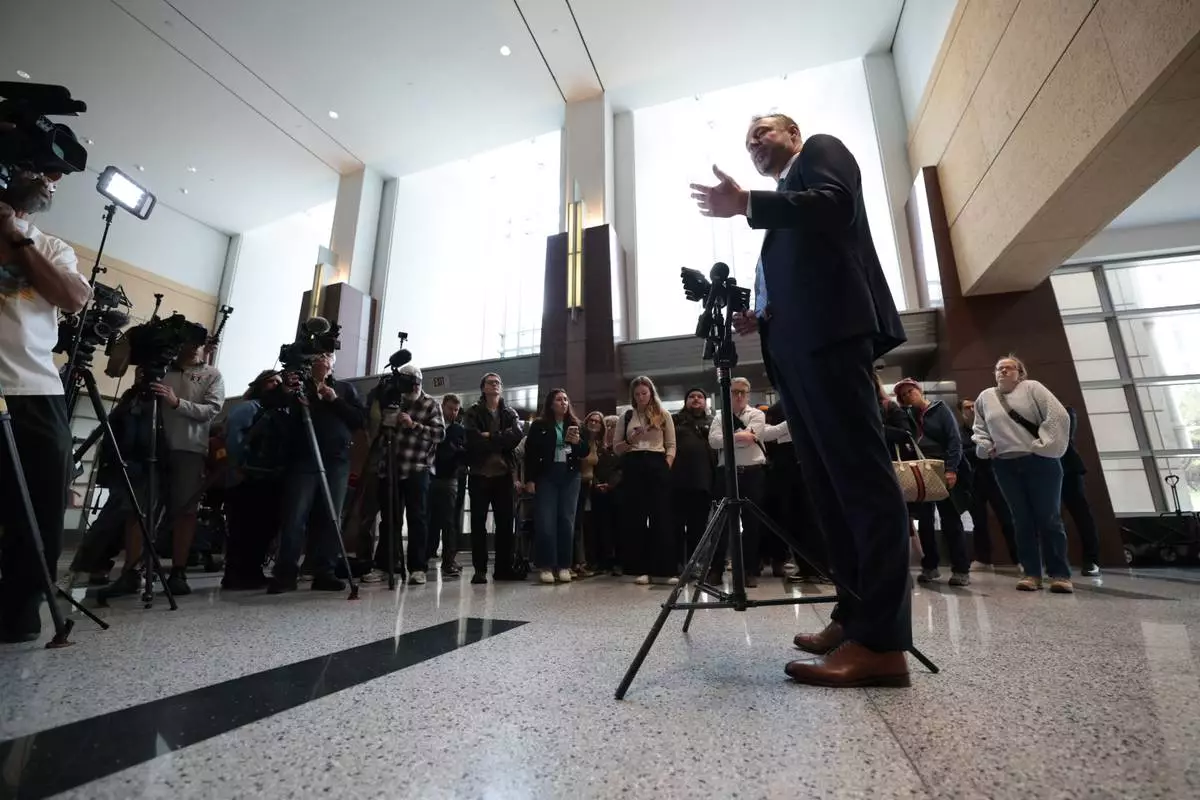
Acting U.S. Attorney for Minnesota Joe Thompson addresses the media following the sentencing of Feeding Our Future founder Aimee Bock on Thursday, May 21, 2026 at at the United States District Court in Minneapolis. (Carlos Gonzalez/Minnesota Star Tribune via AP)
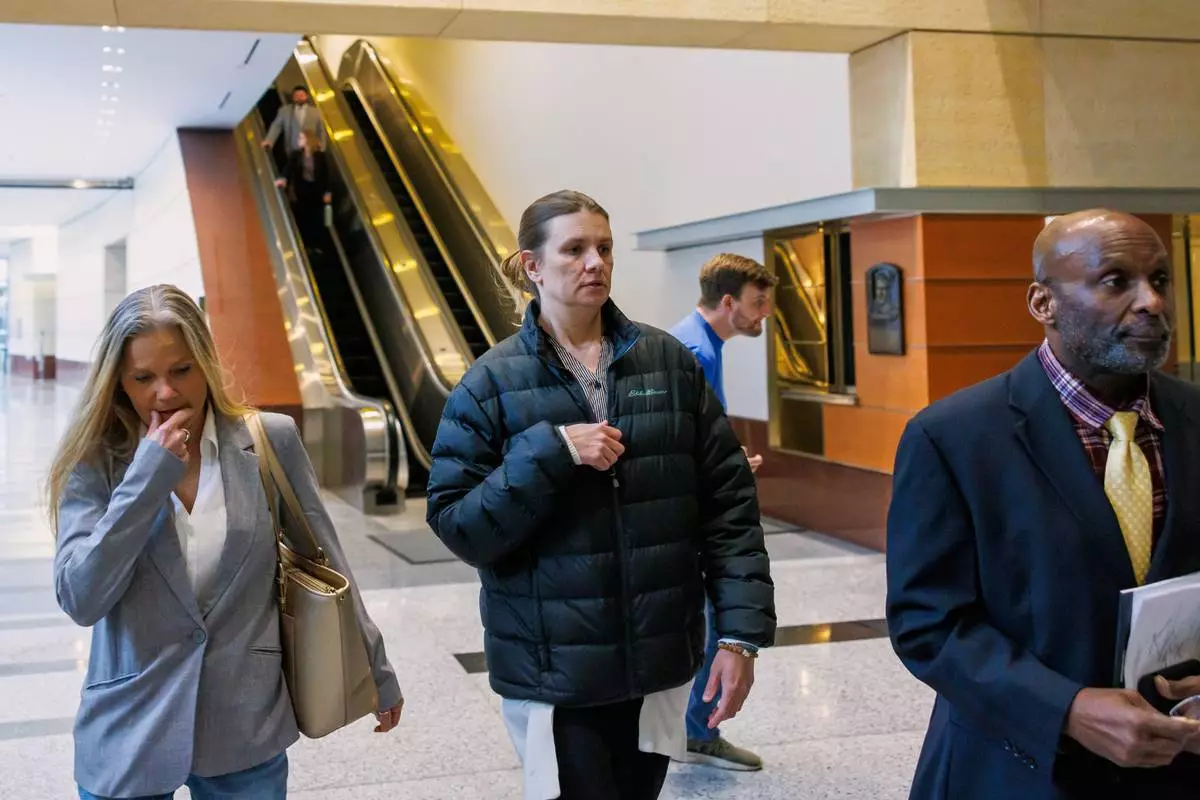
FILE - Aimee Bock, founder and executive director of the nonprofit organization Feeding Our Future, arrives at the Minneapolis federal courthouse with her attorney, Ken Udoibok, right, on March 19, 2025, in Minneapolis. (Kerem Yücel/Minnesota Public Radio via AP, File)