Skip to Content Facebook Feature Image

China's expanded visa-free policy boosts inbound tourism with cultural experiences

China

China

China

China's expanded visa-free policy boosts inbound tourism with cultural experiences

2025-06-06 04:23 Last Updated At:05:37

China's latest visa-free policy expansion to Latin American countries has injected new vitality into the inbound tourism market, with travel agencies responding by offering more immersive cultural experiences to meet growing international demand.

Beginning June 1, citizens from Brazil, Chile, Argentina, Peru and Uruguay can enjoy 30-day visa-free stays for tourism or business, marking China's first such policy extension to Latin America and the Caribbean. This brings the total to 43 countries eligible for China's unilateral visa-free program.

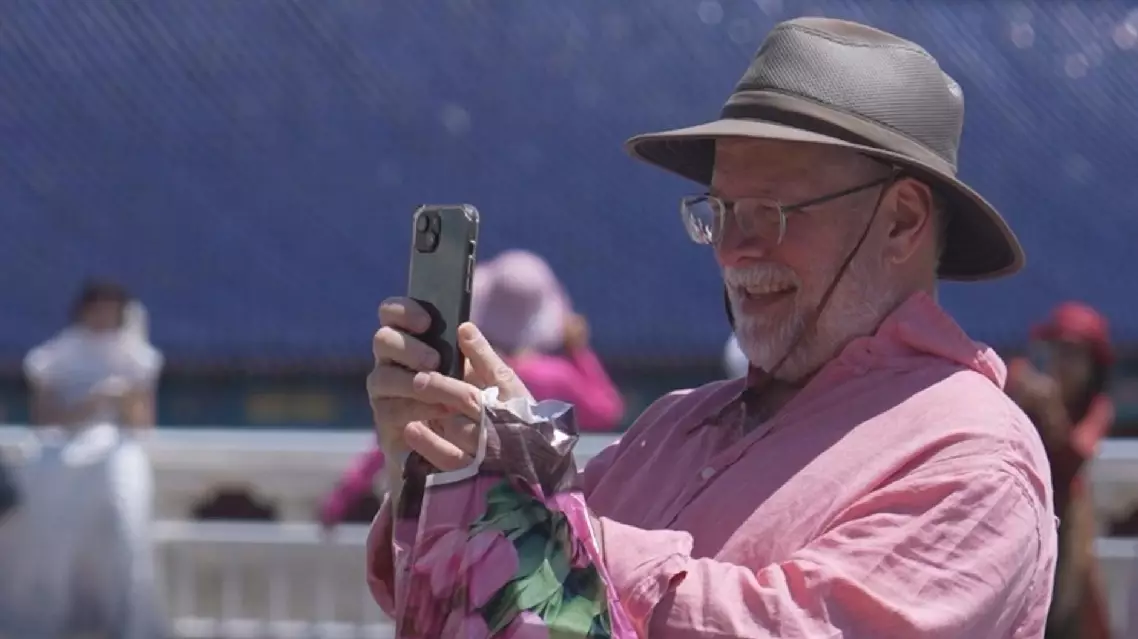
During the just-concluded Dragon Boat Festival holiday from May 31-June 2, international travelers said they experienced a vibrant and authentic China, highlighting its breathtaking landscapes, flavorful cuisine, and rich cultural heritage.

"We stayed for a couple of days at the Great Wall of China and all the historical sites," shared a tourist traveling in Beijing.

"Chinese culture is completely different from ours. So we can admire nearly everything," another tourist said.

Industry experts and travel agencies anticipate significant growth in visitors from these distant markets.

"We expect this policy to significantly boost inbound tourism from South America throughout the second half of this year and into next year," said Li Mengran, manager of Utour Group.

"Given the distance and cost of traveling from Latin America to China, visitors are likely to prioritize value for money, stay longer, and seek a richer, more immersive experience," said Huang Huang, professor at the China Tourism Academy.

According to a special survey by the China Tourism Academy, over 60 percent of inbound tourists cited experiencing Chinese culture as their primary reason for visiting. In response, travel agencies have introduced more immersive cultural experiences to better meet these visitor expectations.

"This year, inbound tourism products have been completely revamped. For example, in Beijing, visitors can now enjoy unique experiences like sampling authentic Beijing cuisine alongside traditional historical site tours. By the end of 2025, the inbound tourism market is expected to grow by 30 percent to 40 percent," Li said.
China's expanded visa-free policy boosts inbound tourism with cultural experiences

China's expanded visa-free policy boosts inbound tourism with cultural experiences
The U.S. military strike against Venezuela and capture of its president, Nicolas Maduro, has shocked the international community, triggering a steady stream of condemnation and serious concerns worldwide.

Brazil, Chile, Colombia, Mexico, Uruguay and Spain issued a joint statement on Sunday, expressing serious concern about and firm opposition to the U.S. unilateral military operations in Venezuela.

The U.S. actions contravene fundamental principles of international law, particularly the prohibition on the use or threat of force, and respect for the sovereignty and territorial integrity of States, as enshrined in the UN Charter, constituting an extremely dangerous precedent against peace and regional security, according to the statement.

In expressing profound concern and firm rejection, the six countries stressed in the statement that the situation in Venezuela must be resolved exclusively by peaceful means, and through dialogue, negotiation and respect for the will of the Venezuelan people in all its expressions, without external interference and in accordance with international law.

Only an inclusive political process, led by Venezuelans, can lead to a democratic, sustainable solution that respects human dignity, according to the statement.

Spanish Prime Minister Pedro Sanchez condemned the U.S. raid in Venezuela as a violation of international law, adding that the Spanish government always advocates and defends international law and peaceful resolution of conflicts.

Addressing a meeting of the Community of Latin American and Caribbean States (CELAC), Cuban Foreign Minister Bruno Rodriguez demanded the unconditional and immediate release of Maduro and his wife.

Noting that Latin America and the Caribbean are a zone of peace, he expressed his firm opposition to the use of force, which is an unshakable principle.

Any aggression against Venezuela shall be regarded as an attack against all CELAC member states, and nations must collectively oppose it, he stressed.

The South African government denounced the U.S. attack on Venezuela as a violation of international law, according to a statement released on Sunday.

History has repeatedly demonstrated that military invasions against sovereign states yield only instability and deepening crisis, the statement said.

South Africa calls on the UN Security Council to urgently convene a session to address this situation, according to the statement.

Serbian President Aleksandar Vucic said what happened in Venezuela demonstrates that international law and the UN Charter are losing their practical effectiveness.

U.S. military action against Venezuela marks a dangerous precedent, as similar actions could be taken against any other nations, he said.

In addition, the foreign ministries of Namibia, Singapore, Oman and Pakistan also issued statements on the same day, expressing grave concern over U.S. interference in Venezuela's internal affairs.

They emphasized the need to uphold international law and the principles of the UN Charter while respecting Venezuela's sovereignty.

They also called on all parties to exercise restraint and resolve the crisis through peaceful dialogue.

U.S. move against Venezuela sparks condemnation, concerns worldwide

U.S. move against Venezuela sparks condemnation, concerns worldwide

Recommended Articles