BEIRUT (AP) — The Lebanese army condemned Friday Israel’s airstrikes on suburbs of Beirut, warning that such attacks are weakening the role of Lebanon’s armed forces that might eventually suspend cooperation with the committee monitoring the truce that ended the Israel-Hezbollah war.
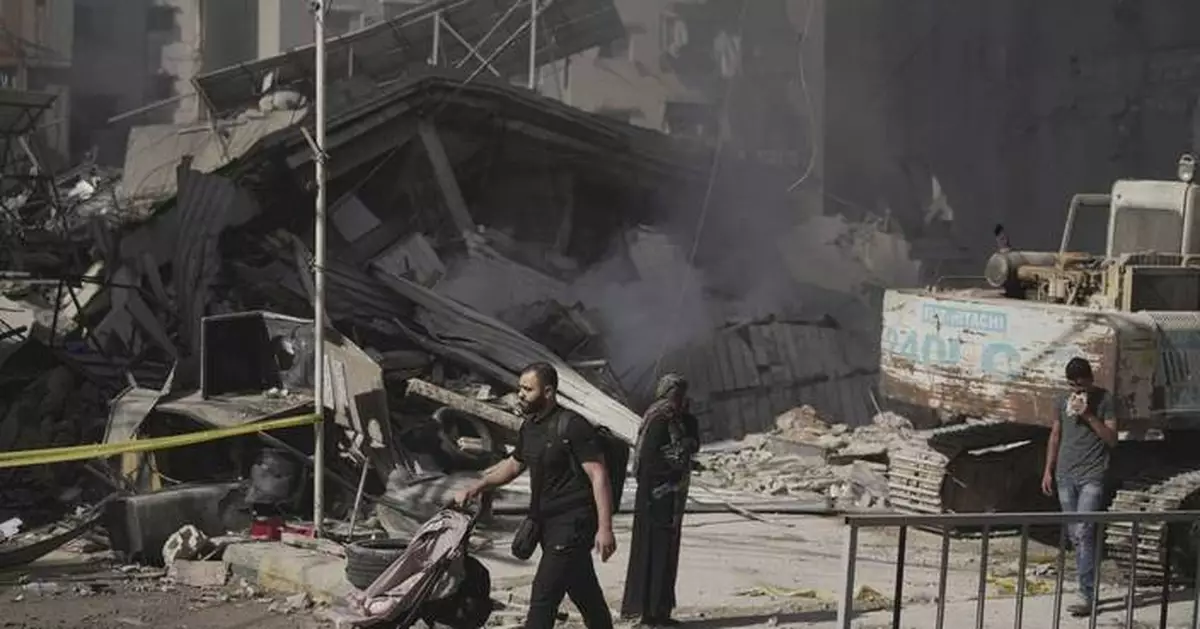
The army statement came hours after the Israeli military struck several buildings in Beirut’s southern suburbs that it said held underground facilities used by Hezbollah for drone production. The strikes, preceded by an Israeli warning to evacuate several buildings, came on the eve of Eid al-Adha, a Muslim holiday.
The Lebanese army said it started coordinating with the committee observing the ceasefire after Israel’s military issued its warning and sent patrols to the areas that were to be struck to search them. It added that Israel rejected the suggestion.
The U.S.-led committee that has been supervising the ceasefire that ended the 14-month Israel-Hezbollah war in November is made up of Lebanon, Israel, France, the U.S. and the U.N. peacekeeping forces in Lebanon known as UNIFIL.
“The Israeli enemy violations of the deal and its refusal to respond to the committee is weakening the role of the committee and the army,” the Lebanese army said in its statement. It added such attacks by Israel could lead the army to freeze its cooperation with the committee “when it comes to searching posts.”
Since the Israel-Hezbollah war ended, Israel has carried out nearly daily airstrikes on parts of Lebanon targeting Hezbollah operatives. Beirut’s southern suburbs were struck on several occasions since then.
The conflict between Hezbollah and Israel began on Oct. 8, 2023, when the Lebanese militant group began launching rockets across the border in support of its ally, Hamas, in Gaza. Israel responded with airstrikes and shelling and the two were quickly locked in a low-level conflict that continued for nearly a year before escalating into full-scale war in September 2024.
It killed more than 4,000 people in Lebanon, including hundreds of civilians, while the Lebanese government said in April that Israeli strikes had killed another 190 people and wounded 485 since the ceasefire agreement.
There has been increasing pressure on Hezbollah, both domestic and international, to give up its remaining arsenal, but officials with the group have said they will not do so until Israel stops its airstrikes and withdraws from five points it is still occupying along the border in southern Lebanon.
Hezbollah says that it has ended its military presence along the border with Israel south of the Litani River, in accordance with terms of the ceasefire deal.

A citizen inspects the destruction from her apartment balcony after Israeli army strikes in the Dahiyeh suburb of Beirut, Lebanon, Friday, June 6, 2025. (AP Photo/Hassan Ammar)
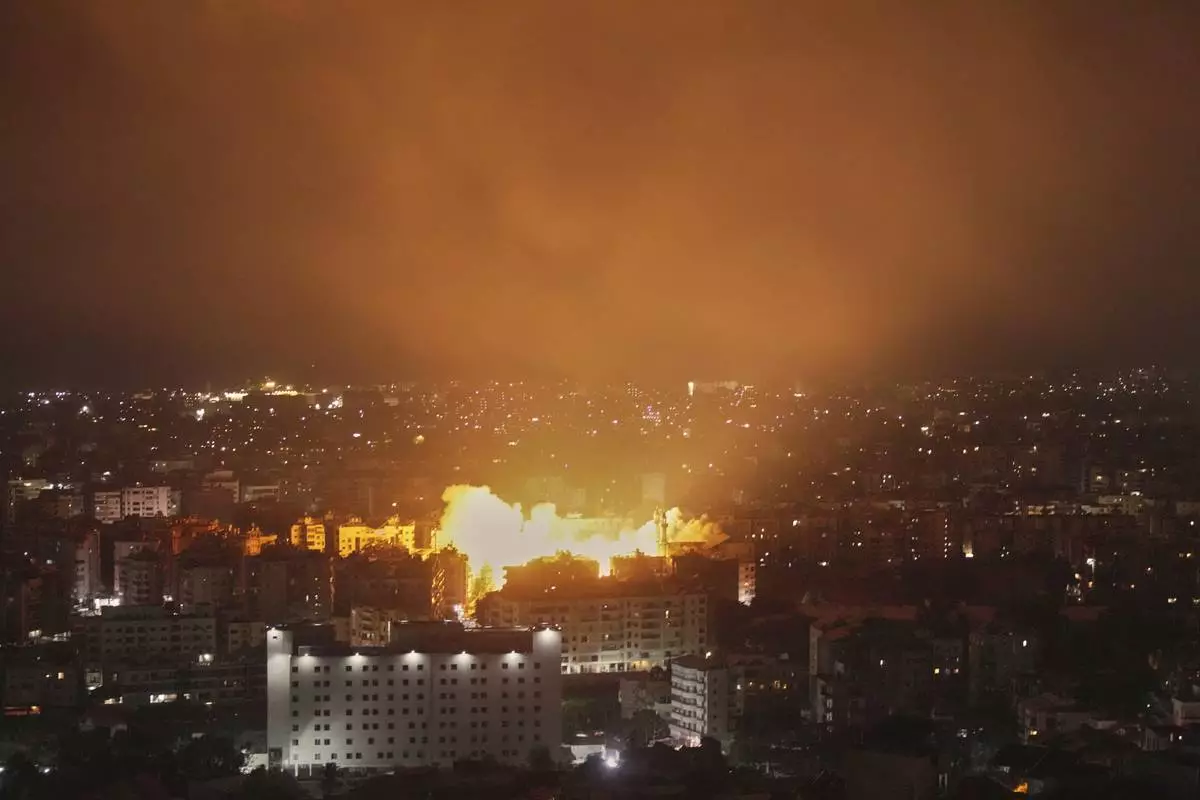
Flames rise following an Israeli airstrike on Dahiyeh in the southern suburb of Beirut, Lebanon, Thursday, June 5, 2025. (AP Photo/Hassan Ammar)
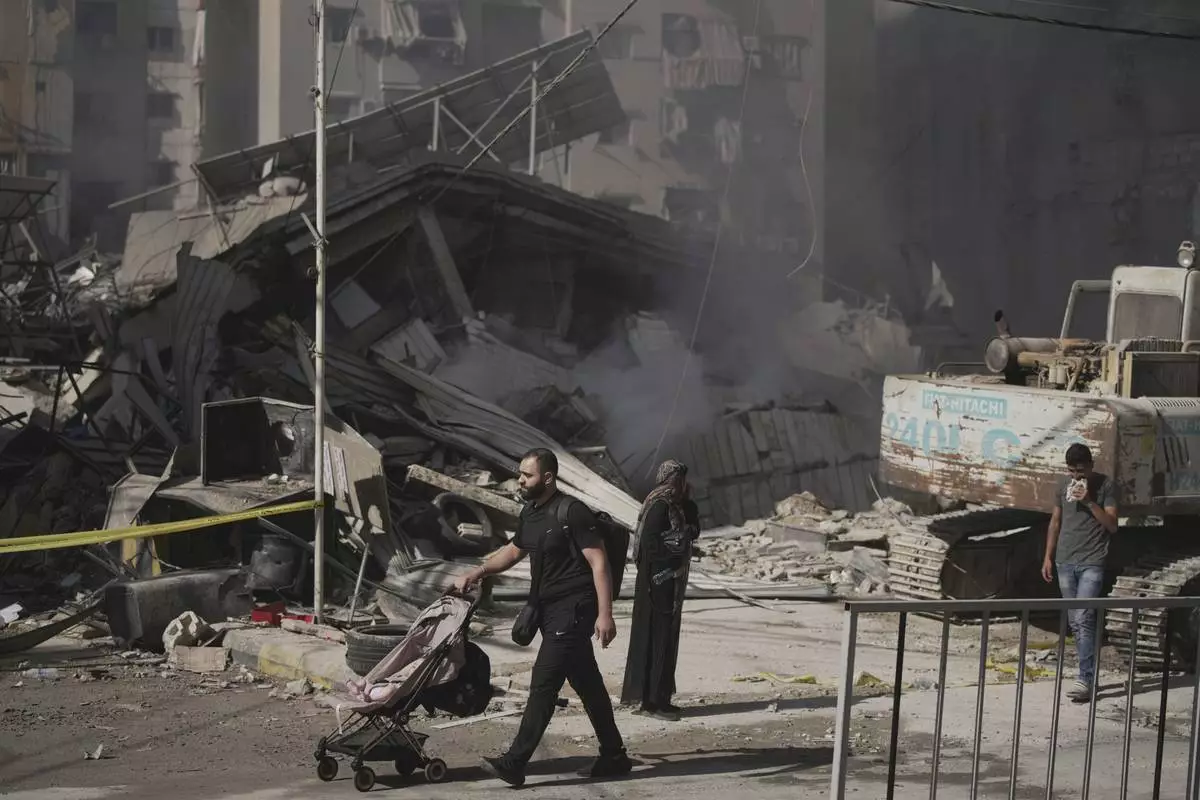
Citizens inspect the destruction after Israeli army strikes in the Dahiyeh suburb of Beirut, Lebanon, Friday, June 6, 2025. (AP Photo/Hassan Ammar)
MINNEAPOLIS (AP) — Federal officers dropped tear gas and sprayed eye irritant at activists Tuesday during another day of confrontations in Minneapolis, while students miles away walked out of a suburban school to protest the Trump administration's bold immigration sweeps.
Meanwhile, the fallout from the fatal shooting of a Minneapolis woman by an immigration agent reached the local U.S. Attorney's Office: At least five prosecutors have resigned amid controversy over how the U.S. Justice Department is handling the investigation, according to people familiar with the matter.
Separately, a Justice Department official said Wednesday there's no basis for a criminal civil rights investigation. An FBI probe of Renee Good's death is ongoing.
Strife between federal agents and the public continues to boil, six days since Good was shot in the head while driving off in her Honda Pilot. At one scene, gas clouds filled a Minneapolis street near where she died. A man scrubbed his eyes with snow and screamed for help after agents in a Jeep sprayed an orange irritant and drove off.
It’s common for people to boo, taunt and blow orange whistles when they spot heavily armed immigration agents passing through in unmarked vehicles or walking the streets, all part of a grassroots effort to warn the neighborhood and remind the government that they’re watching.
“Who doesn't have a whistle?” a man with a bag of them yelled.
Brita Anderson, who lives nearby and came to support neighborhood friends, said she was “incensed” to see agents in tactical gear and gas masks, and wondered about their purpose.
“It felt like the only reason they’d come here is to harass people,” Anderson said.
In Brooklyn Park, Minnesota, students protesting the immigration enforcement operation walked out of school, as students in other communities have done this week.
The departures in the U.S. Attorney's Office include First Assistant U.S. Attorney Joe Thompson, who had been leading the sprawling prosecution of public fraud schemes in the state, according to people who spoke to The Associated Press on the condition of anonymity to discuss personnel matters.
With the Department of Homeland Security pledging to send more than 2,000 immigration officers into Minnesota, the state, joined by Minneapolis and St. Paul, sued President Donald Trump’s administration Monday to halt or limit the surge.
The lawsuit says Homeland Security is violating the First Amendment and other constitutional protections by focusing on a progressive state that favors Democrats and welcomes immigrants.
“What we are seeing is thousands — plural — thousands of federal agents coming into our city. And, yeah, they’re having a tremendous impact on day-to-day life,” Minneapolis Mayor Jacob Frey said.
A judge set a status conference for Wednesday.
Homeland Security says it has made more than 2,000 arrests in the state since early December and is vowing to not back down. Spokesperson Tricia McLaughlin, responding to the lawsuit, accused Minnesota officials of ignoring public safety.
In a different lawsuit, a judge said she would rule by Thursday or Friday on a request to restrict the use of force, such as chemical irritants, on people who are observing and recording agents' activities. Government attorneys argued that officers must protect themselves.
The Trump administration has repeatedly defended the immigration agent who shot Good, a 37-year-old mother of three, saying he acted in self-defense. But that explanation has been widely panned by Frey, Minnesota Gov. Tim Walz and others based on videos of the confrontation.
State and local authorities are urging the public to share video and any other evidence as they seek to separately investigate Good's death after federal authorities insisted they would approach it alone and not share information.
In Wisconsin, Lt. Gov. Sara Rodriguez is proposing that the state ban civil immigration enforcement around courthouses, hospitals, health clinics, schools, churches and other places. She is hoping to succeed Gov. Tony Evers, a fellow Democrat, who is not running for a third term.
“We can take a look at that, but I think banning things absolutely will ramp up the actions of our folks in Washington, D.C.,” Evers said, referring to the Trump administration. “They don’t tend to approach those things appropriately.”
Associated Press reporters Ed White in Detroit; Steve Karnowski in Minneapolis; and Scott Bauer in Madison, Wisconsin, contributed.
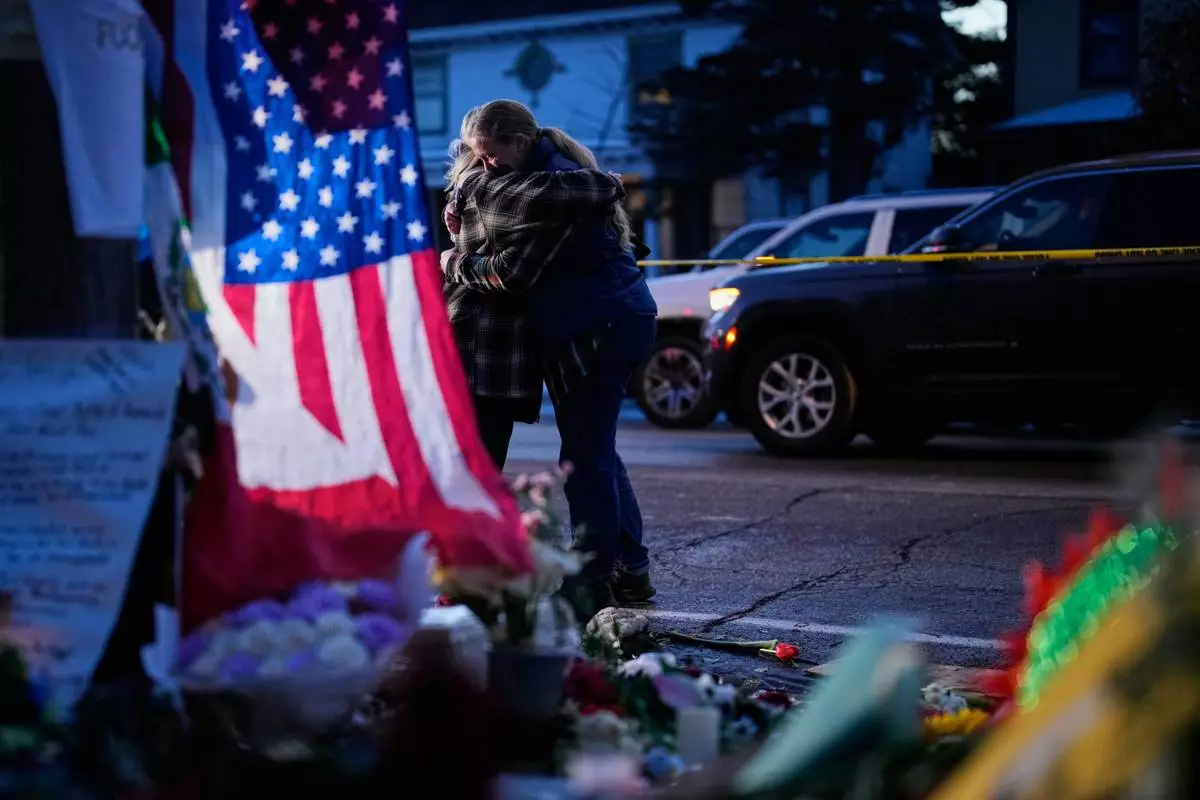
Monica Travis shares an embrace while visiting a makeshift memorial for Renee Good, who was fatally shot by an ICE officer last week, Monday, Jan. 12, 2026, in Minneapolis. (AP Photo/John Locher)
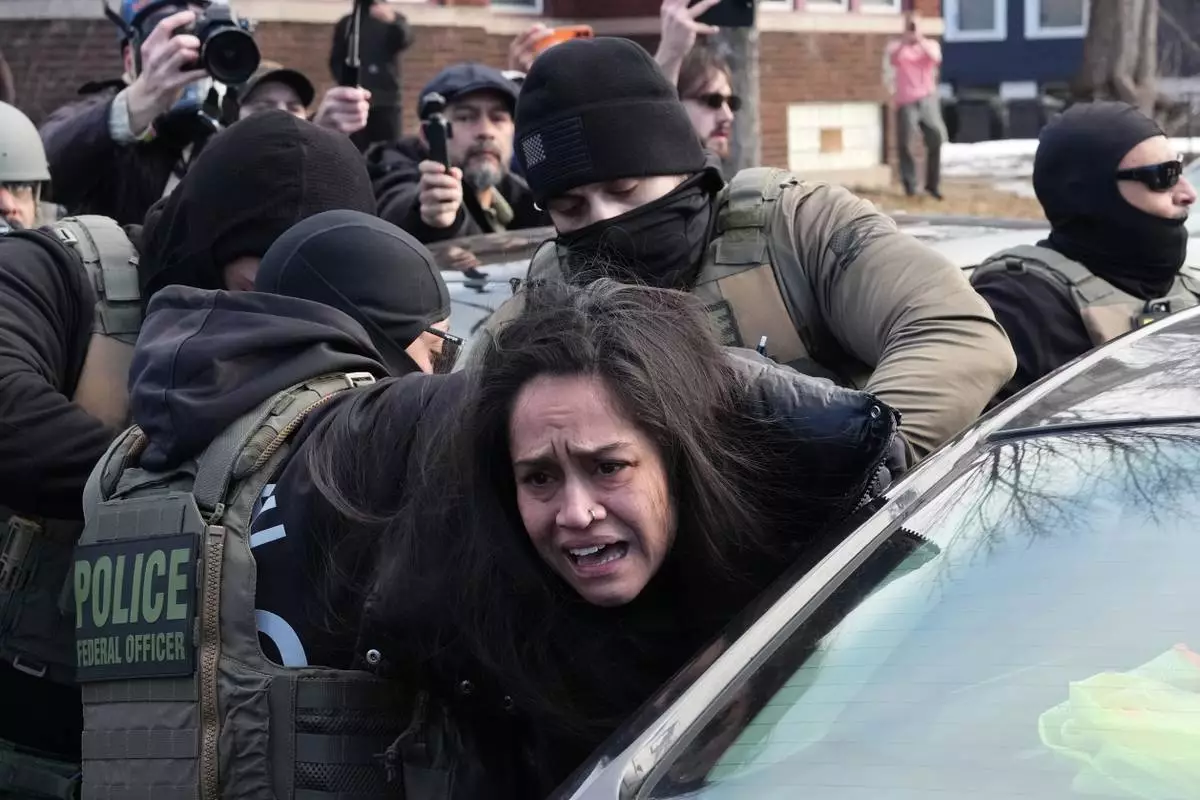
A protester is detained by Federal agents near the scene where Renee Good was fatally shot by an ICE officer last week, Tuesday, Jan. 13, 2026, in Minneapolis.(AP Photo/Adam Gray)
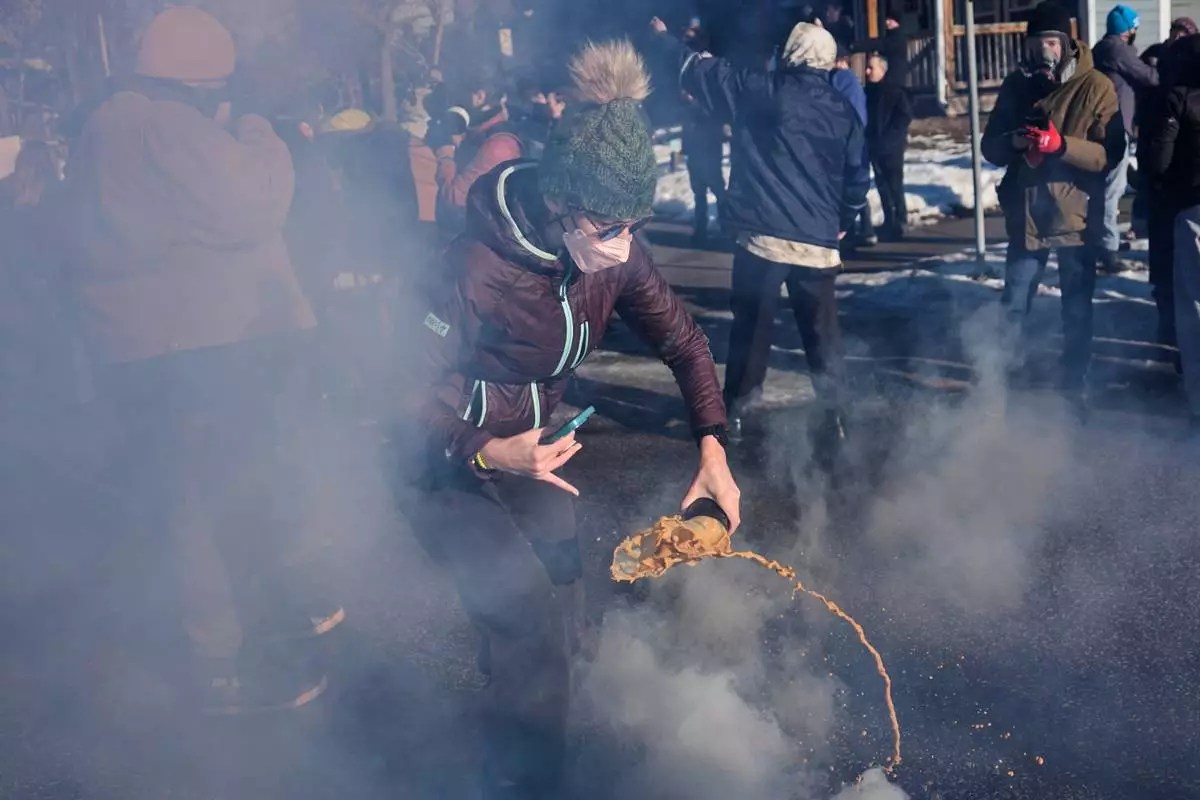
A protester grabs a tear gas grenade deployed by federal immigration officers near the scene where Renee Good was fatally shot by an ICE officer last week, Tuesday, Jan. 13, 2026, in Minneapolis. (AP Photo/John Locher)
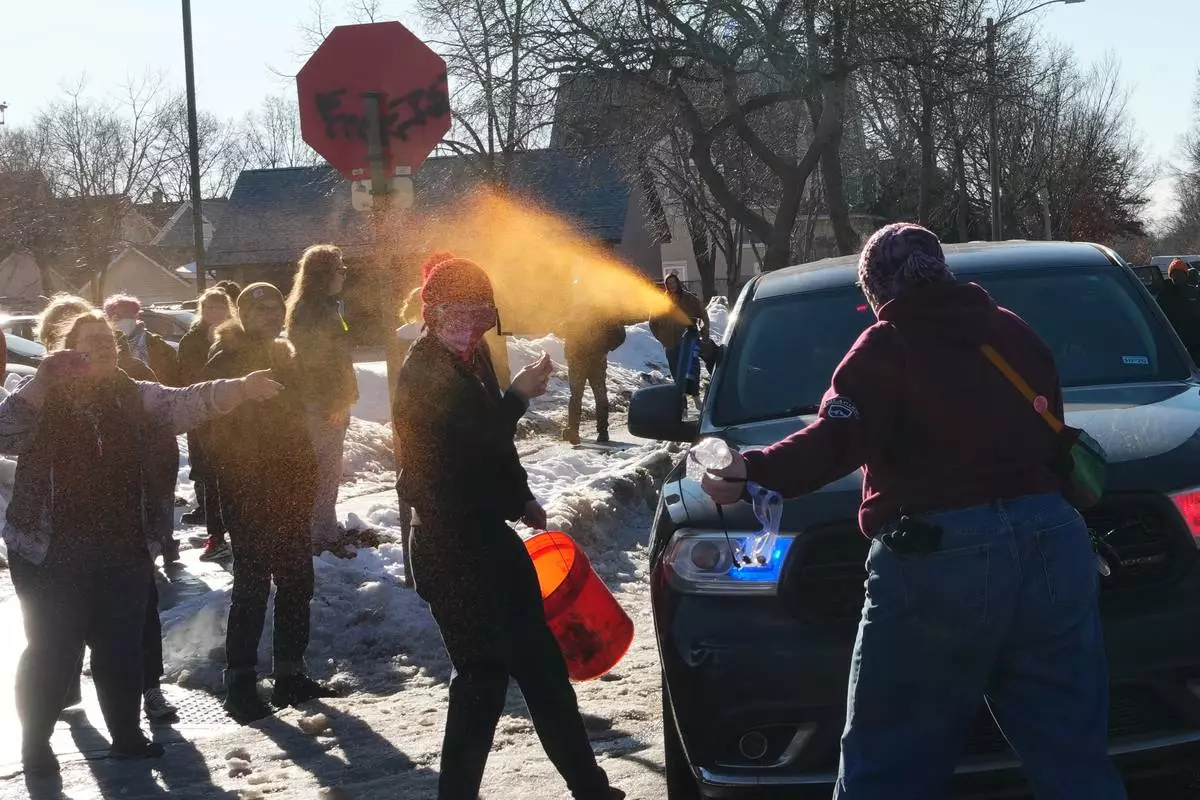
A protester is sprayed with pepper spray by a Federal agent Tuesday, Jan. 13, 2026, in Minneapolis.(AP Photo/Adam Gray)
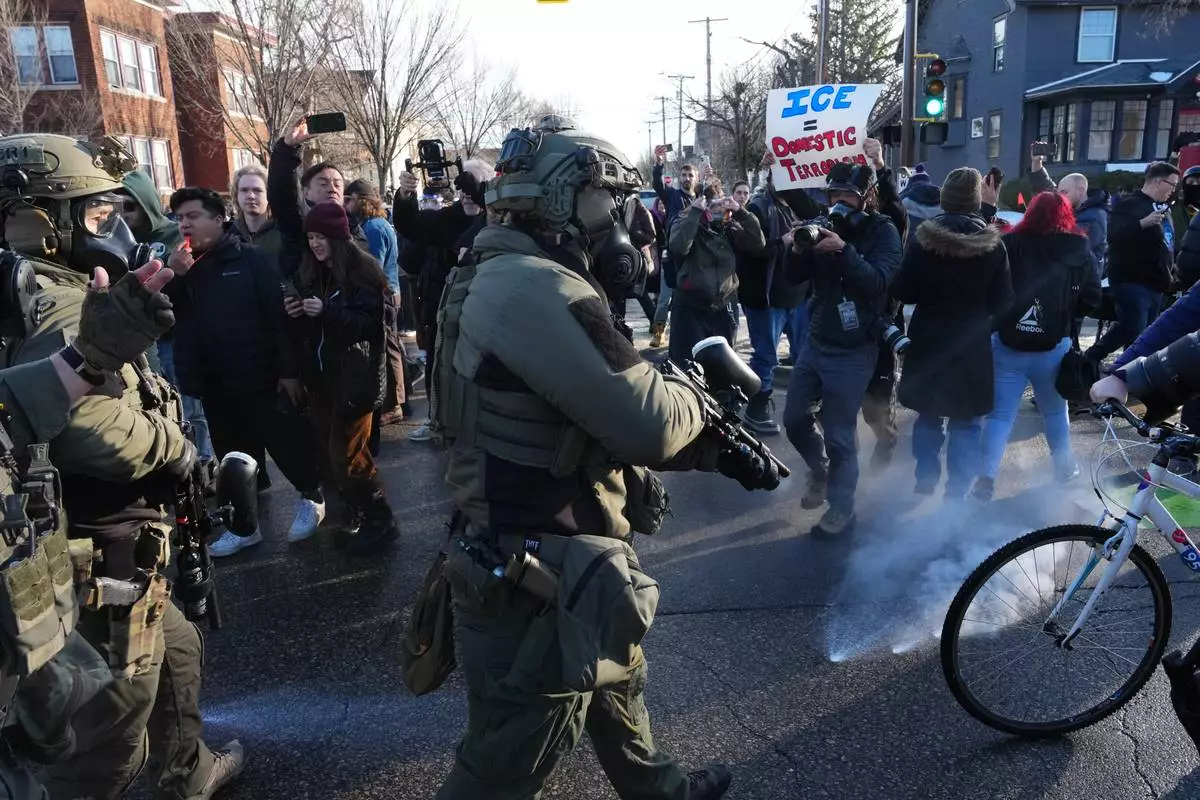
Tear gas is deployed amid protesters near the scene where Renee Good was fatally shot by an ICE officer last week, Tuesday, Jan. 13, 2026, in Minneapolis.(AP Photo/Adam Gray)
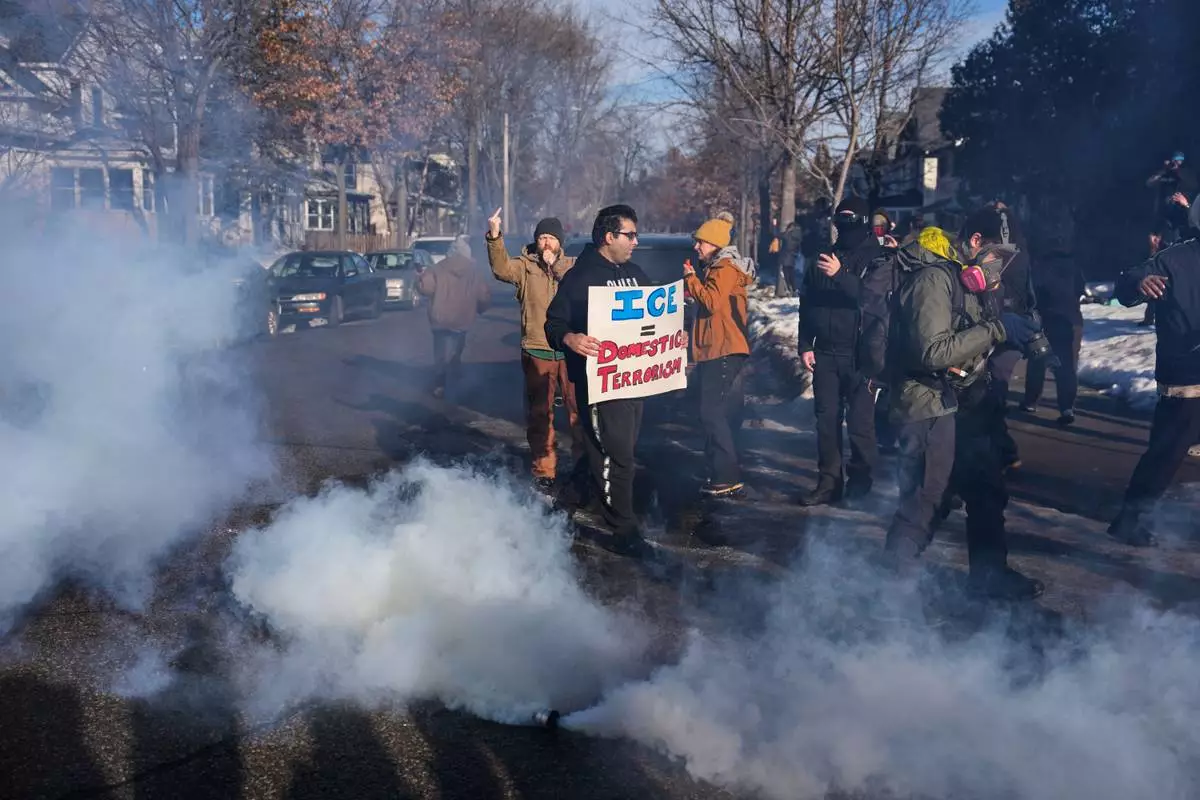
EDS NOTE: OBSCENITY - Tear gas is deployed amid protesters near the scene where Renee Good was fatally shot by an ICE officer last week, Tuesday, Jan. 13, 2026, in Minneapolis. (AP Photo/John Locher)
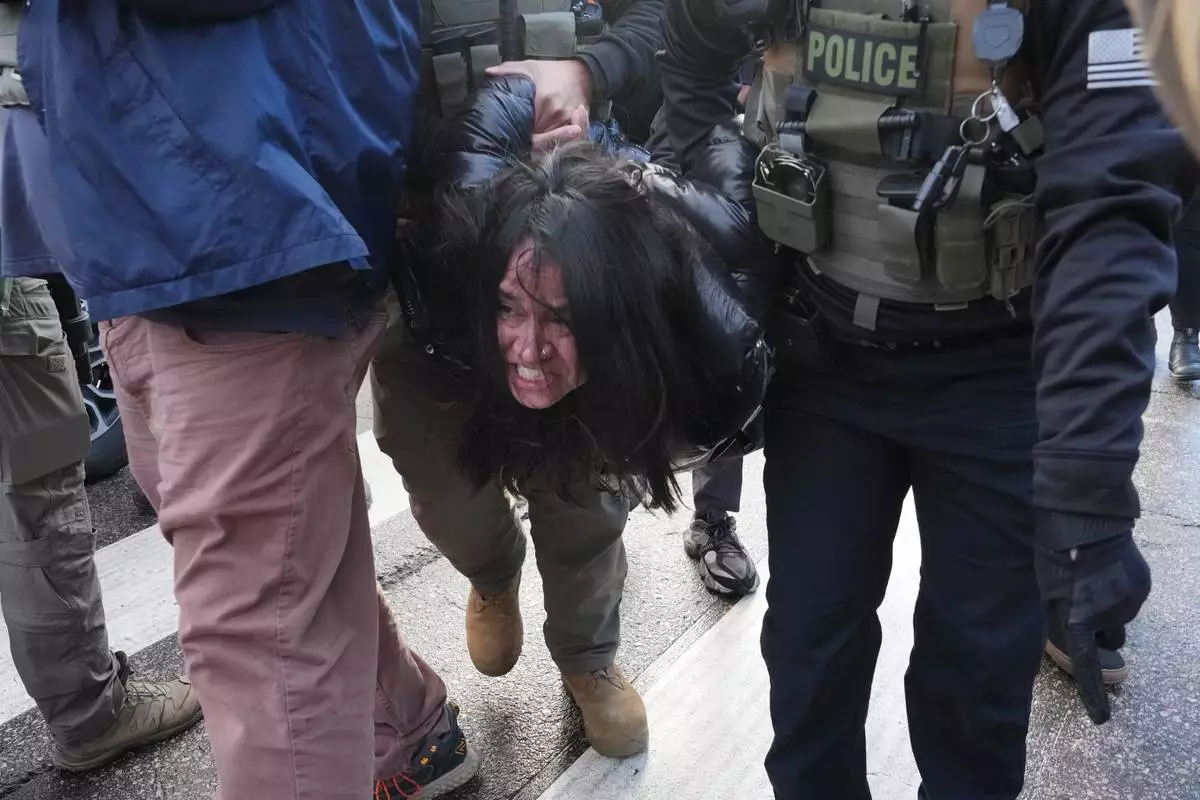
A protester is detained by Federal agents near the scene where Renee Good was fatally shot by an ICE officer last week, Tuesday, Jan. 13, 2026, in Minneapolis.(AP Photo/Adam Gray)(AP Photo/Adam Gray)
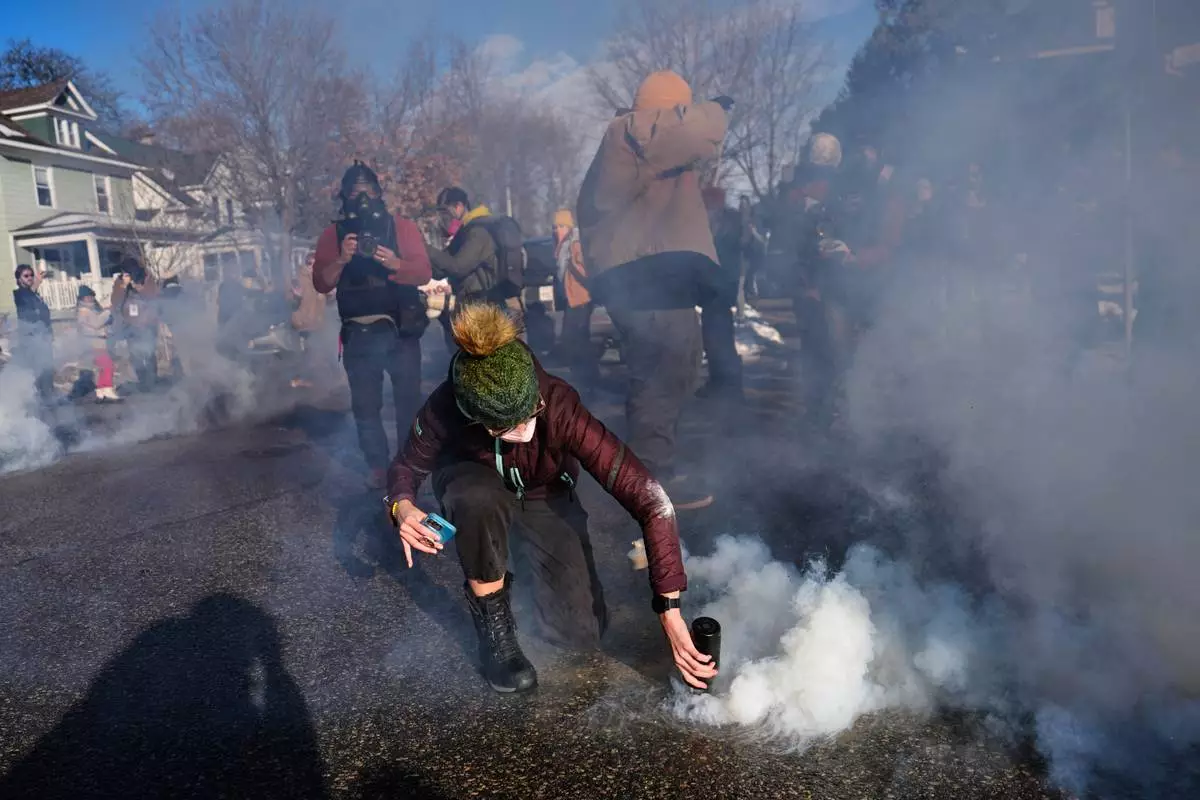
A protester grabs a tear gas grenade deployed by federal immigration officers near the scene where Renee Good was fatally shot by an ICE officer last week, Tuesday, Jan. 13, 2026, in Minneapolis. (AP Photo/John Locher)
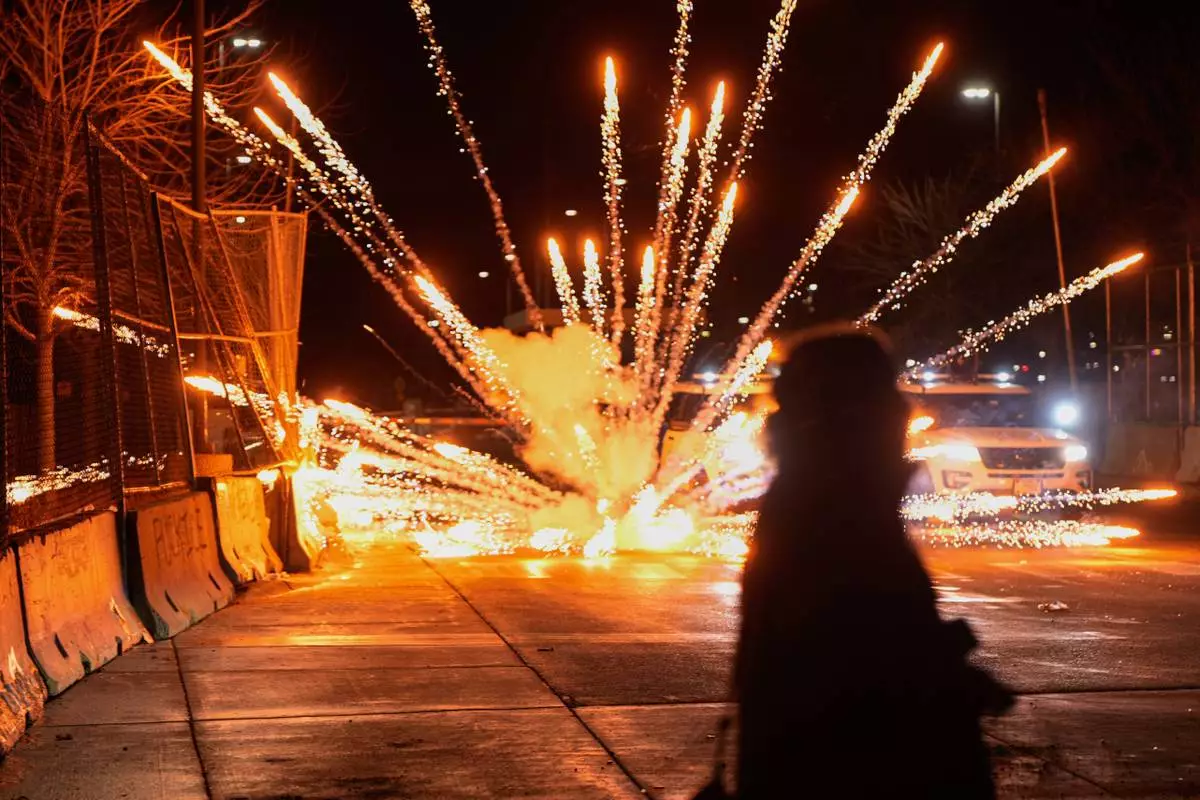
Fireworks are set off by protesters outside the Bishop Henry Whipple Federal Building, Monday, Jan. 12, 2026, in Minneapolis. (AP Photo/Jen Golbeck)
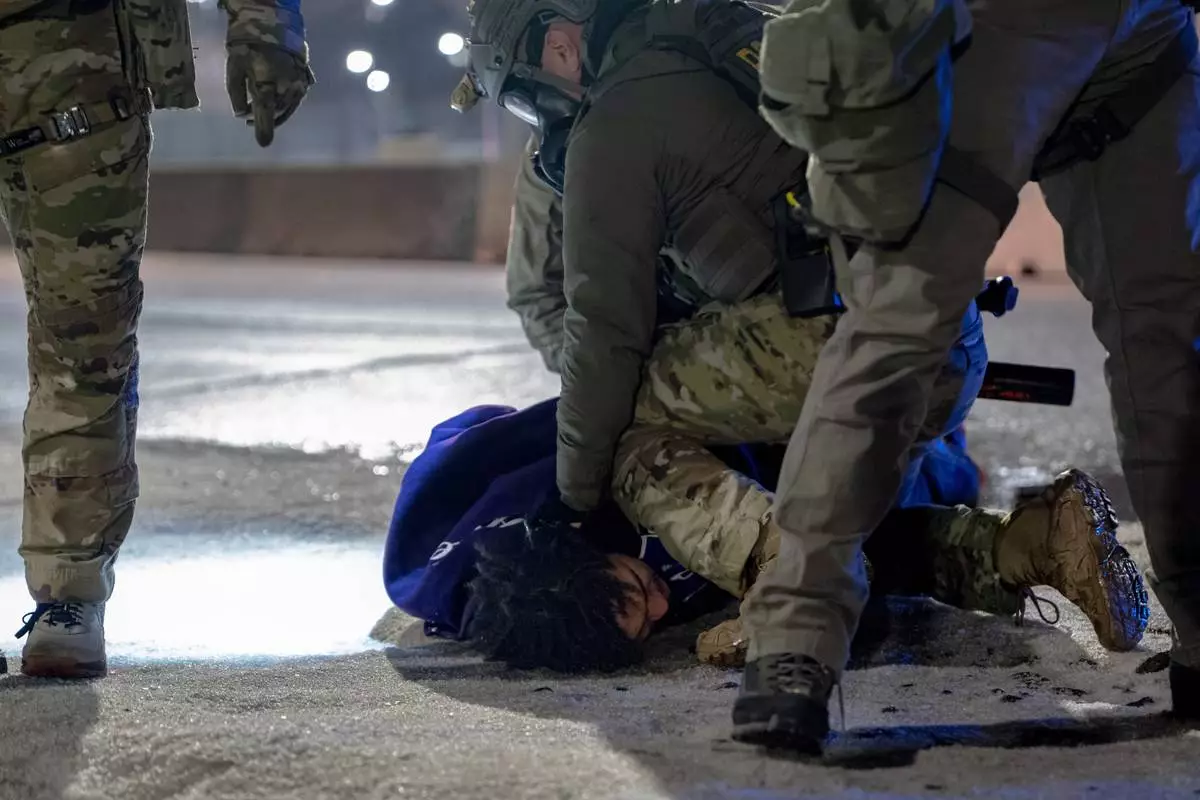
Federal immigration officers detain a demonstrator outside Bishop Whipple Federal Building after tear gas was deployed Monday, Jan. 12, 2026, in Minneapolis. (AP Photo/Jen Golbeck)
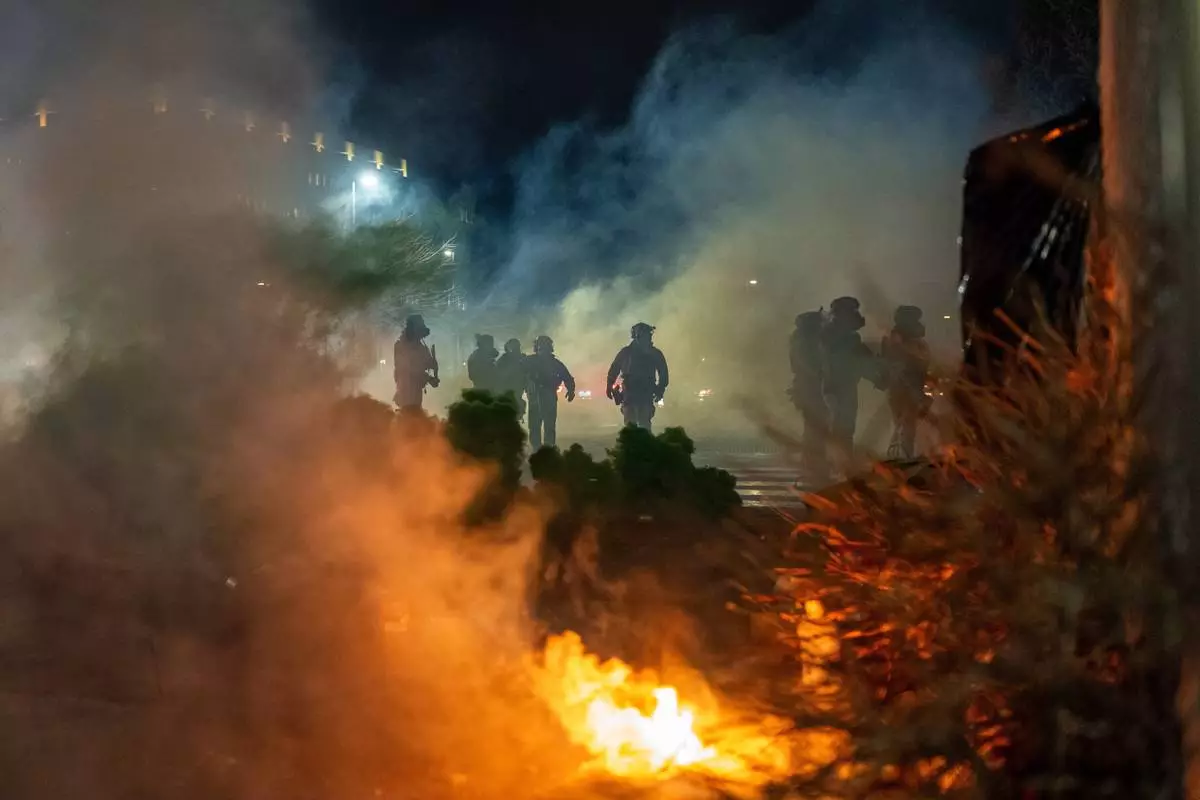
Federal immigration officers are seen outside Bishop Whipple Federal Building after tear gas was deployed Monday, Jan. 12, 2026, in Minneapolis. (AP Photo/Jen Golbeck)
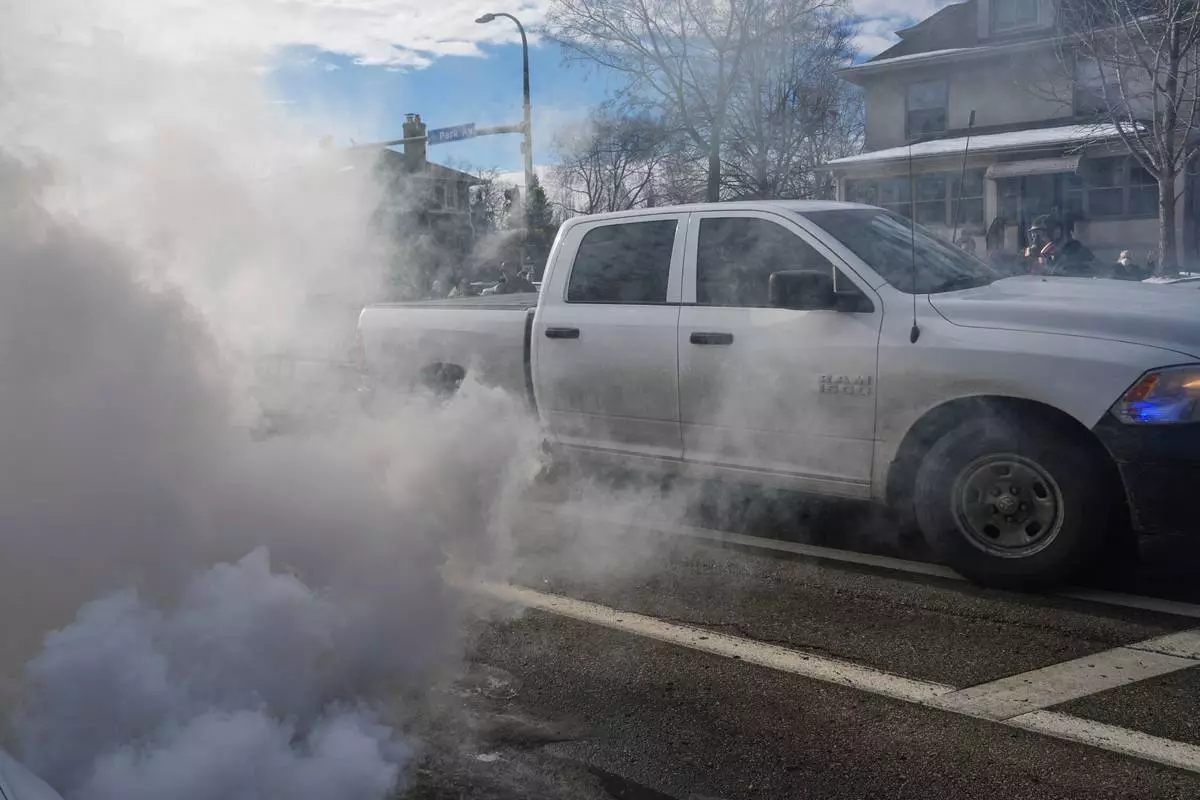
Federal agents drive through smoke from tear gas dispersed during a protest, Monday, Jan. 12, 2026 in Minneapolis (AP Photo/Adam Gray)
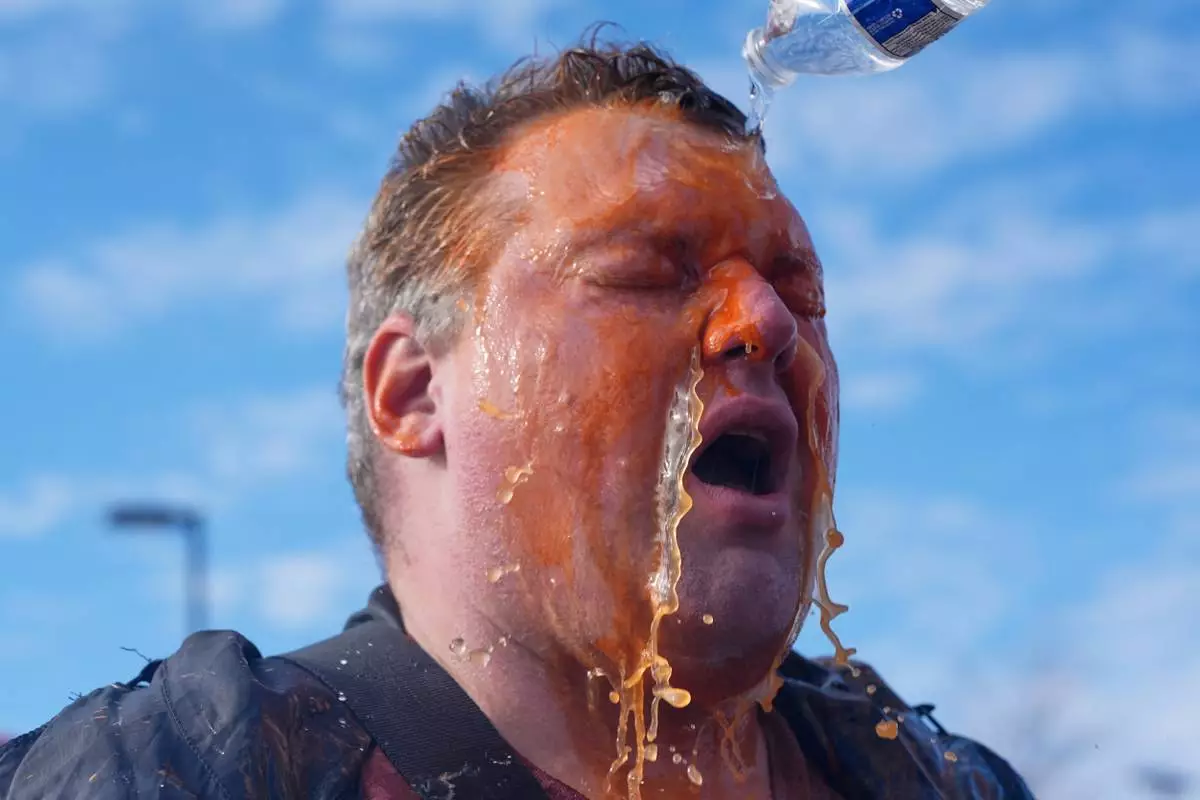
A protester's face is doused in water after he was pepper sprayed outside of the Bishop Whipple Federal Building, Monday, Jan. 12, 2026, in Minneapolis. (AP Photo/Jen Golbeck)
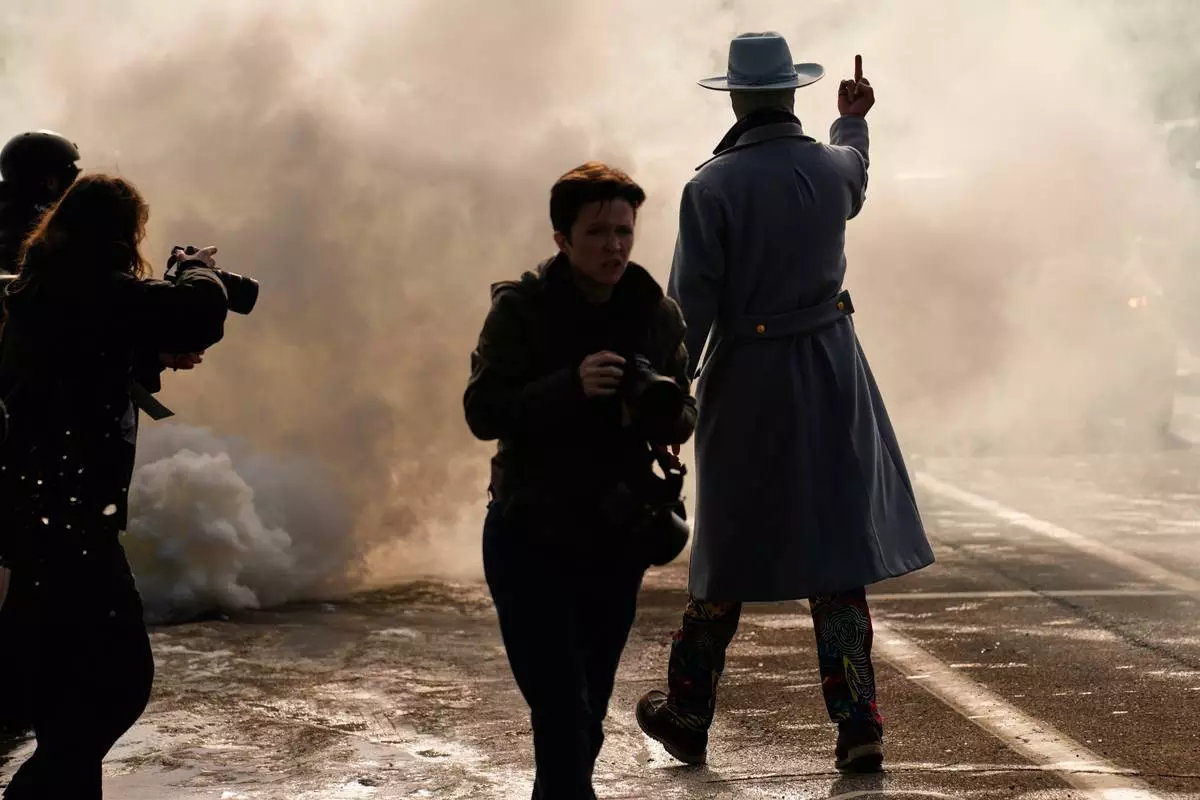
EDS NOTE: OBSCENITY - A man gestures as he walks toward a cloud of tear gas that was deployed by federal immigration officers Monday, Jan. 12, 2026, in Minneapolis. (AP Photo/John Locher)
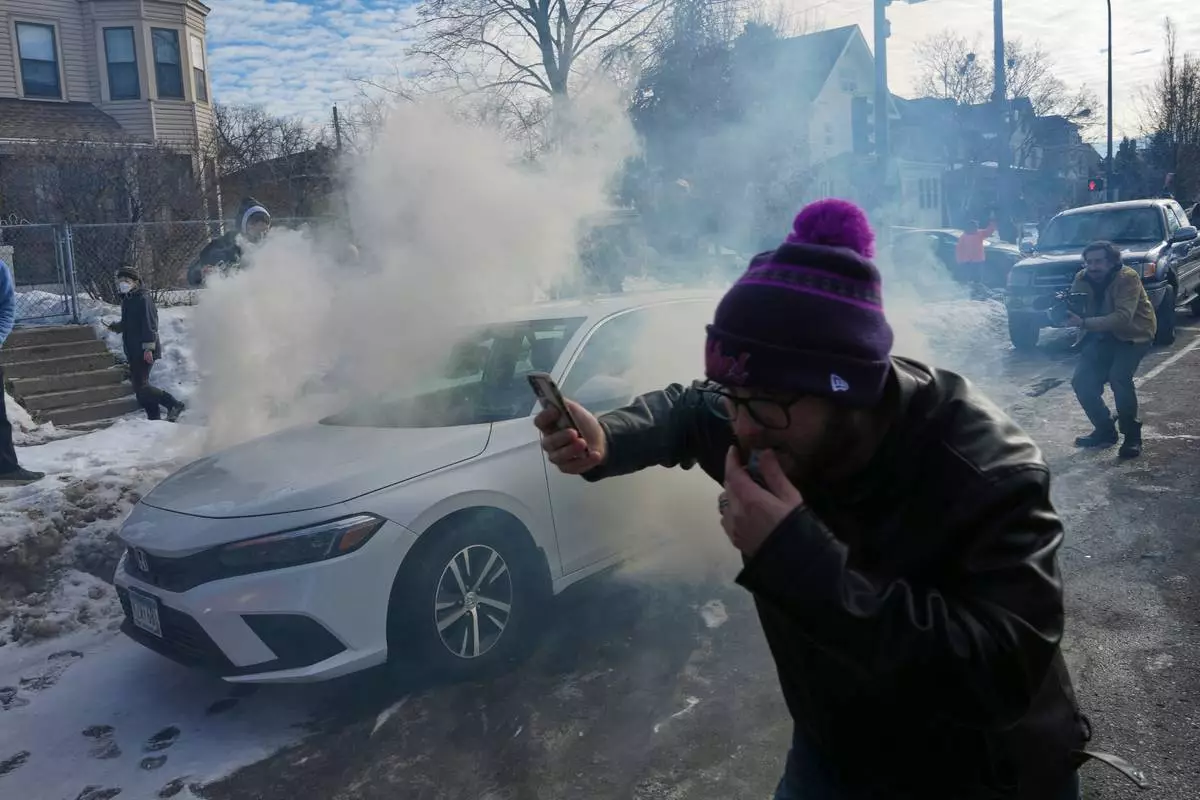
Protesters try to avoid tear gas dispersed by federal agents, Monday, Jan. 12, 2026 in Minneapolis (AP Photo/Adam Gray)
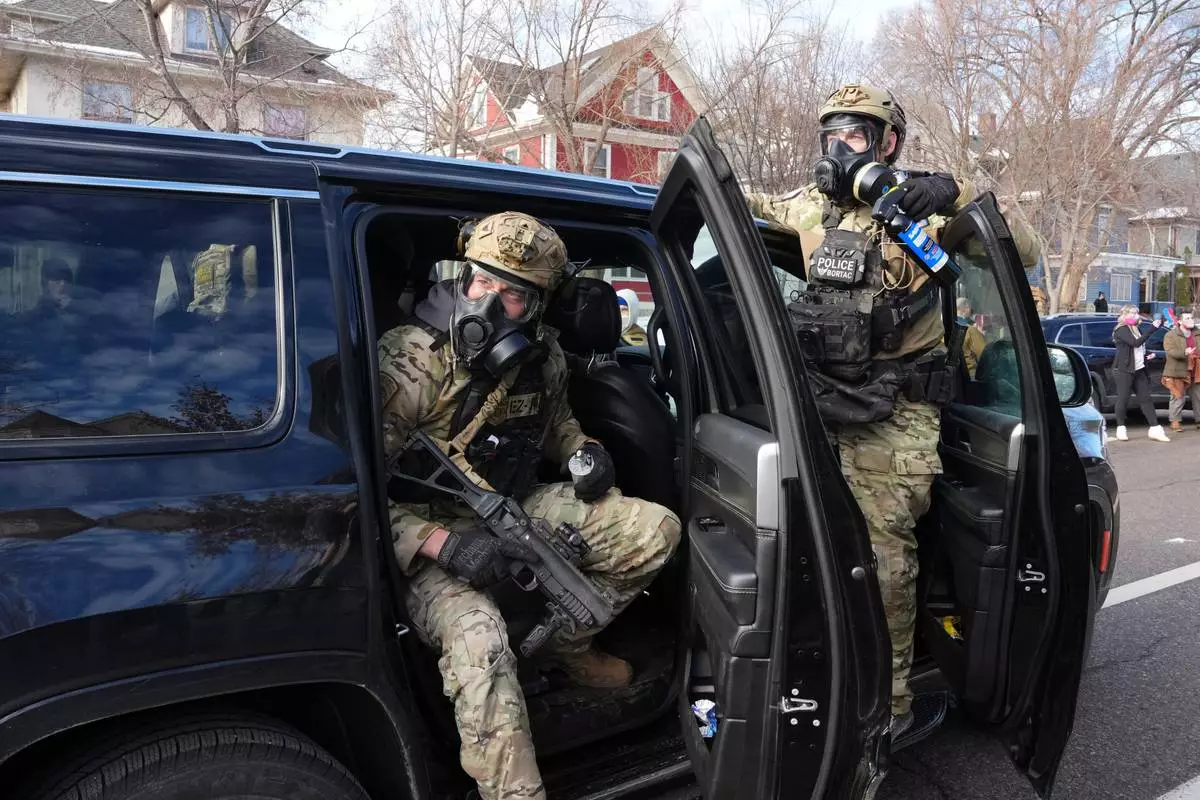
Federal agents get ready to disperse tear gas into a crowd at a protest, Monday, Jan. 12, 2026 in Minneapolis (AP Photo/Adam Gray)