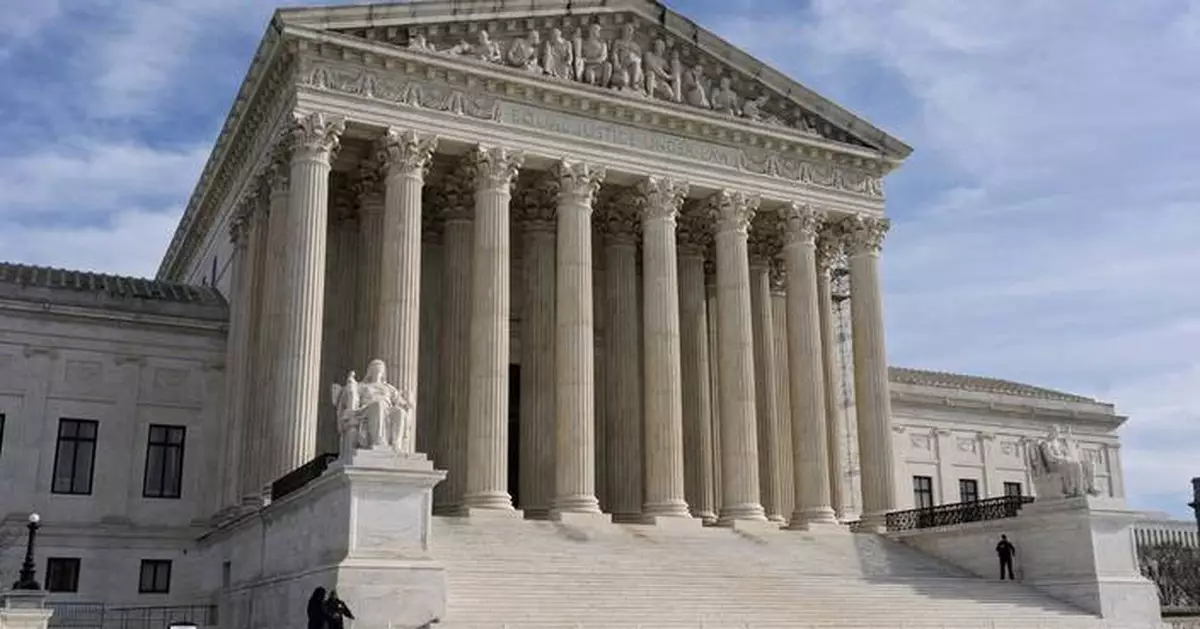
WASHINGTON (AP) — President Donald Trump's administration on Friday asked the Supreme Court to pause a court order to reinstate Education Department employees who were fired in mass layoffs as part of his plan to dismantle the agency.
The Justice Department’s emergency appeal to the high court said U.S. District Judge Myong Joun in Boston exceeded his authority last month when he issued a preliminary injunction reversing the layoffs of nearly 1,400 people and putting the broader plan on hold.
Joun’s order has blocked one of the Republican president’s biggest campaign promises and effectively stalled the effort to wind down the department. A federal appeals court refused to put the order on hold while the administration appealed.
The judge wrote that the layoffs “will likely cripple the department.”
But Solicitor General D. John Sauer wrote on Friday that Joun was substituting his policy preferences for those of the Trump administration.
The layoffs help put in the place the “policy of streamlining the department and eliminating discretionary functions that, in the administration’s view, are better left to the states,” Sauer wrote.
He also pointed out that the Supreme Court in April voted 5-4 to block Joun's earlier order seeking to keep in place Education Department teacher-training grants.
The current case involves two consolidated lawsuits that said Trump’s plan amounted to an illegal closure of the Education Department.
One suit was filed by the Somerville and Easthampton school districts in Massachusetts along with the American Federation of Teachers and other education groups. The other suit was filed by a coalition of 21 Democratic attorneys general.
The suits argued that layoffs left the department unable to carry out responsibilities required by Congress, including duties to support special education, distribute financial aid and enforce civil rights laws.
Education Department employees who were targeted by the layoffs have been on paid leave since March, according to a union that represents some of the agency’s staff. Joun’s order prevents the department from fully terminating them, but none have been allowed to return to work, according to the American Federation of Government Employees Local 252. Without Joun’s order, the workers were scheduled to be terminated Monday.
The Education Department said Friday it is “actively assessing how to reintegrate” the employees. A department email sent Friday asked them to share whether they had gained other employment, saying the request was meant to “support a smooth and informed return to duty.”
Trump has made it a priority to shut down the Education Department, though he has acknowledged that only Congress has the authority to do that. In the meantime, Trump issued a March order directing Education Secretary Linda McMahon to wind it down “to the maximum extent appropriate and permitted by law.”
Trump later said the department’s functions will be parceled to other agencies, suggesting that federal student loans should be managed by the Small Business Administration and programs involving students with disabilities would be absorbed by the Department of Health and Human Services. Those changes have not yet happened.
The president argues that the Education Department has been overtaken by liberals and has failed to spur improvements to the nation’s lagging academic scores. He has promised to “return education to the states.”
Opponents note that K-12 education is already mostly overseen by states and cities.
Democrats have blasted the Trump administration’s Education Department budget, which seeks a 15% budget cut including a $4.5 billion cut in K-12 funding as part of the agency’s downsizing.
Associated Press writer Collin Binkley contributed to this report.
Follow the AP's coverage of the U.S. Supreme Court at https://apnews.com/hub/us-supreme-court.
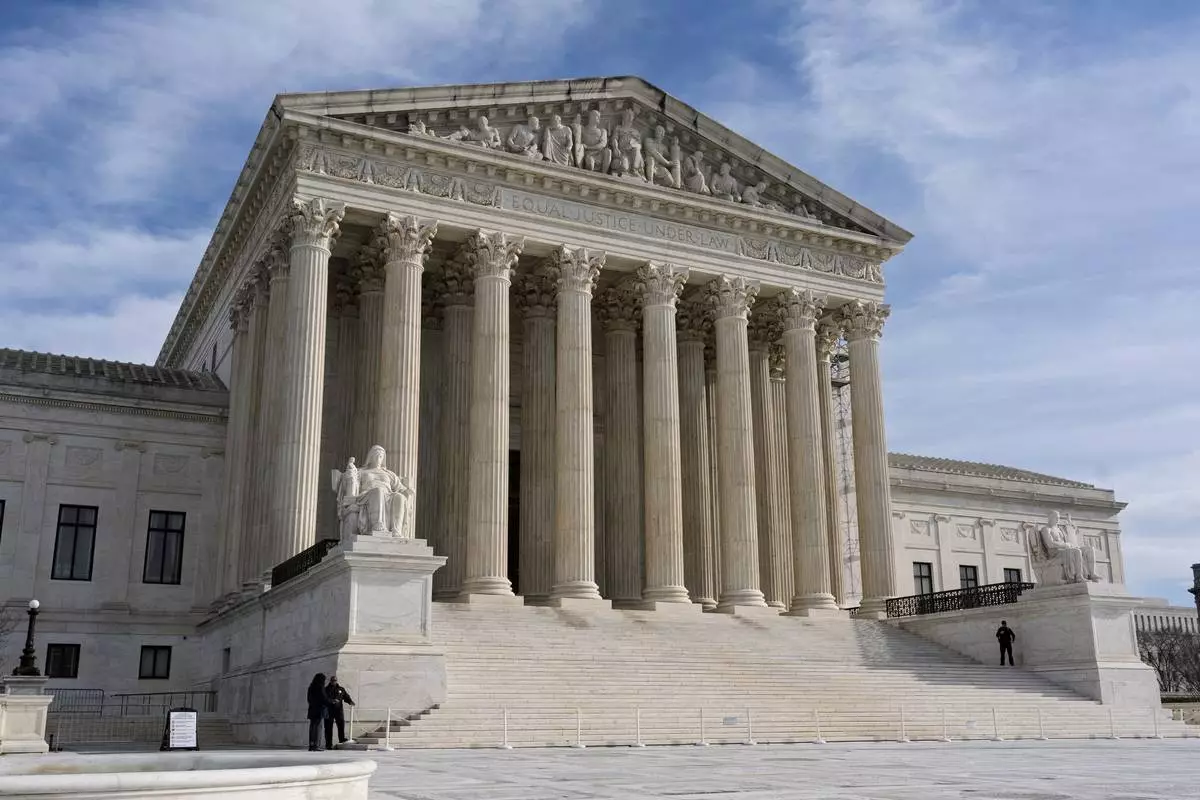
FILE - The Supreme Court is seen on Capitol Hill in Washington, Dec. 17, 2024. (AP Photo/J. Scott Applewhite, File)
SEATTLE (AP) — The number of ballots rejected for late postmarks has soared in the vote-by-mail states of Washington and Oregon, according to newly released data highlighting concerns about recent changes in U.S. Postal Service operations ahead of this fall's pivotal midterm election.
The struggling agency has been consolidating its operations with an emphasis on regional hubs in an effort to save billions of dollars. Some U.S. senators and election officials for months have been warning that the changes could delay the application of postmarks to ballots — even if they're mailed on or before Election Day. That would prevent otherwise valid votes from counting.
That prediction is being borne out, they say, with thousands of voters having their ballots rejected during this year's primaries.
“More Oregonians had their voices go unheard just because their ballots couldn’t make it through the mail in time,” Oregon Secretary of State Tobias Read told a news conference Tuesday, referring to the state's primary in May. “That is unacceptable.”
The operational changes at the Postal Service are compounding worries about the future of voting by mail, especially in some Western states where the method is universal and widely popular. Trump has repeatedly attacked mail-in voting, falsely claiming it's riddled with fraud, despite having voted by mail himself.
Over the weekend, his administration asked the U.S. Supreme Court to overturn a judge’s ruling blocking his executive order that seeks to restrict mail-in voting, a method used by nearly one-third of voters in the U.S.
Read said he is asking lawmakers for emergency funding to install 20 new ballot drop boxes in areas where they're not otherwise easily accessible to voters. Washington's secretary of state this year has spent about $300,000 to reimburse counties for the addition of 21 drop boxes.
In two rural Washington counties — both of which have reliably backed President Donald Trump — ballots rejected for late postmarks represented more than 4% of all ballots cast in last month's primary. Democratic Sen. Maria Cantwell of Washington called it ironic that postal changes might disenfranchise some of Trump's most stable supporters.
“The Postal Service is disenfranchising voters across the United States with policies that are leaving them with a ballot that was cast, but never counted,” she said.
In December, the Postal Service finalized a rule clarifying that postmarks don’t necessarily reflect the date the agency first took possession of a piece of mail, but rather the day it was handled in one of its processing centers. Those processing centers are increasingly likely to be farther from certain communities due to recent consolidations.
And since last year, USPS policy has dictated that mail is transported once a day — rather than twice — from post offices or collection boxes that are more than 50 miles (80.47 kilometers) from a postal distribution center.
In a written statement, the Postal Service acknowledged that changes in how it transports mail could result in postmarking delays. It noted that anyone who wants to ensure their ballots are postmarked on time can go into a post office and ask for it to be stamped manually, free of charge.
“Our consistent message to voters who choose to vote by mail is to mail early” — at least one week before ballots are due, the statement said.
Some 7,314 ballots that arrived in the mail during Oregon’s weeklong grace period for this year’s May primary were not counted because they were postmarked after Election Day — a rejection rate of 13%, up from 9.5% two years earlier, Read said.
In Washington, the number of late-postmarked ballots first jumped last year, after postal changes had taken effect. Officials responded by urging people to get their ballots in early and by installing more drop boxes. Drop box use did increase in this year's primary, but the number of late-postmarked ballots was still a problem: 20,267 — up from 16,131 in 2024.
The data paralleled numbers in California, where during this year’s June primary about 93,500 voters had their ballots rejected because they were postmarked or arrived too late to be counted.
In some rural Washington counties where voters often return ballots by mail because drop boxes are farther away, the data was most pronounced. In Stevens County in Washington’s northeastern corner, the rate at which mailed ballots were rejected for late postmarks quadrupled.
Stevens County Auditor Lori Larsen said that on Aug. 7, three days after the primary and during the state's grace period for ballots to arrive, her office received a haul of 547 ballots with late postmarks. There were so many that she initially thought the mail must have been interrupted by wildfires in the region, but when she looked at the ZIP codes they originated from, she realized that wasn't the case.
“To me that is a number that suggests that many, if not all, of those folks thought they were timely delivering their ballot into USPS custody,” Larsen said in a phone interview.
Her office is now rushing to double the number of secure ballot drop boxes in the county from five to 10.
In conservative Yakima County, where nearly 4.4% of all ballots cast in the primary were rejected for late postmarks, local mail is now sent to a processing center in Spokane — about 200 miles (320 km) away — before being returned to Yakima, said county Auditor Charles Ross.
He said that while elections officials try to treat all voters equally, the postal changes could make it more likely that those in rural areas won't have their vote counted.
“If you’re in one of these rural areas like where we live and you put your ballot in the post office box three days before the election, and if you live in Seattle or Spokane and you put your ballot in the same blue box three days before the election — there’s a high likelihood that those two ballots are going to be treated differently,” Ross said.
Associated Press writer Michael R. Blood in Los Angeles contributed to this report.
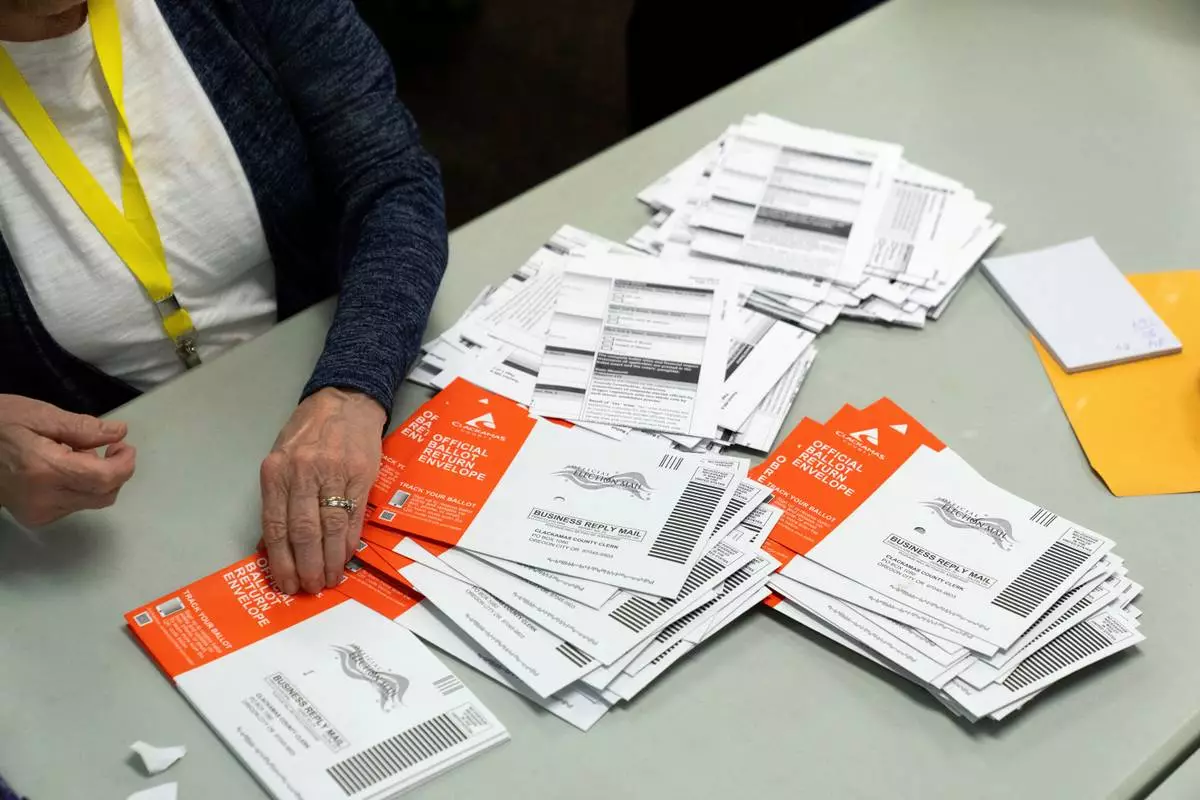
FILE - An election worker reaches for an unopened ballot during sorting at the Clackamas County Elections office, Nov. 7, 2024, in Oregon City, Ore. (AP Photo/Jenny Kane, File)
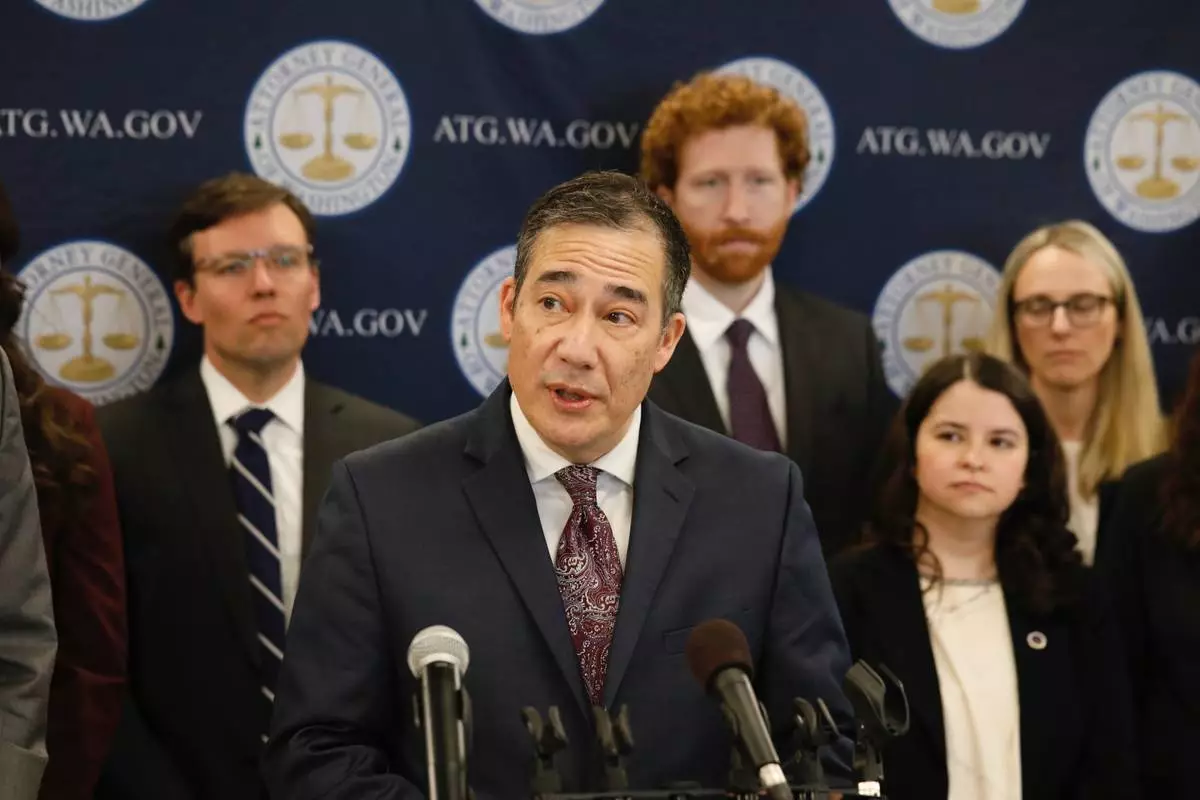
FILE - Washington Secretary of State Steve Hobbs speaks during a news conference at which the state attorney general announced a federal lawsuit challenging President Donald Trump's executive order attempting to overhaul elections in the U.S., in Seattle, April 4, 2025. (AP Photo/Manuel Valdes, File)
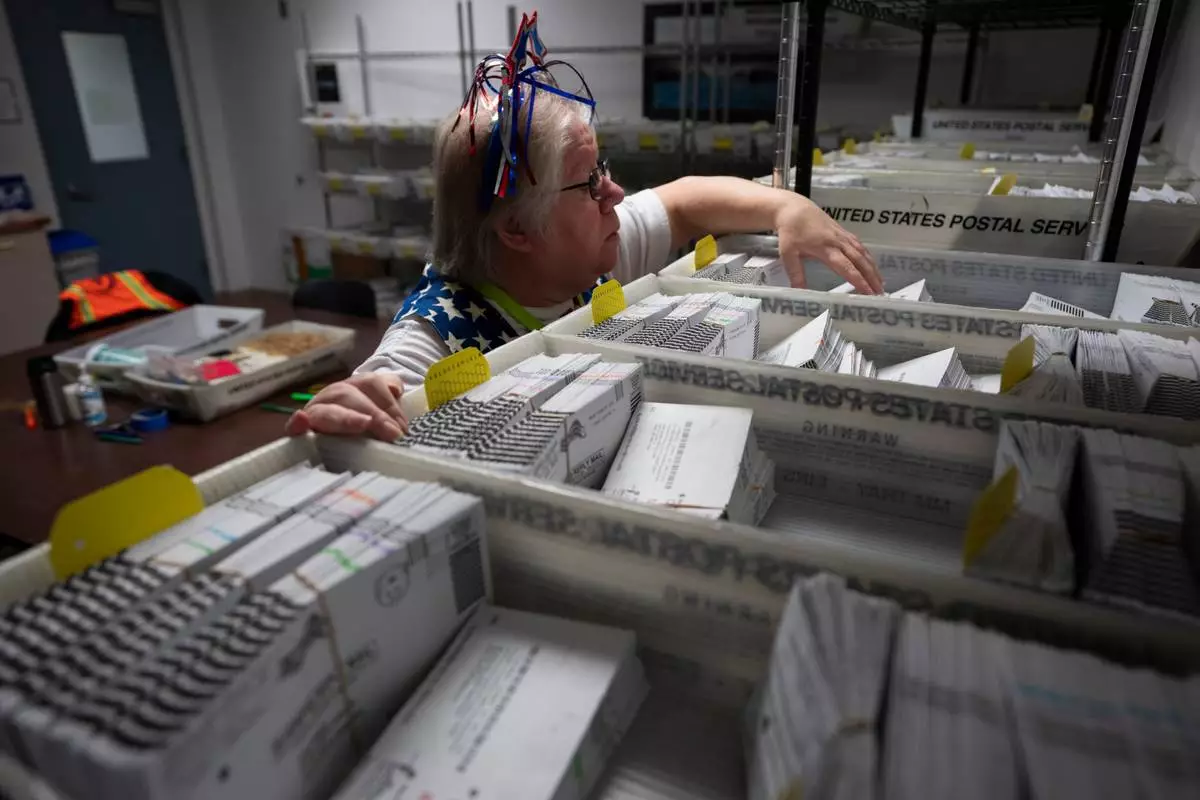
FILE - Election worker Wendy Wimer looks through vote-by-mail ballots for the presidential primary election, March 12, 2024, at the Clark County Elections Office in Vancouver, Wash. (AP Photo/Jenny Kane, File)