DENVER (AP) — A man who told investigators he was driven by a desire “to kill all Zionist people” when he threw Molotov cocktails at demonstrators raising awareness of Israeli hostages appeared briefly in federal court for the first time Friday to face a hate crime charge.
Mohamed Sabry Soliman, 45, sat in the jury box in a Denver courtroom handcuffed and dressed in a green jail uniform, a U.S. Marshal sitting in the row behind him. Listening to the proceedings in Arabic through an interpreter, he answered “yes” and “I understand” in Arabic as Magistrate Judge Timothy P. O’Hara explained his rights.
Click to Gallery
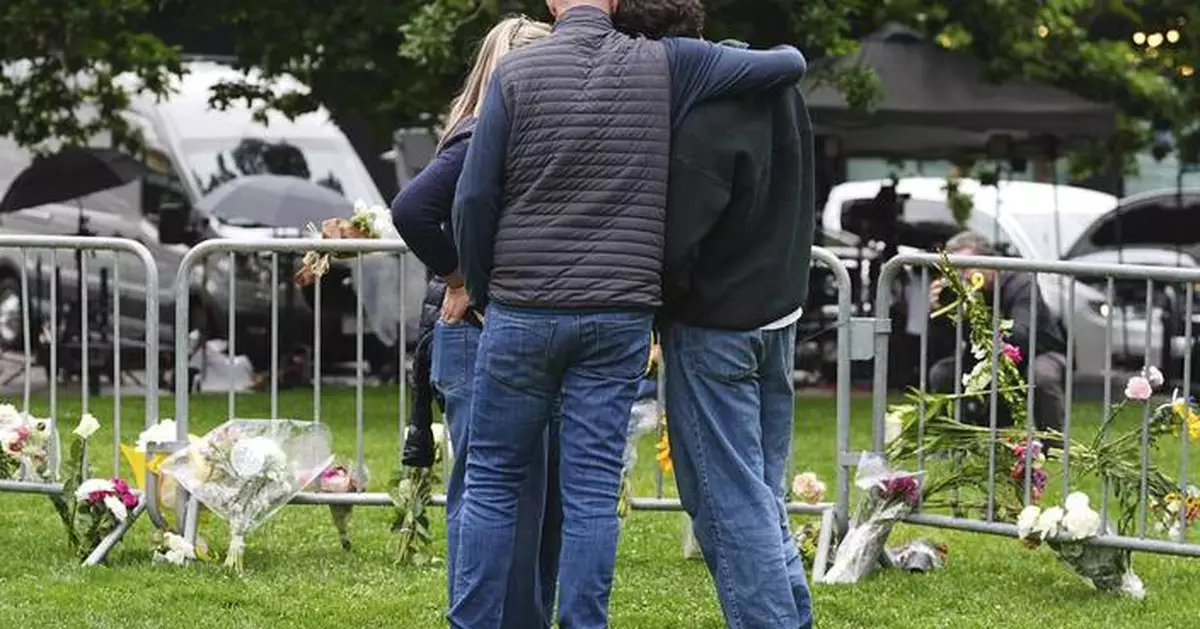
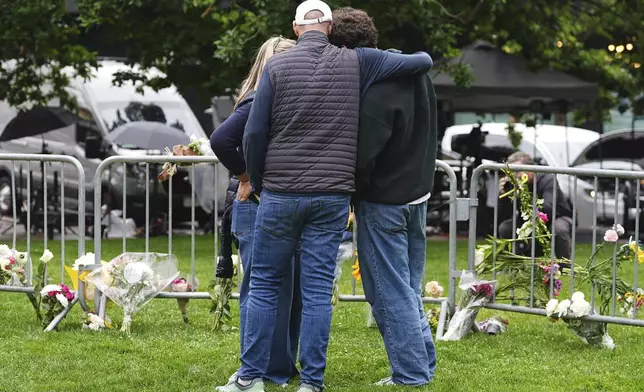
As Jennifer Dechtman, back, looks on, her husband Evan, front left, consoles his son, Isaac, right, at a makeshift memorial for victims of an attack outside of the Boulder County, Colo., courthouse Tuesday, June 3, 2025, in Boulder, Colo. (AP Photo/David Zalubowski)
Rabbi Fred Greene of Congregation Har Hashem, front, hugs a man outside of the Boulder County, Colo., courthouse after Sunday's attack, Monday, June 2, 2025, in Boulder, Colo. (AP Photo/David Zalubowski)
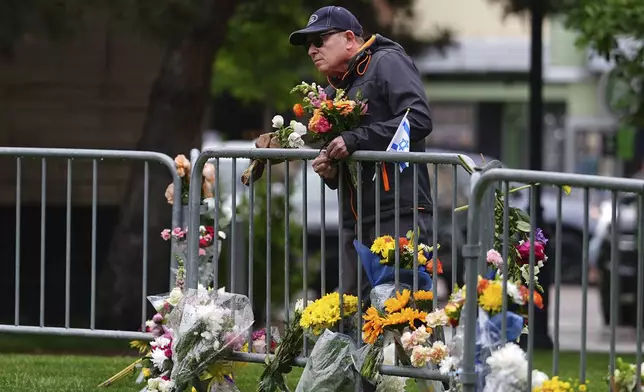
A man affixes a bouquet of flowers to a makeshift memorial for victims of an attack outside of the Boulder County, Colo., courthouse Tuesday, June 3, 2025, in Boulder, Colo. (AP Photo/David Zalubowski)
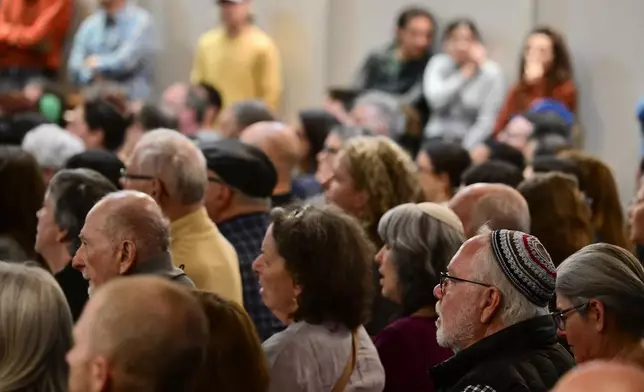
Attendees listen to speakers during a community vigil at the Boulder Jewish Community Center, Wednesday, June 4, 2025, in Boulder, Colo. (Andy Cross/The Denver Post via AP, Pool)
As Jennifer Dechtman, back, looks on, her husband Evan, front left, consoles his son, Isaac, right, at a makeshift memorial for victims of an attack outside of the Boulder County, Colo., courthouse Tuesday, June 3, 2025, in Boulder, Colo. (AP Photo/David Zalubowski)
Before the brief hearing started, Soliman mostly looked away from the crowded gallery, but after the proceedings he nodded and smiled as his lawyers spoke to him.
A conviction on a hate crime charge typically carries a penalty of no more than 10 years in prison, but Assistant U.S. Attorney Melissa Hindman said if the crime involves an attempted killing, the sentence can be as long as life in prison.
Soliman is represented by public defenders who do not comment on their cases to the media. He is scheduled to appear in federal court again June 18 for a hearing in which federal prosecutors will be asked to show they have enough evidence to prosecute Soliman. He'll face a similar hearing in state court July 15.
He is accused in Sunday’s attack on the weekly demonstration in Boulder, which investigators say he planned for a year. The victims include 15 people and a dog. He has also been charged in state court in Boulder with attempted murder and assault counts as well as counts related to the 18 Molotov cocktails police say he carried to the demonstration.
Investigators say Soliman told them he had intended to kill all of the roughly 20 participants at the weekly demonstration on Boulder's popular Pearl Street pedestrian mall, but he threw just two of his 18 Molotov cocktails while yelling “Free Palestine.” Soliman told investigators he tried to buy a gun but was not able to because he was not a “legal citizen.”
Federal authorities say Soliman, an Egyptian national, has been living in the U.S. illegally.
Soliman did not carry out his full plan “because he got scared and had never hurt anyone before,” police wrote in an arrest affidavit.
Not all of the victims were physically injured. Some of them are considered victims because they were in the area and could potentially have been hurt in the attack, 20th Judicial District Michael Dougherty said Thursday.
Three victims remained in the hospital Friday, UCHealth University of Colorado Hospital spokesperson Dan Weaver said.
The dog was among the injured, which resulted in an animal cruelty charge being filed against Soliman, Dougherty said.
Soliman told investigators that he waited until after his daughter graduated from school before launching the attack, according to court documents.
Federal authorities want to deport Soliman's wife and their five children, who range from 4 to 17 years old, but a judge issued an order Wednesday halting deportation proceedings until a lawsuit challenging their deportation can be considered. Homeland Security Assistant Secretary Tricia McLaughlin has described their claims as “absurd” and “an attempt to delay justice.”
U.S. immigration officials took Soliman's wife and children into custody Tuesday. They are being held at a family immigration detention center in Texas.
According to a court document filed Friday by the family's lawyers, law enforcement had arranged for Soliman's wife and children to stay in a hotel while their home was searched following the attack. After two nights, Homeland Security Investigations agents told the family they had to move to another hotel for their safety and were then met by between 10 and 20 plainclothes officers who took them into custody, the filing said.
According to the document, one of them allegedly told Soliman's wife, “You have to pay for the consequences of what you did.”
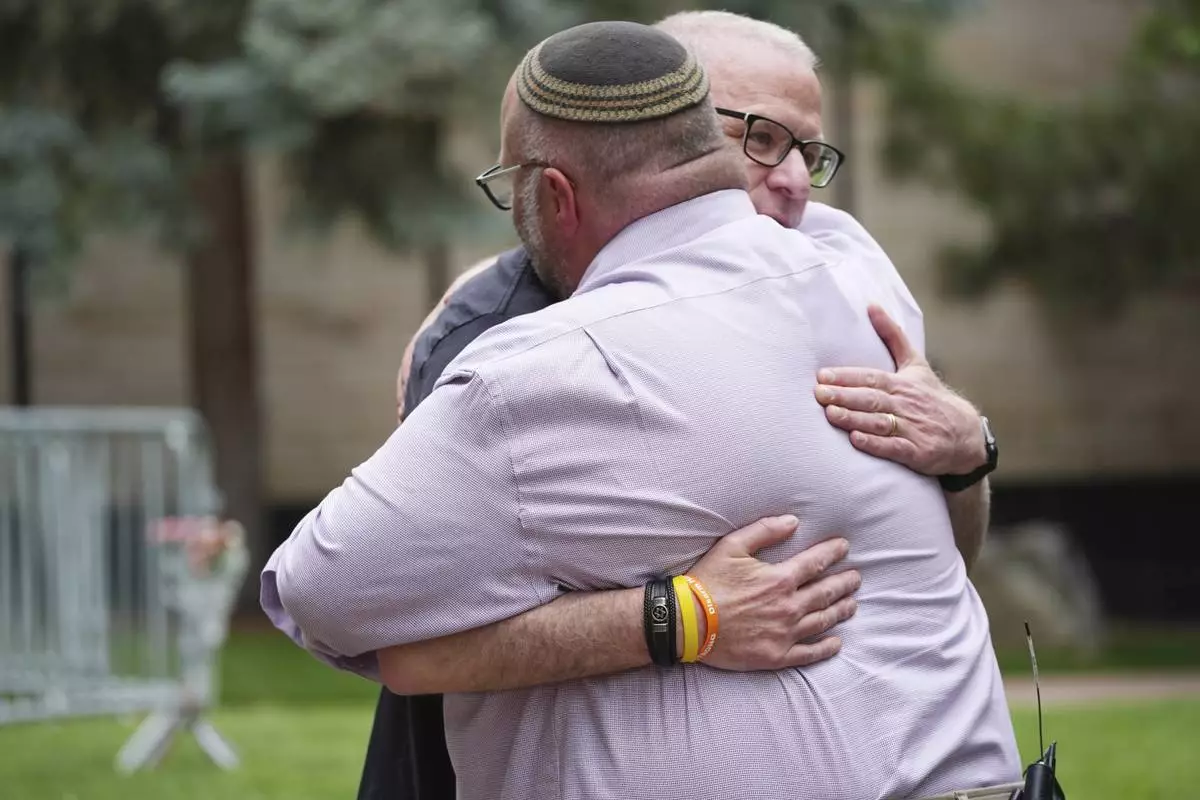
Rabbi Fred Greene of Congregation Har Hashem, front, hugs a man outside of the Boulder County, Colo., courthouse after Sunday's attack, Monday, June 2, 2025, in Boulder, Colo. (AP Photo/David Zalubowski)
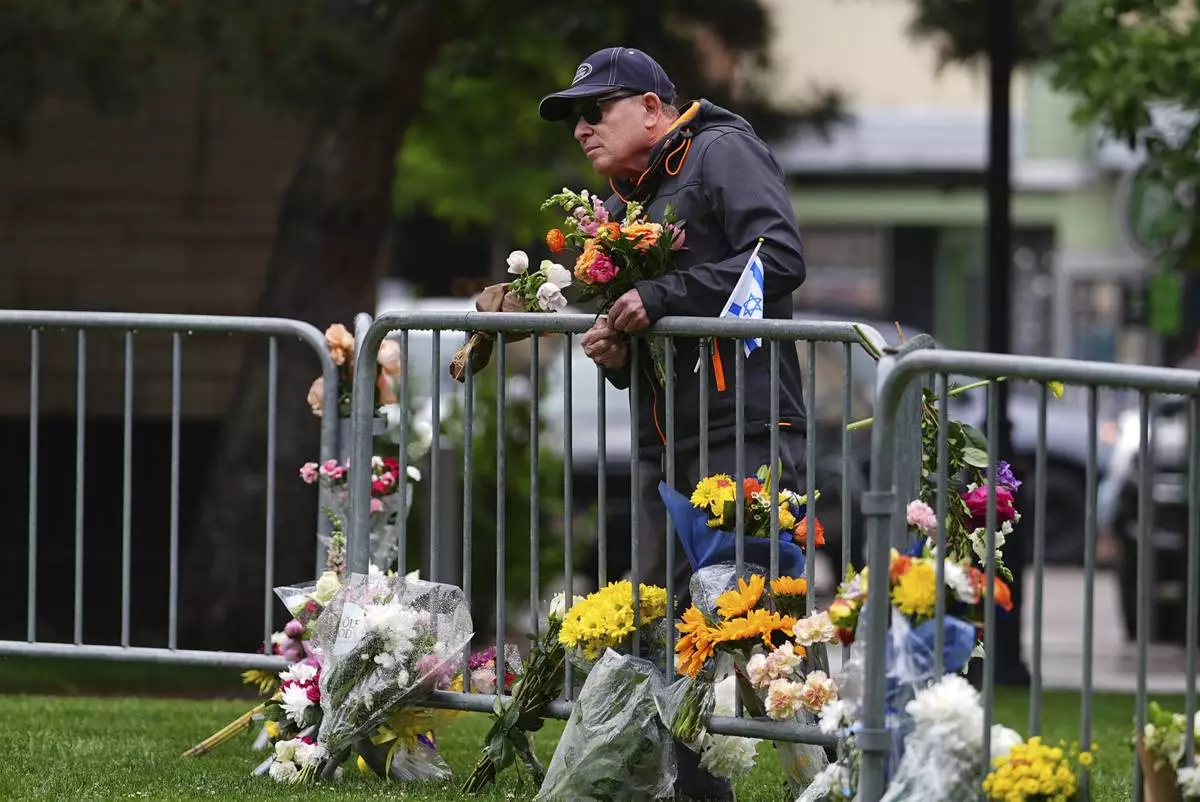
A man affixes a bouquet of flowers to a makeshift memorial for victims of an attack outside of the Boulder County, Colo., courthouse Tuesday, June 3, 2025, in Boulder, Colo. (AP Photo/David Zalubowski)
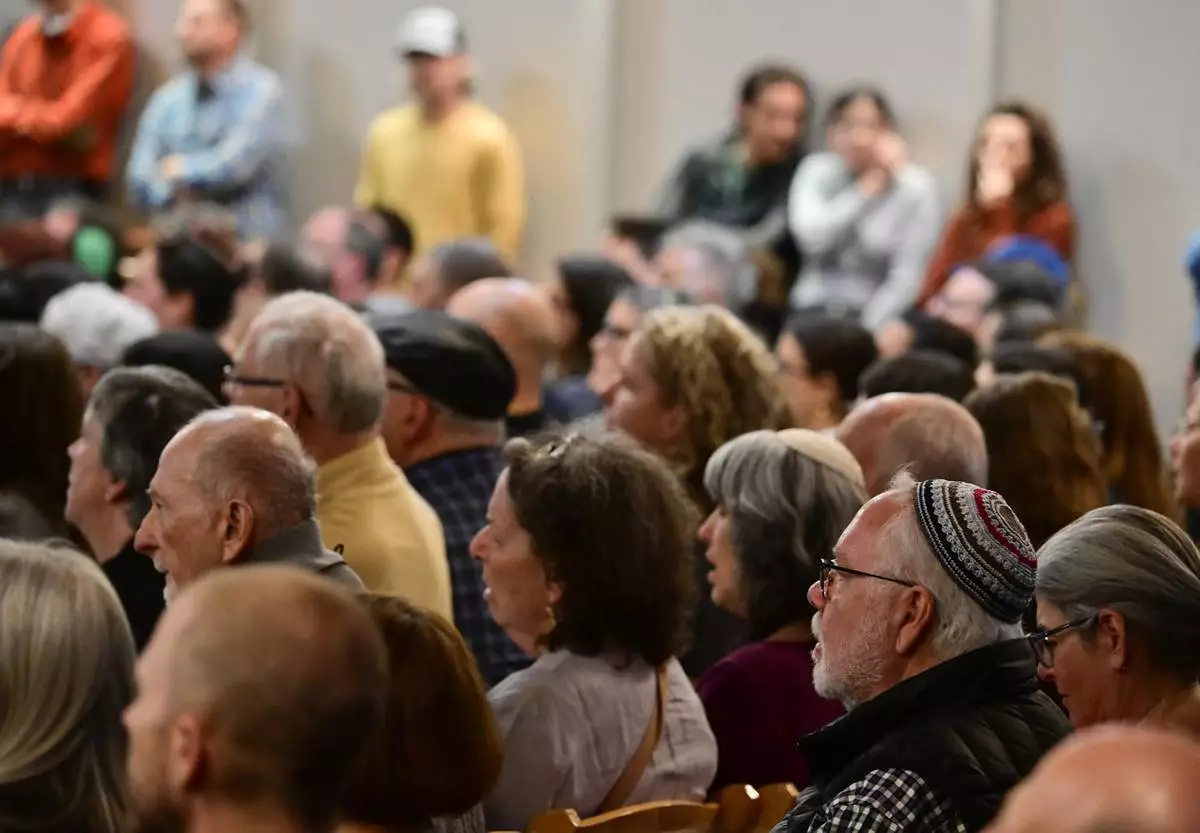
Attendees listen to speakers during a community vigil at the Boulder Jewish Community Center, Wednesday, June 4, 2025, in Boulder, Colo. (Andy Cross/The Denver Post via AP, Pool)
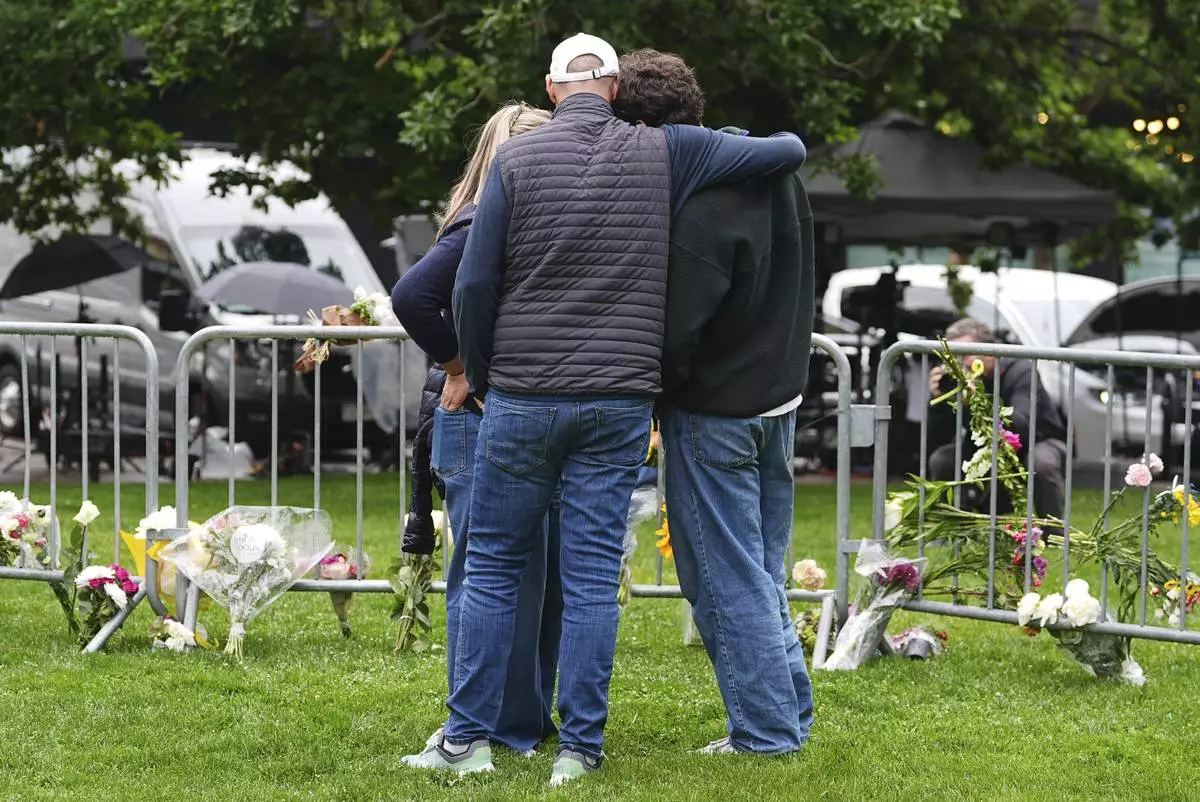
As Jennifer Dechtman, back, looks on, her husband Evan, front left, consoles his son, Isaac, right, at a makeshift memorial for victims of an attack outside of the Boulder County, Colo., courthouse Tuesday, June 3, 2025, in Boulder, Colo. (AP Photo/David Zalubowski)
NEW YORK (AP) — Reviving a campaign pledge, President Donald Trump wants a one-year, 10% cap on credit card interest rates, a move that could save Americans tens of billions of dollars but drew immediate opposition from an industry that has been in his corner.
Trump was not clear in his social media post Friday night whether a cap might take effect through executive action or legislation, though one Republican senator said he had spoken with the president and would work on a bill with his “full support.” Trump said he hoped it would be in place Jan. 20, one year after he took office.
Strong opposition is certain from Wall Street in addition to the credit card companies, which donated heavily to his 2024 campaign and have supported Trump's second-term agenda. Banks are making the argument that such a plan would most hurt poor people, at a time of economic concern, by curtailing or eliminating credit lines, driving them to high-cost alternatives like payday loans or pawnshops.
“We will no longer let the American Public be ripped off by Credit Card Companies that are charging Interest Rates of 20 to 30%,” Trump wrote on his Truth Social platform.
Researchers who studied Trump’s campaign pledge after it was first announced found that Americans would save roughly $100 billion in interest a year if credit card rates were capped at 10%. The same researchers found that while the credit card industry would take a major hit, it would still be profitable, although credit card rewards and other perks might be scaled back.
About 195 million people in the United States had credit cards in 2024 and were assessed $160 billion in interest charges, the Consumer Financial Protection Bureau says. Americans are now carrying more credit card debt than ever, to the tune of about $1.23 trillion, according to figures from the New York Federal Reserve for the third quarter last year.
Further, Americans are paying, on average, between 19.65% and 21.5% in interest on credit cards according to the Federal Reserve and other industry tracking sources. That has come down in the past year as the central bank lowered benchmark rates, but is near the highs since federal regulators started tracking credit card rates in the mid-1990s. That’s significantly higher than a decade ago, when the average credit card interest rate was roughly 12%.
The Republican administration has proved particularly friendly until now to the credit card industry.
Capital One got little resistance from the White House when it finalized its purchase and merger with Discover Financial in early 2025, a deal that created the nation’s largest credit card company. The Consumer Financial Protection Bureau, which is largely tasked with going after credit card companies for alleged wrongdoing, has been largely nonfunctional since Trump took office.
In a joint statement, the banking industry was opposed to Trump's proposal.
“If enacted, this cap would only drive consumers toward less regulated, more costly alternatives," the American Bankers Association and allied groups said.
Bank lobbyists have long argued that lowering interest rates on their credit card products would require the banks to lend less to high-risk borrowers. When Congress enacted a cap on the fee that stores pay large banks when customers use a debit card, banks responded by removing all rewards and perks from those cards. Debit card rewards only recently have trickled back into consumers' hands. For example, United Airlines now has a debit card that gives miles with purchases.
The U.S. already places interest rate caps on some financial products and for some demographics. The Military Lending Act makes it illegal to charge active-duty service members more than 36% for any financial product. The national regulator for credit unions has capped interest rates on credit union credit cards at 18%.
Credit card companies earn three streams of revenue from their products: fees charged to merchants, fees charged to customers and the interest charged on balances. The argument from some researchers and left-leaning policymakers is that the banks earn enough revenue from merchants to keep them profitable if interest rates were capped.
"A 10% credit card interest cap would save Americans $100 billion a year without causing massive account closures, as banks claim. That’s because the few large banks that dominate the credit card market are making absolutely massive profits on customers at all income levels," said Brian Shearer, director of competition and regulatory policy at the Vanderbilt Policy Accelerator, who wrote the research on the industry's impact of Trump's proposal last year.
There are some historic examples that interest rate caps do cut off the less creditworthy to financial products because banks are not able to price risk correctly. Arkansas has a strictly enforced interest rate cap of 17% and evidence points to the poor and less creditworthy being cut out of consumer credit markets in the state. Shearer's research showed that an interest rate cap of 10% would likely result in banks lending less to those with credit scores below 600.
The White House did not respond to questions about how the president seeks to cap the rate or whether he has spoken with credit card companies about the idea.
Sen. Roger Marshall, R-Kan., who said he talked with Trump on Friday night, said the effort is meant to “lower costs for American families and to reign in greedy credit card companies who have been ripping off hardworking Americans for too long."
Legislation in both the House and the Senate would do what Trump is seeking.
Sens. Bernie Sanders, I-Vt., and Josh Hawley, R-Mo., released a plan in February that would immediately cap interest rates at 10% for five years, hoping to use Trump’s campaign promise to build momentum for their measure.
Hours before Trump's post, Sanders said that the president, rather than working to cap interest rates, had taken steps to deregulate big banks that allowed them to charge much higher credit card fees.
Reps. Alexandria Ocasio-Cortez, D-N.Y., and Anna Paulina Luna, R-Fla., have proposed similar legislation. Ocasio-Cortez is a frequent political target of Trump, while Luna is a close ally of the president.
Seung Min Kim reported from West Palm Beach, Fla.
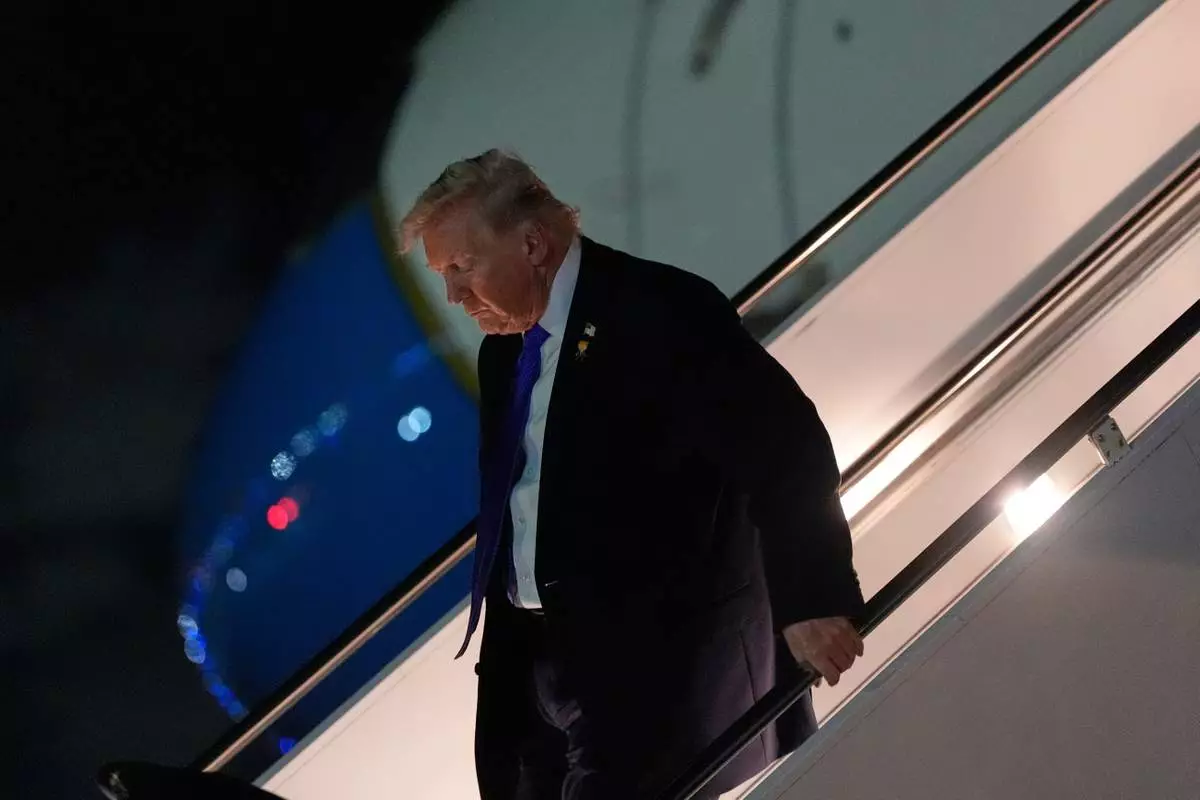
President Donald Trump arrives on Air Force One at Palm Beach International Airport, Friday, Jan. 9, 2025, in West Palm Beach, Fla. (AP Photo/Julia Demaree Nikhinson)
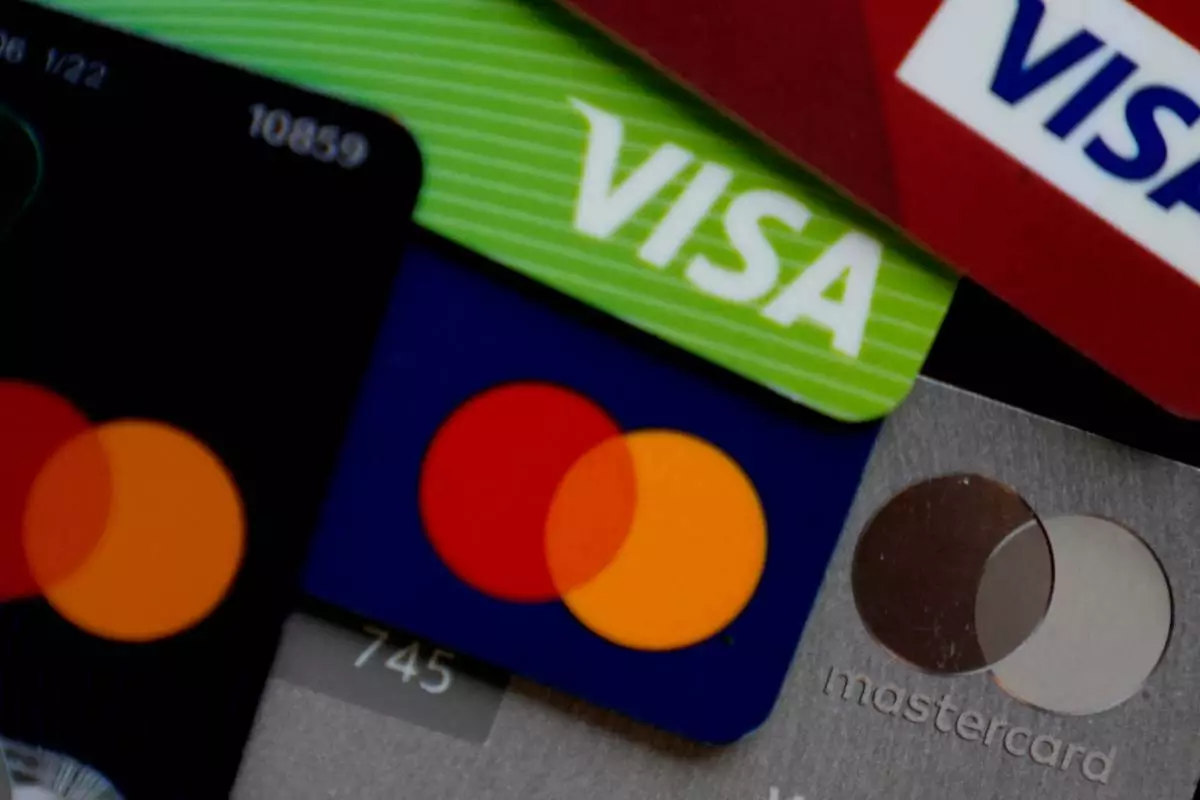
FILE - Visa and Mastercard credit cards are shown in Buffalo Grove, Ill., Feb. 8, 2024. (AP Photo/Nam Y. Huh, File)