SACRAMENTO, Calif. (AP) — California lawmakers this week advanced several efforts aimed at reining in utility profits and slashing electricity bills as part of their agenda to tackle the sky-high costs of living.
The proposals would make sweeping changes to how utilities fund expensive infrastructure projects like putting power lines underground to guard against wildfires. They also would add more oversight around wildfire mitigation spending and put new requirements on utility requests to increase rates. Supporters said the goal is to make the big investor-owned utilities start sharing some of the costs to fight wildfires and build new transmission infrastructure.
“This is not a set of modest tweaks that will make minor improvements at the edges of a problem without offending anyone,” said Democratic State Sen. Josh Becker, the bill’s author. “This is a big deal.”
One of the bills is part of the state Senate's package to address affordability amid growing concern about the high costs of everything from gas to groceries. Democratic Gov. Gavin Newsom signed an executive order last year urging lawmakers to do something to address skyrocketing electricity rates, which rose 47% on average for residential customers between 2019 and 2023, according to the nonpartisan Legislative Analysts Office.
But Republicans, who are in the minority in both chambers, say Democrats are not meaningfully addressing high prices. They did not support the energy reform bills, saying it wouldn't lower costs, and they unsuccessfully tried to force a vote on a proposal to limit utilities from raising power rates above the rate of inflation.
Utility rate increases in recent years have been approved by state regulators in part to help investor-owned utilities bury power lines and conduct vegetation management projects aimed at stopping wildfires. Some of the deadliest and most destructive fires in recent years have been sparked by power equipment. Pacific Gas & Electric, whose equipment sparked a 2018 wildfire that killed 85 people in 2024, raised its rates six times to help cover the costs of putting power lines underground and other improvement projects.
While one in every five ratepayers can't pay their power bills, utilities like PG&E raked in record-breaking profits last year, according to The Utility Reform Network, a ratepayer advocacy group. The group supports Becker's measure and has sponsored a similar effort in the Assembly. PG&E spokesperson Mike Gazda said the electricity bills in April are about 3% lower than last year and that bills are expected to go down next year with some fees becoming expired.
“There are no limits to how much the utilities can ask for in rate increases. There are no limits to how many times a year they can ask,” said Mark Toney, the group's executive director. “You can’t blame them for asking for the sky.”
Under Becker's proposal, utilities would be required to use public financing to fund the first $15 billion spent on capital investment projects. The option would allow utilities to access funding with lower interest rates, and utilities also would be prohibited from collecting a return on that investment for shareholders. That would save customers $8.8 billion over the next 10 years, Becker said.
The bill would also set up a state-backed fund to reimburse utilities for wildfire projects, among other things. But the state may not have money to pay for that this year.
The bill would also increase oversight of utility budgets and their wildfire spending. Utilities would have to include at least one rate increase proposal that doesn't exceed the rate of inflation in their requests. The proposal also calls for $60 billion worth of credits to apply on bills over the years during the summer months when usage is often at its peak.
Senate Democrats overwhelmingly advanced Becker's measure this week. But Republicans, utilities and the California Chamber of Commerce said it would only drive up more costs. The legislation “moves today's utility costs around without eliminating them,” the chamber said in a letter in opposition. New regulations around rate increase and shareholder returns also could halt utilities' investment in preventing wildfires or enhancing the grid, the letter said.
Republican State senators said rising power bills are caused by Democrats' policies and push for more electric vehicles and less reliance on fossil fuels. In the Assembly, meanwhile, Republicans have called for permitting reforms to make it faster and cheaper to build better utility infrastructure.
“The regulation regime that we have in this state is oppressive and definitely drives prices,” said Sen. Roger Niello, a Republican. “Your package of affordability is rather modest in number, but it is even more modest in its potential impact.”
Lawmakers also advanced a slew of other measures aiming to provide relief to ratepayers, including one that would prohibit utilities from using rates to pay for lobbying efforts and one that would allow California to join a regional energy market with other Western states to help increase grid reliability.
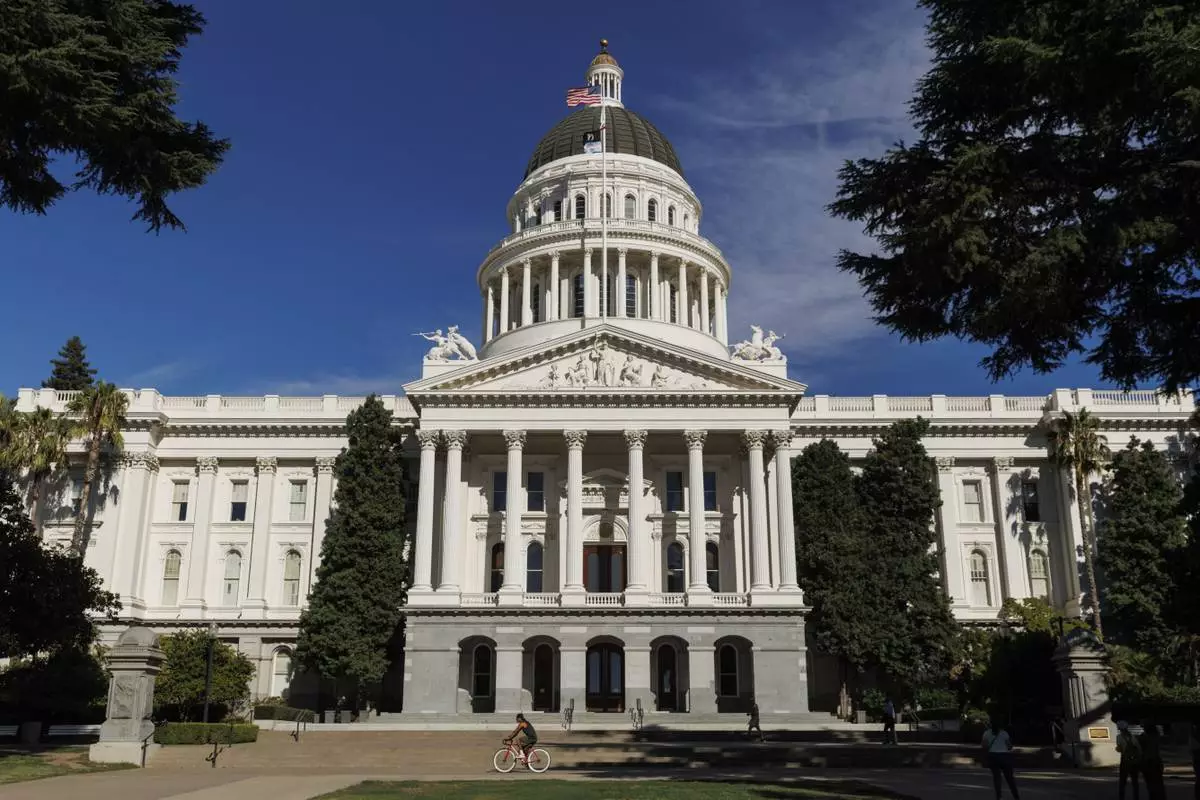
FILE - People walk around the California State Capitol, Aug. 5, 2024, in Sacramento, Calif. (AP Photo/Juliana Yamada, File)