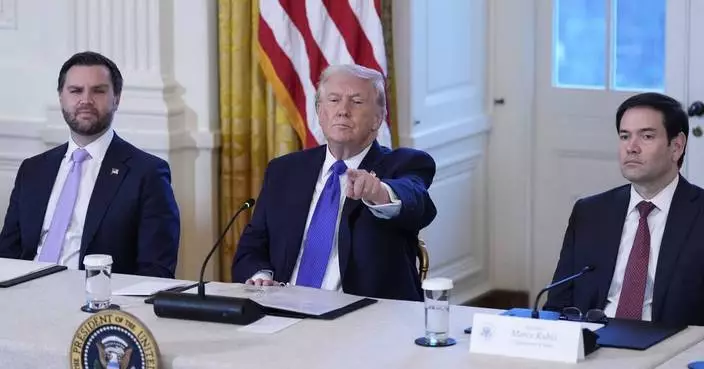
WASHINGTON (AP) —
The tax cuts in President Donald Trump’s One Big Beautiful Bill Act would likely gouge a hole in the federal budget.
Click to Gallery
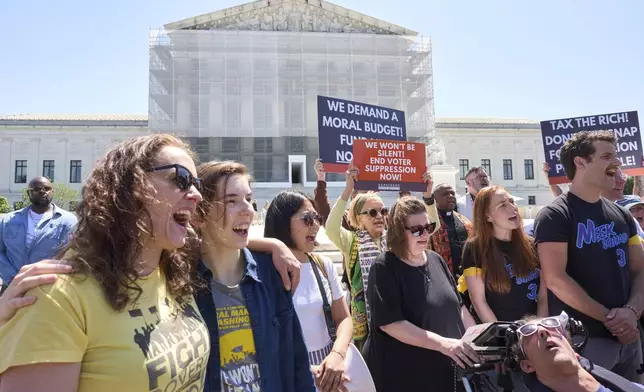
Activists with the Poor People's Campaign protest against spending reductions across Medicaid, food stamps and federal aid in President Donald Trump's spending and tax bill being worked on by Senate Republicans this week, outside the Supreme Court in Washington, Monday, June 2, 2025. (AP Photo/J. Scott Applewhite)
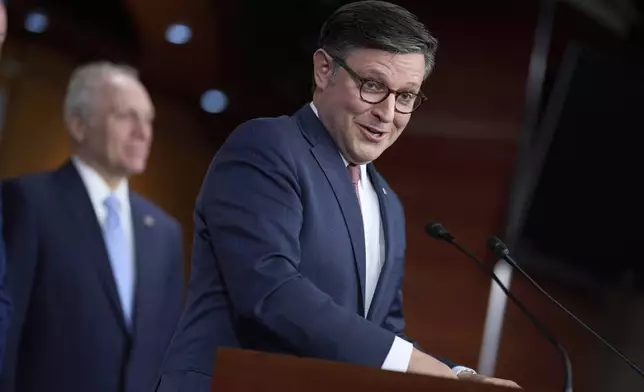
Speaker of the House Mike Johnson, R-La., wraps up a news conference on President Donald Trump's bill of tax breaks and spending cuts, at the Capitol in Washington, Wednesday, June 4, 2025. (AP Photo/J. Scott Applewhite)
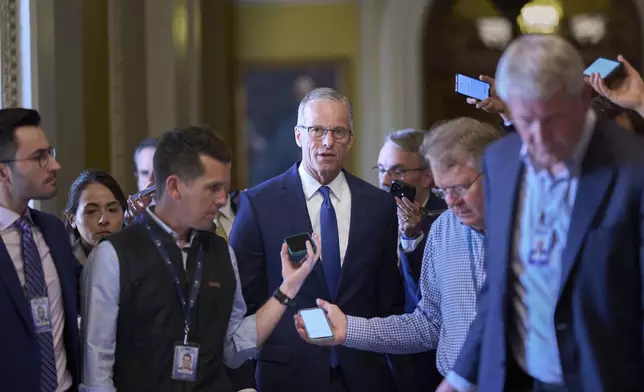
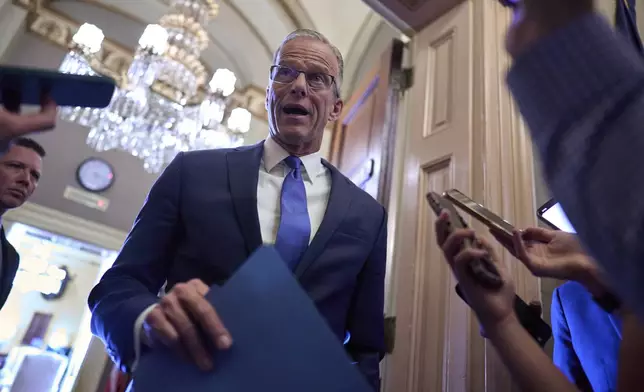
Senate Majority Leader John Thune, R-S.D., speaks with reporters about his plans to advance President Donald Trump's spending and tax bill, at the Capitol in Washington, Monday, June 2, 2025. (AP Photo/J. Scott Applewhite)
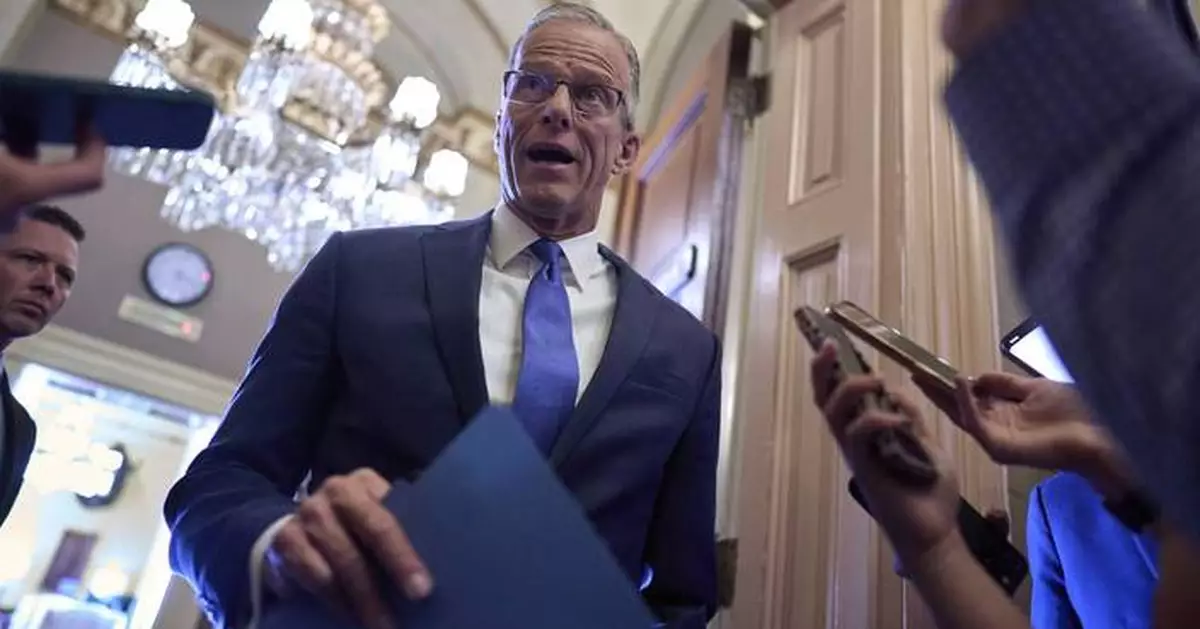
Senate Majority Leader John Thune, R-S.D., pauses in the door of his office to answer questions from reporters about his strategy to advance President Donald Trump's spending and tax bill, at the Capitol in Washington, Monday, June 2, 2025. (AP Photo/J. Scott Applewhite)
The president has a patch handy, though: his sweeping import taxes — tariffs.
The Congressional Budget Office, the government’s nonpartisan arbiter of tax and spending matters, says the One Big Beautiful Bill, passed by the House last month and now under consideration in the Senate, would increase federal budget deficits by $2.4 trillion over the next decade. That is because its tax cuts would drain the government’s coffers faster than its spending cuts would save money.
By bringing in revenue for the Treasury, on the other hand, the tariffs that Trump announced through May 13 — including his so-called reciprocal levies of up to 50% on countries with which the United States has a trade deficit — would offset the budget impact of the tax-cut bill and reduce deficits over the next decade by $2.5 trillion.
So it’s basically a wash.
That’s the budget math anyway. The real answer is more complicated.
Actually using tariffs to finance a big chunk of the federal government would be a painful and perilous undertaking, budget wonks say. “It’s a very dangerous way to try to raise revenue,” said Kent Smetters of the University of Pennsylvania’s Penn Wharton Budget Model, who served in President George W. Bush’s Treasury Department.
Trump has long advocated tariffs as an economic elixir. He says they can protect American industries, bring factories back to the United States, give him leverage to win concessions over foreign governments — and raise a lot of money. He’s even suggested that they could replace the federal income tax, which now brings in about half of federal revenue.
“It’s possible we’ll do a complete tax cut,’’ he told reporters in April. “I think the tariffs will be enough to cut all of the income tax.’’
Economists and budget analysts do not share the president’s enthusiasm for using tariffs to finance the government or to replace other taxes. “It’s a really bad trade,’’ said Erica York, the Tax Foundation’s vice president of federal tax policy. “It’s perhaps the dumbest tax reform you could design.’’
For one thing, Trump’s tariffs are an unstable source of revenue. He bypassed Congress and imposed his biggest import tax hikes through executive orders. That means a future president could simply reverse them.
“Or political whims in Congress could change, and they could decide, ‘Hey, we’re going revoke this authority because we don’t think it’s a good thing that the president can just unilaterally impose a $2 trillion tax hike,’ ’’ York said.
Or the courts could kill his tariffs before Congress or future presidents do. A federal court in New York has already struck down the centerpiece of his tariff program — the reciprocal and other levies he announced on what he called “Liberation Day’’ April 2 — saying he’d overstepped his authority. An appeals court has allowed the government to keep collecting the levies while the legal challenge winds its way through the court system.
Economists also say that tariffs damage the economy. They are a tax on foreign products, paid by importers in the United States and usually passed along to their customers via higher prices. They raise costs for U.S. manufacturers that rely on imported raw materials, components and equipment, making them less competitive than foreign rivals that don’t have to pay Trump’s tariffs.
Tariffs also invite retaliatory taxes on U.S. exports by foreign countries. Indeed, the European Union this week threatened “countermeasures’’ against Trump’s unexpected move to raise his tariff on foreign steel and aluminum to 50%.
“You’re not just getting the effect of a tax on the U.S. economy,” York said. “You’re also getting the effect of foreign taxes on U.S. exports.’’
She said the tariffs will basically wipe out all economic benefits from the One Big Beautiful Bill's tax cuts.
Smetters at the Penn Wharton Budget Model said that tariffs also isolate the United States and discourage foreigners from investing in its economy.
Foreigners see U.S. Treasurys as a super-safe investment and now own about 30% of the federal government’s debt. If they cut back, the federal government would have to pay higher interest rates on Treasury debt to attract a smaller number of potential investors domestically.
Higher borrowing costs and reduced investment would wallop the economy, making tariffs the most economically destructive tax available, Smetters said — more than twice as costly in reduced economic growth and wages as what he sees as the next-most damaging: the tax on corporate earnings.
Tariffs also hit the poor hardest. They end up being a tax on consumers, and the poor spend more of their income than wealthier people do.
Even without the tariffs, the One Big Beautiful Bill slams the poorest because it makes deep cuts to federal food programs and to Medicaid, which provides health care to low-income Americans. After the bill’s tax and spending cuts, an analysis by the Penn Wharton Budget Model found, the poorest fifth of American households earning less than $17,000 a year would see their incomes drop by $820 next year. The richest 0.1% earning more than $4.3 million a year would come out ahead by $390,070 in 2026.
“If you layer a regressive tax increase like tariffs on top of that, you make a lot of low- and middle-income households substantially worse off,’’ said the Tax Foundation’s York.
Overall, she said, tariffs are “a very unreliable source of revenue for the legal reasons, the political reasons as well as the economic reasons. They’re a very, very inefficient way to raise revenue. If you raise a dollar of a revenue with tariffs, that’s going to cause a lot more economic harm than raising revenue any other way.’’
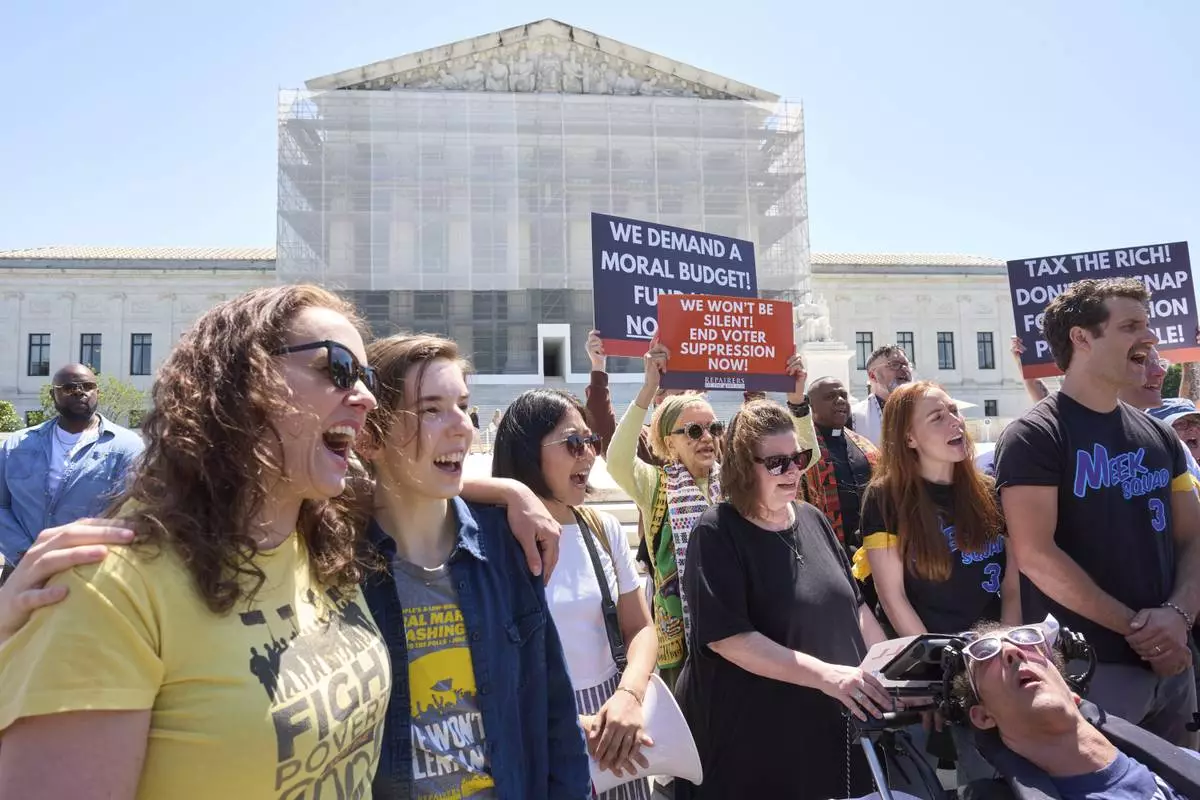
Activists with the Poor People's Campaign protest against spending reductions across Medicaid, food stamps and federal aid in President Donald Trump's spending and tax bill being worked on by Senate Republicans this week, outside the Supreme Court in Washington, Monday, June 2, 2025. (AP Photo/J. Scott Applewhite)
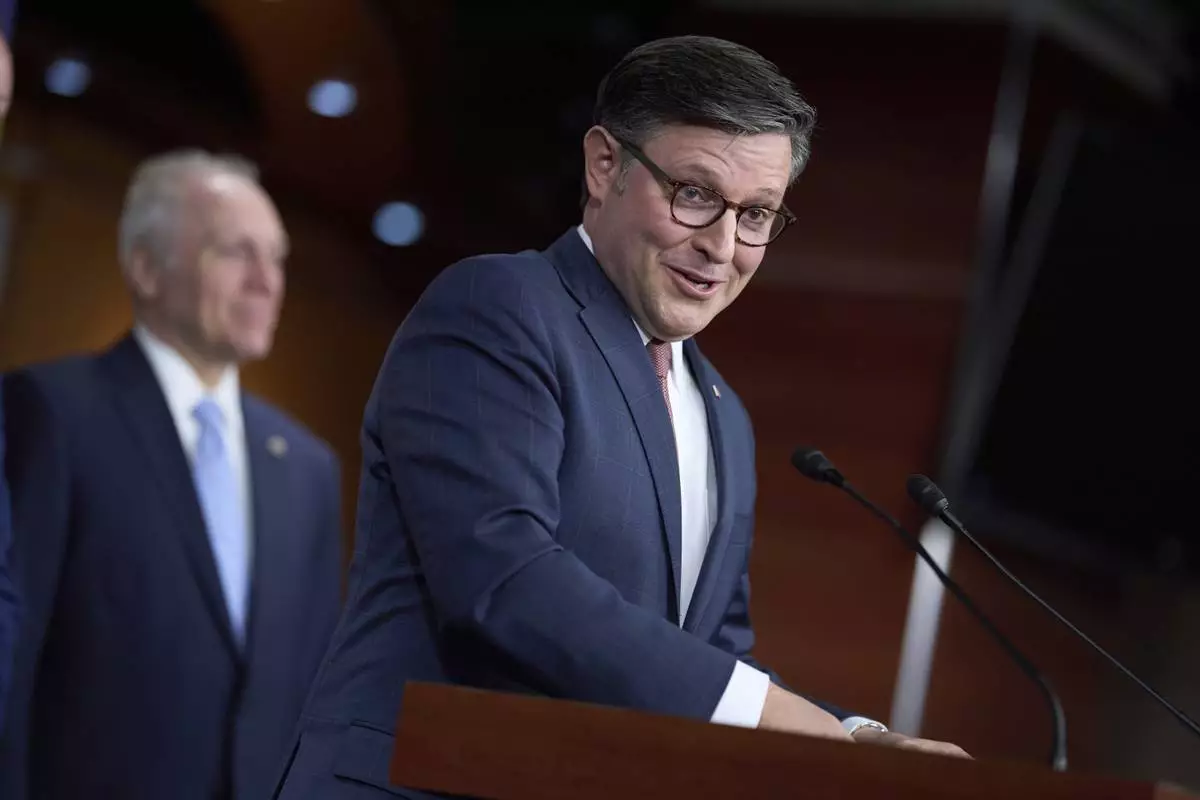
Speaker of the House Mike Johnson, R-La., wraps up a news conference on President Donald Trump's bill of tax breaks and spending cuts, at the Capitol in Washington, Wednesday, June 4, 2025. (AP Photo/J. Scott Applewhite)
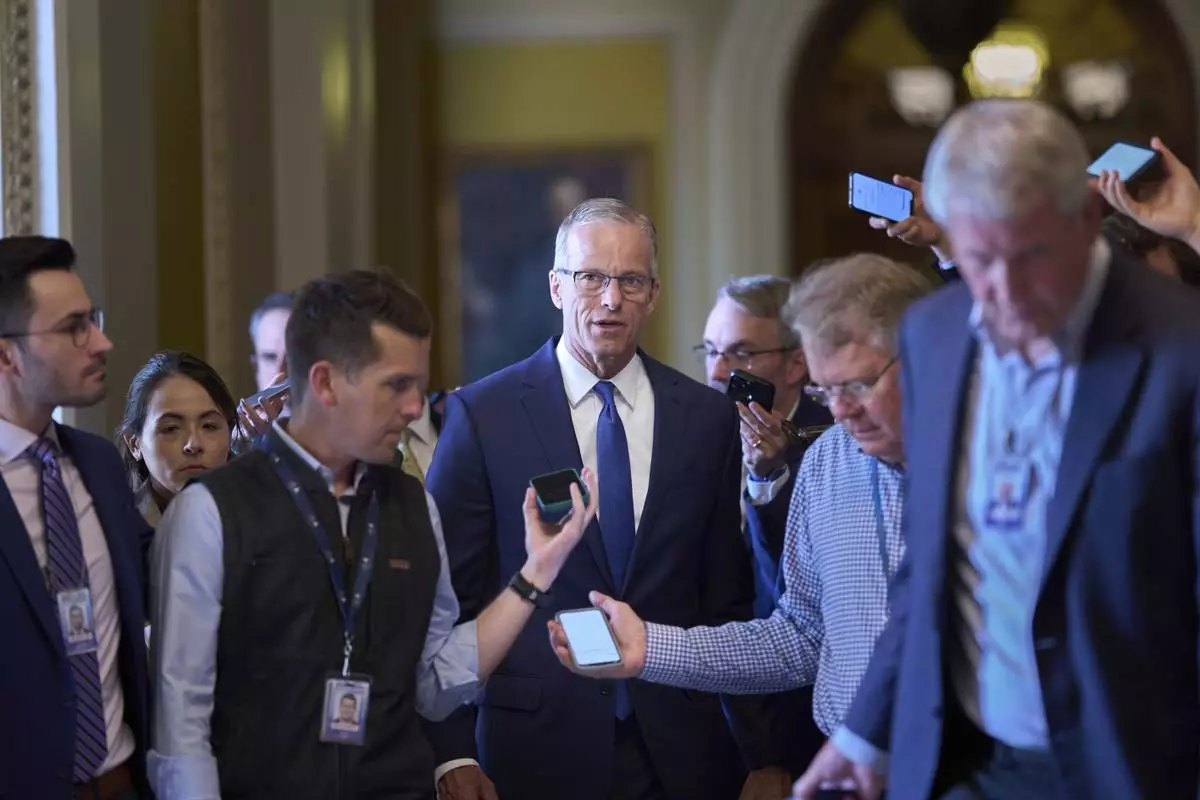
Senate Majority Leader John Thune, R-S.D., speaks with reporters about his plans to advance President Donald Trump's spending and tax bill, at the Capitol in Washington, Monday, June 2, 2025. (AP Photo/J. Scott Applewhite)
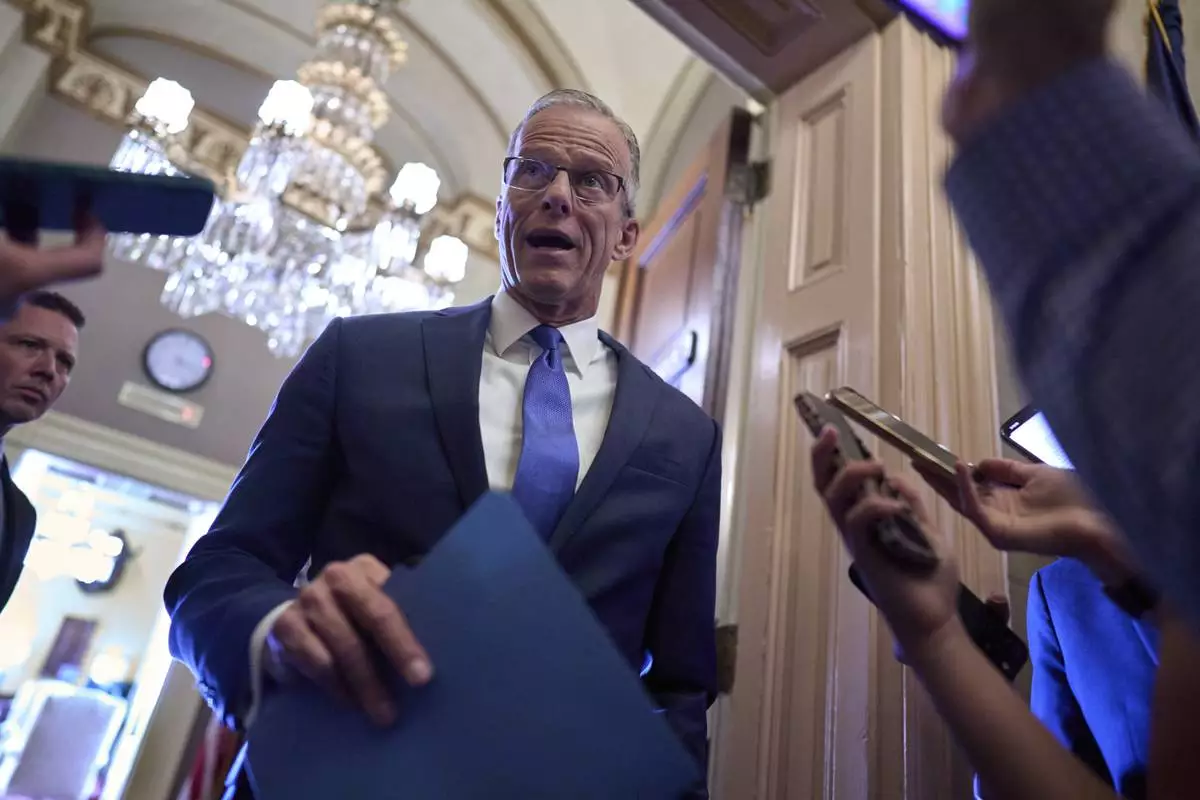
Senate Majority Leader John Thune, R-S.D., pauses in the door of his office to answer questions from reporters about his strategy to advance President Donald Trump's spending and tax bill, at the Capitol in Washington, Monday, June 2, 2025. (AP Photo/J. Scott Applewhite)
MINNEAPOLIS (AP) — Thousands of people marched in Minneapolis Saturday to protest the fatal shooting of a woman by a federal immigration officer there and the shooting of two protesters in Portland, Oregon, as Minnesota leaders urged demonstrators to remain peaceful.
The Minneapolis gathering was one of hundreds of protests planned in towns and cities across the country over the weekend. It came in a city on edge since the killing of Renee Good on Wednesday by an Immigration and Customs Enforcement officer.
“We’re all living in fear right now,” said Meghan Moore, a mother of two from Minneapolis who joined the protest Saturday. “ICE is creating an environment where nobody feels safe and that’s unacceptable.”
On Friday night, a protest outside a Minneapolis hotel that attracted about 1,000 people turned violent as demonstrators threw ice, snow and rocks at officers, Minneapolis Police Chief Brian O’Hara said Saturday. One officer suffered minor injuries after being struck with a piece of ice, O’Hara said. Twenty-nine people were cited and released, he said.
Minneapolis Mayor Jacob Frey stressed that while most protests have been peaceful, those who cause damage to property or put others in danger will be arrested. He faulted “agitators that are trying to rile up large crowds.”
“This is what Donald Trump wants,” Frey said of the president who has demanded massive immigration enforcement efforts in several U.S. cities. “He wants us to take the bait.”
Minnesota Gov. Tim Walz echoed the call for peace.
“Trump sent thousands of armed federal officers into our state, and it took just one day for them to kill someone,” Walz posted on social media. “Now he wants nothing more than to see chaos distract from that horrific action. Don’t give him what he wants.”
The U.S. Department of Homeland Security says its deployment of immigration officers in the Twin Cities is its biggest ever immigration enforcement operation. Trump's administration has said both shootings were acts of self-defense against drivers who “weaponized” their vehicles to attack officers.
Connor Maloney said he was attending the Minneapolis protest to support his community and because he's frustrated with the immigration crackdown.
“Almost daily I see them harassing people,” he said. “It’s just sickening that it’s happening in our community around us.”
Steven Eubanks, 51, said he felt compelled to attend a protest in Durham, North Carolina, on Saturday because of the “horrifying” killing of Good in Minneapolis.
“We can’t allow it,” Eubanks said. “We have to stand up.”
Indivisible, a social movement organization that formed to resist the Trump administration, said hundreds of protests were scheduled in Texas, Kansas, New Mexico, Ohio, Florida and other states.
In Minneapolis, a coalition of migrant rights groups organized the demonstration that began in a park about half a mile from the residential neighborhood where the 37-year-old Good was shot on Wednesday. Marchers carried signs calling for ICE to leave and voiced support for Good and immigrants.
A couple of miles away, just as the demonstration began, an Associated Press photographer witnessed heavily armed officers — at least one in Border Patrol uniform — approach a person who had been following them. Two of the agents had long guns out when they ordered the person to stop following them, telling him it was his “first and final warning.”
The agents eventually drove onto the interstate without detaining the driver.
Protests held in the neighborhood have been largely peaceful, in contrast to the violence that hit Minneapolis in the aftermath of the killing of George Floyd in 2020. Near the airport, some confrontations erupted on Thursday and Friday between smaller groups of protesters and officers guarding the federal building used as a base for the Twin Cities crackdown.
O’Hara said city police officers have responded to calls about cars abandoned because their drivers have been apprehended by immigration enforcement. In one case, the car was left in park and in another case a dog was left in the vehicle.
He said immigration enforcement activities are happening “all over the city” and that 911 callers have been alerting authorities to ICE activity, arrests and abandoned vehicles.
The Trump administration has deployed thousands of federal officers to Minnesota under a sweeping new crackdown tied in part to allegations of fraud involving Somali residents. More than 2,000 officers were taking part.
Some officers moved in after abruptly pulling out of Louisiana, where they were part of another operation that started last month and was expected to last until February.
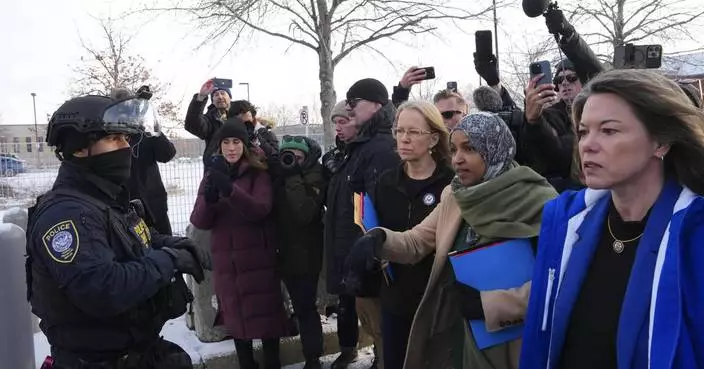
Three congresswomen from Minnesota attempted to tour the ICE facility in the Minneapolis federal building on Saturday morning and were initially allowed to enter but then told they had to leave about 10 minutes later.
U.S, Reps. Ilhan Omar, Kelly Morrison and Angie Craig accused ICE agents of obstructing members of Congress from fulfilling their duty to oversee operations there.
“They do not care that they are violating federal law,” Craig said after being turned away.
A federal judge last month temporarily blocked the Trump administration from enforcing policies that limit congressional visits to immigration facilities. The ruling stems from a lawsuit filed by 12 members of Congress who sued in Washington, D.C. to challenge ICE’s amended visitor policies after they were denied entry to detention facilities.
Associated Press writers Allen Breed in Durham, North Carolina, and Scott Bauer in Madison, Wisconsin, contributed.
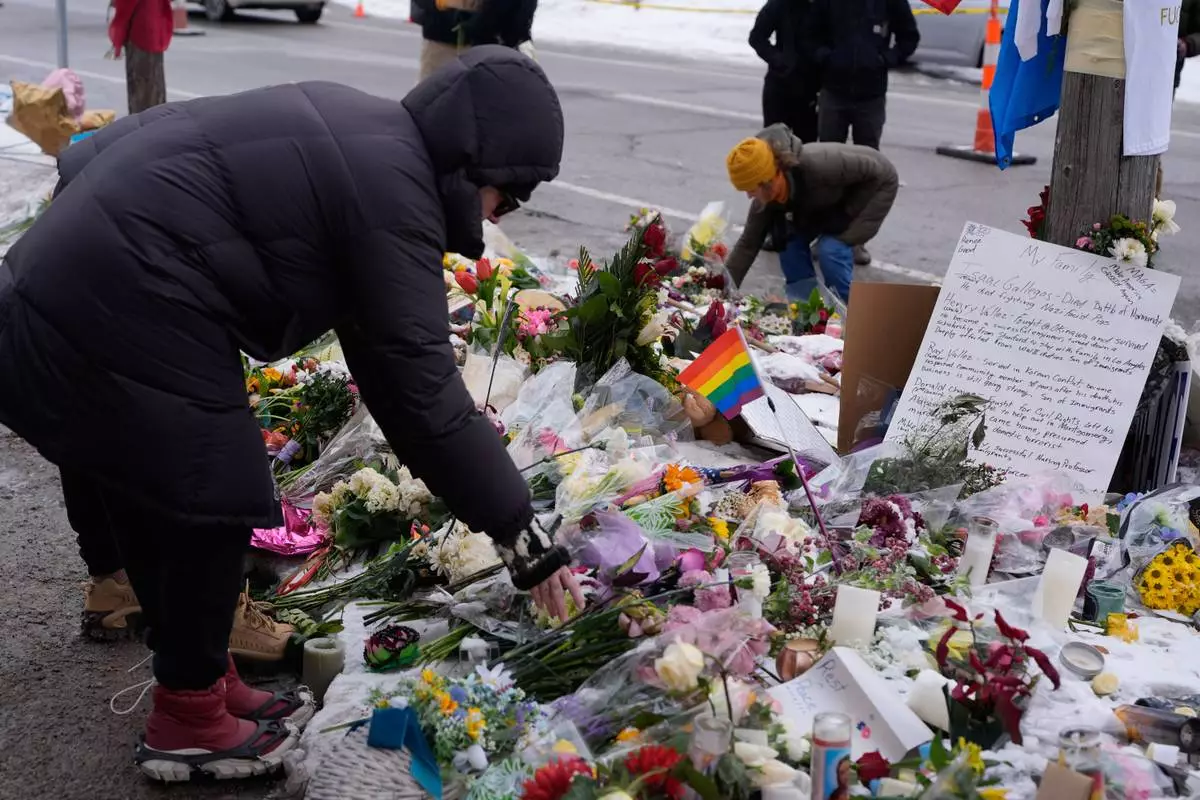
People place flowers for a memorial at the site where Renee Good was fatally shot by an ICE agent in Minneapolis, Saturday, Jan. 10, 2026. (AP Photo/Jen Golbeck)
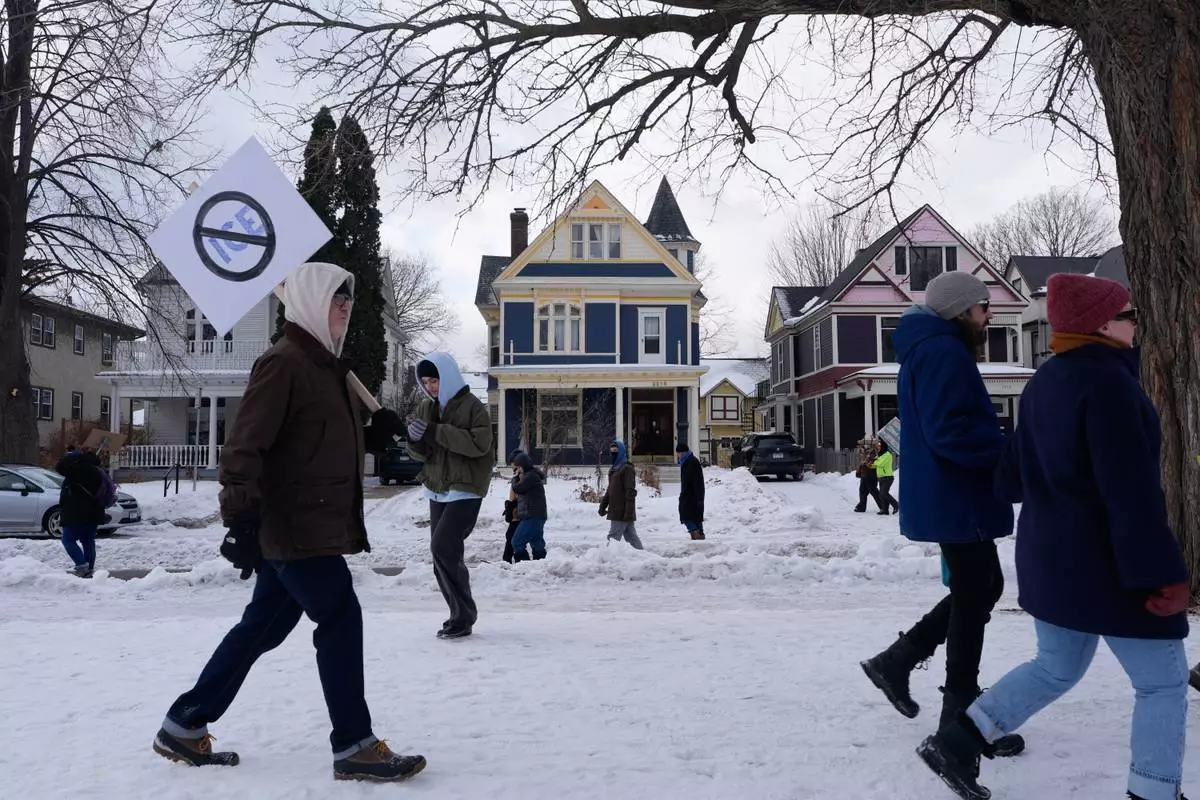
Protesters gather during a rally for Renee Good, who was fatally shot by an ICE officer earlier in the week, Friday, Jan. 10, 2026, in Minneapolis. (AP Photo/Jen Golbeck)
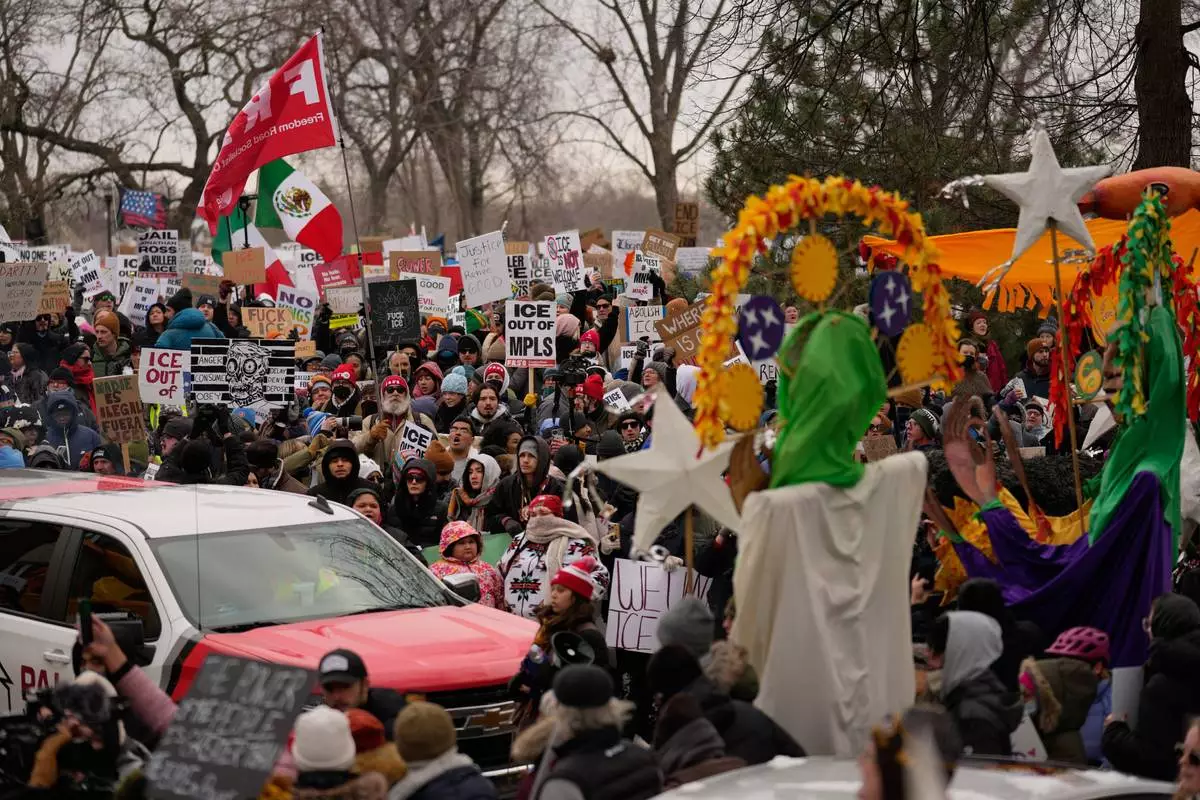
Protesters gather during a rally for Renee Good, who was fatally shot by an ICE officer earlier in the week, Saturday, Jan. 10, 2026, in Minneapolis. (AP Photo/John Locher)
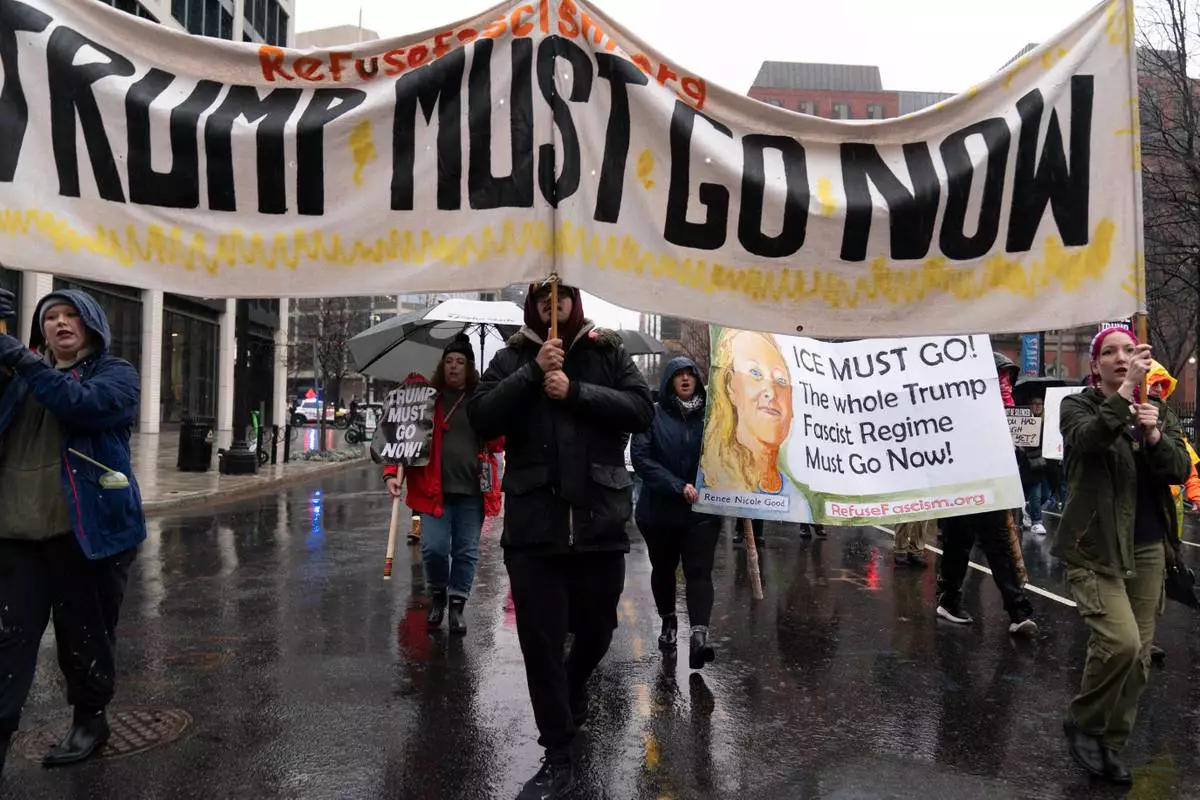
Demonstrators protest outside the White House in Washington, Saturday, Jan. 10, 2026, against the Immigration and Customs Enforcement agent who fatally shot Renee Good in Minneapolis. (AP Photo/Jose Luis Magana)
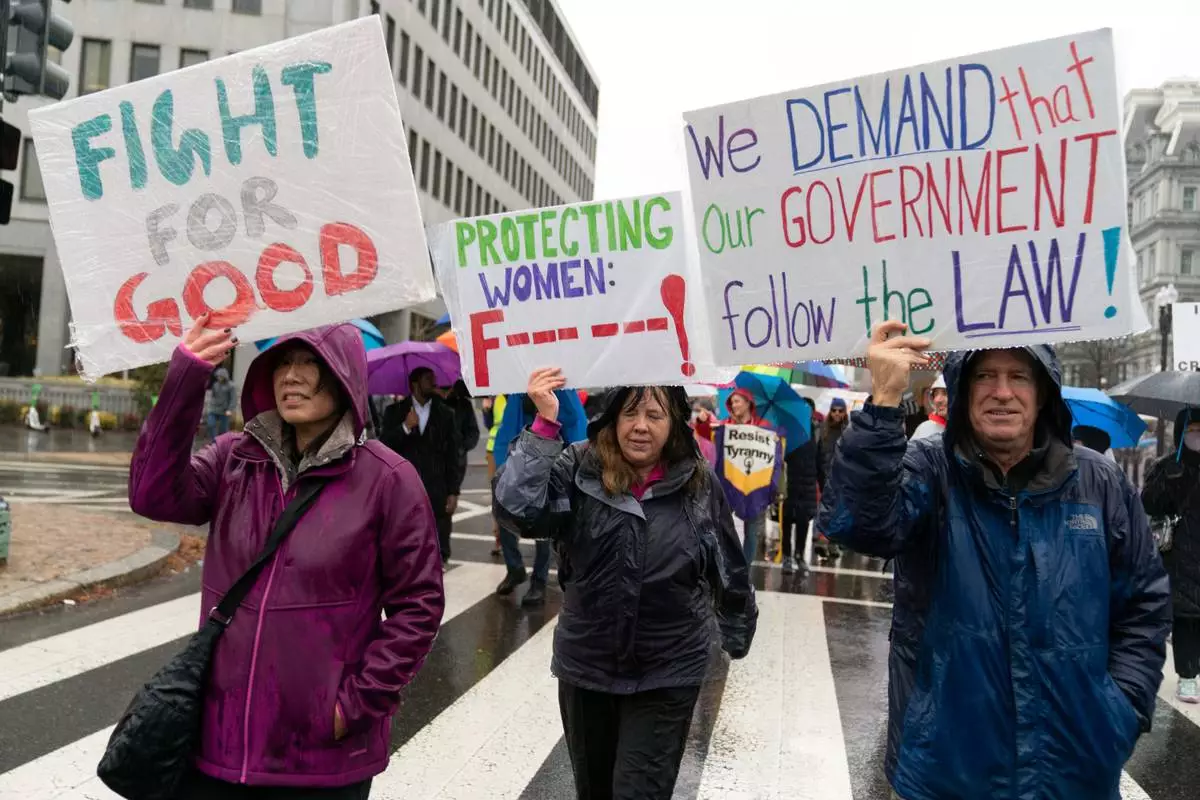
Demonstrators march outside the White House in Washington, Saturday, Jan. 10, 2026, against the Immigration and Customs Enforcement agent who fatally shot Renee Good in Minneapolis. (AP Photo/Jose Luis Magana)
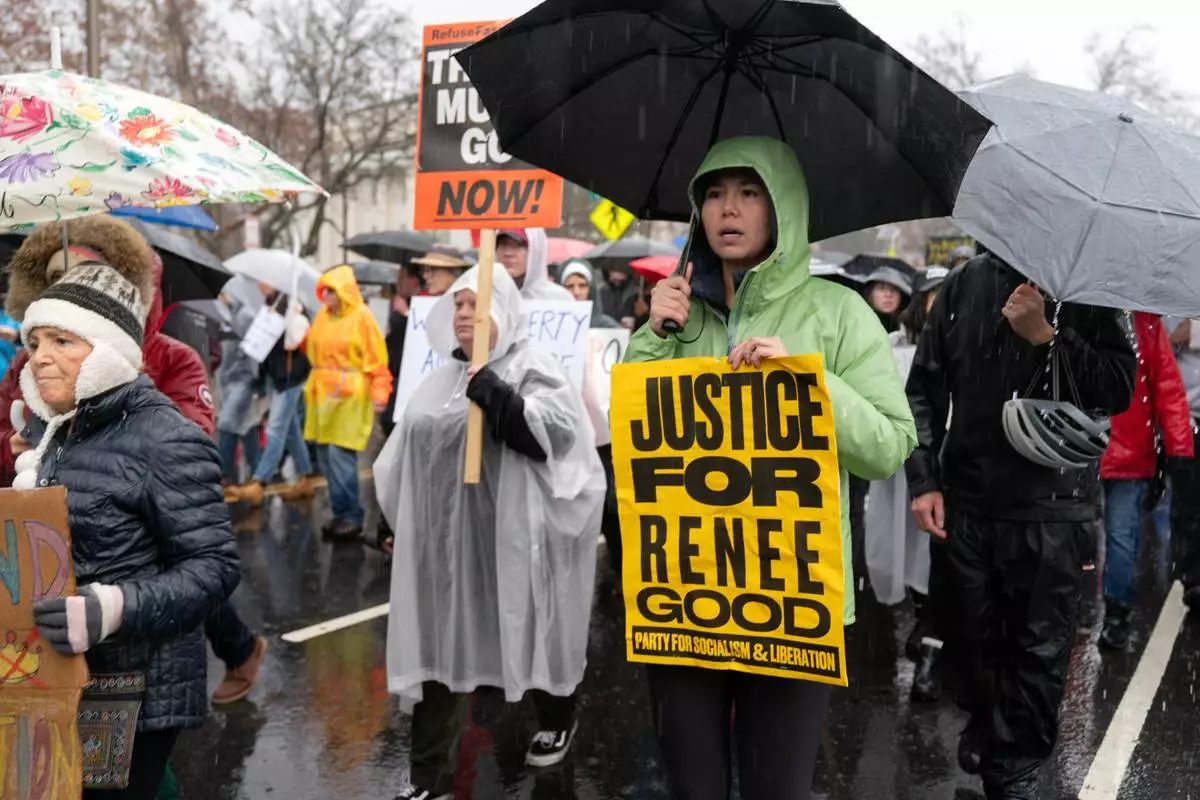
Demonstrators march outside the White House in Washington, Saturday, Jan. 10, 2026, against the Immigration and Customs Enforcement agent who fatally shot Renee Good in Minneapolis. (AP Photo/Jose Luis Magana)
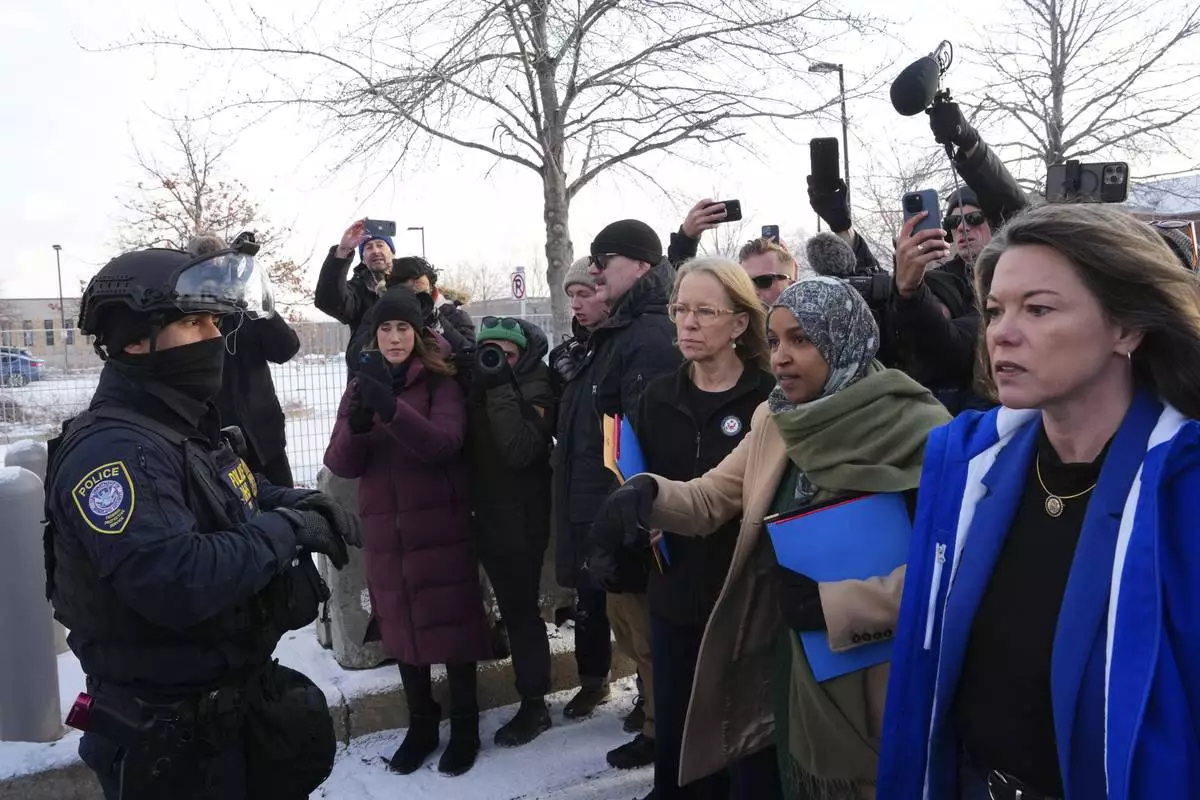
Rep. Kelly Morrison D-Minn., center, Rep. Ilhan Omar, D-Minn., second from the right, and Rep. Angie Craig, D-Minn., far right, at the Bishop Whipple Federal Building, Saturday, Jan. 10, 2026, in Minneapolis. (AP Photo/Adam Gray)

Minneapolis Mayor Jacob Frey holds a news conference as Police Chief Brian O'Hara listens, on Saturday, Jan. 10, 2026, in Minneapolis. (AP Photo/Jen Golbeck)
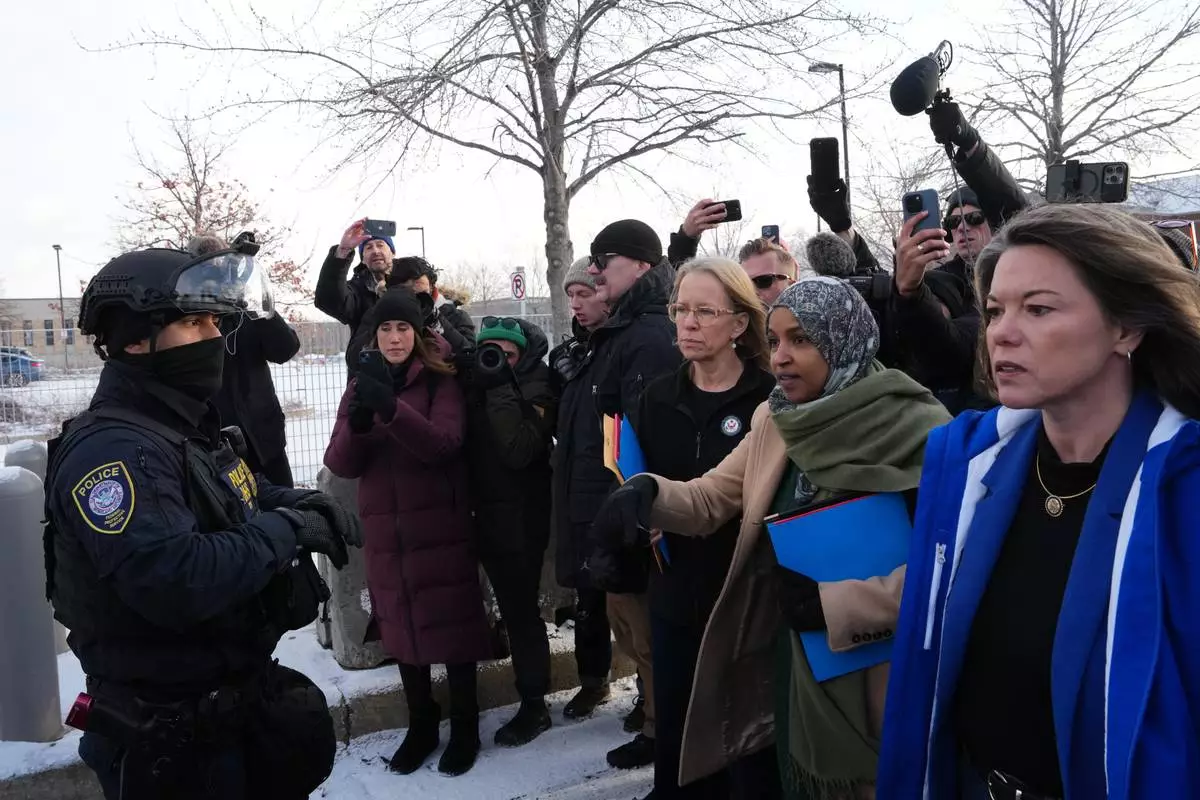
Protesters gather during a rally for Renee Good, who was fatally shot by an ICE officer earlier in the week, Saturday, Jan. 10, 2026, in Minneapolis. (AP Photo/Adam Gray)
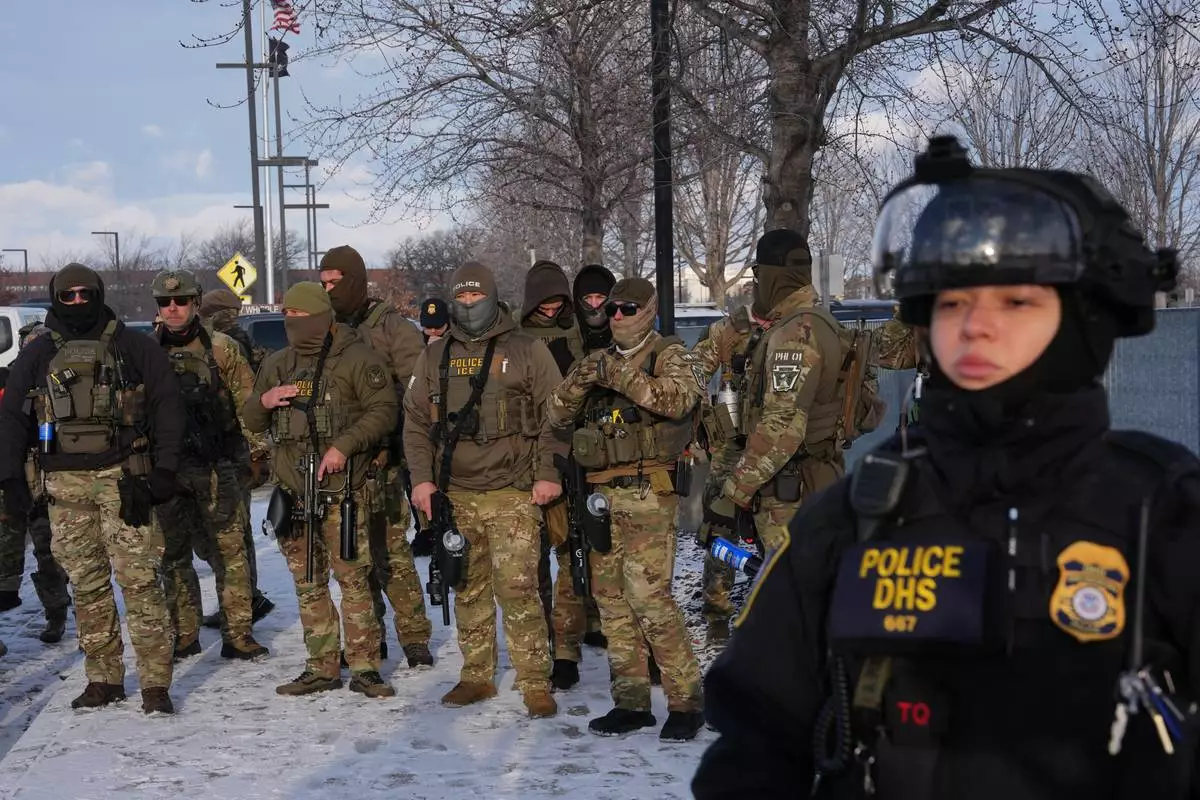
Federal agents stand outside the Bishop Henry Whipple Federal Building as protesters gather in Minneapolis, Saturday, Jan. 10, 2026. (AP Photo/Adam Gray)
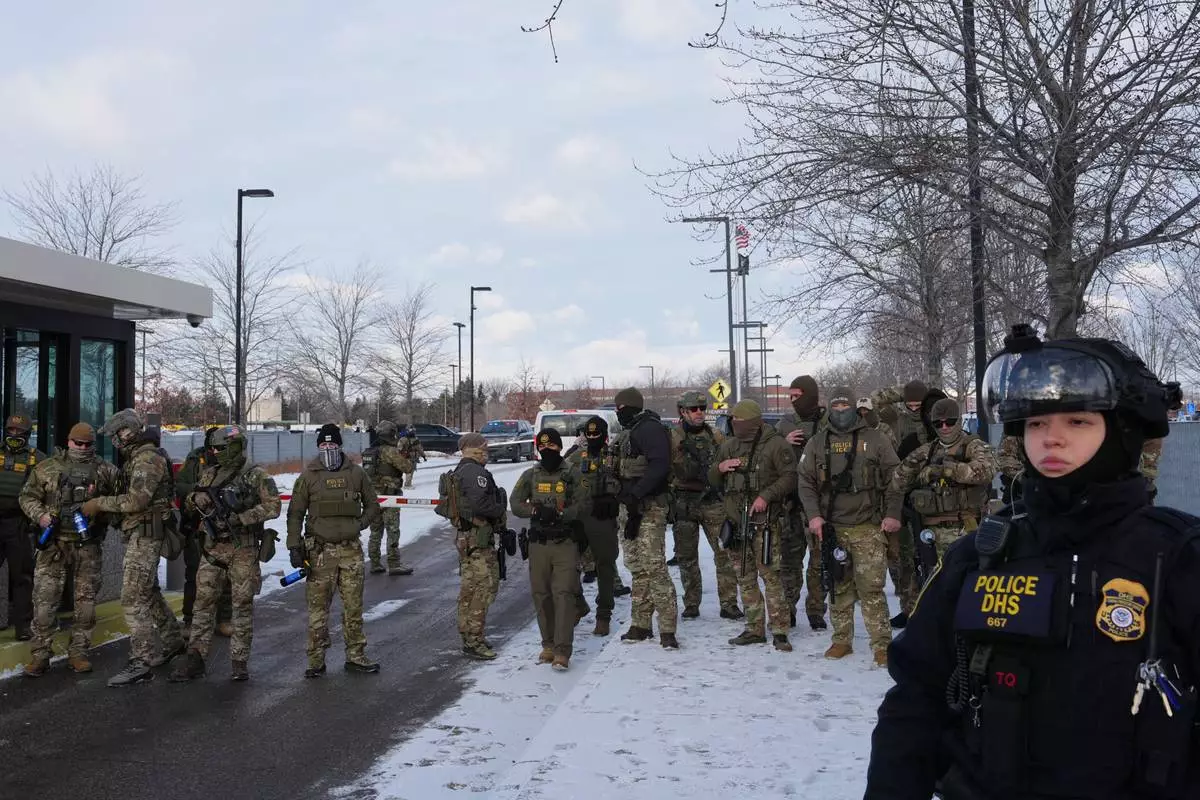
Federal agents stand outside the Bishop Henry Whipple Federal Building as protesters gather in Minneapolis, Saturday, Jan. 10, 2026. (AP Photo/Adam Gray)
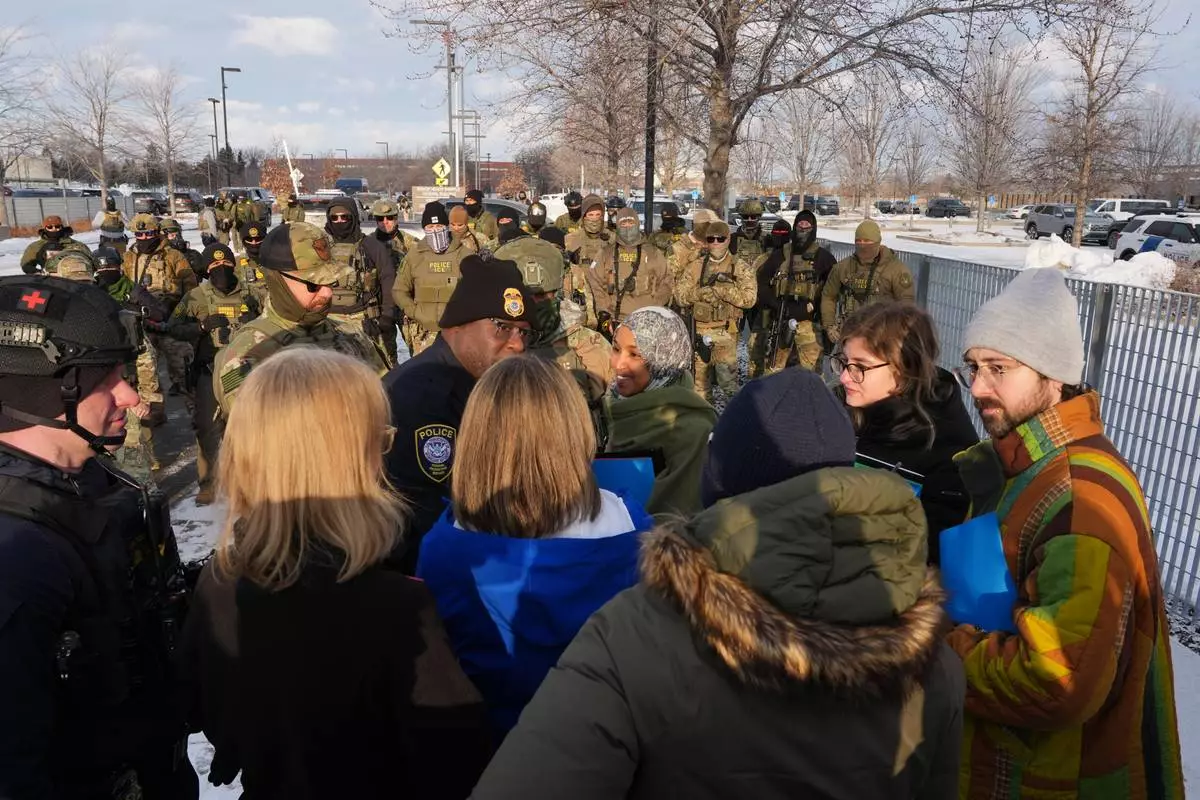
Protesters gather during a rally for Renee Good, who was fatally shot by an ICE officer earlier in the week, Saturday, Jan. 10, 2026, in Minneapolis. (AP Photo/Adam Gray)
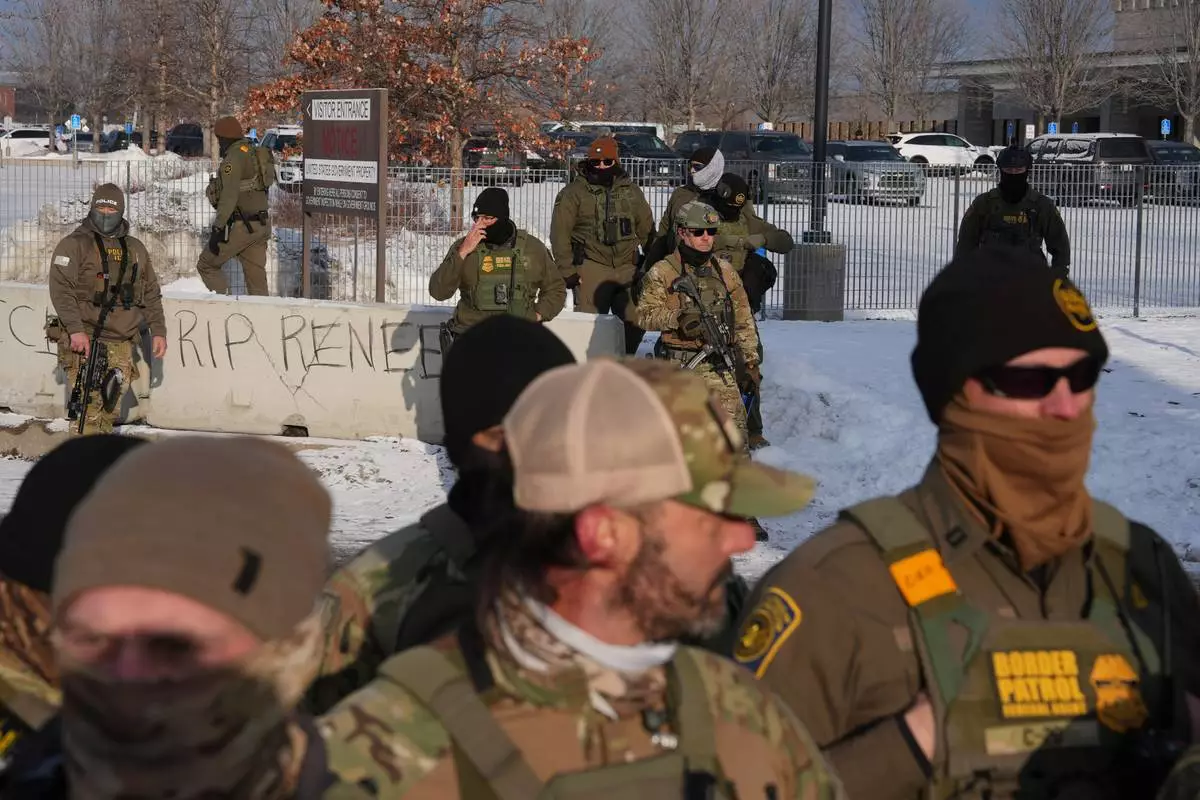
Federal agents look on as protesters gather during a rally for Renee Good, who was fatally shot by an ICE officer earlier in the week, Saturday, Jan. 10, 2026, in Minneapolis. (AP Photo/Adam Gray)
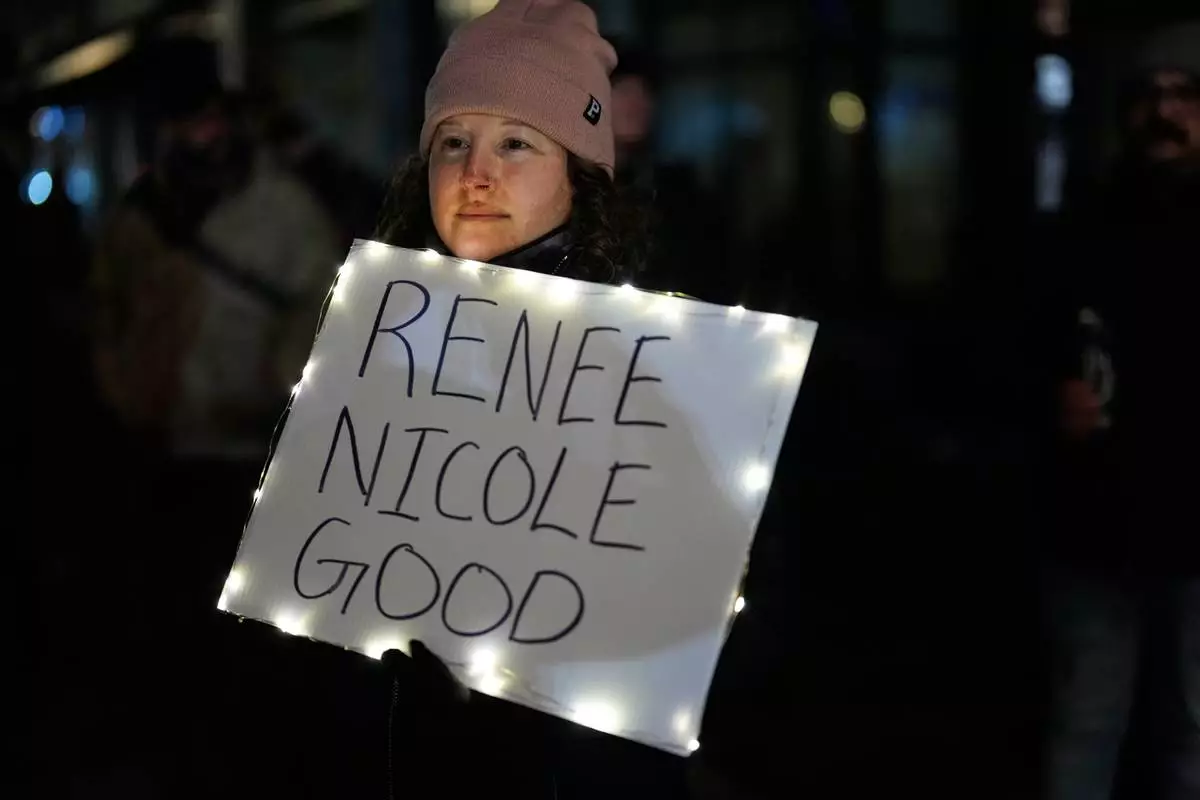
A woman holds a sign for Renee Good, who was fatally shot by an ICE officer in Minneapolis earlier in the week, as people gather outside the U.S. Immigration and Customs Enforcement facility Friday, Jan. 9, 2026, in Portland, Ore. (AP Photo/Jenny Kane)
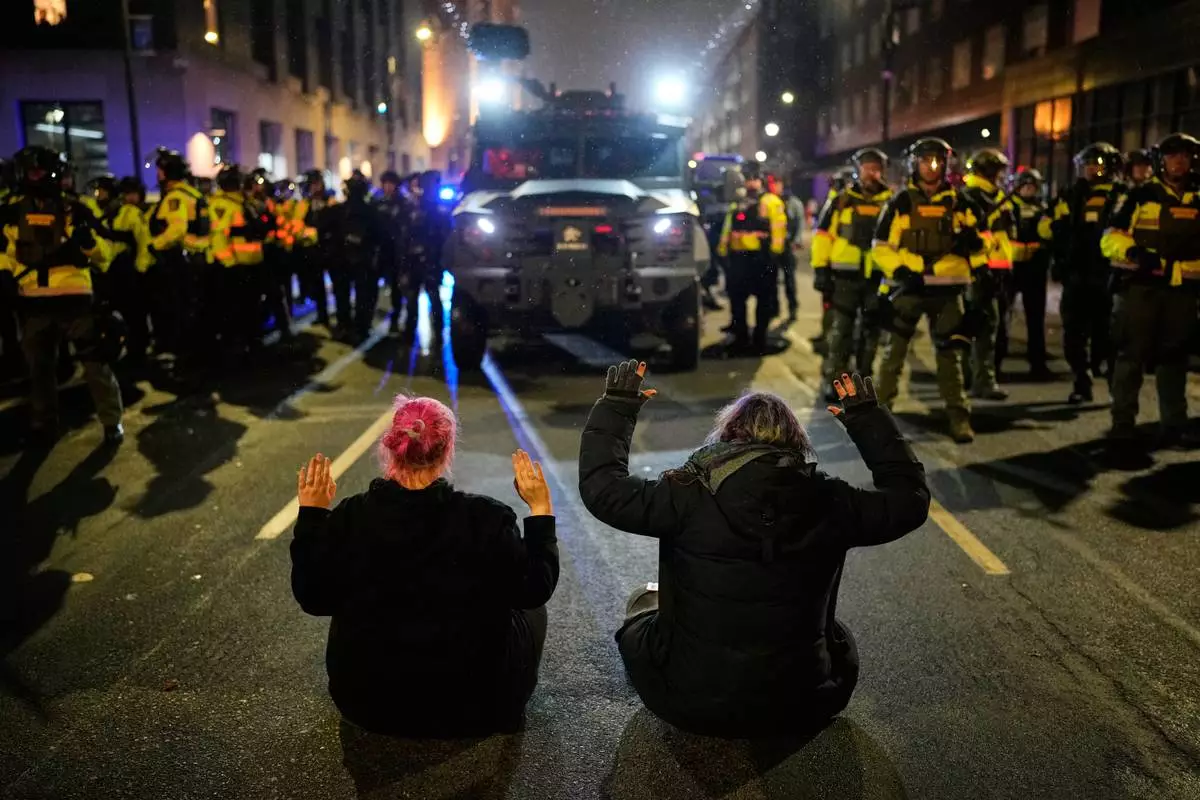
Two people sit in the street with their hands up in front of Minnesota State Patrol during a protest and noise demonstration calling for an end to federal immigration enforcement operations in the city, Friday, Jan. 9, 2026, in Minneapolis. (AP Photo/John Locher)
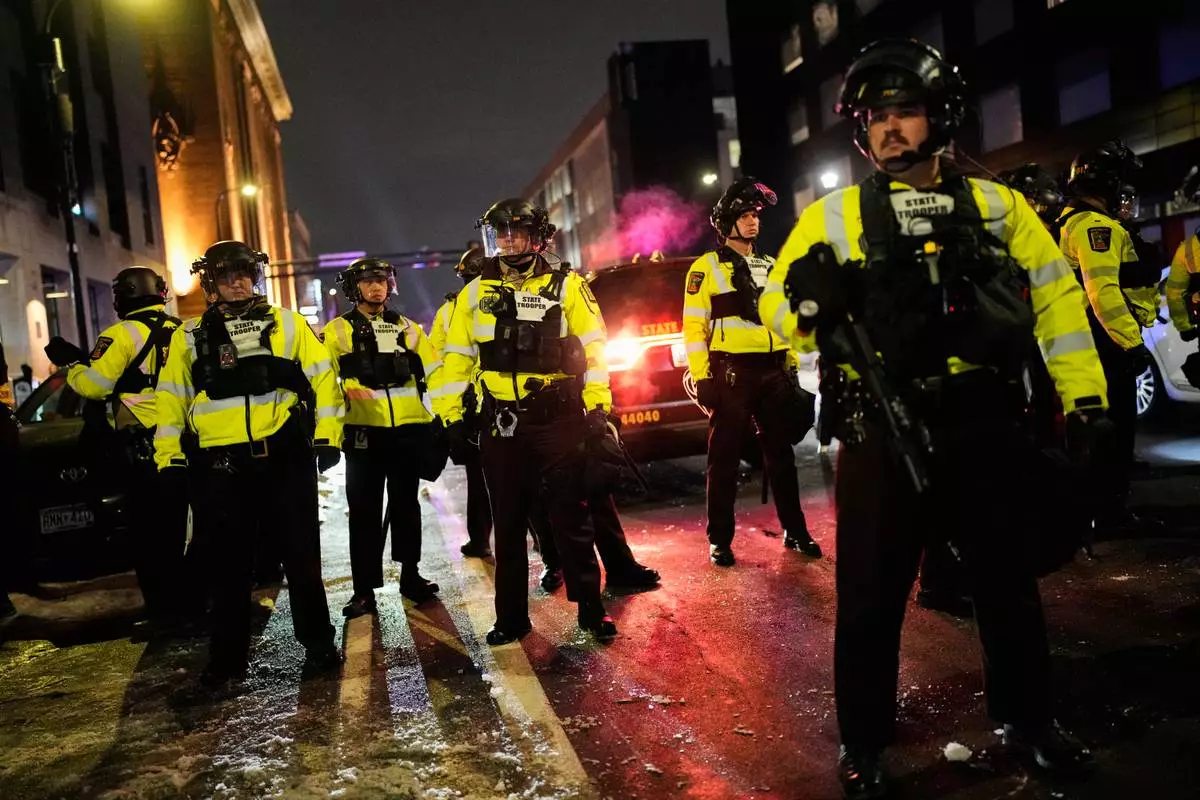
Minnesota State Patrol officers are seen during a protest and noise demonstration calling for an end to federal immigration enforcement operations in the city, Friday, Jan. 9, 2026, in Minneapolis. (AP Photo/John Locher)
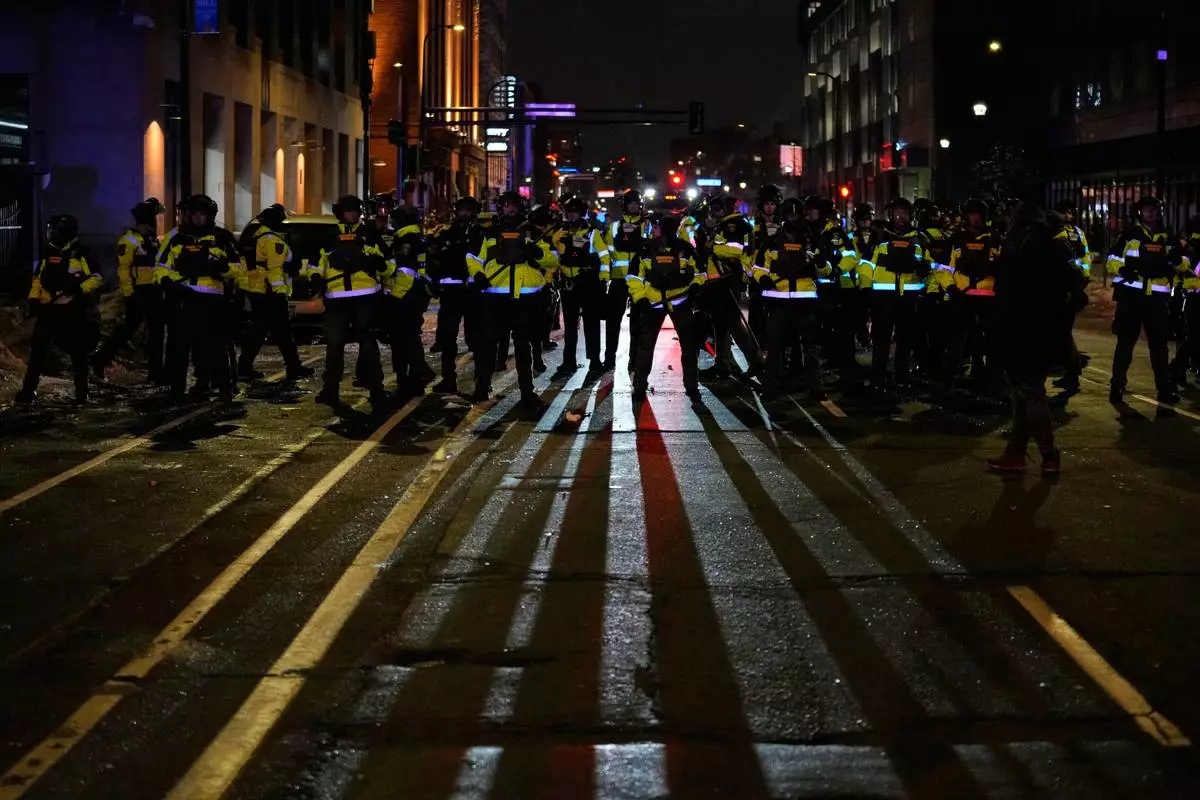
Minnesota State Patrol officers are seen during a protest and noise demonstration calling for an end to federal immigration enforcement operations in the city, Friday, Jan. 9, 2026, in Minneapolis. (AP Photo/John Locher)
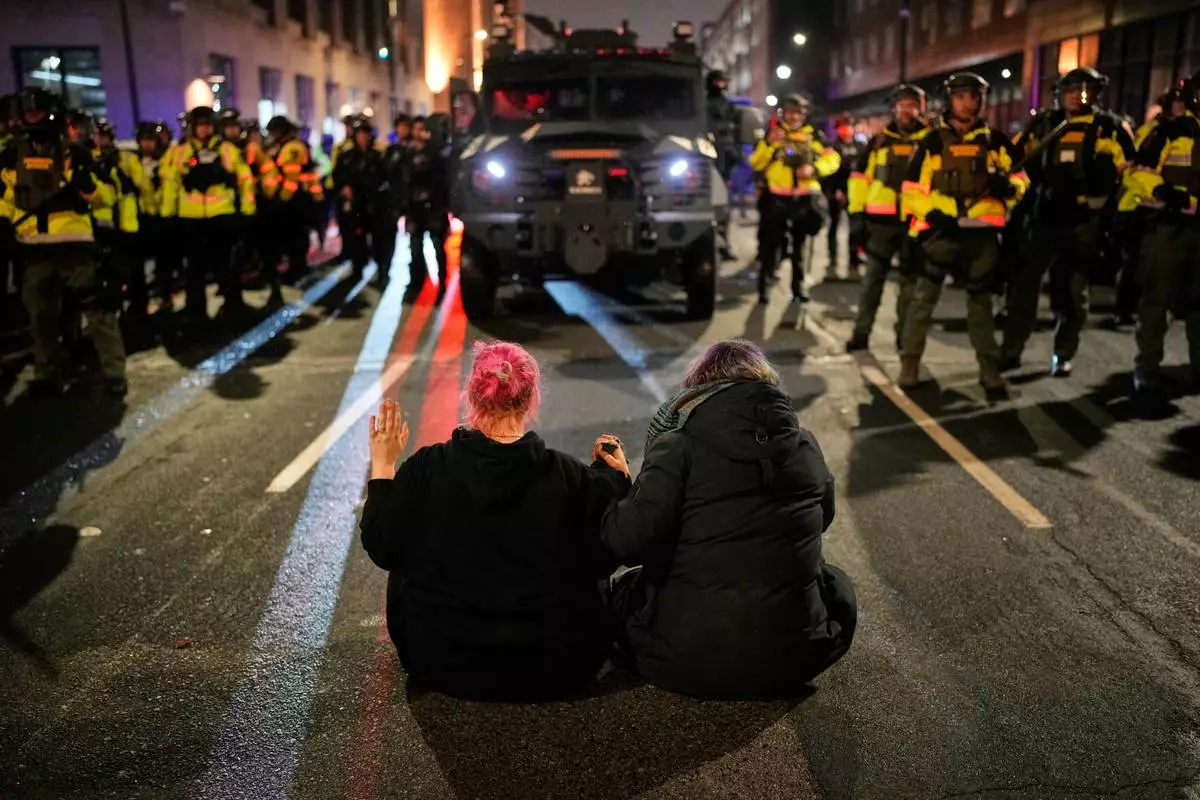
Two people sit in the street holding hands in front of Minnesota State Patrol during a protest and noise demonstration calling for an end to federal immigration enforcement operations in the city, Friday, Jan. 9, 2026, in Minneapolis. (AP Photo/John Locher)