OKLAHOMA CITY (AP) — The Athletes Unlimited Softball League made its debut after a year of buildup and a recent collaboration with Major League Baseball.
The Bandits beat the Talons 3-1 in the first game Saturday in Rosemont, Illinois. The Volts were set to play the Blaze in Wichita, Kansas later in the day.
“I kind of feel like we blinked and it was here,” Cat Osterman, general manager of the Volts, said. “But then there were moments where it felt like we weren’t ever going to get here either because it took a whole year of process. We’re all excited.”
Athletes Unlimited has featured softball since 2020, when it unveiled a unique format that crowned an individual champion. The organization that focuses exclusively on women's sports now has launched a traditional four-team softball league in a traveling format. The Blaze, Volts, Bandits and Talons will play 24 games each, touring to 12 cities. The top two teams will compete in the best-of-three AUSL Championship from July 26-28 in Tuscaloosa, Alabama.
MLB said last month that it is making a strategic investment in the league. It will include an undisclosed amount for operational costs and a commitment to help it gain visibility. It will market the AUSL and its athletes during its All-Star Game, throughout the postseason and during broadcasts on the MLB Network and streams on MLB.TV.
USA Softball executive director Craig Cress likes the fact that a league with MLB’s backing exists for players to join after their college careers. He sees it as an opportunity to keep the top American players facing elite competition so Team USA will be ready for Olympic softball that will be played in Oklahoma City in 2028.
Japan has won the past two Olympic gold medals in the sport. Cress said he hopes the AUSL emerges as something comparable to Japan’s well-established softball leagues.
“We have a great respect and a great rivalry,” Cress said of the history with Japan. “But this Olympics on our home soil is our gold medal. We need to go get it. So from that standpoint, I know we've got a long way to go, but that’s the end goal.”
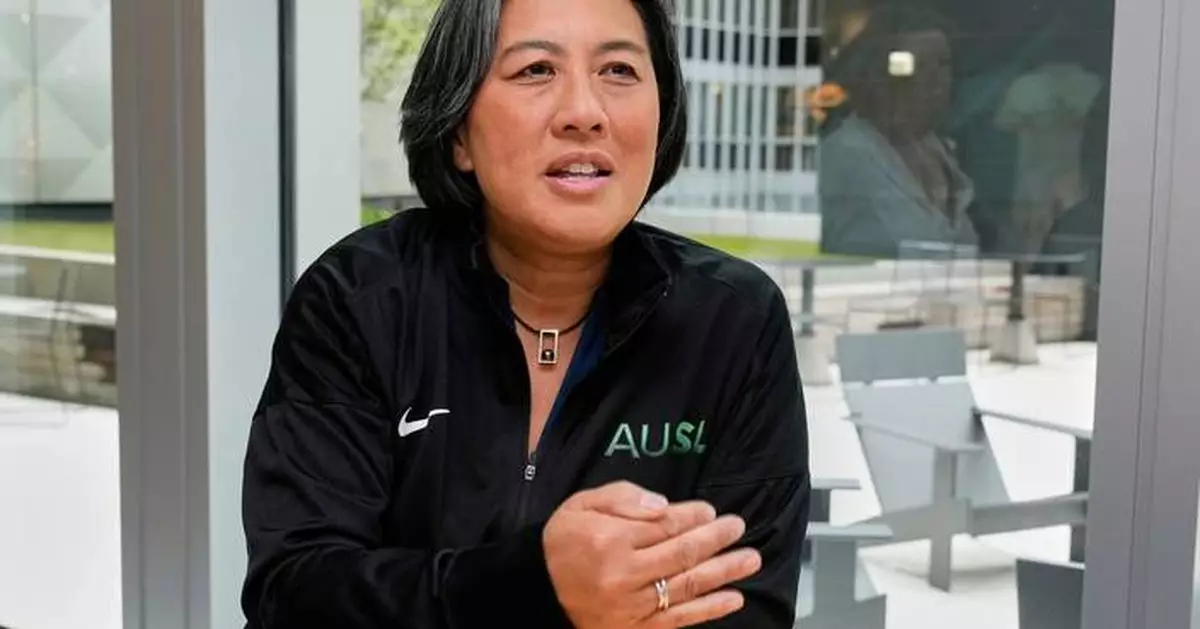
Cress said it was smart for Athletes Unlimited to add former MLB executive Kim Ng as commissioner and to seek out the league as a partner. He hopes the AUSL can catch fire the way the WNBA has the past two years with Caitlin Clark.
“The WNBA is now starting to really do some things with the star power they have coming in,” he said. “But what got them to the point to be able to keep their athletes from going overseas to play? It was the involvement of the NBA.”
There are indicators that this league could last longer than those that have come and gone over the years, starting with the well-structured support system, stability and the experience Athletes Unlimited had with the sport before launching this league.
“I think that one thing you hear about Athletes Unlimited from anybody that’s been around it is we’ve done what we said we were going to do," Athletes Unlimited co-founder Jon Patricof said. “We’ve been around now for five years.”
Bri Ellis, who was named the USA Softball Collegiate Player of the Year for Arkansas this season, played for the Talons on Saturday after being the No. 2 overall pick in the AUSL draft last month. She said she’s thrilled about the timing of the league’s rollout.
“It was kind of this relief that I don’t have to be done now,” she said. “I can keep going and keep playing and there’s still a story to be written for me in my career, and so I’m just really grateful for everyone that’s come before me and has worked their tails off to get the sport to where it is now."
AP sports: https://apnews.com/sports
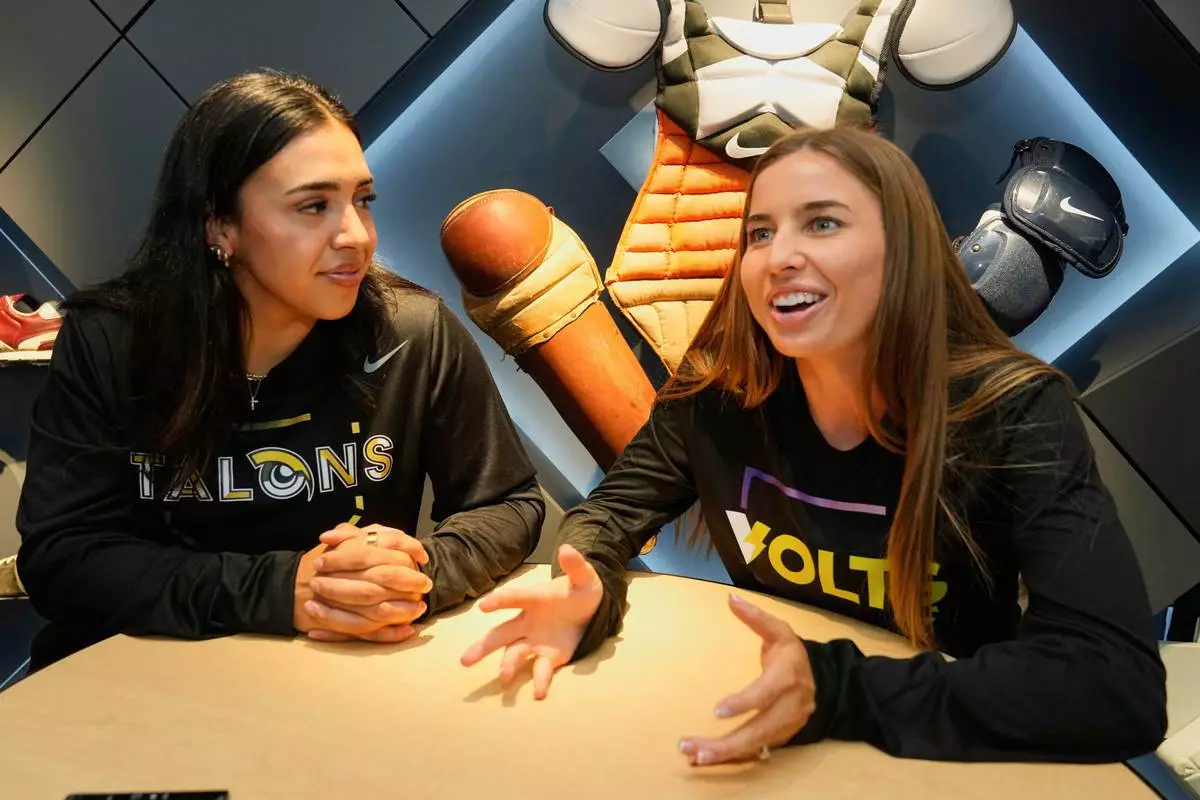
CORRECTS FIRST NAME TO SHARLIZE, NOT CHARLIE - Athletes Unlimited Softball League players Sharlize Palacios, left, of the Talons, and Sis Bates of the Bolts, are interviewed at Major League Baseball's headquarters in New York, Thursday, May 29, 2025. (AP Photo/Richard Drew)
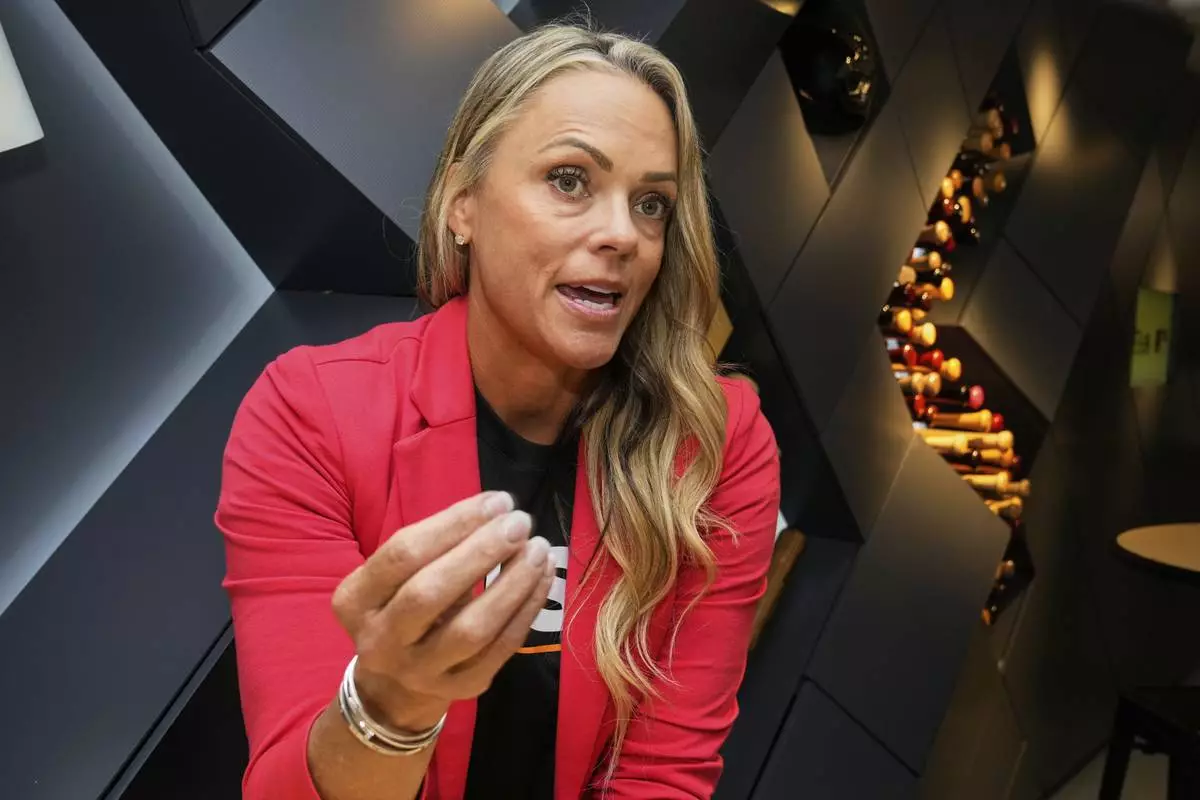
Major League Baseball Youth Softball Ambassador Jennie Finch is interviewed at MLB's headquarters in New York, Thursday, May 29, 2025. (AP Photo/Richard Drew)
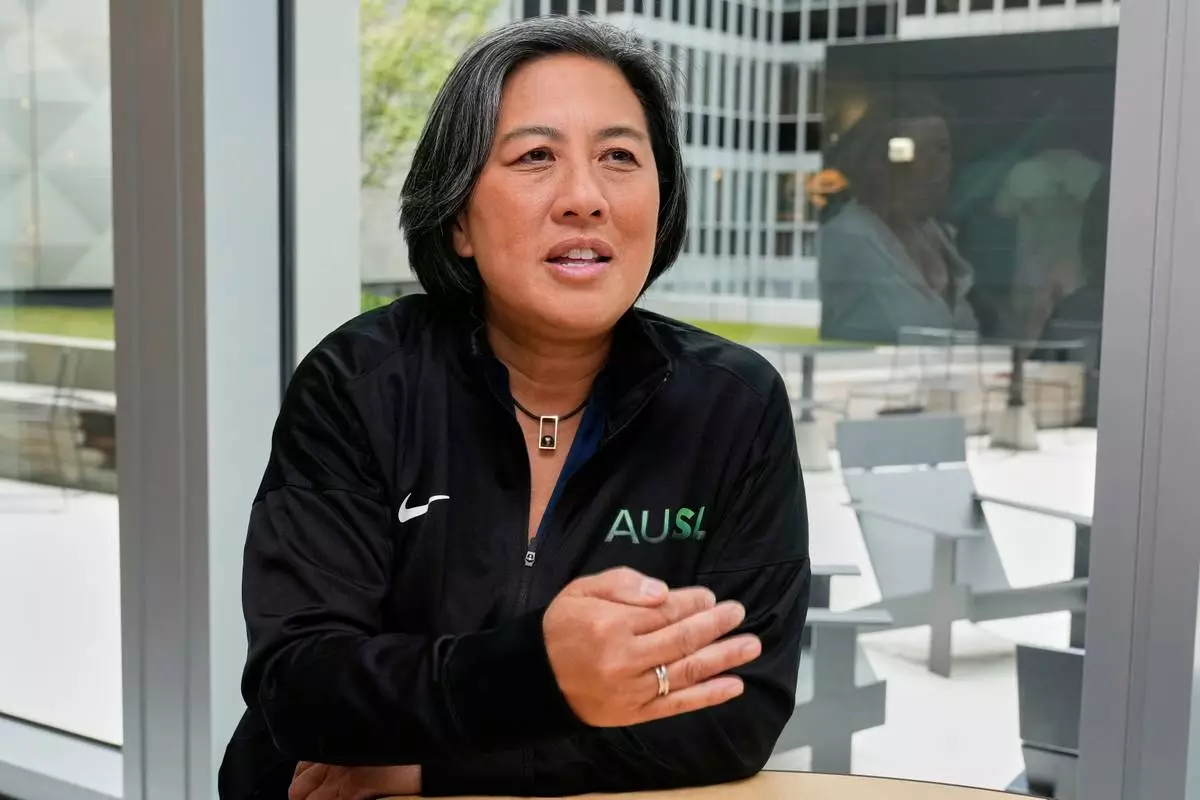
Athletes Unlimited Softball League Commissioner Kim Ng, a former Major League Baseball executive, is interviewed at Major League Baseball's headquarters in New York, Thursday, May 29, 2025. (AP Photo/Richard Drew)
NEW YORK (AP) — On a day of high-stakes diplomacy on the global stage, President Donald Trump began his United Nations visit by telling a prominent U.S. journalist, “You should not be here.”
“It’s an honor to be here,” Trump said as he entered U.N. doors Tuesday ahead of his speech to the General Assembly and faced Kaitlan Collins of CNN, a frequent target of his ire. “I’m surprised that CNN is here covering me. You should not be here covering me. You said you weren’t going to cover me.”
As Collins noted later on air, CNN said nothing of the kind. The administration had banned CNN from White House grounds days earlier — along with MS NOW and Politico — and removed the network from pool duty. But CNN had been admitted into the U.N. as regularly credentialed media.
In any case, the tense moment was a stark reminder of how dramatically the bitter conflict between Trump and news outlets whose coverage he objects to as “fake news" has escalated in just a few days.
The current ban was the subject of a joint lawsuit filed Monday by the three outlets, calling the decision selective — based on the content of their coverage — and asking a judge to find Trump's move unconstitutional.
Late Tuesday, the administration filed a response urging the court to reject the news outlets' request, saying “access to the White House is a privilege — not a right.” The government argued that White House officials can control journalists’ access to “restricted presidential areas,” such as the Oval Office.
“Significantly, Presidents have long decided which journalists should receive privileged access, which has varied substantially by administration,” they wrote.
A hearing is scheduled for Wednesday afternoon.
On Tuesday, Trump doubled down on his remarks and said negative coverage was dangerous for the country.
Asked whether he would allow the outlets back in if the court rules against the White House, he said, “Well, it probably will, because this is a judge who’s not a particularly fair judge.” He was referring to U.S. District Judge Timothy Kelly, whom he appointed in 2017 and who ordered a CNN journalist’s access restored in a similar case in 2018.
“So you never know,” Trump added. "I think we have a right to clean out fake news."
Trump’s comments echoed others he's made since announcing the ban Friday. He has referred to “purposely negative stories” as justification for the ban.
The ban and lawsuit are part of a long-running conflict between the president — especially in his second term — and media outlets he finds unfavorable. Trump has responded in the courtroom, or with regulatory action. He's also lashed out at individual reporters in person or over social media, sometimes in strikingly personal terms — as he has with CNN's Collins, most recently in a speech at the White House Correspondents’ Association dinner.
On air, after her exchange with Trump on Tuesday, Collins said: “We never said we were not going to cover the president. We will do our best to cover him each and every day.”
Tuesday began with an item missing from the daily press schedule issued by the White House: It did not list the U.S. network pool, a departure from the norm.
CNN had been the designated pool network for the president’s trip to New York, according to a schedule that divides coverage of certain events between the five major networks. But Trump's ban removed it from pool duties.
The other pool members agreed, in solidarity, not to replace CNN with another network on the coverage, and further to suspend all pool coverage until further notice. Other news outlets also took steps in solidarity. The Associated Press joined a number of news organizations, including The Washington Post and The New York Times, in a decision not to publish photographs of presidential events Monday.
It remains to be seen how long both the ban and the collective media action will continue.
In speeches and meetings Tuesday, Trump was seen plenty by global audiences, thanks to UNTV — the official United Nations broadcast arm — and pool journalists covering other international leaders.
Meanwhile, a sign was spotted in the White House workspace: “I stand with AP, CNN, MS NOW, Politico.”
One longtime TV analyst says the lack of constant coverage will prove damaging to a spotlight-loving president — which may be one reason the standoff ultimately ends.
“This ban is not going to go on forever because he doesn’t want that to happen, any more than anybody else,” said Robert Thompson, director of Syracuse University’s Bleier Center for Television and Popular Culture.
In the short term, Thompson said, audiences won't feel the impact in a lasting way — after all, he noted, there are many ways people get news outside of network coverage.
“We are not going to be deprived of important civic information,” Thompson said, as might have happened years ago when outlets and options were fewer.
On the other hand, if viewers were interested in what Trump said as he inaugurated a helipad at the White House on Monday, they were out of luck: The sound of Trump’s whirring, waiting helicopter drowned out his remarks. TV network crews usually work to capture clearer audio.
On a deeper level, Thompson said, news consumers will be impacted in a more serious way. He called out Trump's remarks labeling negative media coverage "dangerous" as troubling.
“These casual remarks, not even disguised, about what we always considered basic freedoms of the press ... that, I think, is a lot more serious,” he said.
AP reporter Michael Kunzelman contributed.
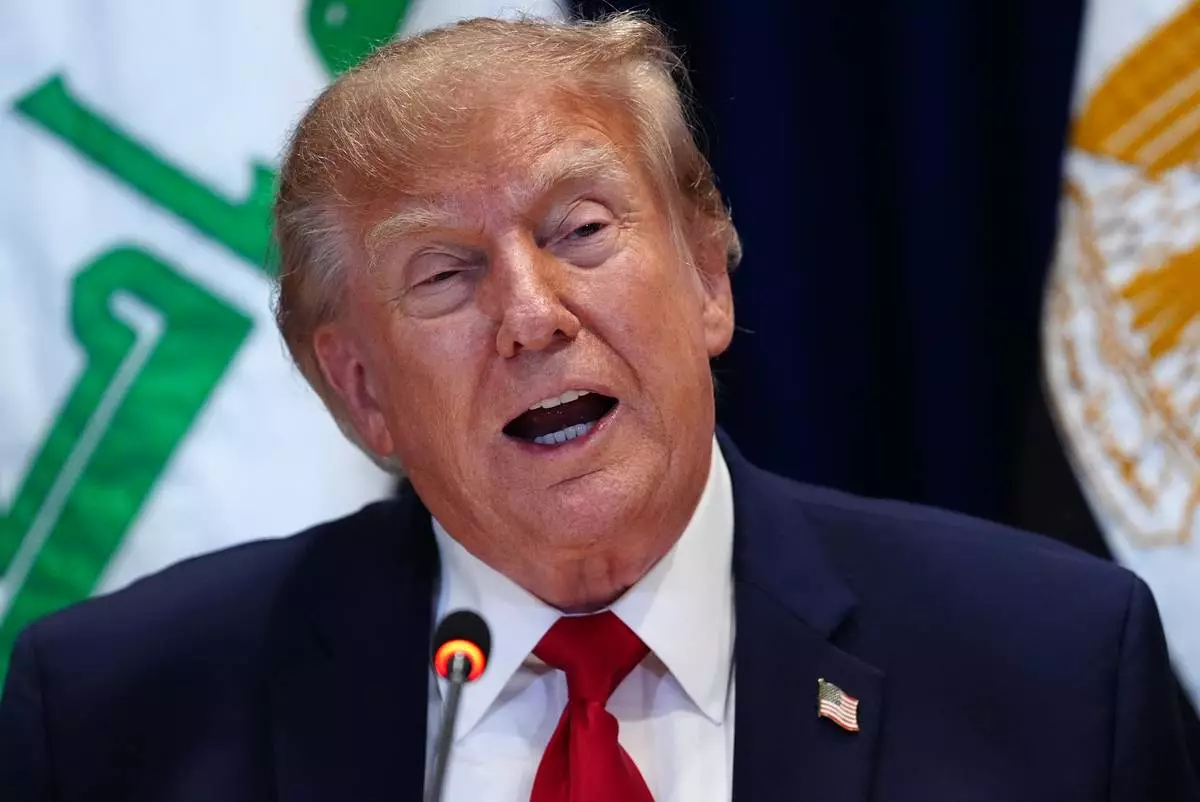
President Donald Trump attends a multilateral meeting with the Gulf Cooperation Council during the United Nations General Assembly, Tuesday, Sept. 22, 2026, at the UN headquarters. (AP Photo/Julia Demaree Nikhinson)
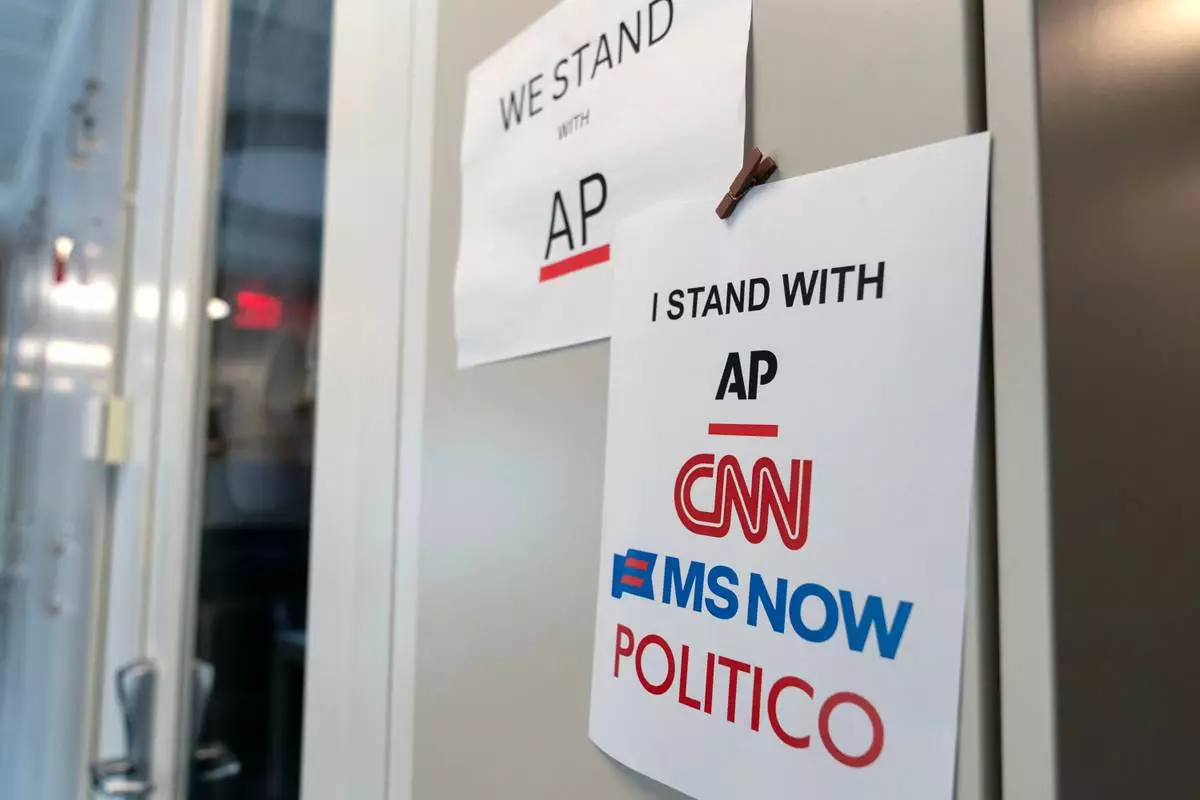
A sign in support of news outlets is seen at the White House press room, Sept. 19, 2026, in Washington. (AP Photo/Jose Luis Magana)