Skip to Content Facebook Feature Image

China promotes salt-tolerant crop cultivation to transform coastal wasteland into farms

China

China

China

China promotes salt-tolerant crop cultivation to transform coastal wasteland into farms

2025-06-08 16:58 Last Updated At:18:07

China is turning salt-damaged land along its coasts into farms, producing a high-value crop known as sea cordyceps, with many once-barren terrains now yielding harvests beneficial to farmers income, consumers’ health and environmental conservation.

China has about 1.5 billion mu (100 million hectares) of saline-alkali land, of which about 500 million mu is available for utilization. As China focuses on promoting agricultural modernization, localities across the country have been making great efforts to utilize saline-alkali land to increase the yield and boost farmer’ incomes.

Such soil is notoriously difficult to farm, typically producing low crop yields, but technological advances in agriculture mean that Chinese farmers are increasingly able to put it to good use.

A newly introduced high-value cash crop, sea cordyceps, is now being widely cultivated on wetlands in Yanfeng Town, Haikou City, the capital of southern China's island province of Hainan. Although the sea cordyceps looks like worms, it is actually a kind of nutrient-packed vegetable.

Few crops can survive in salt-affected soil, but such soil is fertile for sea cordyceps cultivation, with its seedlings, mature seedlings, seeds and straw all having high economic value.

"Because this is saline-alkali land, it is impossible to grow food crops. Its cost will be very high, while the harvest will be very small. However, sea cordyceps can grow in saline-alkali land. It thrives wherever saline-alkali soils exist, and it is a high-value crop," said Qian Guangyao, field farming manager of Hainan Haiyu Biotechnology Company.

This salt-tolerant crop can be irrigated with seawater, helping purify nutrient-rich discharge while producing blue carbon ecosystem benefits.

Sea cordyceps has great commercial value. Fresh sea cordyceps can be eaten raw as a cholesterol-lowering vegetable. It can also be processed into mineral-packed bio-salt through advanced extraction.

The crop is also used to produce tea, cosmetics, and supplements. Estimates suggest that an annual yield of this crop can reach up to 750,000 yuan (about 105,000 U.S. dollars) per hectare, transforming barren, salt-affected land into a source of both nutrition and income.
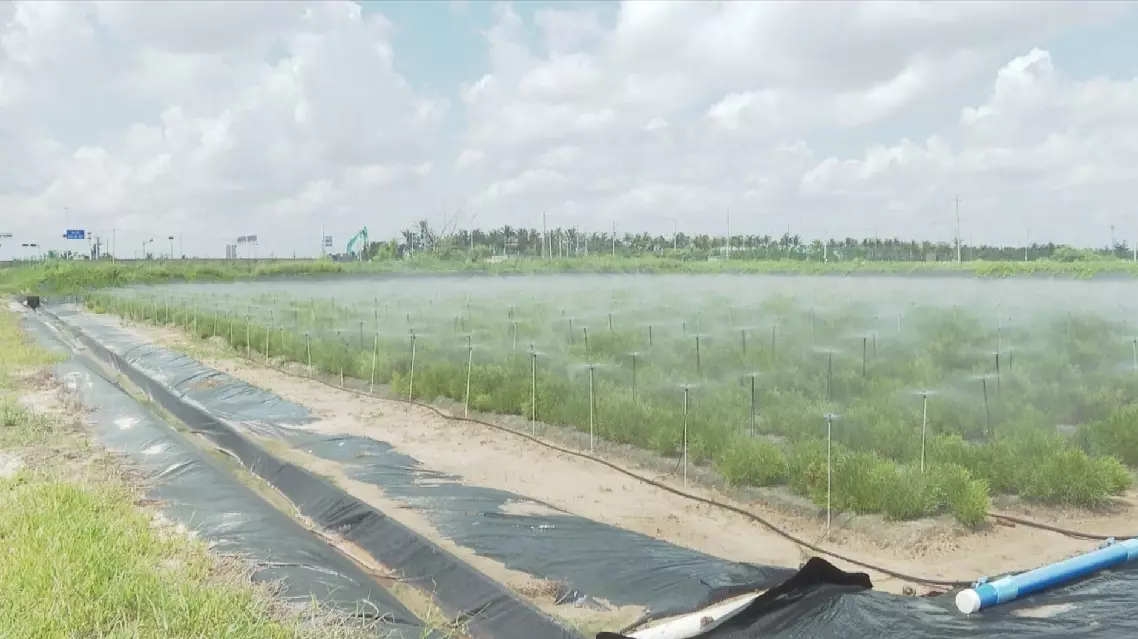
China promotes salt-tolerant crop cultivation to transform coastal wasteland into farms
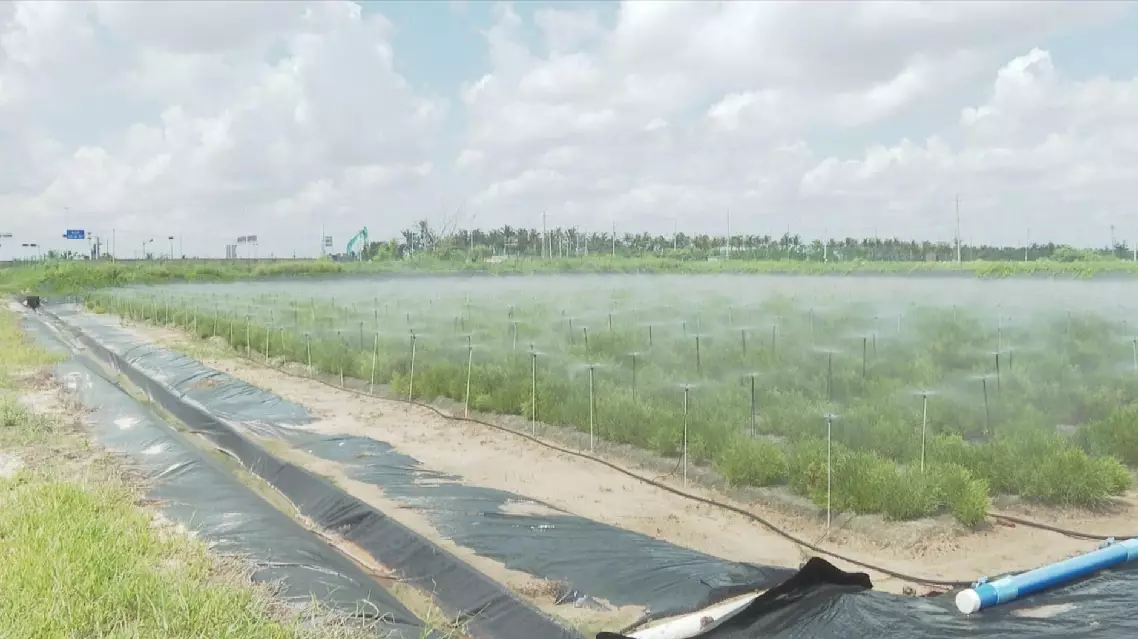
China promotes salt-tolerant crop cultivation to transform coastal wasteland into farms

China promotes salt-tolerant crop cultivation to transform coastal wasteland into farms

China promotes salt-tolerant crop cultivation to transform coastal wasteland into farms

The United States cannot legitimize an operation that attacked Venezuela and captured its president, a Chinese scholar said Sunday.

On Saturday, the United States launched a large-scale strike on Venezuela, during which Venezuelan President Nicolas Maduro and his wife were 'captured and flown out of Venezuela' according to a post by U.S. President Donald Trump on his Truth Social account.

Teng Jianqun, director of the Center for Diplomatic Studies at Hunan Normal University, said in an interview with China Global Television Network (CGTN) that the aim of this operation is to take full control of Venezuela’s natural resources.

"I don't think the United States can legitimize this operation to take custody of the president of Venezuela. And also I don't think the United States can legitimize its any action in taking the oil reserves of that country. This is actually a very dangerous game played by the Trump administration. And of course, the United States would like to take full control of that country and to take full control of the natural resources, especially the large reserve of oil in Venezuela," said Teng.

Teng said Venezuela is not an isolated case but a common practice by the United States. The United States launched an invasion of Panama on Dec. 20, 1989, which continued until January 1990, with the stated objective of capturing Panamanian strongman Manuel Noriega on charges of drug trafficking and organized crime.

"We still remember the so-called sentence of the former president of Panama in the late 1980s. And this time, the president of Venezuela will be under some judicial condition (judicial proceedings) for the so-called drug trafficking and some other crimes. So I think this is not a single case for the Venezuela country, but also this is actually a practice by the United States -- to use force, to use so-called justice under law against any leaders in Latin America and the Caribbean waters," he said.

US cannot legitimize operation against Venezuela: Chinese scholar

US cannot legitimize operation against Venezuela: Chinese scholar

Recommended Articles