As the World Oceans Day is marked on Sunday, China is making significant strides in protecting and restoring vital coastal ecosystems, particularly mangroves and coral reefs that are vital to healthy marine ecology.
The Dongzhaigang National Nature Reserve in the southernmost island province of Hainan is China's first wetland reserve primarily dedicated to mangrove conservation. In recent years, the reserve has planted 130 hectares of mangroves as part of intensified restoration efforts.
"Water quality has become much better. While we previously documented only three seagrass species, our recent surveys have identified an increase to five species. Only when the ecosystem continues turning for the better will new species gradually emerge," said Feng Erhui, forestry engineer at the reserve.
The tropical island province has established 14 mangrove reserves covering 73 percent of its existing mangroves. This year, Hainan plans to add 2,000 hectares of mangroves while developing ecological compensation mechanisms to encourage public participation in conservation efforts.
In east China's Fujian province, the Zhangjiangkou Mangrove National Nature Reserve is the country's most biodiverse mangrove community north of the Tropic of Cancer covering an area of over 266 hectares.
"The ambient climate is relatively stable at this stage, when we should take the advantage of favorable weather to vigorously replant mangroves, as the survival rates are relatively higher now," said Wu Haisheng, deputy director of the reserve.
Fujian is also stepping up its efforts to protect coral reefs. Researchers from the Ministry of Natural Resources' Third Institute of Oceanography have just launched Fujian's first systematic coral rehabilitation project in Dongshan waters.
The team employs a technological system of artificial cultivation plus transplantation, asexually propagating coral fragments until they grow up to five cm, then affixing them to natural or artificial reefs.
"We geometrically increase coral quantities by fragmenting parent colonies, then affix the cuttings to custom ceramic holders to create transplant-ready seedlings for natural or artificial reefs," said associate researcher Wang Jianjia.
"We conduct regular maintenance and health checks on transplanted corals while monitoring coral growth patterns and reef restoration effects. These findings will provide us with more valuable reference for our future coral cultivation and planting efforts," Zhou Xijie, assistant researcher at the institute, explained the post-transplantation care. These initiatives demonstrate China's integrated approach to marine conservation, combining habitat protection with active restoration to maintain coastal resilience and biodiversity.
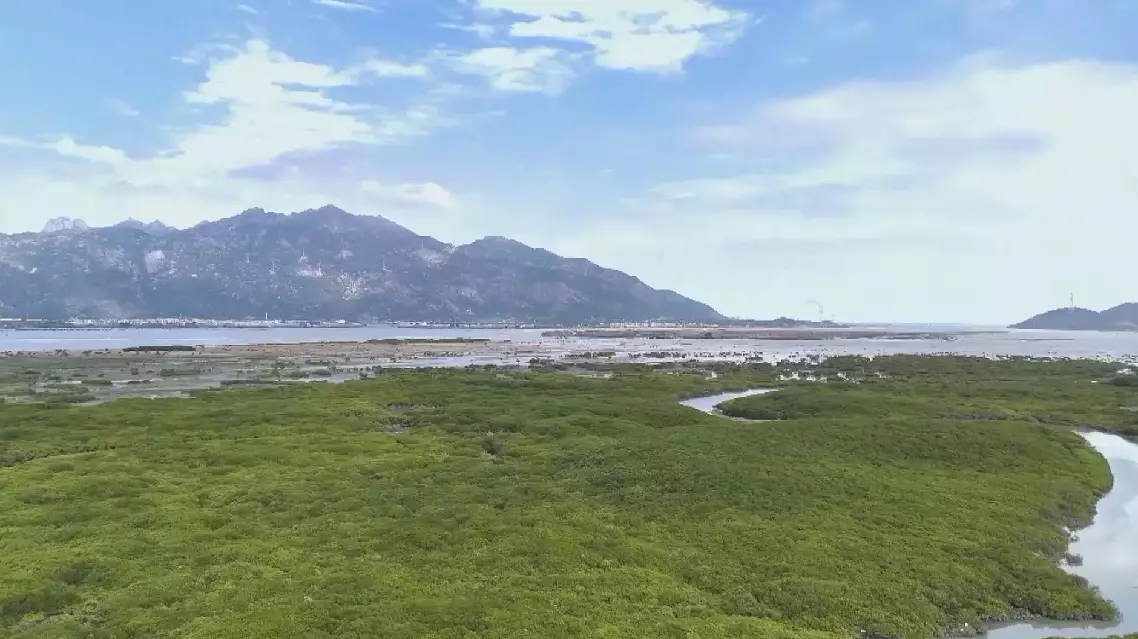
China steps up conservation efforts of coastal ecosystems