Skip to Content Facebook Feature Image

China enhances marine protection efforts, driving rare species recovery

China

China

China

China enhances marine protection efforts, driving rare species recovery

2025-06-08 17:20 Last Updated At:23:47

China's marine ecological efforts have led to notable recoveries in the population and habitats of rare marine species, with continued restoration initiatives driving progress nationwide.

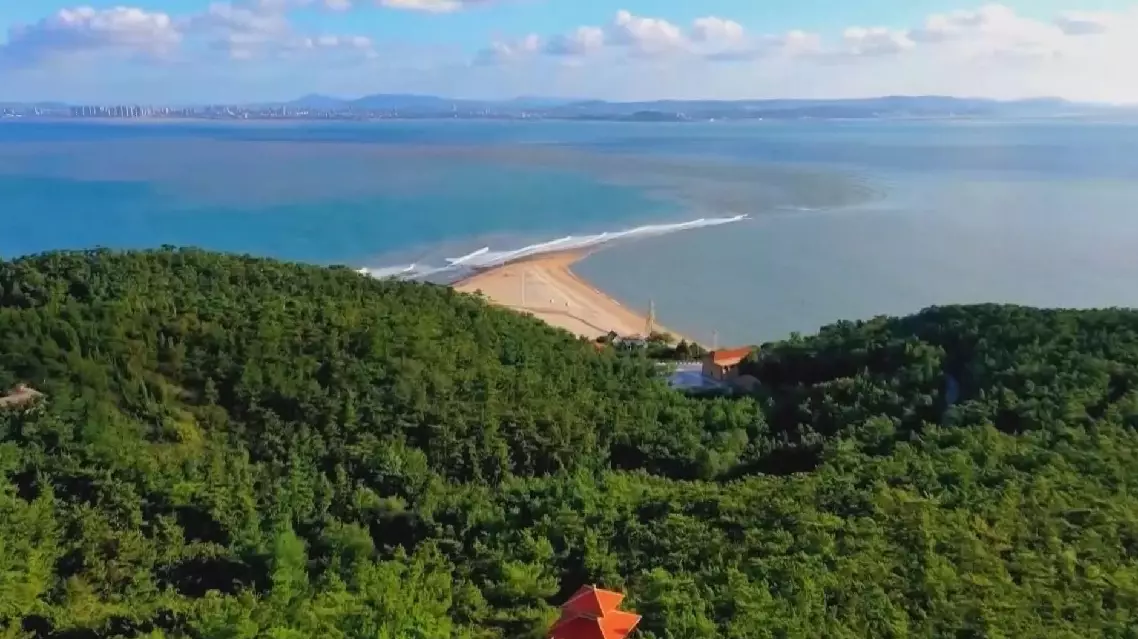
Changdao Island, located in east China's Shandong Province, is an important habitat for the spotted seals, a species under first class national protection.

Local authorities have been promoting the establishment of marine nature reserves to provide a favorable ecological environment for these seals.

The area boasts an excellent marine ecological environment with over 600 species of marine life, including fish, shrimp, crabs, and algae, making it an ideal "refueling station" for spotted seals. And this year, more than 50 spotted seals have migrated to Changdao Island.

To further enhance the protection of spotted seals, Changdao has continued to advance marine ecological restoration efforts, constructing four hectares of seaweed beds and seven hectares of seaweed fields, while deploying 35,000 ecological reef structures to improve the seabed environment.

"By protecting the spotted seal, a rare species, we can also safeguard 97 percent of the important rare and endangered marine species in the Yellow and Bohai Seas, along with over 70 percent of the shallow coastal wetlands, which carries even greater significance," said Zhao Zhaohui, research fellow from the First Institute of Oceanography under Ministry of Natural Resources (MNR).

Meanwhile, the Chinese horseshoe crab - the national second-class protected species, is primarily distributed along China's southern coastal areas, with its survival and reproduction heavily influenced by water temperature.

This year, a breeding base in east China's Fujian Province has utilized artificial temperature control technology to induce early spawning, allowing for a longer high-temperature growing period for the larvae.

The base has achieved a new milestone, nurturing over 300,000 horseshoe crab larvae.

"This approach allows for more time in larval development, particularly in July and August when growth rates are relatively fast, which is foundational for large-scale larval cultivation," said Chen Zhi, an expert on freshwater fishery research from Fujian Provincial Bureau of Ocean and Fisheries.

Starting in June, Fujian plans to release 100,000 horseshoe crab larvae in their third to fifth instar stage in batches, with regular monitoring of their growth and assessments of the impact on intertidal ecosystems, aiding in the recovery of the horseshoe crab population and marine ecological protection.

The MNR on Sunday released the 2024 version of monitoring bulletin for marine ecology, indicating that the overall marine ecological status in China remains stable for 2024. Certain local marine areas have shown improvement, with typical ecosystems primarily characterized as good and stable.
China enhances marine protection efforts, driving rare species recovery


China enhances marine protection efforts, driving rare species recovery

The Iranian government is focusing on public concerns and maintaining stable supplies of essential goods amid recent protests, Iranian President Masoud Pezeshkian said in a televised interview on Sunday.

In the city of Karaj, northwest of the capital Tehran, daily life has largely continued as normal. A video filmed by a local resident on Sunday shows food stores open and grocery shelves fully stocked.

"This is the block near my home, and there are some food stores here. Daily life continues here. Last night we did not see many protests in Karaj. Right now the city is very safe. This is a grocery store close to my home. All the food is available; nothing is in shortage. Here are noodles and different types of beans. Here are dairy products, cheese, and yogurt. I also checked other grocery stores and didn't see any shortages. Everything is available," said local resident Ali Reza.

Iranian officials have described recent disturbances as acts orchestrated by the "enemy," including some carried out by well-trained and armed "terrorists." The incidents have caused casualties among security personnel and civilians, as well as property damage.

The Secretary of Iran's Supreme National Security Council Ali Larijani has directed authorities to severely punish the "terrorists."

Meanwhile, Iran's police chief Ahmad-Reza Radan said on Sunday that the police had raised alert levels and arrested several leaders of the troublemakers during the operations on Saturday.

President Pezeshkian noted in the interview that the normal demands of the Iranian people are reasonable and justified, but they must realize that triggering riots and carrying out terrorist acts are the enemy's attempts to undermine the country. He urged the public to remain vigilant.

Also on Sunday, Iranian Parliament Speaker Mohammad Baqer Qalibaf warned that Tehran would regard U.S. and Israeli bases and facilities in the Middle East as "legitimate targets" if Washington takes military action against Iran. His remarks followed media reports saying U.S. President Donald Trump is "seriously considering authorizing a strike" against Iran.

Iranian state media reported that at least 109 members of Iran's security forces have been killed in clashes since the protests began 14 days ago. Meanwhile, human rights groups based outside the country said the number of protesters killed has exceeded 200, though the figure could not be independently verified.

The protests initially erupted over a sharp depreciation of the rial and sweeping subsidy reforms. Iranian authorities have blamed the unrest on foreign-linked agents and sanctions imposed by the United States.

Iranian president says government focusing on ensuring supplies amid protests

Iranian president says government focusing on ensuring supplies amid protests

Recommended Articles