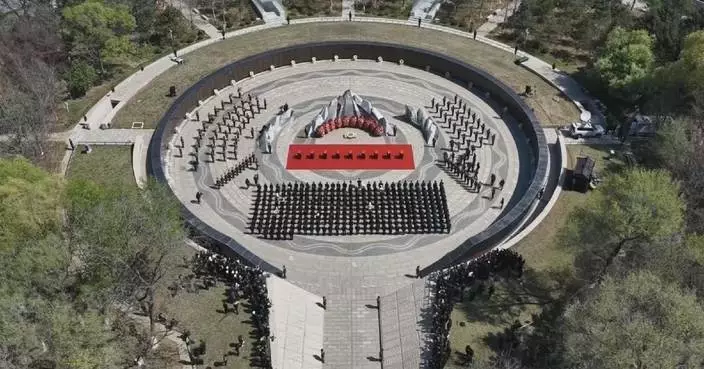
China's three newly established military academies will open recruitment for ordinary high school graduate applicants starting this autumn semester to adapt to the adjustment in services and arms and enhance military talent training.
The three reorganized military academies, namely the University of Army Branches of the People's Liberation Army (PLA), the Engineering University of the PLA's Information Support Forces, and the Engineering University of the PLA's Joint Logistic Support Forces, are all higher education institutions.
The University of Army Branches of the People's Liberation Army (PLA) is set up on the basis of the Army Academy of Armored Forces and the Army Academy of Artillery and Air Defense, with its main campus located in Hefei City, east China's Anhui Province.
It is PLA's only comprehensive university, mainly cultivating junior command officers for armored forces, artillery and air defense forces. It is a pilot institution for cultivating first-class military talents in the new era.
The Engineering University of the PLA's Information Support Forces is established on the basis of the Information and Communication College of the National University of Defense Technology and the Communications NCO (non-commissioned officers) School of the Army Engineering University, with its main campus located in Wuhan City, central China's Hubei Province.
Shouldering the responsibility of training talents in the new domains of the military's network information system, the institution is the only directly affiliated university of the Information Support Forces -- a brand new strategic arm of the PLA. It serves as the cradle for training officers in information network, communication engineering, data intelligence and software systems.
The Engineering University of the PLA's Joint Logistic Support Forces is founded on the basis of the Army Logistics Academy, the Army Military Transportation University, and the affiliated Automobile NCO Academy, with its main campus located in the southwestern municipality of Chongqing.
It is a comprehensive higher education institution based on joint support and serving the entire army, mainly training command and management, engineering and technical talents in the general field of military logistics.
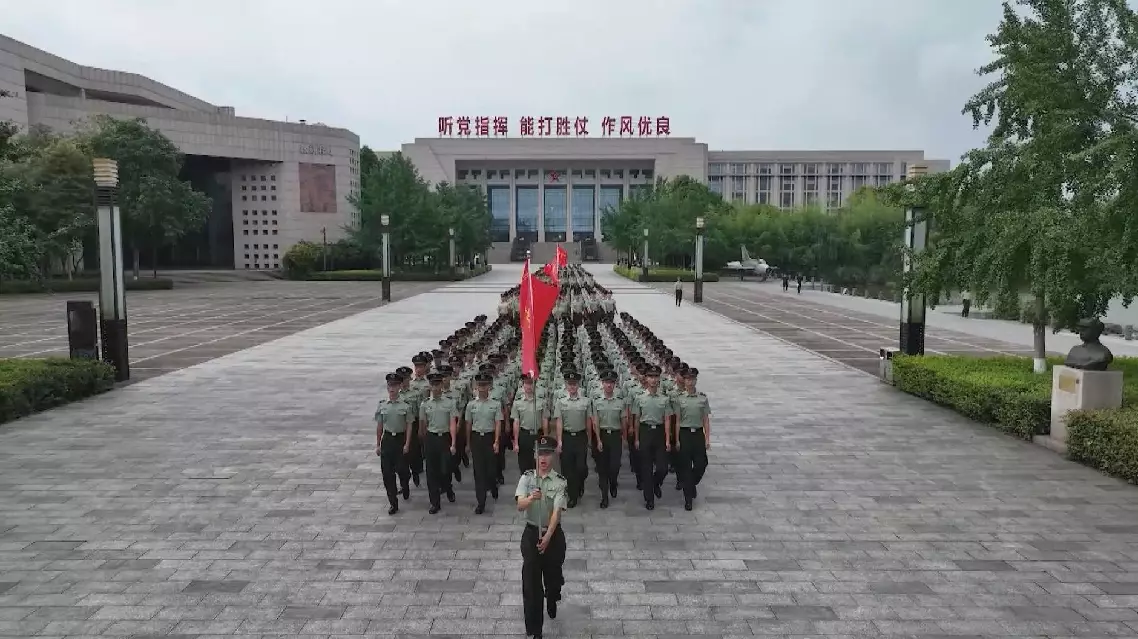
China's three reorganized military academies to recruit students starting this autumn semester

China is willing to provide humanitarian assistance to Cambodia to help resettle displaced people in border areas, Chinese Foreign Minister Wang Yi said on Sunday in Yuxi, southwest China's Yunnan Province.
Wang, also a member of the Political Bureau of the Communist Party of China Central Committee, made the remarks during a meeting with Prak Sokhonn, Cambodian Deputy Prime Minister and Minister of Foreign Affairs and International Cooperation.
Following the signing of a joint statement agreeing to a ceasefire, the Cambodian and Thai foreign ministers are leading delegations meeting in Yunnan from Dec. 28 to 29 at Wang's invitation.
China has been closely following the tense situation on the Cambodia-Thailand border and remains committed to facilitating peace through talks, Wang said, adding that China congratulates both sides on reaching a ceasefire agreement.
The ceasefire marks the beginning of peacebuilding, Wang said, calling on the two sides to proceed in a phased and measured approach to promote a comprehensive and lasting ceasefire, restore normal interactions, rebuild mutual trust, achieve turnaround in bilateral relations, and uphold peace and stability in the region.
He said that both countries can make good use of this face-to-face opportunity for diplomatic and military representatives to engage in dialogue and communication in a flexible manner, enhance mutual understanding, and build mutual trust. He also expressed hope that all sides would jointly send a message of peace from Yunnan, reach a consensus on peace, and demonstrate prospects for peace.
China supports ASEAN in playing its due role and stands ready to provide assistance to the ASEAN observation mission in monitoring the ceasefire, Wang said.
He added that China also hopes Cambodia will continue to enhance protection for Chinese citizens and projects in the country.
Cambodia highly values China's positive role in mediating the conflict, said Prak Sokhonn, citing the informal tea gathering among the foreign ministers of Cambodia, China and Thailand in Anning, Yunnan Province, as well as shuttle diplomacy conducted by China's special envoy.
Thanks to the joint efforts of China and other parties, Cambodia and Thailand were able to convene a meeting of the Joint Boundary Commission, and their militaries signed a ceasefire agreement, he said.
Sokhonn said Cambodia is ready to work with Thailand to fully implement the ceasefire agreement, make full use of existing dialogue mechanisms, and steadily build mutual trust between the two countries and their armed forces.
These steps, he noted, are vital to restoring bilateral exchanges, normalizing relations, and resolving the boundary issue at an early date.
Cambodia hopes for the early arrival of peace and expects the trilateral meeting to help rebuild lasting stability, he said.
The two sides also exchanged views on China-Cambodia relations, agreeing that under the strategic guidance of the leaders of the two countries, positive progress has been made in building an all-weather Cambodia-China community with a shared future in the new era.
The Cambodian side expressed gratitude for China's support and assistance to its development, describing China as its most reliable and trusted partner. It reaffirmed its adherence to the one-China principle, its opposition to Taiwan secessionism, and its support for China's reunification cause.
China will deliver humanitarian aid to Cambodia for displaced people along border: Chinese FM