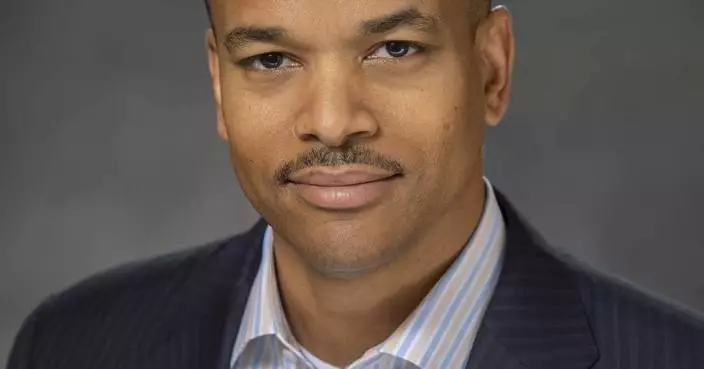
BATON ROUGE, La. (AP) — As Louisiana Rep. Kimberly Landry Coates stood before her colleagues in the state’s Legislature she warned that the bill she was presenting might “seem strange” or even crazy.
Some lawmakers laughed with disbelief and others listened intently, as Coates described situations that are often noted in discussions of “chemtrails” — a decades-old conspiracy theory that posits the white lines left behind by aircraft in the sky are releasing chemicals for any number of reasons, some of them nefarious. As she urged lawmakers to ban the unsubstantiated practice, she told skeptics to “start looking up” at the sky.
“I’m really worried about what is going on above us and what is happening, and we as Louisiana citizens did not give anyone the right to do this above us,” the Republican said.
Louisiana is the latest state taking inspiration from a wide-ranging conspiratorial narrative, mixing it with facts, to create legislation. Tennessee Gov. Bill Lee signed a similar measure into law last year and one in Florida has passed both the House and the Senate. More than a dozen other states, from New York to Arizona, have introduced their own legislation.
Such bills being crafted is indicative of how misinformation is moving beyond the online world and into public policy. Elevating unsubstantiated theories or outright falsehoods into the legislative arena not only erodes democratic processes, according to experts, it provides credibility where there is none and takes away resources from actual issues that need to be addressed.
“Every bill like this is kind of symbolic, or is introduced to appease a very vocal group, but it can still cause real harm by signaling that these conspiracies deserve this level of legal attention,” said Donnell Probst, interim executive director of the National Association for Media Literacy Education.
Louisiana's bill, which is awaiting Republican Gov. Jeff Landry's signature, prohibits anyone from “intentionally" injecting, releasing, applying or dispersing chemicals into the atmosphere with the purpose of affecting the “temperature, weather, climate, or intensity of sunlight.” It also requires the Department of Environmental Quality to collect reports from anyone who believes they have observed such activities.
While some lawmakers have targeted real weather modification techniques that are not widespread or still in their infancy, others have pointed to dubious evidence to support legislation.
Discussion about weather control and banning “chemtrails” has been hoisted into the spotlight by high-profile political officials, including Health Secretary Robert F. Kennedy Jr. and U.S. Rep. Marjorie Taylor Greene.
Recently, Marla Maples, the ex-wife of President Donald Trump, spoke in support of Florida's legislation. She said she was motivated to “start digging” after seeing a rise in Alzheimer’s.
Asked jokingly by a Democratic state senator if she knew anyone in the federal government who could help on the issue, Maples smiled and said, “I sure do.”
Chemtrail conspiracy theories, which have been widely debunked and include a myriad of claims, are not new. The publication of a 1996 Air Force report on the possible future benefits of weather modification is often cited as an early driver of the narrative.
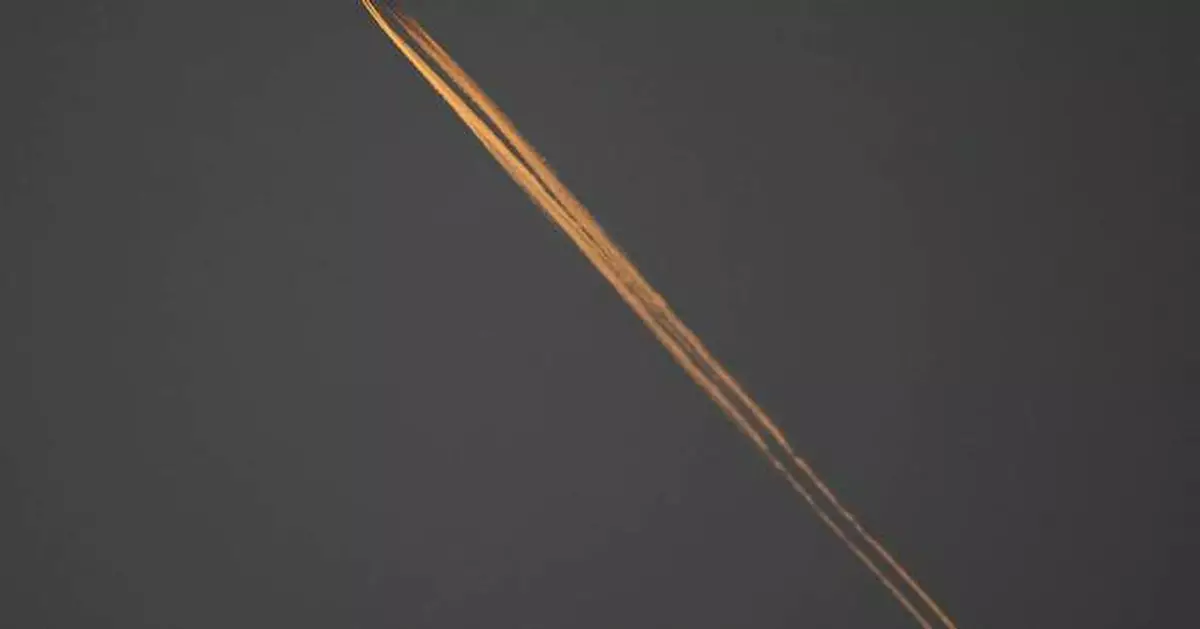
Some say that evidence of the claims is happening right before the publics' eyes, alleging that the white streaks stretching behind aircrafts reveal chemicals being spread in the air, for everything from climate manipulation to mind control.
Ken Leppert, an associate professor of atmospheric science at the University of Louisiana Monroe, said the streaks are actually primarily composed of water and that there is “no malicious intent behind” the thin clouds. He says the streaks are formed as exhaust is emitted from aircrafts, when the humidity is high and air temperature is low, and that ship engines produce the same phenomenon.
A fact sheet about contrails, published by multiple government agencies including NASA and the Environmental Protection Agency, explains that the streaks left behind by planes do not pose health risks to humans. However, the trails, which have been produced since the earliest days of jet aviation, do impact the cloudiness of Earth’s atmosphere and can therefore affect atmospheric temperature and climate.
Scientists have overwhelmingly agreed that data or evidence cited as proof of chemtrails “could be explained through other factors, including well-understood physics and chemistry associated with aircraft contrails and atmospheric aerosols,” according to a 2016 survey published in the journal Environmental Research Letters. In the survey of 77 chemists and geochemists, 76 said they were not aware of evidence proving the existence of a secret large-scale atmospheric program.
“It’s pure myth and conspiracy,” Leppert said.
While many of the arguments lawmakers have used to support the chemtrails narrative are not based in fact, others misrepresent actual scientific endeavors, such as cloud seeding; a process by which an artificial material — usually silver iodide — is used to induce precipitation or to clear fog.
“It’s maybe really weak control of the weather, but it’s not like we’re going to move this cloud here, move this hurricane here, or anything like that,” Leppert said.
Parker Cardwell, an employee of a California-based cloud seeding company called Rainmaker, testified before lawmakers in Louisiana and asked that an amendment be made to the legislation to avoid impacts to the industry.
The practice is an imprecise undertaking with mixed results that isn’t widely used, especially in Louisiana, which has significant natural rainfall. According to Louisiana's Department of Agriculture and Forestry, a cloud seeding permit or license has never been issued in the state.
While presenting Louisiana's bill last week, Coates said her research found charts and graphics from the National Oceanic and Atmospheric Administration on spraying the air with heavy metals to reflect sunlight back into space to cool the Earth.
The Consolidated Appropriations Act of 2022 directed the Office of Science and Technology Policy, with support from NOAA, to develop an initial governance framework and research plan related to solar radiation modification, or SRM. A resulting report, which Coates holds up in the House session, focuses on possible future actions and does not reflect decisions that had already been made.
SRM “refers to deliberate, large-scale actions intended to decrease global average surface temperatures by increasing the reflection of sunlight away from the Earth,” according to NOAA. It is a type of geoengineering. Research into the viability of many methods and potential unintended consequences is ongoing, but none have actually been deployed.
In recent years, misinformation and conspiratorial narratives have become more common during the debates and committee testimonies that are a part of Louisiana's lawmaking process.
And while legislators say Louisiana's new bill doesn't really have teeth, opponents say it still takes away time and focus from important work and more pressing topics.
State Rep. Denise Marcelle, a Democrat who opposed Louisiana’s bill, pointed to other issues ailing the state, which has some of the highest incarceration, poverty, crime, and maternal mortality rates.
“I just feel like we owe the people of Louisiana much more than to be talking about things that I don't see and that aren't real,” she said.
Associated Press writers Kate Payne in Tallahassee, Florida, and Jack Dura in Bismarck, North Dakota, contributed to this story.
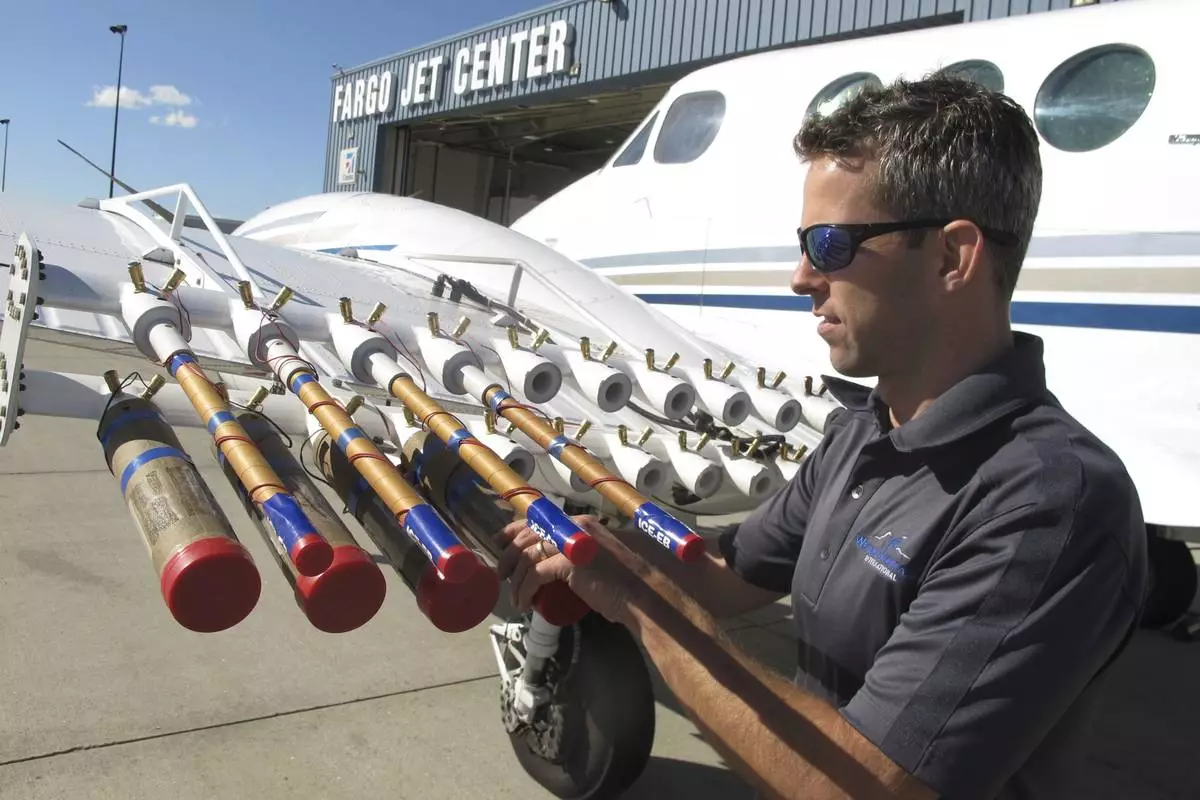
FILE - Jody Fischer, director of flight operations for a North Dakota-based cloud seeding business, adjusts flares used for a seeding on a plane outside the company headquarters in Fargo, N.D., Sept. 20, 2017. (AP Photo/Dave Kolpack, File)
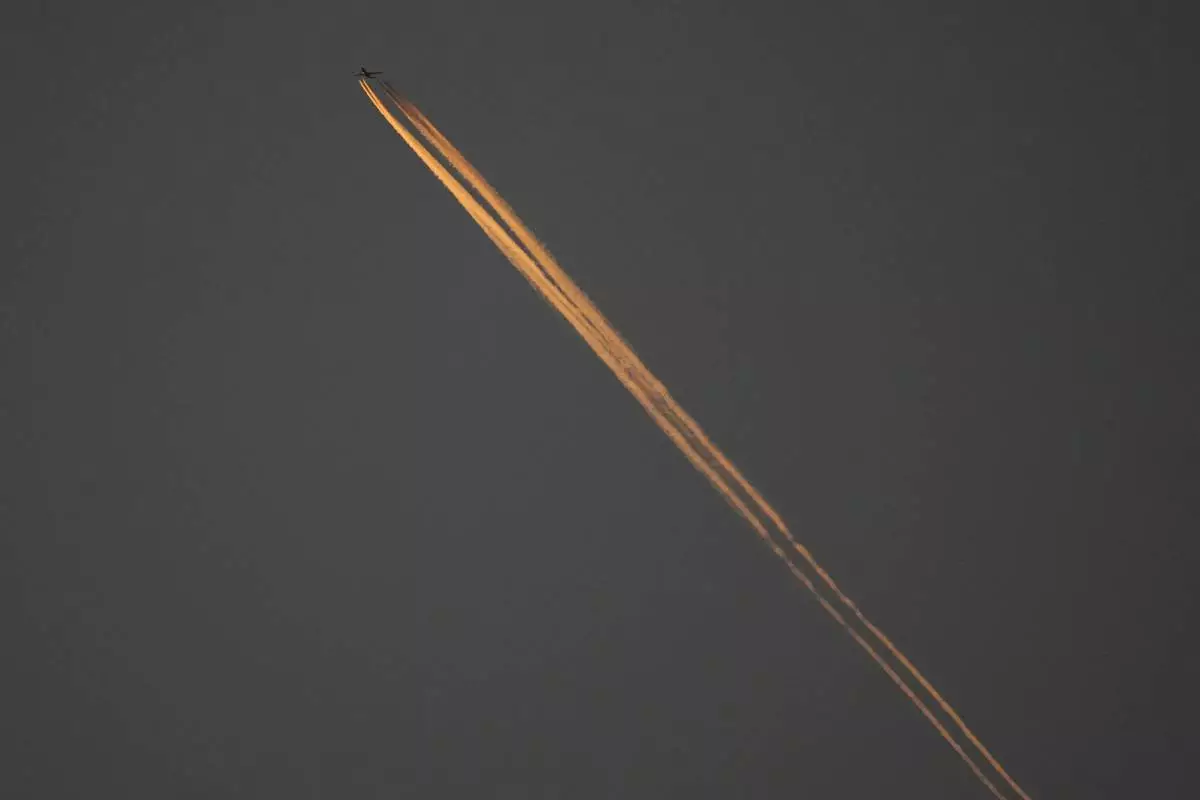
FILE - A plane flies over Oakland Alameda Coliseum in Oakland, Calif., April 30, 2024. (AP Photo/Jeff Chiu, File)