Premier Li Qiang has emphasized furthering reform the mechanisms for applying scientific and technological achievements, and promoting the integrated development of sci-tech innovation and industrial innovation.
Li made the remarks at a study session held by the State Council on Monday. The premier noted that the application of scientific and technological achievements connects the innovation chain with the industrial chain.
Efforts should be made to further deepen the institutional and mechanism reforms and smooth the channels for supply and demand matching so as to better promote the integrated development of sci-tech innovation and industrial innovation with more effective application of scientific and technological achievements, he said.
He urged to tackle blockages and disruptions in the process of applying scientific and technological achievements.
He also emphasized the need to improve support policies and market services to form an efficient, collaborative and dynamic system for the application.
Liu Qing, director of the Yangtze River Delta National Technology Innovation Center (NTI), gave a lecture at the session. Vice premiers Zhang Guoqing and Liu Guozhong participated in discussions.
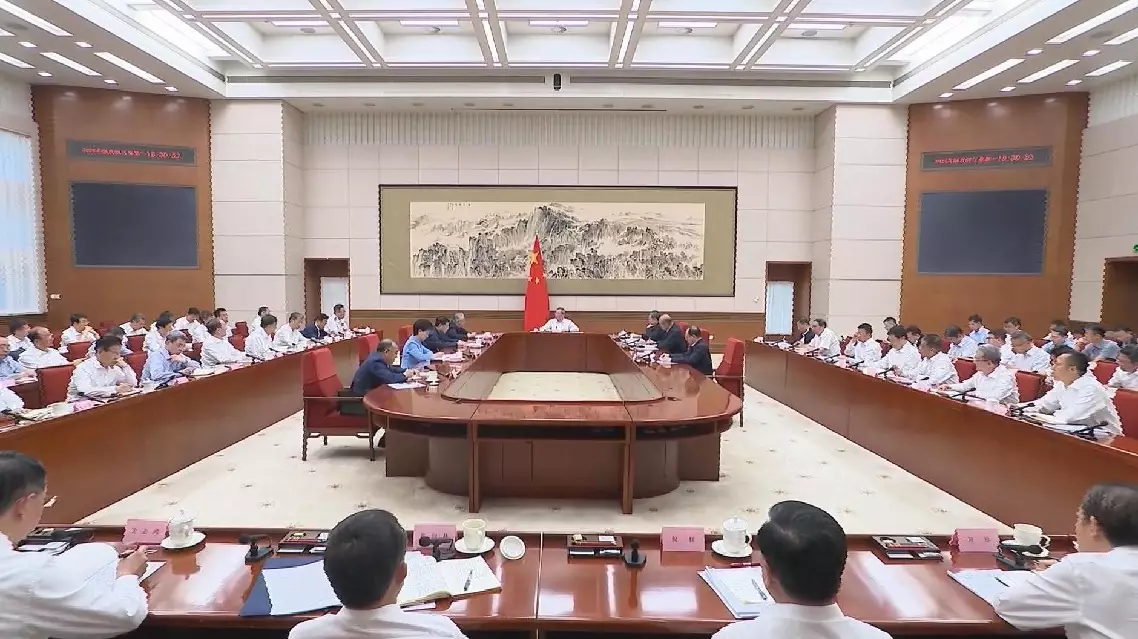
Premier Li stresses application of sci-tech achievements
China aims to achieve secure and reliable supply of key core artificial intelligence (AI) technologies by 2027, with its industrial scale and empowerment level remaining among the world's forefront, according to a recent government action plan.
The plan, jointly issued by eight departments including the Ministry of Industry and Information Technology, the Cyberspace Administration of China, and the National Development and Reform Commission, outlines an ambitious push to deeply integrate AI with the manufacturing sector, foster new quality productive forces and comprehensively empower new industrialization. By 2027, the plan targets the deep application of three to five general-purpose large AI models in manufacturing, the development of specialized, full-coverage industry-specific large models, the creation of 100 high-quality industrial datasets, and the promotion of 500 typical application scenarios.
It also aims to cultivate two to three globally influential ecosystem-leading enterprises, a batch of specialized and sophisticated small and medium-sized enterprises, and a group of enabling service providers proficient in both AI technology and industry know-how.
Furthermore, China plans to build a world-leading open-source ecosystem, enhance security governance capabilities, and contribute Chinese solutions to global AI development.
The document outlines measures including promoting the coordinated development of AI chips' hardware and software, supporting innovations in model training and inference methods, fostering key industry-specific large models, and deeply embedding large model technology into core production processes.
The plan also emphasizes making breakthroughs in key technologies such as security protection for industrial model algorithms and training data protection.
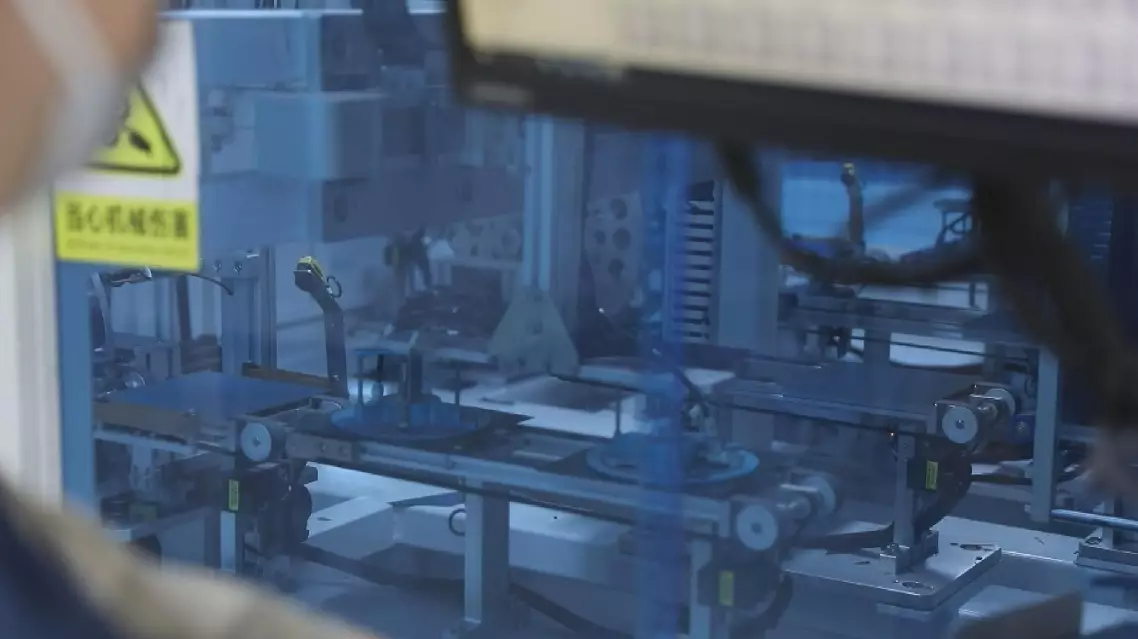
China aims for secure, reliable supply of AI core tech by 2027