ANN ARBOR, Mich. (AP) — The University of Michigan said it's cutting ties with a private security company that was accused of following pro-Palestinian activists on and off campus.
The university said it found the actions of one security company employee "disturbing, unacceptable and unethical." It did not elaborate.
“Going forward, we are terminating all contracts with external vendors to provide plainclothes security on campus,” President Domenico Grasso said in a statement Sunday.
In a Guardian story last week, students said they were surveilled around Ann Arbor. The news outlet posted video from a member of a Muslim group who decided to confront a man who was watching him from a car last summer. That man in turn yelled and accused him of trying to steal his wallet.
Tensions have been high between the university and pro-Palestinian student groups. A student encampment stood for a month on campus last year before authorities shut it down citing safety issues.
Seven people were charged with felonies related to the encampment's removal, though charges were dropped in May.
The university, which has campus police, said it hired private security about a year ago to report suspicious activity in high-traffic areas, not to perform surveillance.
“No individual or group should ever be targeted for their beliefs or affiliations,” Grasso said.

FILE - Dozens of tents in place as part of a pro-Palestinian protest at the University of Michigan in Ann Arbor, Mich., May 2, 2024. (AP Photo/Ed White, File)
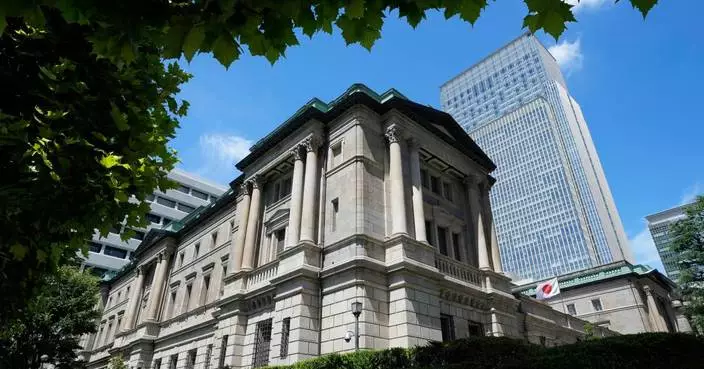
World shares advanced on Friday after the Bank of Japan raised its key policy rate to its highest level in 30 years and U.S. inflation cooled more than expected.
Germany’s DAX gained 0.2% to 24,241.32, while the CAC 40 edged 0.1% higher to 8,156.83. Britain’s FTSE 100 gained less than 2 points to 9,838.83.
Friday's 0.25 percentage point increase by the BOJ was widely expected. It took the benchmark rate to 0.75%, the highest since 1995, but still low compared with other major economies.
In Tokyo, the Nikkei 225 gained 1% to 49,507.21, leading the rise across Asia's key markets.
Following the BOJ's decision, Japan's benchmark 10-year government bond yield surpassed the 2% mark for the first time since May 2006. The U.S. dollar rose to 157.08 Japanese yen from 155.53 yen.
Global investors had been bracing for reactions to the BOJ's move, but markets appeared to take the decision in stride. The future for the S&P 500 rose 0.3%, while that for the Dow Jones Industrial Average was up 0.1%.
“The Bank of Japan’s decision to raise interest rates at its meeting today was clearly signaled ahead of time and therefore came as no surprise,” Abhijit Surya of Capital Economics said in a report, noting that “financial markets had almost fully priced in a hike ahead of today’s meeting.”
Hong Kong's benchmark Hang Seng rose almost 0.8% to 25,690.53, while the Shanghai Composite index added 0.4% to 3,890.45.
In Seoul, the Kospi climbed 0.7% to 4,020.55. Australia's S&P/ASX 200 picked up 0.4% to 8,621.40.
Asia’s share gains were also built on optimism over more Fed rate cuts, after the U.S. on Thursday reported a lower-than-expected 2.7% rise in inflation for November, leaving potentially more room for the Fed to cut rates as the U.S. job market slows.
On Thursday, European indexes gained after the Bank of England cut its key interest rate and the European Central Bank kept its rate steady.
But Thursday’s U.S. inflation update may also not move the needle that much at the Fed given how noisy economic reports have been following the 43-day U.S. government’s shutdown. The inflation report was delayed eight days by the shutdown, which also prevented the Labor Department from compiling overall numbers for consumer prices and core inflation in October.
The next monthly update on inflation, for December, could provide a better gauge of what’s actually happening.
In the U.S. on Thursday, the S&P 500 edged up 0.8% following a four-day losing streak. The Dow Jones Industrial Average gained 0.1% and the Nasdaq composite rose 1.4%.
Technology stocks helped lift the U.S. stock market. Micron Technology, a key maker of memory chips, jumped 10.2% on stronger-than-expected profit and revenue for the latest quarter ending November as the company also delivered an upbeat forecast for upcoming revenue and profit.
But investor concerns over an overblown AI bubble are still clouding the prospects of some companies which benefited big from the AI boom. Broadcom and Oracle’s shares had fallen significantly since last week. Oracle’s shares rose 0.9% on Thursday, while Broadcom’s added 1.1%.
Nvidia, the chip company that’s become Wall Street’s most influential because of its immense size, gained 1.8%.
Another winner was Trump Media & Technology Group, which jumped 41.9% to trim some of its steep loss for the year so far, 69.3% coming into the day. The company, which began with President Donald Trump’s Truth Social platform and then moved into cryptocurrencies and various other lines of business, is now moving into nuclear power.
It’s merging with TAE Technologies in an all-stock deal, and each company will own roughly half of the combined business.
In other dealings early Friday, U.S. benchmark crude oil lost 16 cents to $55.84 per barrel. Brent crude, the international standard, shed 21 cents to $59.61 per barrel.
The euro slipped to $1.1715 from $1.1724.
The price of bitcoin rose 3.9% to about $88,000, according to CoinDesk.
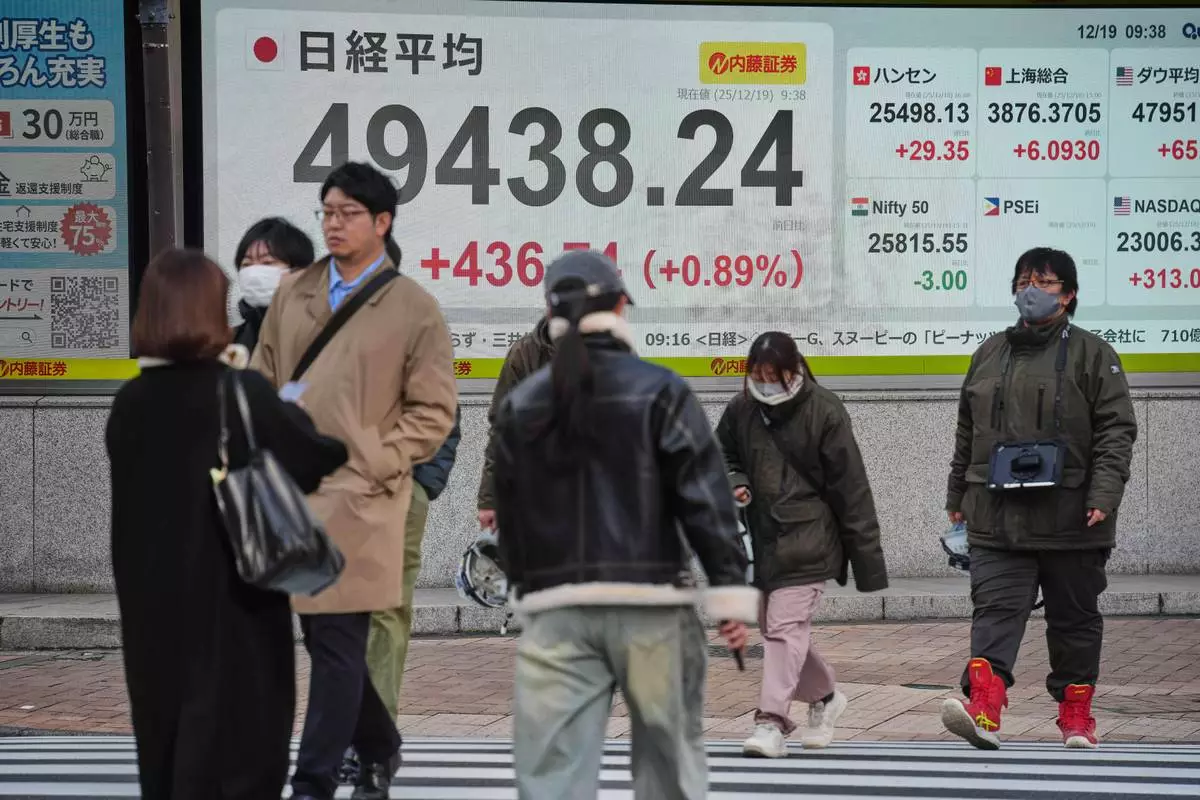
People walk in front of an electronic stock board showing Japan's Nikkei index at a securities firm Friday, Dec. 19, 2025, in Tokyo. (AP Photo/Eugene Hoshiko)
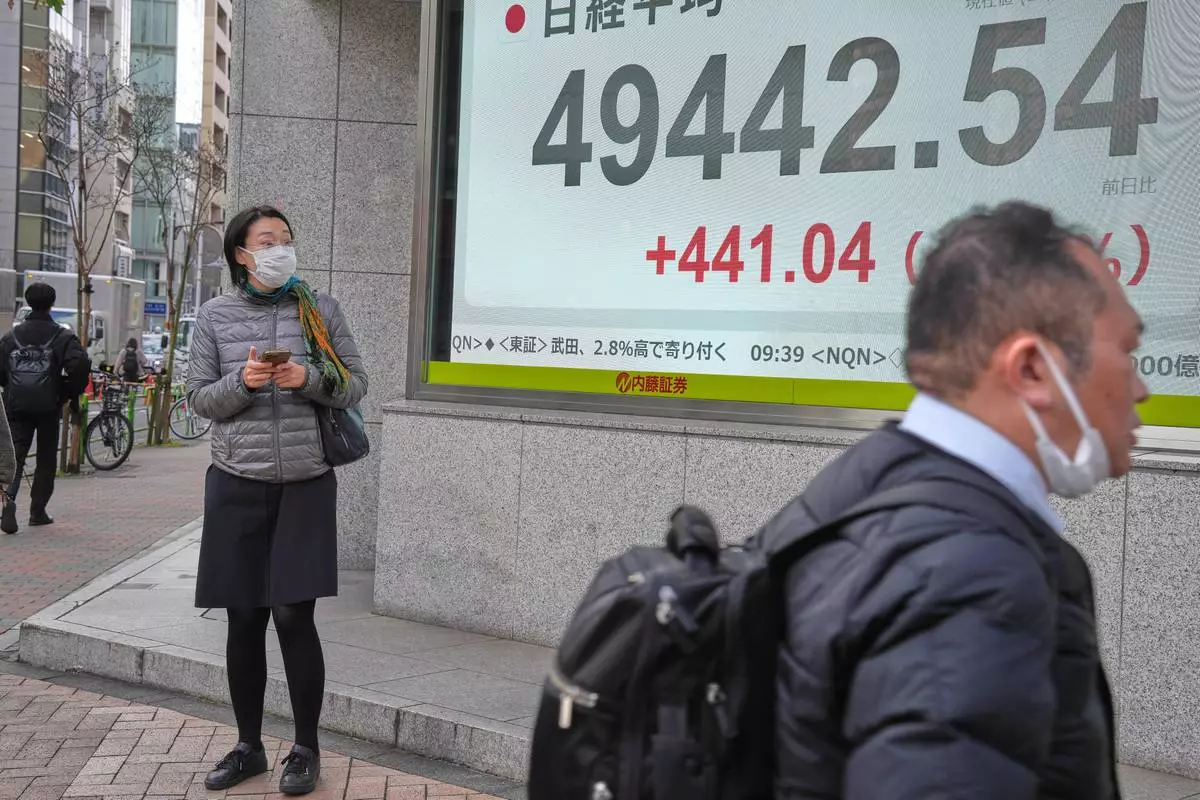
People stand in front of an electronic stock board showing Japan's Nikkei index at a securities firm Friday, Dec. 19, 2025, in Tokyo. (AP Photo/Eugene Hoshiko)
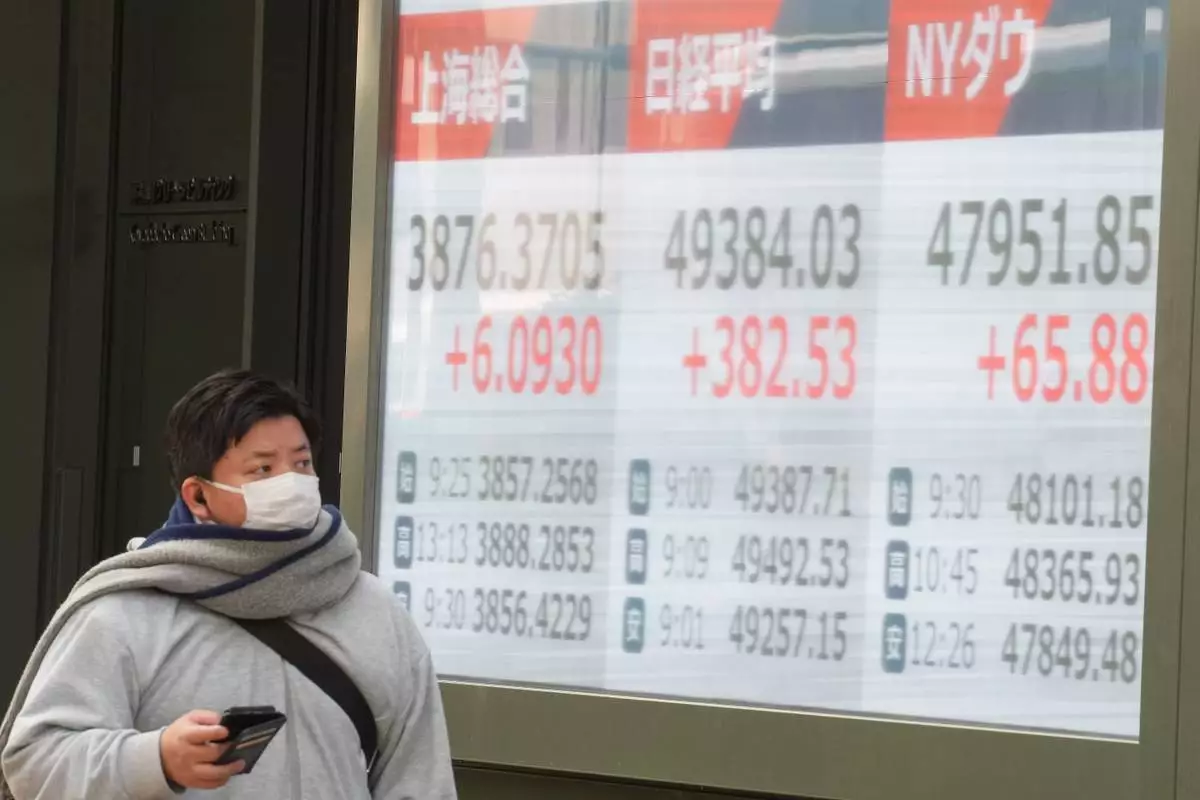
A person walks in front of an electronic stock board showing the market indexes of Shanghai, Tokyo and New York Dow at a securities firm Friday, Dec. 19, 2025, in Tokyo. (AP Photo/Eugene Hoshiko)
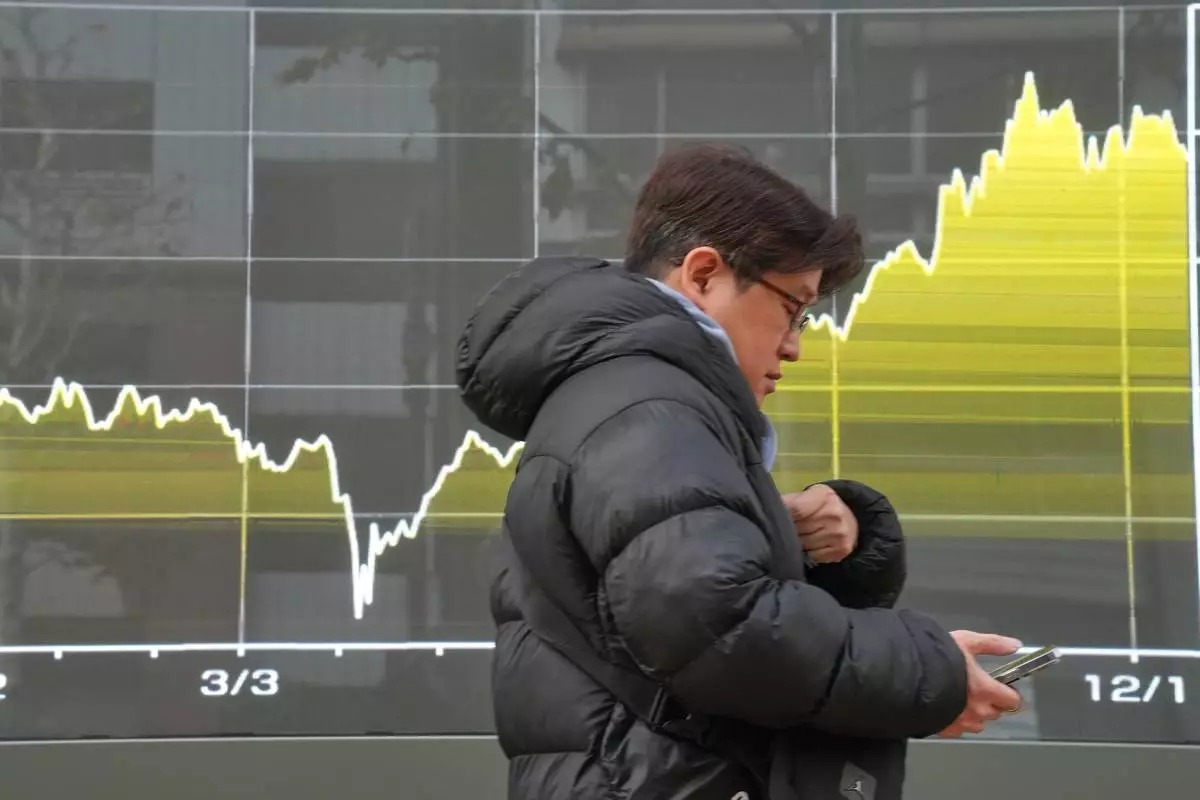
A person walks in front of a chart showing Japan's Nikkei index at a securities firm Friday, Dec. 19, 2025, in Tokyo. (AP Photo/Eugene Hoshiko)