China is accelerating the smart and green development of its ports, with the number of automated terminals completed and those under-construction both surpassing any other nation and many existing facilities progressing toward near-zero carbon operations.
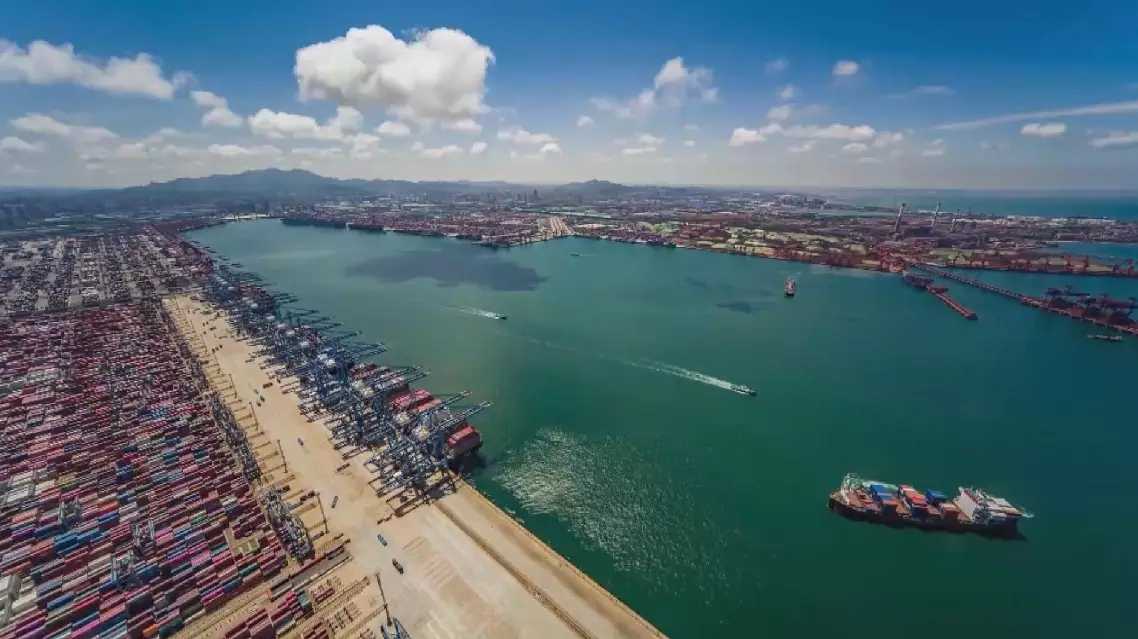
The Mediterranean Shipping Company's MSC Flora, with the largest capacity of 11,552 foot equivalent units (TEUs), docked at Qingdao Port's Qianwan Container Terminal in May, marking the third new shipping route added at the port in east China's Shandong Province in just one month.
Through intelligent service platforms, import container pickup processing time has been slashed from four hours to just 20 minutes.
"Starting from inspection, we've moved all possible services online. This allows us to significantly reduce cargo transit time," said Ren Lingli, senior engineer at Qingdao Port.
In the first four months of this year, Qingdao Port handled a record 10.67 million TEUs, setting a record high thanks to accelerated green and smart port transition.
The country has built 52 automated container terminals, with 5G-powered autonomous vehicles and unmanned trucks.
Data from the Ministry of Transport shows that from January to April this year, container throughput at China's ports increased 7.9 percent year on year to reach 110 million TEUs.
While efficiency improves, green infrastructure is cutting emissions to promote the sustainable development of ports.
At Tianjin Port in northern China, shore power systems supply docked vessels, allowing them to shut down their auxiliary engines and reduce pollution.
"Our 360 new-energy trucks and 132 smart transport robots are estimated to reduce carbon dioxide emissions by about 40,000 tons annually," said Wang Zhili, manager of the environmental protection department at Tianjin Port Group.
In 11 major international ports in China, including Ningbo-Zhoushan Port and Shanghai Port, more than 60 percent of trucks transporting containers are clean energy vehicles, contributing to improved air quality in these ports and surrounding cities.
China aims to establish many more world-class smart, green ports by 2027.
"We will continue improving smart port standards, promote digital transformation, and advance green port development to accelerate the construction of near-zero carbon terminals," said Zheng Qingxiu, deputy director of the Water Transport Bureau at the Ministry of Transport.
China accelerates smart, green port development with world-leading automation