NEWCASTLE, Australia (AP) — A state-of-the-art Japanese warship has arrived in Australia as part of a high-stakes campaign to secure a $6.5 billion contract to build the country's next fleet of general-purpose frigates.
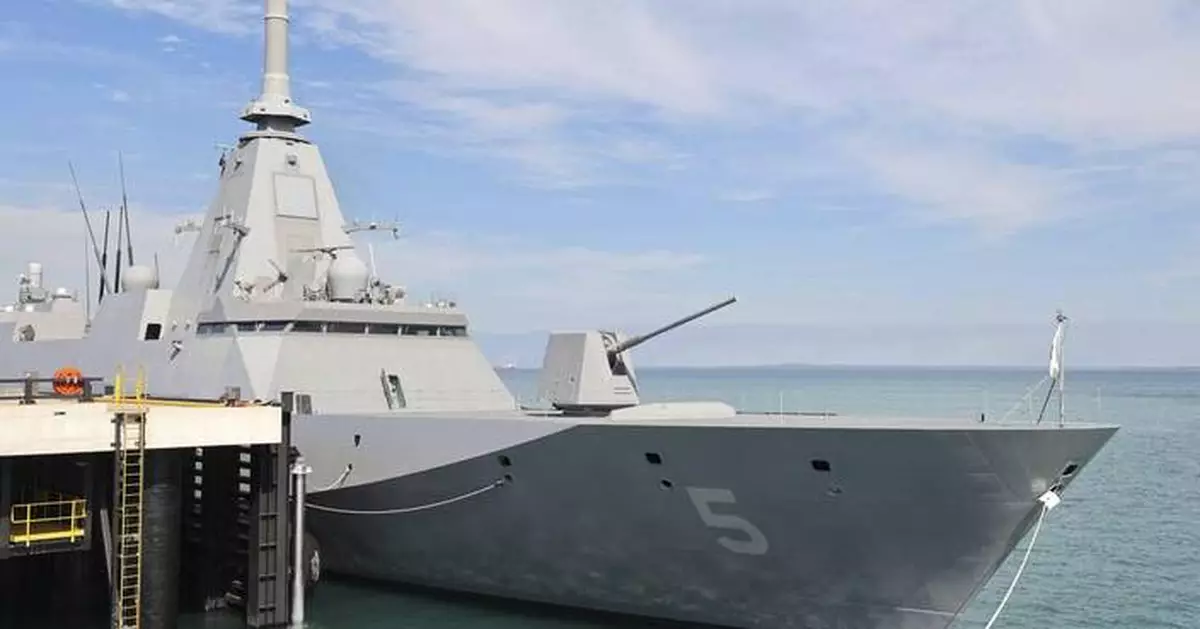
The JS Yahagi, a Mogami-class stealth frigate from Japan’s Maritime Self-Defense Force, is docked in Darwin in Australia's Northern Territory in what appears a symbolic and strategic move aimed at strengthening defense ties with Australia and showcasing Japanese naval technology.
Japan’s bid, led by Mitsubishi Heavy Industries, was short-listed in November for the Royal Australian Navy's SEA 3000 frigate project and is competing against Germany’s MEKO A-200 offered by Thyssenkrupp Marine Systems.
The Australian Government will select a preferred design later this year, with construction for 11 new vessels slated to begin the following year.
“We will go through the process of assessing those bids, both very impressive. We intend to make a decision in relation to that this year,” Deputy Prime Minister and Defense Minister Richard Marles said during his visit to Indonesia last week. “We intend to make a decision as quickly as we can, which means, before the end of this year.”
As part of its military buildup, Japan is pushing to strengthen its largely domestic defense industry by participating in joint development, including a next-generation fighter jet with Britain and Italy, and promoting foreign sales like the Mogami-class ships.
In a sign of its commitment and heavy investment Japan has pledged to prioritize the RAN’s order over its own naval procurement.
The project not only serves to further deepen cooperation between Japan and Australia but also to enhance Japan’s warship capabilities, Defense Minister Gen Nakatani has said.
The Japanese Mogami-class design boasts advanced combat systems, anti-submarine and anti-air warfare capabilities, and mine countermeasure operations — all operated by a lean crew of around 90, helping to address ongoing recruitment challenges in the Australian Navy.
The vessel’s commanding officer, Masayoshi Tamura, said the ship's smaller crew was an aim of the Mogami-class ship.
“The Japanese Maritime Self-Defense Force thought we need stealth, and less people, and a little bit smaller ship,” Tamura told the Australian Broadcasting Corporation.
The JS Yahagi's visit to Darwin comes amid intensifying strategic cooperation between Canberra and Tokyo, both of which have emphasized the importance of maritime safety and security of sea lanes.
The frigate’s arrival is also seen as a gesture of Japan’s growing role in regional security and its desire to align more closely with key partners like Australia.
In September 2024, Australia and Japan agreed to increase joint military training exercises to address shared concerns of China's incursions into Japanese airspace and territorial waters.
Two months later, defense ministers from Australia, Japan and the U.S. held tripartite talks in Darwin to reaffirm their commitment to strengthening security ties and planning for joint military operations in northern Australia.
Japanese marine units are also now included in annual training rotations of U.S. Marines in Darwin.
——
Mari Yamaguchi in Tokyo contributed.
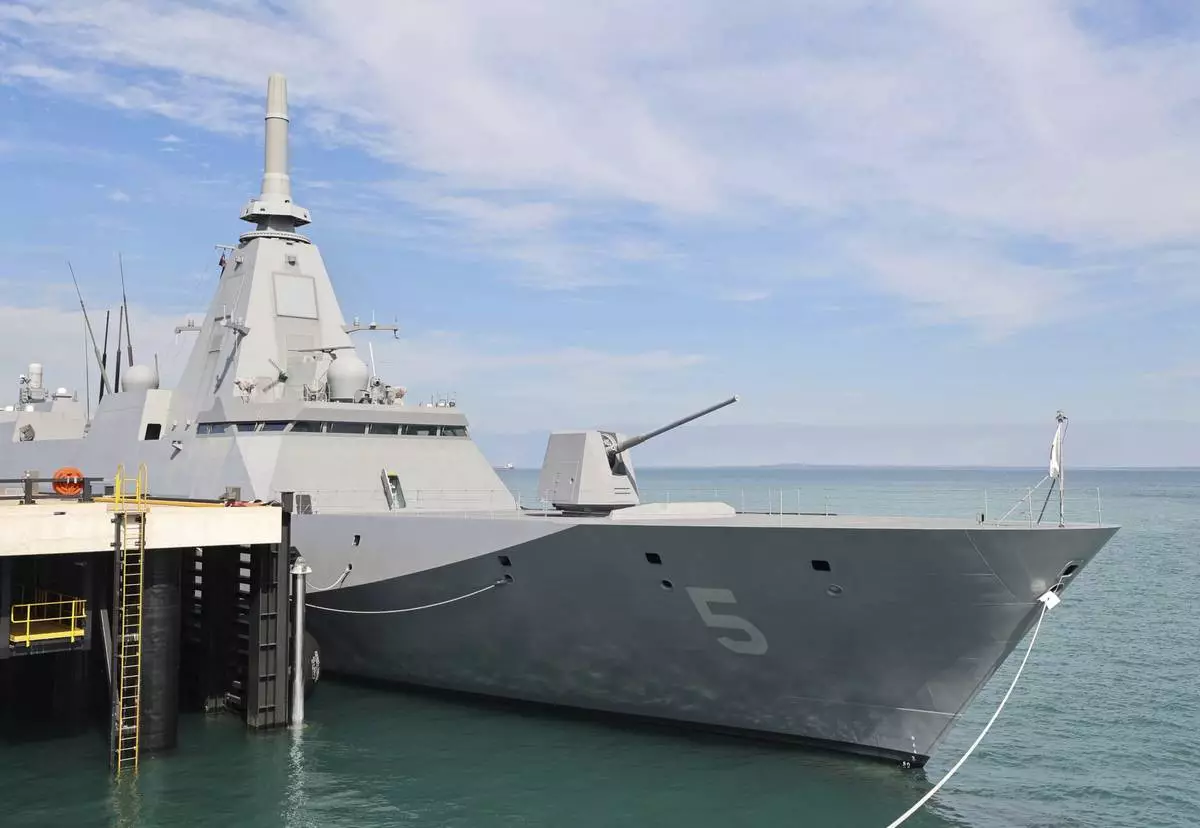
Japanese warship the JS Yahagi, a Mogami-class stealth frigate from Japan’s Maritime Self-Defense Force, is docked in Darwin, Australia, on June 6, 2025. (Kyodo News via AP)
NEW YORK (AP) — Thousands of nurses at some of New York City's biggest hospitals could go on strike Monday during a severe flu season, three years after a similar walkout forced some of the same medical facilities to transfer some patients and divert ambulances.
The looming strike could impact operations at several of the city’s major private hospitals, including Mount Sinai in Manhattan, Montefiore Medical Center in the Bronx and NewYork-Presbyterian/Columbia University Irving Medical Center.
Nearly 15,000 nurses could walk off the job early Monday if a deal is not reached, amounting to the largest nurses strike in city history, according to Nancy Hagans, president of the New York State Nurses Association. As of Sunday morning, little progress had been made at the bargaining table, Hagans said. A vast majority of the union's nurses voted to authorize the strike last month.
Like the 2023 labor fight, this year's dispute involves a complicated array of issues, claims, counterclaims and hospital-by-hospital particulars. Once again, staffing levels are a major flashpoint: Nurses say the big-budget medical centers are refusing to commit to — or even backsliding on — provisions for manageable, safe workloads.
This time, the nurses' union also wants guardrails on hospitals using artificial intelligence, plus more workplace security measures. A gunman strode into Mount Sinai in November, and a man with a sharp object barricaded himself in a Brooklyn hospital room this week; both men ultimately were killed by police.
The private, nonprofit hospitals involved in the current negotiations say they've made strides in staffing since 2023. Some of them suggest the union's demands, taken as a whole, are far too expensive.
Scores of nurses rallied Friday in Manhattan, insisting their primary concern was proper caregiving and accusing the medical centers — whose top executives make millions of dollars a year — of greed and intransigence.
“My hospital tries to cut corners on staffing every day, and then they try to fight historic gains we made three years ago,” said Sophie Boland, a pediatric intensive care nurse in the NewYork-Presbyterian hospital system.
The hospitals, meanwhile, have called the union’s strike threat “reckless.” They vowed in a statement Thursday to “do whatever is necessary to minimize disruptions.”
Hagans, the union president, has also stressed that patients should not delay care during a potential strike.
Still, New York Gov. Kathy Hochul expressed concern that a strike could affect patient care, urging both sides on Friday “to stay at the table and get a deal done.”
Mount Sinai has hired over 1,000 temporary nurses and held preparatory drills for a strike that could affect its 1,100-bed main hospital and two affiliates — Mount Sinai Morningside and Mount Sinai West — with about 500 beds each.
NewYork-Presbyterian said it also had arranged for temporary nurses but, if the strike happens, some patients might be moved to new rooms or advised to transfer to another facility. Montefiore posted a message assuring patients that appointments would be kept.
The same union mounted a three-day strike at the Mount Sinai flagship facility and Montefiore in 2023, when nurses emphasized their sacrifices during the exhausting, frightening height of the COVID-19 pandemic and the national nurse staffing crisis that followed.
The walkout prompted those hospitals to postpone non-emergency surgeries, tell many ambulances to go elsewhere and transfer some intensive-care infants and other patients. Temporary nurses and even administrators with clinical backgrounds were tapped to fill in, but some patients noticed longer waits and more sparsely staffed wards.
The strike ended with an agreement on raises totaling 19% over three years and staffing improvements, including the possibility of extra pay if nurses had to work short-handed.
Now, the union says, the hospitals are retreating from those guarantees and falling short on other promises.
Montefiore, for example, agreed to “make all reasonable efforts” to stop keeping some emergency room patients in hallways while they wait for space to open up in other wards. Yet three years later, nurses still scramble to treat “hallway patients,” Montefiore intensive care nurse Michelle Gonzalez said Friday.
Montefiore has suggested it's made some progress: The hospital told elected officials in a letter in October that there has been a 35% reduction in the time it takes from emergency admission to a clinical unit bed.
Overall, the hospitals say they have greatly reduced nursing job vacancy rates in the last three years, and Mount Sinai and NewYork-Presbyterian/Columbia Irving University Medical Center say they also have added hundreds of nursing positions.
In recent days, several smaller hospitals — including multiple Northwell Health facilities on Long Island — averted potential walkouts by striking deals or making what the union viewed as adequate progress.
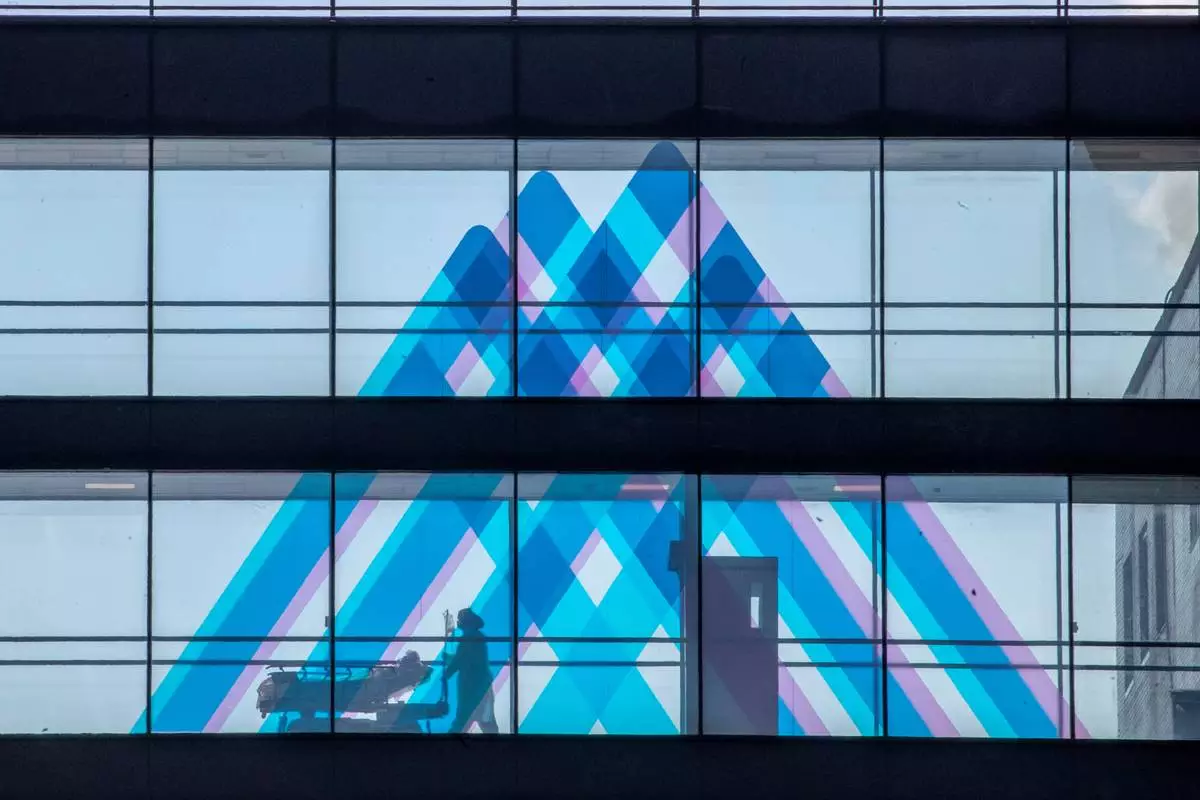
FILE - A medical worker transports a patient at Mount Sinai Hospital, April 1, 2020, in New York. (AP Photo/Mary Altaffer, File)