A new survey that probes the level of trust Democrats and Republicans have for news sources finds the business-oriented publications Forbes and The Wall Street Journal share an unusual distinction: They're the only two of 30 news sources that sympathizers for both parties told the Pew Research Center they're more likely to trust than distrust.
Pew's survey, released Tuesday, illustrates how the country's political polarization has members of both parties in different media silos. Democrats trust more news sources than Republicans, and rarely do their tastes intersect.
Of 30 news sources tested, people who said they were Republican or leaned Republican were more likely to say they trust eight of them. Democrats had more trust than distrust for 23 different sources. Forbes and The Wall Street Journal were the only two on both lists.
There were only two news sources tested that more than three in 10 Republicans said they were likely to trust — Fox News Channel, with 56%, and the Joe Rogan podcast, with 31%.
Meanwhile, 13 of the sources had trust levels of more than 30% among Democrats — the three broadcast news divisions, PBS, CNN, BBC, The New York Times, The Associated Press, MSNBC, National Public Radio, USA Today, The Washington Post and The Wall Street Journal.
Rogan's podcast illustrated some of the sharp differences between the parties and why President Donald Trump's interview there proved influential during the last election. Forty percent of Democrats said they distrust Rogan's show as a source, while only 3% of Democrats trust it as a news source. Others said they didn't know enough about the show to offer an opinion.
Nearly two of three Democrats said they distrust Fox News, but 19% said they trust it. Among Republicans, 21% said they distrust Fox.
The survey finds that 23% of Republicans said they trust PBS, while 26% distrust PBS. Democrats trust PBS by a 59% to 4% margin.
Trump, a Republican, is trying to eliminate most government spending for PBS, arguing that its news content shows a liberal bias. Pew's survey indicates Republicans are fairly evenly divided on that question.
That's not the case for NPR, which is also on Trump's chopping block. Pew finds that more than twice as many Republicans distrust NPR than trust it, while Democrats trust NPR by a 47% to 3% margin.
“It's still a very polarized media ecosystem,” said Elisa Shearer, a senior researcher at Pew. “It's too early to tell if there will be changes in the future.”
A separate Pew survey from March found that 53% of Republicans expressed at least some trust in the information they get from national news organizations, up from 40% only six months earlier. But Shearer said it was tough to tell how much of that increase simply had to do with a new Republican administration taking charge.
For the survey released on Tuesday, Pew said it questioned 9,482 U.S. adults in mid-March.
PBS says Trump’s effort to rescind funding for public media would disrupt an essential service provided to the American people.
David Bauder writes about media for the AP. Follow him at http://x.com/dbauder and https://bsky.app/profile/dbauder.bsky.social.
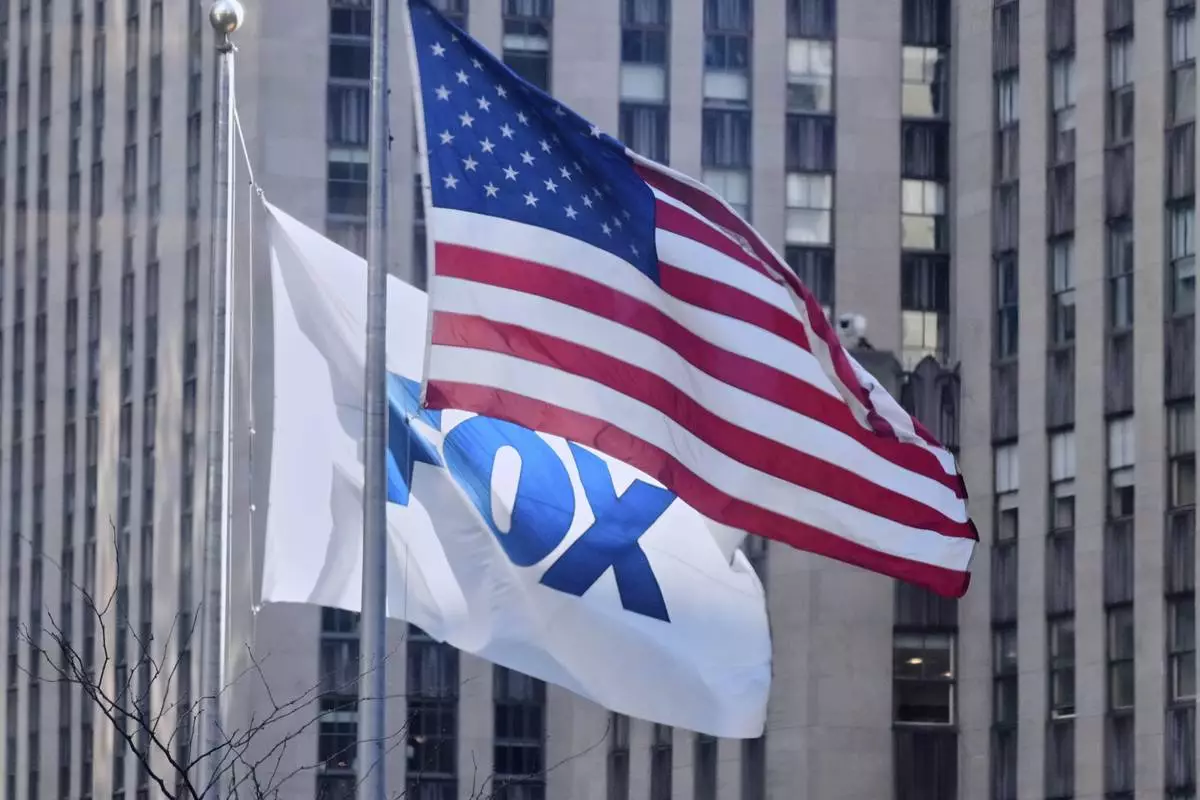
FILE - An American flag and a FOX flag fly outside Fox headquarters, in New York, April 9, 2025. (AP Photo/Richard Drew, File)
ALEPPO, Syria (AP) — First responders on Sunday entered a contested neighborhood in Syria’ s northern city of Aleppo after days of deadly clashes between government forces and Kurdish-led forces. Syrian state media said the military was deployed in large numbers.
The clashes broke out Tuesday in the predominantly Kurdish neighborhoods of Sheikh Maqsoud, Achrafieh and Bani Zaid after the government and the Syrian Democratic Forces, the main Kurdish-led force in the country, failed to make progress on how to merge the SDF into the national army. Security forces captured Achrafieh and Bani Zaid.
The fighting between the two sides was the most intense since the fall of then-President Bashar Assad to insurgents in December 2024. At least 23 people were killed in five days of clashes and more than 140,000 were displaced amid shelling and drone strikes.
The U.S.-backed SDF, which have played a key role in combating the Islamic State group in large swaths of eastern Syria, are the largest force yet to be absorbed into Syria's national army. Some of the factions that make up the army, however, were previously Turkish-backed insurgent groups that have a long history of clashing with Kurdish forces.
The Kurdish fighters have now evacuated from the Sheikh Maqsoud neighborhood to northeastern Syria, which is under the control of the SDF. However, they said in a statement they will continue to fight now that the wounded and civilians have been evacuated, in what they called a “partial ceasefire.”
The neighborhood appeared calm Sunday. The United Nations said it was trying to dispatch more convoys to the neighborhoods with food, fuel, blankets and other urgent supplies.
Government security forces brought journalists to tour the devastated area, showing them the damaged Khalid al-Fajer Hospital and a military position belonging to the SDF’s security forces that government forces had targeted.
The SDF statement accused the government of targeting the hospital “dozens of times” before patients were evacuated. Damascus accused the Kurdish-led group of using the hospital and other civilian facilities as military positions.
On one street, Syrian Red Crescent first responders spoke to a resident surrounded by charred cars and badly damaged residential buildings.
Some residents told The Associated Press that SDF forces did not allow their cars through checkpoints to leave.
“We lived a night of horror. I still cannot believe that I am right here standing on my own two feet,” said Ahmad Shaikho. “So far the situation has been calm. There hasn’t been any gunfire.”
Syrian Civil Defense first responders have been disarming improvised mines that they say were left by the Kurdish forces as booby traps.
Residents who fled are not being allowed back into the neighborhood until all the mines are cleared. Some were reminded of the displacement during Syria’s long civil war.
“I want to go back to my home, I beg you,” said Hoda Alnasiri.
Associated Press journalist Kareem Chehayeb in Beirut contributed to this report.
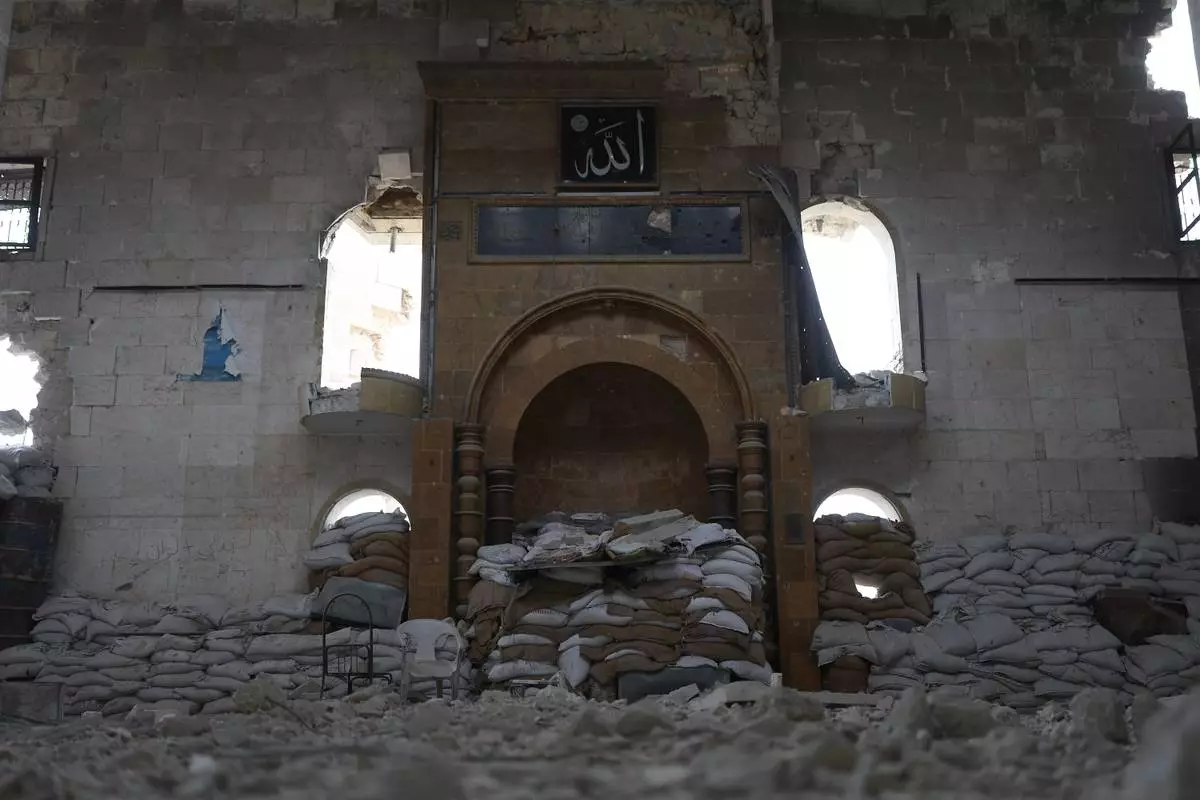
Sandbag barriers used as fighting positions by Kurdish fighters, left inside a destroyed mosque in the Sheikh Maqsoud neighborhood, where clashes between government forces and Kurdish fighters have been taking place in the northern city of Aleppo, Syria, Sunday, Jan. 11, 2026. (AP Photo/Ghaith Alsayed)
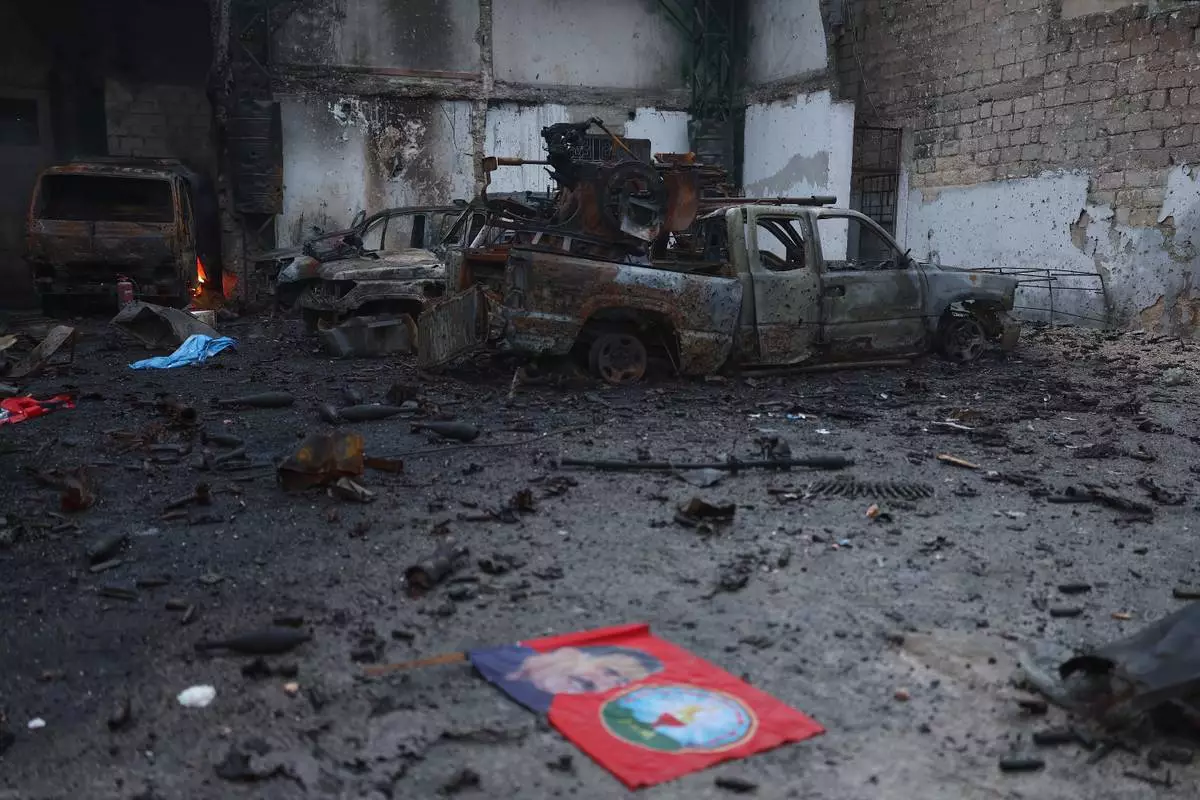
Burned vehicles at one of the Kurdish fighters positions at the Sheikh Maqsoud neighborhood, where clashes between government forces and Kurdish fighters have been taking place in the northern city of Aleppo, Syria, Sunday, Jan. 11, 2026. (AP Photo/Ghaith Alsayed)
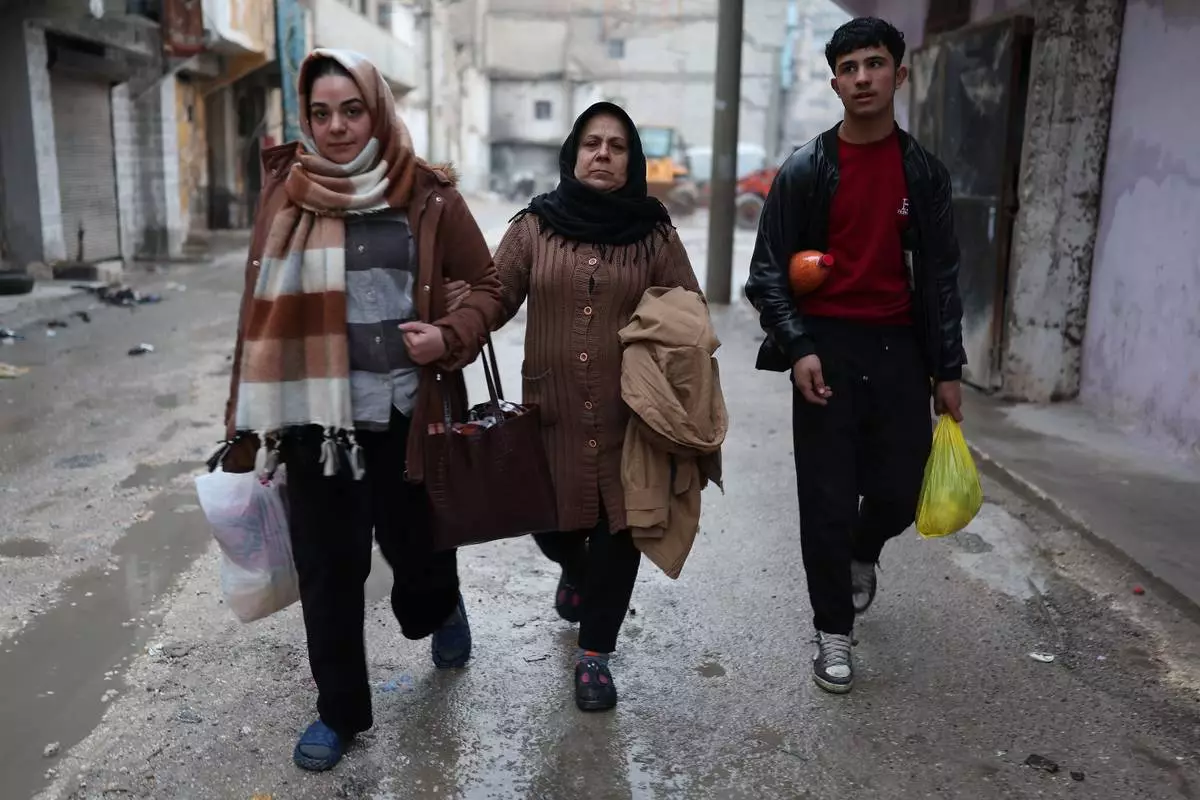
People flee the Sheikh Maqsoud neighborhood, where clashes between government forces and Kurdish fighters have been taking place in the northern city of Aleppo, Syria, Sunday, Jan. 11, 2026. (AP Photo/Ghaith Alsayed)
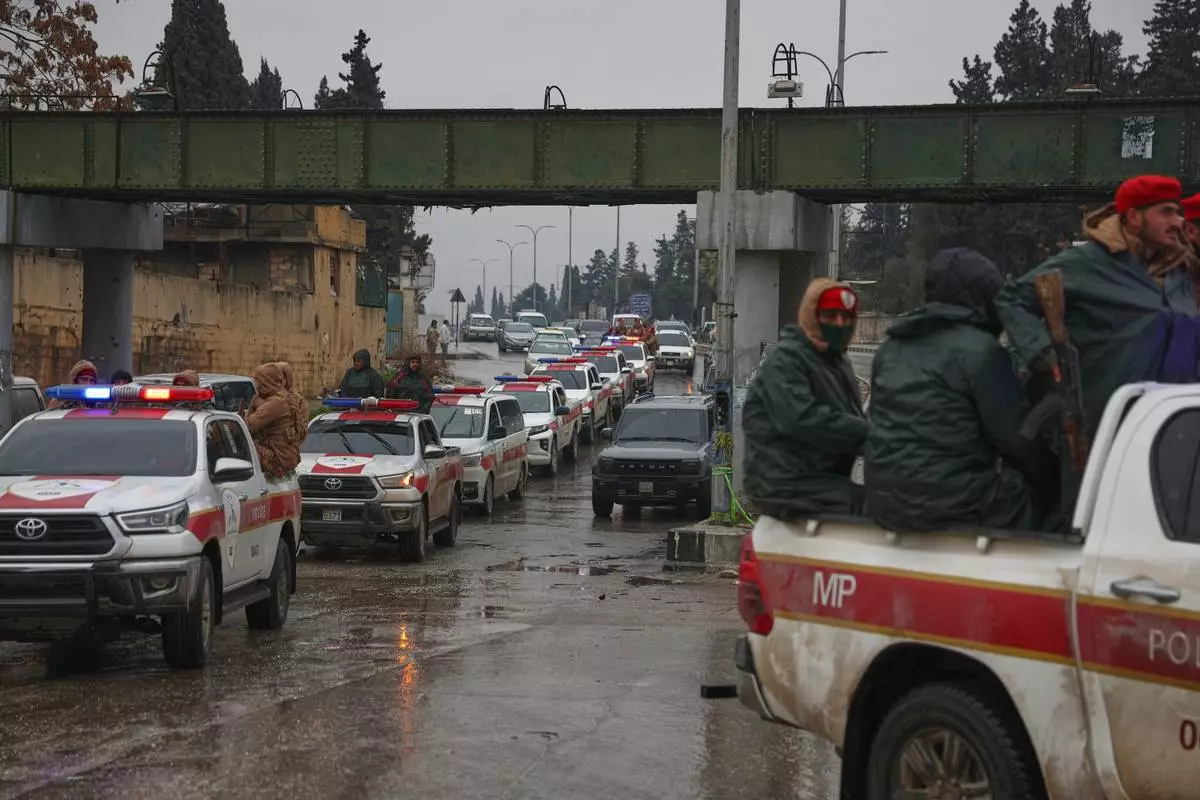
A Syrian military police convoy enters the Sheikh Maqsoud neighborhood, where clashes between government forces and Kurdish fighters have been taking place in the northern city of Aleppo, Syria, Sunday, Jan. 11, 2026. (AP Photo/Ghaith Alsayed)
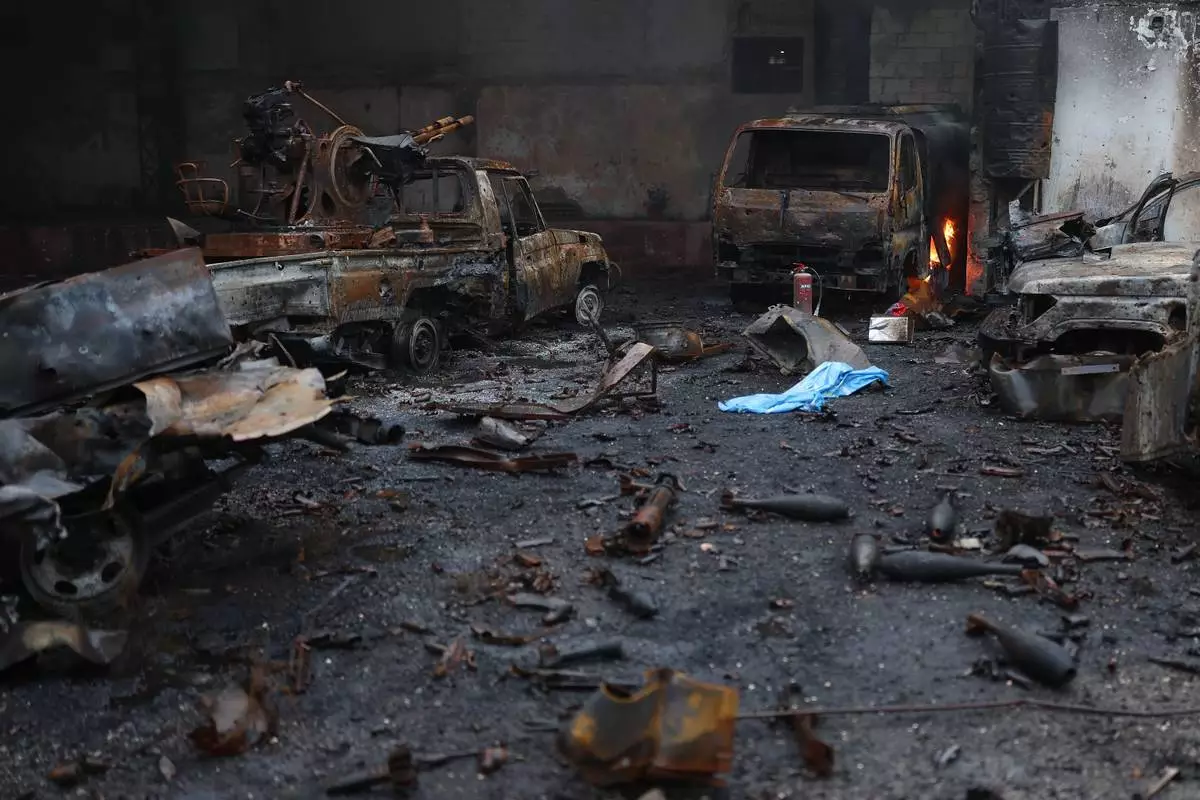
Burned vehicles and ammunitions left at one of the Kurdish fighters positions at the Sheikh Maqsoud neighborhood, where clashes between government forces and Kurdish fighters have been taking place in the northern city of Aleppo, Syria, Sunday, Jan. 11, 2026. (AP Photo/Ghaith Alsayed)