Deepening people-to-people dialogue is the key to enhancing cross-cultural understandings, building trust and promoting peace against a challenging backdrop of geopolitical conflicts, according to a Hungarian expert.
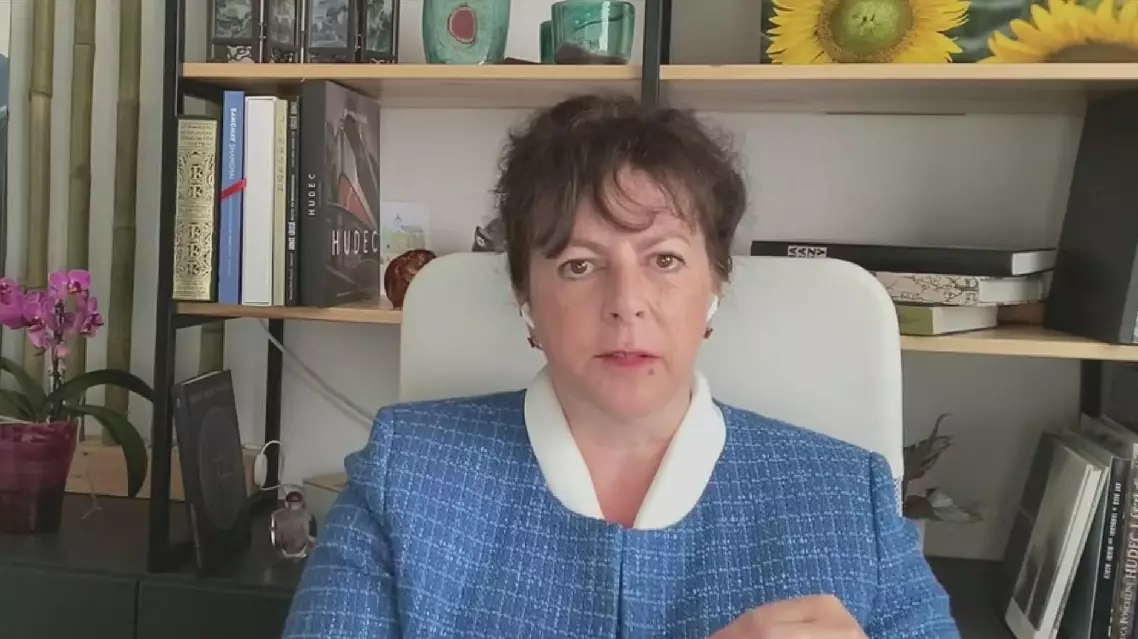
Judit Eva Nagy, president of the Hungarian-Chinese Friendship Association, shared her views during an interview with the China Global Television Network (CGTN) on Monday, one day ahead of the International Day for Dialogue among Civilizations.
Last year, the United Nations General Assembly adopted a China-sponsored resolution to designate June 10 as the International Day for Dialogue among Civilizations.
Nagy pointed to the importance of the China-proposed Global Civilization Initiative (GCI) for setting the tight tone for exchanges between cultures, and cited the example of China's visa-free policy as helping strengthen global connectivity.
"So the Global Civilization Initiative, in my opinion, is about respecting cultural paths and removing barriers to exchange. And it is a powerful reminder that diversity is not a problem, it is a resource. And each nation has the right to shape its own cultural and social path without judgment, because we all carry different cultural backgrounds and that's really beautiful. And at the Hungarian-Chinese Friendship Association, we value this opportunity. As an example, when China introduced visa-free travel for many countries, it sent a very clear signal that let's make connections between people and people easier, let's explore each other's countries, let's travel, let's experience, let's understand," she said.
Nagy also believes the CGI places a big emphasis on heritage protection and highlighted the strong and tangible historical connections between her country and China.
Taking Shanghai's iconic Wukang Mansion building, designed by the early 20th century Hungarian architect Laszlo Hudec, as an example, Nagy said the cooperation between both sides in protecting this much-celebrated heritage symbol is a showcase of the initiative being put into practice.
"One of our interesting upcoming projects is highlighting how Hungarian architects 100 years ago shaped modern Shanghai with building many, many buildings in Shanghai. One of them was the very well-known Laszlo Hudec. We would like to show how Hungarian people can add value to Chinese culture today and how Chinese innovation and technology is shaping the world today. And it's not only about heritage protection, but it's also about understanding each other and history, because the story of these Hungarian architects in Shanghai 100 years ago, they make us understand history better and make us realize that we are not so different from each other," she said.
UN Secretary-General Antonio Guterres on Monday noted the rising voices of intolerance and xenophobia and called for promoting understanding and global solidarity through dialogue. Echoing this view, Nagy called for more efforts to narrow any gaps in understanding which can lead to such problems, urging greater face-to-face communication.
"I think this is only dialogue that can help peace and stability in the world today, because we are living in a very difficult time of international conflicts and wars on the planet, and fear can easily turn into intolerance. But dialogue is the only thing that helps to overcome fear. And culture is a very gentle tool, a very powerful form of dialogue that we have to use to understand each other and develop respect and mutual understanding and acceptance," she said.
Nagy also stressed the significant impact that real exchanges at all levels can have in forging better connections and in ultimately building a more peaceful environment around the world.
"At our association we have learned that building peace, it just does not happen at summits. It happens with people-to-people experiences and sharing ideas. And also it can happen with smaller things, like for example, when a Hungarian child in a school shares their meal with a Chinese classmate or when an artist from Jiangxi Province displays the work at an art fair in Budapest, and also when people in both countries explore each other's works through photo contests and literary nights and film screenings. So I strongly believe that we need more of this and not less. And governments, they really need to support these civil efforts with creating the framework and providing funding and respect the civil initiatives. And people-to-people dialogue, it makes conflicts less likely, because it builds trust and once there is trust, then peace has room to grow," she said.
People-to-people dialogue key to building trust, promoting peace: Hungarian expert