DEIR AL-BALAH, Gaza Strip (AP) — Palestinians desperately trying to access aid in Gaza came under fire again Tuesday, killing 36 people and wounding 207, the Palestinian Health Ministry said.
Experts and humanitarian aid workers say Israel’s blockade and 20-month military campaign have pushed Gaza to the brink of famine.
Click to Gallery
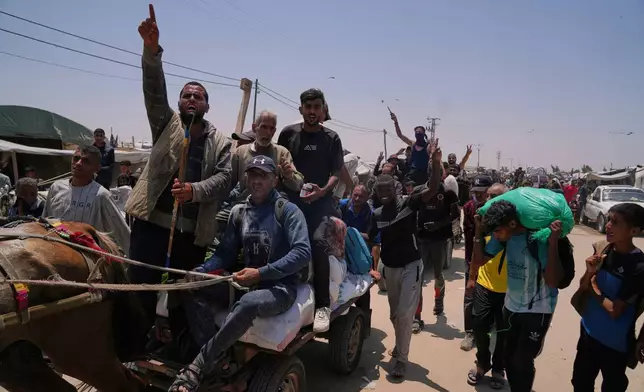
Palestinians wave to the camera while carrying bags containing food and humanitarian aid packages delivered by the Gaza Humanitarian Foundation, a U.S.-backed organization, in Rafah, southern Gaza Strip, Tuesday, June 10, 2025. (AP Photo/Abdel Kareem Hana)
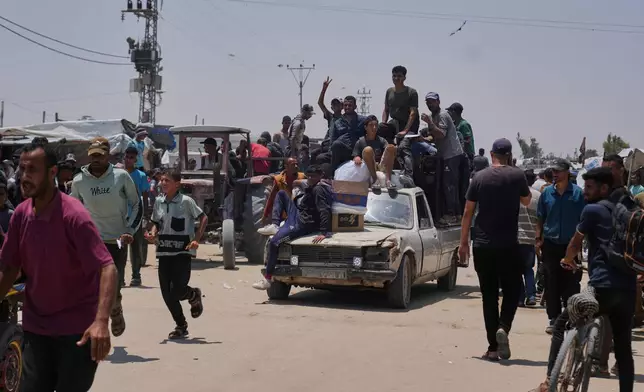
Palestinians carry food and humanitarian aid packages delivered by the Gaza Humanitarian Foundation, a U.S.-backed organization, in Rafah, southern Gaza Strip, Tuesday, June 10, 2025. (AP Photo/Abdel Kareem Hana)
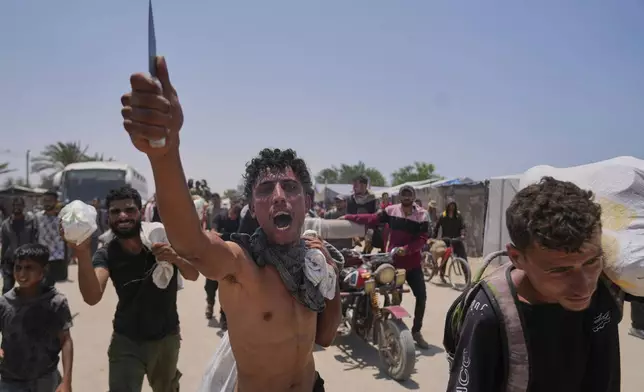
A Palestinian shouts to the camera in Arabic "We get food with the taste of death and blood" as he carries a bag containing food and humanitarian aid packages delivered by the Gaza Humanitarian Foundation, a U.S.-backed organization, in Rafah, southern Gaza Strip, Tuesday, June 10, 2025. (AP Photo/Abdel Kareem Hana)
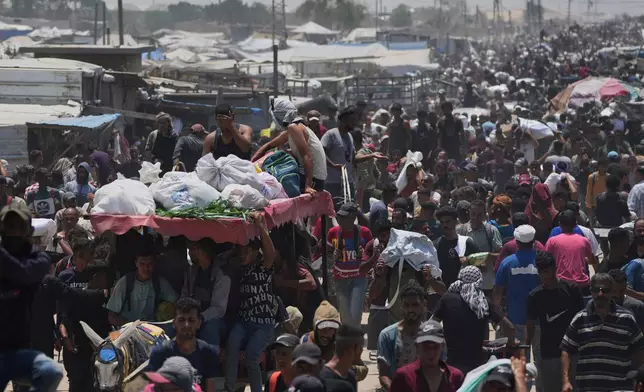
Palestinians carry bags containing food and humanitarian aid packages delivered by the Gaza Humanitarian Foundation, a U.S.-backed organization, in Rafah, southern Gaza Strip, Tuesday, June 10, 2025. (AP Photo/Abdel Kareem Hana)
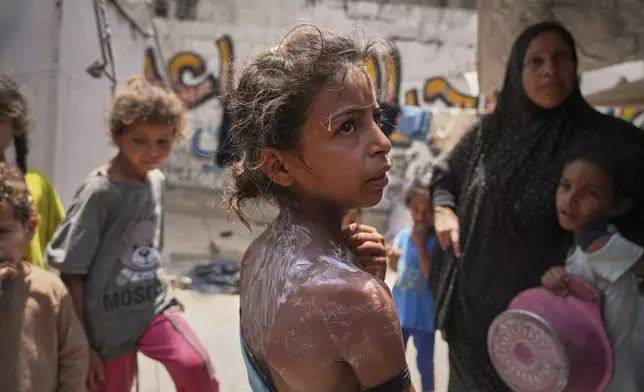
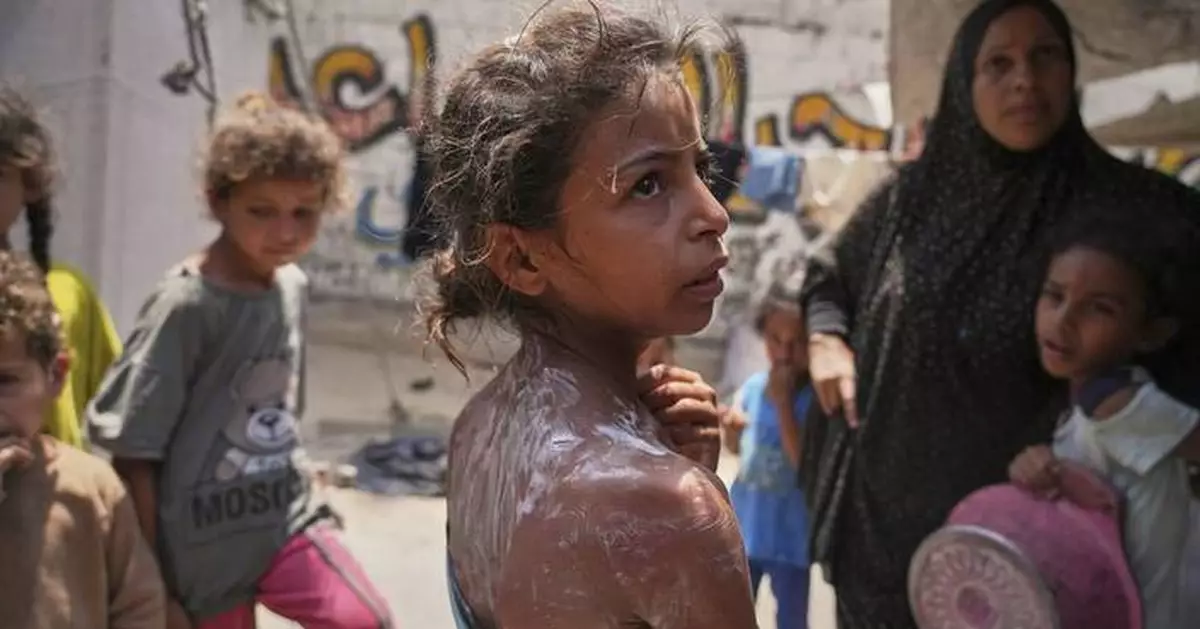
Rital Abu Jari, 9, stands after receiving cream to relieve burns on her back and shoulder, which she suffered while trying to get warm donated food at a community kitchen in Gaza City, Tuesday, June 10, 2025. (AP Photo/Jehad Alshrafi)
At least 163 people have been killed and 1,495 wounded in a number of shootings near aid sites run by the Israeli and U.S.-backed Gaza Humanitarian Foundation, which are in military zones that are off-limits to independent media. The Israeli military has acknowledged firing warning shots on previous occasions at people who it says approached its forces in a suspicious manner.
The foundation says there has been no violence in or around the distribution points themselves. But it has warned people to stay on designated access routes and it paused delivery last week while it held talks with the military on improving safety.
Prime Minister Benjamin Netanyahu said Tuesday there is “meaningful progress” on a possible ceasefire deal that would also return some of the 55 hostages still being held in Gaza, but said it was “too early to hope.” Foreign Minister Gideon Saar also mentioned Tuesday that there was progress in ceasefire negotiations.
Netanyahu was meeting with the Israeli negotiating team and the defense minister Tuesday evening to discuss next steps.
In southern Gaza, at least eight people were killed while trying to obtain aid around Rafah, according to Nasser Hospital.
In northern Gaza, two men and a child were killed and at least 130 were wounded on Tuesday, according to Nader Garghoun, a spokesperson for the al-Awda Hospital, which received the casualties. He said most were being treated for gunshot wounds.
Witnesses told The Associated Press that Israeli forces opened fire at around 2 a.m., several hundred meters (yards) from the aid site in central Gaza. Crowds of Palestinians seeking desperately needed food often head to the sites hours before dawn, hoping to beat the crowds.
The Israeli military said it fired warning shots at people it referred to as suspects. It said they had advanced toward its troops hundreds of meters (yards) from the aid site prior to its opening hours.
Mohammed Abu Hussein, a resident of the nearby built-up Bureij refugee camp, said Israeli drones and tanks opened fire, and that he saw five people wounded by gunshots.
Abed Haniyah, another witness, said Israeli forces opened fire “indiscriminately” as thousands of people were attempting to reach the food site.
“What happens every day is humiliation," he said. "Every day, people are killed just trying to get food for their children.”
Additionally, three Palestinian medics were killed in an Israeli strike Tuesday in Gaza City, according to the health ministry.
The medics from the health ministry’s emergency service were responding to an Israeli attack on a house in Jaffa street in Gaza City when a second strike hit the building, the ministry said. The Israeli military did not comment on the strike, but said over the past day the air force has hit dozens of targets belonging to Hamas' military infrastructure, including rocket launchers.
Israel and the United States say they set up the new food distribution system to prevent Hamas from stealing humanitarian aid and using it to finance militant activities.
The United Nations, which runs a long-standing system capable of delivering aid to all parts of Gaza, says there is no evidence of any systematic diversion.
U.N. agencies and major aid groups have refused to cooperate with the new system, saying it violates humanitarian principles by allowing Israel to decide who receives aid and by forcing Palestinians to relocate to just three currently operational sites.
The other two distribution sites are in the now mostly uninhabited southern city of Rafah, which Israel has transformed into a military zone. Israeli forces maintain an outer perimeter around all three hubs, and Palestinians must pass close to them to reach the distribution points.
Israeli Prime Minister Benjamin Netanyahu has spoken of creating a “sterile zone” in Rafah free of Hamas and of moving the territory's entire population there. He has also said Israel will facilitate what he refers to as the voluntary emigration of much of Gaza's 2 million Palestinians to other countries — plans rejected by much of the international community, including the Palestinians, who view it as forcible expulsion.
Hamas started the war with its attack on southern Israel on Oct. 7, 2023, when Palestinian militants killed around 1,200 people, mostly civilians, and took another 251 hostage. They still hold 55 hostages, fewer than half of them alive, after most of the rest were released in ceasefire agreements or other deals.
Israel’s military campaign has killed nearly 55,000 Palestinians, according to Gaza’s Health Ministry. It says women and children make up most of the dead, but doesn’t distinguish between civilians and combatants. Israel says it has killed more than 20,000 militants, without providing evidence.
The war has destroyed vast areas of Gaza and displaced around 90% of its population, often multiple times.
Magdy reported from Cairo. Associated Press writer Melanie Lidman contributed from Jerusalem.
Follow AP’s war coverage at https://apnews.com/hub/israel-hamas-war
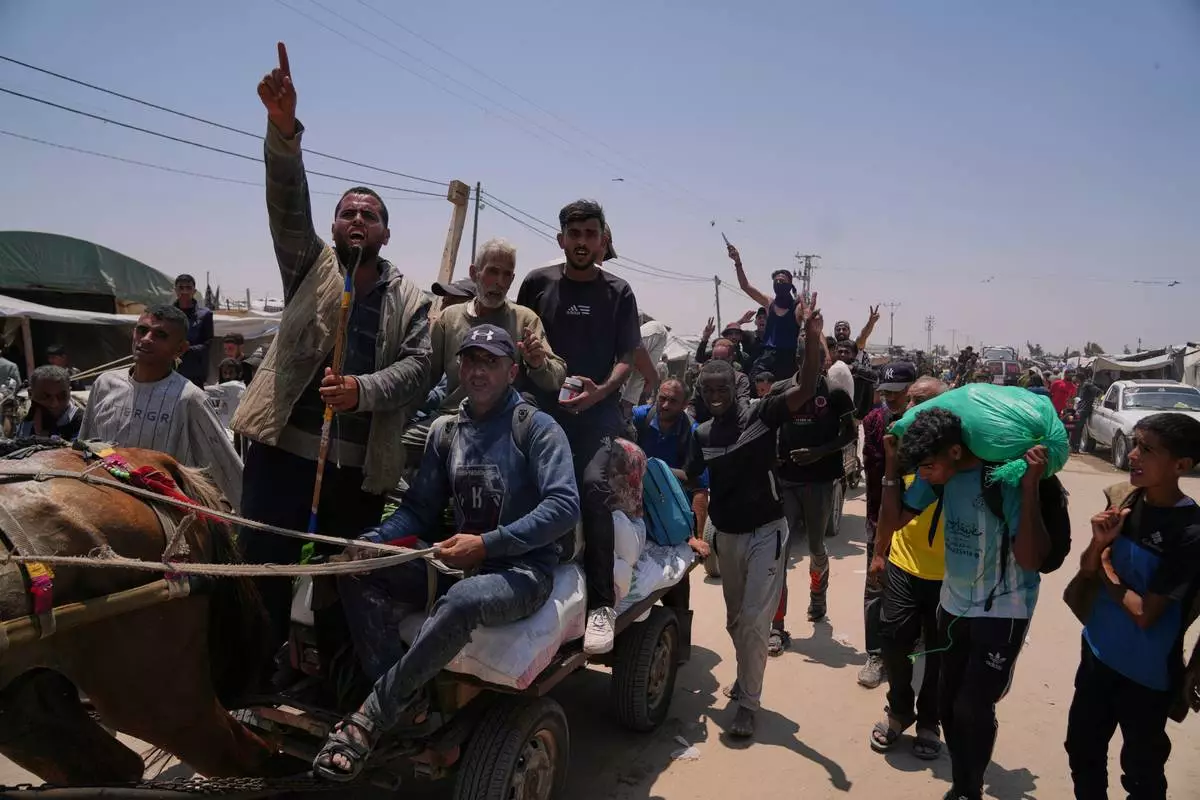
Palestinians wave to the camera while carrying bags containing food and humanitarian aid packages delivered by the Gaza Humanitarian Foundation, a U.S.-backed organization, in Rafah, southern Gaza Strip, Tuesday, June 10, 2025. (AP Photo/Abdel Kareem Hana)
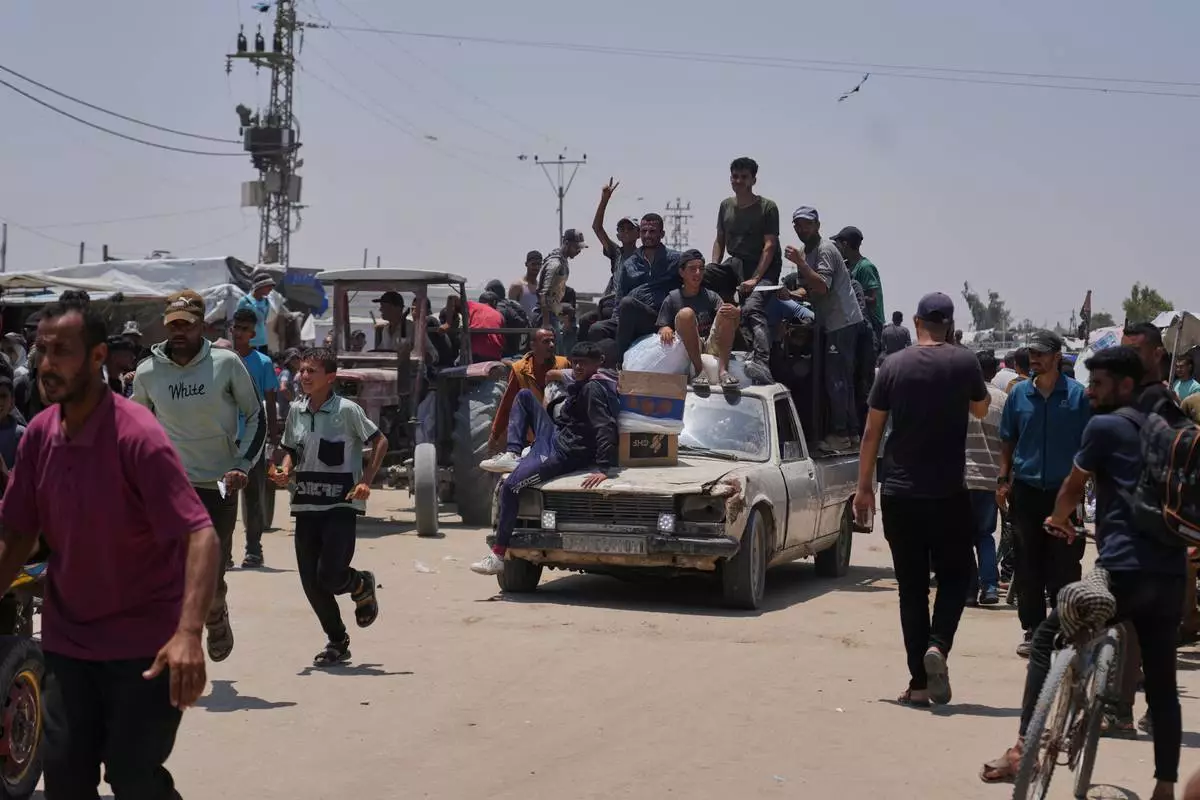
Palestinians carry food and humanitarian aid packages delivered by the Gaza Humanitarian Foundation, a U.S.-backed organization, in Rafah, southern Gaza Strip, Tuesday, June 10, 2025. (AP Photo/Abdel Kareem Hana)
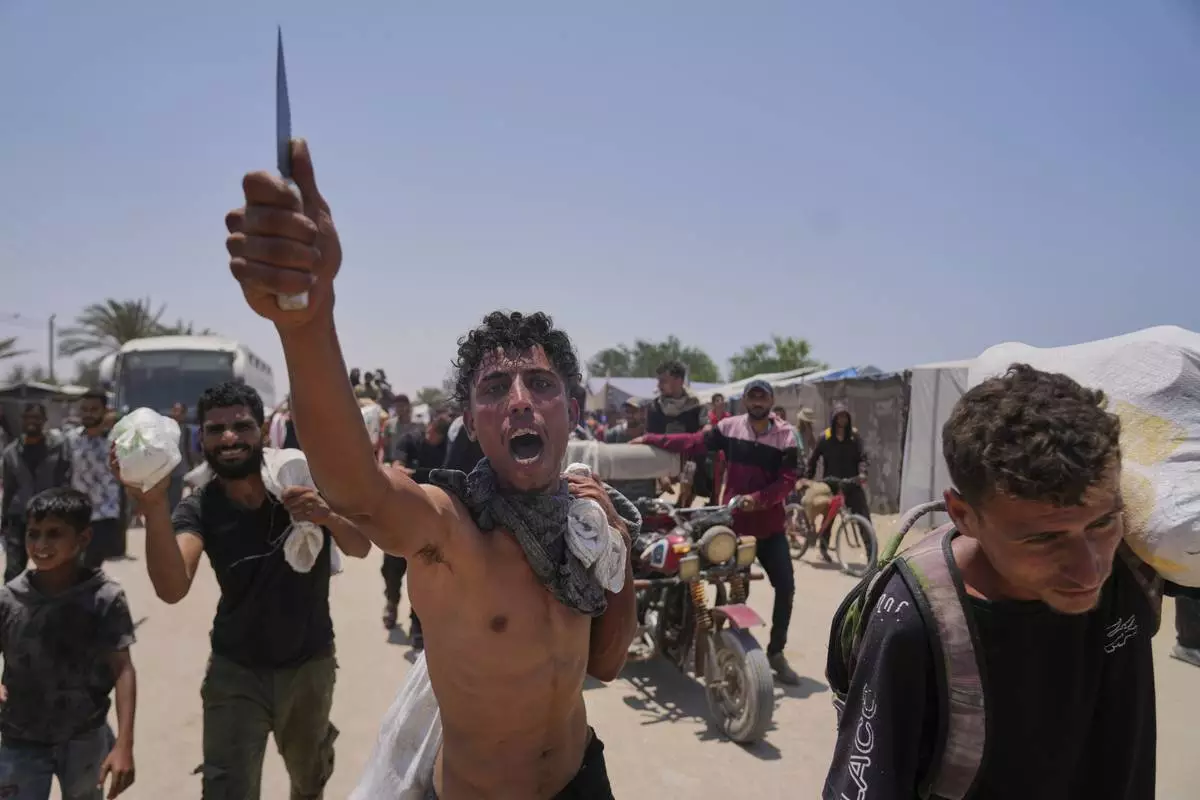
A Palestinian shouts to the camera in Arabic "We get food with the taste of death and blood" as he carries a bag containing food and humanitarian aid packages delivered by the Gaza Humanitarian Foundation, a U.S.-backed organization, in Rafah, southern Gaza Strip, Tuesday, June 10, 2025. (AP Photo/Abdel Kareem Hana)
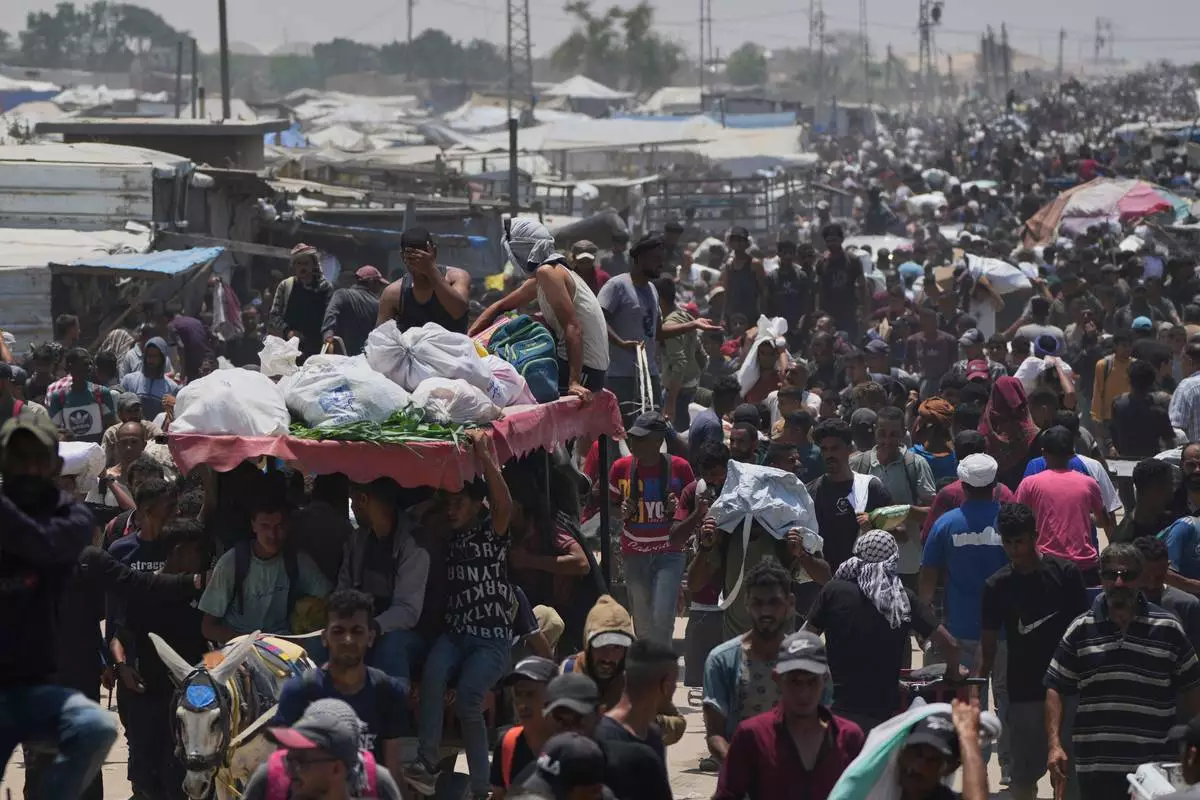
Palestinians carry bags containing food and humanitarian aid packages delivered by the Gaza Humanitarian Foundation, a U.S.-backed organization, in Rafah, southern Gaza Strip, Tuesday, June 10, 2025. (AP Photo/Abdel Kareem Hana)
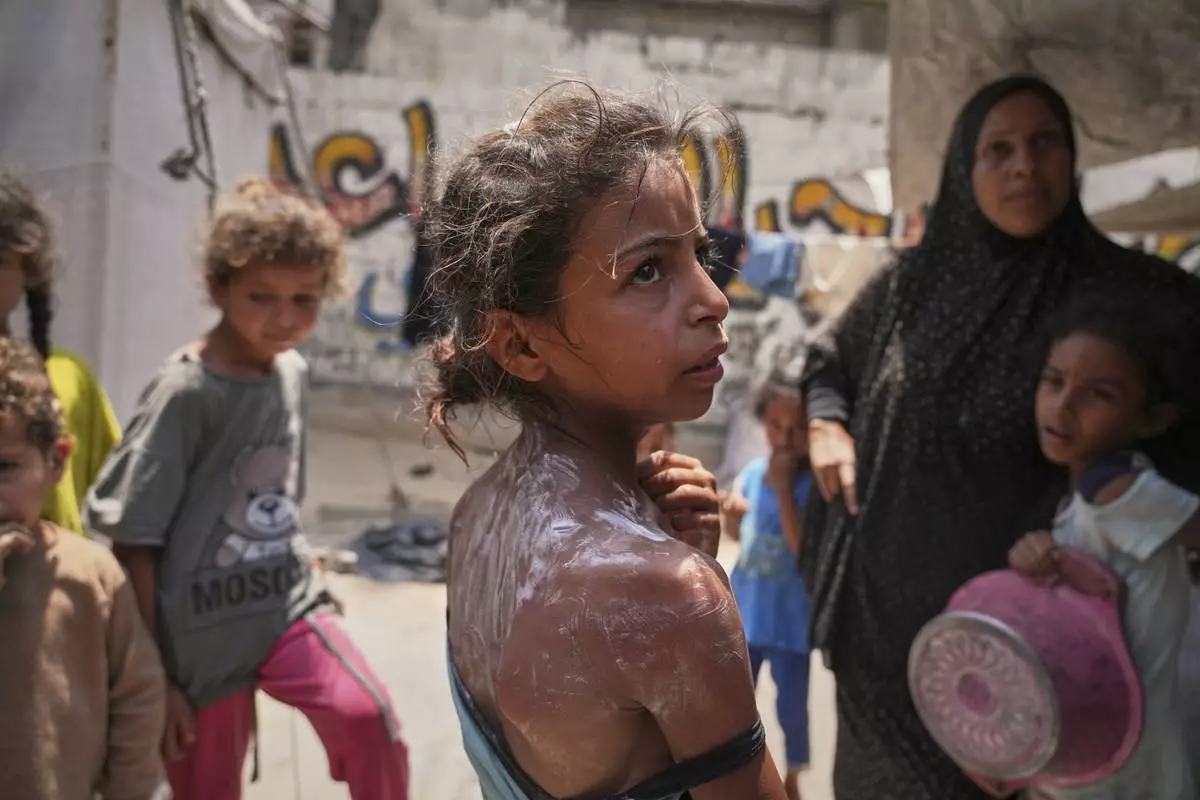
Rital Abu Jari, 9, stands after receiving cream to relieve burns on her back and shoulder, which she suffered while trying to get warm donated food at a community kitchen in Gaza City, Tuesday, June 10, 2025. (AP Photo/Jehad Alshrafi)