Skip to Content Facebook Feature Image

Trump's tax bill could raise taxes on foreign companies, hurting investment from abroad

News

Trump's tax bill could raise taxes on foreign companies, hurting investment from abroad
News

News

Trump's tax bill could raise taxes on foreign companies, hurting investment from abroad

2025-06-11 07:23 Last Updated At:07:30

WASHINGTON (AP) — President Donald Trump likes to say he's bringing in trillions of dollars in investments from foreign countries, but a provision in his tax cuts bill could cause international companies to avoid expanding into the United States.

The House-passed version of the legislation would allow the federal government to impose taxes on foreign-parented companies and investors from countries judged as charging “unfair foreign taxes” on U.S. companies.

Known as Section 899, the measure could cause companies to avoid investing in the the U.S. out of concern they could face steep taxes. The fate of the measure rests with the Senate — setting off a debate about its prospects and impact.

A new analysis by the Global Business Alliance, a trade group representing international companies such as Toyota and Nestlé, estimates that the provision would cost the U.S. 360,000 jobs and $55 billion annually over 10 years in lost gross domestic product. The analysis estimates that the tax could cut a third off the economic growth anticipated from the overall tax cuts by Congress' Joint Committee on Taxation.

"While proponents say this punitive tax hike is intended as a retaliatory measure against foreign governments, this report confirms that the real victims are American workers in states like North Carolina, South Carolina, Indiana, Tennessee and Texas," said Jonathan Samford, president and CEO of the Global Business Alliance.

Republican Rep. Jason Smith of Missouri, chair of the House Ways and Means Committee, has defended the provision as protecting U.S. interests by giving the president a tool that can be used against countries with tax codes that, in the federal government's opinion, put American companies at a disadvantage.

“If these countries withdraw these taxes and decide to behave, we will have achieved our goal," Smith said in a statement last week. "It’s just common sense. I urge my colleagues in the Senate to move quickly to pass this bill and protect Americans from economic bad actors around the world.”

House Republicans have been looking into the issue for a long time and the bill provides the flexibility so that a president doesn't have to levy taxes. There were concerns among GOP lawmakers during Joe Biden's presidency that an agreement among countries on corporate tax codes could cause foreign governments to charge U.S. companies more.

The tax gets at a fundamental tension within Trump's policy agenda: a contradiction in the broad strokes of Trump simultaneously trying to tax imports and foreign profits at higher rates while also seeking investments from companies headquartered abroad.

In late May, Trump defended his approach by saying that his tariffs were causing more countries to invest in the U.S. to avoid imports getting taxed. While some countries and companies have made announcements, there is not evidence of the investments pushing up spending on new factories as measured in the government's monthly report on construction spending.

The Republican president said his tendency to impose steep tariffs, then retreat to lower rates, had succeeded.

“We have $14 trillion now invested, committed to investing,” Trump said then. “You know we have the hottest country anywhere in the world. I went to Saudi Arabia, the king told me, he said, you got the hottest -- we have the hottest country in the world right now.”

The Global Business Alliance was among the groups that signed a letter on Monday warning of the consequences of Section 899 to Senate Majority Leader John Thune of South Dakota and Senate Finance Committee Chairman Mike Crapo of Idaho, both Republicans.

The Investment Company Institute, representing financial firms, said the provision “could limit foreign investment to the U.S. — a key driver of growth in American capital markets that ultimately benefits American families saving for their futures.”

The analysis performed by EY Quantitative Economics and Statistics notes there is a degree of uncertainty in how the taxes under Section 899 could be implemented and other countries would respond. But they could be charged against companies based in countries that tax digital services, as is the case in parts of Europe.

There are fundamental disputes among supporters and opponents about the terms in the bill and how the taxes would be applied. If the U.S. judged the taxes unfair based on various criteria, there could be a tax rate of as much as 30% on foreign companies' profits and income, though it could also be less than that as supporters note. Non-resident foreigners could be taxed as well based on their U.S. property holdings. Still, an exemption is in place so that the foreign holders of U.S. debt are not affected by the potential new taxes.

The possibility of the taxes and seemingly arbitrary nature by which they could be imposed is also a challenge, said Chye-Ching Huang, executive director of New York University's Tax Law Center.

“Section 899 creates a game of political chicken with trade partners that risks harming businesses, consumers, and workers in the hopes of securing US multinationals the ability to shift more of their profits out of the US to tax havens," Huang said in an email. “It’s a high-risk strategy that could expand the damage of the failed tariff war.”

There could also be political repercussions if key states in Trump's political coalition from 2024 suffer layoffs or simply find job growth slowing. The Global Business Alliance finds job losses could amount to 44,200 in Florida, 27,700 in Pennsylvania, 24,500 in North Carolina and 23,500 in Michigan.

Associated Press writer Fatima Hussein contributed to this report.
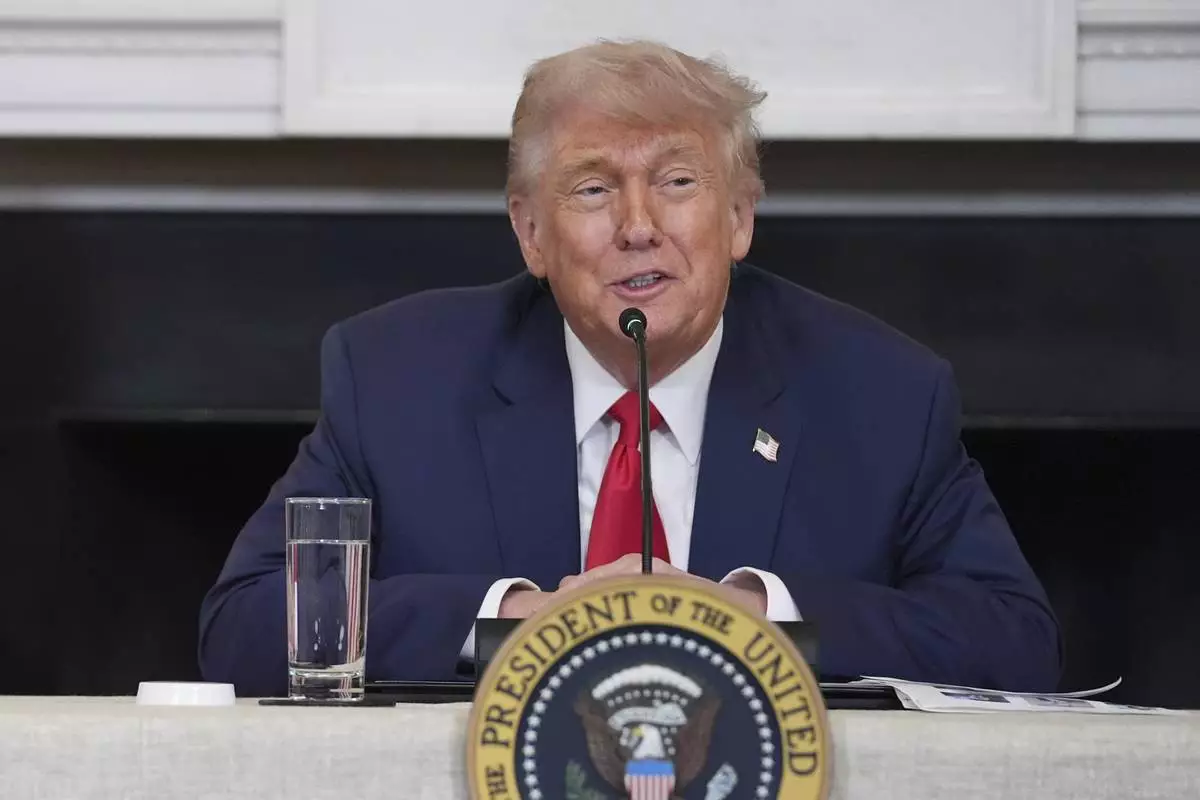
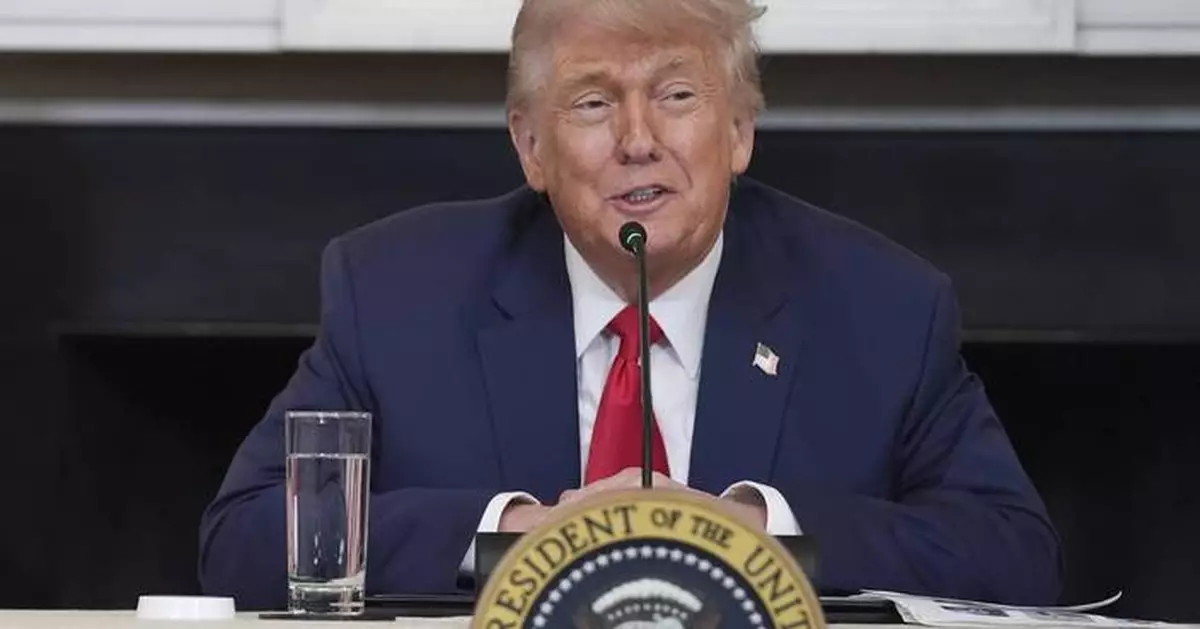
President Donald Trump speaks during an "Invest in America" roundtable with business leaders at the White House, Monday, June 9, 2025, in Washington. (AP Photo/Evan Vucci)
President Donald Trump speaks during an "Invest in America" roundtable with business leaders at the White House, Monday, June 9, 2025, in Washington. (AP Photo/Evan Vucci)
DUBAI, United Arab Emirates (AP) — U.S. President Donald Trump said Iran wants to negotiate with Washington after his threat to strike the Islamic Republic over its bloody crackdown on protesters, a move coming as activists said Monday the death toll in the nationwide demonstrations rose to at least 544.

Iran had no immediate reaction to the news, which came after the foreign minister of Oman — long an interlocutor between Washington and Tehran — traveled to Iran this weekend. It also remains unclear just what Iran could promise, particularly as Trump has set strict demands over its nuclear program and its ballistic missile arsenal, which Tehran insists is crucial for its national defense.

Meanwhile Monday, Iran called for pro-government demonstrators to head to the streets in support of the theocracy, a show of force after days of protests directly challenging the rule of 86-year-old Supreme Leader Ayatollah Ali Khamenei. Iranian state television aired chants from the crowd, who shouted “Death to America!” and “Death to Israel!”

Trump and his national security team have been weighing a range of potential responses against Iran including cyberattacks and direct strikes by the U.S. or Israel, according to two people familiar with internal White House discussions who were not authorized to comment publicly and spoke on condition of anonymity.

“The military is looking at it, and we’re looking at some very strong options,” Trump told reporters on Air Force One on Sunday night. Asked about Iran’s threats of retaliation, he said: “If they do that, we will hit them at levels that they’ve never been hit before.”

Trump said that his administration was in talks to set up a meeting with Tehran, but cautioned that he may have to act first as reports of the death toll in Iran mount and the government continues to arrest protesters.

“I think they’re tired of being beat up by the United States,” Trump said. “Iran wants to negotiate.”

He added: “The meeting is being set up, but we may have to act because of what’s happening before the meeting. But a meeting is being set up. Iran called, they want to negotiate.”

Iran through country's parliamentary speaker warned Sunday that the U.S. military and Israel would be “legitimate targets” if America uses force to protect demonstrators.

More than 10,600 people also have been detained over the two weeks of protests, said the U.S.-based Human Rights Activists News Agency, which has been accurate in previous unrest in recent years and gave the death toll. It relies on supporters in Iran crosschecking information. It said 496 of the dead were protesters and 48 were with security forces.

With the internet down in Iran and phone lines cut off, gauging the demonstrations from abroad has grown more difficult. The Associated Press has been unable to independently assess the toll. Iran’s government has not offered overall casualty figures.

Those abroad fear the information blackout is emboldening hard-liners within Iran’s security services to launch a bloody crackdown. Protesters flooded the streets in the country’s capital and its second-largest city on Saturday night into Sunday morning. Online videos purported to show more demonstrations Sunday night into Monday, with a Tehran official acknowledging them in state media.

In Tehran, a witness told the AP that the streets of the capital empty at the sunset call to prayers each night. By the Isha, or nighttime prayer, the streets are deserted.

Part of that stems from the fear of getting caught in the crackdown. Police sent the public a text message that warned: “Given the presence of terrorist groups and armed individuals in some gatherings last night and their plans to cause death, and the firm decision to not tolerate any appeasement and to deal decisively with the rioters, families are strongly advised to take care of their youth and teenagers.”

Another text, which claimed to come from the intelligence arm of the paramilitary Revolutionary Guard, also directly warned people not to take part in demonstrations.

“Dear parents, in view of the enemy’s plan to increase the level of naked violence and the decision to kill people, ... refrain from being on the streets and gathering in places involved in violence, and inform your children about the consequences of cooperating with terrorist mercenaries, which is an example of treason against the country,” the text warned.

The witness spoke to the AP on condition of anonymity due to the ongoing crackdown.

The demonstrations began Dec. 28 over the collapse of the Iranian rial currency, which trades at over 1.4 million to $1, as the country’s economy is squeezed by international sanctions in part levied over its nuclear program. The protests intensified and grew into calls directly challenging Iran’s theocracy.

Nikhinson reported from aboard Air Force One.

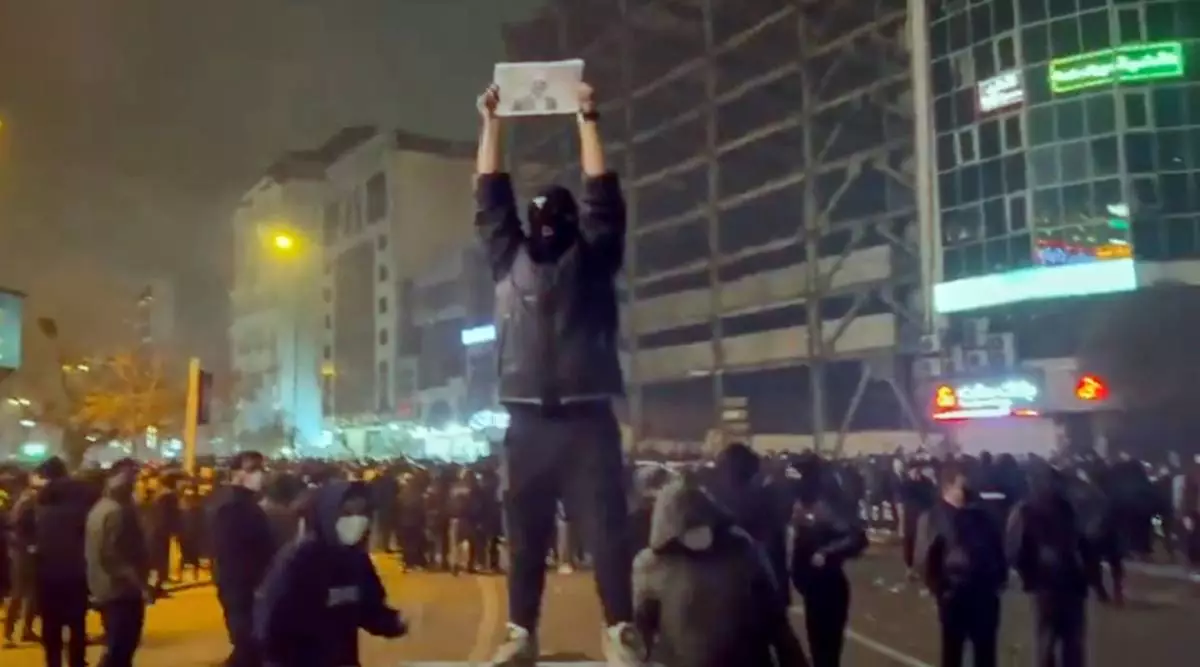
In this frame grab from video obtained by the AP outside Iran, a masked demonstrator holds a picture of Iran's Crown Prince Reza Pahlavi during a protest in Tehran, Iran, Friday, January. 9, 2026. (UGC via AP)

In this frame grab from video obtained by the AP outside Iran, a masked demonstrator holds a picture of Iran's Crown Prince Reza Pahlavi during a protest in Tehran, Iran, Friday, January. 9, 2026. (UGC via AP)

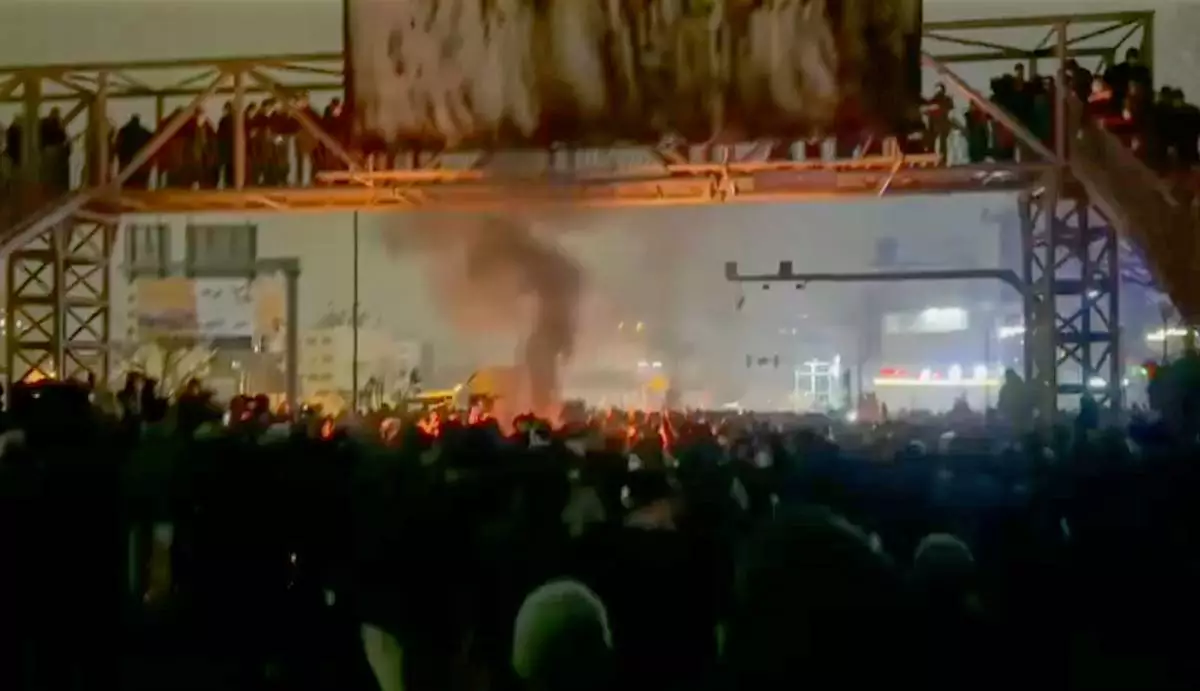
In this frame grab from footage circulating on social media from Iran shows protesters taking to the streets despite an intensifying crackdown as the Islamic Republic remains cut off from the rest of the world in Tehran, Iran, Friday, Jan. 9, 2026.(UGC via AP)

In this frame grab from footage circulating on social media from Iran shows protesters taking to the streets despite an intensifying crackdown as the Islamic Republic remains cut off from the rest of the world in Tehran, Iran, Friday, Jan. 9, 2026.(UGC via AP)

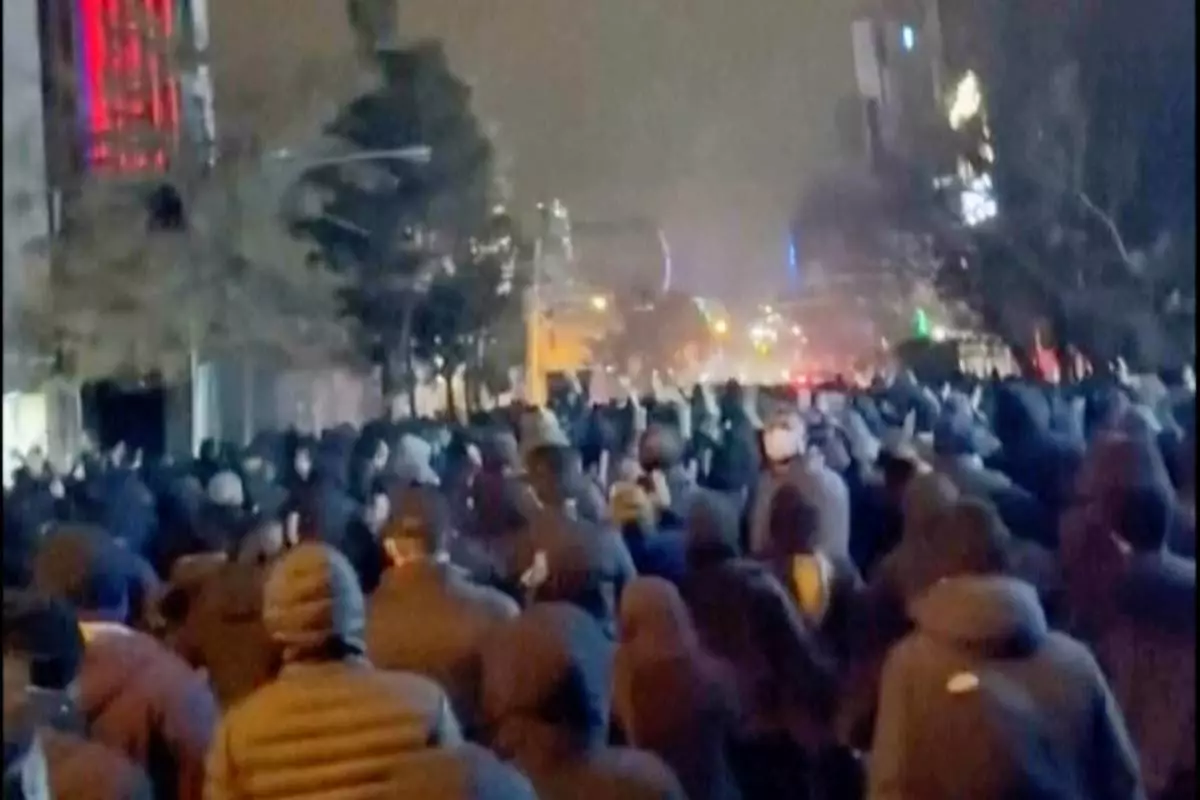
In this frame grab from footage circulating on social media from Iran showed protesters once again taking to the streets of Tehran despite an intensifying crackdown as the Islamic Republic remains cut off from the rest of the world in Tehran, Iran, Saturday Jan. 10, 2026. (UGC via AP)

In this frame grab from footage circulating on social media from Iran showed protesters once again taking to the streets of Tehran despite an intensifying crackdown as the Islamic Republic remains cut off from the rest of the world in Tehran, Iran, Saturday Jan. 10, 2026. (UGC via AP)

Recommended Articles