Skip to Content Facebook Feature Image

In his own words: Trump said during 2024 campaign he would use military for immigration enforcement

News

In his own words: Trump said during 2024 campaign he would use military for immigration enforcement
News

News

In his own words: Trump said during 2024 campaign he would use military for immigration enforcement

2025-06-11 08:10 Last Updated At:08:21

President Donald Trump in recent days has sent thousands of National Guard troops and 700 active duty Marines to quell Los Angeles-area protests over immigration enforcement actions, despite the objections of Democratic Gov. Gavin Newsom and local leaders.

On Tuesday, National Guard troops were standing guard around officers as they made arrests, an expansion of the troops' duties from their earlier role of protecting federal property.

The actions are in line with what Trump pledged during last year’s campaign, when as a candidate he promised the largest mass deportation effort the U.S. has seen, and said he would be willing to use military might to make it happen.

But Trump has changed his position since his 2020 presidential bid, namely around using the Insurrection Act to send military units to respond to unrest in the states.

Here's a look at how Trump has talked about use of the military when it comes to immigration — and how his position evolved — in his own words:

“If there’s an insurrection, I would certainly invoke it. We’ll see. But I can tell you last night was terrible, and the night before that was terrible.” — Trump, Tuesday, to reporters in the Oval Office.

During an Oval Office engagement with reporters, Trump left open the possibility of invoking one of the most extreme emergency powers available to a U.S. president.

The Insurrection Act authorizes the president to deploy military forces inside the United States to suppress rebellion or domestic violence or to enforce the law in certain situations.

It is often referred to as the “Insurrection Act of 1807,” but the law is actually an amalgamation of different statutes enacted by Congress between 1792 and 1871.

In calling up National Guard forces over Newsom's objections, Trump cited a legal provision that allows him to mobilize federal service members when there is “a rebellion or danger of a rebellion against the authority of the Government of the United States.”

“If I thought things were getting out of control, I would have no problem using the military, per se. We have to have safety in our country. We have to have law and order in our country. And whichever gets us there, but I think the National Guard will do the job.” — Trump, April 30, 2024, interview with Time Magazine.

While campaigning in 2024, Trump said he would use the National Guard as part of efforts to deport millions of migrants across the country. He didn’t say how he would carry out the operations and what role the National Guard would play, but added he would resort to the military if “things were getting out of control.”

When asked to clarify if he would use the military inland, he said, “I don’t think I’d have to do that. I think the National Guard would be able to do that. If they weren’t able to, then I’d use the military.”

Trump told Time that he would deport between 15 million and 20 million people who are in the country illegally. The foreign-born population, including immigrants in the country both legally and illegally, was estimated to be 46.2 million, or nearly 14% of the U.S. total, in 2022, according to the Census Bureau, which also reported about 11 million immigrants in the country illegally.

After winning the November election, the possible contours of Trump's incoming administration and how it would handle issues, including immigration, began to take greater shape.

On Nov. 17, after conservative activist Tom Fitton proclaimed in a social media post that the incoming president “will declare a national emergency and will use military assets to reverse the Biden invasion through a mass deportation program,” Trump replied: “TRUE!!!”

On his first day back in office, Trump rolled out a blueprint to beef up security at the southern border in a series of executive orders that began taking effect soon after his Jan. 20 inauguration. Trump ordered the government, with Defense Department assistance, to “finish” construction of the border wall and send troops to the border. He did not say how many would go — leaving it up to the defense secretary — or what their exact role would be.

His executive orders suggested the military would help the Department of Homeland Security with “detention space, transportation (including aircraft), and other logistics services.” Trump directed the defense secretary to come up with a plan to “seal the borders” and repel “unlawful mass migration.”

“We have to go by the laws. We can’t move in the National Guard. I can call insurrection, but there’s no reason to ever do that.” — Trump, Sept. 15, 2020, in a town hall hosted by ABC News in Philadelphia.

Questioned during a 2020 election town hall about his campaign promise of restoring law and order, Trump said he could not activate the National Guard unless a governor requested it, referring to the response to wildfires that ravaged Portland in 2020.

“We have laws. We have to go by the laws. We can’t move in the National Guard. I can call insurrection, but there’s no reason to ever do that,” he said. “Even in a Portland case, we can’t call in the National Guard unless we’re requested by a governor. If a governor or a mayor is a Democrat, like in Portland, we call them constantly.”

That reference wasn't explicitly to immigration, but it was referring to Trump's willingness to overrule a state's governor and federalize National Guard resources.

Kinnard can be reached at http://x.com/MegKinnardAP
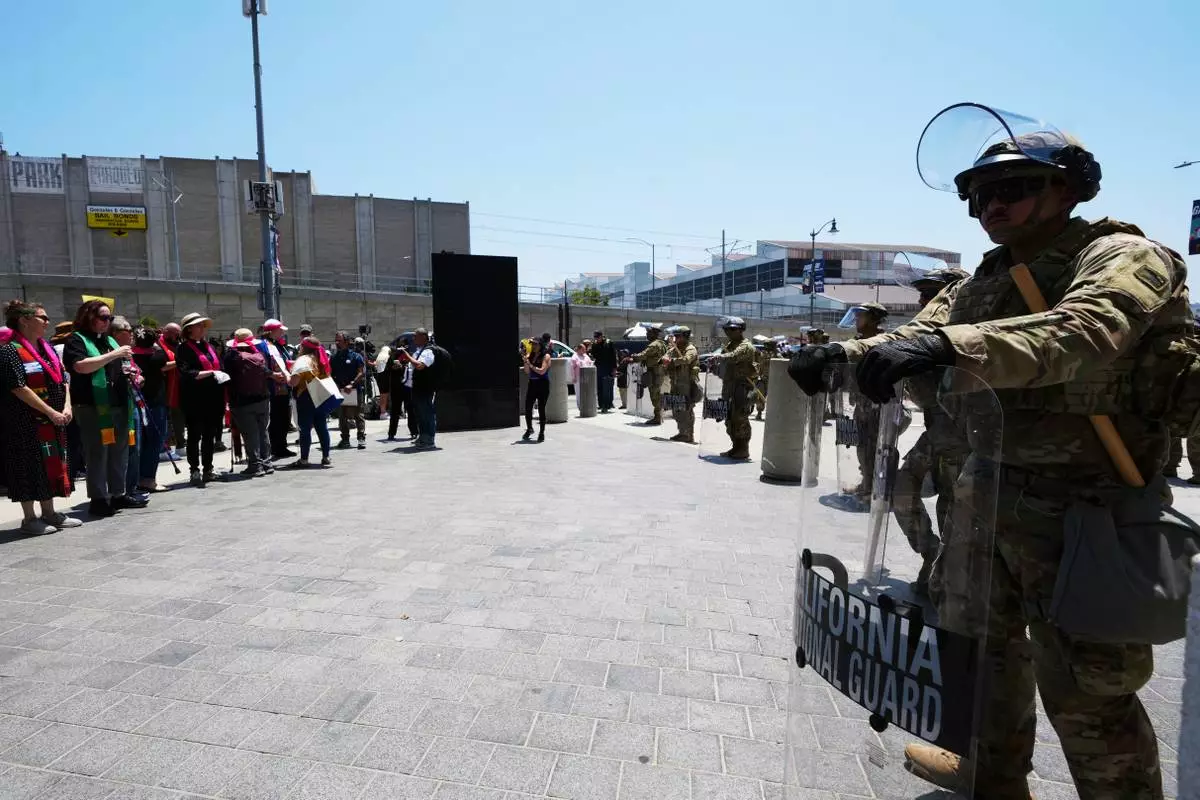
U.S. National Guard stand by as protesters gather to denounce ICE, U.S Immigration and Customs Enforcement, operations Tuesday, June 10, 2025, in Los Angeles. (AP Photo Damian Dovarganes)
U.S. National Guard stand by as protesters gather to denounce ICE, U.S Immigration and Customs Enforcement, operations Tuesday, June 10, 2025, in Los Angeles. (AP Photo Damian Dovarganes)

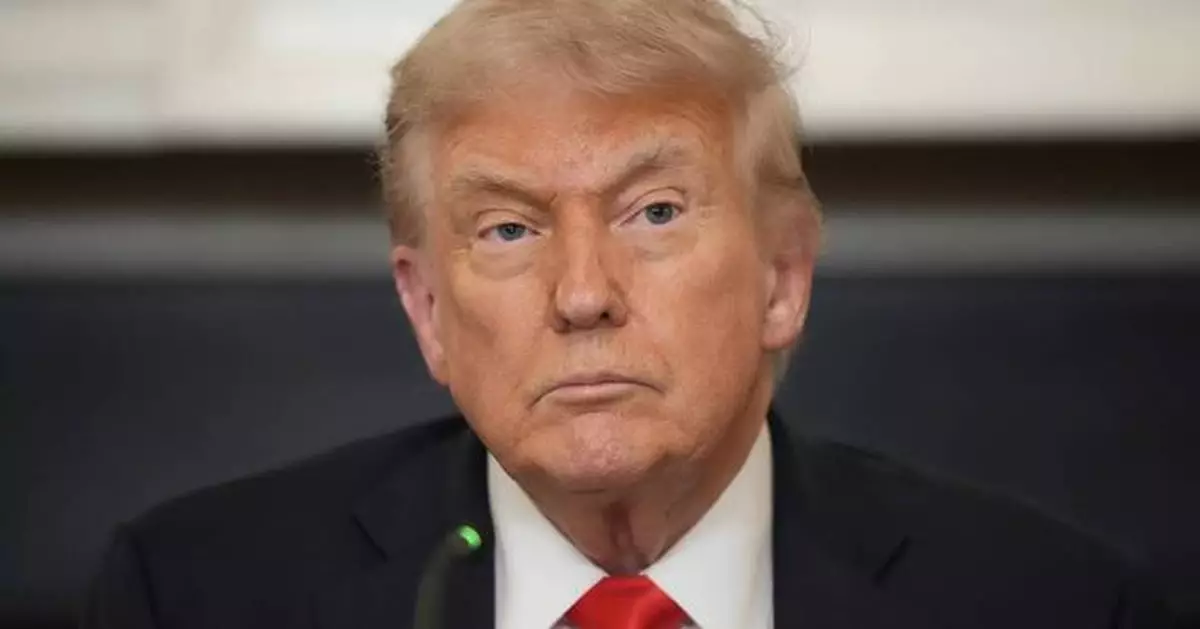
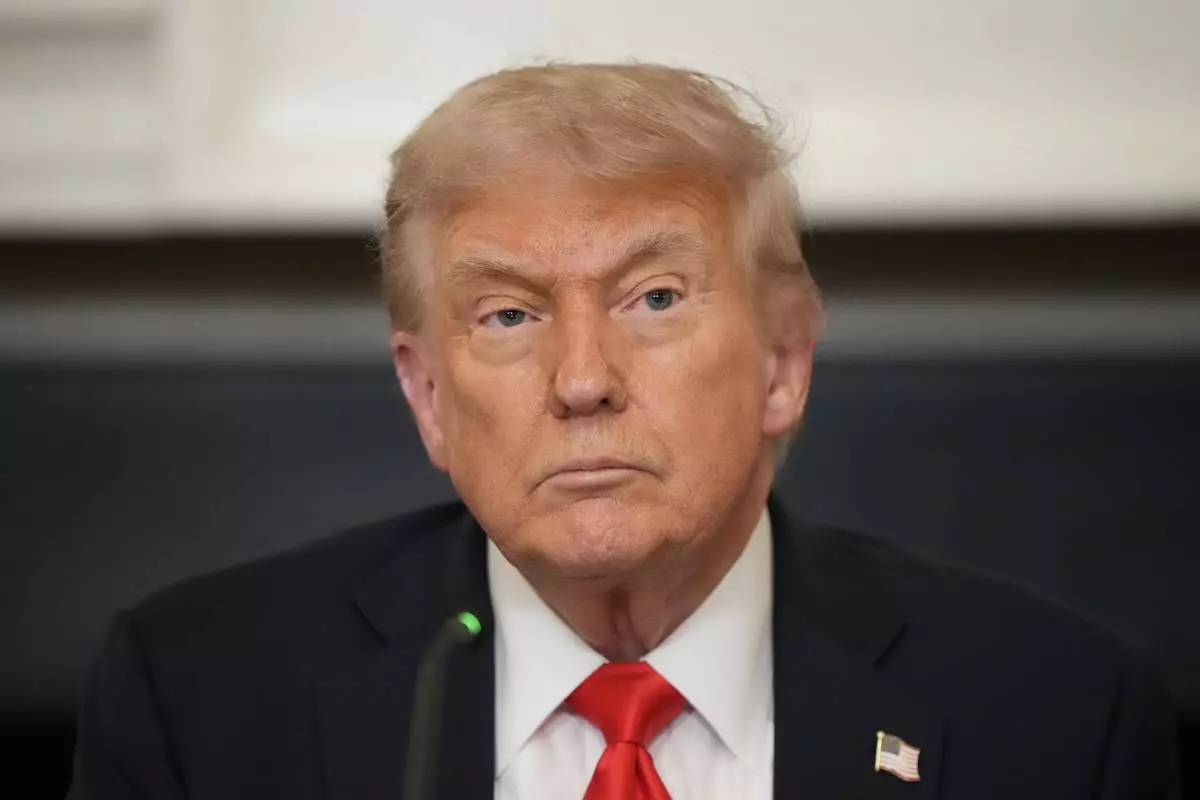
President Donald Trump attends a meeting with the Fraternal Order of Police in the State Dinning Room of the White House, Thursday, June 5, 2025, in Washington. (AP Photo/Alex Brandon)
President Donald Trump attends a meeting with the Fraternal Order of Police in the State Dinning Room of the White House, Thursday, June 5, 2025, in Washington. (AP Photo/Alex Brandon)
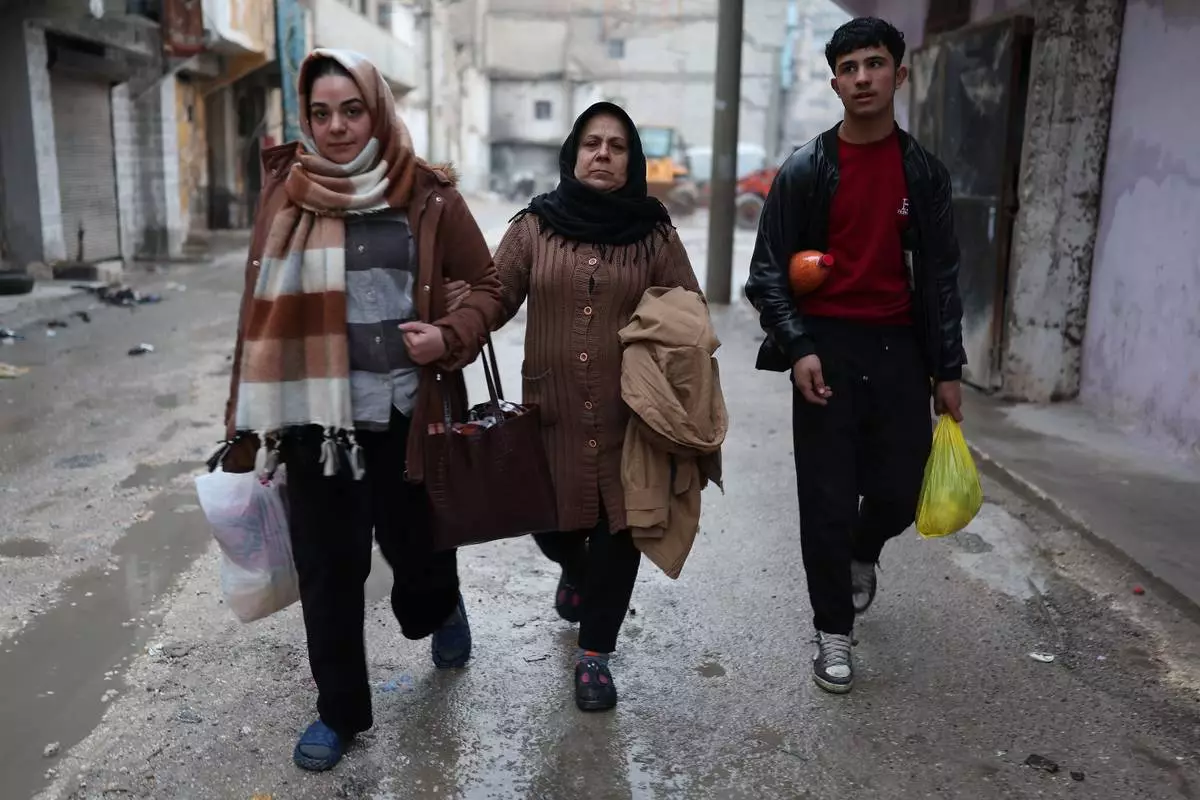
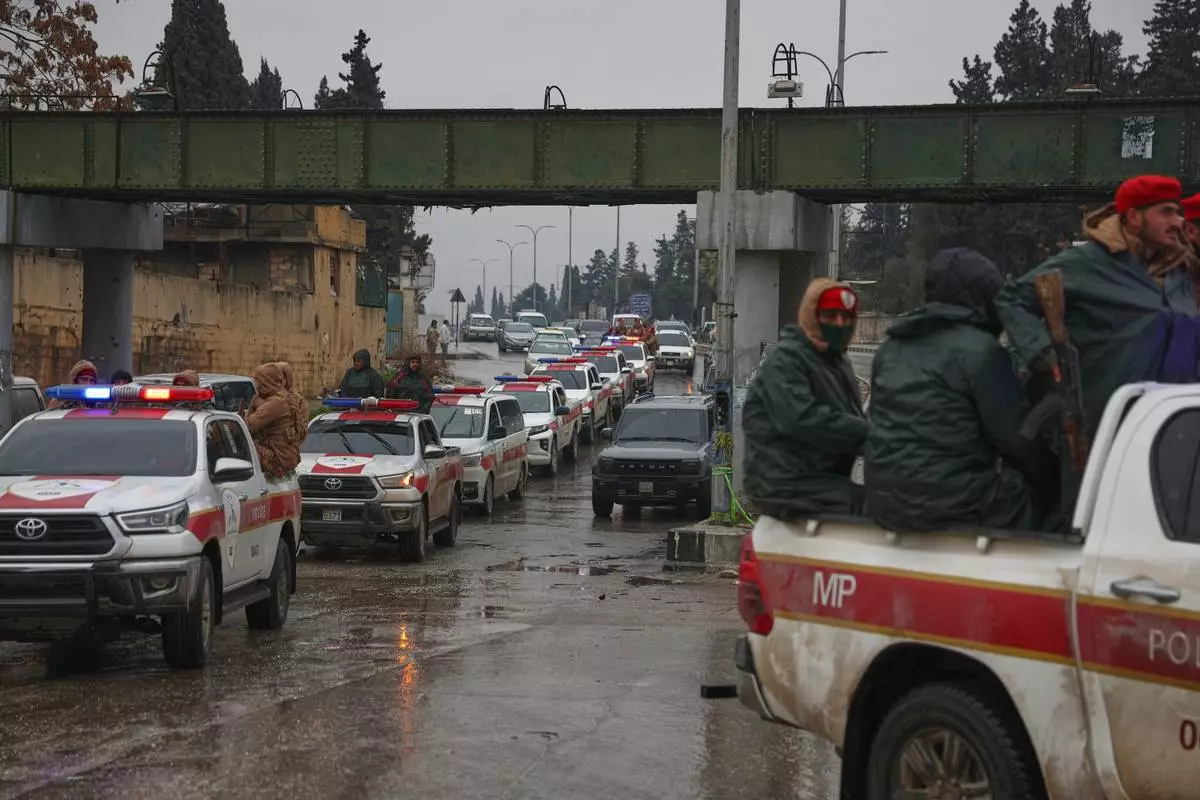
ALEPPO, Syria (AP) — First responders on Sunday entered a contested neighborhood in Syria’ s northern city of Aleppo after days of deadly clashes between government forces and Kurdish-led forces. Syrian state media said the military was deployed in large numbers.

The clashes broke out Tuesday in the predominantly Kurdish neighborhoods of Sheikh Maqsoud, Achrafieh and Bani Zaid after the government and the Syrian Democratic Forces, the main Kurdish-led force in the country, failed to make progress on how to merge the SDF into the national army. Security forces captured Achrafieh and Bani Zaid.

The fighting between the two sides was the most intense since the fall of then-President Bashar Assad to insurgents in December 2024. At least 23 people were killed in five days of clashes and more than 140,000 were displaced amid shelling and drone strikes.

The U.S.-backed SDF, which have played a key role in combating the Islamic State group in large swaths of eastern Syria, are the largest force yet to be absorbed into Syria's national army. Some of the factions that make up the army, however, were previously Turkish-backed insurgent groups that have a long history of clashing with Kurdish forces.

The Kurdish fighters have now evacuated from the Sheikh Maqsoud neighborhood to northeastern Syria, which is under the control of the SDF. However, they said in a statement they will continue to fight now that the wounded and civilians have been evacuated, in what they called a “partial ceasefire.”

The neighborhood appeared calm Sunday. The United Nations said it was trying to dispatch more convoys to the neighborhoods with food, fuel, blankets and other urgent supplies.

Government security forces brought journalists to tour the devastated area, showing them the damaged Khalid al-Fajer Hospital and a military position belonging to the SDF’s security forces that government forces had targeted.

The SDF statement accused the government of targeting the hospital “dozens of times” before patients were evacuated. Damascus accused the Kurdish-led group of using the hospital and other civilian facilities as military positions.

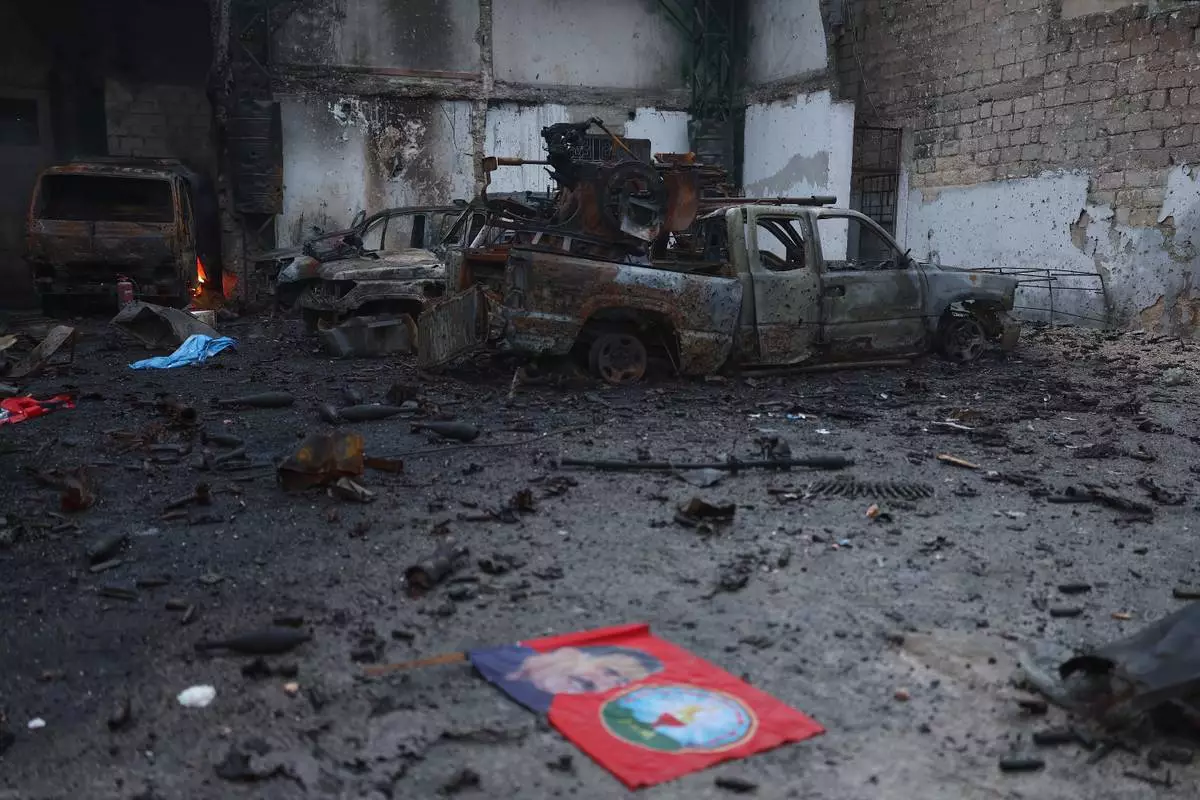
On one street, Syrian Red Crescent first responders spoke to a resident surrounded by charred cars and badly damaged residential buildings.

Some residents told The Associated Press that SDF forces did not allow their cars through checkpoints to leave.

“We lived a night of horror. I still cannot believe that I am right here standing on my own two feet,” said Ahmad Shaikho. “So far the situation has been calm. There hasn’t been any gunfire.”

Syrian Civil Defense first responders have been disarming improvised mines that they say were left by the Kurdish forces as booby traps.

Residents who fled are not being allowed back into the neighborhood until all the mines are cleared. Some were reminded of the displacement during Syria’s long civil war.

“I want to go back to my home, I beg you,” said Hoda Alnasiri.

Associated Press journalist Kareem Chehayeb in Beirut contributed to this report.

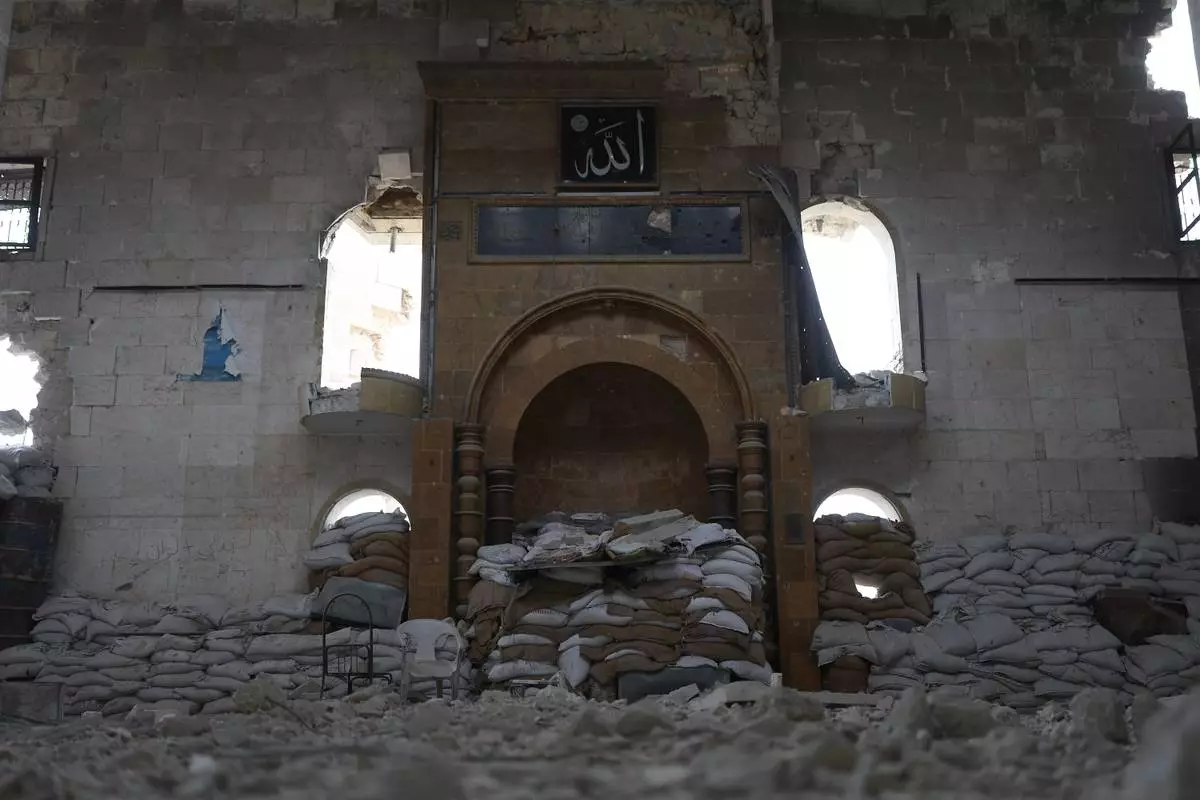
Sandbag barriers used as fighting positions by Kurdish fighters, left inside a destroyed mosque in the Sheikh Maqsoud neighborhood, where clashes between government forces and Kurdish fighters have been taking place in the northern city of Aleppo, Syria, Sunday, Jan. 11, 2026. (AP Photo/Ghaith Alsayed)

Sandbag barriers used as fighting positions by Kurdish fighters, left inside a destroyed mosque in the Sheikh Maqsoud neighborhood, where clashes between government forces and Kurdish fighters have been taking place in the northern city of Aleppo, Syria, Sunday, Jan. 11, 2026. (AP Photo/Ghaith Alsayed)

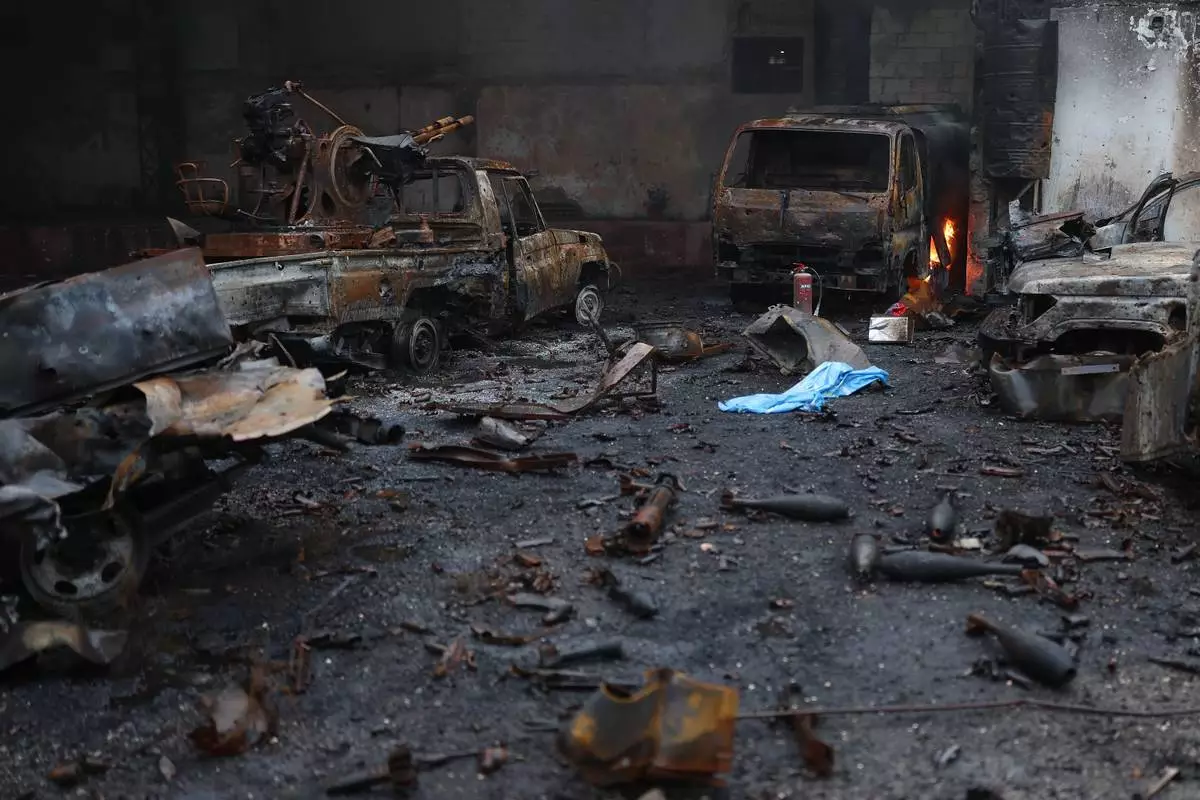
Burned vehicles at one of the Kurdish fighters positions at the Sheikh Maqsoud neighborhood, where clashes between government forces and Kurdish fighters have been taking place in the northern city of Aleppo, Syria, Sunday, Jan. 11, 2026. (AP Photo/Ghaith Alsayed)

Burned vehicles at one of the Kurdish fighters positions at the Sheikh Maqsoud neighborhood, where clashes between government forces and Kurdish fighters have been taking place in the northern city of Aleppo, Syria, Sunday, Jan. 11, 2026. (AP Photo/Ghaith Alsayed)

People flee the Sheikh Maqsoud neighborhood, where clashes between government forces and Kurdish fighters have been taking place in the northern city of Aleppo, Syria, Sunday, Jan. 11, 2026. (AP Photo/Ghaith Alsayed)

People flee the Sheikh Maqsoud neighborhood, where clashes between government forces and Kurdish fighters have been taking place in the northern city of Aleppo, Syria, Sunday, Jan. 11, 2026. (AP Photo/Ghaith Alsayed)

A Syrian military police convoy enters the Sheikh Maqsoud neighborhood, where clashes between government forces and Kurdish fighters have been taking place in the northern city of Aleppo, Syria, Sunday, Jan. 11, 2026. (AP Photo/Ghaith Alsayed)

A Syrian military police convoy enters the Sheikh Maqsoud neighborhood, where clashes between government forces and Kurdish fighters have been taking place in the northern city of Aleppo, Syria, Sunday, Jan. 11, 2026. (AP Photo/Ghaith Alsayed)

Burned vehicles and ammunitions left at one of the Kurdish fighters positions at the Sheikh Maqsoud neighborhood, where clashes between government forces and Kurdish fighters have been taking place in the northern city of Aleppo, Syria, Sunday, Jan. 11, 2026. (AP Photo/Ghaith Alsayed)

Burned vehicles and ammunitions left at one of the Kurdish fighters positions at the Sheikh Maqsoud neighborhood, where clashes between government forces and Kurdish fighters have been taking place in the northern city of Aleppo, Syria, Sunday, Jan. 11, 2026. (AP Photo/Ghaith Alsayed)

Recommended Articles