LOS ANGELES (AP) — Jacob Vasquez began working at a clothing warehouse in Los Angeles soon after arriving from Mexico less than three years ago.
He is among dozens of workers detained by federal immigration authorities in a series of raids in LA’s fashion district and at Home Depot parking lots in Southern California. More than 100 people have been detained.
Click to Gallery
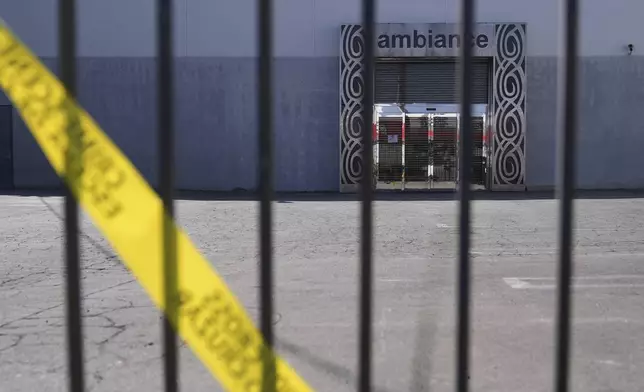
FILE - Caution tape hangs outside Ambiance Apparel after federal immigration authorities conducted an operation on Friday, June 6, 2025, in Los Angeles. (AP Photo/Jae C. Hong, File)
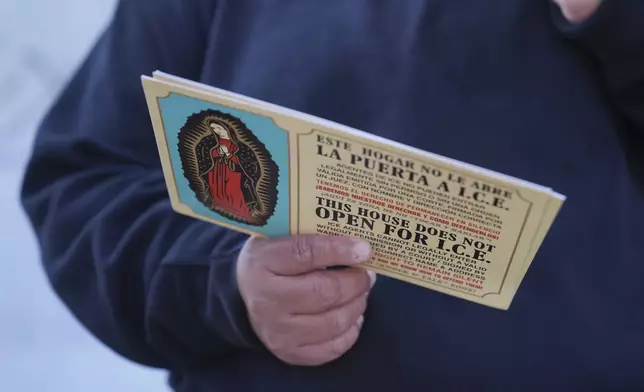
FILE - A woman outside Ambiance Apparel holds a card about Immigration and Customs Enforcement after authorities conducted an operation, Friday, June 6, 2025, in Los Angeles. (AP Photo/Jae C. Hong, File)
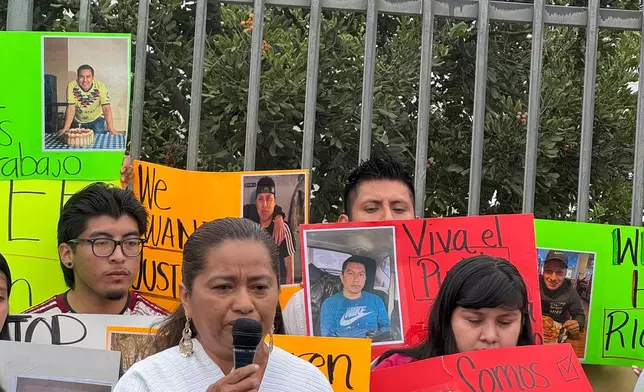
Perla Rios, an Indigenous community leader, at a press conference Monday, June 9, 2025, urged the release of more than a dozen garment workers who were detained by ICE on Friday, at a warehouse in Los Angeles. (AP Photo/Dorany Pineda)
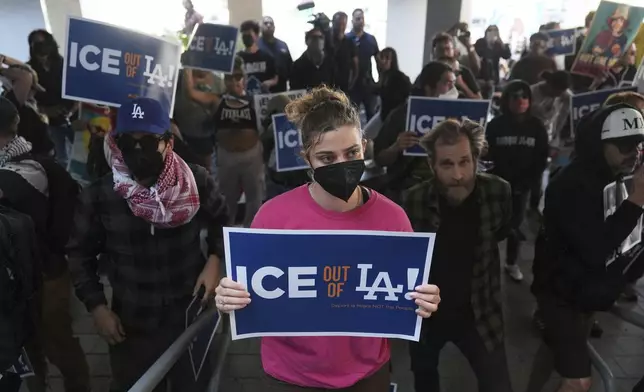
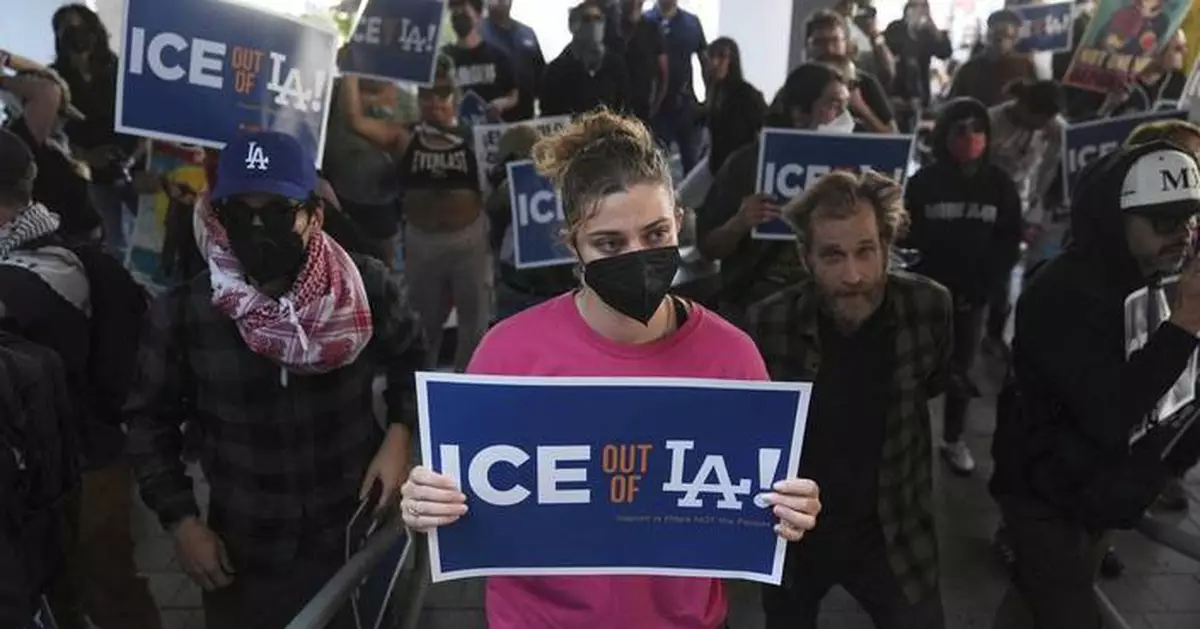
FILE - Protesters gather at the U.S. Department of Justice Federal Bureau of Prisons after federal immigration authorities conducted an operation on Friday, June 6, 2025, in Los Angeles. (AP Photo/Jae C. Hong, File)
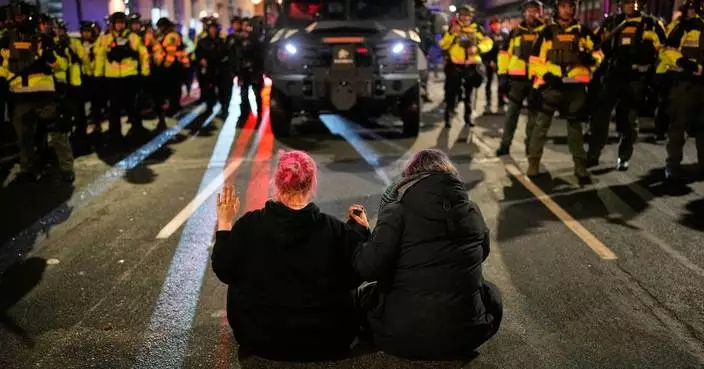
The raids have triggered days of turbulent protests across the city and beyond and led President Donald Trump to deploy National Guard troops and Marines to the LA area, the latest development in the administration’s immigration crackdown. Protests in the city’s downtown have ranged from peaceful to raucous, with demonstrators blocking a major freeway and setting cars on fire over the weekend.
Immigrant advocates say the workers who were detained do not have criminal histories and are being denied their due process rights.
Vasquez has a three-month-old baby, according to his family who spoke to reporters outside the Ambiance Apparel warehouse, a clothing company founded in 1999, and where the young father worked.
“Jacob is a family man and the sole breadwinner of his household,” said his brother Gabriel, speaking in Spanish during a news conference Monday. He doesn't know if he’s OK, he later said in an interview. “We don’t know where he is.”
At a press conference Wednesday, other families said their detained loved ones had no criminal history. They didn't know where they were being held.
Noemi Ciau said it has been three days since she has seen or heard of her husband, one of more than two dozen people detained at car washes this week across Los Angeles. She heard through word-of-mouth that he could be in El Paso, Texas.
“(He) was taken from me and my family,” she said. “I am here to demand an immediate release of my husband … he’s not a criminal”
Sisters Jaslyn and Kimberly Hernandez last spoke to their father, Joel, on Saturday, the day before he was detained at his job site in Culver City, about 10 miles (16 kilometers) west of downtown L.A.
“We haven’t been able to find him, to find out where he is,” said Jaslyn, 17, speaking in Spanish. Wednesday was also her high school graduation, a day she has waited for her whole life, she said. But instead, she is devastated that her father won't be there to watch her cross the stage.
“Everyone is going to have their dads there,” she said through tears. “But not me.”
Los Angeles Mayor Karen Bass denounced the raids and the deployment of troops, saying Tuesday that the actions were aimed at intimidating the area's vast immigrant population, one of the country's largest. She said she has heard even immigrants with legal status are being swept up and that the raids may continue for months.
An estimated 950,000 people in Los Angeles County do not have legal immigration status, according to the Migration Policy Institute. That is about a tenth of the county's population, and they include cooks, nannies, hotel employees, street vendors, gardeners, construction workers and garment workers.
“Families across the city are terrified," Bass said. “They don’t know if they should go to work, they don’t know if they should go to school.”
She said many of those detained have had no contact with their loved ones or lawyers. The raids have only fueled unrest in the city, Bass said.
“They were going to go after violent felons, drug dealers, and I don’t know how that matches with the scenes that we saw of people outside Home Depot running through the parking lot, because they were afraid that they were going to get arrested," she said.
Saraí Ortiz said her father, Jose, worked for Ambiance for 18 years. “It was really painful to see him arrested on Friday with his co-workers,” she told the crowd in Spanish.
A judge signed a search warrant that there was probable cause to conclude that Ambiance was using fake documents for some workers, said Ciaran McEvoy, a spokesperson for the U.S. attorney’s office in Los Angeles. The U.S. Department of Homeland Security has not shared details about the arrests.
“Ambience Apparel has never created any fictitious documents for its workers," Benjamin N. Gluck, an attorney representing the company, said in a statement. "The company obeys, and continues to obey, all applicable laws. We support our workforce, many of whom have worked faithfully for the company for decades.”
The Trump administration did not respond to emails from The Associated Press asking about whether any of the immigrants detained in the raids had criminal records.
Los Angeles is one of the nation’s largest garment-production hubs with more than 45,000 workers, mostly Latino and Asian immigrants, who cut, sew and finish the clothing, according to the Garment Worker Center.
The raids are deepening fears far beyond LA and even among those who are in the country legally, immigrants said. Jot Condie, president and chief executive of the California Restaurant Association, said the fear is keeping away workers and hurting businesses. In LA County last year, food and drink services were a $30 billion industry.
Outside a Home Depot in Santa Ana, California, about 30 miles (48 kilometers) southeast of Los Angeles, a handful of day laborers leaned against their cars waiting to be hired Tuesday, a day after armed Immigration and Customs Enforcement officers drove up and sent many of the workers running.
Junior Ortega, 43, said he saw four people arrested by ICE, while others fled on foot or jumped into a car and peeled out of the parking lot before they were caught.
“They came out with guns, (saying) ‘don’t move,' ’’ Ortega said in Spanish. By then, the Honduran citizen who has lived nearly three decades in the U.S. said he had already taken out his green card to avoid making any sudden moves should agents approach him.
One of the agents did, and while holding a gun, demanded to see his ID, Ortega said. After he showed it, he said the agent let him go.
The day laborer said he recently started carrying not only his driver's license but his green card with him.
While he is not directly affected by the immigration raids, Ortega said they still weigh on him and his children.
“Why don’t they go and follow the gang members?" he said. "They are coming for people who do things for the country, who pay taxes.”
Taxin reported from Santa Ana, California. Associated Press writer Julie Watson contributed to this report from San Diego, California.
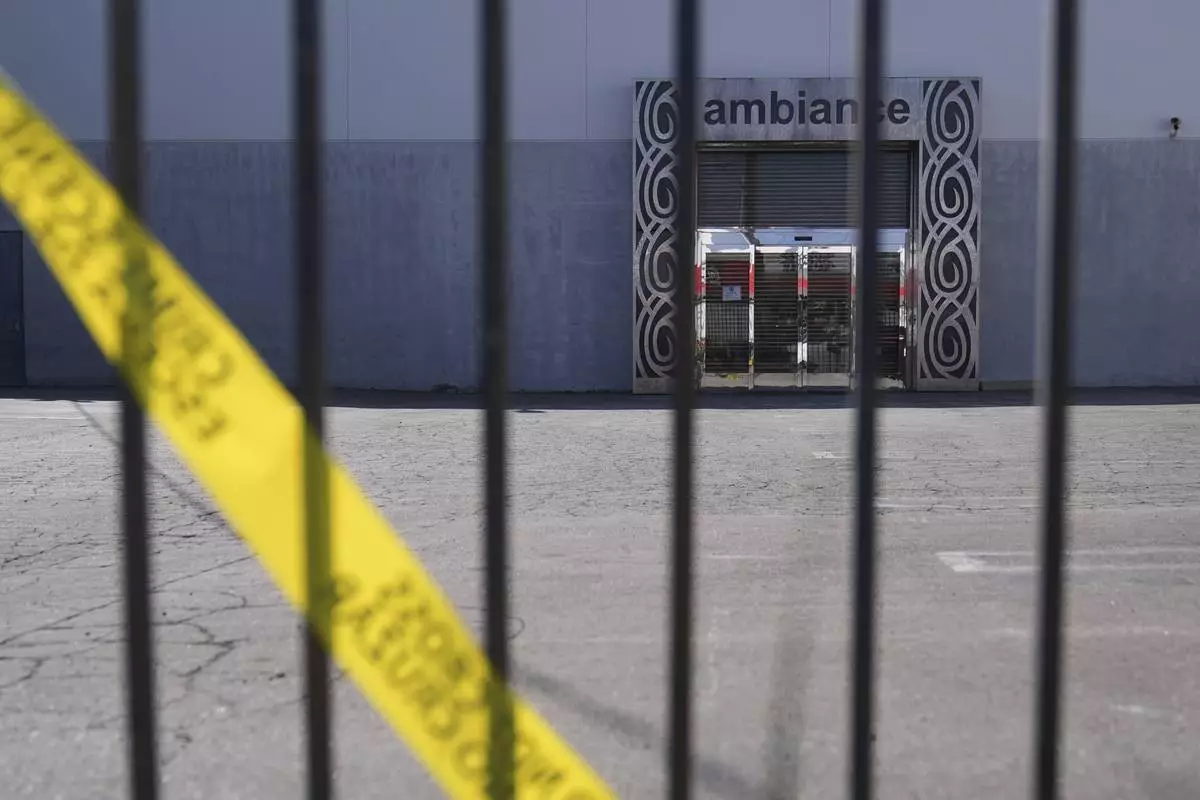
FILE - Caution tape hangs outside Ambiance Apparel after federal immigration authorities conducted an operation on Friday, June 6, 2025, in Los Angeles. (AP Photo/Jae C. Hong, File)
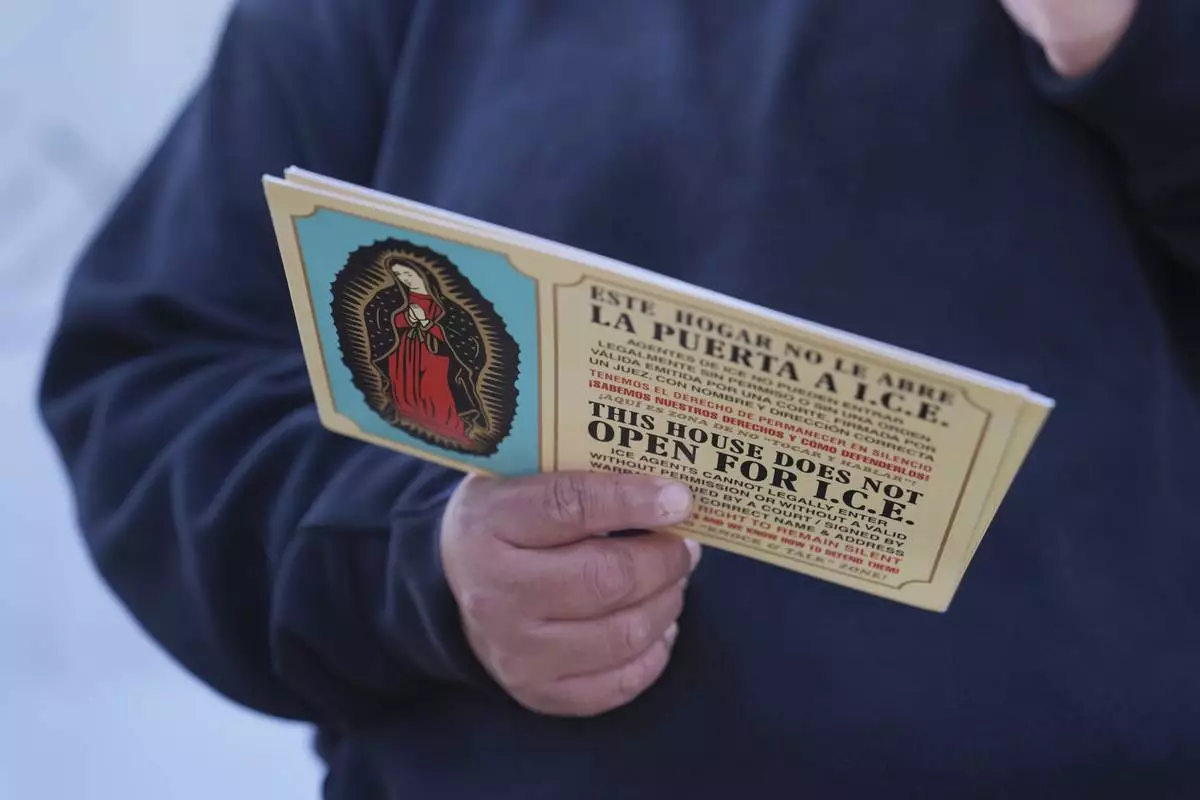
FILE - A woman outside Ambiance Apparel holds a card about Immigration and Customs Enforcement after authorities conducted an operation, Friday, June 6, 2025, in Los Angeles. (AP Photo/Jae C. Hong, File)
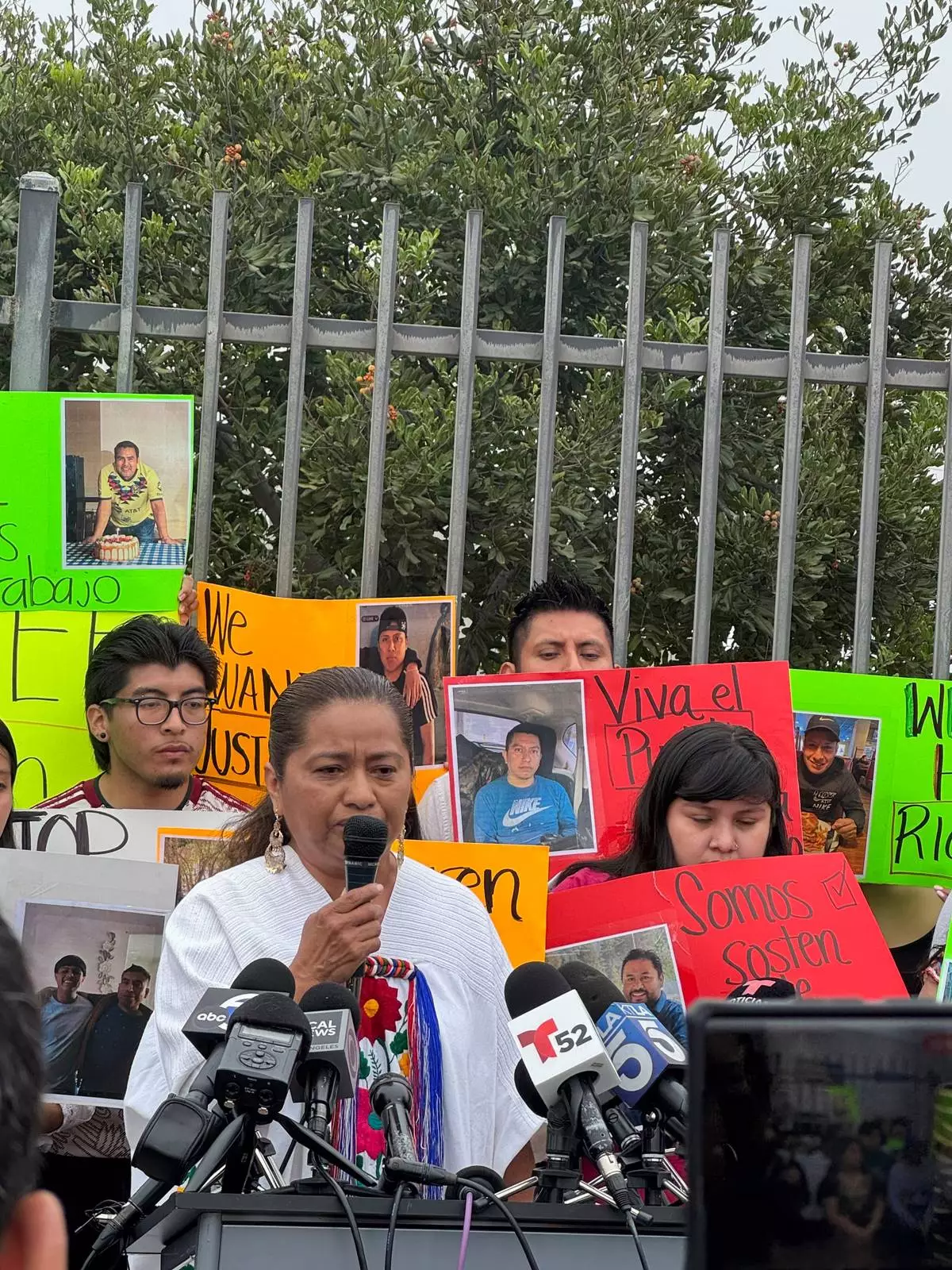
Perla Rios, an Indigenous community leader, at a press conference Monday, June 9, 2025, urged the release of more than a dozen garment workers who were detained by ICE on Friday, at a warehouse in Los Angeles. (AP Photo/Dorany Pineda)
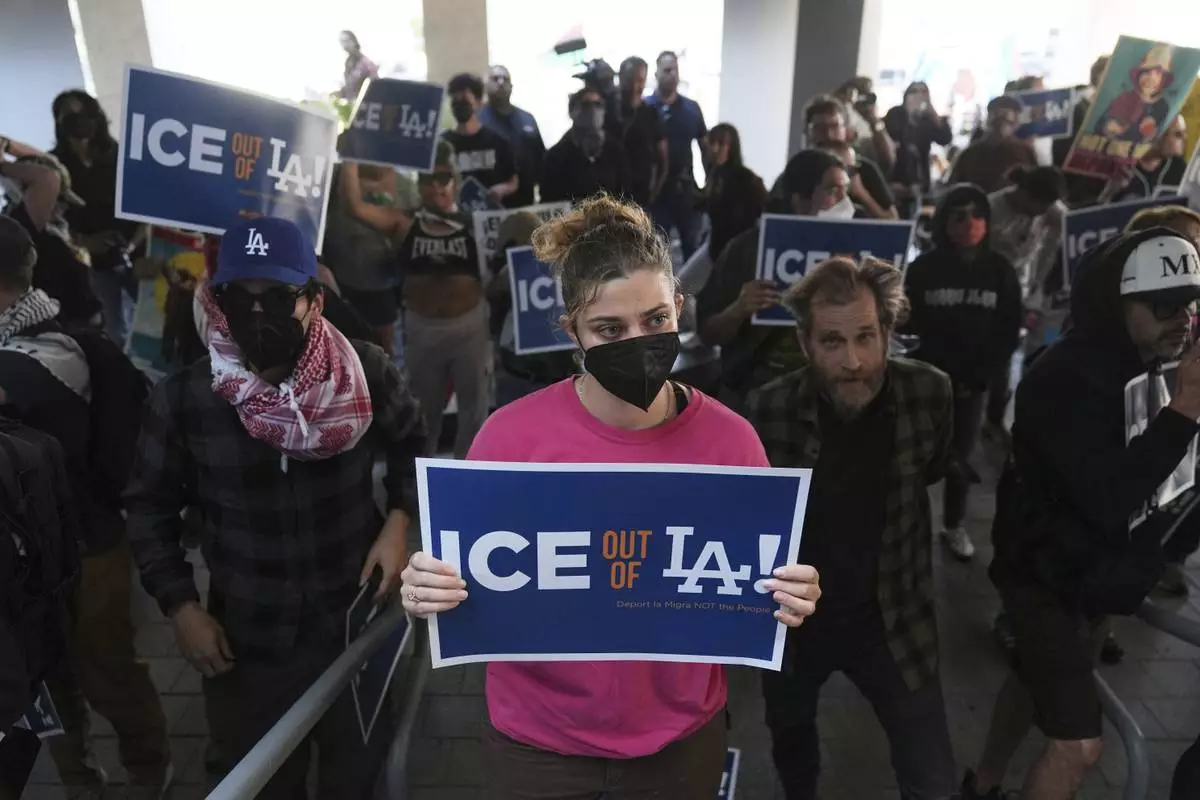
FILE - Protesters gather at the U.S. Department of Justice Federal Bureau of Prisons after federal immigration authorities conducted an operation on Friday, June 6, 2025, in Los Angeles. (AP Photo/Jae C. Hong, File)