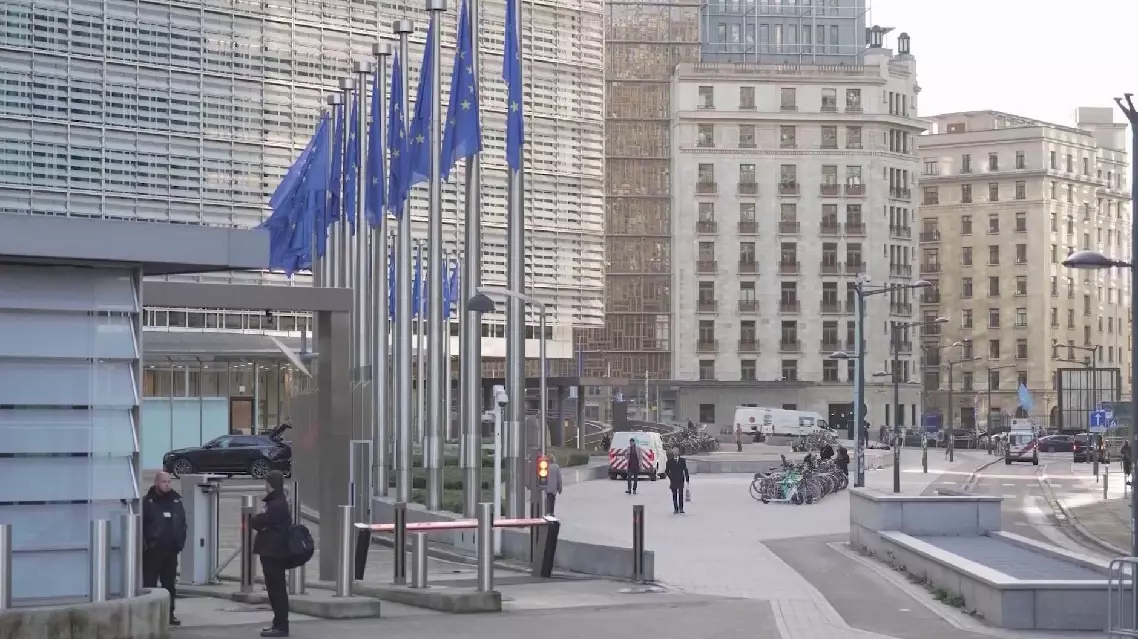
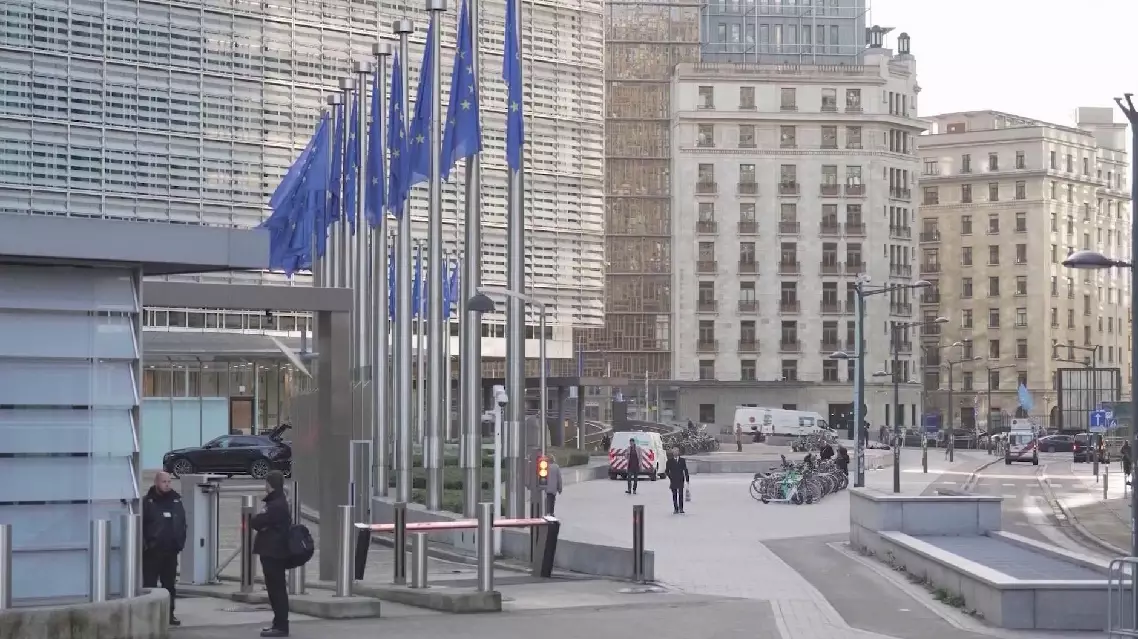
The European Commission -- the primary executive arm of the 27-nation European Union (EU) -- on Tuesday proposed a new draft of sanctions against Russia, while Russia has moved to extend the validity of its countermeasures against the sanctions.
European Union members will start debates on the draft within this week. If passed, the draft, targeting its energy, finance and military industries, will be the 18th package of sanctions the EU imposes on Russia.
In terms of energy, the draft proposes some measures to stop the reopening of the Nord Stream gas pipelines, which have been out of service.
The draft proposes the inclusion of more ships into the list of the so-called "shadow fleet" which Russia uses to transport oil and gas, bringing the total number to over 400. It proposes sanctions against around 70 old Russian oil tankers.
The draft proposes to lower the price cap on Russian crude oil set by the G7 in 2022 from 60 to 45 dollars per barrel, in order to reduce Russia's energy revenue. It also proposes a ban on the import of refined oil products produced from Russian crude oil.
In terms of finance, the draft proposes to add 22 more Russian banks to the sanction list and expand restrictions on them, including removing them from the Society for Worldwide Interbank Financial Telecommunication (SWIFT) and a complete ban on transactions.
It also proposes to expand sanctions, listing the Russian Direct Investment Fund, as well as its subsidiaries and wider network.
In terms of the military sector, the draft proposes to include more companies "suspected" of assisting the Russian troops into the sanctions list to strike at Russia's military production capacity.
Speaking at a press conference on Tuesday, European Commission President Ursula von der Leyen said that the EU and other G7 partners need to prompt the United States to follow suit so as to make the new sanction package to have the most impact.
She noted that they will continue to urge the U.S. to follow up on the sanctions at the G7 Leaders' Summit to be held in Canada next week.
However, there are still differences among the EU members regarding the new draft of sanctions.
Slovak Prime Minister Robert Fico said Tuesday that if the European Commission fails to come up with a practical solution to the energy issue, Slovakia will not support this package of sanctions against Russia.
Previously, Hungary has voted against or publicly expressed opposition to the EU's sanctions against Russia and military support for Ukraine on multiple occasions.
In Moscow, Russian President Vladimir Putin has signed a decree, announcing that the countermeasures against setting price caps on Russian oil and petroleum products will be extended until Dec 31, 2025, Russia media reported on Tuesday.
In 2022, the EU members and the G7 announced a price cap of 60 U.S. dollars per barrel on Russian seaborne oil exports. In response, Putin signed a presidential decree on Dec 27, 2022, demanding a ban on the supply of Russian oil and petroleum products to foreign companies and individuals who use the price cap mechanism directly or indirectly in their contracts. The validity period of this presidential decree has been extended many times.
EU proposes 18th package of sanctions against Russia, Russia extends countermeasures validity
EU proposes 18th package of sanctions against Russia, Russia extends countermeasures validity
EU proposes 18th package of sanctions against Russia, Russia extends countermeasures validity