 |
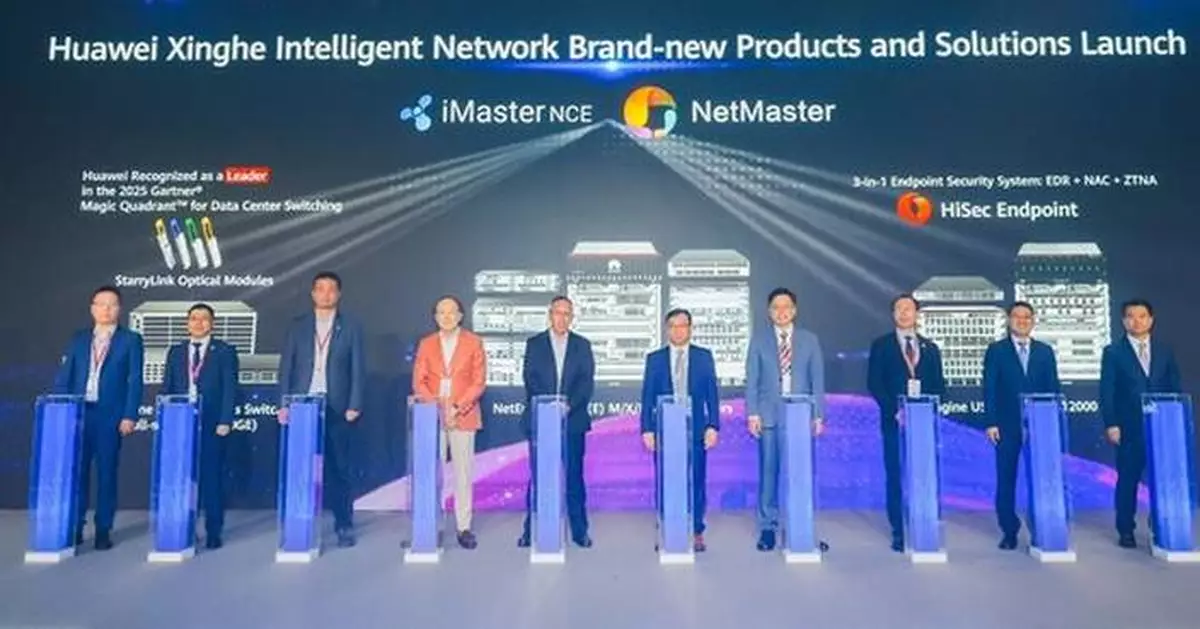
HONG KONG, June 11, 2025 /PRNewswire/ -- At Huawei Network Summit 2025 (Asia Pacific), Huawei unveiled fully-upgraded Xinghe Intelligent Network products and solutions for the Asia Pacific region, and released the Technical Requirements for Financial Data Center Networks with the Network Innovation and Development Alliance (NIDA). All of these announcements will inject new vitality into digital and intelligent development in Asia Pacific.
In the opening speech, Spawn Fan, President of Huawei's Asia Pacific Enterprise Sales Department, pointed out that AI development has far exceeded expectations, with record-breaking growth in AI users and adoption rates. Huawei responds to this by leveraging its unique full-stack capabilities and collaborating with partners to help customers in all industries build advanced infrastructure for the AI era.
Mr. Sword Cheng, Vice President of Huawei's Data Communication Product Line, said in the speech that global industries are actively promoting the convergence of AI and network technologies. However, most solutions are still in the early stages of "network management + AI". As such, only end-to-end AI-powered networks are viable solutions in the AI era.
Huawei's Xinghe Intelligent Network Solution is ideal for AI-powered networks through innovations in diverse domains.
- Xinghe Intelligent Campus leverages Wi-Fi Channel State Information (CSI) sensing technology to detect intrusions and identify unauthorized cameras in seconds through Wi-Fi signals, ensuring campus space security and privacy protection.
- Xinghe Intelligent Fabric provides intelligent assurance for general-purpose computing and intelligent computing scenarios.
- Xinghe Intelligent WAN employs an AI latency compensation algorithm to reduce the two-way latency variation to 3 μs, which is a 20-fold improvement over SDH networks. It also draws on AI algorithms to achieve a 95% identification rate of encrypted traffic, helping Internet Service Providers (ISPs) reduce latency by more than 65% and increase revenue by 20%.
- Xinghe Intelligent Network Security builds on an AI detection engine to achieve a 95% unknown malware identification rate. It also leverages a high-performance graph database to trace up to 100 hops back to the source. All of these help detect threats at a high accuracy and prevent virus spread.
Huawei also announced a full lineup of all-new Xinghe Intelligent Network products and solutions for Asia Pacific. Examples include the industry's first 5-radio Wi-Fi 7 AP, unique "3S (spanning, stable, and secure)" StarryLink optical modules, the industry's highest-density 400GE full-service router, and differentiated solutions across industries.
Huawei and NIDA jointly released the Technical Requirements for Financial Data Center Networks, which systematically defines key technical indicators of financial data center networks for the first time, serving as an industry-recognized network construction guide for financial institutions.
Looking ahead, Huawei will further deepen AI-powered Xinghe Intelligent Network innovation and collaborate with Asia-Pacific customers across industries to accelerate intelligent transformation, explore new use cases, and stride to the digital and intelligent future together.
HONG KONG, June 11, 2025 /PRNewswire/ -- At Huawei Network Summit 2025 (Asia Pacific), Huawei unveiled fully-upgraded Xinghe Intelligent Network products and solutions for the Asia Pacific region, and released the Technical Requirements for Financial Data Center Networks with the Network Innovation and Development Alliance (NIDA). All of these announcements will inject new vitality into digital and intelligent development in Asia Pacific.
In the opening speech, Spawn Fan, President of Huawei's Asia Pacific Enterprise Sales Department, pointed out that AI development has far exceeded expectations, with record-breaking growth in AI users and adoption rates. Huawei responds to this by leveraging its unique full-stack capabilities and collaborating with partners to help customers in all industries build advanced infrastructure for the AI era.
Mr. Sword Cheng, Vice President of Huawei's Data Communication Product Line, said in the speech that global industries are actively promoting the convergence of AI and network technologies. However, most solutions are still in the early stages of "network management + AI". As such, only end-to-end AI-powered networks are viable solutions in the AI era.
Huawei's Xinghe Intelligent Network Solution is ideal for AI-powered networks through innovations in diverse domains.
- Xinghe Intelligent Campus leverages Wi-Fi Channel State Information (CSI) sensing technology to detect intrusions and identify unauthorized cameras in seconds through Wi-Fi signals, ensuring campus space security and privacy protection.
- Xinghe Intelligent Fabric provides intelligent assurance for general-purpose computing and intelligent computing scenarios.
- Xinghe Intelligent WAN employs an AI latency compensation algorithm to reduce the two-way latency variation to 3 μs, which is a 20-fold improvement over SDH networks. It also draws on AI algorithms to achieve a 95% identification rate of encrypted traffic, helping Internet Service Providers (ISPs) reduce latency by more than 65% and increase revenue by 20%.
- Xinghe Intelligent Network Security builds on an AI detection engine to achieve a 95% unknown malware identification rate. It also leverages a high-performance graph database to trace up to 100 hops back to the source. All of these help detect threats at a high accuracy and prevent virus spread.
Huawei also announced a full lineup of all-new Xinghe Intelligent Network products and solutions for Asia Pacific. Examples include the industry's first 5-radio Wi-Fi 7 AP, unique "3S (spanning, stable, and secure)" StarryLink optical modules, the industry's highest-density 400GE full-service router, and differentiated solutions across industries.
Huawei and NIDA jointly released the Technical Requirements for Financial Data Center Networks, which systematically defines key technical indicators of financial data center networks for the first time, serving as an industry-recognized network construction guide for financial institutions.
Looking ahead, Huawei will further deepen AI-powered Xinghe Intelligent Network innovation and collaborate with Asia-Pacific customers across industries to accelerate intelligent transformation, explore new use cases, and stride to the digital and intelligent future together.
** The press release content is from PR Newswire. Bastille Post is not involved in its creation. **
Huawei Unveils Fully-Upgraded Xinghe Intelligent Network Offerings to Accelerate Digital and Intelligent Transformation in Asia Pacific
|
GRENOBLE, France and PLEASANTON, Calif., May 8, 2026 /PRNewswire/ -- Following a 2026 CES Innovation Award, MountAIn enables frictionless deployment of high-precision AI models fully optimised for Alif's ultra-low-power hardware to eliminate the need for power-hungry chipsets.
Python developers can now slash development time from 12 months to minutes while achieving a 3x reduction in memory usage to run computer vision models.
To view the Multimedia News Release, please click:
https://www.multivu.com/mountain-and-alif-semiconductors/9397851-en-ai-cloud-computing-balletto-processors
MountAIn SAS, an award-winning AI orchestration company and 2026 CES Innovation Award honoree, today announced a strategic partnership with Alif Semiconductor to revolutionize Computer Vision at the extreme edge.
The combined hardware-software solution is engineered to serve high-demand mass markets, enabling the next generation of smart cameras, smart glasses, smart factories, health tech, and smart home appliances.
Historically, device manufacturers and developers faced a frustrating trade-off: use expensive, power-hungry MPUs to run complex vision AI, or settle for limited AI performance on cost-effective MCUs. MountAIn's proprietary "AI Booster" middleware is acting as an intelligent bridge, orchestrating Alif's internal processors to maximize speed (FPS) while compressing memory usage by 3x.
A Game-Changer for the Edge AI Ecosystem
For Device Manufacturers (OEMs/ODMs): MPU Power at MCU Economics
- Ultra-Low Power: Manufacturers can now integrate vision models into battery-powered devices operating under a strict 100 mW power envelope.
- Uncompromised Precision: Deliver cloud-equivalent model resolution and accuracy directly on the edge, without the traditional cost or thermal penalties.
For AI Developers: From Python to Silicon in Just One Click
- Developer Democratization: Python-centric AI specialists can seamlessly deploy models directly to Alif MCUs
- Months to Minutes: MountAIn's single-click compiler completely eliminates the firmware bottleneck
"The Edge AI industry has been forced to choose between expensive, power-hungry MPUs and cost-efficient MCUs" said Vincent Huard, CEO of MountAIn. "We believe that 'Embedded AI' shouldn't require a PhD in firmware optimization. We are on a mission to Deliver cloud-grade vision at MCU economics and to unlock entirely new use cases."
"To truly democratize Edge AI and scale it across billions of smart devices, developers need hardware that delivers extreme efficiency without sacrificing capability," said Reza Kazerounian, President and Co-Founder of Alif Semiconductor. "By pairing MountAIn's 1-click software infrastructure with the native power of our Ensemble and Balletto processor families, we are giving the market exactly that."
MountAIn and Alif Semiconductor will be present at the Embedded Vision Summit in Santa Clara, May 11-13, 2026.
Contacts:
David Nahmani
david@mountainedge.ai
Alexandra Kazerounian
alexandra.kazerounian@alifsemi.co
GRENOBLE, France and PLEASANTON, Calif., May 8, 2026 /PRNewswire/ -- Following a 2026 CES Innovation Award, MountAIn enables frictionless deployment of high-precision AI models fully optimised for Alif's ultra-low-power hardware to eliminate the need for power-hungry chipsets.
Python developers can now slash development time from 12 months to minutes while achieving a 3x reduction in memory usage to run computer vision models.
To view the Multimedia News Release, please click:
https://www.multivu.com/mountain-and-alif-semiconductors/9397851-en-ai-cloud-computing-balletto-processors
MountAIn SAS, an award-winning AI orchestration company and 2026 CES Innovation Award honoree, today announced a strategic partnership with Alif Semiconductor to revolutionize Computer Vision at the extreme edge.
The combined hardware-software solution is engineered to serve high-demand mass markets, enabling the next generation of smart cameras, smart glasses, smart factories, health tech, and smart home appliances.
Historically, device manufacturers and developers faced a frustrating trade-off: use expensive, power-hungry MPUs to run complex vision AI, or settle for limited AI performance on cost-effective MCUs. MountAIn's proprietary "AI Booster" middleware is acting as an intelligent bridge, orchestrating Alif's internal processors to maximize speed (FPS) while compressing memory usage by 3x.
A Game-Changer for the Edge AI Ecosystem
For Device Manufacturers (OEMs/ODMs): MPU Power at MCU Economics
- Ultra-Low Power: Manufacturers can now integrate vision models into battery-powered devices operating under a strict 100 mW power envelope.
- Uncompromised Precision: Deliver cloud-equivalent model resolution and accuracy directly on the edge, without the traditional cost or thermal penalties.
For AI Developers: From Python to Silicon in Just One Click
- Developer Democratization: Python-centric AI specialists can seamlessly deploy models directly to Alif MCUs
- Months to Minutes: MountAIn's single-click compiler completely eliminates the firmware bottleneck
"The Edge AI industry has been forced to choose between expensive, power-hungry MPUs and cost-efficient MCUs" said Vincent Huard, CEO of MountAIn. "We believe that 'Embedded AI' shouldn't require a PhD in firmware optimization. We are on a mission to Deliver cloud-grade vision at MCU economics and to unlock entirely new use cases."
"To truly democratize Edge AI and scale it across billions of smart devices, developers need hardware that delivers extreme efficiency without sacrificing capability," said Reza Kazerounian, President and Co-Founder of Alif Semiconductor. "By pairing MountAIn's 1-click software infrastructure with the native power of our Ensemble and Balletto processor families, we are giving the market exactly that."
MountAIn and Alif Semiconductor will be present at the Embedded Vision Summit in Santa Clara, May 11-13, 2026.
Contacts:
David Nahmani
david@mountainedge.ai
Alexandra Kazerounian
alexandra.kazerounian@alifsemi.co
** This press release is distributed by PR Newswire through automated distribution system, for which the client assumes full responsibility. **
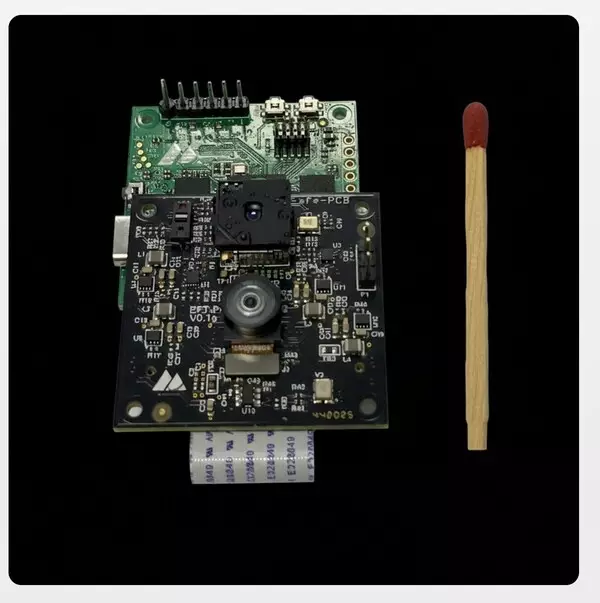
MountAIn disrupts Edge AI landscape to Deliver Cloud-Grade Computer Vision Stack on Alif Semiconductor's Ensemble and Balletto Processors