NEW ORLEANS (AP) — A Tulane University researcher resigned Wednesday, citing censorship from university leaders who had warned that her advocacy and research exposing the Louisiana petrochemical industry's health impacts and racial disparities in hiring had triggered blowback from donors and elected officials.
In her resignation letter, Kimberly Terrell accused the university of sacrificing academic freedom to appease Louisiana's Republican Gov. Jeff Landry. Terrell, the director of community engagement at Tulane's Environmental Law Clinic claimed the clinic had been “placed under a complete gag order” that barred her from making public statements about her research.
According to emails obtained by The Associated Press, university leaders wrote that the work of the law clinic had become an “impediment” to a Tulane redevelopment project reliant on support from state and private funders. The clinic represents communities fighting the petrochemical industry in court.
Kate Kelly, a Landry spokesperson, denied that the governor threatened to withhold state funding.
“I cannot remain silent as this university sacrifices academic integrity for political appeasement and pet projects,” Terrell wrote. “Our work is too important, and the stakes are too high, to sit back and watch special interests replace scholarship with censorship.”
Terrell said she resigned “to protect the work and interests” of the clinic.
Tulane spokesperson Michael Strecker said in an emailed statement that the university “is fully committed to academic freedom and the strong pedagogical value of law clinics.” He declined to comment on “personnel matters.”
Many of the clinic's clients are located along the heavily industrialized 85-mile (137-kilometer) stretch of the Mississippi River between New Orleans and Baton Rouge commonly referred to by environmental groups as “Cancer Alley.”
Marcilynn Burke, dean of Tulane's law school, wrote in a May 4 email to clinic staff that Tulane University President Michael Fitts worried the clinic's work threatened to tank support for the university's long-sought efforts to redevelop New Orleans’ historic Charity Hospital as part of a downtown expansion.
“Elected officials and major donors have cited the clinic as an impediment to them lending their support to the university generally and this project specifically,” Burke wrote.
Burke did not respond to an emailed request for comment Wednesday.
In her resignation letter, Terrell wrote that she had been told the governor “threatened to veto” any state funding for the expansion project unless Tulane's president “did something” about the clinic.
A 2022 study Terrell co-authored found higher cancer rates in Black or impoverished communities in Louisiana. Another study she published last year linked toxic air pollution in Louisiana with premature births and lower weight in newborns.
In April, Terrell published research showing that Black people received significantly less jobs in the petrochemical industry than white people in Louisiana despite having similar levels of training and education.
Media coverage of the April study coincided with a visit by Tulane leaders to Louisiana's capitol to lobby elected officials in support of university projects. Shortly after, Burke, the law school's dean, told clinic staff in an email that “all external communications” such as social media posts and media interviews “must be pre-approved by me.”
Emails from May show that Burke denied requests from Terrell to make comments in response to various media requests, correspondence and speaking engagements, saying they were not “essential functions of the job.”
On May 12, Terrell filed a complaint with the Southern Association of Colleges and Schools Commission on Colleges, claiming that her academic freedom had been violated. The agency, which accredits Tulane, did not comment.
In a May 21 audio recording obtained by the AP, Provost Robin Forman said that when Tulane leadership met with elected officials in April, they were pressed as to why "‘Tulane has taken a stand on the chemical industry as harming communities’,” and this “left people feeling embarrassed and uncomfortable.”
Burke said in an email that university leaders had misgivings about a press release in which a community activist represented by Terrell's clinic is quoted as saying that petrochemical companies “prioritize profit over people.” Burke noted that Fitts was concerned about the clinic's science-based advocacy program, and Terrell's work in particular which he worried had veered “into lobbying.” Burke said Fitts required an explanation of “how the study about racial disparities relates directly to client representation."
The clinic cites the study in a legal filing opposing a proposed chemical plant beside a predominantly Black neighborhood, arguing the community would be burdened with a disproportionate amount of pollution and less than a fair share of the jobs.
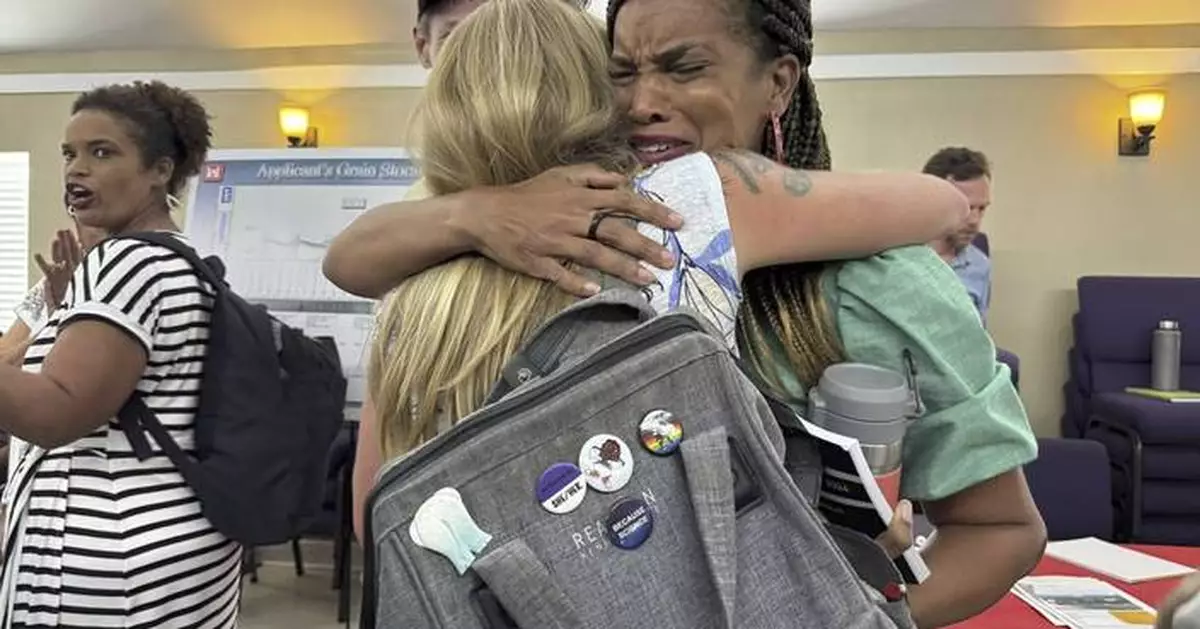
The clinic's annual report highlighted its representation of a group of residents in a historic Black community who halted a massive grain terminal that would have been built around 300 feet from their homes.
The provost viewed the clinic’s annual report “as bragging that the clinic has shut down development,” Burke said in an email.
In her resignation letter, Terrell warned colleagues that she felt Tulane's leaders “have chosen to abandon the principles of knowledge, education, and the greater good in pursuit of their own narrow agenda.”
Brook is a corps member for The Associated Press/Report for America Statehouse News Initiative. Report for America is a nonprofit national service program that places journalists in local newsrooms to report on undercovered issues.
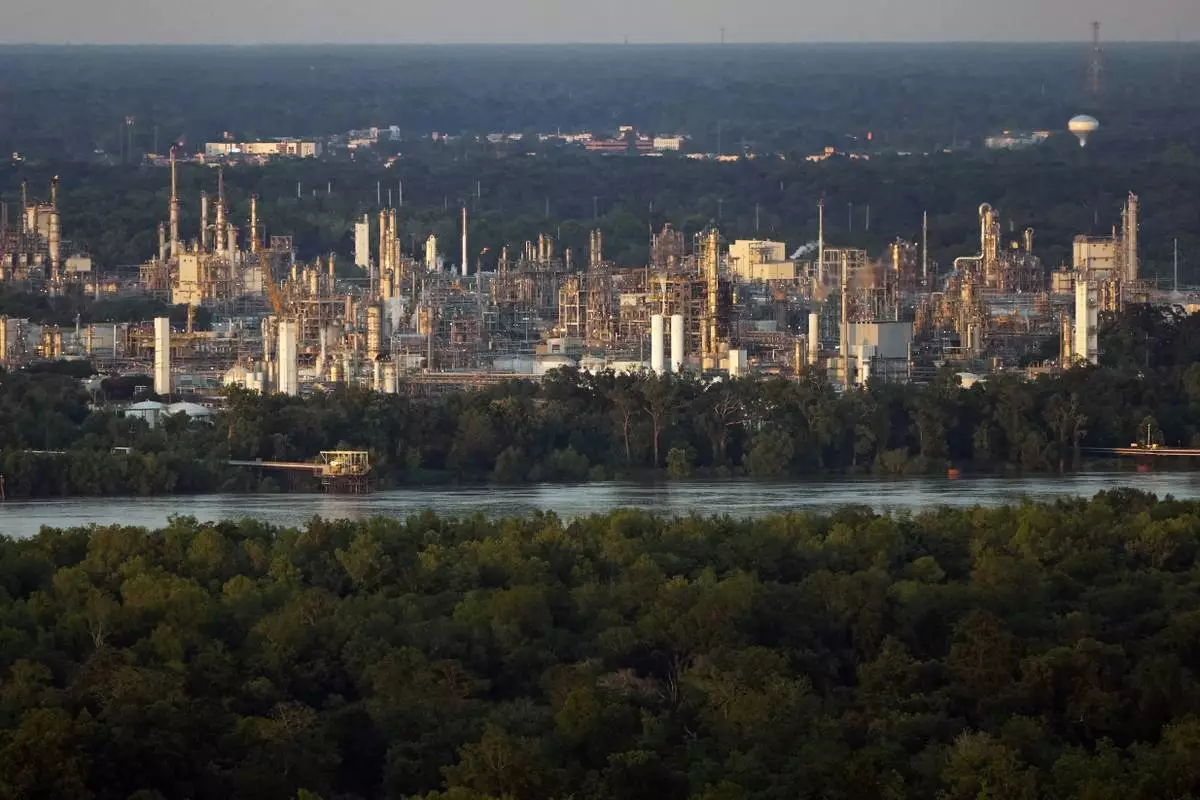
FILE - The community of Geismar is seen in the shadow of a chemical and petroleum industrial corridor, that is a known source of ethylene oxide emissions, in Ascension Parish, La., Friday, June 7, 2024. (AP Photo/Gerald Herbert, File)
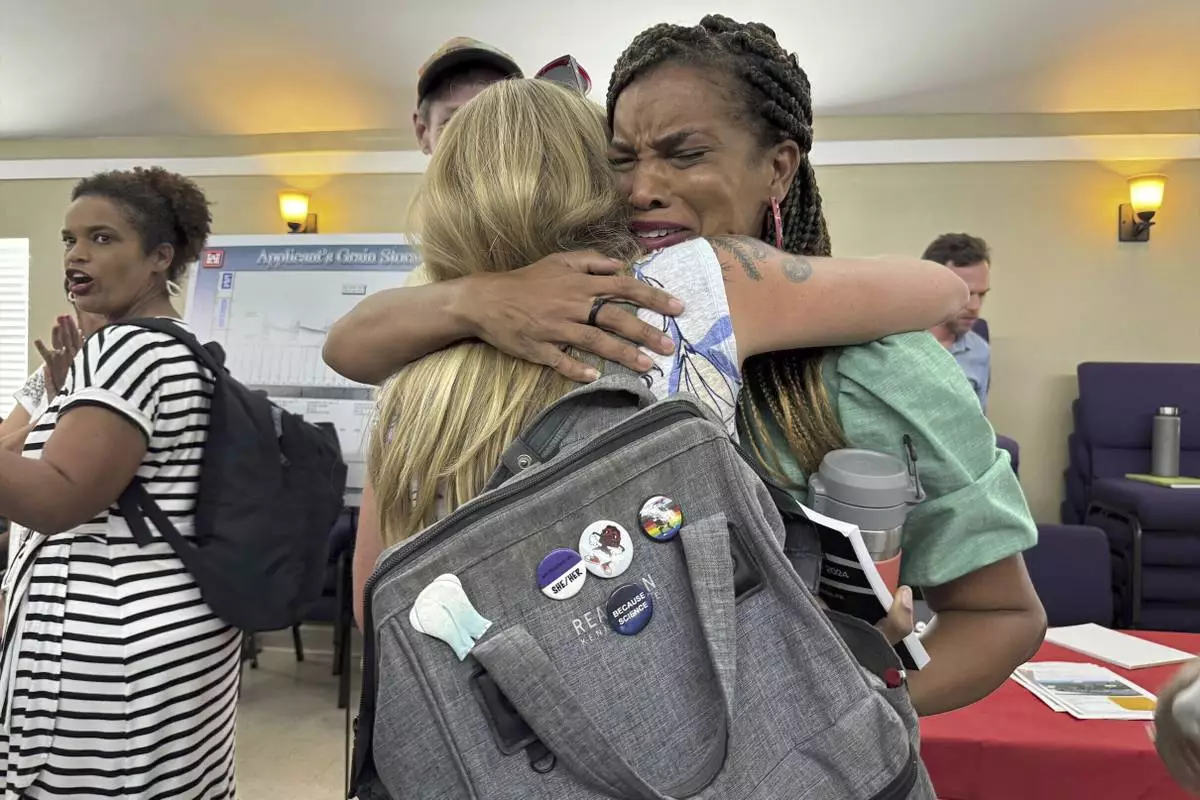
FILE - Joy Banner, co-founder of The Descendants Project and a leader in the fight against Greenfield, hugs Kimberly Terrell, then a researcher with the Tulane Environmental Law Clinic, which represented the Descendants Project, moments after hearing that the company would cease plans for a grain elevator facility in the middle of her hometown of Wallace, which is in a heavily industrialized stretch of Louisiana commonly referred to by environmental groups as "Cancer Alley." Aug. 6, 2024. (AP Photo/Jack Brook, File)
WASHINGTON (AP) — A day after the audacious U.S. military operation in Venezuela, President Donald Trump on Sunday renewed his calls for an American takeover of the Danish territory of Greenland for the sake of U.S. security interests, while his top diplomat declared the communist government in Cuba is “in a lot of trouble.”
The comments from Trump and Secretary of State Marco Rubio after the ouster of Venezuela's Nicolás Maduro underscore that the U.S. administration is serious about taking a more expansive role in the Western Hemisphere.
With thinly veiled threats, Trump is rattling hemispheric friends and foes alike, spurring a pointed question around the globe: Who's next?
“It’s so strategic right now. Greenland is covered with Russian and Chinese ships all over the place," Trump told reporters as he flew back to Washington from his home in Florida. "We need Greenland from the standpoint of national security, and Denmark is not going to be able to do it.”
Asked during an interview with The Atlantic earlier on Sunday what the U.S.-military action in Venezuela could portend for Greenland, Trump replied: “They are going to have to view it themselves. I really don’t know.”
Trump, in his administration's National Security Strategy published last month, laid out restoring “American preeminence in the Western Hemisphere” as a central guidepost for his second go-around in the White House.
Trump has also pointed to the 19th century Monroe Doctrine, which rejects European colonialism, as well as the Roosevelt Corollary — a justification invoked by the U.S. in supporting Panama’s secession from Colombia, which helped secure the Panama Canal Zone for the U.S. — as he's made his case for an assertive approach to American neighbors and beyond.
Trump has even quipped that some now refer to the fifth U.S. president's foundational document as the “Don-roe Doctrine.”
Saturday's dead-of-night operation by U.S. forces in Caracas and Trump’s comments on Sunday heightened concerns in Denmark, which has jurisdiction over the vast mineral-rich island of Greenland.
Danish Prime Minister Mette Frederiksen in a statement that Trump has "no right to annex" the territory. She also reminded Trump that Denmark already provides the United States, a fellow member of NATO, broad access to Greenland through existing security agreements.
“I would therefore strongly urge the U.S. to stop threatening a historically close ally and another country and people who have made it very clear that they are not for sale,” Frederiksen said.
Denmark on Sunday also signed onto a European Union statement underscoring that “the right of the Venezuelan people to determine their future must be respected” as Trump has vowed to “run” Venezuela and pressed the acting president, Delcy Rodriguez, to get in line.
Trump on Sunday mocked Denmark’s efforts at boosting Greenland’s national security posture, saying the Danes have added “one more dog sled” to the Arctic territory’s arsenal.
Greenlanders and Danes were further rankled by a social media post following the raid by a former Trump administration official turned podcaster, Katie Miller. The post shows an illustrated map of Greenland in the colors of the Stars and Stripes accompanied by the caption: “SOON."
“And yes, we expect full respect for the territorial integrity of the Kingdom of Denmark,” Amb. Jesper Møller Sørensen, Denmark's chief envoy to Washington, said in a post responding to Miller, who is married to Trump's influential deputy chief of staff Stephen Miller.
During his presidential transition and in the early months of his return to the White House, Trump repeatedly called for U.S. jurisdiction over Greenland, and has pointedly not ruled out military force to take control of the mineral-rich, strategically located Arctic island that belongs to an ally.
The issue had largely drifted out of the headlines in recent months. Then Trump put the spotlight back on Greenland less than two weeks ago when he said he would appoint Republican Gov. Jeff Landry as his special envoy to Greenland.
The Louisiana governor said in his volunteer position he would help Trump “make Greenland a part of the U.S.”
Meanwhile, concern simmered in Cuba, one of Venezuela’s most important allies and trading partners, as Rubio issued a new stern warning to the Cuban government. U.S.-Cuba relations have been hostile since the 1959 Cuban revolution.
Rubio, in an appearance on NBC's “Meet the Press,” said Cuban officials were with Maduro in Venezuela ahead of his capture.
“It was Cubans that guarded Maduro,” Rubio said. “He was not guarded by Venezuelan bodyguards. He had Cuban bodyguards.” The secretary of state added that Cuban bodyguards were also in charge of “internal intelligence” in Maduro’s government, including “who spies on who inside, to make sure there are no traitors.”
Trump said that “a lot” of Cuban guards tasked with protecting Maduro were killed in the operation. The Cuban government said in a statement read on state television on Sunday evening that 32 officers were killed in the U.S. military operation.
Trump also said that the Cuban economy, battered by years of a U.S. embargo, is in tatters and will slide further now with the ouster of Maduro, who provided the Caribbean island subsidized oil.
“It's going down,” Trump said of Cuba. “It's going down for the count.”
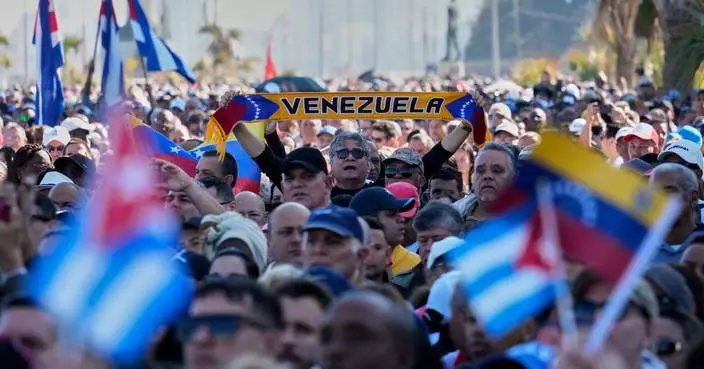
Cuban authorities called a rally in support of Venezuela’s government and railed against the U.S. military operation, writing in a statement: “All the nations of the region must remain alert, because the threat hangs over all of us.”
Rubio, a former Florida senator and son of Cuban immigrants, has long maintained Cuba is a dictatorship repressing its people.
“This is the Western Hemisphere. This is where we live — and we’re not going to allow the Western Hemisphere to be a base of operation for adversaries, competitors, and rivals of the United States," Rubio said.
Cubans like 55-year-old biochemical laboratory worker Bárbara Rodríguez were following developments in Venezuela. She said she worried about what she described as an “aggression against a sovereign state.”
“It can happen in any country, it can happen right here. We have always been in the crosshairs,” Rodríguez said.
AP writers Andrea Rodriguez in Havana, Cuba, and Darlene Superville traveling aboard Air Force One contributed reporting.
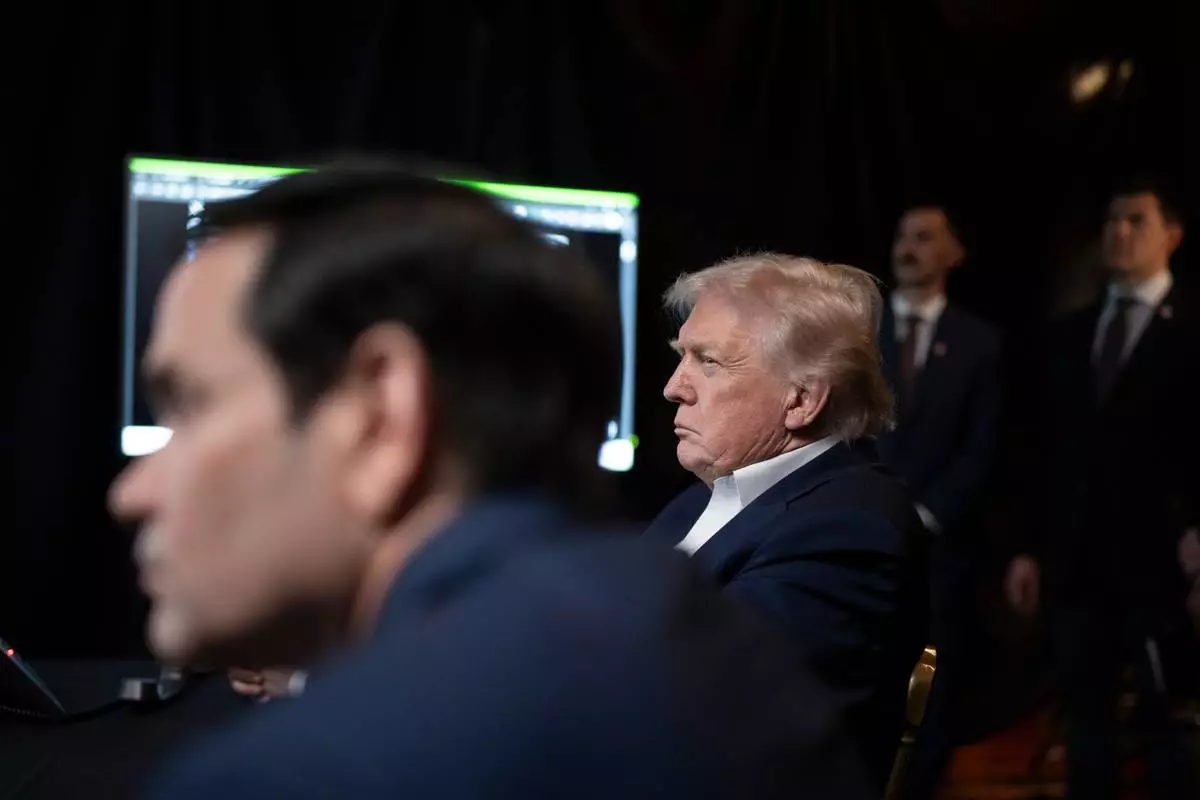
In this photo released by the White House, President Donald Trump monitors U.S. military operations in Venezuela, with Secretary of State Marco Rubio at Mar-a-Lago in Palm Beach, Fla., Saturday, Jan. 3, 2026. (Molly Riley/The White House via AP)