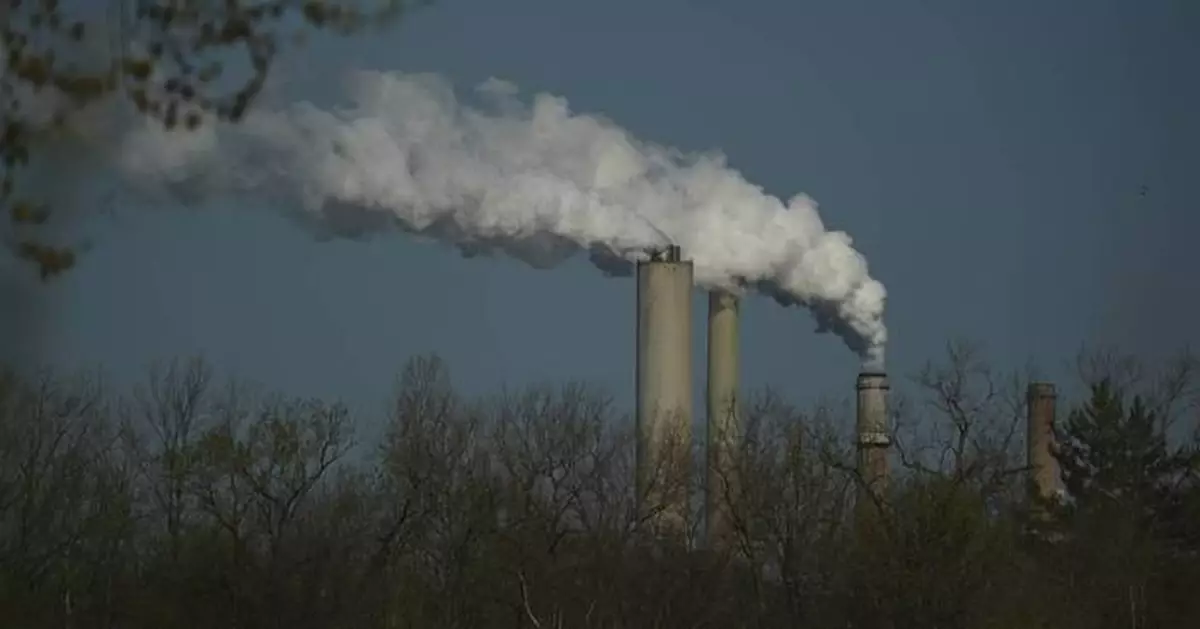
WASHINGTON (AP) — The Trump administration's Environmental Protection Agency on Wednesday proposed a new ruling that heat-trapping carbon gas "emissions from fossil fuel-fired power plants do not contribute significantly to dangerous air pollution.''
The Associated Press asked 30 different scientists, experts in climate, health and economics, about the scientific reality behind this proposal. Nineteen of them responded, all saying that the proposal was scientifically wrong and many of them called it disinformation. Here's what eight of them said.
“This is the scientific equivalent to saying that smoking doesn’t cause lung cancer,” said climate scientist Zeke Hausfather of the tech firm Stripe and the temperature monitoring group Berkeley Earth. “The relationship between CO2 emissions and global temperatures has been well established since the late 1800s, and coal burning is the single biggest driver of global CO2 emissions, followed by oil and gas. It is utterly nonsensical to say that carbon emissions from power plants do not contribute significantly to climate change.”
"It’s about as valid as saying that arsenic is not a dangerous substance to consume," said University of Pennsylvania climate scientist Michael Mann.
"The world is round, the sun rises in the east, coal-and gas-fired power plants contribute significantly to climate change, and climate change increases the risk of heat waves, catastrophic storms, infectious diseases, and many other health threats. These are indisputable facts," said Dr. Howard Frumkin, former director of the National Center for Environmental Health and a retired public health professor at the University of Washington.
Climate economist R. Daniel Bressler of Columbia University, said: “We can use tools from climate economics, including the mortality cost of carbon and the social cost of carbon, to estimate the climate impacts of these emissions. For instance, in my past work, I found that adding just one year’s worth of emissions from an average-sized coal-fired plant in the U.S. causes 904 expected temperature-related deaths and over $1 billion in total climate damages.”
University of Arizona climate scientist Kathy Jacobs said: "Their statement is in direct conflict with evidence that has been presented by thousands of scientists from almost 200 countries for decades.
“It’s basic chemistry that burning coal and natural gas releases carbon dioxide and it’s basic physics that CO2 warms the planet. We’ve known these simple facts since the mid-19th century,” said Oregon State's Phil Mote.
Andrew Weaver, a professor at the University of Victoria and former member of parliament in British Columbia, said: “President Trump is setting himself up for international court charges against him for crimes against humanity. To proclaim you don’t want to deal with climate change is one thing, but denying the basic science can only be taken as a wanton betrayal of future generations for which there should be consequences.”
Stanford climate scientist Chris Field, who coordinated an international report linking climate change to increasingly deadly extreme weather, summed it up this way: "It is hard to imagine a decision dumber than putting the short-term interests of oil and gas companies ahead of the long-term interests of our children and grandchildren."
Matthew Daly and Michael Phillis contributed from Washington.
The Associated Press’ climate and environmental coverage receives financial support from multiple private foundations. AP is solely responsible for all content. Find AP’s standards for working with philanthropies, a list of supporters and funded coverage areas at AP.org.
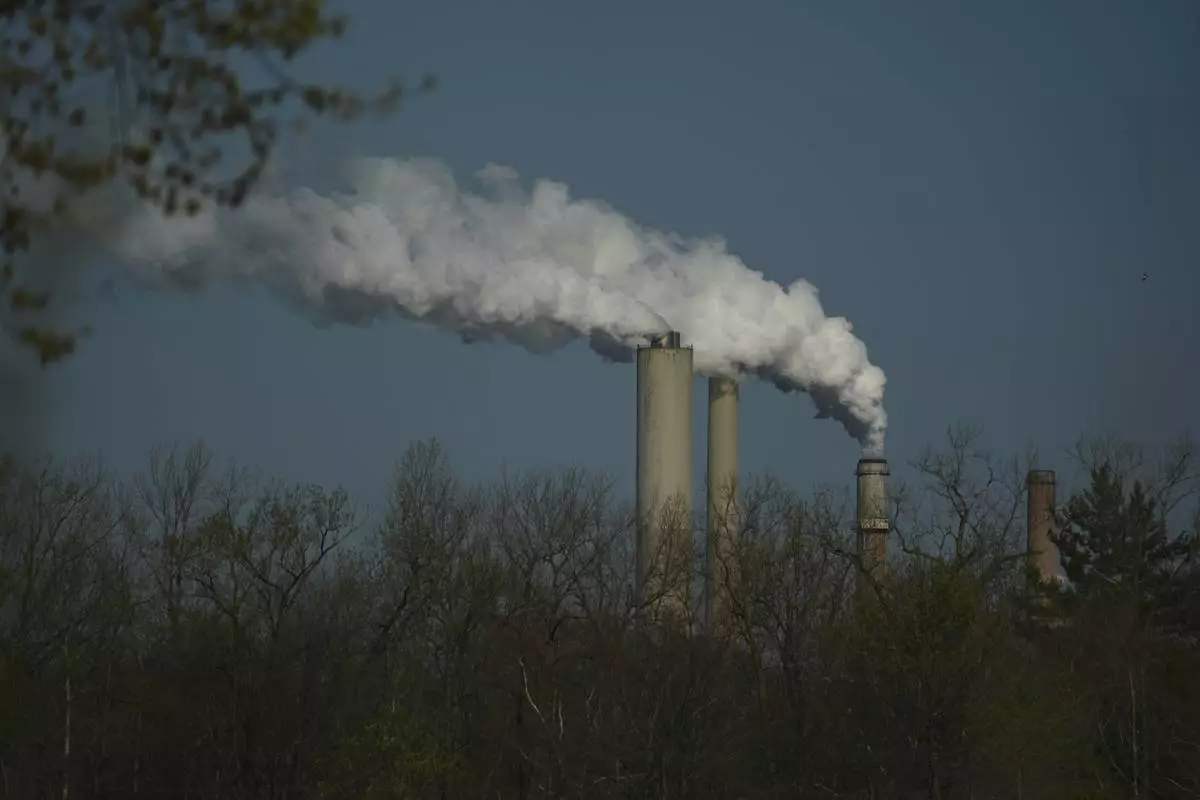
The Gibson Power Plant operates Thursday, April 10, 2025, in Princeton, Ind. (AP Photo/Joshua A. Bickel)
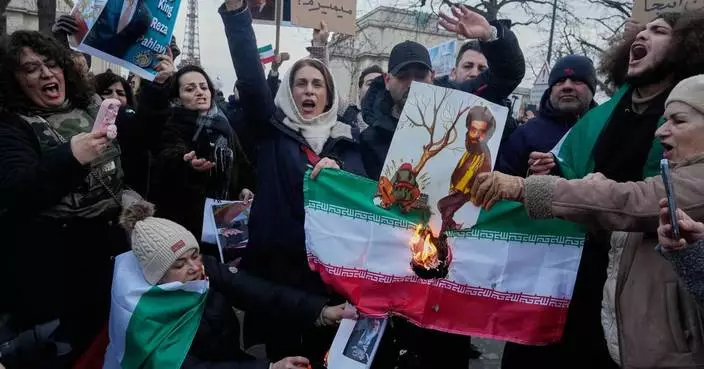
DUBAI, United Arab Emirates (AP) — U.S. President Donald Trump said Iran wants to negotiate with Washington after his threat to strike the Islamic Republic over its bloody crackdown on protesters, a move coming as activists said Monday the death toll in the nationwide demonstrations rose to at least 544.
Iran had no immediate reaction to the news, which came after the foreign minister of Oman — long an interlocutor between Washington and Tehran — traveled to Iran this weekend. It also remains unclear just what Iran could promise, particularly as Trump has set strict demands over its nuclear program and its ballistic missile arsenal, which Tehran insists is crucial for its national defense.
Meanwhile Monday, Iran called for pro-government demonstrators to head to the streets in support of the theocracy, a show of force after days of protests directly challenging the rule of 86-year-old Supreme Leader Ayatollah Ali Khamenei. Iranian state television aired chants from the crowd, who shouted “Death to America!” and “Death to Israel!”
Trump and his national security team have been weighing a range of potential responses against Iran including cyberattacks and direct strikes by the U.S. or Israel, according to two people familiar with internal White House discussions who were not authorized to comment publicly and spoke on condition of anonymity.
“The military is looking at it, and we’re looking at some very strong options,” Trump told reporters on Air Force One on Sunday night. Asked about Iran’s threats of retaliation, he said: “If they do that, we will hit them at levels that they’ve never been hit before.”
Trump said that his administration was in talks to set up a meeting with Tehran, but cautioned that he may have to act first as reports of the death toll in Iran mount and the government continues to arrest protesters.
“I think they’re tired of being beat up by the United States,” Trump said. “Iran wants to negotiate.”
He added: “The meeting is being set up, but we may have to act because of what’s happening before the meeting. But a meeting is being set up. Iran called, they want to negotiate.”
Iran through country's parliamentary speaker warned Sunday that the U.S. military and Israel would be “legitimate targets” if America uses force to protect demonstrators.
More than 10,600 people also have been detained over the two weeks of protests, said the U.S.-based Human Rights Activists News Agency, which has been accurate in previous unrest in recent years and gave the death toll. It relies on supporters in Iran crosschecking information. It said 496 of the dead were protesters and 48 were with security forces.
With the internet down in Iran and phone lines cut off, gauging the demonstrations from abroad has grown more difficult. The Associated Press has been unable to independently assess the toll. Iran’s government has not offered overall casualty figures.
Those abroad fear the information blackout is emboldening hard-liners within Iran’s security services to launch a bloody crackdown. Protesters flooded the streets in the country’s capital and its second-largest city on Saturday night into Sunday morning. Online videos purported to show more demonstrations Sunday night into Monday, with a Tehran official acknowledging them in state media.
In Tehran, a witness told the AP that the streets of the capital empty at the sunset call to prayers each night. By the Isha, or nighttime prayer, the streets are deserted.
Part of that stems from the fear of getting caught in the crackdown. Police sent the public a text message that warned: “Given the presence of terrorist groups and armed individuals in some gatherings last night and their plans to cause death, and the firm decision to not tolerate any appeasement and to deal decisively with the rioters, families are strongly advised to take care of their youth and teenagers.”
Another text, which claimed to come from the intelligence arm of the paramilitary Revolutionary Guard, also directly warned people not to take part in demonstrations.
“Dear parents, in view of the enemy’s plan to increase the level of naked violence and the decision to kill people, ... refrain from being on the streets and gathering in places involved in violence, and inform your children about the consequences of cooperating with terrorist mercenaries, which is an example of treason against the country,” the text warned.
The witness spoke to the AP on condition of anonymity due to the ongoing crackdown.
The demonstrations began Dec. 28 over the collapse of the Iranian rial currency, which trades at over 1.4 million to $1, as the country’s economy is squeezed by international sanctions in part levied over its nuclear program. The protests intensified and grew into calls directly challenging Iran’s theocracy.
Nikhinson reported from aboard Air Force One.
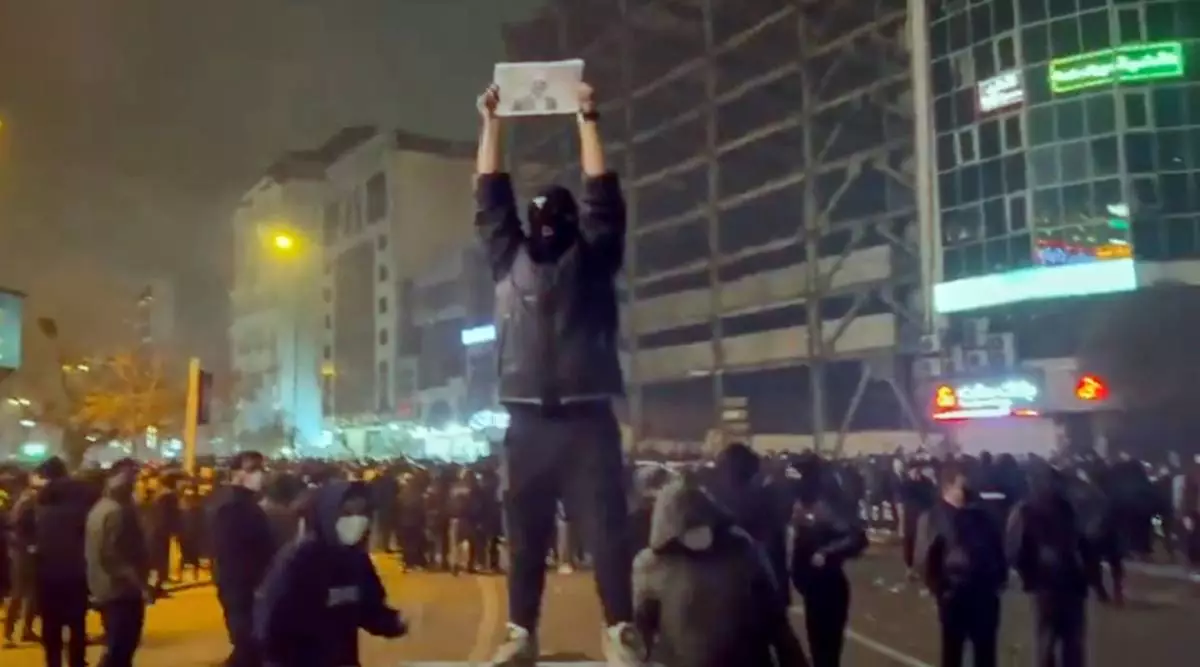
In this frame grab from video obtained by the AP outside Iran, a masked demonstrator holds a picture of Iran's Crown Prince Reza Pahlavi during a protest in Tehran, Iran, Friday, January. 9, 2026. (UGC via AP)
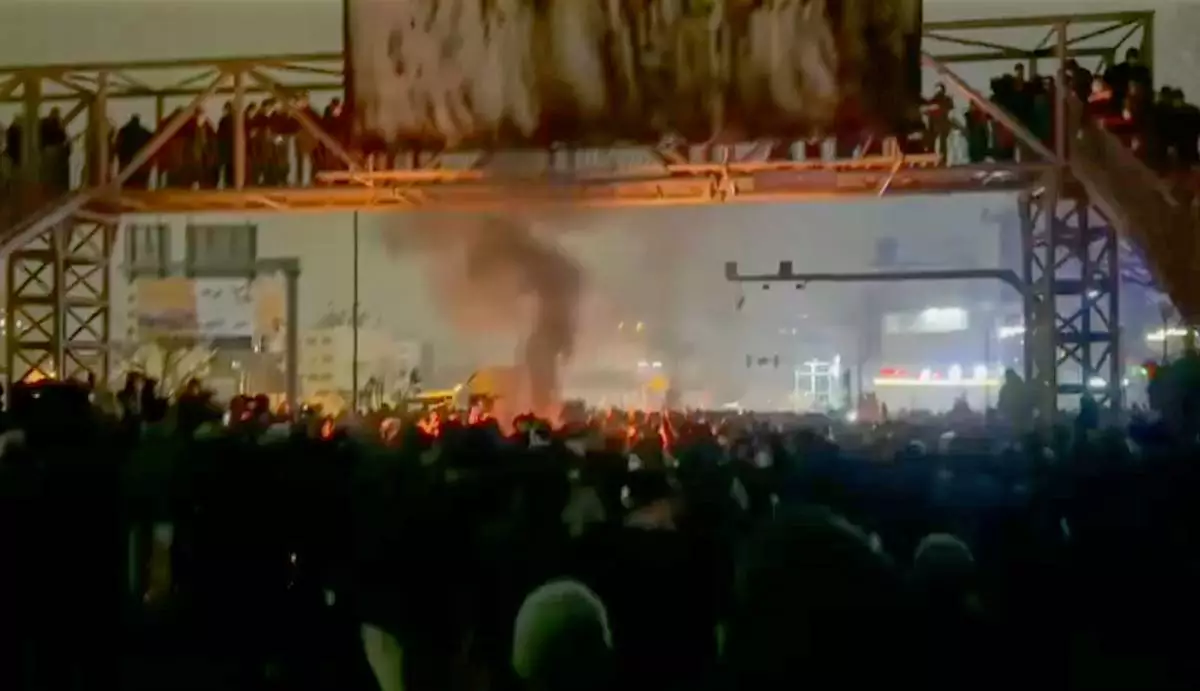
In this frame grab from footage circulating on social media from Iran shows protesters taking to the streets despite an intensifying crackdown as the Islamic Republic remains cut off from the rest of the world in Tehran, Iran, Friday, Jan. 9, 2026.(UGC via AP)
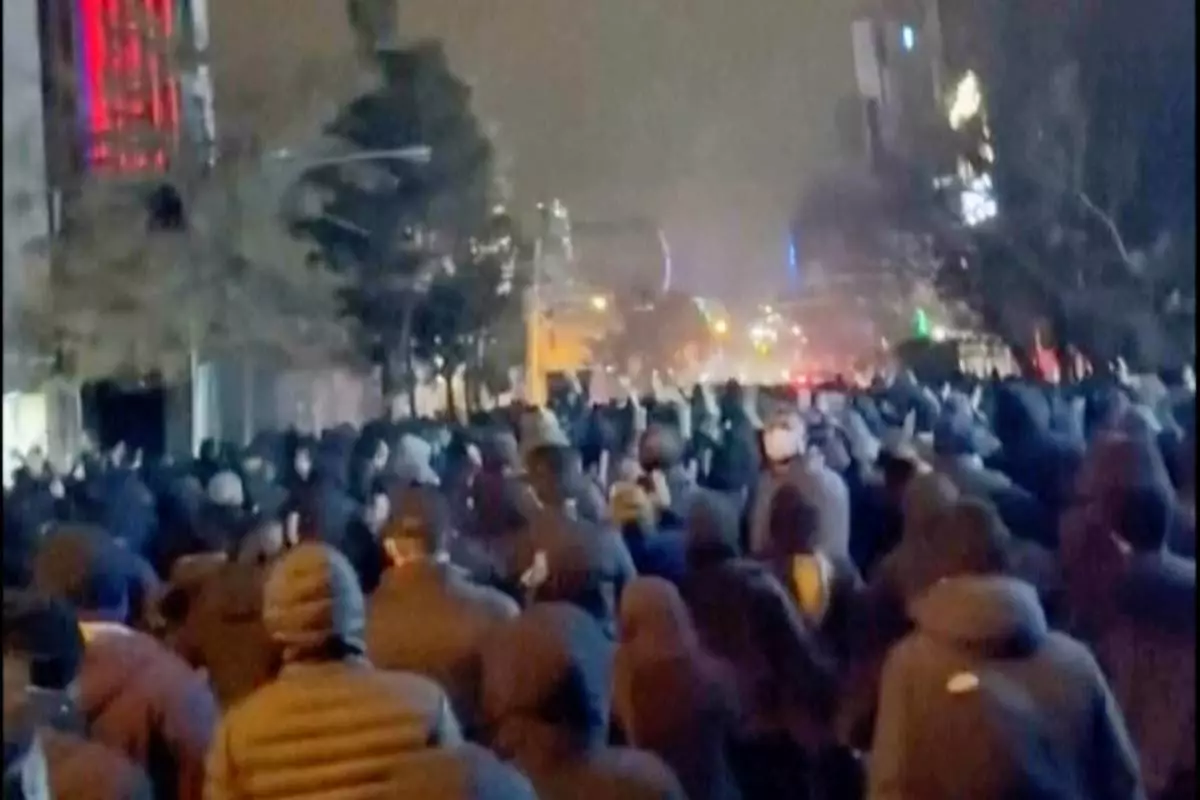
In this frame grab from footage circulating on social media from Iran showed protesters once again taking to the streets of Tehran despite an intensifying crackdown as the Islamic Republic remains cut off from the rest of the world in Tehran, Iran, Saturday Jan. 10, 2026. (UGC via AP)