Skip to Content Facebook Feature Image

Inside the legal fight over the telehealth clinics that help women defy abortion bans

News

Inside the legal fight over the telehealth clinics that help women defy abortion bans
News

News

Inside the legal fight over the telehealth clinics that help women defy abortion bans

2025-06-12 18:19 Last Updated At:18:51

Every month, thousands of women thwart abortion bans in their home states by turning to telehealth clinics willing to prescribe pregnancy-ending drugs online and ship them anywhere in the country.

Whether this is legal, though, is a matter of debate. Two legal cases involving a New York doctor could wind up testing the shield laws some states have passed to protect telehealth providers who ship abortion pills nationwide.

More Images
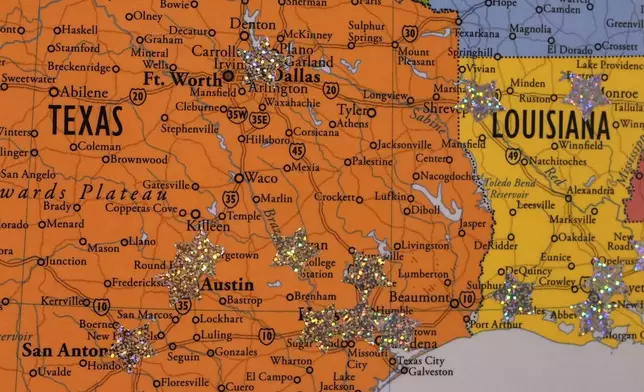
Star stickers are placed on a map showing where in Texas and Louisiana the Massachusetts Medication Abortion Access Project sends medication to their clients, May 13, 2025, in Somerville, Mass. (AP Photo/Charles Krupa)

Star stickers are placed on a map showing where in Texas and Louisiana the Massachusetts Medication Abortion Access Project sends medication to their clients, May 13, 2025, in Somerville, Mass. (AP Photo/Charles Krupa)

Boxes of Mifeprex, which will be sent out to clients, are stacked at the Massachusetts Medication Abortion Access Project, May 13, 2025, in Somerville, Mass. (AP Photo/Charles Krupa)
Boxes of Mifeprex, which will be sent out to clients, are stacked at the Massachusetts Medication Abortion Access Project, May 13, 2025, in Somerville, Mass. (AP Photo/Charles Krupa)
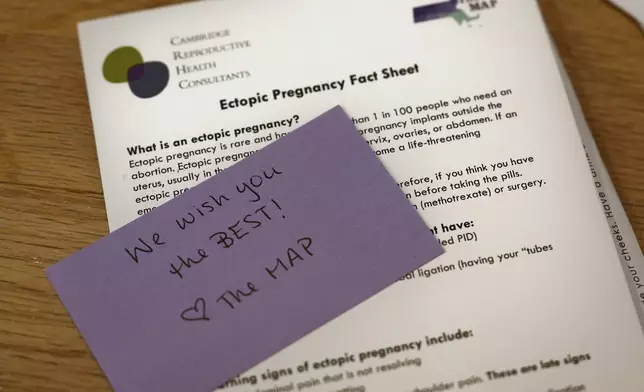
A handwritten note is included in a package sent out to the clients from the Massachusetts Medication Abortion Access Project, May 13, 2025, in Somerville, Mass. (AP Photo/Charles Krupa)

A handwritten note is included in a package sent out to the clients from the Massachusetts Medication Abortion Access Project, May 13, 2025, in Somerville, Mass. (AP Photo/Charles Krupa)

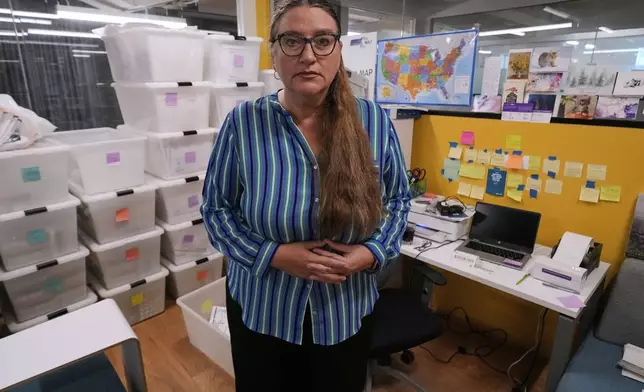
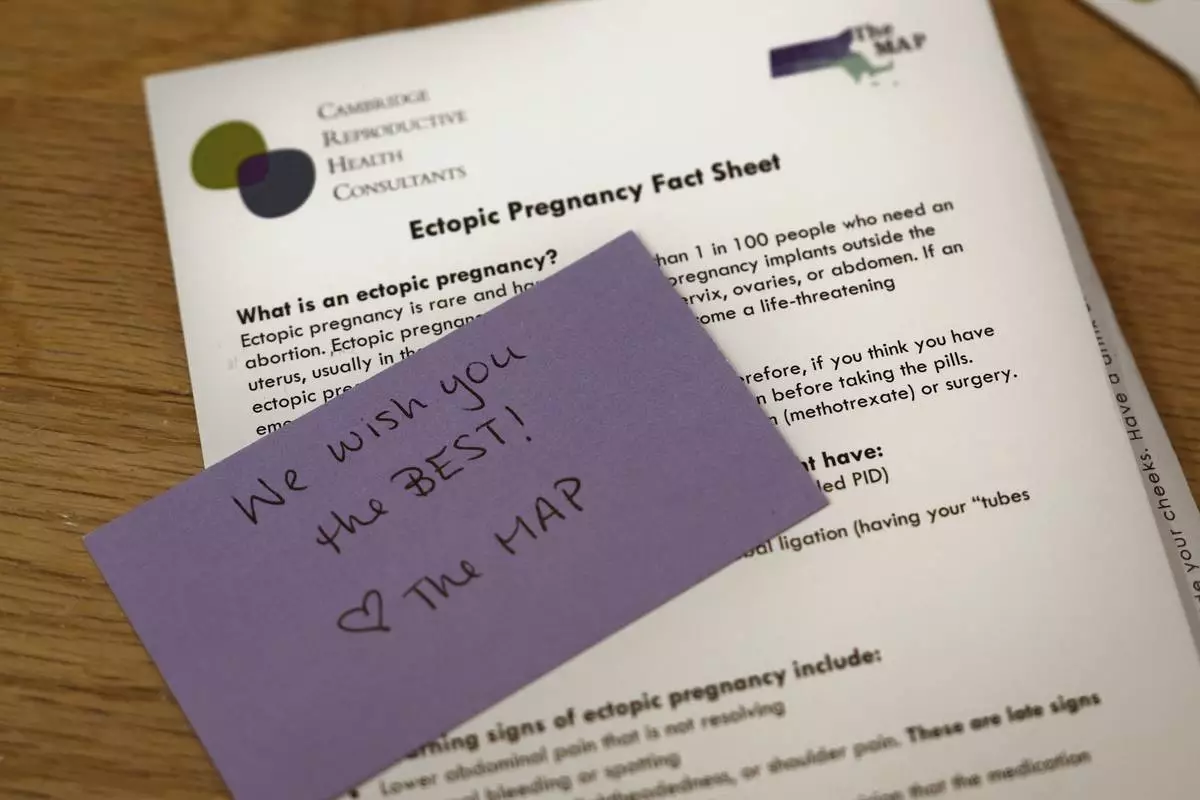
Dr. Angel Foster, co-founder of Massachusetts Medication Abortion Access Project, poses for a photo at the organization's headquarters, May 13, 2025, in Somerville, Mass. (AP Photo/Charles Krupa)
Dr. Angel Foster, co-founder of Massachusetts Medication Abortion Access Project, poses for a photo at the organization's headquarters, May 13, 2025, in Somerville, Mass. (AP Photo/Charles Krupa)

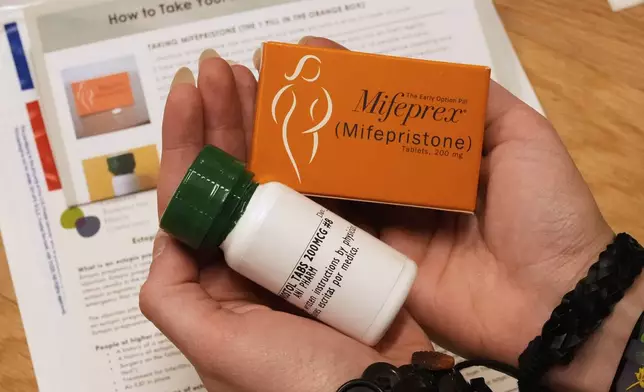
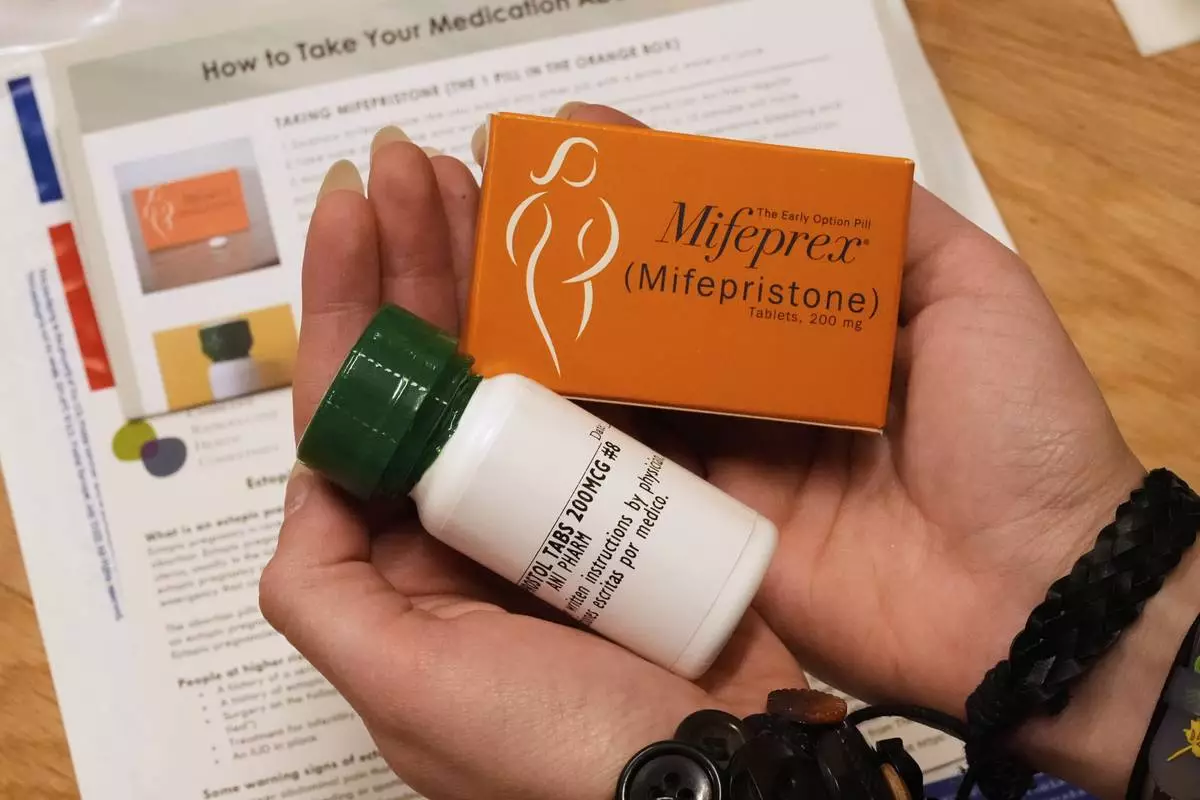
A coordinator shows the medications and care kit, which will be sent out the clients at Massachusetts Medication Abortion Access Project, May 13, 2025, in Somerville, Mass. (AP Photo/Charles Krupa)
A coordinator shows the medications and care kit, which will be sent out the clients at Massachusetts Medication Abortion Access Project, May 13, 2025, in Somerville, Mass. (AP Photo/Charles Krupa)

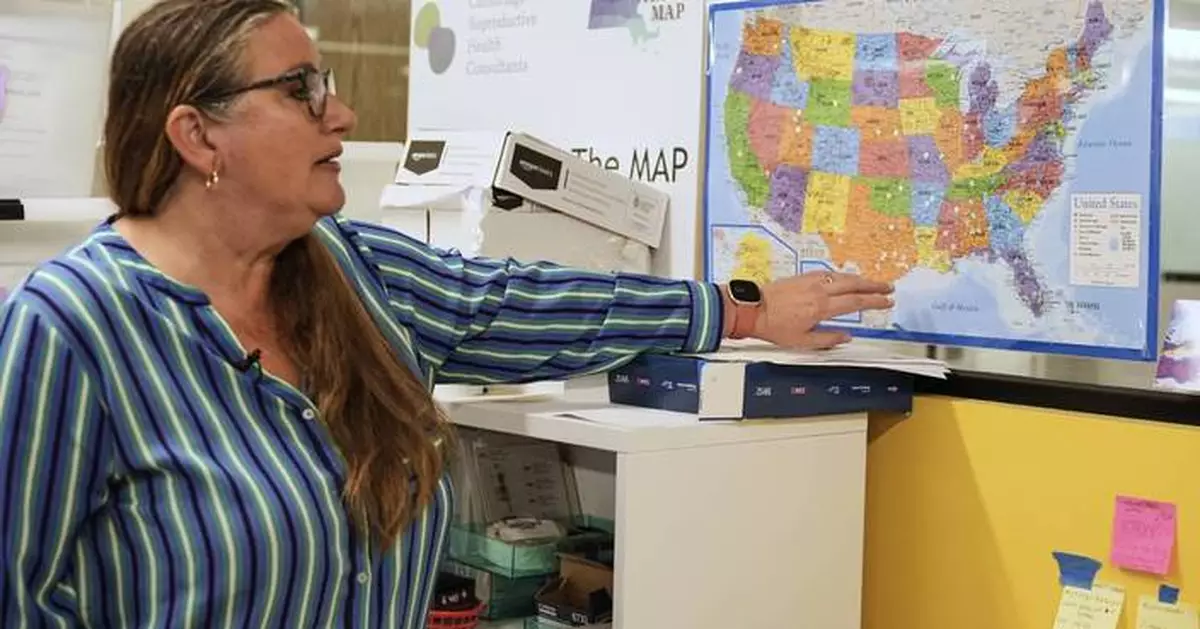
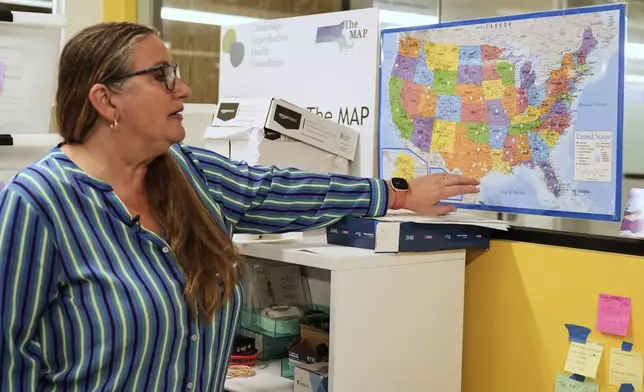
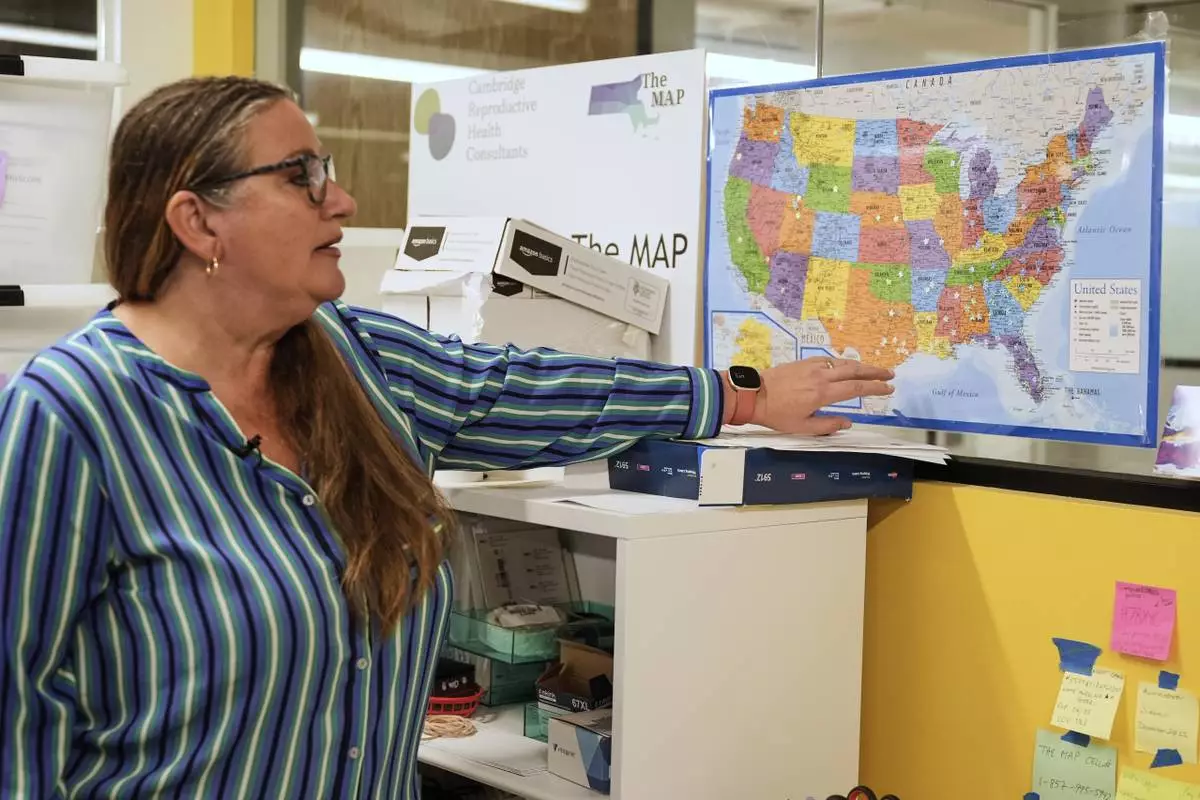
Dr. Angel Foster, co-founder of Massachusetts Medication Abortion Access Project, points out on a map of the United States where her organization provides care, May 13, 2025, in Somerville, Mass. (AP Photo/Charles Krupa)

Dr. Angel Foster, co-founder of Massachusetts Medication Abortion Access Project, points out on a map of the United States where her organization provides care, May 13, 2025, in Somerville, Mass. (AP Photo/Charles Krupa)

Dr. Margaret Carpenter faces a felony charge in Louisiana for supplying abortion medication through the mail to a pregnant teen in that state. The patient's mother also faces criminal charges. A Texas judge fined the same physician $100,000 after the state accused her of prescribing abortion medication for a woman near Dallas.

So far, the prosecution hasn't progressed thanks to New York's shield law, which has protected Carpenter from extradition to Louisiana. But other telehealth centers operating in states with similar legal protections for abortion providers are watching closely.

"We have great legal counsel who have advised us that what we are doing is legal,” said Dr. Angel Foster, co-founder of The Massachusetts Medication Abortion Access Project, which is among a handful of telehealth providers that facilitate abortions from afar in states with bans.

As more states consider enacting shield laws or expanding existing ones, whether one state can shield providers from liability for breaking another state's laws around abortion is still an unsettled area of law.

Erik Baptist, senior counsel for the Alliance Defending Freedom, which opposes abortion, said shield laws violate a constitutional requirement that states respect the laws and legal judgments of other states.

"What these shield law states are doing are undermining the prerogative of these pro-life states to implement and enforce pro-life laws,” said Baptist, director of the group’s Center for Life. ”And so I think the Supreme Court ultimately will want to take this.”

“That is inherently a challenge with shield laws and telehealth,” said Carmel Shachar, faculty director of the Health Law and Policy Clinic at Harvard Law School. “At a certain point, for the purposes of abortion bans, the courts will need to decide: Do we treat a telehealth abortion as happening within the state of the provider or within the state of the patient?”

Decades ago, the FDA approved the use of two prescription medicines — mifepristone and misoprostol — to terminate pregnancies.

But it wasn't until 2023 that telehealth abortions across states became more popular, after the U.S. Supreme Court overturned Roe v. Wade in 2022.

The Society of Family Planning, which supports abortion rights, said that between April and June 2024 there were an average of 7,700 telehealth abortions performed each month in states that either ban abortion totally or after six weeks of pregnancy.

The prescribing process at telehealth clinics varies by provider, but usually takes place entirely online, with the patient answering a series of health-related questions and consent forms.

At some telehealth clinics, medical providers don't come face-to-face with patients, even via videoconferencing, and patients don't necessarily know the prescriber's name unless requested.

For instance, when Foster's clinic, also known as The MAP, puts pills in the mail, only the name of the practice appears on the label, as allowed under the Massachusetts shield law. If patients have follow-up questions, they can talk or text the doctor working that day, but may not know that doctor's name either.

Pills can arrive in a less than a week.

“This has been the safety net, post-Dobbs, of allowing people who don’t have the ability to travel out of state to get abortion care,” said Greer Donley, a University of Pittsburgh law professor and abortion law expert.

When dealing with medications not related to abortion, doctors are often able to write prescriptions for patients in other states. However, in most states, if the patient is located within its borders, the doctor must have a license issued by that state, according to Mei Wa Kwong, executive director of the The Center for Connected Health Policy.

Twenty three states and Washington, D.C., currently have shield laws protecting abortion providers.

Of those, eight have specific provisions protecting them from criminal prosecution or civil lawsuits even if the patient is in another state, according to the nonprofit research organization KFF. They include California, Colorado, Maine, Massachusetts, New York, Rhode Island, Vermont and Washington.

Louisiana’s request to extradite Carpenter hit a roadblock when New York Gov. Kathy Hochul rejected it, citing the state’s shield law. (A county clerk also cited the shield law as he refused to file the civil judgment from Texas.)

“These are not doctors providing health care. They are drug dealers,” Republican Louisiana Attorney General Liz Murrill told state lawmakers as she promoted a bill that would expand who can sue and be sued in abortion medication cases. “They are violating our laws. They are sending illegal medications for purposes of procuring abortions that are illegal in our state.”

Julie Kay, the executive director of the Abortion Coalition for Telemedicine, the nationwide organization co-founded by Carpenter, said providers won’t be “bullied and intimidated” into ceasing operations.

Other telehealth abortion providers said they also won't be deterred by legal threats.

“I have been working in this field for 25 years and this is part of the work," said Dr. Rebecca Gomperts, founder and director of Aid Access, an abortion pill supplier. ”It’s something that we all anticipated would happen," she said of the legal challenges.

A doctor who is part of A Safe Choice, a network of California-based physicians that prescribes abortion pills to women in all 50 states, told The Associated Press he believes he is protected by the state's shield law, but is also taking precautions.

“I’m not going to be traveling outside of California for a very long time,” said the doctor, who spoke with The Associated Press on condition of anonymity because he wanted to protect his identity for safety reasons.

Associated Press writer Sara Cline in Baton Rouge, Louisiana, contributed to this report.
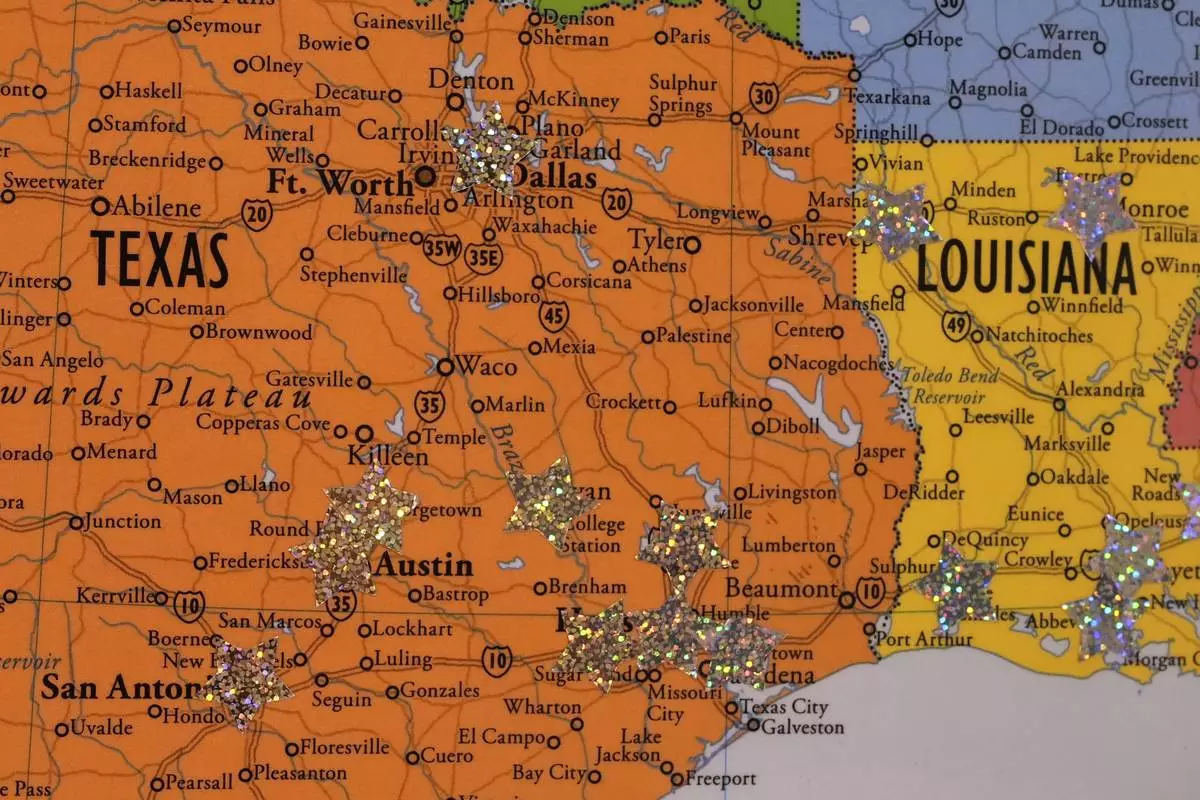
Star stickers are placed on a map showing where in Texas and Louisiana the Massachusetts Medication Abortion Access Project sends medication to their clients, May 13, 2025, in Somerville, Mass. (AP Photo/Charles Krupa)

Star stickers are placed on a map showing where in Texas and Louisiana the Massachusetts Medication Abortion Access Project sends medication to their clients, May 13, 2025, in Somerville, Mass. (AP Photo/Charles Krupa)

Boxes of Mifeprex, which will be sent out to clients, are stacked at the Massachusetts Medication Abortion Access Project, May 13, 2025, in Somerville, Mass. (AP Photo/Charles Krupa)
Boxes of Mifeprex, which will be sent out to clients, are stacked at the Massachusetts Medication Abortion Access Project, May 13, 2025, in Somerville, Mass. (AP Photo/Charles Krupa)
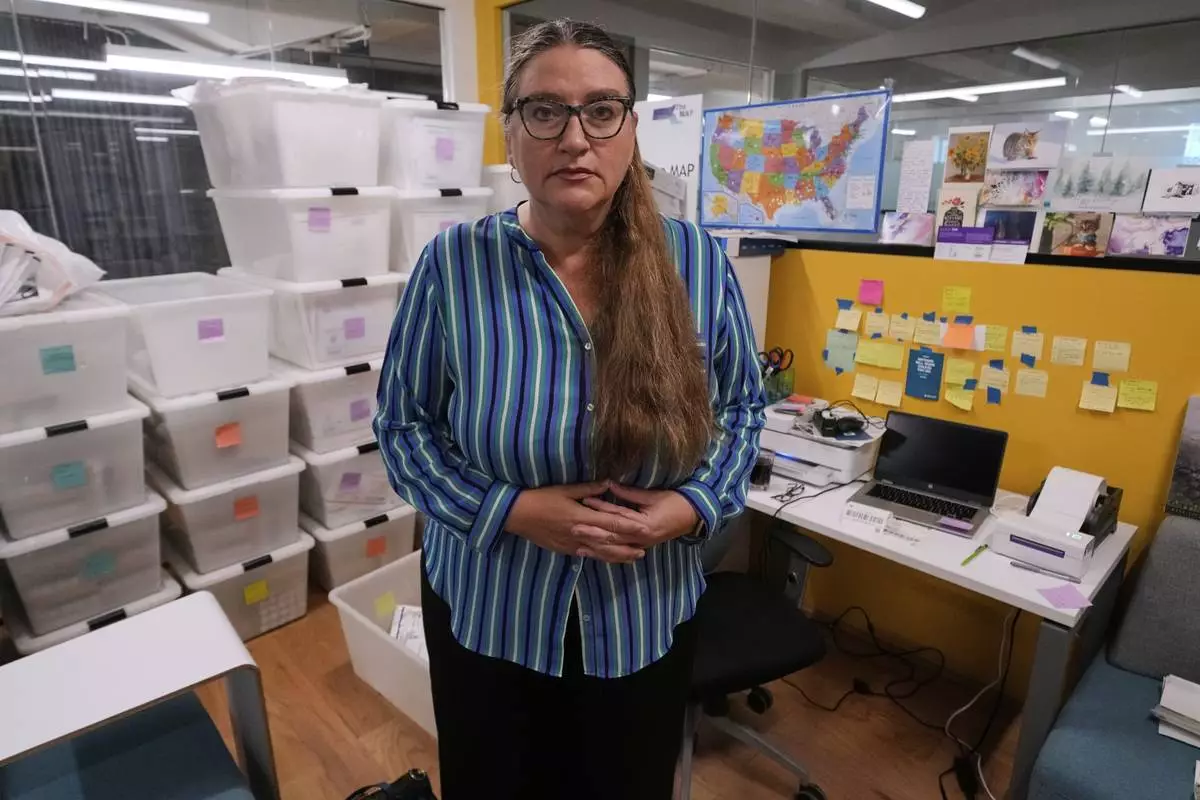
A handwritten note is included in a package sent out to the clients from the Massachusetts Medication Abortion Access Project, May 13, 2025, in Somerville, Mass. (AP Photo/Charles Krupa)

A handwritten note is included in a package sent out to the clients from the Massachusetts Medication Abortion Access Project, May 13, 2025, in Somerville, Mass. (AP Photo/Charles Krupa)

Dr. Angel Foster, co-founder of Massachusetts Medication Abortion Access Project, poses for a photo at the organization's headquarters, May 13, 2025, in Somerville, Mass. (AP Photo/Charles Krupa)
Dr. Angel Foster, co-founder of Massachusetts Medication Abortion Access Project, poses for a photo at the organization's headquarters, May 13, 2025, in Somerville, Mass. (AP Photo/Charles Krupa)

A coordinator shows the medications and care kit, which will be sent out the clients at Massachusetts Medication Abortion Access Project, May 13, 2025, in Somerville, Mass. (AP Photo/Charles Krupa)
A coordinator shows the medications and care kit, which will be sent out the clients at Massachusetts Medication Abortion Access Project, May 13, 2025, in Somerville, Mass. (AP Photo/Charles Krupa)

Dr. Angel Foster, co-founder of Massachusetts Medication Abortion Access Project, points out on a map of the United States where her organization provides care, May 13, 2025, in Somerville, Mass. (AP Photo/Charles Krupa)
Dr. Angel Foster, co-founder of Massachusetts Medication Abortion Access Project, points out on a map of the United States where her organization provides care, May 13, 2025, in Somerville, Mass. (AP Photo/Charles Krupa)
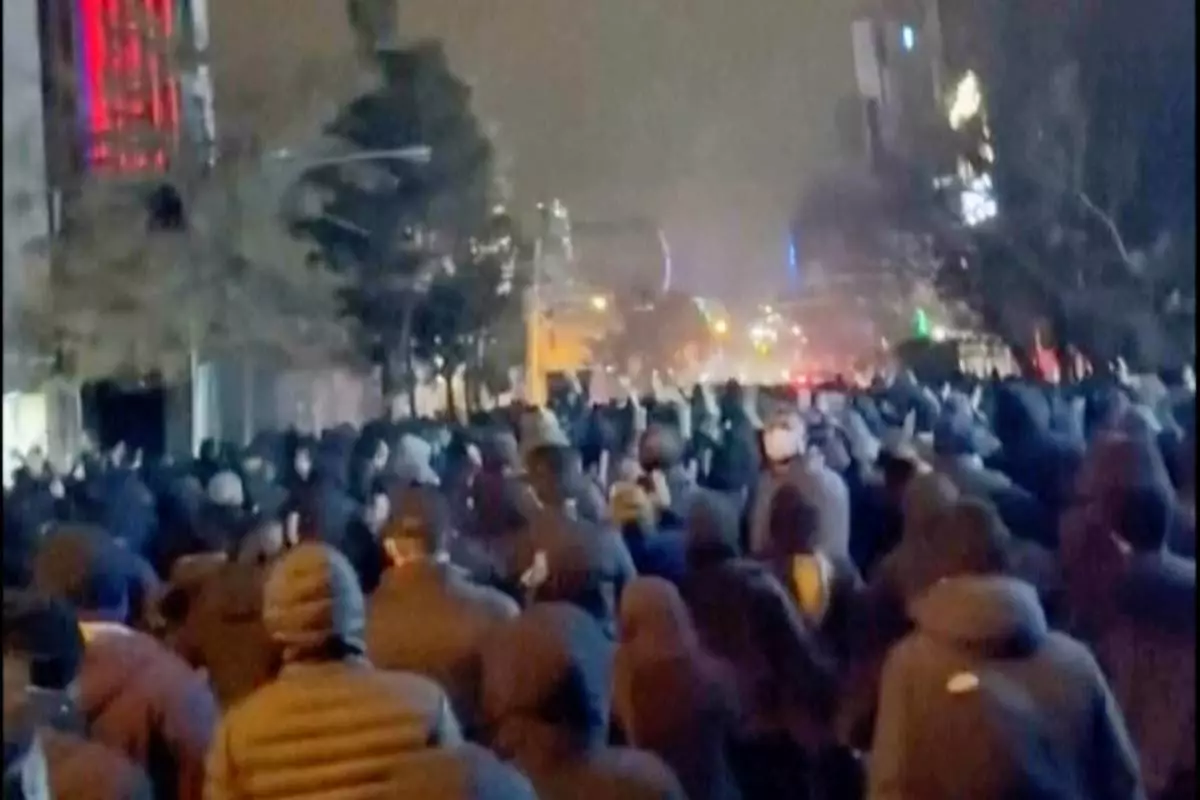
DUBAI, United Arab Emirates (AP) — U.S. President Donald Trump said Iran wants to negotiate with Washington after his threat to strike the Islamic Republic over its bloody crackdown on protesters, a move coming as activists said Monday the death toll in the nationwide demonstrations rose to at least 544.

Iran had no immediate reaction to the news, which came after the foreign minister of Oman — long an interlocutor between Washington and Tehran — traveled to Iran this weekend. It also remains unclear just what Iran could promise, particularly as Trump has set strict demands over its nuclear program and its ballistic missile arsenal, which Tehran insists is crucial for its national defense.

Meanwhile Monday, Iran called for pro-government demonstrators to head to the streets in support of the theocracy, a show of force after days of protests directly challenging the rule of 86-year-old Supreme Leader Ayatollah Ali Khamenei. Iranian state television aired chants from the crowd, who shouted “Death to America!” and “Death to Israel!”

Trump and his national security team have been weighing a range of potential responses against Iran including cyberattacks and direct strikes by the U.S. or Israel, according to two people familiar with internal White House discussions who were not authorized to comment publicly and spoke on condition of anonymity.

“The military is looking at it, and we’re looking at some very strong options,” Trump told reporters on Air Force One on Sunday night. Asked about Iran’s threats of retaliation, he said: “If they do that, we will hit them at levels that they’ve never been hit before.”

Trump said that his administration was in talks to set up a meeting with Tehran, but cautioned that he may have to act first as reports of the death toll in Iran mount and the government continues to arrest protesters.

“I think they’re tired of being beat up by the United States,” Trump said. “Iran wants to negotiate.”

He added: “The meeting is being set up, but we may have to act because of what’s happening before the meeting. But a meeting is being set up. Iran called, they want to negotiate.”

Iran through country's parliamentary speaker warned Sunday that the U.S. military and Israel would be “legitimate targets” if America uses force to protect demonstrators.

More than 10,600 people also have been detained over the two weeks of protests, said the U.S.-based Human Rights Activists News Agency, which has been accurate in previous unrest in recent years and gave the death toll. It relies on supporters in Iran crosschecking information. It said 496 of the dead were protesters and 48 were with security forces.

With the internet down in Iran and phone lines cut off, gauging the demonstrations from abroad has grown more difficult. The Associated Press has been unable to independently assess the toll. Iran’s government has not offered overall casualty figures.

Those abroad fear the information blackout is emboldening hard-liners within Iran’s security services to launch a bloody crackdown. Protesters flooded the streets in the country’s capital and its second-largest city on Saturday night into Sunday morning. Online videos purported to show more demonstrations Sunday night into Monday, with a Tehran official acknowledging them in state media.

In Tehran, a witness told the AP that the streets of the capital empty at the sunset call to prayers each night. By the Isha, or nighttime prayer, the streets are deserted.

Part of that stems from the fear of getting caught in the crackdown. Police sent the public a text message that warned: “Given the presence of terrorist groups and armed individuals in some gatherings last night and their plans to cause death, and the firm decision to not tolerate any appeasement and to deal decisively with the rioters, families are strongly advised to take care of their youth and teenagers.”

Another text, which claimed to come from the intelligence arm of the paramilitary Revolutionary Guard, also directly warned people not to take part in demonstrations.

“Dear parents, in view of the enemy’s plan to increase the level of naked violence and the decision to kill people, ... refrain from being on the streets and gathering in places involved in violence, and inform your children about the consequences of cooperating with terrorist mercenaries, which is an example of treason against the country,” the text warned.

The witness spoke to the AP on condition of anonymity due to the ongoing crackdown.

The demonstrations began Dec. 28 over the collapse of the Iranian rial currency, which trades at over 1.4 million to $1, as the country’s economy is squeezed by international sanctions in part levied over its nuclear program. The protests intensified and grew into calls directly challenging Iran’s theocracy.

Nikhinson reported from aboard Air Force One.

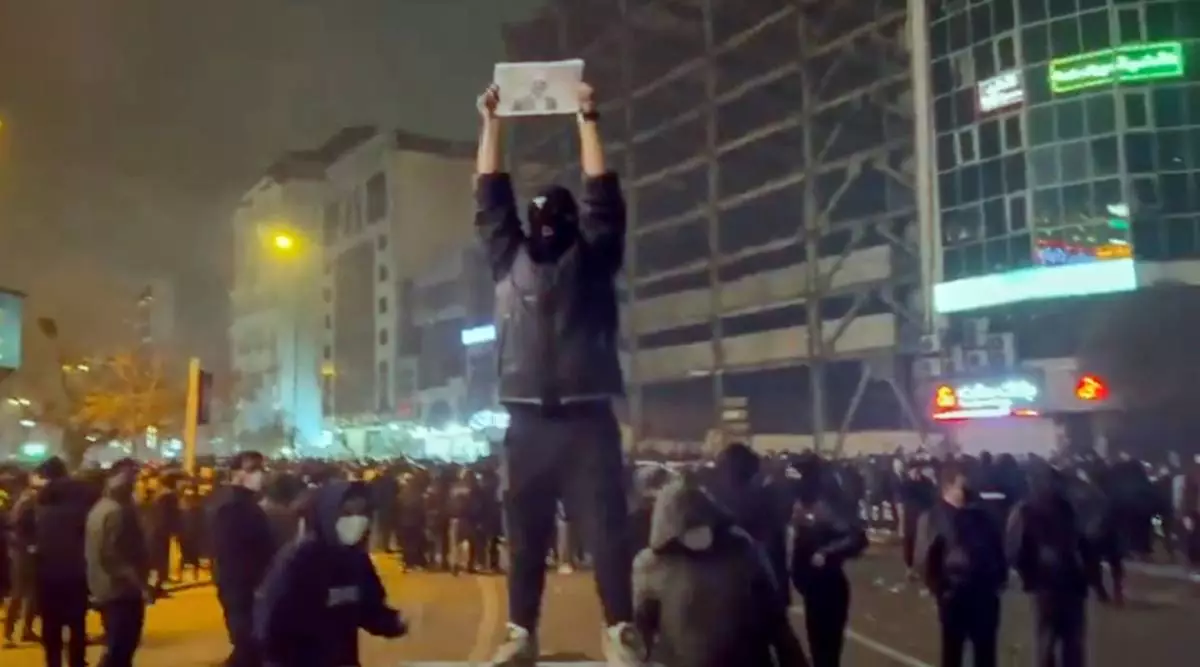
In this frame grab from video obtained by the AP outside Iran, a masked demonstrator holds a picture of Iran's Crown Prince Reza Pahlavi during a protest in Tehran, Iran, Friday, January. 9, 2026. (UGC via AP)

In this frame grab from video obtained by the AP outside Iran, a masked demonstrator holds a picture of Iran's Crown Prince Reza Pahlavi during a protest in Tehran, Iran, Friday, January. 9, 2026. (UGC via AP)

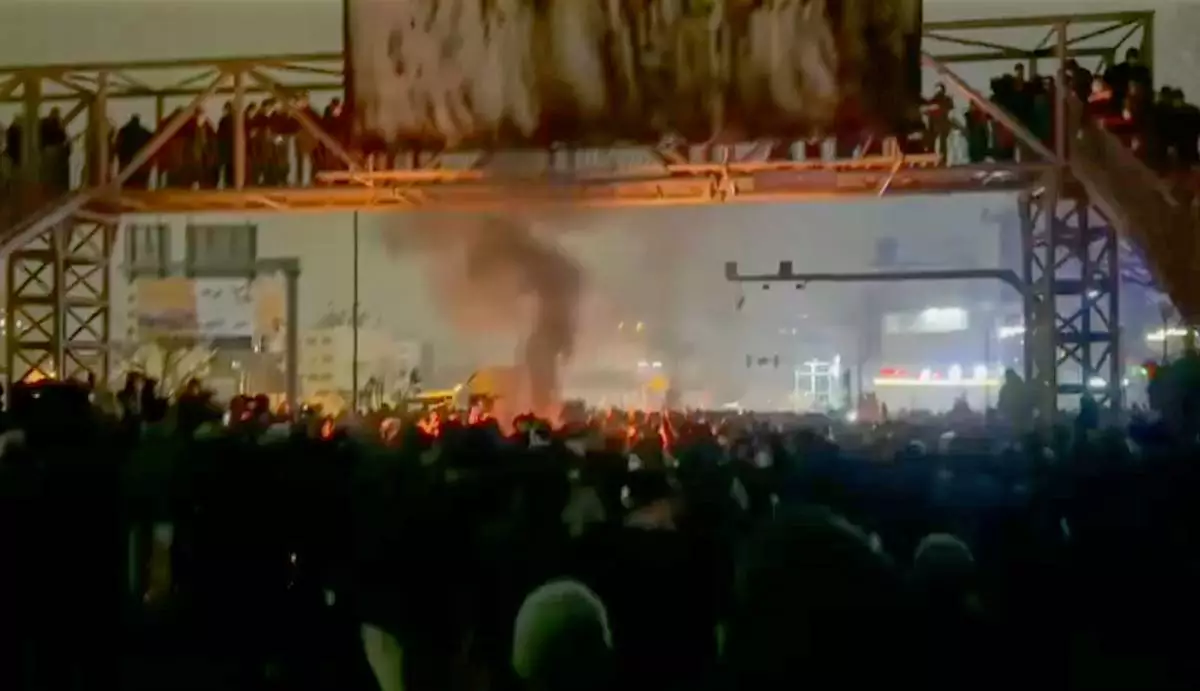
In this frame grab from footage circulating on social media from Iran shows protesters taking to the streets despite an intensifying crackdown as the Islamic Republic remains cut off from the rest of the world in Tehran, Iran, Friday, Jan. 9, 2026.(UGC via AP)

In this frame grab from footage circulating on social media from Iran shows protesters taking to the streets despite an intensifying crackdown as the Islamic Republic remains cut off from the rest of the world in Tehran, Iran, Friday, Jan. 9, 2026.(UGC via AP)

In this frame grab from footage circulating on social media from Iran showed protesters once again taking to the streets of Tehran despite an intensifying crackdown as the Islamic Republic remains cut off from the rest of the world in Tehran, Iran, Saturday Jan. 10, 2026. (UGC via AP)

In this frame grab from footage circulating on social media from Iran showed protesters once again taking to the streets of Tehran despite an intensifying crackdown as the Islamic Republic remains cut off from the rest of the world in Tehran, Iran, Saturday Jan. 10, 2026. (UGC via AP)

Recommended Articles