U.S. tariff threats have dampened global economic recovery, adding great uncertainty and halting global investments, said Christine Lagarde, president of the European Central Bank (ECB).
During her visit to Beijing, the ECB chief highlighted the catastrophic influence of the unilateral and unstable U.S. tariff policies on the global economy during her exclusive interview with China Global Television Network (CGTN).
"When I look at the global economy, I see an economy that has sustained a series of incredible shocks. We have short memories, but when we remember what we faced in the last three years, it's incredible. So from those successive and almost compounded shocks, eventually, the global economy came out with a high degree of resilience. And this is particularly the case in Europe. Unfortunately, as we were going into this recovery mode, great uncertainty landed on our global economy as a result of the tariff threats and the announcements that were made and then withdrawn and paused and negotiated," said Lagarde.
Trump's protectionism policies have not only brought down the economic prospects of major economies, but also stagnated global businesses and investors, noted Lagarde, calling the attempts of the Trump administration "a lose-lose situation."
"That has dampened global growth expectations. Our projections have been revised downwards. So have the projections of the IMF, the World Bank, the OECD, and most countries are affected. It's not a win-win situation. It's a lose-lose situation that we are looking at the moment. And it's aggravated by the level of uncertainty that is actually putting a break, a hold, if you wish, on many investment projects, on many developments, because investors are not too sure what the future lays ahead," she said.
Despite all the headwinds, the ECB has been committed to its mission to bring back stability.
"The European Central Bank has one key mission, and it is stability. So, in our mission, we have price stability, but we also know that (there) cannot be price stability without financial stability. So, we are very focused (on) monitoring the potential risks, the uncertainty that abounds around the European economy to anticipate any further consequences and be able to respond," she said.
So far, the ECB has managed to avoid drastic price surges in the eurozone, and it is in a good position to counter future shocks, according to the ECB chief.
"But at this point in time, what I will say is that we have stabilized prices at the level that we were expecting. We are within a range of our medium-term target, which is 2 percent. And we are in a good position to withstand future shocks. So we have to keep that stability as much as is required under the circumstances. And we stand ready for that because our objective is stability," said Lagarde.
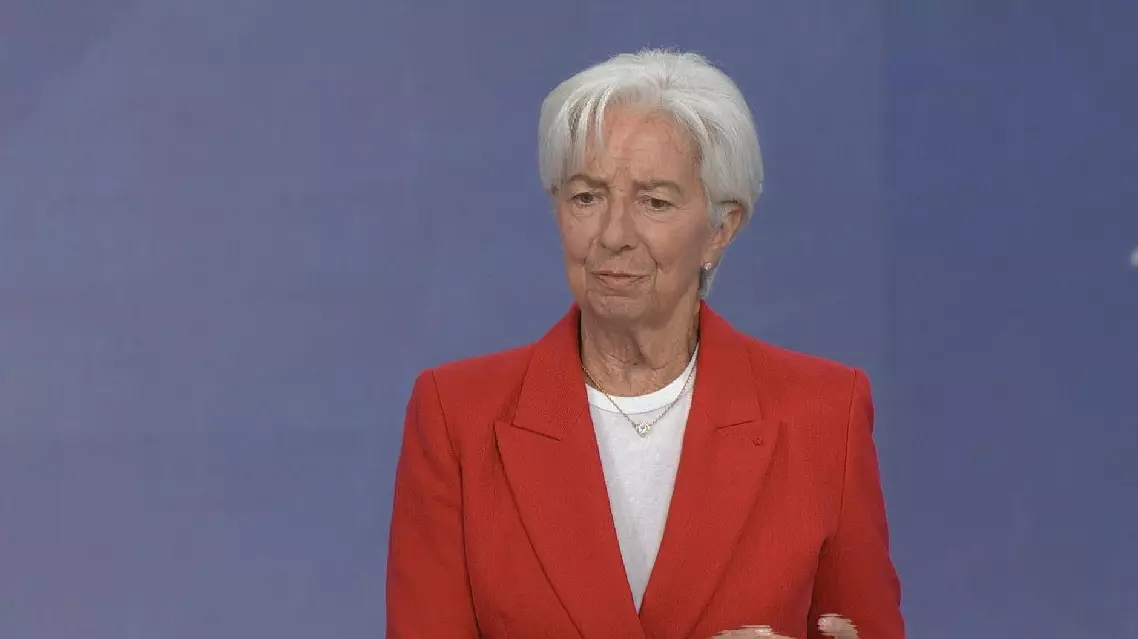
US tariff threats add great uncertainty to global economy: ECB president