If slashed ticket prices, closed stadium sections and moved seats are any indication, fans aren't exactly clamoring to attend the Club World Cup.
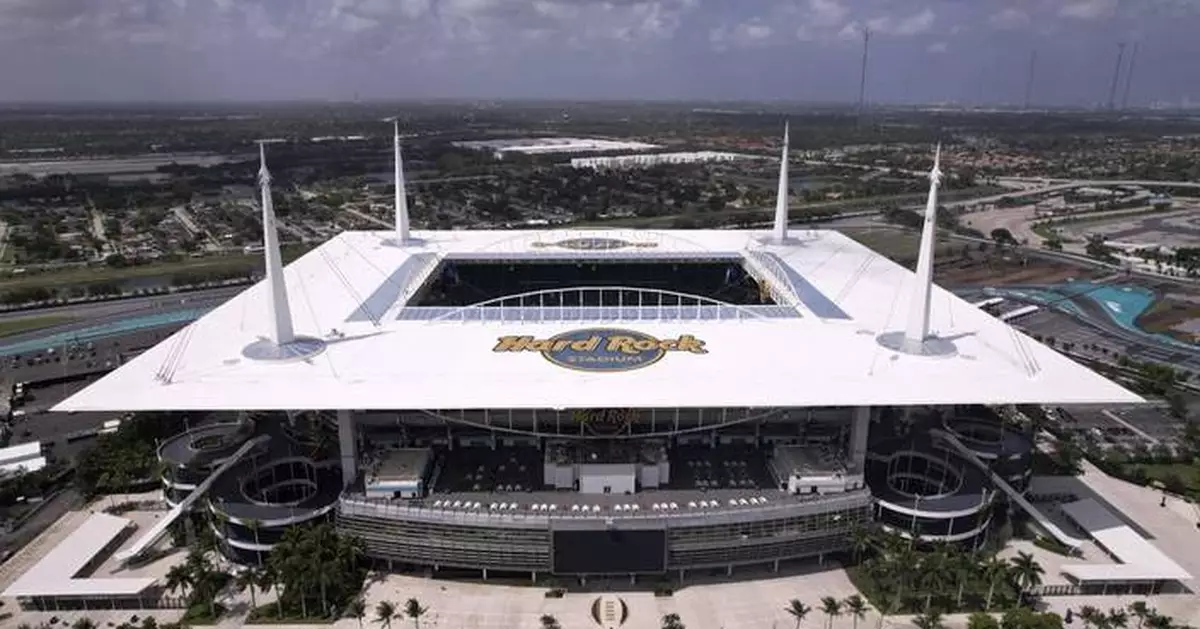
The tournament opens Saturday with Lionel Messi's Inter Miami facing Al Ahly at Florida's Hard Rock Stadium. Thirty-two teams are taking part in the newly expanded tournament that will be played across 11 U.S. cities. The final is set for July 13 at MetLife Stadium in New Jersey.
On Ticketmaster, FIFA’s official ticketing partner for the Club World Cup, the least expensive tickets to the opener were $349 in December. As of Thursday, there were tickets available for just under $80.
Upper deck seats for certain games at Seattle's Lumen Field and Philadelphia's Lincoln Financial Field were no longer available. Links to a smattering of resale tickets in those sections did not work.
A person with knowledge of the situation confirmed to The Associated Press that some sections of Lumen Field in Seattle had been closed, but did not offer details. The person spoke on the condition of anonymity because they were not allowed to speak on the record.
In Philadelphia, some ticketholders received messages that said they were moved.
“As we continue preparations to deliver a world-class event, we are making a few enhancements inside the stadium to optimize operations and ensure the best possible matchday experience for fans, players and the global broadcast audience," the message said. “As a result of these stadium optimizations, some seats, including yours, will be relocated. We want to ensure you that your new seat will be in the same or better value zone than your original one.”
Ticketmaster used dynamic pricing for ticket sales, which is based on demand and other factors. They referred all questions about sales to FIFA.
FIFA did not respond to questions about whether sections were closed due to slow ticket sales, or whether fans who originally bought tickets in those sections were moved or offered refunds.
But soccer's international governing body did offer a general statement.
“We anticipate great attendances and electric atmospheres at its inaugural edition, with excitement growing with every round of matches and the tournament ultimately standing as the undisputed pinnacle of club world football,” the statement said in part. “The appetite speaks for itself: fans from over 130 countries have already purchased tickets. The top 10 markets are led by the United States, followed by Brazil, Argentina, Mexico, Canada, France, Japan, Switzerland, Germany and Portugal — a clear sign of global anticipation and reach.”
With 32 international teams, there are undoubtedly some clubs that are unfamiliar to American audiences. There are also 63 total matches, meaning not all can occur in prime hours for fans.
Argentine club River Plate is playing Japan's Urawa Red Diamonds at Lumen Field on Tuesday at noon local time ($24 tickets), while a noon game between Brazil's Fluminense and Germany's Borussia Dortmund had tickets available via Ticketmaster for $23.
However, some matches were drawing fans, including Paris Saint-Germain's opener against Atletico Madrid on Sunday at the Rose Bowl, where the least expensive seats were $100.
The least expensive ticket for July's tournament final available through Ticketmaster was $769.
FIFA President Gianni Infantino urged fans to buy tickets at a hype event in the leadup to the tournament this week.
“Be part of history,” he said. “Football is such an important sport all over the world. We have billions of people watching this Club World Cup from home who would love to club and to attend."
AP soccer: https://apnews.com/hub/soccer
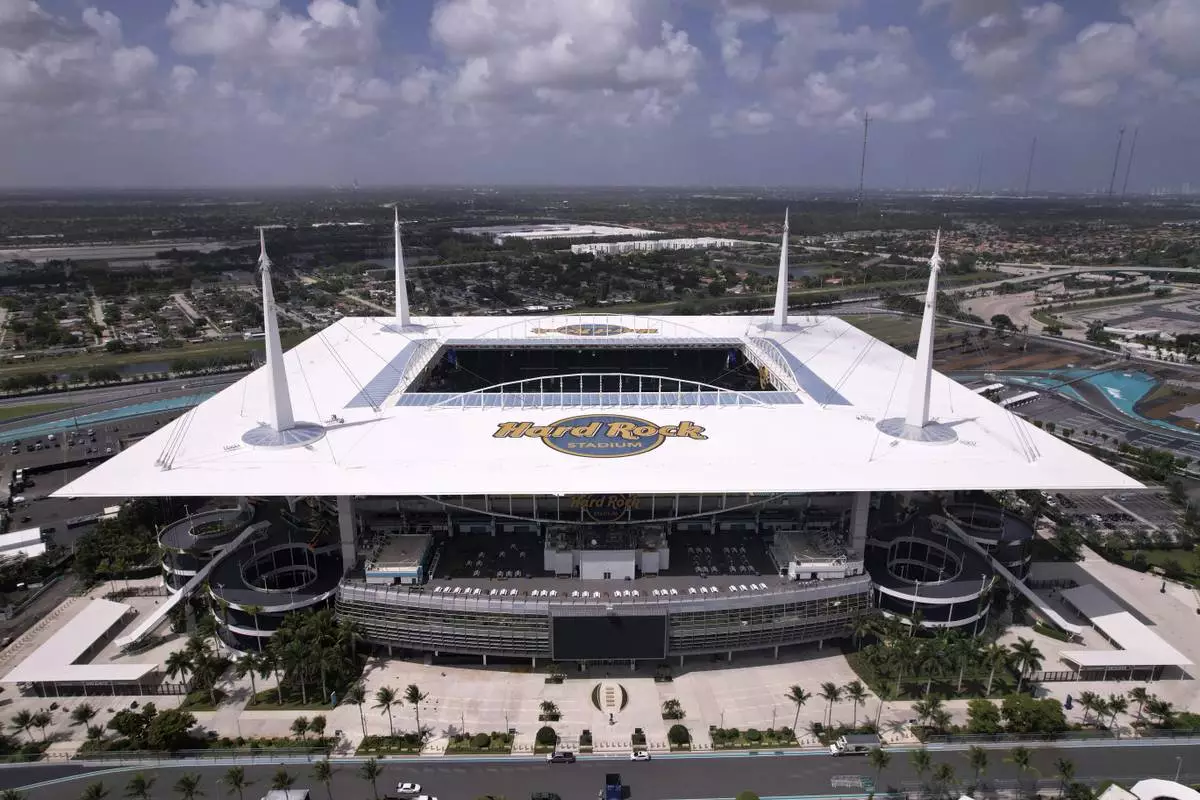
Hard Rock Stadium is viewed two days ahead of the scheduled opening match of the Club World Cup soccer tournament Thursday, June 12, 2025, in Miami Gardens, Fla. (AP Photo/Rebecca Blackwell)
WASHINGTON (AP) — President Donald Trump is meeting with oil executives at the White House on Friday in hopes of securing $100 billion in investments to revive Venezuela’s ability to fully tap into its expansive reserves of petroleum — a plan that rides on their comfort in making commitments in a country plagued by instability, inflation and uncertainty.
Since the U.S. military raid to capture former Venezuelan leader Nicolás Maduro on Saturday, Trump has quickly pivoted to portraying the move as a newfound economic opportunity for the U.S., seizing tankers carrying Venezuelan oil, saying the U.S. is taking over the sales of 30 million to 50 million barrels of previously sanctioned Venezuelan oil and will be controlling sales worldwide indefinitely.
On Friday, U.S. forces seized their fifth tanker over the past month that has been linked to Venezuelan oil. The action reflected the determination of the U.S. to fully control the exporting, refining and production of Venezuelan petroleum, a sign of the Trump administration's plans for ongoing involvement in the sector as it seeks commitments from private companies.
It's all part of a broader push by Trump to keep gasoline prices low. At a time when many Americans are concerned about affordability, the incursion in Venezuela melds Trump’s assertive use of presidential powers with an optical spectacle meant to convince Americans that he can bring down energy prices.
The meeting, set for 2:30 p.m. EST, will be open to the news media, according to an update to the president's daily schedule. “At least 100 Billion Dollars will be invested by BIG OIL, all of whom I will be meeting with today at The White House,” Trump said Friday in a pre-dawn social media post.
Trump is set to meet with executives from 17 oil companies, according to the White House. Among the companies attending are Chevron, which still operates in Venezuela, and ExxonMobil and ConocoPhillips, which both had oil projects in the country that were lost as part of a 2007 nationalization of private businesses under Maduro’s predecessor, Hugo Chávez.
The president is meeting with a wide swath of domestic and international companies with interests ranging from construction to the commodity markets. Other companies slated to be at the meeting include Halliburton, Valero, Marathon, Shell, Singapore-based Trafigura, Italy-based Eni and Spain-based Repsol.
Large U.S. oil companies have so far largely refrained from affirming investments in Venezuela as contracts and guarantees need to be in place. Trump has suggested on social media that America would help to backstop any investments.
Venezuela’s oil production has slumped below one million barrels a day. Part of Trump's challenge to turn that around will be to convince oil companies that his administration has a stable relationship with Venezuela’s interim President Delcy Rodríguez, as well as protections for companies entering the market.
Secretary of State Marco Rubio, Energy Secretary Chris Wright and Interior Secretary Doug Burgum are slated to attend the oil executives meeting, according to the White House.
Meanwhile, the United States and Venezuelan governments said Friday they were exploring the possibility of r estoring diplomatic relations between the two countries, and that a delegation from the Trump administration arrived to the South American nation on Friday.
The small team of U.S. diplomats and diplomatic security officials traveled to Venezuela to make a preliminary assessment about the potential re-opening of the U.S. Embassy in Caracas, the State Department said in a statement.
Trump also announced on Friday he’d meet with President Gustavo Petro in early February, but called on the Colombian leader to make quick progress on stemming flow of cocaine into the U.S.
Trump, following the ouster of Maduro, had made vague threats to take similar action against Petro. Trump abruptly changed his tone Wednesday about his Colombian counterpart after a friendly phone call in which he invited Petro to visit the White House.
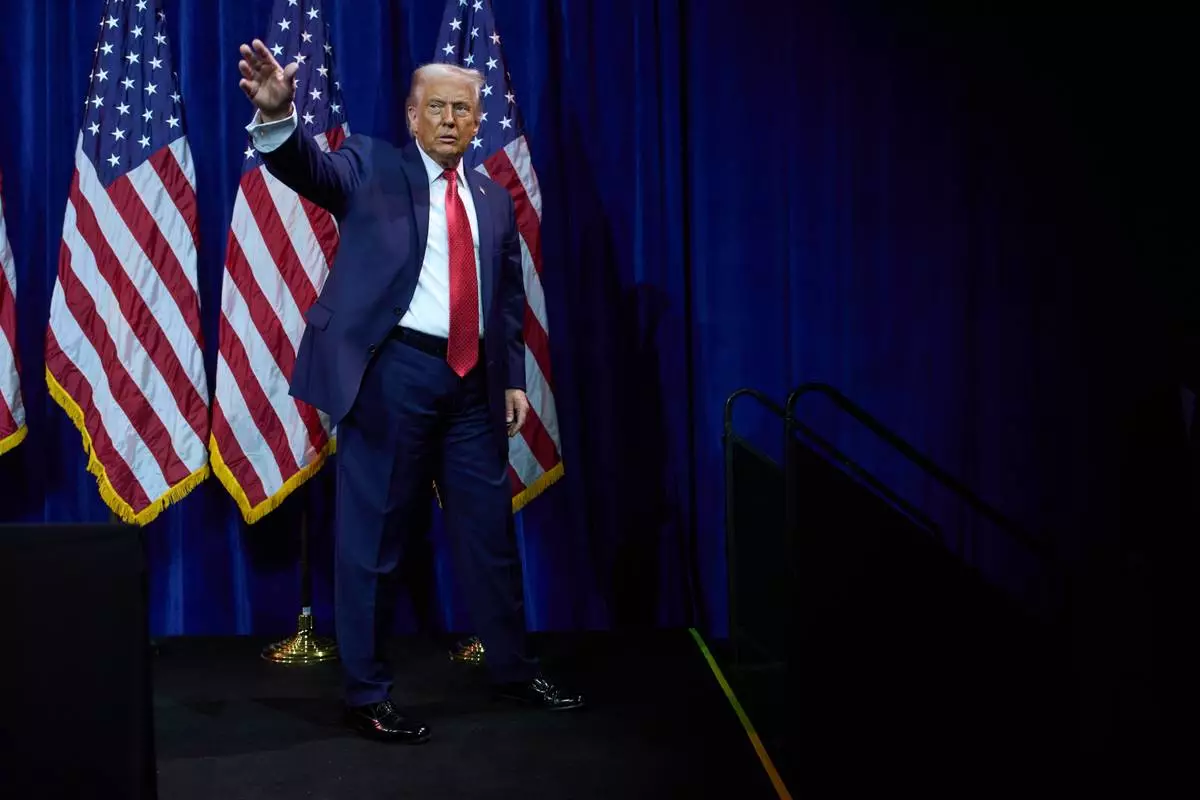
President Donald Trump waves as he walks off stage after speaking to House Republican lawmakers during their annual policy retreat, Tuesday, Jan. 6, 2026, in Washington. (AP Photo/Evan Vucci)