
Skip to Content Facebook Feature Image

Cizzle Brands Corporation Releases its Fiscal Q3 2025 Results, Reflecting Net Sales Growth of Over 25% for the Quarter

News

Cizzle Brands Corporation Releases its Fiscal Q3 2025 Results, Reflecting Net Sales Growth of Over 25% for the Quarter
News

News

Cizzle Brands Corporation Releases its Fiscal Q3 2025 Results, Reflecting Net Sales Growth of Over 25% for the Quarter

2025-06-13 19:48 Last Updated At:20:01

TORONTO--(BUSINESS WIRE)--Jun 13, 2025--

Cizzle Brands Corporation (Cboe Canada: CZZL) (OTCQB: CZZLF) (Frankfurt: 8YF) ( the “Company” or “Cizzle Brands”), has released its financial results for the third quarter of its 2025 fiscal year (three months ended April 30, 2025, referred to herein as “ FQ3 2025 ”).

This press release features multimedia. View the full release here: https://www.businesswire.com/news/home/20250613551279/en/

Key highlights from Cizzle Brands’ FQ3 2025 results include the following (all figures are in Canadian Dollars unless otherwise specified):

Please refer to Cizzle Brands’ profile on SEDAR+ ( http://www.sedarplus.ca/ ) to view the Company’s full FQ3 2025 financial statements, as well as its corresponding Management Discussion and Analysis (“ MD&A ”).

Notable developments for Cizzle Brands during its FQ3 2025 period are summarized below.

Corporate Updates

In addition to release of the FQ3 2025 Financial Statements, Cizzle announced today that it has filed with the securities regulatory authorities in Ontario, British Columbia, and Alberta a notice of intention to be qualified to file a short form prospectus under National Instrument 44-101 – Short Form Prospectus Distributions, and an Annual Information Form. The filings qualify Cizzle Brands as a short-form prospectus filer but do not evidence its intent to file a short form prospectus, to enter into any particular financing or transaction or to become a reporting issuer in any jurisdiction.

The Company also continues to evaluate a range of strategic alternatives to drive growth and maximize shareholder value as part of its ongoing review. Management is considering options to ensure each business unit is well-positioned, properly resourced, and focused on long-term value creation. Potential actions may include refining the Company’s business strategy, focusing on specific products, markets, or partners; asset or business unit transactions; strategic investments; partnerships or joint ventures; or changes to capital structure and allocation. There is no assurance that this process will result in any specific action or transaction, or regarding the timing or outcome if one does occur.

Cizzle Brands’ Founder, Chairman, and Chief Executive Officer John Celenza commented, “With the completion of Cizzle Brands’ FQ3 2025, it is amazing to consider how much our team accomplished in under one calendar year. While many early-stage sports nutrition companies struggle to drive awareness, our disciplined approach has enabled us to be taken on by several leading Canadian retailers, in addition to Van Houtte Coffee Services Inc., a subsidiary of Keurig Dr Pepper Canada, and leading U.S. organizations such as USA Hockey and LifeTime. These accomplishments have generated quantifiable results, anchored by over CAD $9.2 million in net sales fiscal year-to-date with a gross margin of 57%, and over 3,000 locations carrying CWENCH Hydration products across North America and Europe. This is only the beginning, and on behalf of the Cizzle Brands team we are grateful to all of our investors, partners, and stakeholders who have contributed to the Company’s phenomenal performance in its early stages.”

About Cizzle Brands Corporation

Cizzle Brands Corporation is a sports nutrition company that is elevating the game in health and wellness. Through extensive collaboration and testing with leading athletes and trainers across several elite sports, Cizzle Brands has launched two leading product lines in the sports nutrition category: (i) CWENCH Hydration™, a better-for-you sports drink that is now carried in over 3,000 locations in Canada, the United States, and Europe; and (ii) SPOKEN™ Nutrition, a premium brand of athlete-grade nutraceuticals that carry the prestigious NSF Certified for Sport® qualification. All Cizzle Brands products are designed to help people achieve their best in both competitive sports and in living a healthy, vibrant, active lifestyle.

For more information about Cizzle Brands, please visit: https://www.cizzlebrands.com/

For more information about CWENCH Hydration™, please visit: https://www.cwenchhydration.com

For more information about SPOKEN™ Nutrition, please visit: https://www.spokennutrition.com

On behalf of the Board of Directors of the Company,

CIZZLE BRANDS CORPORATION

“John Celenza”

John Celenza, Founder, Chairman, and Chief Executive Officer

CAUTIONARY NOTE REGARDING FORWARD-LOOKING INFORMATION

This news release contains "forward-looking information" which may include, but is not limited to, information with respect to the activities, events or developments that the Company expects or anticipates will or may occur in the future, such as, but not limited to: new products of the Company and potential sales and distribution opportunities. Such forward-looking information is often, but not always, identified by the use of words and phrases such as "plans", "expects", "is expected", "budget", "scheduled", "estimates", "forecasts", "intends", "anticipates", or "believes" or variations (including negative variations) of such words and phrases, or state that certain actions, events or results "may", "could", "would", "might" or "will" be taken, occur or be achieved. Various assumptions or factors are typically applied in drawing conclusions or making the forecasts or projections set out in forward-looking information. Those assumptions and factors are based on information currently available to the Company.

Forward looking information involves known and unknown risks, uncertainties and other risk factors which may cause the actual results, performance or achievements to be materially different from any future results, performance or achievements expressed or implied by the forward-looking information. Such risks include risks related to increased competition and current global financial conditions, access and supply risks, reliance on key personnel, operational risks, regulatory risks, financing, capitalization and liquidity risks. Although the Company has attempted to identify important factors that could cause actual results to differ materially from those contained in forward-looking information, there may be other factors that cause results not to be as anticipated, estimated or intended. There can be no assurance that such information will prove to be accurate, as actual results and future events could differ materially from those anticipated in such statements. Accordingly, readers should not place undue reliance on forward-looking information. The Company undertakes no obligation, except as otherwise required by law, to update these forward-looking statements if management's beliefs, estimates or opinions, or other factors change.
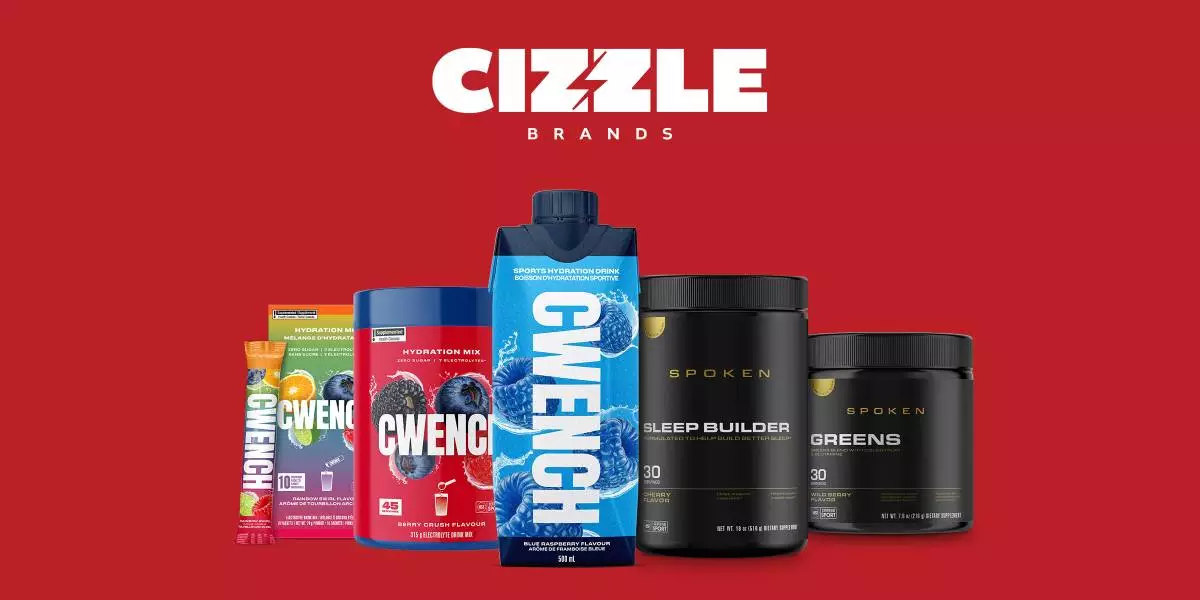
Cizzle Brands Corporation released its Fiscal Q3 2025 financial results, demonstrating strong revenue QoQ revenue growth for the quarter along with strong gross margin.


Cizzle Brands Corporation released its Fiscal Q3 2025 financial results, demonstrating strong revenue QoQ revenue growth for the quarter along with strong gross margin.

NEW YORK (AP) — Reviving a campaign pledge, President Donald Trump wants a one-year, 10% cap on credit card interest rates, a move that could save Americans tens of billions of dollars but drew immediate opposition from an industry that has been in his corner.

Trump was not clear in his social media post Friday night whether a cap might take effect through executive action or legislation, though one Republican senator said he had spoken with the president and would work on a bill with his “full support.” Trump said he hoped it would be in place Jan. 20, one year after he took office.

Strong opposition is certain from Wall Street in addition to the credit card companies, which donated heavily to his 2024 campaign and have supported Trump's second-term agenda. Banks are making the argument that such a plan would most hurt poor people, at a time of economic concern, by curtailing or eliminating credit lines, driving them to high-cost alternatives like payday loans or pawnshops.

“We will no longer let the American Public be ripped off by Credit Card Companies that are charging Interest Rates of 20 to 30%,” Trump wrote on his Truth Social platform.

Researchers who studied Trump’s campaign pledge after it was first announced found that Americans would save roughly $100 billion in interest a year if credit card rates were capped at 10%. The same researchers found that while the credit card industry would take a major hit, it would still be profitable, although credit card rewards and other perks might be scaled back.

About 195 million people in the United States had credit cards in 2024 and were assessed $160 billion in interest charges, the Consumer Financial Protection Bureau says. Americans are now carrying more credit card debt than ever, to the tune of about $1.23 trillion, according to figures from the New York Federal Reserve for the third quarter last year.

Further, Americans are paying, on average, between 19.65% and 21.5% in interest on credit cards according to the Federal Reserve and other industry tracking sources. That has come down in the past year as the central bank lowered benchmark rates, but is near the highs since federal regulators started tracking credit card rates in the mid-1990s. That’s significantly higher than a decade ago, when the average credit card interest rate was roughly 12%.

The Republican administration has proved particularly friendly until now to the credit card industry.

Capital One got little resistance from the White House when it finalized its purchase and merger with Discover Financial in early 2025, a deal that created the nation’s largest credit card company. The Consumer Financial Protection Bureau, which is largely tasked with going after credit card companies for alleged wrongdoing, has been largely nonfunctional since Trump took office.

In a joint statement, the banking industry was opposed to Trump's proposal.

“If enacted, this cap would only drive consumers toward less regulated, more costly alternatives," the American Bankers Association and allied groups said.

Bank lobbyists have long argued that lowering interest rates on their credit card products would require the banks to lend less to high-risk borrowers. When Congress enacted a cap on the fee that stores pay large banks when customers use a debit card, banks responded by removing all rewards and perks from those cards. Debit card rewards only recently have trickled back into consumers' hands. For example, United Airlines now has a debit card that gives miles with purchases.

The U.S. already places interest rate caps on some financial products and for some demographics. The Military Lending Act makes it illegal to charge active-duty service members more than 36% for any financial product. The national regulator for credit unions has capped interest rates on credit union credit cards at 18%.

Credit card companies earn three streams of revenue from their products: fees charged to merchants, fees charged to customers and the interest charged on balances. The argument from some researchers and left-leaning policymakers is that the banks earn enough revenue from merchants to keep them profitable if interest rates were capped.

"A 10% credit card interest cap would save Americans $100 billion a year without causing massive account closures, as banks claim. That’s because the few large banks that dominate the credit card market are making absolutely massive profits on customers at all income levels," said Brian Shearer, director of competition and regulatory policy at the Vanderbilt Policy Accelerator, who wrote the research on the industry's impact of Trump's proposal last year.

There are some historic examples that interest rate caps do cut off the less creditworthy to financial products because banks are not able to price risk correctly. Arkansas has a strictly enforced interest rate cap of 17% and evidence points to the poor and less creditworthy being cut out of consumer credit markets in the state. Shearer's research showed that an interest rate cap of 10% would likely result in banks lending less to those with credit scores below 600.

The White House did not respond to questions about how the president seeks to cap the rate or whether he has spoken with credit card companies about the idea.

Sen. Roger Marshall, R-Kan., who said he talked with Trump on Friday night, said the effort is meant to “lower costs for American families and to reign in greedy credit card companies who have been ripping off hardworking Americans for too long."

Legislation in both the House and the Senate would do what Trump is seeking.

Sens. Bernie Sanders, I-Vt., and Josh Hawley, R-Mo., released a plan in February that would immediately cap interest rates at 10% for five years, hoping to use Trump’s campaign promise to build momentum for their measure.

Hours before Trump's post, Sanders said that the president, rather than working to cap interest rates, had taken steps to deregulate big banks that allowed them to charge much higher credit card fees.

Reps. Alexandria Ocasio-Cortez, D-N.Y., and Anna Paulina Luna, R-Fla., have proposed similar legislation. Ocasio-Cortez is a frequent political target of Trump, while Luna is a close ally of the president.

Seung Min Kim reported from West Palm Beach, Fla.

President Donald Trump arrives on Air Force One at Palm Beach International Airport, Friday, Jan. 9, 2025, in West Palm Beach, Fla. (AP Photo/Julia Demaree Nikhinson)

President Donald Trump arrives on Air Force One at Palm Beach International Airport, Friday, Jan. 9, 2025, in West Palm Beach, Fla. (AP Photo/Julia Demaree Nikhinson)

FILE - Visa and Mastercard credit cards are shown in Buffalo Grove, Ill., Feb. 8, 2024. (AP Photo/Nam Y. Huh, File)

FILE - Visa and Mastercard credit cards are shown in Buffalo Grove, Ill., Feb. 8, 2024. (AP Photo/Nam Y. Huh, File)

Recommended Articles