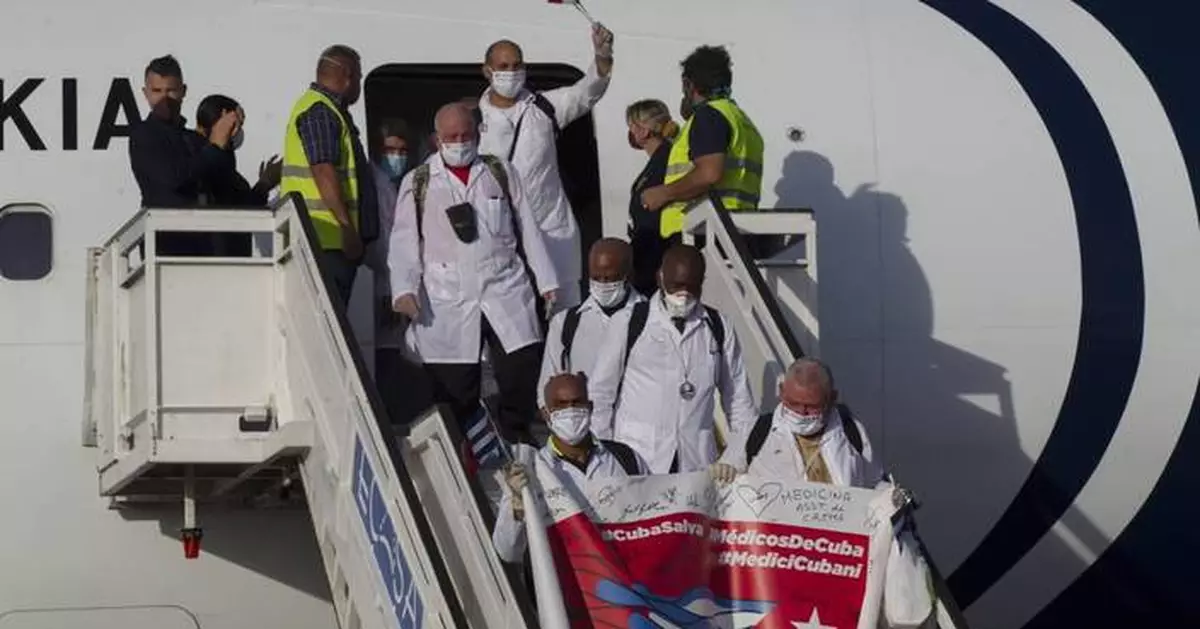
SAN JUAN, Puerto Rico (AP) — An unusual request from the Inter-American Commission on Human Rights about Cuban medical brigades that operate worldwide and provide much needed help has roiled countries in the Caribbean and the Americas.
In a letter obtained by The Associated Press, the commission asks members of the Organization of American States, OAS, for details including whether they have an agreement with Cuba for medical missions, whether those workers have labor and union rights and information about any labor complaints.
“This was an unprecedented move,” said Francesca Emanuele, senior international policy associate at the Center for Economic and Policy Research in Washington. “It’s deeply troubling.”
Cuba has more than 22,000 doctors working in more than 50 countries, including in the Caribbean and the Americas, according to its government. A breakdown for the region was not available, but many impoverished nations in the Caribbean rely heavily on those medical professionals.
The commission, an independent body of the OAS, which is heavily funded by the U.S., said it plans to analyze the data collected as well as offer recommendations “given the persistence of reports of rights violations.”
A spokesperson for the commission declined comment, saying the letter is private.
The letter was sent after U.S. Secretary of State Marco Rubio announced visa restrictions in late February for Cuban or foreign government officials accused of involvement in Cuba’s medical missions, which he called “forced labor.”
“The timing is really suspicious,” Emanuele said, noting that the information requested “falls squarely” within the member states’ sovereign decision-making. “The role of this organization should not be distorted.”
In June, the administration of U.S. President Donald Trump slapped several unidentified officials from Central America with visa restrictions.
Silence has prevailed since the human rights commission issued its May 24 letter giving OAS member states 30 days to respond.
“I’m awaiting a regional approach,” said Ralph Gonsalves, prime minister of St. Vincent and the Grenadines.
He said in a phone interview that he would raise the issue next week during a meeting of the Organization of Eastern Caribbean States as chairman.
“There are no human rights issues involved here,” he said, noting that St. Vincent is party to several international and labor conventions. “They have not been breached and will not be breached.”
Gonsalves said Cuban doctors run the sole hemodialysis center in St. Vincent that provides free care to 64 patients at a rate of $5 million a year.
“Without the Cubans, that dialysis center will close,” he said.
When asked if he worried about potential visa restrictions, Gonsalves said he met earlier this year with Rubio and provided a lengthy letter that he declined to share detailing the work of Cuban medical professionals in St. Vincent.
“We didn’t scrimp on any of the details,” he said. “I didn’t walk away from that meeting thinking that there was any possibility or threat of sanctions.”
Guyana 's foreign minister, Hugh Todd, told The Associated Press on Friday that the government plans to amend its payment and recruitment system involving Cuban medical professionals.
He said their main concern "is to make sure we are compliant with international labor laws.” Todd did not say whether the planned amendments are related to concerns over U.S. visa restrictions.
Late Thursday, Guyanese Vice President Bharrat Jagdeo said the government wants to ensure that "the conditions of work here don’t run afoul of the requirements set by the United States of America.”
Guyana depends heavily on the U.S. for support, especially given an ongoing and bitter border dispute with neighboring Venezuela.
Some Caribbean leaders have said they would risk losing a U.S. visa, noting that Cuban medical professionals provide much needed help in the region.
“If we cannot reach a sensible agreement on this matter...if the cost of it is the loss of my visa to the U.S., then so be it,” Barbados’ Prime Minister Mia Mottley told Parliament in March as legislators pounded a table in support.
No Cuban medical workers are currently in Barbados.
Echoing Mottley’s sentiment was Trinidad and Tobago Prime Minister Keith Rowley.
“I just came back from California, and if I never go back there again in my life, I will ensure that the sovereignty of Trinidad and Tobago is known to its people and respected by all,” he said in March.
In April, Cuban President Miguel Díaz-Canel criticized what he described as a campaign against the Caribbean country.
“There is no doubt that that desperate campaign to block Cuban cooperation has two clear objectives: to close off any avenue of income for the country, even in an activity as noble and necessary to other nations as healthcare services,” he said.
“The other reason is political and ideological: they want to sweep Cuba away as an example. And they resort to methods as immoral as threatening any foreign official involved in that activity,” he added.
Rubio has defended visa restrictions, saying they promote accountability.
Associated Press reporters Bert Wilkinson in Georgetown, Guyana, and Andrea Rodríguez in Havana contributed.
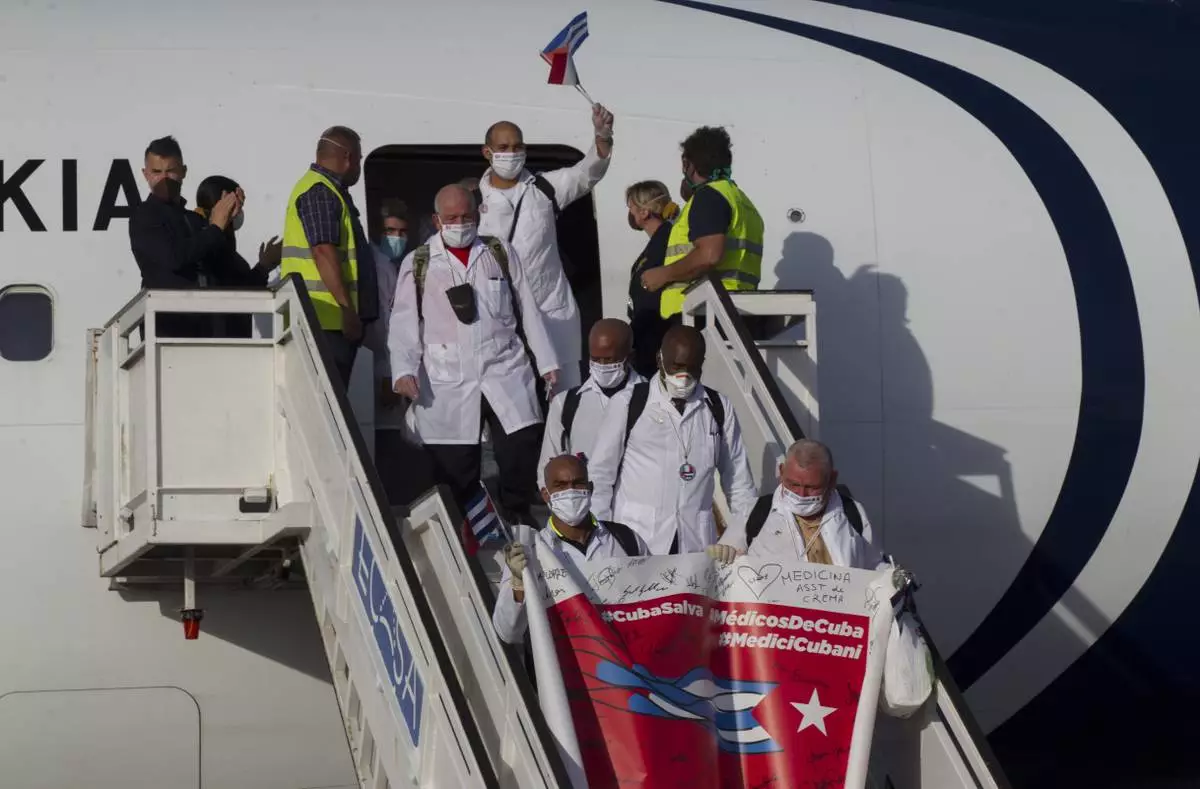
FILE - Cuban doctors arrive at the Jose Marti International Airport in Havana, Cuba, June 8, 2020, after traveling to Italy to help with the COVID-19 emergency response. (Ismael Francisco/Pool via AP, File)
DUBAI, United Arab Emirates (AP) — U.S. President Donald Trump said Iran wants to negotiate with Washington after his threat to strike the Islamic Republic over its bloody crackdown on protesters, a move coming as activists said Monday the death toll in the nationwide demonstrations rose to at least 544.
Iran had no immediate reaction to the news, which came after the foreign minister of Oman — long an interlocutor between Washington and Tehran — traveled to Iran this weekend. It also remains unclear just what Iran could promise, particularly as Trump has set strict demands over its nuclear program and its ballistic missile arsenal, which Tehran insists is crucial for its national defense.
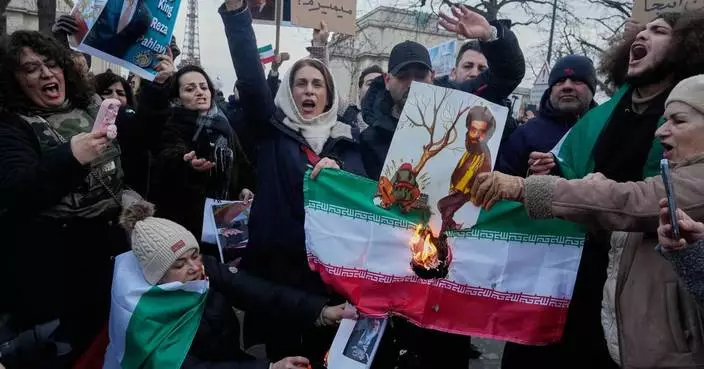
Meanwhile Monday, Iran called for pro-government demonstrators to head to the streets in support of the theocracy, a show of force after days of protests directly challenging the rule of 86-year-old Supreme Leader Ayatollah Ali Khamenei. Iranian state television aired chants from the crowd, who shouted “Death to America!” and “Death to Israel!”
Trump and his national security team have been weighing a range of potential responses against Iran including cyberattacks and direct strikes by the U.S. or Israel, according to two people familiar with internal White House discussions who were not authorized to comment publicly and spoke on condition of anonymity.
“The military is looking at it, and we’re looking at some very strong options,” Trump told reporters on Air Force One on Sunday night. Asked about Iran’s threats of retaliation, he said: “If they do that, we will hit them at levels that they’ve never been hit before.”
Trump said that his administration was in talks to set up a meeting with Tehran, but cautioned that he may have to act first as reports of the death toll in Iran mount and the government continues to arrest protesters.
“I think they’re tired of being beat up by the United States,” Trump said. “Iran wants to negotiate.”
He added: “The meeting is being set up, but we may have to act because of what’s happening before the meeting. But a meeting is being set up. Iran called, they want to negotiate.”
Iran through country's parliamentary speaker warned Sunday that the U.S. military and Israel would be “legitimate targets” if America uses force to protect demonstrators.
More than 10,600 people also have been detained over the two weeks of protests, said the U.S.-based Human Rights Activists News Agency, which has been accurate in previous unrest in recent years and gave the death toll. It relies on supporters in Iran crosschecking information. It said 496 of the dead were protesters and 48 were with security forces.
With the internet down in Iran and phone lines cut off, gauging the demonstrations from abroad has grown more difficult. The Associated Press has been unable to independently assess the toll. Iran’s government has not offered overall casualty figures.
Those abroad fear the information blackout is emboldening hard-liners within Iran’s security services to launch a bloody crackdown. Protesters flooded the streets in the country’s capital and its second-largest city on Saturday night into Sunday morning. Online videos purported to show more demonstrations Sunday night into Monday, with a Tehran official acknowledging them in state media.
In Tehran, a witness told the AP that the streets of the capital empty at the sunset call to prayers each night. By the Isha, or nighttime prayer, the streets are deserted.
Part of that stems from the fear of getting caught in the crackdown. Police sent the public a text message that warned: “Given the presence of terrorist groups and armed individuals in some gatherings last night and their plans to cause death, and the firm decision to not tolerate any appeasement and to deal decisively with the rioters, families are strongly advised to take care of their youth and teenagers.”
Another text, which claimed to come from the intelligence arm of the paramilitary Revolutionary Guard, also directly warned people not to take part in demonstrations.
“Dear parents, in view of the enemy’s plan to increase the level of naked violence and the decision to kill people, ... refrain from being on the streets and gathering in places involved in violence, and inform your children about the consequences of cooperating with terrorist mercenaries, which is an example of treason against the country,” the text warned.
The witness spoke to the AP on condition of anonymity due to the ongoing crackdown.
The demonstrations began Dec. 28 over the collapse of the Iranian rial currency, which trades at over 1.4 million to $1, as the country’s economy is squeezed by international sanctions in part levied over its nuclear program. The protests intensified and grew into calls directly challenging Iran’s theocracy.
Nikhinson reported from aboard Air Force One.
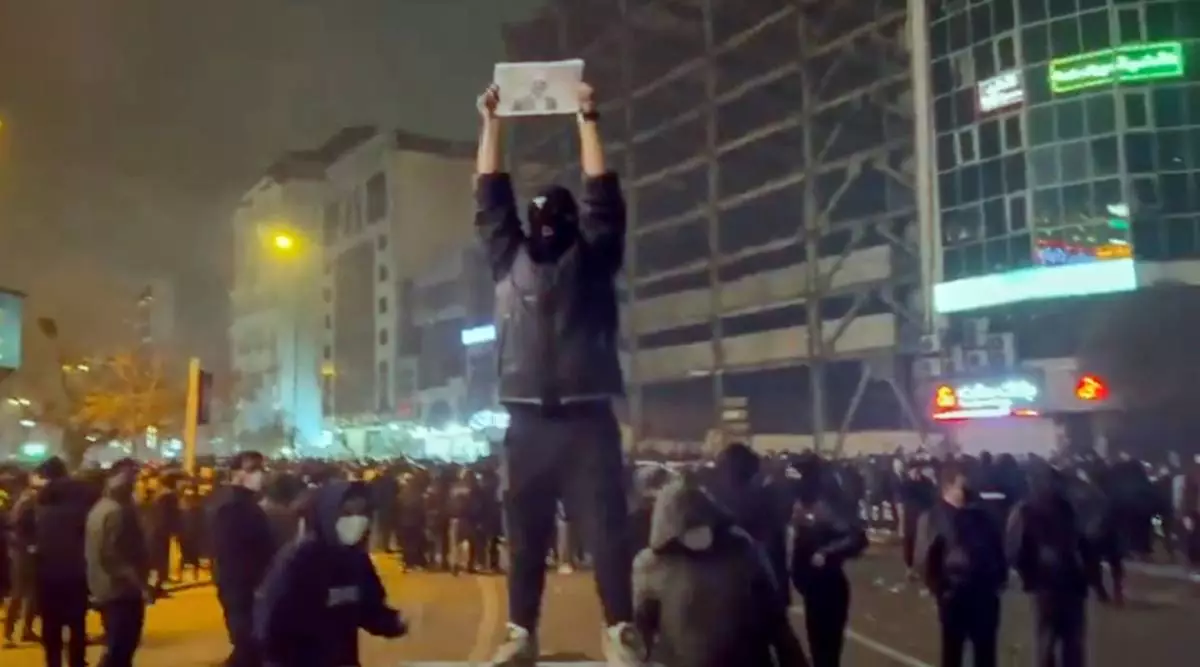
In this frame grab from video obtained by the AP outside Iran, a masked demonstrator holds a picture of Iran's Crown Prince Reza Pahlavi during a protest in Tehran, Iran, Friday, January. 9, 2026. (UGC via AP)
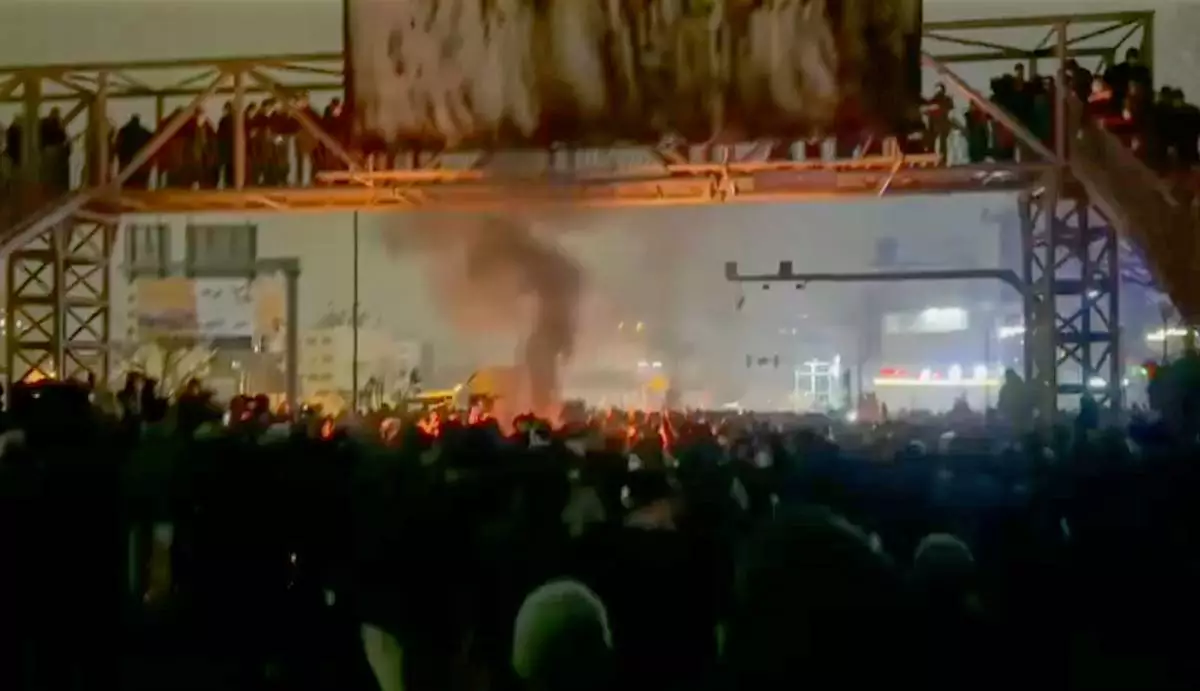
In this frame grab from footage circulating on social media from Iran shows protesters taking to the streets despite an intensifying crackdown as the Islamic Republic remains cut off from the rest of the world in Tehran, Iran, Friday, Jan. 9, 2026.(UGC via AP)
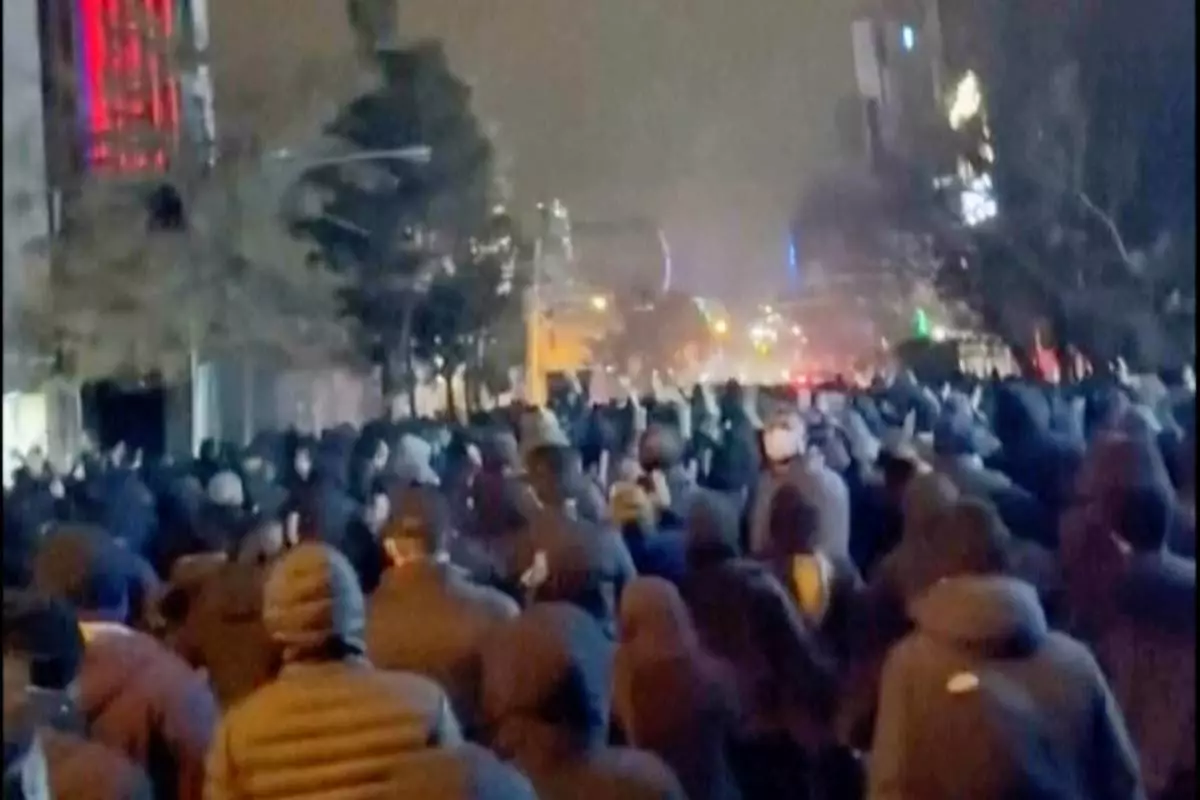
In this frame grab from footage circulating on social media from Iran showed protesters once again taking to the streets of Tehran despite an intensifying crackdown as the Islamic Republic remains cut off from the rest of the world in Tehran, Iran, Saturday Jan. 10, 2026. (UGC via AP)