Skip to Content Facebook Feature Image

Middle East conflict threatens to exacerbate inflationary pressure on some things

Business

Middle East conflict threatens to exacerbate inflationary pressure on some things
Business

Business

Middle East conflict threatens to exacerbate inflationary pressure on some things

2025-06-14 02:31 Last Updated At:02:41

Israel's attack on Iran Friday has catapulted their long-running conflict into what could become a wider, more dangerous regional war and potentially drive prices higher for both businesses and households.

Oil and gold surged and the dollar rose as markets retreated, signaling a flight to investments perceived as more safe.

After years of sky-high inflation in the aftermath of the COVID-19 pandemic, Americans have become increasingly leery about the economy this year due to President Donald Trump's sweeping tariffs, though the impact so far has been muted.

The latest escalation in the Middle East has the potential to cause widespread price increases that could set consumers back again.

Here's a look at some of the sectors that could face an outsized impact from the escalation in the Middle East, and what that might mean for consumers.

Oil prices surged Friday to their biggest gain since the onset of Russia's war on Ukraine began more than three years ago. If or when Israel's attack on Iran could impact gas prices, which have been in decline for nearly a year, isn't entirely clear.

Iran is one of the world’s major producers of oil, though sanctions by Western countries have limited its sales. If a wider war erupts, it could significantly slow or stop the flow of Iran’s oil to its customers. Energy prices have been held in check this year because production has remained relatively high, and demand for it low. A widening conflict could tilt that balance.

“The loss of this export supply would wipe out the surplus that was expected in the fourth quarter of this year,” analysts for ING wrote in a note to clients.

In the past, conflicts in the Middle East have sent energy price soaring for extended periods but in recent years, because of the huge supply of oil, those spikes have been more fleeting.

Earlier this month, the countries in the OPEC+ alliance decided to increase production again, which often pushes crude prices down. They hit a four-year low in early May. That usually means cheaper gas, of which there is currently a surplus.

According to the auto club organization AAA, the average price for a gallon of gas in the U.S. on Friday was $3.13 per gallon, down from $3.46 a year ago.

Shipping costs were already on the rise for a number of reasons. Cargo is being rerouted around the Red Sea where the U.S. began conducting air strikes on Yemen’s Houthis, the Iran-backed rebels who were attacking ships on what is a vital global trade route. And this year, companies have scrambled to import as many goods as possible before Trump’s tariffs kicked in, pushing demand, and prices to ship, higher.

The Baltic Dry Index, a key indicator of dry bulk shipping demand that tacks the movement of coal, iron ore, grains and more, is hitting eight-month highs.

The window for companies seeking to ship goods before the year's end is coming to a close this month. A widening conflict in the Middle East would only drive prices higher as those companies jostle to get goods from overseas as geopolitical tensions in the region rise.

Shares of ocean shipping companies like Teekay and Frontline rose sharply following Israel's attack.

Higher energy prices can lead to elevated costs for a wide range of products because just about everything is made and transported using oil or natural gas.

Government data this week revealed that Trump's tariffs have yet to cause a broader rise in inflation. Still, many companies have announced price hikes due to the tariffs. Walmart has already raised prices on some goods and said it will do so again as the back-to-school shopping season begins. J.M. Smucker, largely due to the impact of tariffs on coffee from Brazil and Vietnam, said it's also raised prices and will do so again. Combined with the higher shipping and production costs that could result from the escalated Middle East conflict, prices will almost certainly rise further, analysts say.

“Inventory buffers may have allowed firms to put off decisions about raising prices, but that won’t be the case for much longer,” the ING analysts said. “We expect to see bigger spikes in the month-on-month inflation figures through the summer,” they added, noting that The Fed’s recent Beige Book cited widespread reports of aggressive price hikes already in the pipeline.

Federal Reserve officials meet next week to make their next interest rate decision, and the vast majority of economists still think the U.S. central bank will leave its benchmark rate where it is for the fourth straight time. The Fed has been juggling its dual mandate of supporting the labor market while keeping inflation at bay. That goal may become increasingly difficult to achieve if prices for gas, food and other essential rise due to the Israel-Iran conflict.

If prices go up, Fed officials may be inclined to raise its benchmark rate, raising borrowing costs for businesses and consumers. That could lead to businesses to cut jobs, particularly in the high-growth tech sector, and force Americans to pull back on spending, which drives more than 70% of economic activity in the U.S.

Shares of tech companies and retailers were among the biggest decliners Friday.

Perhaps contrary to conventional wisdom, one cascading effect of the heightened Middle East tension may be that the cost of traveling, even if fuel prices rise, will come down.

Airlines have been downgrading their travel forecasts as businesses and families tighten their travel budgets in anticipation of tariff-related price hikes. Several major air disasters also have made some wary of getting on a plane.

Most major U.S. airlines have said they plan to reduce their scheduled domestic flights this summer, citing an ebb in economy passengers booking leisure trips. Last month, Bank of America reported that its credit card customers were spending less on flights and lodging.

And because of the Trump tariff wars, the dollar has fallen almost 10% this year when measured against a basket of foreign currencies, making it more expensive for Americans to travel abroad due to unfavorable exchange rates.

On Friday, shares of major U.S. airlines were in sharp retreat.

The flight information board at Israel's Ben Gurion Airport shows flight cancellations following an Israeli military strike on Iran, near Tel Aviv, Israel, Friday, June 13, 2025. (AP Photo/Ariel Schalit)
The flight information board at Israel's Ben Gurion Airport shows flight cancellations following an Israeli military strike on Iran, near Tel Aviv, Israel, Friday, June 13, 2025. (AP Photo/Ariel Schalit)

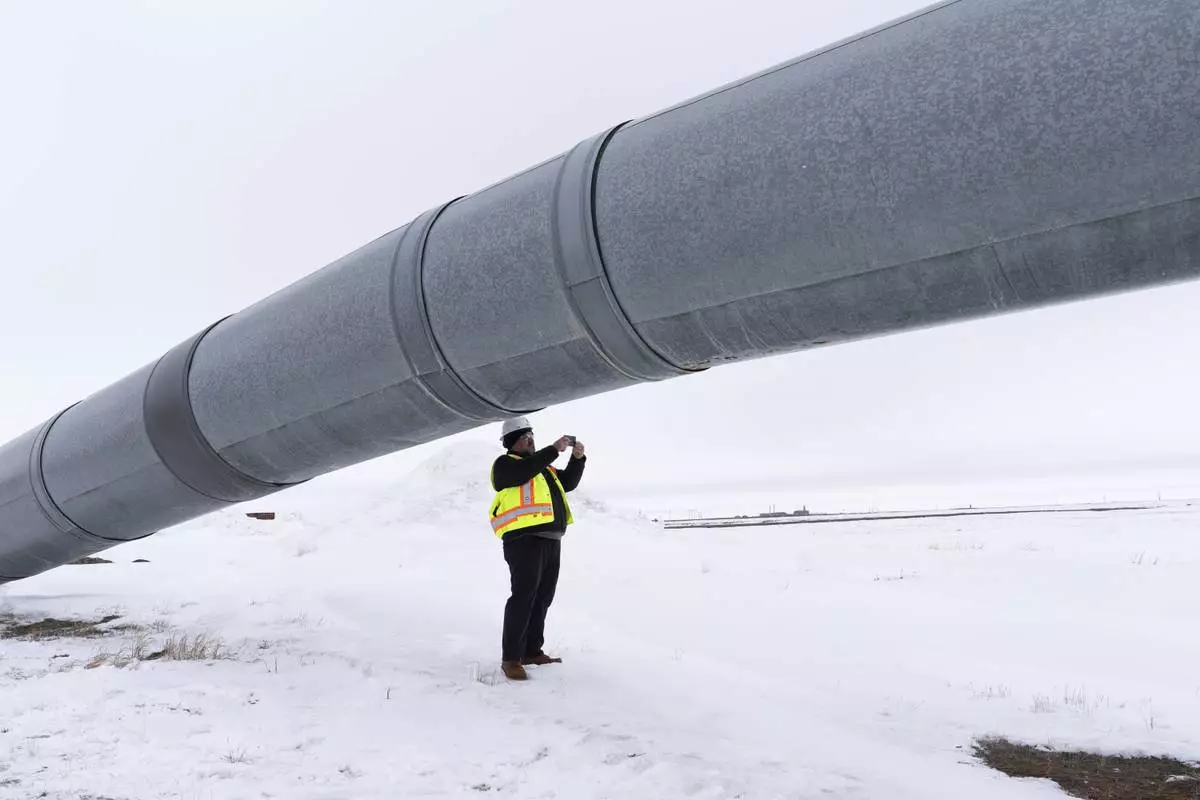
A worker takes a photo under the start of the Trans-Alaska Pipeline after a news conference at the Pump Station 1 on Monday, June 2, 2025, located near Deadhorse, Alaska, on the state's prodigious North Slope. (AP Photo/Jenny Kane)
A worker takes a photo under the start of the Trans-Alaska Pipeline after a news conference at the Pump Station 1 on Monday, June 2, 2025, located near Deadhorse, Alaska, on the state's prodigious North Slope. (AP Photo/Jenny Kane)

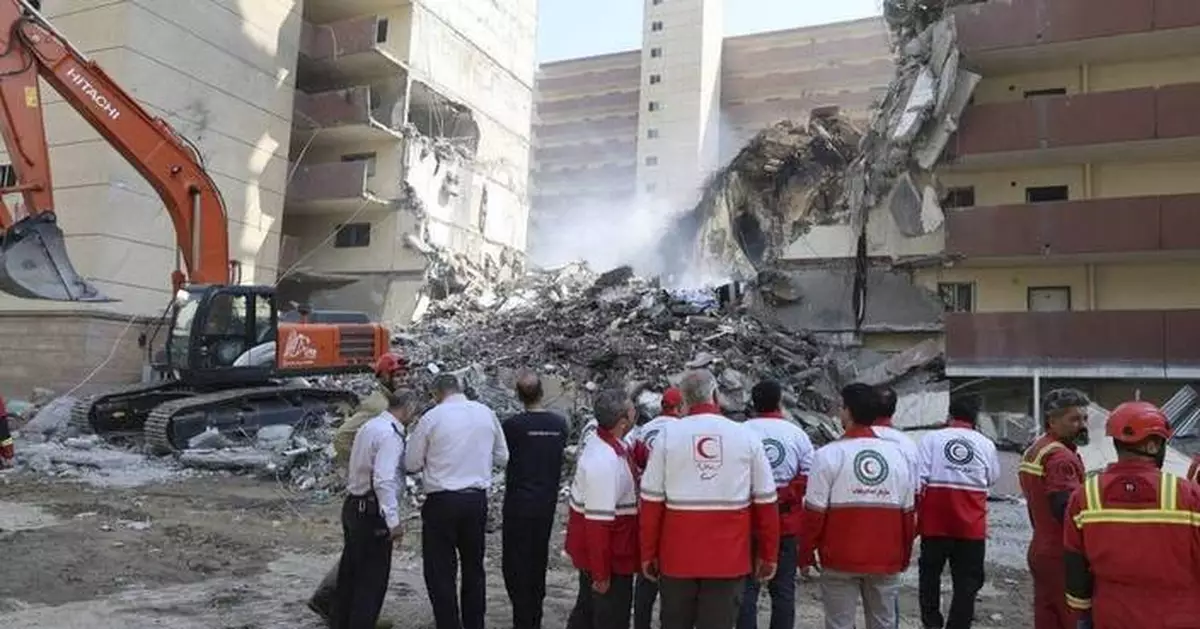
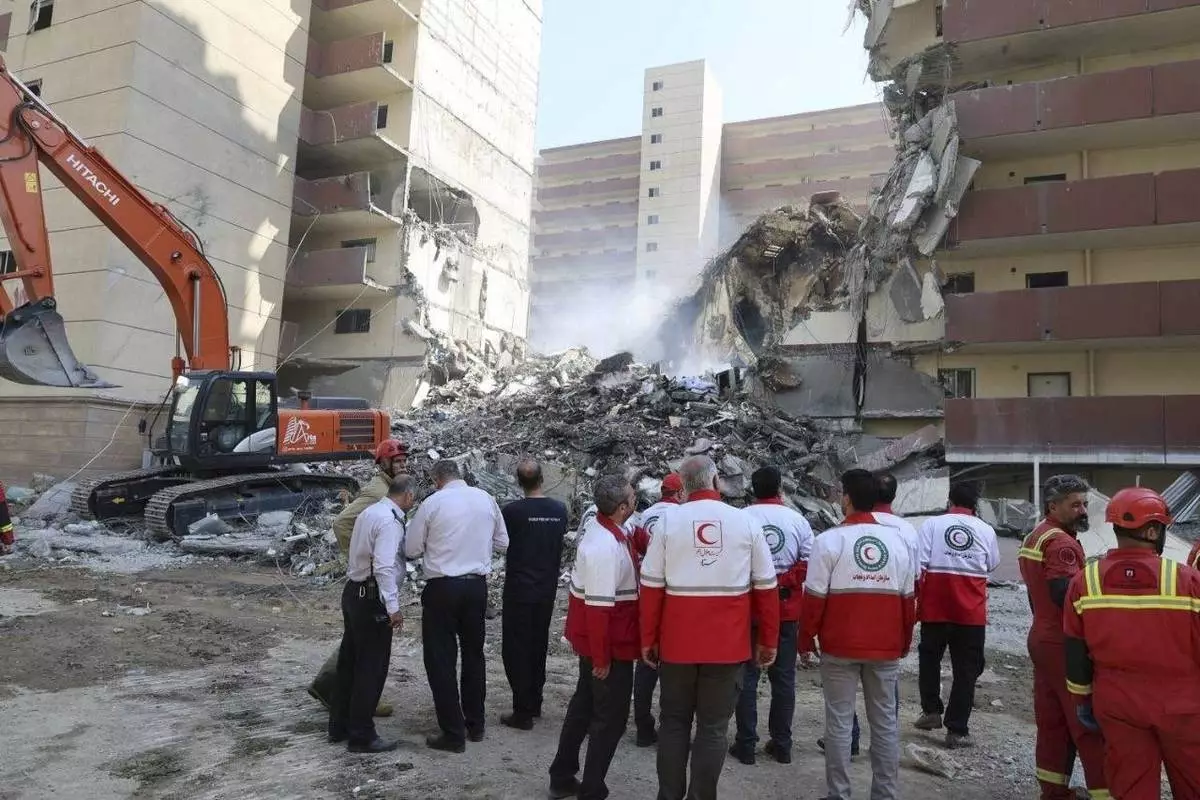
In this photo released by the Iranian Red Crescent Society rescuers work at the scene of an explosion after an Israeli strike in Tehran, Iran, Friday, June 13, 2025. (Iranian Red Crescent Society via AP)


In this photo released by the Iranian Red Crescent Society rescuers work at the scene of an explosion after an Israeli strike in Tehran, Iran, Friday, June 13, 2025. (Iranian Red Crescent Society via AP)

U.S. forces have boarded another oil tanker in the Caribbean Sea. The announcement was made Friday by the U.S. military. The Trump administration has been targeting sanctioned tankers traveling to and from Venezuela.

The pre-dawn action was carried out by U.S. Marines and Navy, taking part in the monthslong buildup of forces in the Caribbean, according to U.S. Southern Command, which declared “there is no safe haven for criminals” as it announced the seizure of the vessel called the Olina.

Navy officials couldn’t immediately provide details about whether the Coast Guard was part of the force that took control of the vessel as has been the case in the previous seizures. A spokesperson for the U.S. Coast Guard said there was no immediate comment on the seizure.

The Olina is the fifth tanker that has been seized by U.S. forces as part of a broader effort by Trump’s administration to control the distribution of Venezuela’s oil products globally following the U.S. ouster of President Nicolás Maduro in a surprise nighttime raid.

The latest:

Richard Grenell, president of the Kennedy Center, says a documentary film about first lady Melania Trump will make its premiere later this month, posting a trailer on X.

As the Trumps prepared to return to the White House last year, Amazon Prime Video announced a year ago that it had obtained exclusive licensing rights for a streaming and theatrical release directed by Brett Ratner.

Melania Trump also released a self-titled memoir in late 2024.

Some artists have canceled scheduled Kennedy Center performances after a newly installed board voted to add President Donald Trump’s to the facility, prompting Grenell to accuse the performers of making their decisions because of politics.

Mexico President Claudia Sheinbaum says that she has asked her foreign affairs secretary to reach out directly to U.S. Secretary of State Marco Rubio or Trump regarding comments by the American leader that the U.S. cold begin ground attacks against drug cartels.

In a wide-ranging interview with Fox News aired Thursday night, Trump said, “We’ve knocked out 97% of the drugs coming in by water and we are going to start now hitting land, with regard to the cartels. The cartels are running Mexico. It’s very sad to watch.”

As she has on previous occasions, Sheinbaum downplayed the remarks, saying “it is part of his way of communicating.” She said she asked her Foreign Affairs Secretary Juan Ramón de la Fuente to strengthen coordination with the U.S.

Sheinbaum has repeatedly rebuffed Trump’s offer to send U.S. troops after Mexican drug cartels. She emphasizes that there will be no violation of Mexico’s sovereignty, but the two governments will continue to collaborate closely.

Analysts do not see a U.S. incursion in Mexico as a real possibility, in part because Sheinbaum’s administration has been doing nearly everything Trump has asked and Mexico is a critical trade partner.

Trump says he wants to secure $100 billion to remake Venezuela’s oil infrastructure, a lofty goal going into a 2:30 meeting on Friday with executives from leading oil companies. His plan rides on oil producers being comfortable in making commitments in a country plagued by instability, inflation and uncertainty.

The president has said that the U.S. will control distribution worldwide of Venezuela’s oil and will share some of the proceeds with the country’s population from accounts that it controls.

“At least 100 Billion Dollars will be invested by BIG OIL, all of whom I will be meeting with today at The White House,” Trump said Friday in a pre-dawn social media post.

Trump is banking on the idea that he can tap more of Venezuela’s petroleum reserves to keep oil prices and gasoline costs low.

At a time when many Americans are concerned about affordability, the incursion in Venezuela melds Trump’s assertive use of presidential powers with an optical spectacle meant to convince Americans that he can bring down energy prices.

Trump is expected to meet with oil executives at the White House on Friday.

He hopes to secure $100 billion in investments to revive Venezuela’s oil industry. The goal rides on the executives’ comfort with investing in a country facing instability and inflation.

Since a U.S. military raid captured former Venezuelan leader Nicolás Maduro on Saturday, Trump has said there’s a new opportunity to use the country’s oil to keep gasoline prices low.

The full list of executives invited to the meeting has not been disclosed, but Chevron, ExxonMobil and ConocoPhillips are expected to attend.

Attorneys general in five Democratic-led states have filed a lawsuit against President Donald Trump’s administration after it said it would freeze money for several public benefit programs.

The Trump administration has cited concerns about fraud in the programs designed to help low-income families and their children. California, Colorado, Minnesota, Illinois and New York states filed the lawsuit Thursday in the U.S. District Court for the Southern District of New York.

The lawsuit asks the courts to order the administration to release the funds. The attorneys general have called the funding freeze an unconstitutional abuse of power.

Iran’s judiciary chief has vowed decisive punishment for protesters, signaling a coming crackdown against demonstrations.

Iranian state television reported the comments from Gholamhossein Mohseni-Ejei on Friday. They came after Supreme Leader Ayatollah Ali Khamenei criticized Trump’s support for the protesters, calling Trump’s hands “stained with the blood of Iranians.”

The government has shut down the internet and is blocking international calls. State media has labeled the demonstrators as “terrorists.”

The protests began over Iran’s struggling economy and have become a significant challenge to the government. Violence has killed at least 50 people, and more than 2,270 have been detained.

Trump questions why a president’s party often loses in midterm elections and suggests voters “want, maybe a check or something”

Trump suggested voters want to check a president’s power and that’s why they often deliver wins for an opposing party in midterm elections, which he’s facing this year.

“There’s something down, deep psychologically with the voters that they want, maybe a check or something. I don’t know what it is, exactly,” he said.

He said that one would expect that after winning an election and having “a great, successful presidency, it would be an automatic win, but it’s never been a win.”

Hiring likely remained subdued last month as many companies have sought to avoid expanding their workforces, though the job gains may be enough to bring down the unemployment rate.

December’s jobs report, to be released Friday, is likely to show that employers added a modest 55,000 jobs, economists forecast. That figure would be below November’s 64,000 but an improvement after the economy lost jobs in October. The unemployment rate is expected to slip to 4.5%, according to data provider FactSet, from a four-year high of 4.6% in November.

The figures will be closely watched on Wall Street and in Washington because they will be the first clean readings on the labor market in three months. The government didn’t issue a report in October because of the six-week government shutdown, and November’s data was distorted by the closure, which lasted until Nov. 12.

FILE - President Donald Trump dances as he walks off stage after speaking to House Republican lawmakers during their annual policy retreat, Tuesday, Jan. 6, 2026, in Washington. (AP Photo/Evan Vucci, File)

FILE - President Donald Trump dances as he walks off stage after speaking to House Republican lawmakers during their annual policy retreat, Tuesday, Jan. 6, 2026, in Washington. (AP Photo/Evan Vucci, File)

Recommended Articles