Foreign Minister Wang Yi met with Somalian Foreign Minister Abdisalam Dhaay in Changsha, the provincial capital of Hunan in central China, on Thursday.
Wang, also a member of the Political Bureau of the Communist Party of China (CPC) Central Committee, said Somalia was the first country in eastern Africa to establish diplomatic relationship with the People's Republic of China.
This year marks the 65th anniversary of the establishment of diplomatic relations between China and Somalia. In recent years, China-Somalia relations have overcome difficulties, steered clear of disruptions, and maintained a momentum of development, Wang said.
He said during the Beijing Summit of the Forum on China-Africa Cooperation (FOCAC) in 2024, the two heads of state jointly elevated China-Somalia relations to a strategic partnership.
China is ready to work with Somalia to deliver on the outcomes of the Summit, carry forward traditional friendship, expand mutually beneficial cooperation, bring more tangible benefits to the Somali people, and assist Somalia in restoring peace and stability and accelerating reconstruction and development, Wang said.
He noted China highly appreciates Somalia's commitment to the one-China principle, supports Somalia in safeguarding its core interests, attaches great importance to Somalia's security concerns and is ready to work with Somalia to continue implementing the Outlook on Peace and Development in the Horn of Africa, to turn the Horn of Africa into a region of peace, development, cooperation and prosperity.
Abdisalam Dhaay stated that Somalia and China share a high level of mutual trust and traditional friendship. He expressed gratitude to China for the strong support it has provided during the most difficult times for Somalia, noting that China holds a very important position in the hearts of the Somali people.
Somalia takes pride in elevating bilateral relations to a strategic partnership and is willing to be a trustworthy and principled friend of China, continue to steadfastly abide by the one-China principle, uphold the United Nations General Assembly Resolution 2758, and support all efforts by China to achieve national reunification, he said.
Noting President Xi Jinping's announcement of the zero-tariff policy for Africa has greatly inspired the continent, Abdisalam Dhaay extended congratulations on the successful adoption of the Changsha Declaration at this Ministerial Meeting of Coordinators, which demonstrates the solidarity between Africa and China and fully validates China's commitment to developing long-term partnerships with Africa through concrete actions.
Somalia highly appreciates and is willing to actively participate in the series of global initiatives proposed by China, firmly supports multilateralism, and is willing to work together to build a community with a shared future for mankind, he said.
Abdisalam Dhaay came to China for the Ministerial Meeting of Coordinators on the Implementation of the Follow-up Actions of the FOCAC held on Wednesday in Changsha.
China gave 33 African nations classified as "the least developed" zero-tariff treatment for 100 percent tariff lines last year and this week announced to eliminate tariffs on imports from all 53 African countries with which it has diplomatic relations.
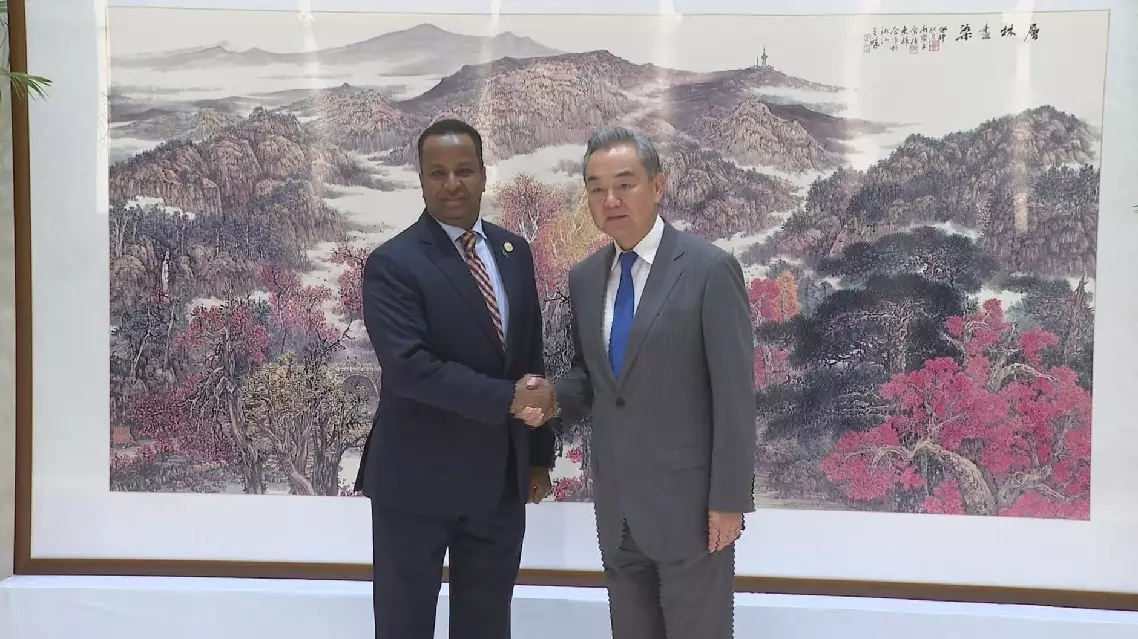
Chinese FM meets Somalian FM in Changsha
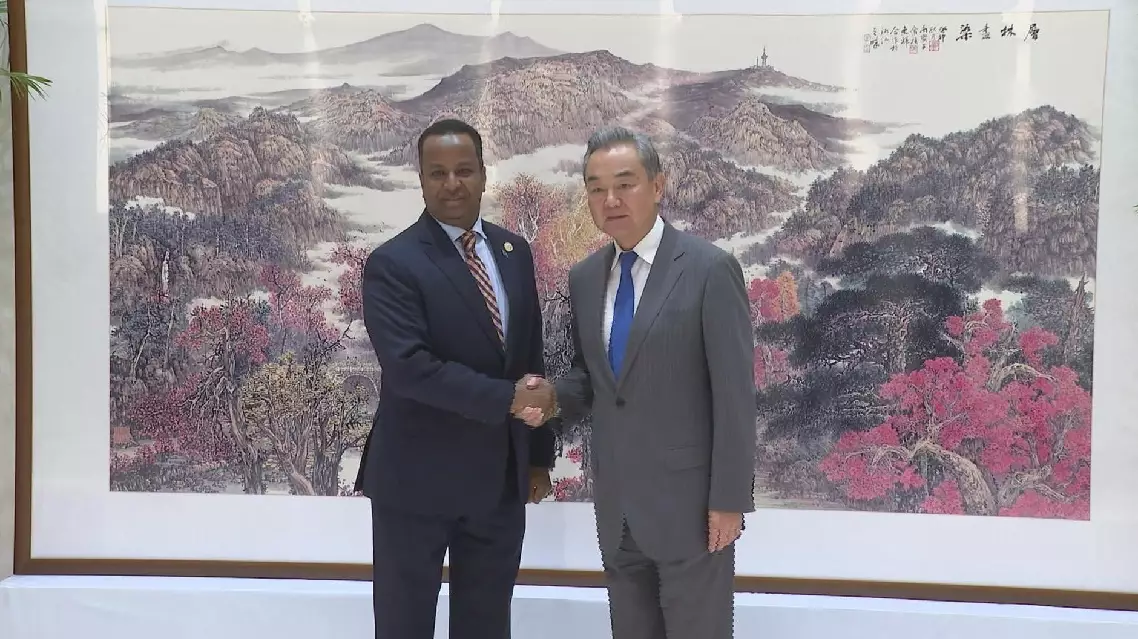
Chinese FM meets Somalian FM in Changsha