A federal program that provides benefits to families of police officers and firefighters who die and become disabled on duty is rapidly growing while facing criticism for increasing delays in deciding claims.
Congress created the Public Safety Officers’ Benefits program in 1976 to guarantee that the spouses and children of officers who put their lives on the line would receive financial support.
But repeated expansions in eligibility approved by Congress, including three passed in the last five years, have made the program more popular and complex to administer. Critics say the program fails some families by taking too long to grant or deny benefits and making inconsistent rulings.
An Associated Press analysis found that hundreds of families are waiting years to learn whether they qualify for payments, and more are ultimately being denied.
New Jersey widow Sharline Volcy learned this month that she'd been awarded the benefits, more than 3 1/2 years after her husband, Ronald Donat, died while training at the Gwinnett County Police Academy in Georgia.
Volcy said she was grateful for the aid, which will provide some financial security and help pay for her two daughters to go to college. But she said the long wait was stressful, when she was told time and again the claim remained under review and ultimately saw her inquiries ignored.
“They told me they didn't know how long it would take because they don't have a deadline. That's the hardest thing to hear,” she said. “I felt defeated.”
She said lawyers didn't want to take the case, and a plea for help to her congressperson went nowhere. She said she'd given up hope and was lucky she had a job as an airport gate agent in the meantime.
Volcy's experience isn't unique, and some cases take longer.
As of late April, more than 120 claims by surviving relatives or disabled first responders have been awaiting initial determinations or rulings on their appeals for more than five years, according AP's findings. About a dozen have waited over a decade for an answer.
The program has a goal of making determinations within one year but has not taken steps to track its progress, according to a recent Government Accountability Office report.
But roughly three in 10 cases have not met that timeframe in recent years. As of late late April, 900 claims had been pending longer than one year. That includes claims from nearly every state.
Republican lawmakers have introduced a bill to require the program to make determinations within 270 days.
Over the last year, the denial rate has increased, with roughly one in three death and disability claims getting rejected.
Applicants can appeal to a hearing officer and then the director if they choose, but that isn't common. Many say they can't afford attorneys or want to get on with their lives.
Justice Department officials, who oversee the program, say they’re making complicated decisions about whether cases meet legal criteria.
“Death and disability claims involving complex medical and causation issues, voluminous evidence and conflicting medical opinions, take longer to determine, as do claims in various stages of appeal,” they said in a statement.
The program started as a simple $50,000 payout for the families of officers who were fatally shot on duty or died as a result of other violence or dangers.
But Congress expanded the program in 1990 to cover some first responders who were disabled on duty, which made some determinations harder to reach. A 1998 law added educational benefits for the spouses and children of those deceased and disabled officers.
Since 2020, Congress has passed three laws making many other types of deaths and disabilities eligible, including deaths related to COVID-19, deaths and injuries of those working rescue and cleanup operations after the September 2001 attacks, and responders who committed suicide under certain circumstances.
Annual claims have more than doubled in the last five years, from 500 in 2019 to roughly 1,200 today.
While many applicants have criticized the increasing delays, the leading group that represents the relatives of officers who die on duty has been silent.
Critics say that’s because the group, Concerns of Police Survivors, has a financial incentive not to criticize the program, which has awarded it tens of millions of dollars in grant funding in recent decades.
The Missouri-based nonprofit recently received a new $6 million grant from the program to for its work with deceased officers’ relatives, including counseling, hosting memorial events, educating agencies about the program and assisting with claims.
The group’s founder and retired executive director, Suzie Sawyer, said she was warned many years ago that fighting too hard for claimants could jeopardize its grant funding.
But current spokesperson Sara Slone said advocacy isn't the group's mission and that it works “hand in hand” with PSOB to assist applicants and provide education about benefits.
Lisa Afolayan’s husband died after a training exercise at the Border Patrol academy more than 16 years ago, but she’s still fighting the program for benefits.
An autopsy found that Nate Afolayan died from heat illness after completing a 1.5-mile test run in 88 degree heat, at a high altitude in the New Mexico desert.
The program had awarded benefits to families after similar training deaths, dating back to an officer who died at an academy in 1988.
But its independent investigation blamed Nate’s death on sickle cell trait, a genetic condition that's usually benign but has been linked to rare exertion-related deaths in police, military and sports training.
The program denied Lisa’s claim and her subsequent appeals, arguing the death wasn't the result of heat along and didn't qualify.
The program stood by its denial in 2024, even after a federal appeals court said it may have failed to adequately consider the weather’s role and violated a law barring discrimination on the basis of genetic information.
The appeals court is currently considering Lisa’s second appeal, even as the couple’s two children reach college age.
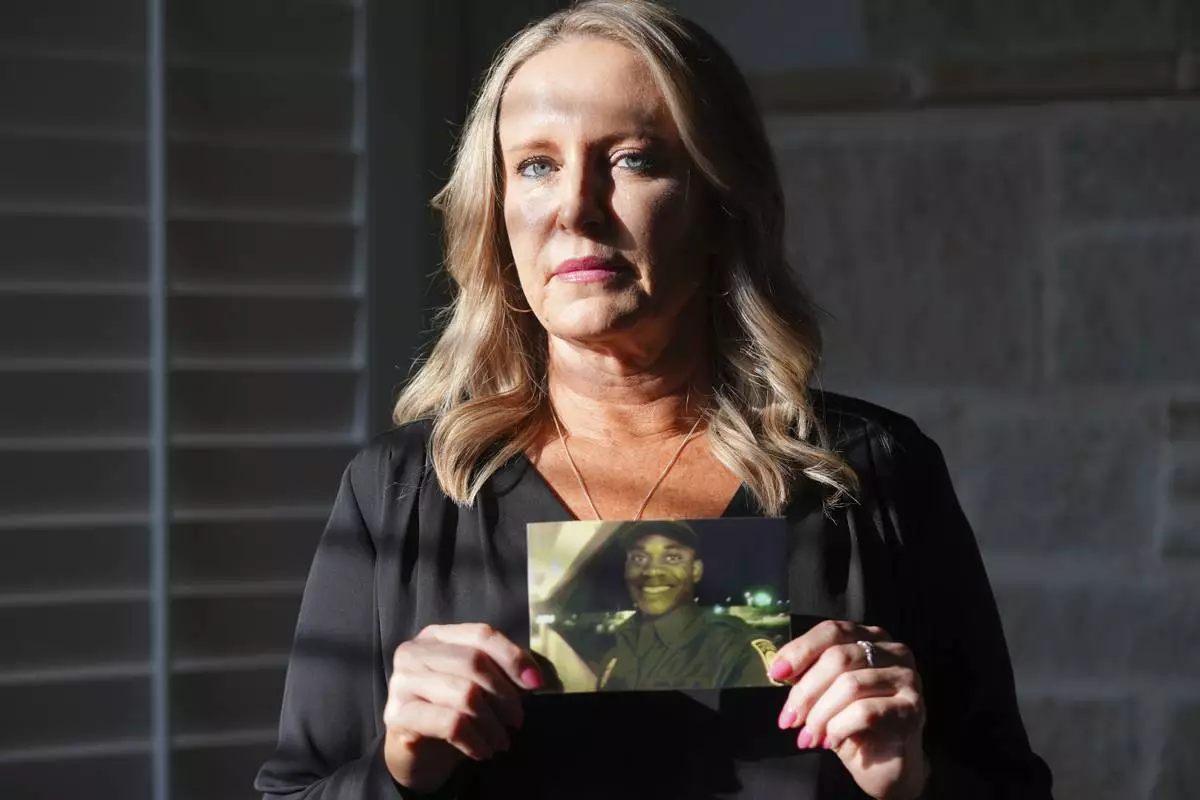
Lisa Afolayan poses with a photo of her late husband, U.S. Border Patrol agent Nate Afolayan, at her home in The Colony, Texas, May 24, 2025. (AP Photo/LM Otero)
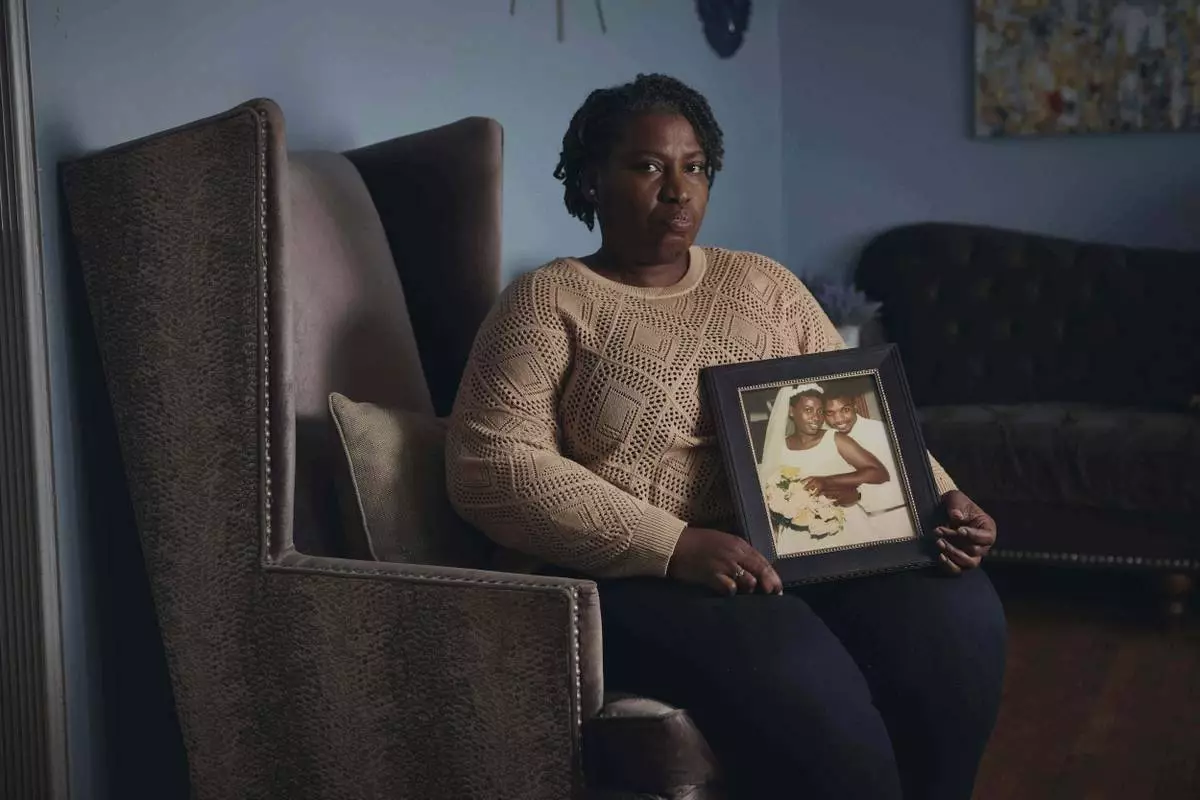
FILE - Sharline Volcy holds a wedding picture of her and her deceased husband, Roland Donat, Feb. 3, 2025, in Orange, N.J. (AP Photo/Andres Kudacki, File)
PIKE COUNTY, Ohio--(BUSINESS WIRE)--Jan 9, 2026--
Oklo Inc. (NYSE: OKLO) (Oklo), an advanced nuclear technology company, announced an agreement with Meta Platforms, Inc. (Nasdaq: META) that advances Oklo’s plans to develop a 1.2 GW power campus in Pike County, Ohio, to support Meta’s data centers in the region. The agreement provides a mechanism for Meta to prepay for power and provide funding to advance project certainty for Oklo’s Aurora powerhouse deployment.
This press release features multimedia. View the full release here: https://www.businesswire.com/news/home/20260109127781/en/
Oklo will use the funds to secure nuclear fuel and advance Phase 1 of the project—supporting the development of clean, reliable power in Pike County that can scale up to 1.2 GW. Meta’s commitment enables Oklo to pursue development in southern Ohio. Oklo seeks to develop the project on 206 acres of land in Pike County owned by the company and formerly owned by the Department of Energy. The land purchase was facilitated in part by the Southern Ohio Diversification Initiative (SODI), a nonprofit working to reuse the land for regional development.
“Two years ago, Oklo shared its vision to build a new generation of advanced reactors in Ohio. Today, that vision is becoming a reality. We have finalized the purchase of over 200 acres in Pike County and are excited to announce this agreement in support of a multi-year effort with Meta to deliver clean energy and create long-term, high-quality jobs in Ohio,” said Jacob DeWitte, Oklo’s co-founder and CEO. "Meta’s funding commitment in support of early procurement and development activity is a major step in moving advanced nuclear forward.”
The agreement is expected to lay the foundation for constructing multiple Oklo Aurora powerhouses, creating thousands of construction and long-term operations jobs, expanding Ohio’s clean energy workforce, and generating new local and state tax revenues through investment in energy infrastructure.
Pre-construction and site characterization are slated to begin in 2026, with the first phase targeted to come online as early as 2030. The plans for the scalable powerhouse facility are expected to expand incrementally to deliver up to the full target of 1.2 GW by 2034.
Ohio’s location within the PJM interconnection—one of the nation’s largest grid systems—and its strong transmission network position it as a strategic hub for America’s clean energy growth as demand for artificial intelligence and digital infrastructure accelerates.
Oklo’s business model allows large energy users to fund their own generation and add new clean power to the grid supported by private capital investment. The agreement provides Oklo with the commercial support needed to advance the development of power infrastructure to support future data center capacity for Meta. This means that Meta is paying to help add more power to Ohio, which will support a reliable grid for all energy customers in the region. This project will also add local jobs to build and operate the nuclear facilities.
“Our agreement with Oklo enables the development of 1.2 gigawatts of nuclear energy in Southern Ohio, supporting Meta’s operations in the region—including our AI supercluster in New Albany. This project will create jobs, spur local innovation, and advance American leadership in energy technology. By investing in baseload nuclear energy, we’re helping build a resilient and sustainable future for our communities,” said Urvi Parekh, head of global energy, Meta.
The project aligns with the broader redevelopment efforts led by SODI to transform thousands of acres at the former Portsmouth Gaseous Diffusion Plant—a symbol of national strength where local families played a key role in America’s national security efforts—into a hub for advanced manufacturing and clean energy.
“The project brings into focus the potential for the transformative impact the redevelopment of this site can have on our energy infrastructure and the reinvigoration of our community,” said Kevin Shoemaker, General Counsel at SODI. “We appreciate our strong partnership with Oklo and look forward to continuing to work with them to bring more jobs and economic opportunity to the region.”
About Oklo Inc.: Oklo Inc. is developing fast fission power plants to deliver clean, reliable, affordable energy at global scale; establishing a domestic supply chain for critical radioisotopes; and advancing nuclear fuel recycling to convert used nuclear fuel into clean energy. Oklo was the first to receive a site use permit from the U.S. Department of Energy for a commercial advanced fission plant, was awarded fuel from Idaho National Laboratory, and submitted the first custom combined license application for an advanced reactor to the U.S. Nuclear Regulatory Commission. Oklo is also developing advanced fuel recycling technologies in collaboration with the U.S. Department of Energy and U.S. National Laboratories.
Forward-Looking Statements
This press release includes statements that express Oklo’s opinions, expectations, objectives, beliefs, plans, intentions, strategies, assumptions, forecasts or projections regarding future events or future results and therefore are, or may be deemed to be, “forward-looking statements.” The words “may,” “will,” “could,” “should,” “expects,” “anticipates,” “intends,” “plans,” “believes,” “seeks,” “estimates,” “continue,” “might,” “possible,” “potential,” “predict,” “project,” “goal,” “would,” “commit,” or, in each case, their negative or other variations or comparable terminology, and similar expressions may identify forward-looking statements, but the absence of these words does not mean that a statement is not forward-looking. These forward-looking statements include all matters that are not historical facts. They appear in a number of places throughout this press release and include statements regarding our intentions, beliefs or current expectations concerning, among other things, results of operations, financial condition, liquidity, prospects, growth, strategies and the markets in which Oklo operates. Such forward-looking statements are based on information available as of the date of this press release, and current expectations, forecasts and assumptions, and involve a number of judgments, risks and uncertainties.
As a result of a number of known and unknown risks and uncertainties, the actual results or performance of Oklo may be materially different from those expressed or implied by these forward-looking statements. The following important risk factors could affect Oklo’s future results and cause those results or other outcomes to differ materially from those expressed or implied in the forward-looking statements: risks related to the development and deployment of Oklo’s powerhouses; the risk that Oklo is pursuing an emerging market with no commercial project operating and regulatory uncertainties; risks related to acquisitions, divestitures, or joint ventures we may engage in; the need for financing to construct plants, which remain subject to market, financial, political, and legal conditions; risks related to an inability to raise additional capital to support our business and sustain our growth on favorable terms; the effects of competition; risks related to accessing high-assay low-enriched uranium, plutonium, and other fuels at acceptable costs (including recycled fuels); risks related to our supply chain; risks related to power purchase agreements; risks related to human capital; risks related to our intellectual property; risks related to cybersecurity and data privacy; changes in applicable laws or regulations, including tariffs; the outcome of any government and regulatory proceedings and investigations and inquiries; and the other factors set forth in our documents we have filed with the U.S. Securities and Exchange Commission (the “SEC”).
The foregoing list of factors is not exhaustive. You should carefully consider the foregoing factors and the other risks and uncertainties of the other documents filed by Oklo from time to time with the SEC. The forward-looking statements contained in this press release are based on current expectations and beliefs concerning future developments and their potential effects on Oklo. There can be no assurance that future developments affecting Oklo will be those that Oklo has anticipated. Oklo undertakes no obligation to update or revise any forward-looking statements to reflect events or circumstances after the date of this presentation, except as may be required by law.
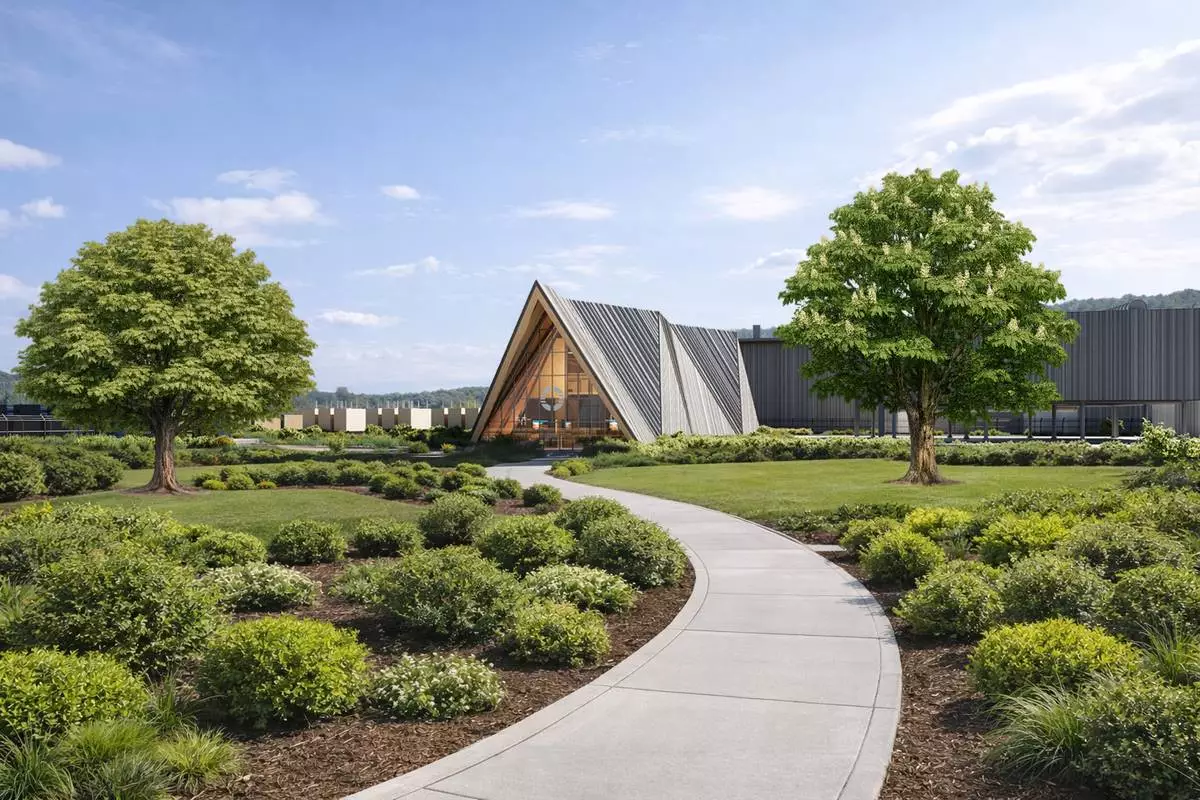
Oklo Aurora powerhouse (Image: Oklo)