A special mini-documentary series produced by China Media Group (CMG), which tells the stories of Central Asian youths who returned to their home countries after pursuing studies in China, will be aired from June 16, on the occasion of the second China-Central Asia Summit.
The series focuses on how Chinese President Xi Jinping's proposal of the Belt and Road Initiative (BRI) in 2013 has opened a new chapter in educational exchanges between China and the five Central Asian nations - Kazakhstan, Kyrgyzstan, Tajikistan, Turkmenistan, and Uzbekistan.
From individual perspectives, the CMG production highlights several protagonists - young students from Central Asia - who recount their years studying in Chinese universities and how such experiences have influenced their career choices after they go back to their respective home countries.
During his first Central Asia tour as Chinese president in 2013, Xi delivered a landmark speech at Nazarbayev University in the Kazakh capital Astana, in which he first laid out his vision for building the Silk Road Economic Belt - a key component of the BRI.
Over the past 12 years, Central Asia has become a model region of common development among countries participating in the BRI, as many infrastructure projects built through cooperation with China has transformed the landlocked region into a transportation hub in Eurasia.
The second China-Central Asia Summit is scheduled to take place from June 16 to 18 in Astana.

CMG to air Central Asian youths returning from studies in China
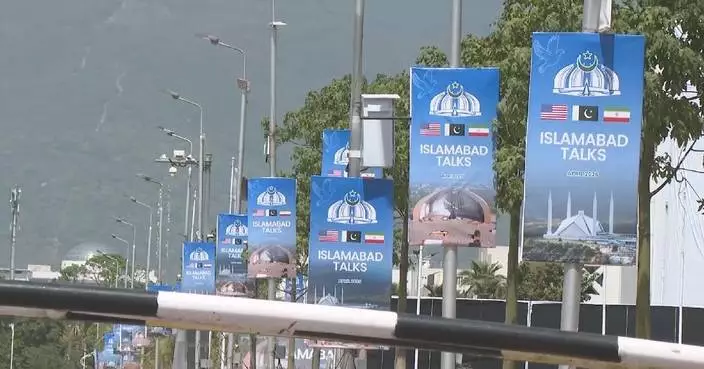
An Iranian delegation led by Foreign Minister Seyed Abbas Araghchi arrived in Pakistan on Friday night to discuss regional developments and ongoing peace efforts, a spokesman for Pakistan's Ministry of Foreign Affairs said.
Tahir Andrabi, the spokesman, said in a social media post that Araghchi is scheduled to meet Pakistan's leadership to exchange views on the evolving regional situation and efforts aimed at promoting peace and stability.
Upon arrival, the Iranian foreign minister was received by Pakistani Deputy Prime Minister and Foreign Minister Mohammad Ishaq Dar, Chief of Defense Forces and Chief of Army Staff Field Marshal Syed Asim Munir, along with other senior officials.
Araghchi currently has no negotiation plans with U.S. representatives, but will convey messages to the U.S. side through Pakistani mediators, according to Iranian sources on Friday.
However, the White House said Friday that U.S. President Donald Trump's envoy Steve Witkoff and son-in-law Jared Kushner are heading to Pakistan for talks with Araghchi this weekend.
U.S. Vice President JD Vance, who led the U.S. negotiating team during the first round of talks in Pakistan earlier this month, is not currently planning to attend the upcoming talks, White House Press Secretary Karoline Leavitt said, adding he will be standing by and consulting Trump alongside Secretary of State Marco Rubio.
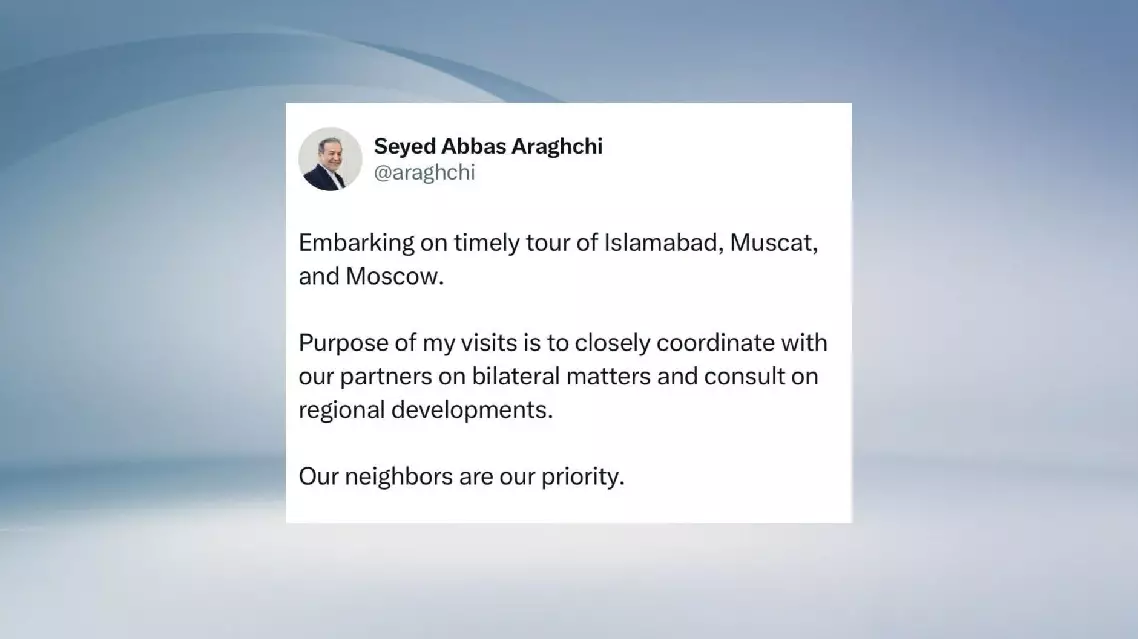
Earlier in the day, Araghchi said in a social media post that he was embarking on a regional tour that includes stops in Islamabad, Muscat and Moscow. Araghchi emphasized that the purpose of the visit is to closely coordinate with partners on bilateral affairs and to consult on the regional situation. He also noted that Iran's neighbors are a priority for Iran.
Iranian delegation led by FM arrives in Pakistan