Skip to Content Facebook Feature Image

Israelis are uneasy as they prepare for more Iranian missiles

News

Israelis are uneasy as they prepare for more Iranian missiles
News

News

Israelis are uneasy as they prepare for more Iranian missiles

2025-06-15 02:58 Last Updated At:03:01

TEL AVIV, Israel (AP) — A palpable tension settled over an eerily quiet Tel Aviv on Saturday as residents anticipated another round of missiles to be fired from Iran, which is under intense attack from the Israeli military.

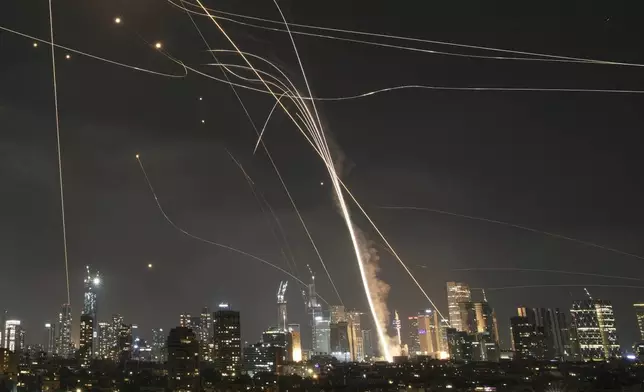
Iran’s retaliatory strikes late Friday — a barrage of drones and missiles mostly shot down by Israel's defenses — killed at least three people in the greater Tel Aviv area, and wounded dozens.

More Images
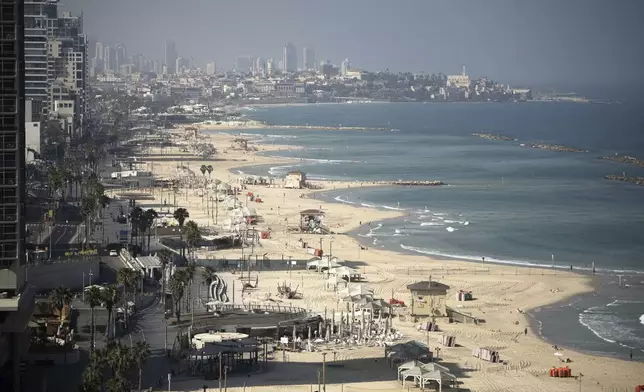
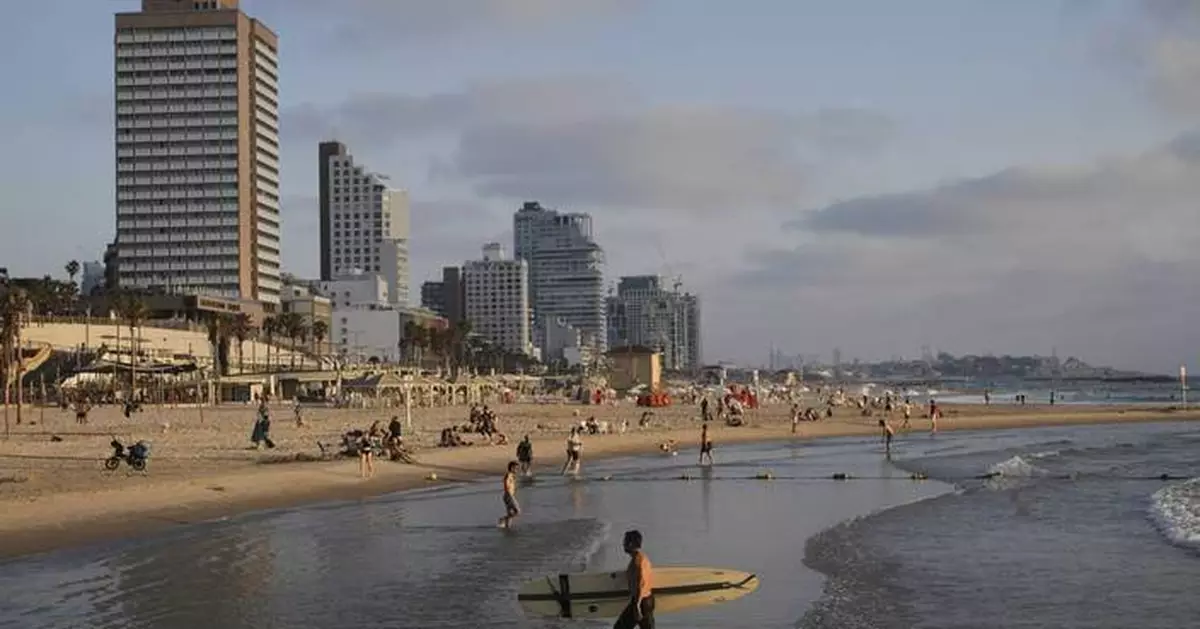
A general view shows the mostly empty beachfront in Tel Aviv, Friday, June 13, 2025. (AP Photo/Leo Correa)
A general view shows the mostly empty beachfront in Tel Aviv, Friday, June 13, 2025. (AP Photo/Leo Correa)

ALTERNATIVE CROP OF XEM124.- A projectile hit buildings as Israeli Iron Dome air defense system fires to intercept missiles over Tel Aviv, Israel, Friday, June 13, 2025. (AP Photo/Leo Correa)
ALTERNATIVE CROP OF XEM124.- A projectile hit buildings as Israeli Iron Dome air defense system fires to intercept missiles over Tel Aviv, Israel, Friday, June 13, 2025. (AP Photo/Leo Correa)

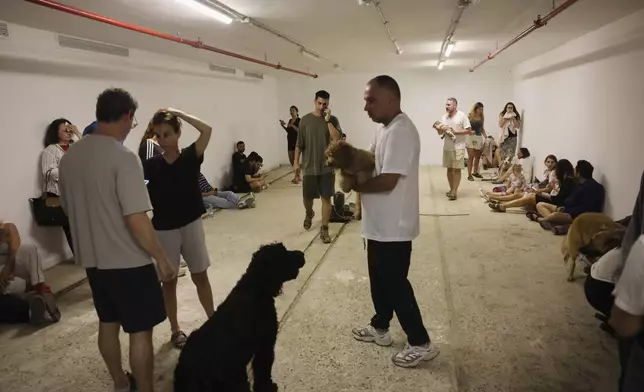
People take shelter as a siren sounds a warning following a missiles that were launched from Iran, in Tel Aviv, Israel, on Friday, June 13, 2025. (AP Photo/Tomer Appelbaum)
People take shelter as a siren sounds a warning following a missiles that were launched from Iran, in Tel Aviv, Israel, on Friday, June 13, 2025. (AP Photo/Tomer Appelbaum)

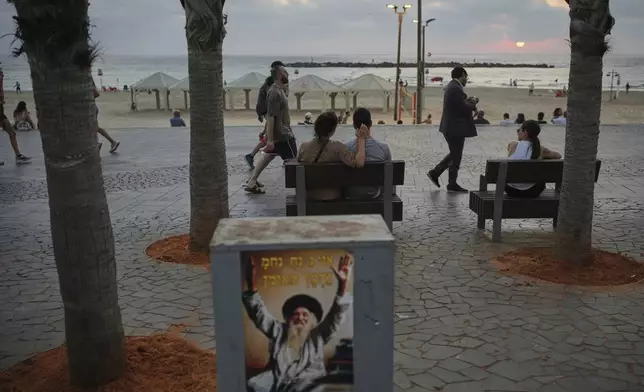
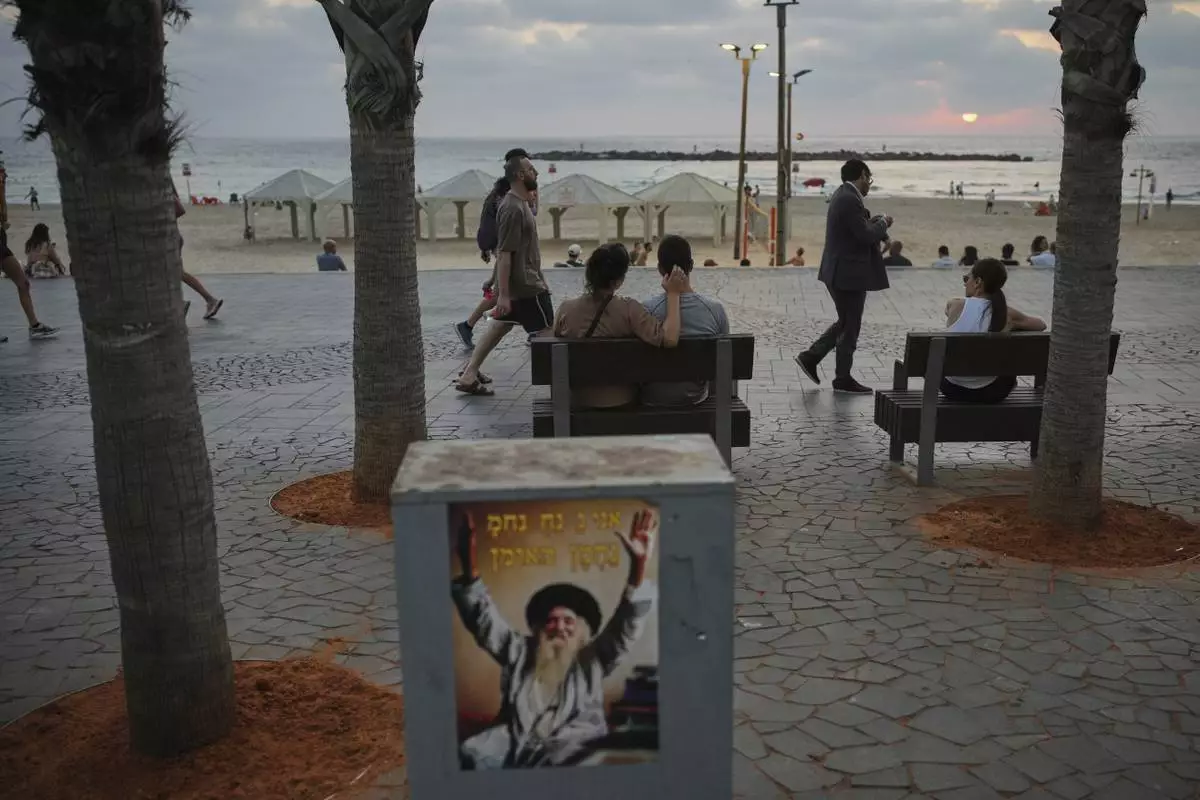
People walk along the beachfront promenade in Tel Aviv, Israel, on Saturday, June 14, 2025. (AP Photo/Ohad Zwigenberg)
People walk along the beachfront promenade in Tel Aviv, Israel, on Saturday, June 14, 2025. (AP Photo/Ohad Zwigenberg)

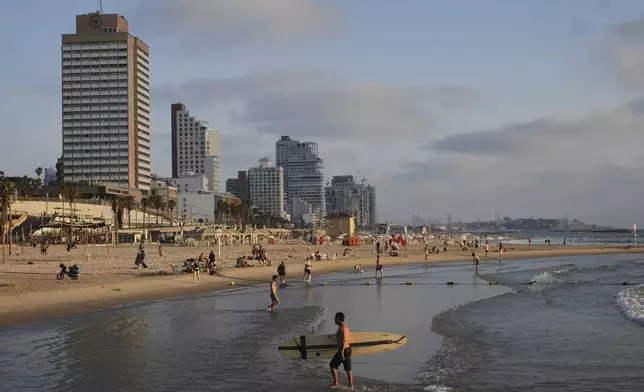
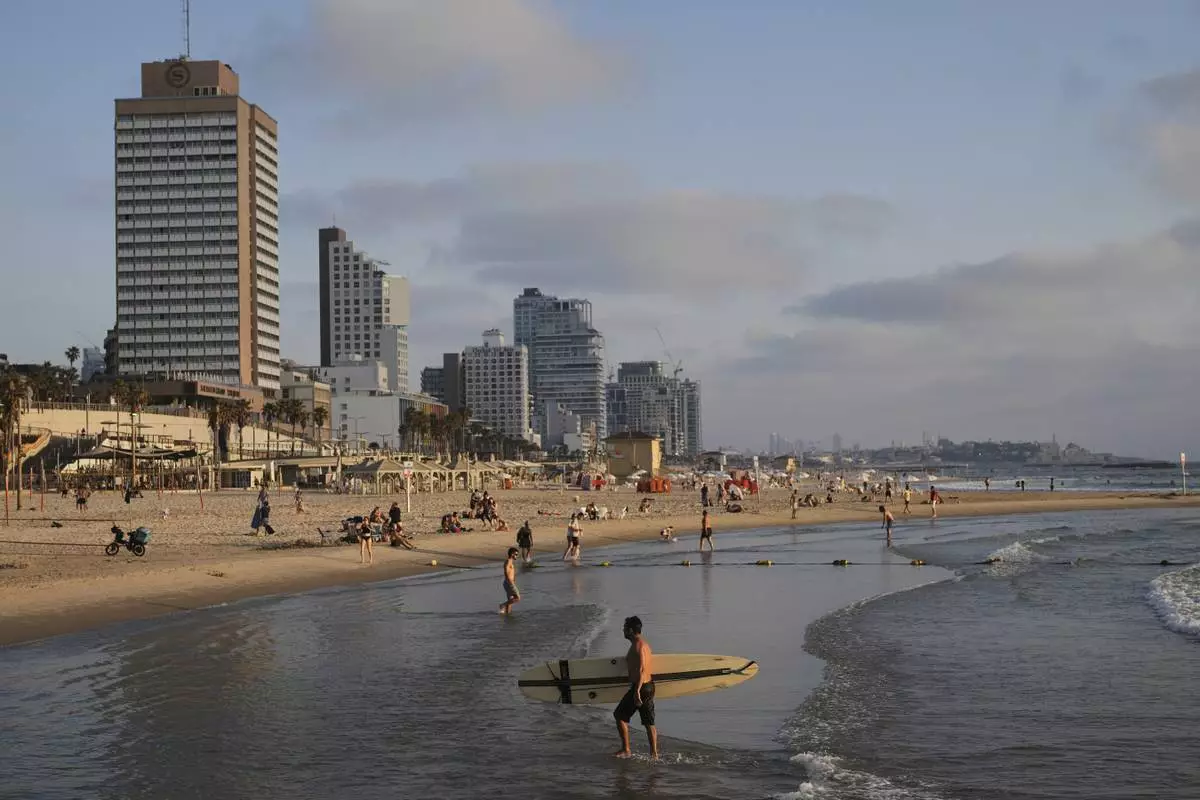
People spend the day on the Mediterranean Sea beachfront in Tel Aviv, Israel, on Saturday, June 14, 2025. (AP Photo/Ohad Zwigenberg)

People spend the day on the Mediterranean Sea beachfront in Tel Aviv, Israel, on Saturday, June 14, 2025. (AP Photo/Ohad Zwigenberg)

Most stores and restaurants were closed the next day across the Mediterranean city, though some ice cream shops remained open. A smattering of people gathered with friends in parks, while staying close to public bomb shelters. Tel Aviv's beaches, normally packed, had fewer sunbathers.

Uneasy Israelis huddled over their phones for updates about the escalating conflict with Iran, while still trying to go about their lives and enjoy a bit of sunshine.

“It just feels very unknown,” said Lindsay Schragen, an architect in Tel Aviv.

After more than 20 months of war between Israel and Hamas in Gaza, the war with Hezbollah in Lebanon and the conflict with Houthi rebels in Yemen — all with ties to Iran — Israelis are used to government requests for them to go to bomb shelters when sirens are activated.

But those episodes usually last about 10 minutes, whereas conflict with the much more powerful Iranian army means attacks last significantly longer, requiring families to spend hours in bomb shelters. Still, many people expressed gratitude for Israel's early warning systems, including cellphone notifications, and the robust shelter infrastructure in the city.

Schragen, who moved to Israel from New Jersey eight years ago, said it was difficult for her family and friends in the U.S. to understand how she spent the night dashing for a bomb shelter and then the next afternoon hanging with friends in the park.

“My mom keeps calling me and asking if I’m in the shelter, but no, I’m here, outside,” she said. “Somehow we’re able to preserve some normalcy.”

Over the decades, Israel has developed a sophisticated air defense system capable of detecting incoming fire and deploying only if the projectile is headed toward a population center or sensitive military or civilian infrastructure. Israeli leaders say the system isn’t 100% guaranteed, but credit it with preventing serious damage and countless casualties.

Israel's attack on Iran was much more intense and caused significantly more damage. Israel said its hundreds of strikes on Iran over the past two days killed a number of top generals, nine senior scientists and experts involved in Iran’s nuclear program.

Iran’s U.N. ambassador said 78 people were killed and more than 320 wounded.

Israel said the surprise attack was necessary before Iran got any closer to building an atomic weapon. The Israeli attack threw into disarray talks between the United States and Iran over Tehran's rapidly developing nuclear program.

As the Iranian attack ensued, hospitals across Israel moved intensive-care patients into underground parking lots converted for such emergencies.

Sheba Medical Center, in Ramat Gan, has room for hundreds of patients in its underground facility east of Tel Aviv. Over the past 48 hours, the hospital has moved dozens of patients, including premature babies, into the protected underground area.

“I told my wife I never want my child to be born into such a reality,” said Eliran Bar, the father of a three-week-old premature baby in the intensive care unit. “I really hope it will end soon.”

Saturday was mostly quiet in Israel, though many people were preparing for another night of missiles.

Shaun Katz, a 32-year-old lawyer from Tel Aviv, packed a bag with camping mattresses, water bottles, and bananagrams, his favorite game, to pass the time.

“We don’t know how this goes on or how it plays out, but this may have been the best chance to neutralize the Iranian threat,” Katz said. “I usually would take the option to de-escalate, but I don’t know if that option is on the table, and this may be the best chance we’ve got to stop them from getting a nuclear weapon.”

Iran says its nuclear program is for peaceful purposes only, though its uranium enrichment has reached near weapons-grade levels, according to the U.N.'s International Atomic Energy Agency.

Others in the Tel Aviv area, where several buildings were destroyed, were more worried about what comes next.

“My wife, she is Israeli, she’s very, very anxious and she wants to leave as soon as possible,” said Howard Alansteen, an American living in Israel. “She’s talking about going over the bridge to Jordan. She was talking about getting on a ferry to Cyprus. She’s taking about going to Eliat. She is really upset.”

Zhenya Kuperman, a 20-year-old chef from Givatayim, a suburb east of Tel Aviv, said she had many friends who were too scared to leave their homes all day, but it helped her to come out and see people.

“Even with all the pressure, all we need is to be together,” she said.
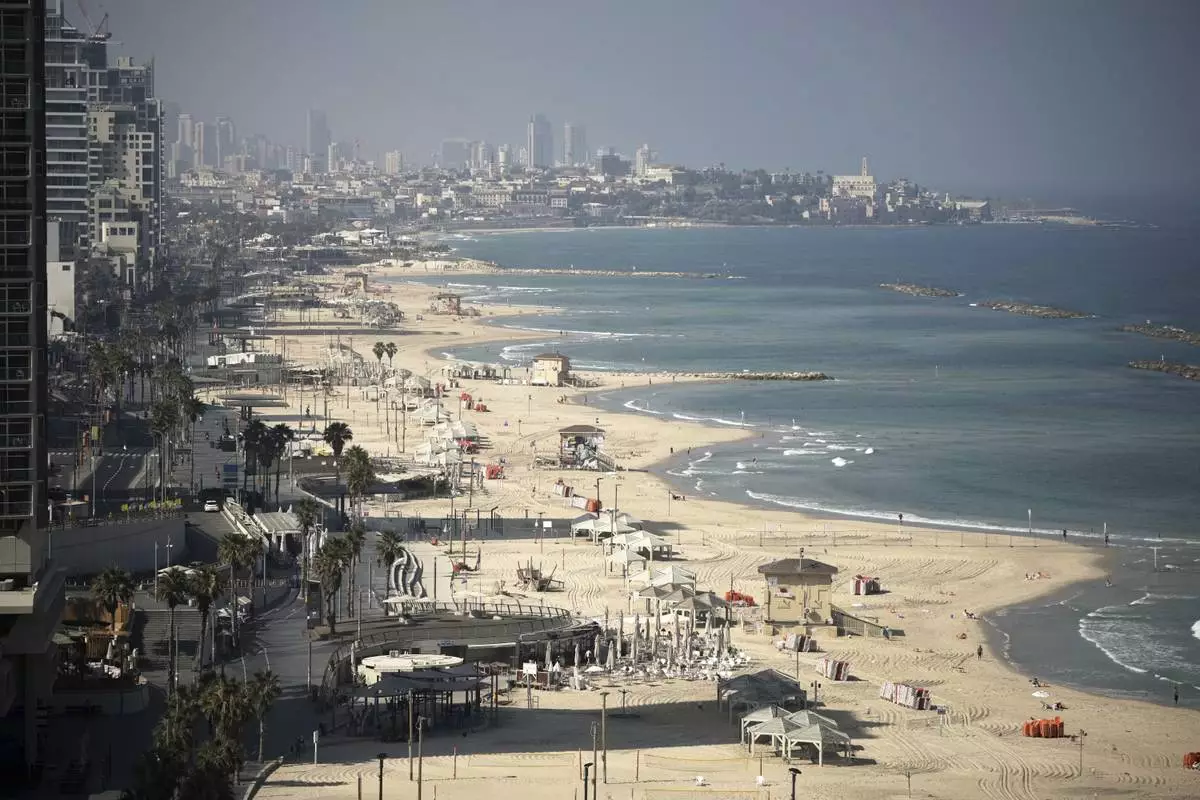
A general view shows the mostly empty beachfront in Tel Aviv, Friday, June 13, 2025. (AP Photo/Leo Correa)

A general view shows the mostly empty beachfront in Tel Aviv, Friday, June 13, 2025. (AP Photo/Leo Correa)

ALTERNATIVE CROP OF XEM124.- A projectile hit buildings as Israeli Iron Dome air defense system fires to intercept missiles over Tel Aviv, Israel, Friday, June 13, 2025. (AP Photo/Leo Correa)

ALTERNATIVE CROP OF XEM124.- A projectile hit buildings as Israeli Iron Dome air defense system fires to intercept missiles over Tel Aviv, Israel, Friday, June 13, 2025. (AP Photo/Leo Correa)

People take shelter as a siren sounds a warning following a missiles that were launched from Iran, in Tel Aviv, Israel, on Friday, June 13, 2025. (AP Photo/Tomer Appelbaum)
People take shelter as a siren sounds a warning following a missiles that were launched from Iran, in Tel Aviv, Israel, on Friday, June 13, 2025. (AP Photo/Tomer Appelbaum)

People walk along the beachfront promenade in Tel Aviv, Israel, on Saturday, June 14, 2025. (AP Photo/Ohad Zwigenberg)
People walk along the beachfront promenade in Tel Aviv, Israel, on Saturday, June 14, 2025. (AP Photo/Ohad Zwigenberg)

People spend the day on the Mediterranean Sea beachfront in Tel Aviv, Israel, on Saturday, June 14, 2025. (AP Photo/Ohad Zwigenberg)


People spend the day on the Mediterranean Sea beachfront in Tel Aviv, Israel, on Saturday, June 14, 2025. (AP Photo/Ohad Zwigenberg)

DUBAI, United Arab Emirates (AP) — Nationwide protests challenging Iran's theocracy saw protesters flood the streets in the country's capital and its second-largest city into Sunday, crossing the two-week mark as violence surrounding the demonstrations has killed at least 116 people, activists said.

With the internet down in Iran and phone lines cut off, gauging the demonstrations from abroad has grown more difficult. But the death toll in the protests has grown, while 2,600 others have been detained, according to the U.S.-based Human Rights Activists News Agency.

Those abroad fear the information blackout will embolden hard-liners within Iran's security services to launch a bloody crackdown, despite warnings from U.S. President Donald Trump he's willing to strike the Islamic Republic to protect peaceful demonstrators.

Trump offered support for the protesters, saying on social media that “Iran is looking at FREEDOM, perhaps like never before. The USA stands ready to help!!!” The New York Times and Wall Street Journal, citing anonymous U.S. officials, said on Saturday night that Trump had been given military options for a strike on Iran, but hadn’t made a final decision.

The State Department separately warned: “Do not play games with President Trump. When he says he’ll do something, he means it.”

Online videos sent out of Iran, likely using Starlink satellite transmitters, purportedly showed demonstrators gathering in northern Tehran's Punak neighborhood. There, it appeared authorities shut off streets, with protesters waving their lit mobile phones. Others banged metal while fireworks went off.

Other footage purportedly showed demonstrators peacefully marching down a street and others honking their car horns on the street.

In Mashhad, Iran's second-largest city, some 725 kilometers (450 miles) northeast of Tehran, footage purported to show protesters confronting security forces. Flaming debris and dumpsters could be seen in the street, blocking the road. Mashhad is home to the Imam Reza shrine, the holiest in Shiite Islam, making the protests there carry heavy significance for the country's theocracy.

Protests also appeared to happen in Kerman, 800 kilometers (500 miles) southeast of Tehran.

Iranian state television on Sunday morning took a page from demonstrators, having their correspondents appear on streets in several cities to show calm areas with a date stamp shown on screen. Tehran and Mashhad were not included. They also showed pro-government demonstrations in Qom and Qazvin.

Supreme Leader Ayatollah Ali Khamenei has signaled a coming clampdown, despite U.S. warnings. Tehran escalated its threats Saturday, with Iran’s attorney general, Mohammad Movahedi Azad, warning that anyone taking part in protests will be considered an “enemy of God,” a death-penalty charge. The statement carried by Iranian state television said even those who “helped rioters” would face the charge.

Iran’s theocracy cut off the nation from the internet and international telephone calls on Thursday, though it allowed some state-owned and semiofficial media to publish. Qatar’s state-funded Al Jazeera news network reported live from Iran, but they appeared to be the only major foreign outlet able to work.

Iran’s exiled Crown Prince Reza Pahlavi, who called for protests Thursday and Friday, asked in his latest message for demonstrators to take to the streets Saturday and Sunday. He urged protesters to carry Iran’s old lion-and-sun flag and other national symbols used during the time of the shah to “claim public spaces as your own.”

Pahlavi’s support of and from Israel has drawn criticism in the past — particularly after the 12-day war. Demonstrators have shouted in support of the shah in some protests, but it isn’t clear whether that’s support for Pahlavi himself or a desire to return to a time before the 1979 Islamic Revolution.

The demonstrations began Dec. 28 over the collapse of the Iranian rial currency, which trades at over 1.4 million to $1, as the country’s economy is squeezed by international sanctions in part levied over its nuclear program. The protests intensified and grew into calls directly challenging Iran’s theocracy.

In this frame grab from footage circulating on social media from Iran showed protesters once again taking to the streets of Tehran despite an intensifying crackdown as the Islamic Republic remains cut off from the rest of the world in Tehran, Iran, Saturday Jan. 10, 2026. (UGC via AP)

In this frame grab from footage circulating on social media from Iran showed protesters once again taking to the streets of Tehran despite an intensifying crackdown as the Islamic Republic remains cut off from the rest of the world in Tehran, Iran, Saturday Jan. 10, 2026. (UGC via AP)

Recommended Articles