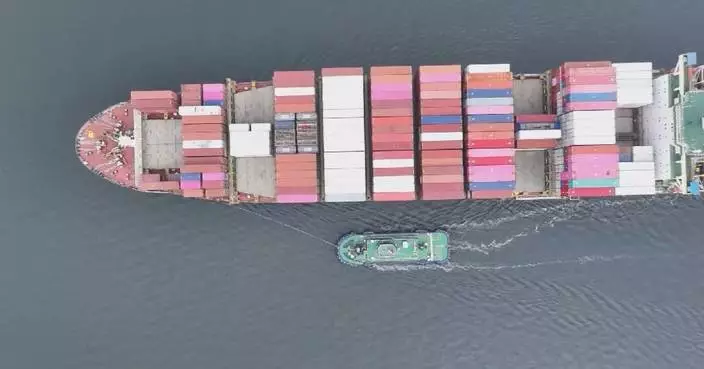
Nanning City, in south China's Guangxi Zhuang Autonomous Region, will launch a campaign to promote fruit sales as part of efforts to further leverage its role as a vital distribution hub for Association of Southeast Asian Nations (ASEAN) agricultural products—particularly fruits—to enter the Chinese market.
Known as China's "fruit basket", Guangxi, a top fruit-producing region, also serves as the main portal for fruits such as durians and mangosteens from ASEAN and Regional Comprehensive Economic Partnership (RCEP) countries to enter the Chinese market.
From January to April 2024, Guangxi's import and export volume with ASEAN reached 139.63 billion yuan (about 19.25 billion U.S. dollars), marking a 16.3 percent year-on-year growth.
In 2024 alone, Guangxi imported nearly 2.5 million metric tons of ASEAN fruits, with a total value of approximately 35 billion yuan, accounting for over one-third of China's total ASEAN fruit imports.
"Riding the momentum of RCEP policies, more fruits from ASEAN countries and high-quality products from RCEP member states are being brought into China's vast market of 1.4 billion people through Guangxi as the first-stop, which formed a supply chain model of 'produced in ASEAN, distributed via Guangxi, and sold across China,' bringing ASEAN fruits to dining tables nationwide. Thai durians and mangosteens, Vietnamese coffee, Indonesian palm oil, and other premium ASEAN and RCEP products are now making their way into the homes of ordinary Chinese families," said Zhu Yanling, deputy director-general of the Department of Commerce of Guangxi Zhuang Autonomous Region.
Building on the establishment of the China-ASEAN (Nanning) Fruit Trading Center, Nanning will accelerate the development of a comprehensive import-export supply chain system for ASEAN fruits.
"Nanning now hosts key platforms such as a land port-type national logistics hub and a major national cold-chain logistics base. A number of high-standard fruit trading markets and cold-chain facilities have already been established. Today, Nanning stands as the largest fruit trading center in Guangxi," said Xu Kefeng, vice mayor of the Nanning Municipal People's Government.
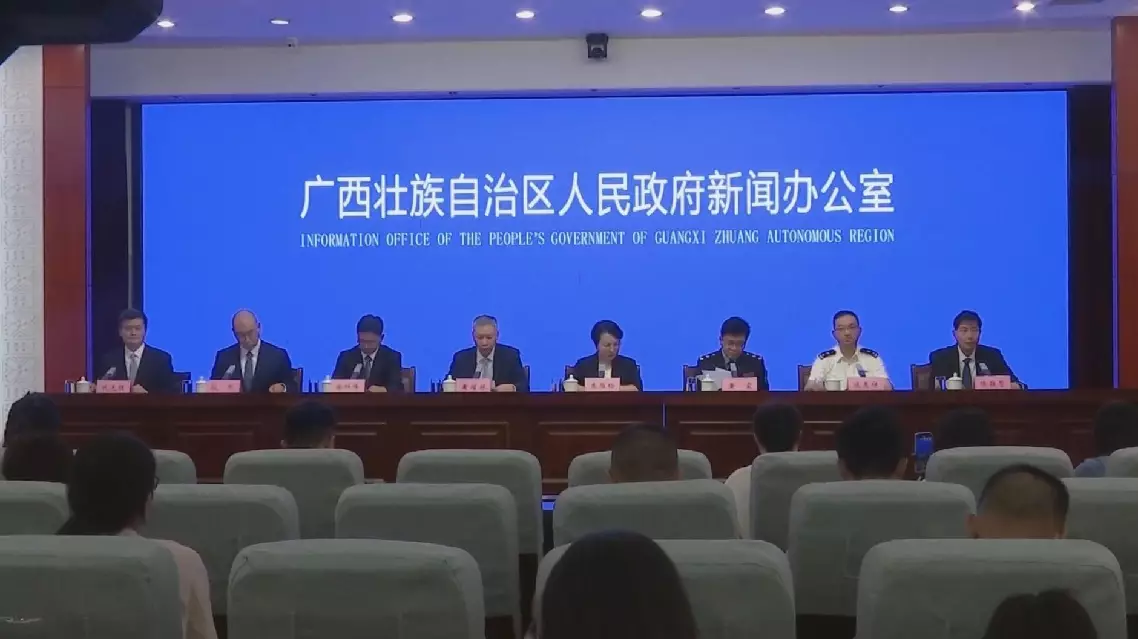
Nanning serves as key hub connecting Chinese market to ASEAN region
Huanggang Port, linking south China's Shenzhen City and Hong Kong Special Administrative Region, has greatly streamlined cross-border passenger travel since its reopening on Oct 12 after redevelopment.
The updated port is positioned as the most important 24-hour passenger land boundary control point between Hong Kong and Shenzhen. It operates under a co-location arrangement with a new "collaborative inspection and joint clearance" mode, allowing travelers to complete both Hong Kong and Shenzhen immigration clearance in a single queue.
Under this new clearance mode, clearance time is significantly reduced from around 30 minutes at the original Lok Ma Chau/Huanggang Port to approximately five minutes.
On Saturday, the first weekend since the redeveloped port resumed operations, passengers were impressed by the clean facilities and speedy clearance, even as passenger numbers surged.
"This is my first time here. I'm heading to Hong Kong for shopping, and I will pass through this port again on my way back. I chose this route because the transport connections here are excellent; the port area is spacious with plenty inspection counters, making the process convenient and fast," said Mr. Liang, a Shenzhen resident.
"I came to check out the redeveloped port and see how things run here. It has been a great experience; everything is very clean, well-organized, and the facilities are excellent," said Mr. Chua, a Singaporean tourist.
To handle the surge in passengers during the weekend, Shenzhen border inspection authorities have coordinated with their Hong Kong counterparts to manage the pace of immigration checks, ensuring safety and order at the port.
"Leveraging intelligent monitoring equipment, we conduct round-the-clock real-time analysis of vehicle and passenger flow trends at the port, ensuring efficient and smooth customs clearance for passengers," said Wu Liupeng, a customs official at Huanggang Port.
The original Huanggang Port, which opened in 1989, was China's first large-scale land port with 24-hour clearance. It has served hundreds of millions of travelers, with daily passenger traffic peaking at over 60,000 and daily vehicle traffic reaching around 10,000.
Reconstruction on the original site began in 2019 to meet the surging demand for cross-border passage.
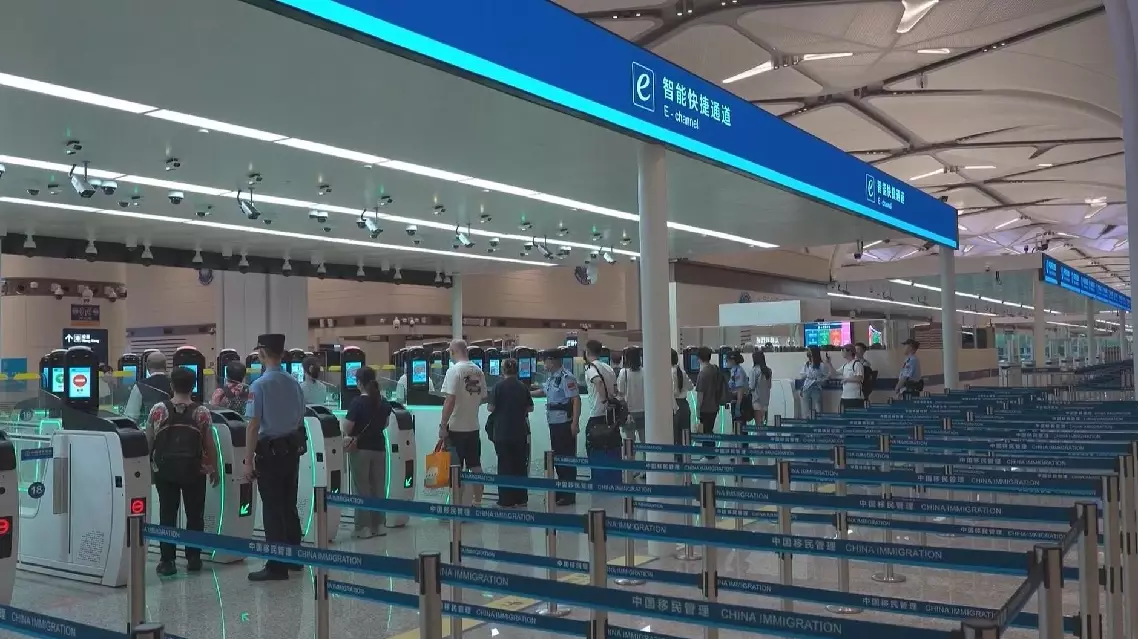
Redeveloped port greatly streamlines cross-border passenger travel between Shenzhen, Hong Kong