
MINNETONKA, Minn.--(BUSINESS WIRE)--Jun 16, 2025--
Boveda, the global leader in precise, reliable 2-way humidity control, is proud to announce its technology is now featured in the Crumblr—a new, user-friendly herbal aerator, humidor, and storage system. The Crumblr is the first device of its kind offered by a third party to integrate Boveda’s patented humidity control, ensuring that aerated herbs stay fresher, more potent, and better tasting for longer.
This press release features multimedia. View the full release here: https://www.businesswire.com/news/home/20250616459024/en/
With Boveda’s 2-way humidity control technology at its core, the Crumblr offers a significant upgrade for anyone who values freshness and quality. Boveda’s innovative technology automatically regulates humidity inside the Crumblr, protecting terpenes and extending shelf life. Once herbs are aerated and fluffed, they remain at their peak, preserved against overdrying or moisture damage.
“Combining Boveda’s 2-way humidity control with the Crumblr is a game-changer in the world of precision grinding,” said Boveda’s Wholesale Direct Accounts Manager, Mike Kanowitz. “We are delighted that Crumblr recognized the game-changing technology that Boveda delivers by incorporating our product into Crumblr’s advanced design.”
“For rapidly chewing through any quantities of biomass while keeping cannabis fresh with Boveda’s unique humidity control, there is no better solution available,” Jake Kuczeruk, Budist. “The unique hand-crank mechanism of the Crumblr is revolutionary for medical cannabis users who need convenient, high-quality cannabis, especially those struggling with arthritis.”
Boveda’s inclusion in the Crumblr means users benefit from the same gold-standard humidity control trusted by professionals worldwide. Herbs remain fluffy, aromatic, and potent, with terpenes and flavors preserved for an exceptional experience.
Follow this link to see Boveda and the Crumblr in action: https://youtu.be/RGOfSelCJc0
###
About Boveda Inc.:
Boveda Inc. is the global leader in 2-way humidity control. The brand’s suite of products preserve moisture-sensitive items, including cigars, cannabis, medical devices, guitars, and more. Headquartered in Minnetonka, Minnesota, Boveda invented and patented the Original Terpene Shield™, which protects dried cannabis in storage, transport, and packaging. Made with all-natural salts and purified water, Boveda’s ready-to-use packs allow moisture to pass in and out as necessary through a semipermeable vapor-phase reverse osmosis membrane. The purified water creates a powerful terpene shield that protects precious trichomes by preventing evaporation and preserving terpenes and other volatile compounds. Innovative companies ensure an exceptional consumer experience by using Boveda to maintain the quality, consistency, and freshness of their moisture-sensitive products. For more information, visit Bovedainc.com or call 952-745-2900.
About Crumblr:
Crumblr by Project Epoch LLC is the world’s first 3-in-1 humidor, storage container, and aerating grinder. It is designed to preserve the natural quality of herbs while delivering a consistent and effective grind. The device uses a patent-pending dual-blade system with built-in humidity control to gently fluff the material instead of crushing it. Tests show improved burn consistency and product density. Crumblr is founded by a diverse team and is certified as an SBA 8(a) business. It is built for quality, inclusion, and broad use across herbal, culinary, and wellness markets. For more information, visit thecrumblr.com
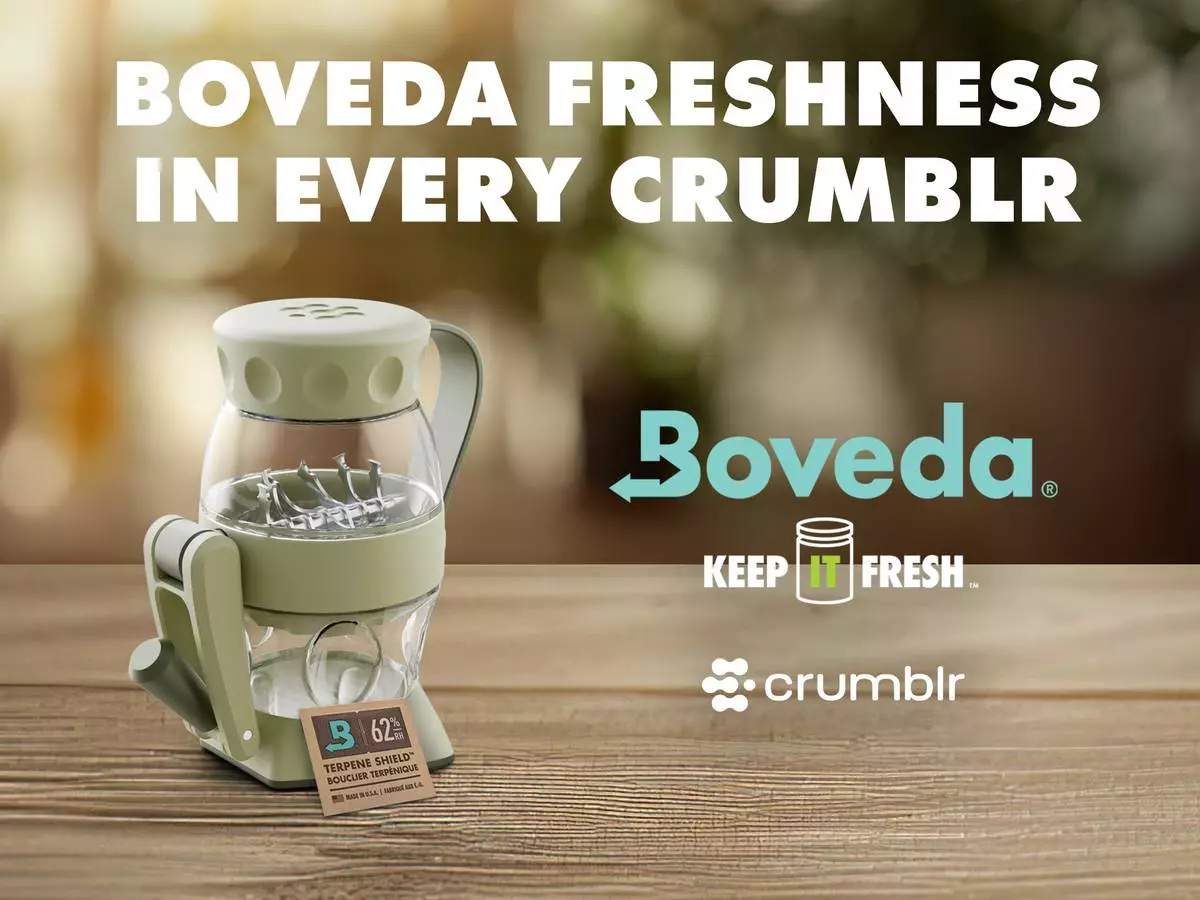
Boveda’s Precision Humidity Control Elevates Herbal Freshness in the New Crumblr Aerator

ADEN, Yemen (AP) — Southern separatists in Yemen said Saudi warplanes carried out new airstrikes Saturday on a military camp in the port city of Mukalla and other areas where their forces are stationed, as Saudi-backed forces moved to retake the city.
There was no immediate Saudi comment. It was the latest direct intervention by Saudi Arabia, which in recent weeks has bombed the separatist Southern Transitional Council, or STC, and struck what is said was a shipment of Emirati weapons destined for it.
The Saudi strikes hit Barshid Brigade camp west of Mukalla in Hadramout, one of two governorates seized last month by the STC, according to the group’s AIC satellite news channel.
Yemen has been engulfed in civil war for more than a decade, with Iran-backed Houthi rebels controlling much of the north and a Saudi-led coalition supporting the internationally recognized government in the south. But coalition member the United Arab Emirates also supports the separatists, who call for South Yemen to secede again from Yemen.
The latest Saudi strikes came a day after the separatist movement announced a constitution for an independent nation in the south.
Last month, the STC moved into Hadramout and Mahra and seized an oil-rich region. That pushed out allies of the Saudi-supported National Shield forces, a group in the anti-Houthi coalition.
After Saudi pressure and an ultimatum from anti-Houthi forces to withdraw from Yemen, the UAE said early Saturday it had pulled out all its forces.
The tensions in Yemen have further strained ties between Saudi Arabia and the UAE, neighbors on the Arabian Peninsula that have competed over economic issues and regional politics, particularly in the Red Sea area. Ostensibly, Saudi Arabia and the UAE have shared the coalition's professed goal of restoring Yemen's internationally recognized government.
An official with the STC told The Associated Press on Saturday that more than 100 Saudi airstrikes struck multiple locations across Hadramout over the past 24 hours, resulting in deaths and injuries. The official spoke on condition of anonymity because he wasn’t authorized to brief the media.
Mukalla residents Ahmed al-Faradi and Salem Maadan told the AP the city was now controlled by the Hadramout Tribes Confederacy and the National Shield forces.
Col. Ahmed Baqatyan, a military commander in the Hadramout Tribes Confederacy, said that striking the Barshid Brigade camp was necessary because it sits on the route to the southern port city of Aden. He said clearing the camp of STC forces was aimed at preventing them from regrouping and launching a return to Mukalla.
Meanwhile, Yemen’s Transportation Ministry, aligned with the STC, condemned Saudi airstrikes late Friday it said targeted the international airport in Seiyun, “exposing the airport to serious risks that could damage its infrastructure, hindering its operation and the resumption of flights.”
Earlier on Saturday, Saudi Arabia's foreign ministry said it plans to hold a conference in its capital, Riyadh, to bring together all southern factions in Yemen "to discuss just solutions to the southern cause."
Saudi Arabia was responding to a request for dialogue from Rashad al-Alimi, head of Yemen’s Presidential Leadership Council, the ruling organ of the internationally recognized government.
There were no immediate details about the proposed conference.
The anti-Houthi coalition was showing other signs of strain. Clashes erupted on Friday between National Shield forces and the southern forces in Hadramout and their allies, killing at least eight people, paramedic Ahmed al-Ketheri told the AP.
Hilal Khashan, political science professor at the American University of Beirut, said that when Saudi Arabia and the UAE began a military operation against the Houthis a decade ago, the Saudis were interested in controlling the mountains of Saada, while the UAE wanted to capture Aden because of its importance as a gateway to the Red Sea.
Khashan said the situation got out of control in recent weeks when the UAE-backed STC started capturing areas in Hadramout that border the kingdom.
“For the Saudis that was a red line,” Khashan said, adding that the Saudis felt that they were being “held captive between the Houthis in the north and the UAE in the south.” They ”decided to stop the UAE from its regional expansionism," he said.
Khaled reported from Cairo. Associated Press writer Bassem Mroue in Beirut contributed to this report.
Supporters of the Southern Transitional Council (STC), a coalition of separatist groups seeking to restore the state of South Yemen, hold South Yemen flags during a rally, in Aden, Yemen, Friday, Jan. 2, 2026. (AP Photo)