Task Group on New Medical School meets for second time with universities that submitted proposals
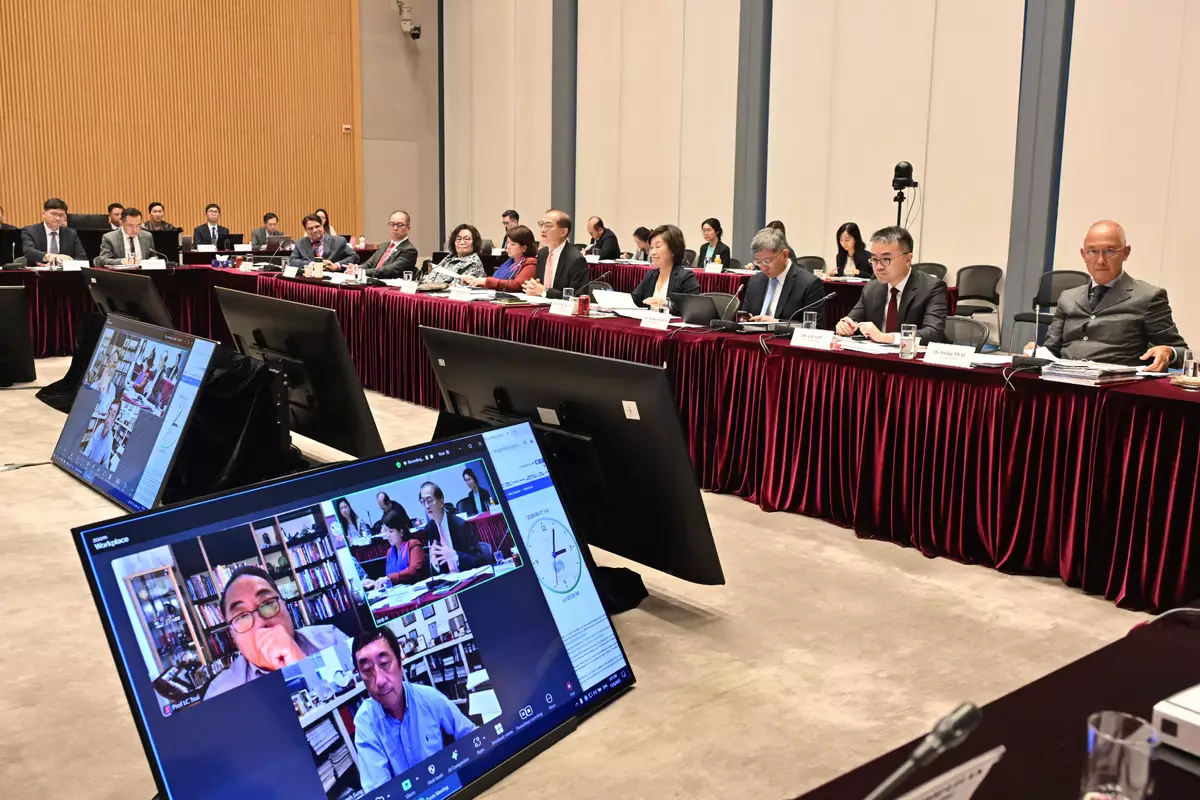
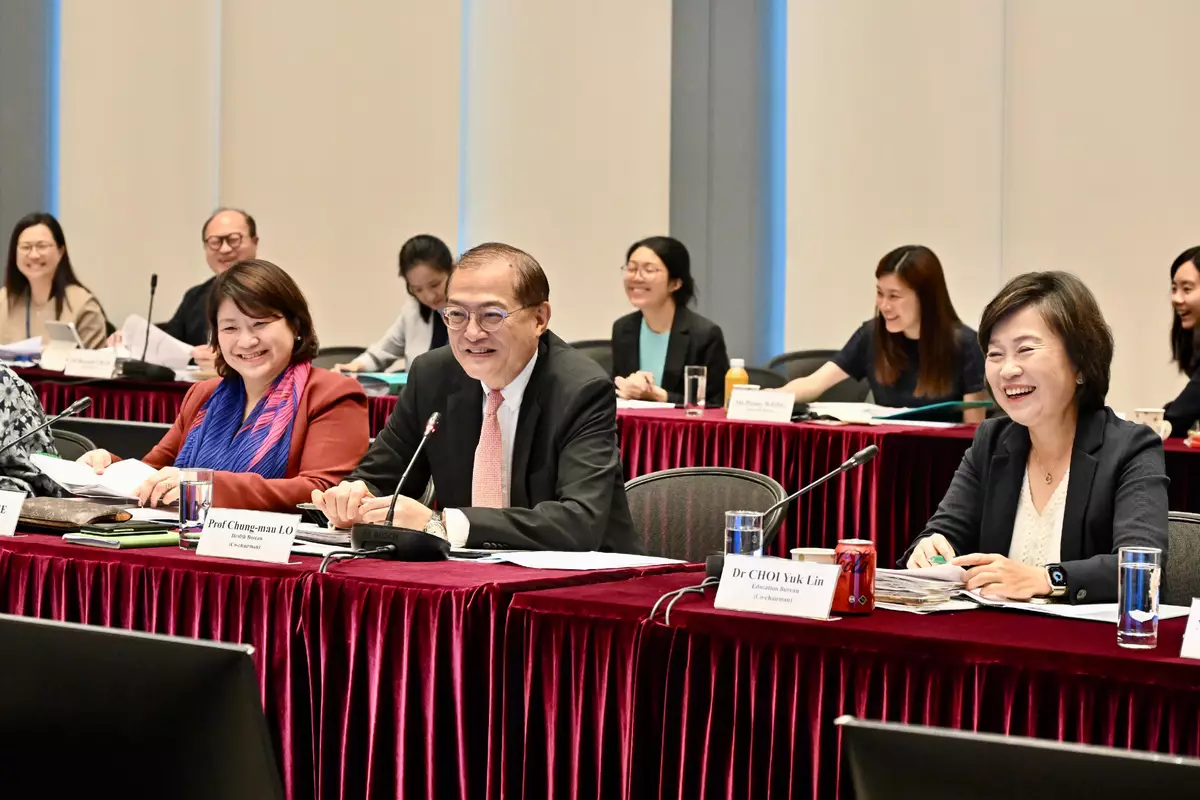
The Task Group on New Medical School met separately with the three universities that have submitted proposals for the establishment of the third medical school, namely Hong Kong Baptist University, the Hong Kong Polytechnic University and the Hong Kong University of Science and Technology, for the second time today (June 17) to have a focused exchange on the specific implementation plans of their proposals. Each university further presented to the Task Group its overall plan for implementing the new medical school proposal, including the curriculum content, clinical training for medical students, construction of teaching facilities, and funding arrangements, and responded to the suggestions and targeted questions raised by the Task Group after the first meeting. The Task Group will enhance speed and efficiency in expediting the assessment of the proposals, with a view to completing the assessments and providing a recommendation to the Government within this year.
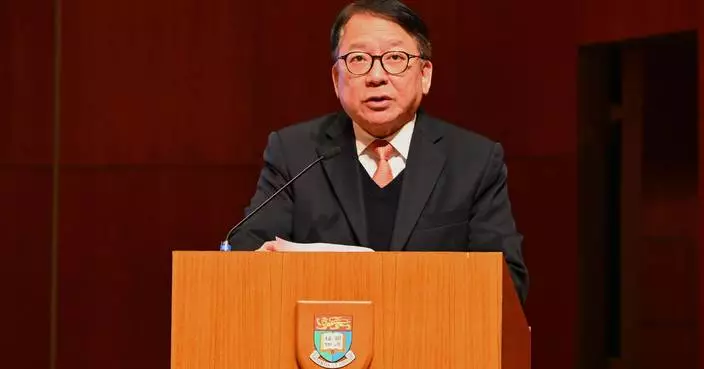
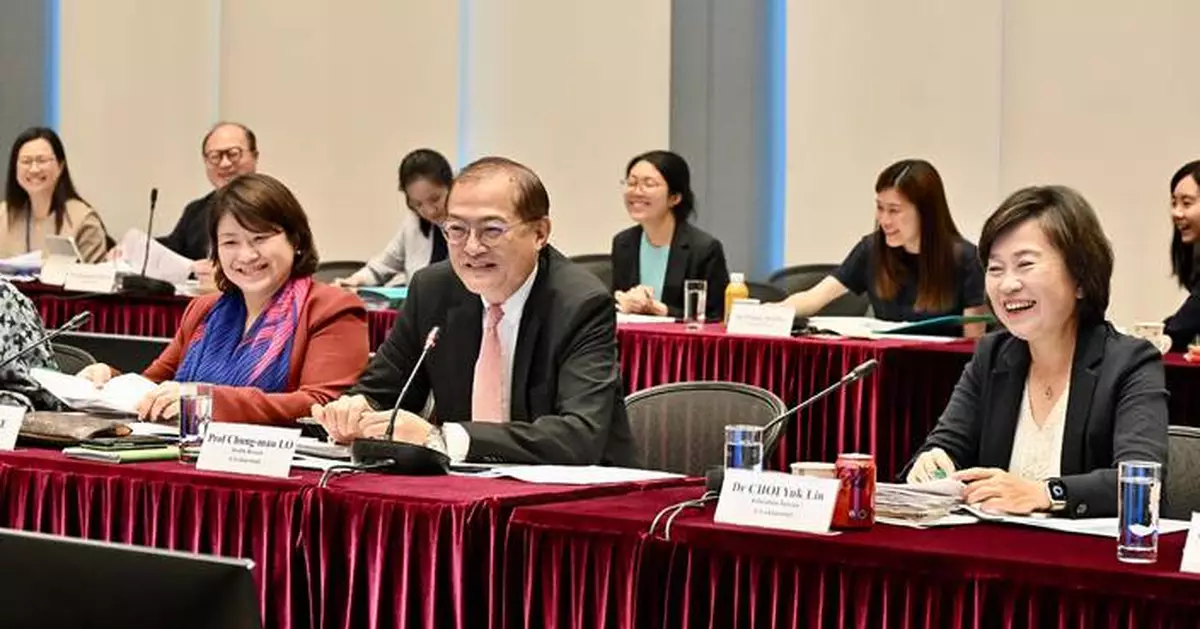
The Secretary for Health, Professor Lo Chung-mau, said, "I am pleased to see that all the three universities have demonstrated a strong commitment to nurturing medical talent and developing Hong Kong into an international health and medical innovation hub, as well as responded positively to the key concerns raised by the Task Group, in particular, the quality of medical education and clinical training arrangements. As President Xi Jinping said, 'Health is the most important indicator of people's happiness.' The current-term Hong Kong Special Administrative Region Government strives to comprehensively deepen the reform of the healthcare system, and the new medical school will not only shoulder the mission of coping with the rapidly ageing population and the worsening shortage of healthcare manpower, but also collaborate and pursue complementary development with the two existing medical schools, with a view to contributing to the long-term enhancement of the quality, efficiency, and sustainability of Hong Kong's healthcare system."
The Secretary for Education, Dr Choi Yuk-lin, said, "The establishment of the new medical school is not only a development project for an individual university, but also an important step in elevating Hong Kong's position as an international hub for medical education and innovation. The 2024-2035 master plan on building China into a leading country in education newly released by our nation strives to accelerate the development of world-class universities and advanced disciplines. We expect the selected university to take on the important task of actively promoting curriculum innovation, interdisciplinary collaboration and establishing closer ties with regional partners. In addition to facilitating the overall development of the university concerned, the new medical school will also be able to nurture more healthcare talent, raise academic standard and broaden the scope of medical education and research in Hong Kong."
Established in October last year, the Task Group comprises seasoned local, Mainland and overseas academics in medical education and university management, professionals, representatives from the Medical Council of Hong Kong and the Hong Kong Academy of Medicine, as well as representatives from the relevant government bureaux and departments. It has already set the overall direction and parameters for establishing the new medical school. In December last year, the Task Group issued a letter of invitation to all University Grants Committee-funded universities to invite local universities interested in establishing the new medical school to submit proposals, and three proposals were receivedby the deadline. The Task Group's first round of meetings with each of the three universities that have submitted proposals was conducted on May 3 this year to have in-depth discussions on the proposals.
Task Group on New Medical School meets for second time with universities that submitted proposals Source: HKSAR Government Press Releases
Interdepartmental working group on festival arrangements releases latest information on special boundary-crossing and corresponding public transport service arrangements during New Year's Eve and New Year holidays
The interdepartmental working group on festival arrangements, led by the Chief Secretary for Administration, released the following information today (December 25) on the special boundary-crossing and corresponding public transport service arrangements during New Year's Eve and the New Year holidays.
In view of a series of New Year's Eve countdown events, while the Hong Kong Port of the Hong Kong-Zhuhai-Macao Bridge (HZMB) and the Lok Ma Chau/Huanggang Port (LMC/HG Port) will maintain 24-hour operations as usual, the Hong Kong Special Administrative Region (HKSAR) Government reached a consensus with the relevant departments of Guangdong Province and Shenzhen Municipality to make the following special boundary-crossing arrangements on New Year's Eve to facilitate cross-boundary passenger and vehicular movements:
(1) Passenger clearance services at the Lo Wu Control Point, which usually close at midnight, will be extended to 2am the next day. The operating hours of the MTR East Rail Line will be extended correspondingly, with the departure of the last East Rail Line train from Admiralty to Lo Wu extended to 12.56am; and
(2) Passenger and passenger vehicle clearance services at the Shenzhen Bay Port (SBP), which usually close at midnight, will operate overnight, providing round-the-clock services.
For more effective diversion of cross-boundary private cars on New Year's Day with the implementation of round-the-clock clearance at the SBP, only cross-boundary private cars issued with Closed Road Permits (Permits) for the LMC/HG Port are allowed to use the LMC/HG crossing. For cross-boundary private cars issued with Permits for SBP, LMC/HG, Heung Yuen Wai, Man Kam To Boundary Control Point (BCP) or Sha Tau Kok BCP, they can use the SBP during early-morning hours on New Year's Day.
For cross-boundary coaches, the HKSAR Government has also worked with cross-boundary coach service operators to arrange additional services using the SBP during early-morning hours on New Year's Day, and to enhance the services using the LMC/HG Port, including cross-boundary coaches departing from major stopping points in urban areas such as Wan Chai, Prince Edward and Jordan, as well as a shuttle bus running between the Lok Ma Chau (San Tin) Public Transport Interchange and the LMC/HG Port (Yellow Bus), and the HZMB shuttle bus (Gold Bus). Moreover, a dedicated traffic lane section will be reserved for public transport services at the HZMB, LMC/HG Port, and SBP when necessary, to ensure the smooth operation of public transport services.
As regards local public transport services connecting to BCPs, to tie in with the special round-the-clock passenger clearance arrangements of the SBP on New Year's Day, franchised bus operators will operate two special overnight bus routes, Nos. NB2 and NB3, to provide services to and from Yuen Long/Tin Shui Wai and Tuen Mun respectively during the overnight period. Furthermore, in the case of travellers using overnight services of the MTR East Rail Line that night, after the closure of the Lo Wu Control Point, they may also take the specially arranged short-working bus service, route No. N73, from MTR Sheung Shui Station to Lok Ma Chau (San Tin) Public Transport Interchange, and transfer to the Yellow bus for their journey to Shenzhen.
Residents and visitors may visit "Easy Boundary" (www.sb.gov.hk/eng/bwt/status.html?type=outbound), a one-stop information platform on immigration clearance launched by the Security Bureau, to obtain useful information in one go, including the respective average waiting time for passengers and private cars at land BCPs, as well as for the Gold Bus and Yellow Bus to plan their trips and save waiting time.
The Transport Department's Emergency Transport Co-ordination Centre will operate 24 hours to closely monitor the traffic conditions and public transport services of various districts, the BCPs and major stations; implement contingency measures when necessary to meet service demands; and disseminate the latest traffic information through various channels.
"The full support and co-ordination of the leaders and relevant departments of Guangdong Province and Shenzhen Municipality are crucial to the implementation of the special boundary-crossing arrangements to facilitate the two-way flow of people between Hong Kong and the Mainland, reflecting the effective and close co-operation between Hong Kong and Shenzhen," the spokesman said.
The HKSAR Government will closely monitor the situation and take contingency actions promptly where necessary and deploy manpower flexibly to ensure orderly operations of the BCPs. The Government has formulated contingency plans for the peak periods of cross-boundary travel and made preparations for preventive and control measures to cater for different scenarios. Relevant bureaux and departments have formulated the plans below.
First, with the extension of operating hours at certain BCPs on New Year's Eve, the relevant departments have minimised leave for frontline officers for flexible manpower deployment. Additional counters, temporary counters and channels will be in operation to facilitate passenger and vehicular flow.
Second, the Inter-departmental Joint Command Centre set up by the Hong Kong Police Force, the Immigration Department, the Customs and Excise Department and other relevant departments will be activated from December 31, 2025 to January 4, 2026 to monitor the real-time situations at various BCPs and regularly report to the interdepartmental working group on festival arrangements, maintain close liaison with Mainland port authorities through the established port hotlines and real-time notification mechanism, and take timely contingency actions to flexibly deploy manpower at the BCPs to ensure smooth operation of the land control points.
Third, the Security Bureau will activate the Emergency Monitoring and Support Centre from December 31, 2025 to January 4, 2026 to closely monitor public order matters and co-ordinate any necessary actions at various BCPs, and support the working group in facilitating interdepartmental follow-up actions where necessary to respond promptly to various kinds of emergencies.
The interdepartmental working group on festival arrangements is tasked with holistically co-ordinating and steering the preparatory work of various government departments for welcoming visitors to Hong Kong during the New Year's Eve and New Year holidays, as well as strengthening information dissemination to enable the public and visitors to plan their itineraries according to the latest situation.
Source: AI-found images