BERLIN (AP) — A century after the city of Berlin banned swimming in the Spree River because it was so polluted it could make people sick, there's a push by swimmers to get back into the water.
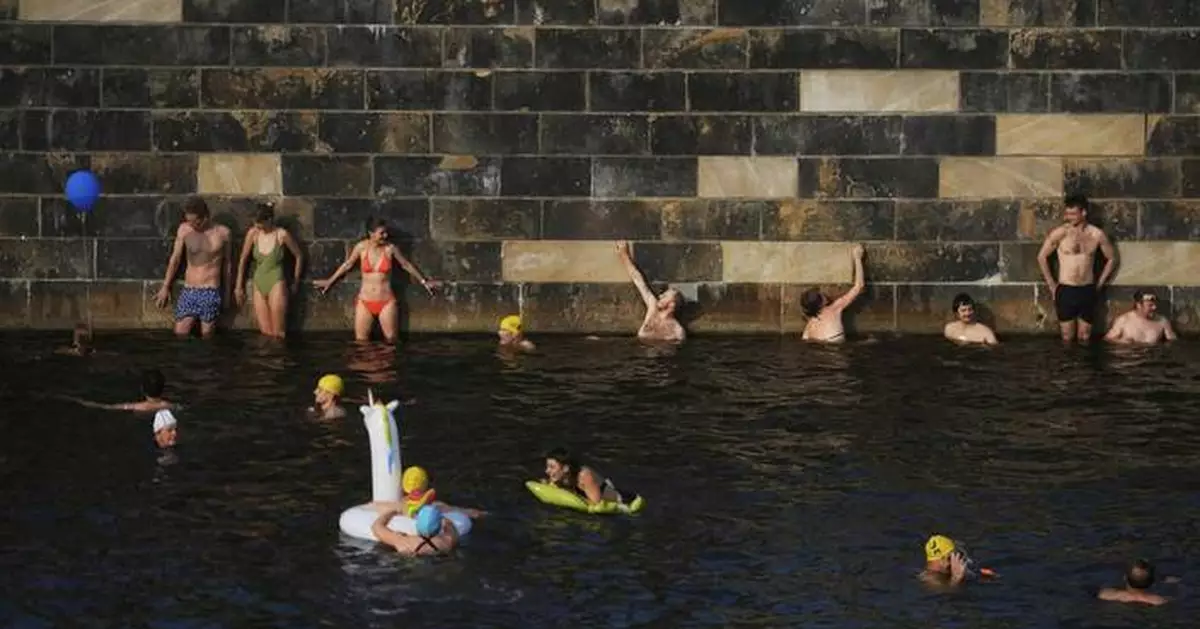
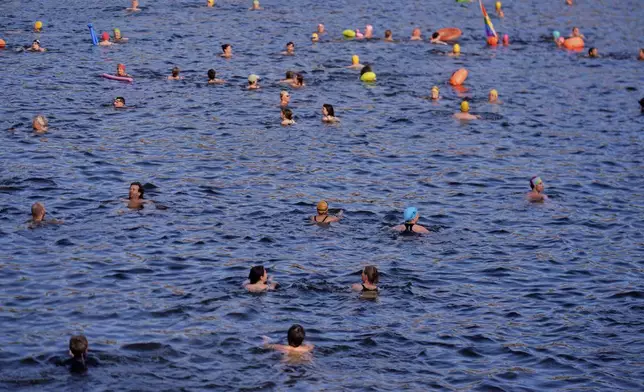
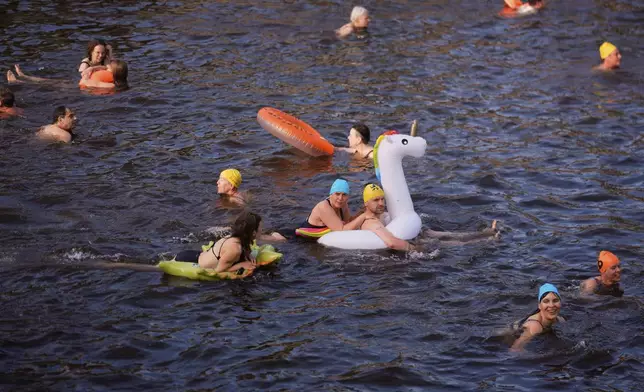
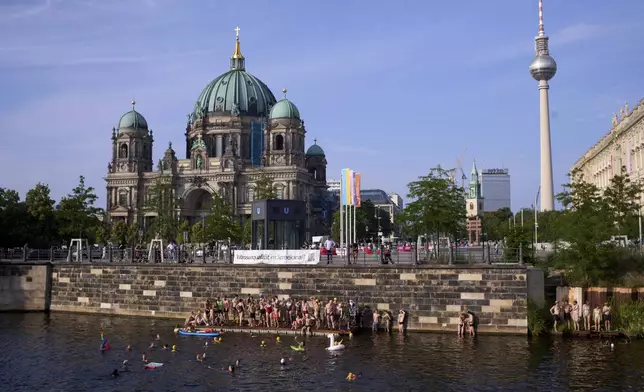
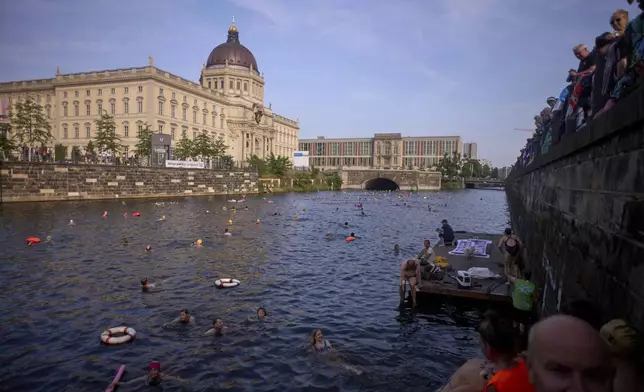
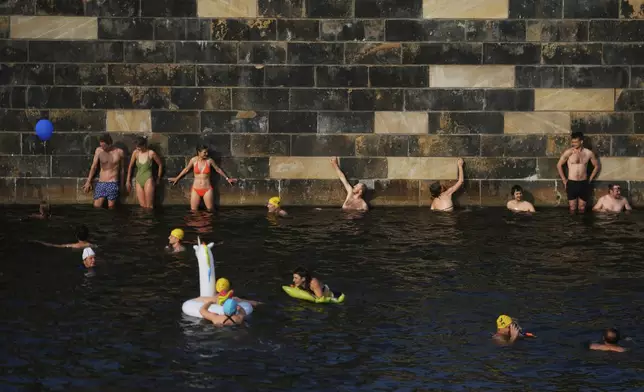
Around 200 people jumped into the slow-moving, greenish water Tuesday to show that it's not only clean enough, but also lots of fun to splash and swim in the Mitte neighborhood along the world-famous Museum Island.
Click to Gallery
People swim in the river Spree to demand the lift of the hundred years old swimming ban at the river in Berlin, Germany, Tuesday, June 17, 2025. (AP Photo/Markus Schreiber)
People swim in the river Spree to demand the lift of the hundred years old swimming ban at the river in Berlin, Germany, Tuesday, June 17, 2025. (AP Photo/Markus Schreiber)
People swim in the river Spree to demand the lift of the hundred years old swimming ban at the river in Berlin, Germany, Tuesday, June 17, 2025. (AP Photo/Markus Schreiber)
People swim in the river Spree to demand the lift of the hundred years old swimming ban at the river in front of the Stadtschloss or City Place in Berlin, Germany, Tuesday, June 17, 2025. (AP Photo/Markus Schreiber)
People swim in the river Spree to demand the lift of the hundred years old swimming ban at the river in Berlin, Germany, Tuesday, June 17, 2025. (AP Photo/Markus Schreiber)
A group calling itself Fluss Bad Berlin, or River Pool Berlin, has been lobbying for years to open the meandering river for swimmers again.
“For 100 years now, people have not been allowed to swim in the inner-city Spree and we no longer think this is justified, because we can show that the water quality is usually good enough to go swimming during the season," said Jan Edler, who is on the board of Fluss Bad Berlin and helped organize Tuesday's swim-in.
To circumvent the ban, the group registered their collective swim event as an official protest.
Standing on a little staircase that leads down to the Spree canal, which flows around the southern side of the island, Edler stressed that “we want the people to use the Spree for recreation again.”
He pointed to the fact that the river has been cleaned up thoroughly, and that the water quality has improved in the last decade and is constantly being monitored.
Even city officials in the central Mitte district of Berlin say they'd be interested in introducing river swimming again in 2026.
“There are still many things that need to be clarified, but I am optimistic that it can succeed,” district city councilor Ephraim Gothe told German news agency dpa recently.
Supporters of lifting the swimming ban also point at Paris, where the Seine River was opened up for swimmers for the Olympic Games last year and will be opened this summer for Parisians. Swimming there had been banned since 1923.
In Vienna, too, water lovers can splash into the Danube River canal, in the Swiss city of Basel they can bathe in the Rhine, and in Amsterdam there are some designated areas where people can plunge into the canals.
Only in Berlin, swimming has been continuously prohibited in the Spree since May 1925, when the German capital closed all traditional river pools because the water was deemed too toxic. Some of those pools weren't only used for recreational swimming, but were a place for poor people to wash themselves if they didn't have bathrooms at home.
These days, the water is clean on most days, except when there's heavy rain, which leads to some water pollution.
Allowing swimmers to dive into the river would also mean loosening the historical monument protection on some parts of the riverbanks to install easy access ways to the water and places for lifeguards.
Another problem is the busy boat traffic on the Spree that could endanger swimmers. However, for the time being, the Fluss Bad Berlin group only wants to open up nearly 2-kilometer-long (just over a mile-long) canal where there's no boat traffic.
For what it's worth, the German capital, a city of 3.9 million, could definitely need more places where people can cool off in the summer as regular outdoor pools tend to be hopelessly overcrowded on hot summer days.
“The cities are getting hotter,” Edler said. "It's also a question of environmental justice to create offers for people who just can’t make it out of the city when it’s so hot and can enjoy themselves in the countryside.”
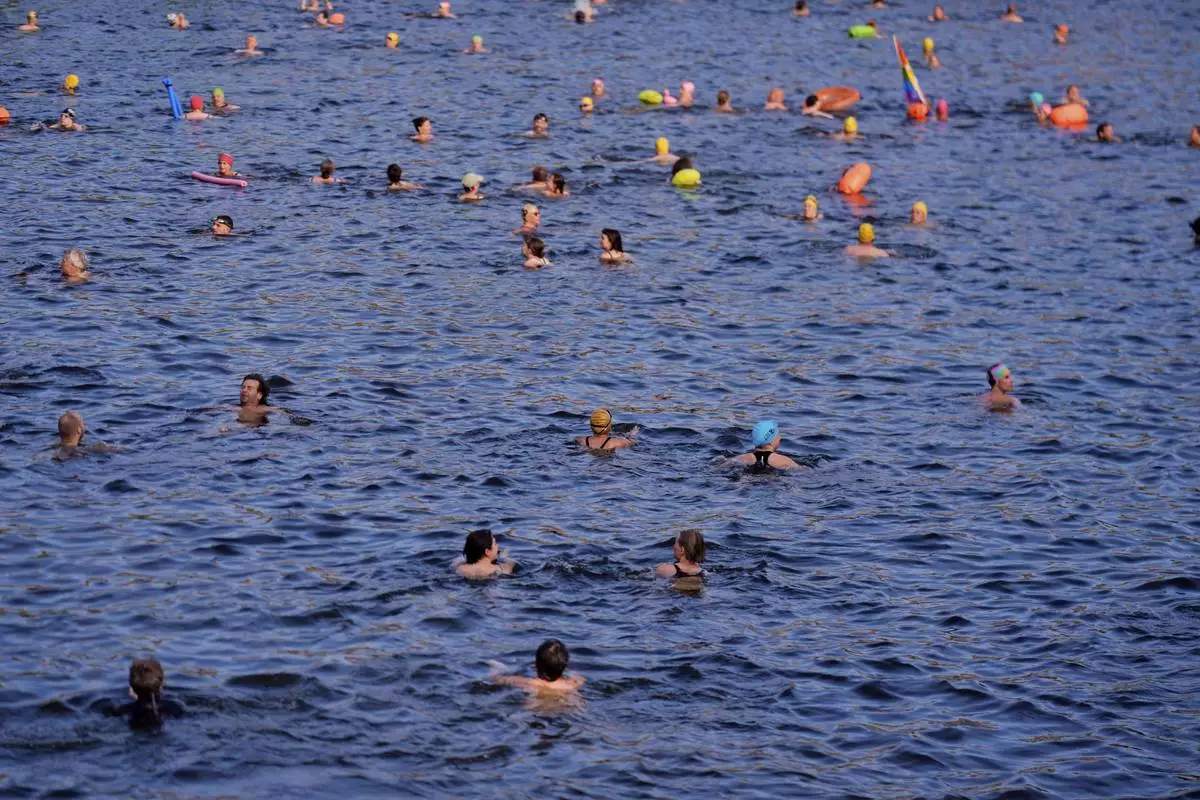
People swim in the river Spree to demand the lift of the hundred years old swimming ban at the river in Berlin, Germany, Tuesday, June 17, 2025. (AP Photo/Markus Schreiber)
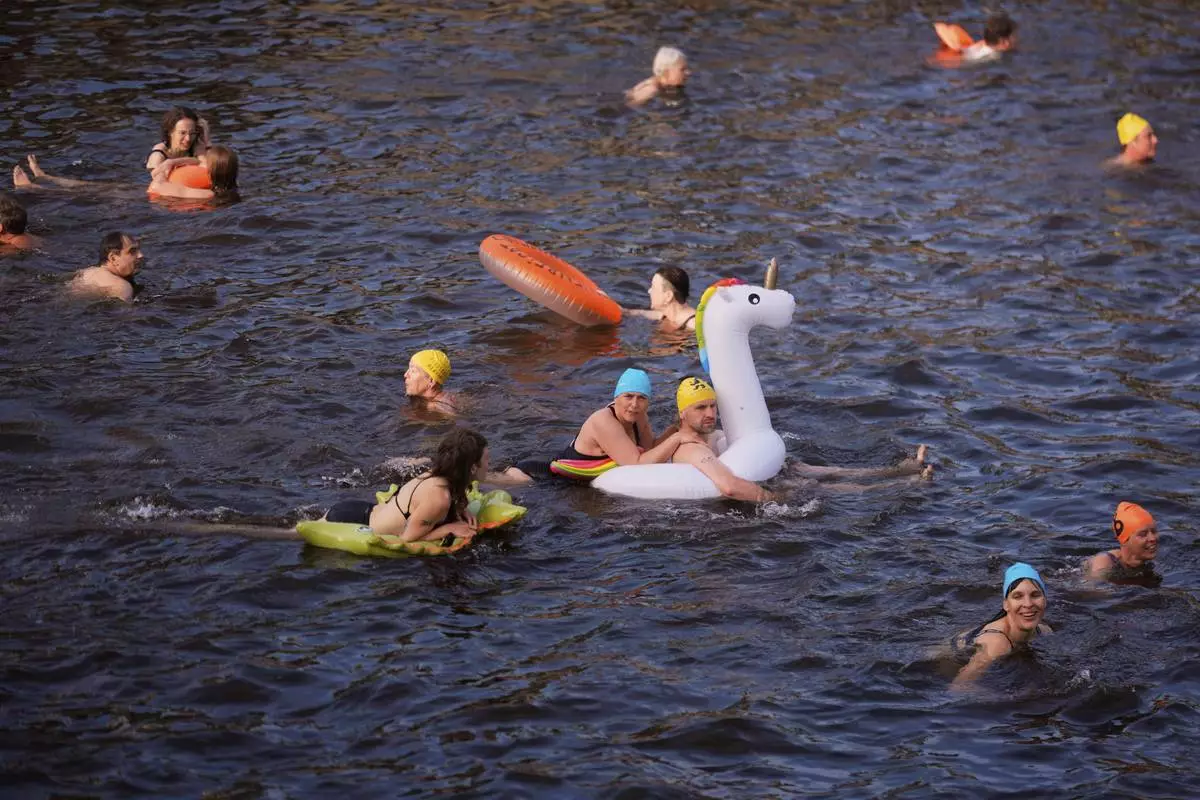
People swim in the river Spree to demand the lift of the hundred years old swimming ban at the river in Berlin, Germany, Tuesday, June 17, 2025. (AP Photo/Markus Schreiber)
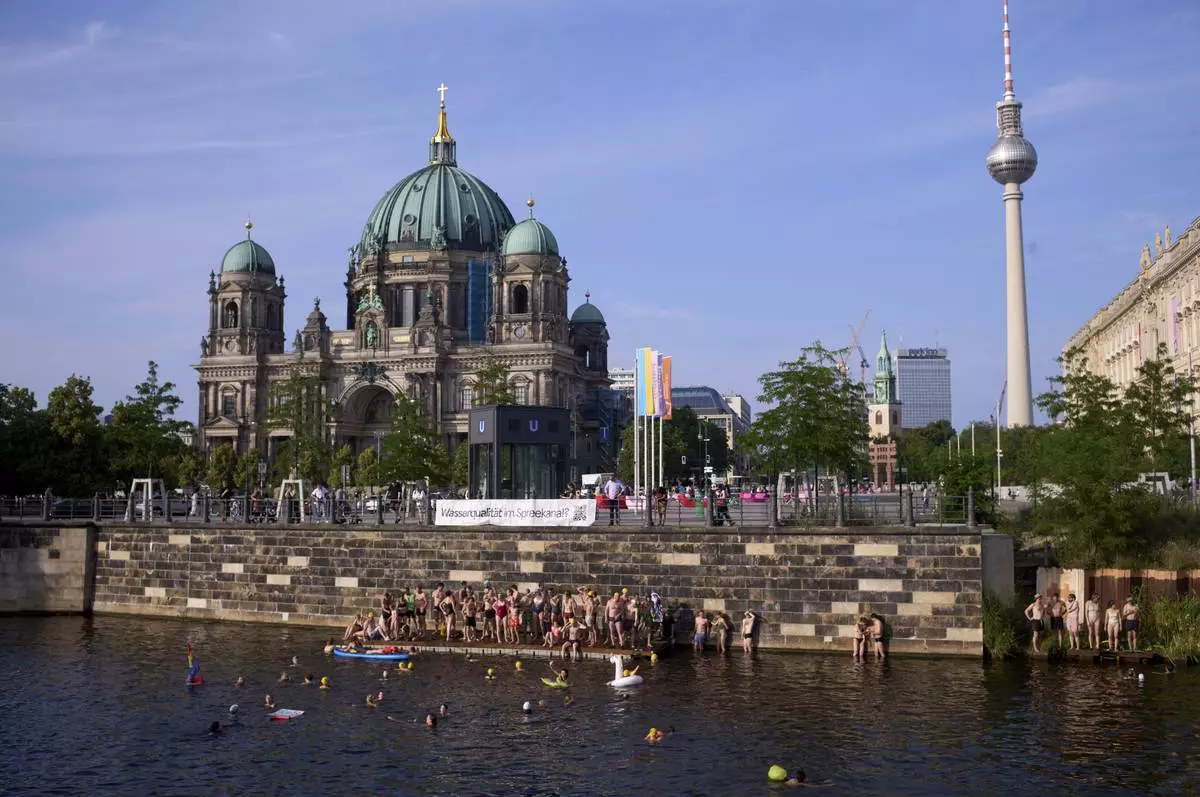
People swim in the river Spree to demand the lift of the hundred years old swimming ban at the river in Berlin, Germany, Tuesday, June 17, 2025. (AP Photo/Markus Schreiber)
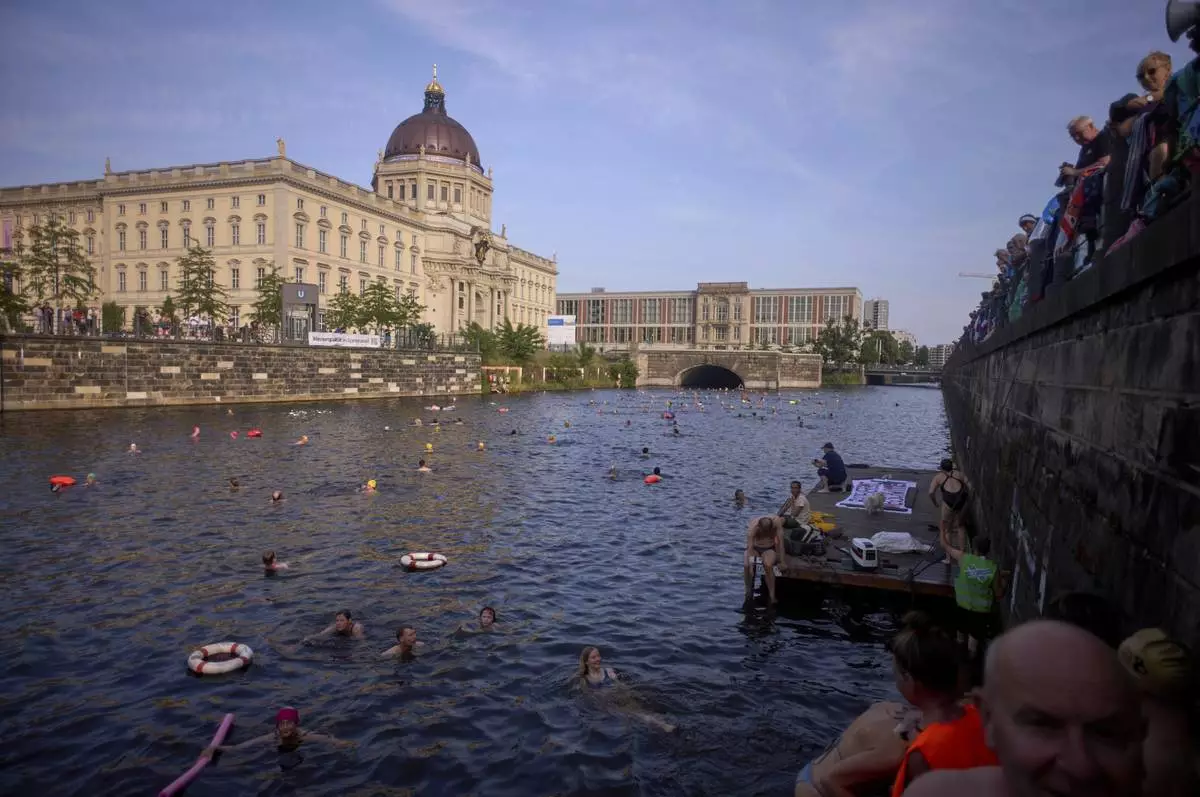
People swim in the river Spree to demand the lift of the hundred years old swimming ban at the river in front of the Stadtschloss or City Place in Berlin, Germany, Tuesday, June 17, 2025. (AP Photo/Markus Schreiber)
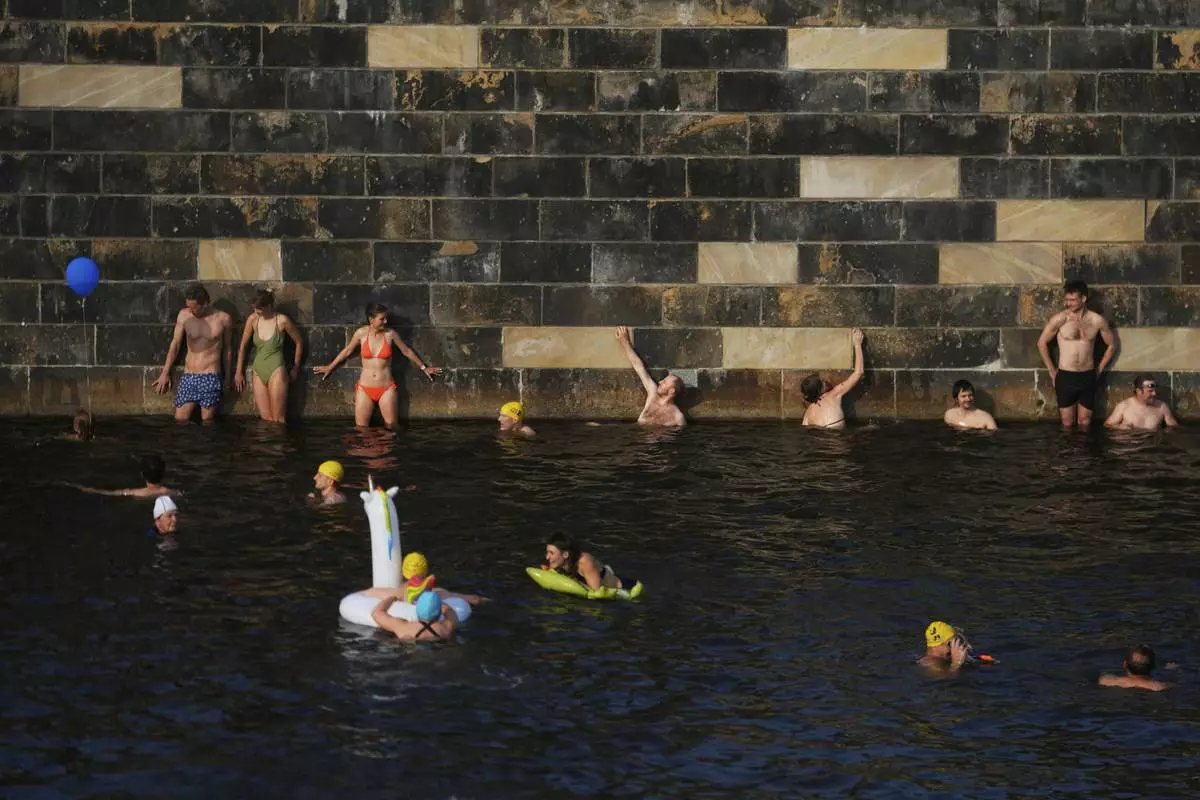
People swim in the river Spree to demand the lift of the hundred years old swimming ban at the river in Berlin, Germany, Tuesday, June 17, 2025. (AP Photo/Markus Schreiber)
SEOUL, South Korea (AP) — North Korea on Thursday displayed apparent progress in the construction of a nuclear-powered submarine, with state media photos showing a largely completed hull, as leader Kim Jong Un condemned rival South Korea’s push to acquire the technology.
North Korea’s official Korean Central News Agency said Kim visited a shipyard to inspect the construction of what the North describes as an 8,700-ton-class nuclear-propelled submarine, which the leader has called a crucial step in the modernization and nuclear armament of North Korea’s navy. The North has indicated it plans to arm the submarine with nuclear weapons, calling it a “strategic guided missile submarine” or a “strategic nuclear attack submarine.”
During the visit, Kim described South Korea’s efforts to acquire its own nuclear-powered submarine, which have been backed by U.S. President Donald Trump, as an “offensive act” that severely violates the North’s security and maritime sovereignty.
He said that the South Korean plan further underscores the need to advance and nuclear-arm North Korea’s navy, and claimed that the completion of his nuclear-powered submarine would be an “epoch-making” change in strengthening its nuclear war deterrent against what he called enemy threats.
The agency did not specify when Kim visited the shipyard but released photos showing him inspecting a huge, burgundy-colored vessel, coated with what appears to be anti-corrosion paint, under construction inside an assembly hall with senior officials and his daughter. It was the first time North Korean state media had released images of the submarine since March, when they mostly showed the lower sections of the vessel.
It was not immediately clear how close North Korea is to completing the vessel. But because submarines are typically built from the inside out, the release of what appears to be a largely completed hull suggests that many core components, including the engine and possibly the reactor, are already in place, said Moon Keun-sik, a submarine expert at Seoul’s Hanyang University.
“Showing the entire vessel now seems to indicate that most of the equipment has already been installed and it is just about ready to be launched into the water,” said Moon, a former submarine officer in the South Korean navy, who believes the North Korean submarine could possibly be tested at sea within months.
A nuclear-powered submarine was one item on a long wish list of sophisticated weaponry that Kim announced during a major political conference in 2021 to cope with what he called growing U.S.-led military threats. Other weapons were solid-fueled intercontinental ballistic missiles, hypersonic weapons, spy satellites and multi-warhead missiles.
North Korea has conducted a series of tests to develop some of those systems and recently unveiled a new naval destroyer, which Kim hailed as a major step toward expanding the operational range and preemptive strike capabilities of the country’s nuclear forces.
If North Korea obtains a submarine capable of operating stealthily for extended periods and launching missiles from underwater, it would be a worrying development for its neighbors, as such launches would be difficult to detect in advance. But there have been questions about whether North Korea, a heavily sanctioned and impoverished country, could get resources and technology to build nuclear-powered submarines.
Some experts say North Korea’s recent alignment with Russia — including sending thousands of troops and military equipment to support President Vladimir Putin’s war in Ukraine — may have helped it to receive crucial technologies in return.
While some analysts suspect North Korea may have sought a reactor from Russia, possibly from a retired Russian submarine, Moon said it's more likely that North Korea designed its own reactor, while possibly receiving some technological assistance from Russia.
During a summit with Trump in November, South Korean President Lee Jae Myung called for U.S. support for South Korea’s efforts to acquire nuclear-powered submarines, while reaffirming a commitment to increase defense spending to ease the burden on the United States.
Trump later said that the United States is open to sharing closely held technology to allow South Korea to build a nuclear-powered submarine, but it’s not immediately clear where and when the vessel would be built and how Seoul would get the nuclear fuel and reactor technology required.
In a separate report, KCNA said Kim on Wednesday supervised a test of a new, long-range anti-air missile that was fired toward its eastern sea. South Korea’s Defense Ministry didn’t immediately comment on the launch.
Tensions on the Korean Peninsula have worsened in recent years as Kim accelerated his military nuclear program and deepened alignment with Moscow following Russia’s invasion of Ukraine. His government has repeatedly dismissed calls by Washington and Seoul to revive negotiations aimed at winding down his nuclear and missile programs, which derailed in 2019 following a collapsed summit with Trump during the American president’s first term.

In this photo provided by the North Korean government, a test of a long-range anti-air missile is launched towards its eastern sea, as seen from an undisclosed location in North Korea, Wednesday, Dec. 24, 2025. Independent journalists were not given access to cover the event depicted in this image distributed by the North Korean government. The content of this image is as provided and cannot be independently verified. Korean language watermark on image as provided by source reads: "KCNA" which is the abbreviation for Korean Central News Agency. (Korean Central News Agency/Korea News Service via AP)
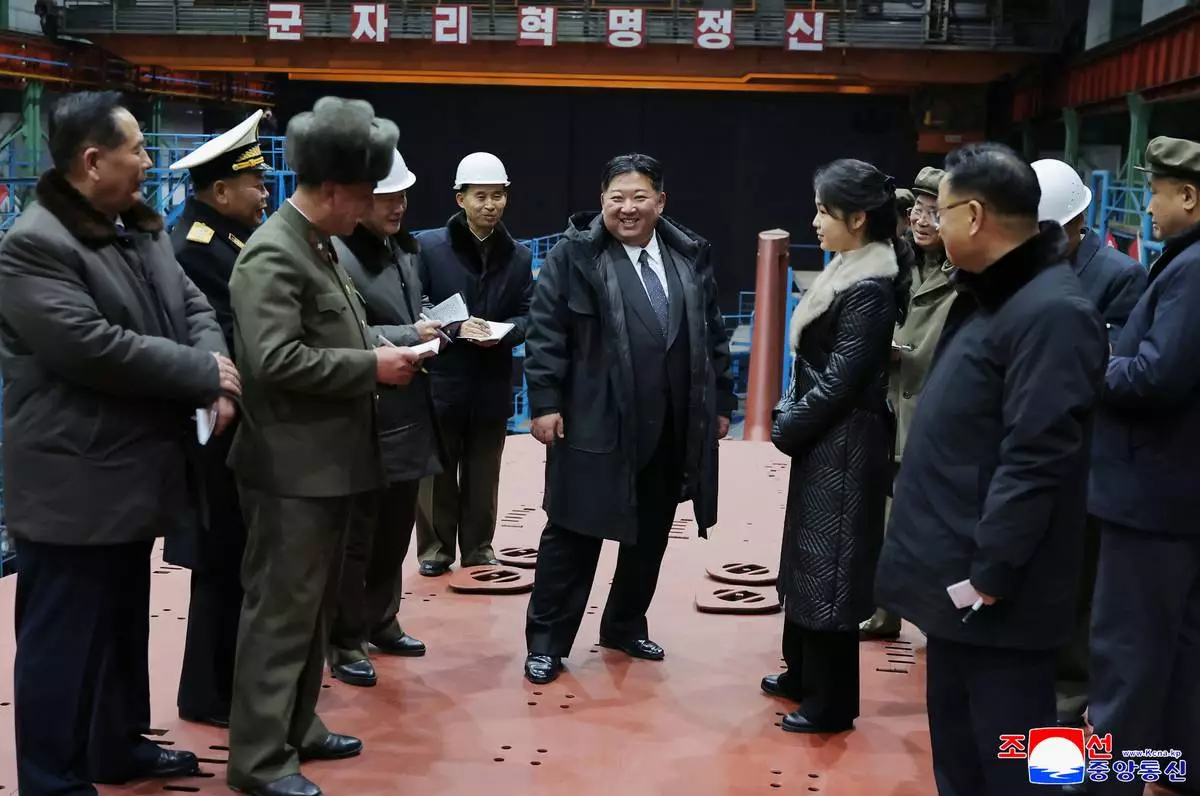
In this undated photo provided Thursday, Dec. 25, 2025, by the North Korean government, its leader Kim Jong Un, with his daughter, inspects a nuclear-powered submarine under construction at an undisclosed location in North Korea. Independent journalists were not given access to cover the event depicted in this image distributed by the North Korean government. The content of this image is as provided and cannot be independently verified. Korean language watermark on image as provided by source reads: "KCNA" which is the abbreviation for Korean Central News Agency. (Korean Central News Agency/Korea News Service via AP)

In this undated photo provided Thursday, Dec. 25, 2025, by the North Korean government, its leader Kim Jong Un, third left, visits a shipyard as he inspects a nuclear-powered submarine under construction at an undisclosed location in North Korea. Independent journalists were not given access to cover the event depicted in this image distributed by the North Korean government. The content of this image is as provided and cannot be independently verified. Korean language watermark on image as provided by source reads: "KCNA" which is the abbreviation for Korean Central News Agency. (Korean Central News Agency/Korea News Service via AP)

In this undated photo provided Thursday, Dec. 25, 2025, by the North Korean government, its leader Kim Jong Un inspects a nuclear-powered submarine under construction at an undisclosed location in North Korea. Independent journalists were not given access to cover the event depicted in this image distributed by the North Korean government. The content of this image is as provided and cannot be independently verified. Korean language watermark on image as provided by source reads: "KCNA" which is the abbreviation for Korean Central News Agency. (Korean Central News Agency/Korea News Service via AP)

In this undated photo provided Thursday, Dec. 25, 2025, by the North Korean government, its leader Kim Jong Un inspects a nuclear-powered submarine under construction at an undisclosed location in North Korea. Independent journalists were not given access to cover the event depicted in this image distributed by the North Korean government. The content of this image is as provided and cannot be independently verified. Korean language watermark on image as provided by source reads: "KCNA" which is the abbreviation for Korean Central News Agency. (Korean Central News Agency/Korea News Service via AP)