Skip to Content Facebook Feature Image

Man charged with killing prominent lawmaker could face a rarity for Minnesota: the death penalty

News

Man charged with killing prominent lawmaker could face a rarity for Minnesota: the death penalty
News

News

Man charged with killing prominent lawmaker could face a rarity for Minnesota: the death penalty

2025-06-19 04:53 Last Updated At:05:01

MINNEAPOLIS (AP) — The man charged with killing a prominent Minnesota lawmaker and wounding another could face something that is a rarity for Minnesota but could become more common under the Trump administration: the death penalty.

Minnesota abolished capital punishment in 1911, and the state's last execution was a botched hanging in 1906. But federal prosecutors announced charges against Vance Boelter on Monday that can carry the death penalty.

More Images
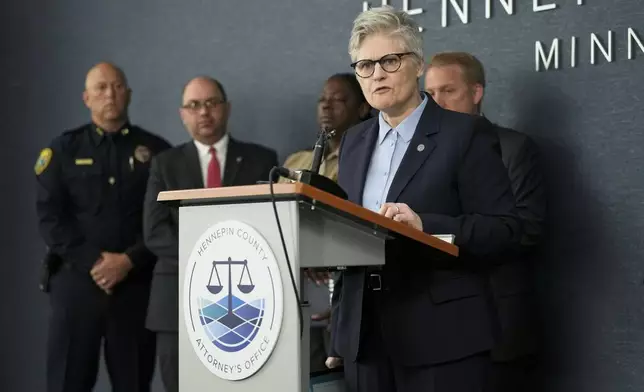
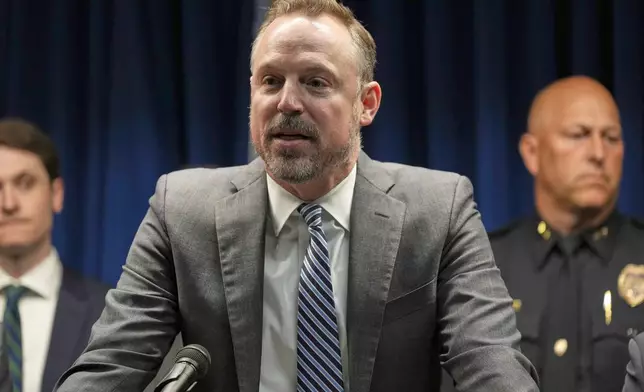
Hennepin County Attorney Mary Moriarty speaks during a news conference at the Hennepin County Attorney’s Office in Minneapolis, Monday, June 16, 2025. (AP Photo/George Walker IV)
Hennepin County Attorney Mary Moriarty speaks during a news conference at the Hennepin County Attorney’s Office in Minneapolis, Monday, June 16, 2025. (AP Photo/George Walker IV)

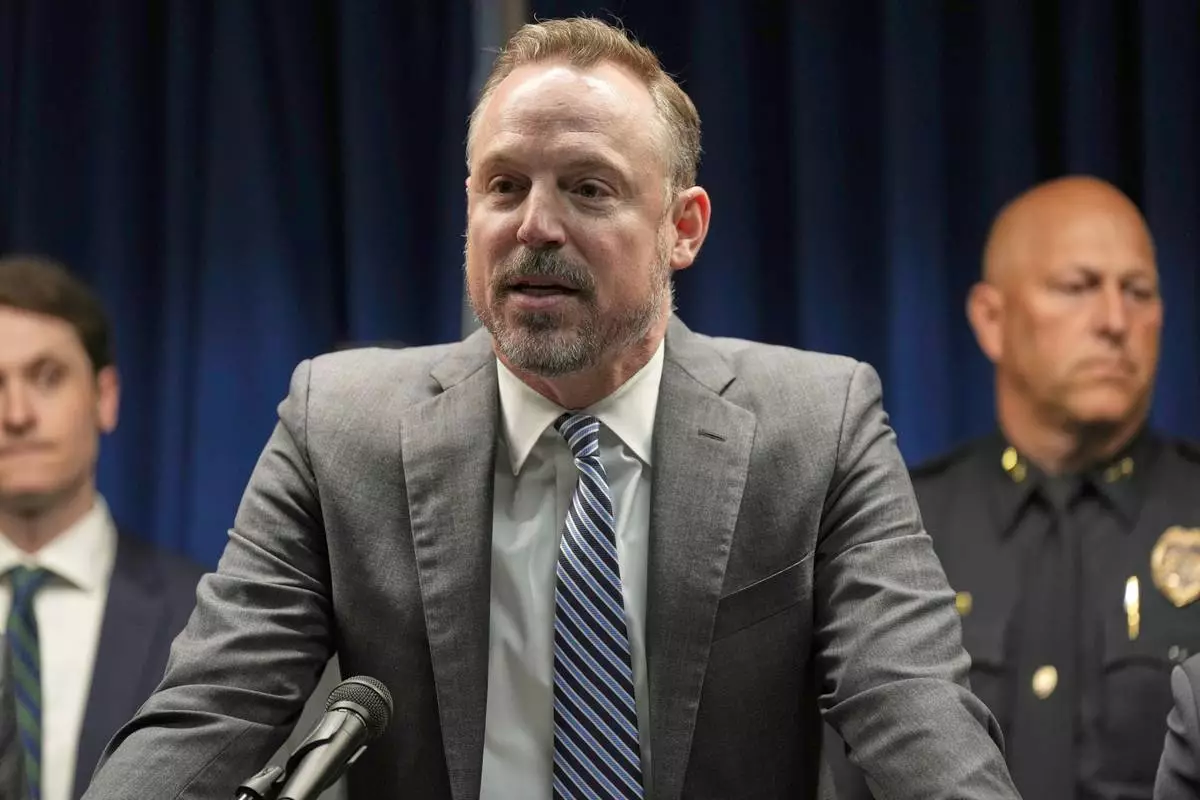
Acting U.S. Attorney Joseph H. Thompson speaks during a news conference at the United States Courthouse in Minneapolis, Monday, June 16, 2025. (AP Photo/George Walker IV)
Acting U.S. Attorney Joseph H. Thompson speaks during a news conference at the United States Courthouse in Minneapolis, Monday, June 16, 2025. (AP Photo/George Walker IV)

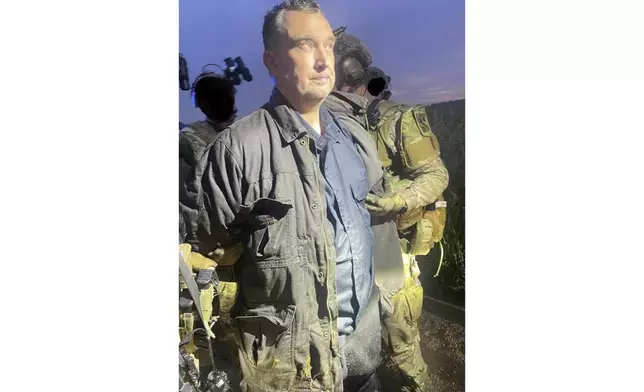
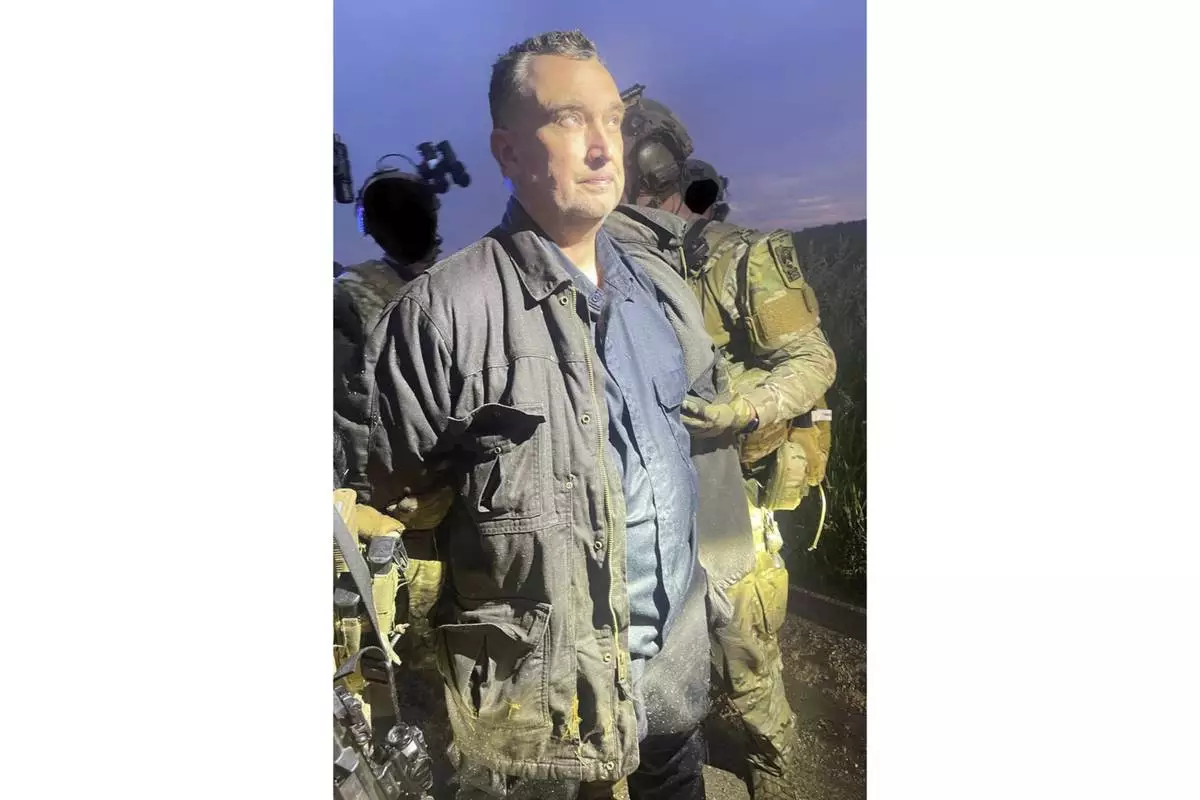
This photo made available by the Ramsey County Sheriff's Office shows Vance Luther Boelter, the man accused of assassinating the top Democrat in the Minnesota House, as he was arrested late Sunday, June 15, 2025. (Ramsey County Sheriff's Office via AP)
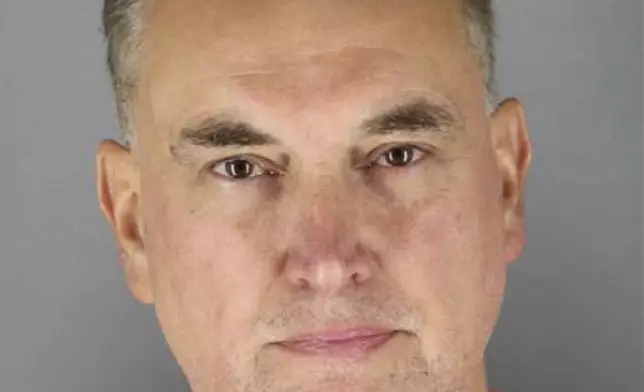
This photo made available by the Ramsey County Sheriff's Office shows Vance Luther Boelter, the man accused of assassinating the top Democrat in the Minnesota House, as he was arrested late Sunday, June 15, 2025. (Ramsey County Sheriff's Office via AP)

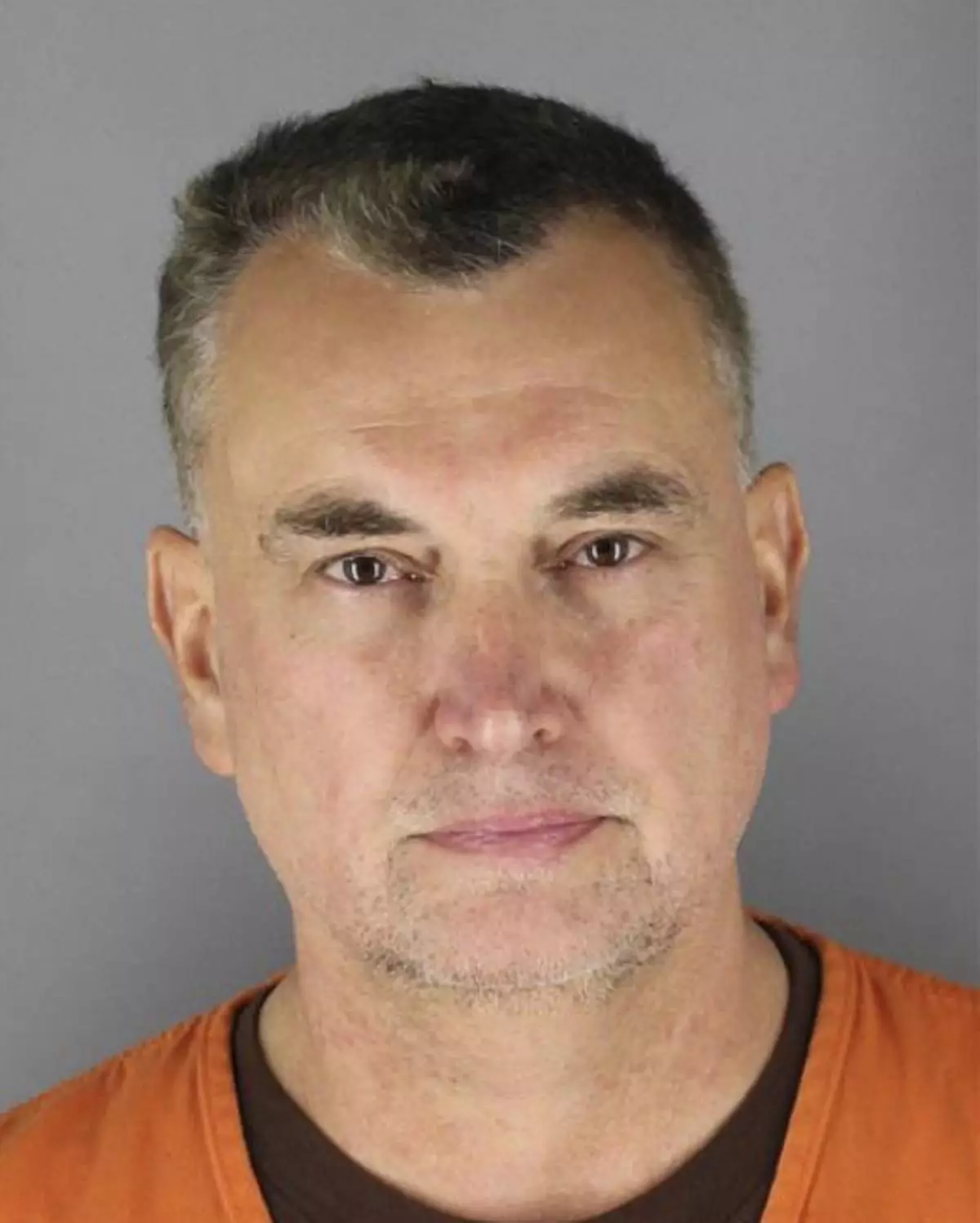
This booking photo provided by the Hennepin County Sheriff's Office shows Vance Boelter in Green Isle, Minn., on June 16, 2025. (Hennepin County Sheriff's Office via AP)
This booking photo provided by the Hennepin County Sheriff's Office shows Vance Boelter in Green Isle, Minn., on June 16, 2025. (Hennepin County Sheriff's Office via AP)

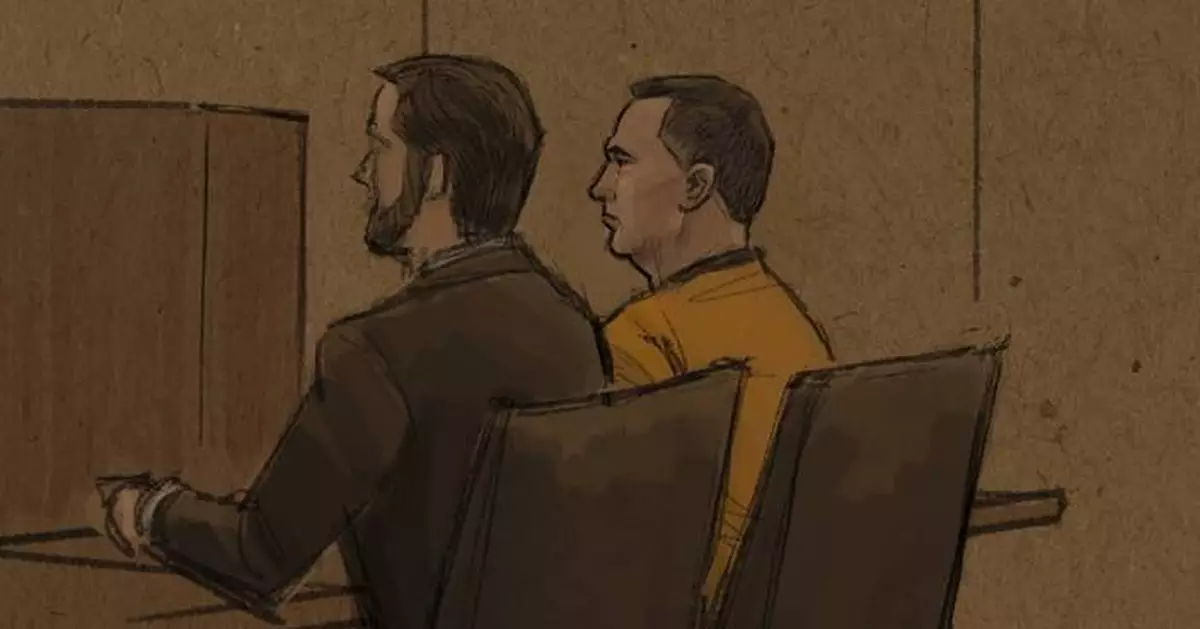
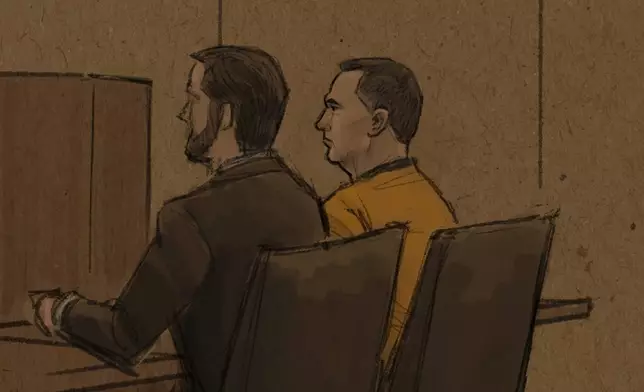
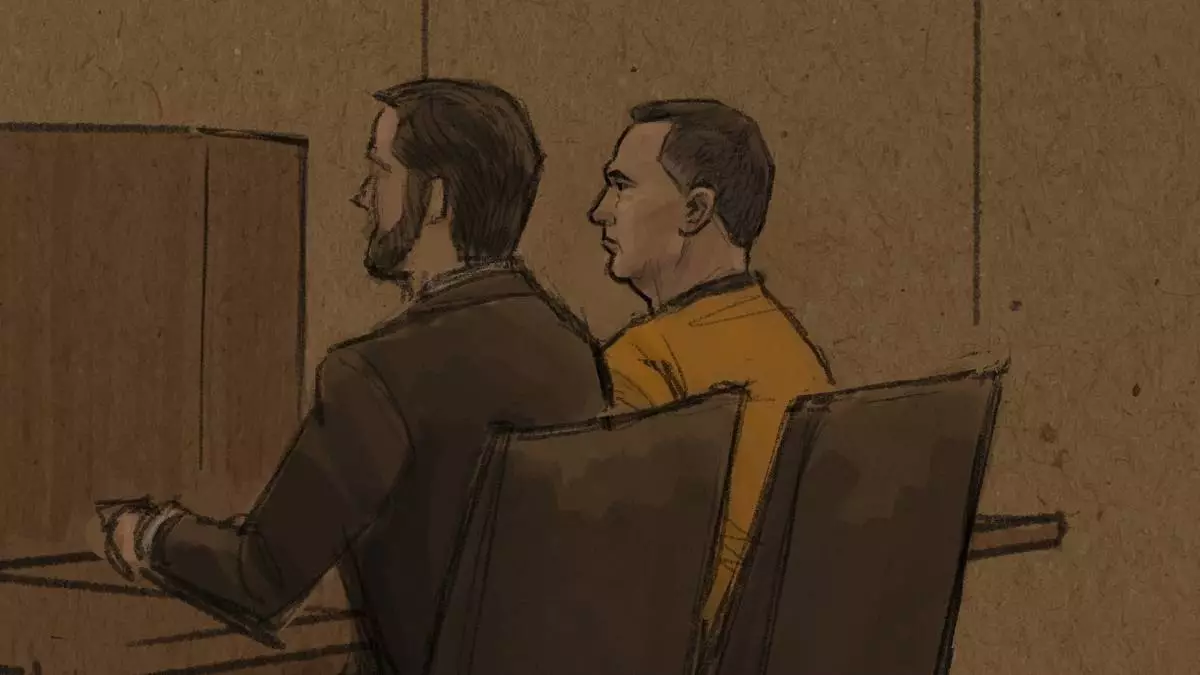
In this courtroom sketch, Vance Boelter, right, who is charged with killing one Minnesota lawmaker and wounding another, is seen at a federal court hearing Monday, June 16, 2025, in St. Paul, Minn. (Cedric Hohnstadt via AP)

In this courtroom sketch, Vance Boelter, right, who is charged with killing one Minnesota lawmaker and wounding another, is seen at a federal court hearing Monday, June 16, 2025, in St. Paul, Minn. (Cedric Hohnstadt via AP)

It is not unheard of for state and federal prosecutors to both pursue criminal cases for the same offense, especially in high-profile matters.

In this case, federal authorities essentially grabbed the lead from the state prosecutor, Hennepin County Attorney Mary Moriarty, who happens to oppose the death penalty. Boelter had been scheduled to make his first court appearance on state charges Monday, but instead marshals took him from the county jail to the U.S. courthouse in St. Paul, where he appeared on the more serious federal charges.

Boelter is accused of fatally shooting former Democratic House Speaker Melissa Hortman and her husband, Mark, in their home early Saturday in the northern Minneapolis suburbs. Before that, authorities say, he also shot and wounded another Democrat, Sen. John Hoffman, and his wife, Yvette, who lived a few miles away. He surrendered Sunday night after what authorities have called the largest search in Minnesota history.

Two of the six federal counts can carry the death penalty, something federal prosecutors have not sought in a Minnesota-based case since the Supreme Court reinstated capital punishment in 1976.

“Will we seek the death penalty? It’s too early to tell. That is one of the options,” Acting U.S. Attorney Joseph Thompson said Monday at a news conference where he revealed new details of what he described as a meticulously planned attack. They included allegations that Boelter also stopped at the homes of two other lawmakers that night and had dozens of other Democrats as potential targets, including officials in other states.

Boelter’s federal defenders have declined to comment on the case, and he has not entered a plea.

On her first day in office in February, Attorney General Pam Bondi lifted a moratorium on federal executions that was imposed under the Biden administration in 2021. Only three defendants remain on federal death row after Biden converted 37 of their sentences to life in prison.

Bondi has since authorized federal prosecutors to seek the death penalty in at least three cases, including against Luigi Mangione for the killing of UnitedHealthcare CEO Brian Thompson. In the other two cases, the Justice Department has said it is seeking the death penalty against defendants charged with killing fellow prison inmates.

President Donald Trump’s first administration carried out 13 federal executions, more than the administration of any other president in modern history.

The federal intervention in Boelter's case appeared to irritate Moriarty, the county's former chief public defender, who was elected on a police reform and racial justice platform in 2022 after the police killing of George Floyd.

At a news conference Monday to announce the state charges, Moriarty gave only vague answers in response to questions about the interplay between the federal and state investigations. But she acknowledged “there's a tension” and said federal officials “can speak for themselves.”

Moriarty said she intends to press forward in state court regardless and to seek an indictment for first-degree murder for the killings of the Hortmans, which would carry a mandatory sentence of life without parole.

Thompson told reporters that the federal case “does not nullify the state charges. They remain in place. ... My expectation based on prior cases is the federal case, the federal charges, will be litigated first, but the state charges won’t necessarily go anywhere.”

On Wednesday, Moriarty said in an interview with The Associated Press that she told federal prosecutors that she wants her office to try Boelter first. But she said she came away with the impression that the U.S. Attorney’s Office intends to exercise its legal authority to go first.

Moriarty said she wants the first chance “because this horrific crime happened in our community" and the lawmakers represented parts of Hennepin County. And she pointed out that her office tries murder cases all the time, and that it is the largest prosecutors' office in the state.

“We have all the resources and experience to handle these cases because that’s what we do," she said. "We feel that we owe it to the community to prosecute this case, and we would like to go first.”

Officials with the U.S. Attorney's Office did not immediately return a call seeking comment Wednesday.

“Usually murder cases are overwhelmingly handled in state courts,” said Mark Osler, a death penalty expert at the University of St. Thomas School of Law in Minneapolis. “Clearly this is something of national interest. And that seemed to play a role in the decision that the Justice Department is making here.”

Osler, who formerly served as Moriarty’s deputy county attorney and head of her criminal division, as well as assistant U.S. attorney in Detroit, acknowledged that there are often tensions between state and federal prosecutors.

“There’s no doubt that it’s complicated,” Osler said. “And it’s hard to avoid the sense of the older sibling grabbing something away from the younger sibling.”

If federal officials do pursue the death penalty, Osler said, they will face an unusual challenge: “a jury pool drawn from the citizens of a state that has rejected the death penalty for over 100 years. It’s not the same as choosing people in a state where there’s a history of support for the death penalty, such as Texas.”

Moriarty opposes the death penalty and hopes that the federal prosecutors decide not to seek it against Boelter, noting that she hopes to try him for first-degree murder, which would mean life without parole if he is convicted.

“I certainly hope they respect the fact that Minnesota hasn’t had a death penalty for decades, and that’s because of our values here,” Moriarty said.

After his federal court appearance, Boelter was taken to the Sherburne County Jail in suburban Elk River, where federal prisoners are often held. His next federal court appearance is June 27. He does not have any further appearances scheduled in state court.

“There’s a natural competitiveness that occurs sometimes between jurisdictions, but you have to hope that in the end, they’re all facing the same way where there’s something as important to public safety as this case is,” Osler said.

Associated Press writer Alanna Durkin Richer in Washington contributed.
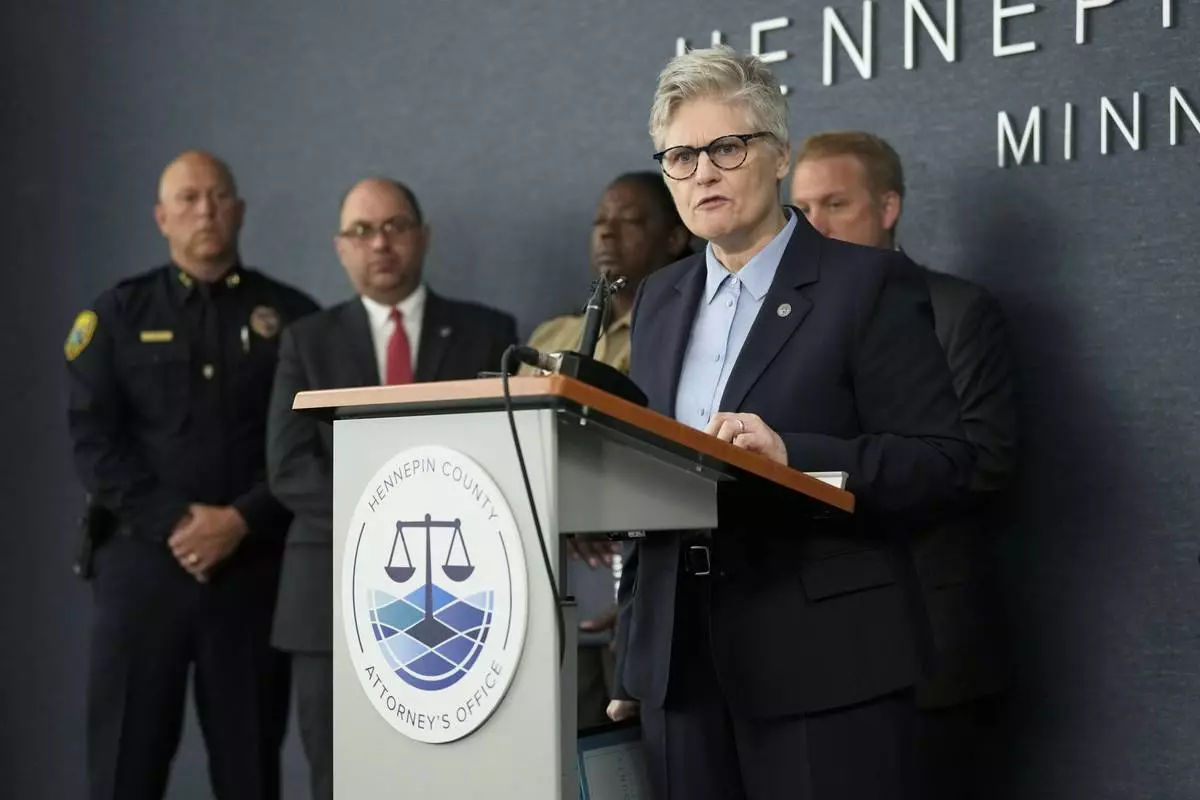
Hennepin County Attorney Mary Moriarty speaks during a news conference at the Hennepin County Attorney’s Office in Minneapolis, Monday, June 16, 2025. (AP Photo/George Walker IV)
Hennepin County Attorney Mary Moriarty speaks during a news conference at the Hennepin County Attorney’s Office in Minneapolis, Monday, June 16, 2025. (AP Photo/George Walker IV)

Acting U.S. Attorney Joseph H. Thompson speaks during a news conference at the United States Courthouse in Minneapolis, Monday, June 16, 2025. (AP Photo/George Walker IV)
Acting U.S. Attorney Joseph H. Thompson speaks during a news conference at the United States Courthouse in Minneapolis, Monday, June 16, 2025. (AP Photo/George Walker IV)

This photo made available by the Ramsey County Sheriff's Office shows Vance Luther Boelter, the man accused of assassinating the top Democrat in the Minnesota House, as he was arrested late Sunday, June 15, 2025. (Ramsey County Sheriff's Office via AP)
This photo made available by the Ramsey County Sheriff's Office shows Vance Luther Boelter, the man accused of assassinating the top Democrat in the Minnesota House, as he was arrested late Sunday, June 15, 2025. (Ramsey County Sheriff's Office via AP)

This booking photo provided by the Hennepin County Sheriff's Office shows Vance Boelter in Green Isle, Minn., on June 16, 2025. (Hennepin County Sheriff's Office via AP)
This booking photo provided by the Hennepin County Sheriff's Office shows Vance Boelter in Green Isle, Minn., on June 16, 2025. (Hennepin County Sheriff's Office via AP)

In this courtroom sketch, Vance Boelter, right, who is charged with killing one Minnesota lawmaker and wounding another, is seen at a federal court hearing Monday, June 16, 2025, in St. Paul, Minn. (Cedric Hohnstadt via AP)
In this courtroom sketch, Vance Boelter, right, who is charged with killing one Minnesota lawmaker and wounding another, is seen at a federal court hearing Monday, June 16, 2025, in St. Paul, Minn. (Cedric Hohnstadt via AP)
DUBAI, United Arab Emirates (AP) — U.S. President Donald Trump said Iran wants to negotiate with Washington after his threat to strike the Islamic Republic over its bloody crackdown on protesters, a move coming as activists said Monday the death toll in the nationwide demonstrations rose to at least 544.

Iran had no immediate reaction to the news, which came after the foreign minister of Oman — long an interlocutor between Washington and Tehran — traveled to Iran this weekend. It also remains unclear just what Iran could promise, particularly as Trump has set strict demands over its nuclear program and its ballistic missile arsenal, which Tehran insists is crucial for its national defense.

Meanwhile Monday, Iran called for pro-government demonstrators to head to the streets in support of the theocracy, a show of force after days of protests directly challenging the rule of 86-year-old Supreme Leader Ayatollah Ali Khamenei. Iranian state television aired chants from the crowd, who shouted “Death to America!” and “Death to Israel!”

Trump and his national security team have been weighing a range of potential responses against Iran including cyberattacks and direct strikes by the U.S. or Israel, according to two people familiar with internal White House discussions who were not authorized to comment publicly and spoke on condition of anonymity.

“The military is looking at it, and we’re looking at some very strong options,” Trump told reporters on Air Force One on Sunday night. Asked about Iran’s threats of retaliation, he said: “If they do that, we will hit them at levels that they’ve never been hit before.”

Trump said that his administration was in talks to set up a meeting with Tehran, but cautioned that he may have to act first as reports of the death toll in Iran mount and the government continues to arrest protesters.

“I think they’re tired of being beat up by the United States,” Trump said. “Iran wants to negotiate.”

He added: “The meeting is being set up, but we may have to act because of what’s happening before the meeting. But a meeting is being set up. Iran called, they want to negotiate.”

Iran through country's parliamentary speaker warned Sunday that the U.S. military and Israel would be “legitimate targets” if America uses force to protect demonstrators.

More than 10,600 people also have been detained over the two weeks of protests, said the U.S.-based Human Rights Activists News Agency, which has been accurate in previous unrest in recent years and gave the death toll. It relies on supporters in Iran crosschecking information. It said 496 of the dead were protesters and 48 were with security forces.

With the internet down in Iran and phone lines cut off, gauging the demonstrations from abroad has grown more difficult. The Associated Press has been unable to independently assess the toll. Iran’s government has not offered overall casualty figures.

Those abroad fear the information blackout is emboldening hard-liners within Iran’s security services to launch a bloody crackdown. Protesters flooded the streets in the country’s capital and its second-largest city on Saturday night into Sunday morning. Online videos purported to show more demonstrations Sunday night into Monday, with a Tehran official acknowledging them in state media.

In Tehran, a witness told the AP that the streets of the capital empty at the sunset call to prayers each night. By the Isha, or nighttime prayer, the streets are deserted.

Part of that stems from the fear of getting caught in the crackdown. Police sent the public a text message that warned: “Given the presence of terrorist groups and armed individuals in some gatherings last night and their plans to cause death, and the firm decision to not tolerate any appeasement and to deal decisively with the rioters, families are strongly advised to take care of their youth and teenagers.”

Another text, which claimed to come from the intelligence arm of the paramilitary Revolutionary Guard, also directly warned people not to take part in demonstrations.

“Dear parents, in view of the enemy’s plan to increase the level of naked violence and the decision to kill people, ... refrain from being on the streets and gathering in places involved in violence, and inform your children about the consequences of cooperating with terrorist mercenaries, which is an example of treason against the country,” the text warned.

The witness spoke to the AP on condition of anonymity due to the ongoing crackdown.

The demonstrations began Dec. 28 over the collapse of the Iranian rial currency, which trades at over 1.4 million to $1, as the country’s economy is squeezed by international sanctions in part levied over its nuclear program. The protests intensified and grew into calls directly challenging Iran’s theocracy.

Nikhinson reported from aboard Air Force One.

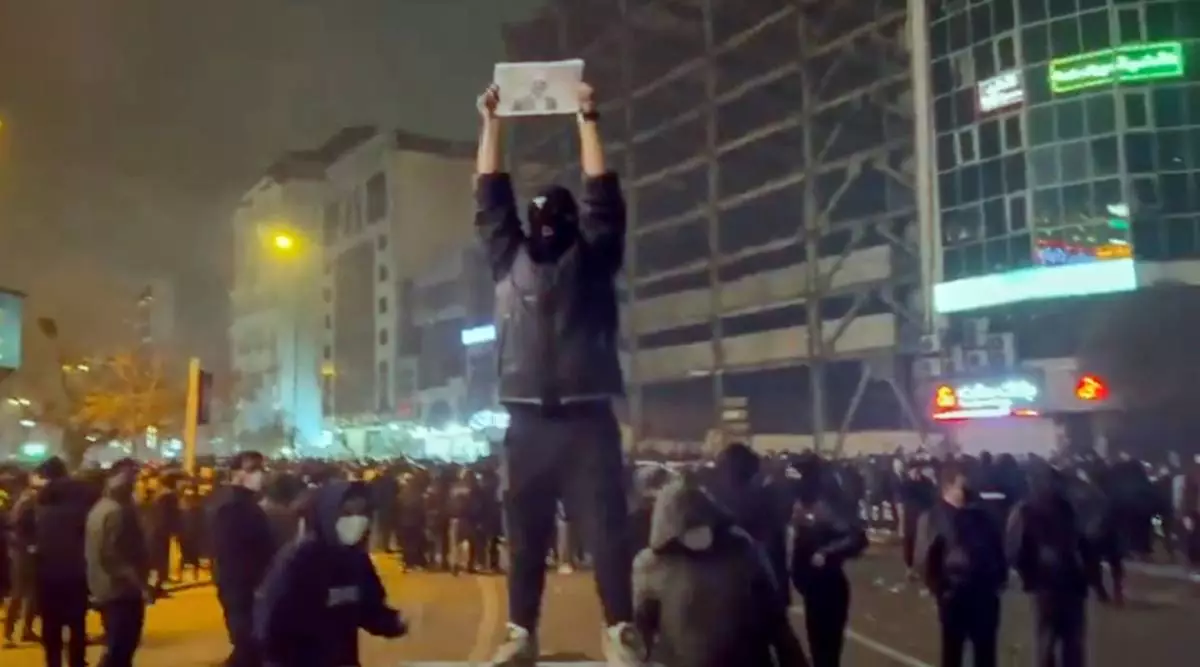
In this frame grab from video obtained by the AP outside Iran, a masked demonstrator holds a picture of Iran's Crown Prince Reza Pahlavi during a protest in Tehran, Iran, Friday, January. 9, 2026. (UGC via AP)

In this frame grab from video obtained by the AP outside Iran, a masked demonstrator holds a picture of Iran's Crown Prince Reza Pahlavi during a protest in Tehran, Iran, Friday, January. 9, 2026. (UGC via AP)

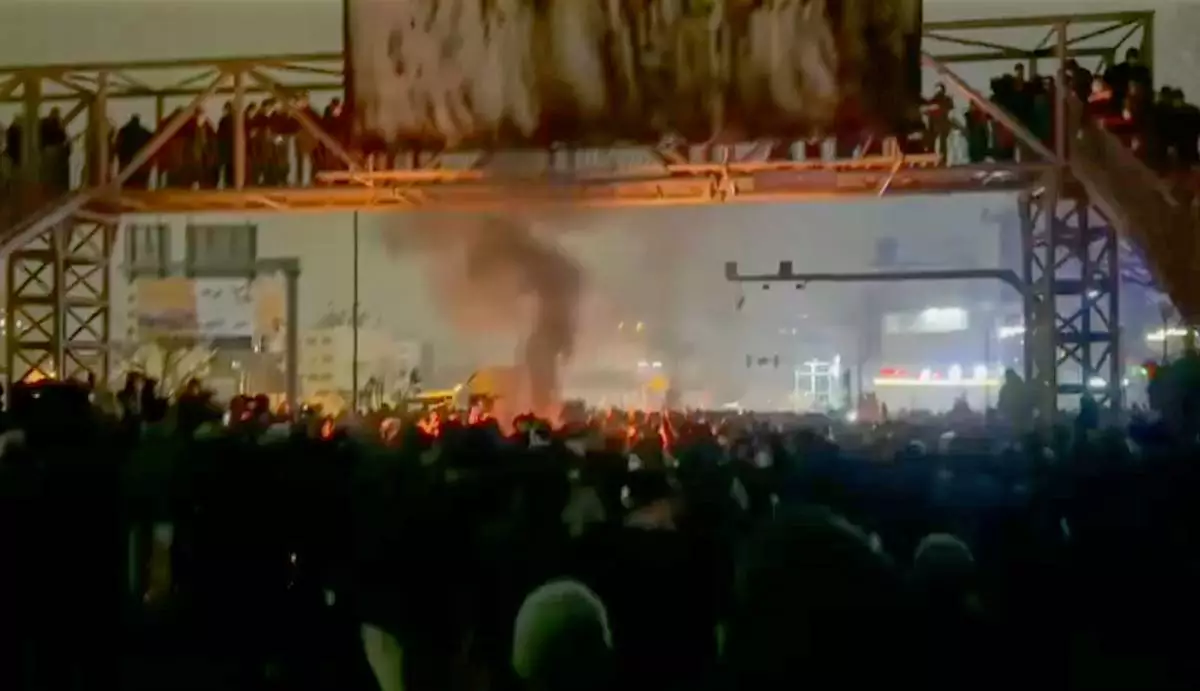
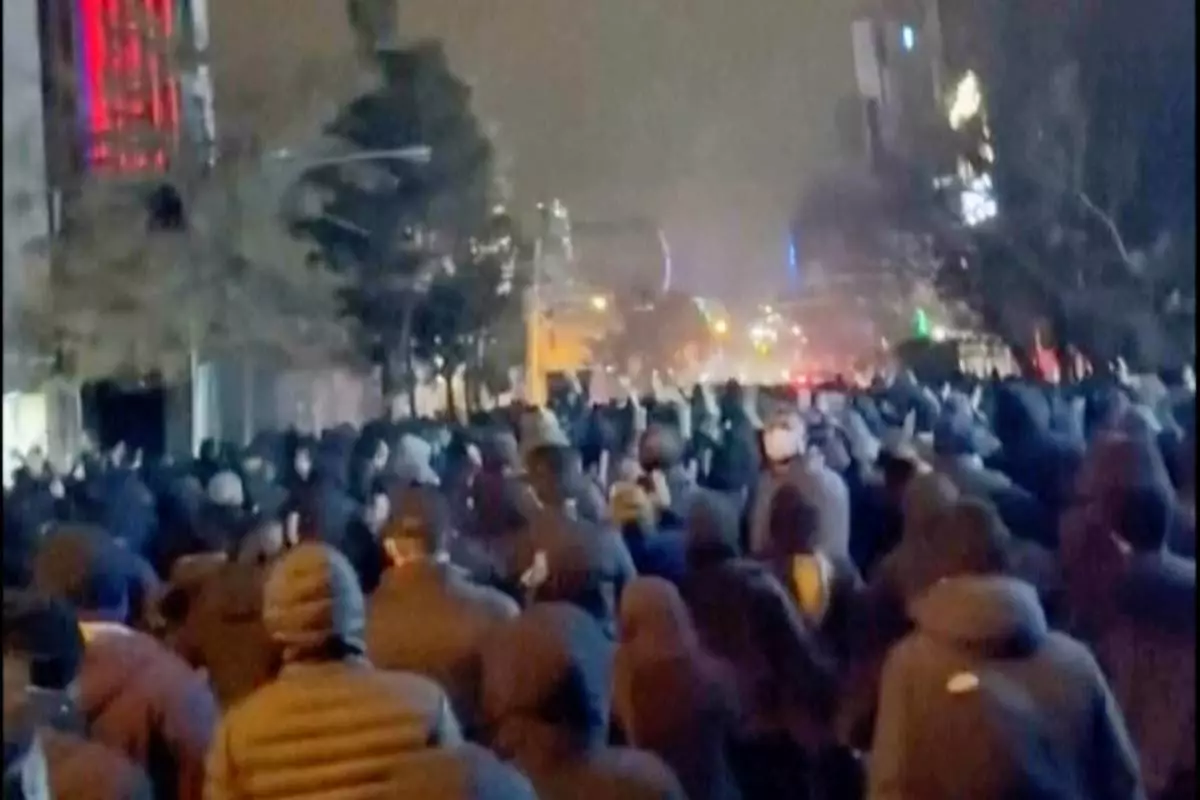
In this frame grab from footage circulating on social media from Iran shows protesters taking to the streets despite an intensifying crackdown as the Islamic Republic remains cut off from the rest of the world in Tehran, Iran, Friday, Jan. 9, 2026.(UGC via AP)

In this frame grab from footage circulating on social media from Iran shows protesters taking to the streets despite an intensifying crackdown as the Islamic Republic remains cut off from the rest of the world in Tehran, Iran, Friday, Jan. 9, 2026.(UGC via AP)

In this frame grab from footage circulating on social media from Iran showed protesters once again taking to the streets of Tehran despite an intensifying crackdown as the Islamic Republic remains cut off from the rest of the world in Tehran, Iran, Saturday Jan. 10, 2026. (UGC via AP)

In this frame grab from footage circulating on social media from Iran showed protesters once again taking to the streets of Tehran despite an intensifying crackdown as the Islamic Republic remains cut off from the rest of the world in Tehran, Iran, Saturday Jan. 10, 2026. (UGC via AP)

Recommended Articles