|
Advancing Shared Goals in Innovation, Trade, and Sustainability
HO CHI MINH CITY, Vietnam, June 18, 2025 /PRNewswire/ -- The U.S. Soybean Export Council (USSEC) today commemorates three decades of partnership between U.S. Soy and Vietnam at a milestone event in Ho Chi Minh City. The special event, titled "USSEC 30th Anniversary in Vietnam: Sustainable Solutions with U.S. Soy!", recognizes the strength of this enduring relationship and its role in supporting Vietnam's food, feed, and livestock sectors.
The event brings together leading agribusiness stakeholders, technical experts, and sustainability advocates from Vietnam and across Southeast Asia. The program features keynote remarks, industry panel discussions, and interactive breakout sessions focused on sustainable food and feed solutions. A strategic roundtable on sustainability highlights shared goals in climate-smart agriculture, responsible sourcing, and long-term supply chain resilience—reinforcing the commitment of both U.S. and Vietnamese partners to collaboration, innovation, and environmental stewardship.
A Growing Partnership Anchored in Trust
Over the years, U.S. soy farmers and Vietnam's feed, food processing, and aquaculture sectors have built a resilient partnership focused on improving food production, sharing knowledge, and promoting sustainability.
"It's been extraordinary to witness the growth of Vietnam's food and feed industries," said Timothy Loh, Regional Director for Southeast Asia & Oceania at USSEC. "This milestone marks three decades of collaboration, between Vietnam and U.S. Soy."
Vietnam has become Southeast Asia's third-largest U.S. Soy importer and the world's 13th-largest soy consumer. In marketing year 2023/24 overall Vietnam imported an estimated 2.2 million metric tons of whole soybeans and 5.9 million metric tons of soybean meal to meet growing demand[1].
Vietnam's rapidly modernizing feed sector and soybean crush facilities are creating more opportunities for U.S. Soy to support local production of pork, poultry, aquaculture products, and soybean oil. These trends are fueled by urbanization, a rising middle class, and shifting consumer preferences toward protein-rich diets.
Sustainable Soy for a Sustainable Future
U.S. Soy farmers are committed to continuous improvement through innovation and technology. This includes U.S. Soy farmers adopting updated national sustainability improvement goals. U.S. Soy farmers are leading the way by producing more while using fewer resources, implementing farming practices that reduce carbon footprint.
These sustainable soybean production practices provide Vietnamese customers with access to responsibly produced soy products that meet global sustainability, and reliability standards. With a transparent and reliable supply chain, U.S. Soy ensures consistent, timely delivery—providing Vietnamese customers with confidence and continuity as demand for sustainable food and feed solutions continues to grow.
A Market on the Rise
Vietnam is now the world's sixth-largest pork producer[2] and fourth-largest aquaculture producer[3]. Aquaculture alone contributes 4–5% of national GDP. Soy has become a vital component of aquafeed, offering a high-quality, plant-based protein source to support the sector's continued growth. As demand increases, soybean meal consumption is forecasted to grow to 6 MMT in 2025[4], reflecting a recovery in feed demand and long-term market momentum.
At the same time, Vietnamese consumers are showing growing interest in plant-based options and soy-based foods. U.S. Soy's nutritional profile, origin traceability, and sustainability credentials make it well-positioned to support this evolving demand.
Celebrating 30 Years of Shared Progress
The anniversary of U.S. Soy's partnership with Vietnam aligns with the 30th anniversary of bilateral relations between the two nations. Agricultural trade has been a cornerstone of this broader relationship, advancing food security, sustainability, and economic resilience on both sides.
"Long-term collaboration is at the heart of U.S. Soy's work around the world," said Jim Sutter, CEO of USSEC. "Vietnam's remarkable economic rise over the past 30 years has been mirrored by the growth of its soy demand, and U.S farmers are proud to have been a trusted partner every step of the way."
Forging the Next Chapter in U.S.–Vietnam Soy Cooperation
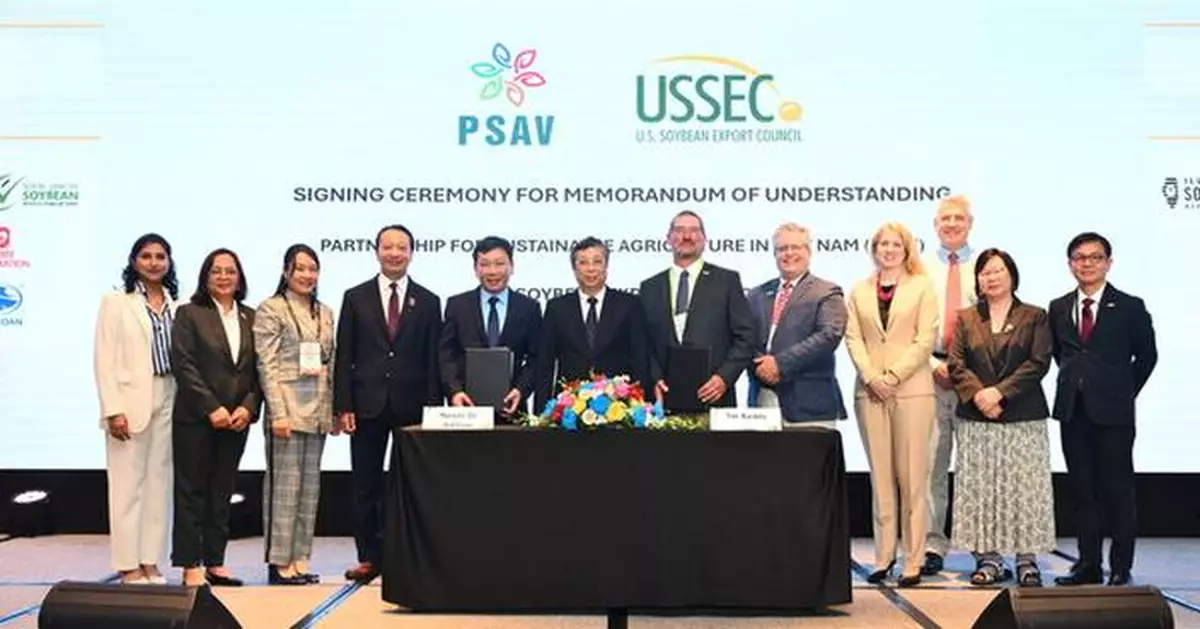
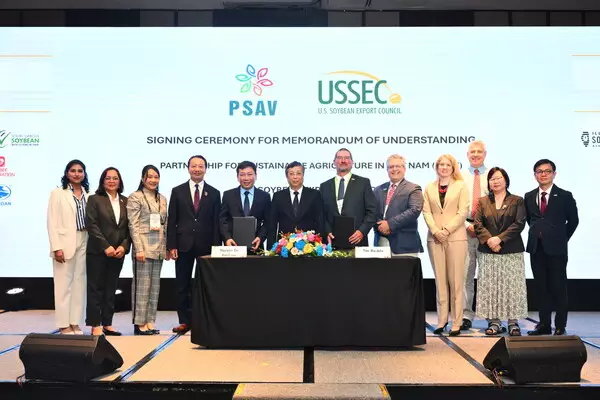
Marking a new chapter in U.S.–Vietnam agricultural engagement, USSEC and the Partnership for Sustainable Agriculture Development in Vietnam (PSAV) - a unit under Vietnam's Ministry of Agriculture and Environment signed a Memorandum of Understanding (MOU) during the conference to strengthen trade ties, foster industry collaboration, and support Vietnamese enterprises in accessing high-quality, sustainably produced soy products from the U.S. The MOU outlines efforts to strengthen Vietnam's agricultural sector by facilitating trade, promoting technical cooperation, and enhancing awareness of U.S. Soy sustainability programs such as the U.S. Soy Sustainability Assurance Protocol (SSAP).
"Vietnam's agricultural sector is committed to sustainable development and enhancing the competitiveness of our domestic industries," said Deputy Minister Hoang Trung of the Ministry of Agriculture and Environment in Vietnam. "This MOU with USSEC underscores our shared determination to build a reliable, transparent, and forward-looking supply chain—one that supports our economic and environmental goals while meeting growing demand for high-quality food and feed ingredients."
"The MOU marks a pivotal moment in the long-standing relationship between U.S. Soy and Vietnam," added Timothy Loh, USSEC Regional Director. "Through this collaboration, we look forward to strengthening supply chain connectivity, and reinforcing our shared commitment to sustainability."
As Vietnam continues to pursue sustainable agriculture and food system transformation, USSEC remains committed to supporting the country's ambitions with high-quality U.S. Soy and solutions that deliver value across the supply chain.
This press release is funded in part by the soy checkoff.
About the U.S. Soybean Export Council (USSEC):
The U.S. Soybean Export Council (USSEC) focuses on differentiating, elevating preference, and attaining market access for the use of U.S. Soy for human consumption, aquaculture, and livestock feed in 93 countries internationally. USSEC members represent the soy supply chain including U.S. Soy farmers, processors, commodity shippers, merchandisers, allied agribusinesses, and agricultural organizations. USSEC is funded by the soy checkoff, USDA Foreign Agricultural Service matching funds, and industry. Visit ussec.org for the latest information and news about USSEC and U.S. Soy internationally.
| [1] USDA Foreign Agricultural Service Production, Supply and Distribution, USDA Foreign Agricultural Service Global Agricultural Trade System |
| [2] USDA |
| [3] SEAFDEC (2023). Fishery statistic summary 2020. https://www.seafdec.org/stat2020/ |
| [4] USDA |
Advancing Shared Goals in Innovation, Trade, and Sustainability
HO CHI MINH CITY, Vietnam, June 18, 2025 /PRNewswire/ -- The U.S. Soybean Export Council (USSEC) today commemorates three decades of partnership between U.S. Soy and Vietnam at a milestone event in Ho Chi Minh City. The special event, titled "USSEC 30th Anniversary in Vietnam: Sustainable Solutions with U.S. Soy!", recognizes the strength of this enduring relationship and its role in supporting Vietnam's food, feed, and livestock sectors.
The event brings together leading agribusiness stakeholders, technical experts, and sustainability advocates from Vietnam and across Southeast Asia. The program features keynote remarks, industry panel discussions, and interactive breakout sessions focused on sustainable food and feed solutions. A strategic roundtable on sustainability highlights shared goals in climate-smart agriculture, responsible sourcing, and long-term supply chain resilience—reinforcing the commitment of both U.S. and Vietnamese partners to collaboration, innovation, and environmental stewardship.
A Growing Partnership Anchored in Trust
Over the years, U.S. soy farmers and Vietnam's feed, food processing, and aquaculture sectors have built a resilient partnership focused on improving food production, sharing knowledge, and promoting sustainability.
"It's been extraordinary to witness the growth of Vietnam's food and feed industries," said Timothy Loh, Regional Director for Southeast Asia & Oceania at USSEC. "This milestone marks three decades of collaboration, between Vietnam and U.S. Soy."
Vietnam has become Southeast Asia's third-largest U.S. Soy importer and the world's 13th-largest soy consumer. In marketing year 2023/24 overall Vietnam imported an estimated 2.2 million metric tons of whole soybeans and 5.9 million metric tons of soybean meal to meet growing demand[1].
Vietnam's rapidly modernizing feed sector and soybean crush facilities are creating more opportunities for U.S. Soy to support local production of pork, poultry, aquaculture products, and soybean oil. These trends are fueled by urbanization, a rising middle class, and shifting consumer preferences toward protein-rich diets.
Sustainable Soy for a Sustainable Future
U.S. Soy farmers are committed to continuous improvement through innovation and technology. This includes U.S. Soy farmers adopting updated national sustainability improvement goals. U.S. Soy farmers are leading the way by producing more while using fewer resources, implementing farming practices that reduce carbon footprint.
These sustainable soybean production practices provide Vietnamese customers with access to responsibly produced soy products that meet global sustainability, and reliability standards. With a transparent and reliable supply chain, U.S. Soy ensures consistent, timely delivery—providing Vietnamese customers with confidence and continuity as demand for sustainable food and feed solutions continues to grow.
A Market on the Rise
Vietnam is now the world's sixth-largest pork producer[2] and fourth-largest aquaculture producer[3]. Aquaculture alone contributes 4–5% of national GDP. Soy has become a vital component of aquafeed, offering a high-quality, plant-based protein source to support the sector's continued growth. As demand increases, soybean meal consumption is forecasted to grow to 6 MMT in 2025[4], reflecting a recovery in feed demand and long-term market momentum.
At the same time, Vietnamese consumers are showing growing interest in plant-based options and soy-based foods. U.S. Soy's nutritional profile, origin traceability, and sustainability credentials make it well-positioned to support this evolving demand.
Celebrating 30 Years of Shared Progress
The anniversary of U.S. Soy's partnership with Vietnam aligns with the 30th anniversary of bilateral relations between the two nations. Agricultural trade has been a cornerstone of this broader relationship, advancing food security, sustainability, and economic resilience on both sides.
"Long-term collaboration is at the heart of U.S. Soy's work around the world," said Jim Sutter, CEO of USSEC. "Vietnam's remarkable economic rise over the past 30 years has been mirrored by the growth of its soy demand, and U.S farmers are proud to have been a trusted partner every step of the way."
Forging the Next Chapter in U.S.–Vietnam Soy Cooperation
Marking a new chapter in U.S.–Vietnam agricultural engagement, USSEC and the Partnership for Sustainable Agriculture Development in Vietnam (PSAV) - a unit under Vietnam's Ministry of Agriculture and Environment signed a Memorandum of Understanding (MOU) during the conference to strengthen trade ties, foster industry collaboration, and support Vietnamese enterprises in accessing high-quality, sustainably produced soy products from the U.S. The MOU outlines efforts to strengthen Vietnam's agricultural sector by facilitating trade, promoting technical cooperation, and enhancing awareness of U.S. Soy sustainability programs such as the U.S. Soy Sustainability Assurance Protocol (SSAP).
"Vietnam's agricultural sector is committed to sustainable development and enhancing the competitiveness of our domestic industries," said Deputy Minister Hoang Trung of the Ministry of Agriculture and Environment in Vietnam. "This MOU with USSEC underscores our shared determination to build a reliable, transparent, and forward-looking supply chain—one that supports our economic and environmental goals while meeting growing demand for high-quality food and feed ingredients."
"The MOU marks a pivotal moment in the long-standing relationship between U.S. Soy and Vietnam," added Timothy Loh, USSEC Regional Director. "Through this collaboration, we look forward to strengthening supply chain connectivity, and reinforcing our shared commitment to sustainability."
As Vietnam continues to pursue sustainable agriculture and food system transformation, USSEC remains committed to supporting the country's ambitions with high-quality U.S. Soy and solutions that deliver value across the supply chain.
This press release is funded in part by the soy checkoff.
About the U.S. Soybean Export Council (USSEC):
The U.S. Soybean Export Council (USSEC) focuses on differentiating, elevating preference, and attaining market access for the use of U.S. Soy for human consumption, aquaculture, and livestock feed in 93 countries internationally. USSEC members represent the soy supply chain including U.S. Soy farmers, processors, commodity shippers, merchandisers, allied agribusinesses, and agricultural organizations. USSEC is funded by the soy checkoff, USDA Foreign Agricultural Service matching funds, and industry. Visit ussec.org for the latest information and news about USSEC and U.S. Soy internationally.
[1] USDA Foreign Agricultural Service Production, Supply and Distribution, USDA Foreign Agricultural Service Global Agricultural Trade System
[2] USDA
[3] SEAFDEC (2023). Fishery statistic summary 2020. https://www.seafdec.org/stat2020/
[4] USDA
** The press release content is from PR Newswire. Bastille Post is not involved in its creation. **
U.S. Soy Celebrates 30 Years of Partnership with Vietnam
BEIJING, Jan. 11, 2026 /PRNewswire/ -- On December 29, the "Forging the Path to National Strength: China's Manufacturing Achievements Under the 14th Five-Year Plan," jointly organized by the National Museum of China and the Ministry of Industry and Information Technology, officially opened at the National Museum of China, showcasing more than 300 top national achievements. GAC's "National Outstanding Engineer Team" successfully developed both the Magazine Battery and the Solid-State Battery, which were selected for the exhibition.
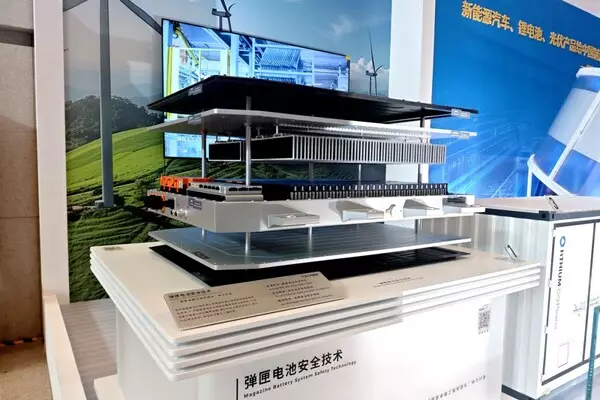
The GAC Magazine Battery is the first battery system to pass both the nail penetration no-flame and non-ignition safety tests. By utilizing ultra-high intrinsic safety cells, an all-weather "vehicle-end + cloud-based" active safety monitoring system, and a multi-dimensional safety protection system, the Magazine Battery achieves three layers of protection: core, active, and passive. Its safety performance far exceeds the electric vehicles traction battery safety requirements (GB38031-2025), which will take effect on July 1, 2026. Currently, the Magazine Battery has a cumulative deployment of 1.3 million vehicles with zero spontaneous combustion and over 50 billion kilometers of safe travel, providing users with robust safety assurance for every journey.
GAC's self-developed large-capacity solid-state battery has achieved an energy density exceeding 400 Wh/kg and easily passes rigorous safety tests such as 200°C thermal chamber and nail penetration tests, effectively addressing users' range anxiety and safety concerns. Innovations in materials and processes have placed the solid-state battery at the forefront of the industry in key indicators such as safety, energy density, and cycle life, providing a superior power solution for the future development of NEVs. Currently, a pilot production line for GAC's solid-state battery has been established, capable of mass-producing vehicle-grade solid-state batteries over 60 Ah, marking a critical step toward the goal of full vehicle integration by 2026.
Over the years, GAC has been steadily enhancing its competitiveness through innovations across intelligent connectivity, NEV powertrains technologies, and forward-looking technologies. Looking ahead, GAC will continue to deepen its efforts in the intelligent connected NEV field, leveraging more leading technological achievements to drive industry progress.
** The press release content is from PR Newswire. Bastille Post is not involved in its creation. **
GAC Magazine Battery and Solid-State Battery Win Top National Honor