Central Asian officials and experts have hailed growing ties under China's Belt and Road Initiative as a model of good-neighborliness, strategic partnership, and shared development.
Leaders from China and Central Asian nations -- Kazakhstan, Kyrgyzstan, Tajikistan, Turkmenistan and Uzbekistan -- signed the Astana Declaration and the Treaty of Permanent Good-Neighborliness and Friendly Cooperation on Tuesday during the second China-Central Asia Summit held in Astana, Kazakhstan, reinforcing commitments to a shared future under the Belt and Road Initiative (BRI).
Government officials and international experts praised the summit for strengthening diplomatic and economic ties across the region and fostering mutually beneficial growth.
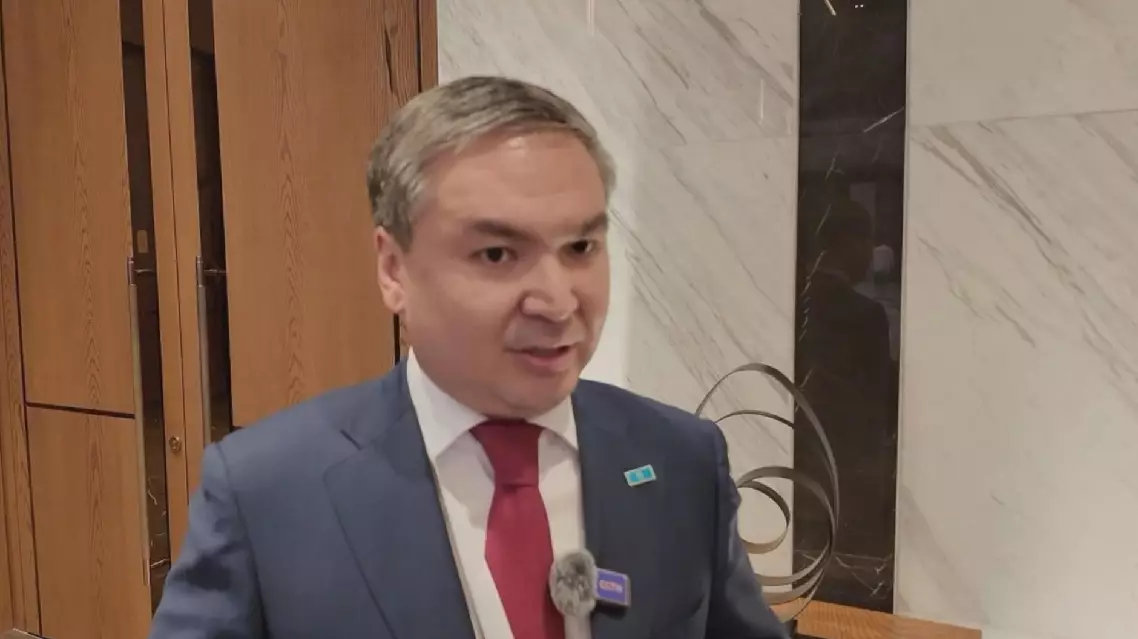
"Kazakhstan and China work closely in the field of industrial cooperation under the Belt and Road Initiative. There are many joint projects in mining and metallurgy. Joint projects with Chinese companies in coal chemistry and mining were also discussed. A total of 133 projects worth 35 billion dollars are being implemented, and 54 of these projects worth nine billion dollars have already been implemented so far. This is an excellent platform for China and Central Asia to discuss issues of industrial integration and cooperation in the region," said Yersaiyn Nagaspayev, Kazakhstan's Minister of Industry and Construction.
According to Saifullo Safarov, chairman of the Association of Political Scientists in Tajikistan, the newly signed treaty was the result of the summit's emphasis on diplomatic cohesion.
"The heads of state jointly signed the Treaty of Permanent Good-Neighborliness and Friendly Cooperation. From the strategic perspective of building a China-Central Asia community with a shared future and common values, it points the way forward for future cooperation. China and the Central Asian countries share a deep mutual understanding, as we uphold the same principles of good-neighborly relations, sincere cooperation, mutual respect, and friendly coexistence. China has always engaged with other countries in a prudent and wise manner, respecting each and every partner," said Safarov.
Kairat Osmonaliyev, former Kyrgyzstan's Ambassador to Azerbaijan, shared his views on regional autonomy and international outlook.
"This summit fully demonstrates that Central Asian countries are taking a more proactive role in regional affairs, independently shaping their development agendas, and placing cooperation with China as a top priority. China has always adhered to a foreign policy of good-neighborliness, friendship, and mutual respect," he said.
The first China-Central Asia Summit was held in Xi'an, the provincial capital of Shaanxi in northwest China, in May 2023. It concluded with the Xi'an Declaration, saying that a mechanism for meetings among the heads of state of China and Central Asian countries has been officially established. The next edition of the summit is set to take place in China in 2027.
China, Central Asia prioritize good-neighborliness, mutual respect: observers
The U.S. military strike against Venezuela and capture of its president, Nicolas Maduro, has shocked the international community, triggering a steady stream of condemnation and serious concerns worldwide.
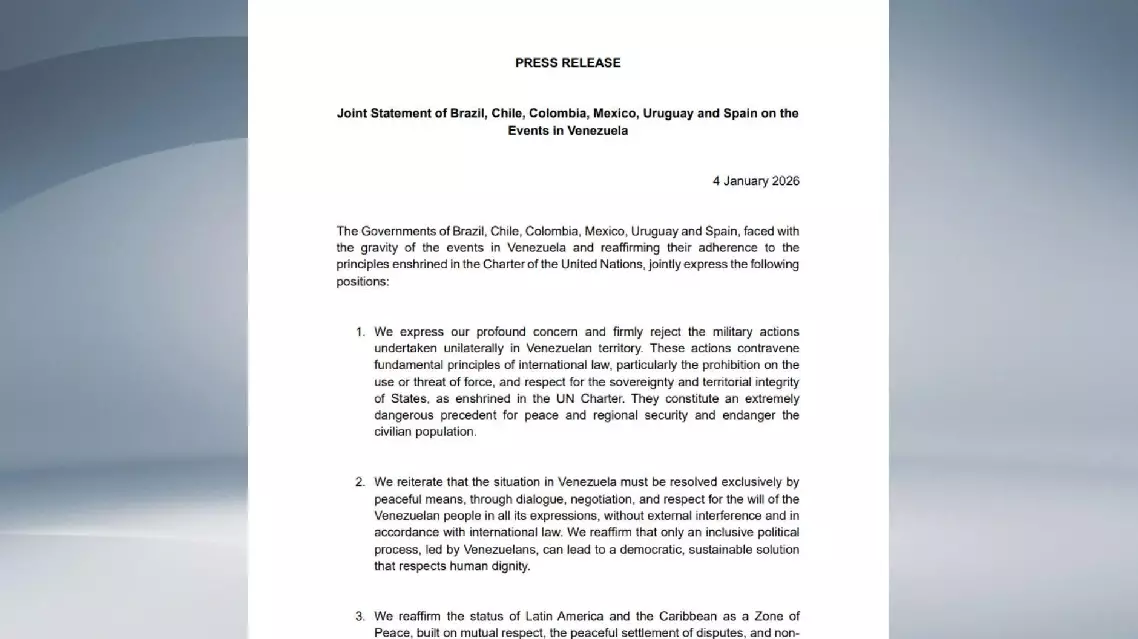
Brazil, Chile, Colombia, Mexico, Uruguay and Spain issued a joint statement on Sunday, expressing serious concern about and firm opposition to the U.S. unilateral military operations in Venezuela.
The U.S. actions contravene fundamental principles of international law, particularly the prohibition on the use or threat of force, and respect for the sovereignty and territorial integrity of States, as enshrined in the UN Charter, constituting an extremely dangerous precedent against peace and regional security, according to the statement.
In expressing profound concern and firm rejection, the six countries stressed in the statement that the situation in Venezuela must be resolved exclusively by peaceful means, and through dialogue, negotiation and respect for the will of the Venezuelan people in all its expressions, without external interference and in accordance with international law.
Only an inclusive political process, led by Venezuelans, can lead to a democratic, sustainable solution that respects human dignity, according to the statement.
Spanish Prime Minister Pedro Sanchez condemned the U.S. raid in Venezuela as a violation of international law, adding that the Spanish government always advocates and defends international law and peaceful resolution of conflicts.
Addressing a meeting of the Community of Latin American and Caribbean States (CELAC), Cuban Foreign Minister Bruno Rodriguez demanded the unconditional and immediate release of Maduro and his wife.
Noting that Latin America and the Caribbean are a zone of peace, he expressed his firm opposition to the use of force, which is an unshakable principle.
Any aggression against Venezuela shall be regarded as an attack against all CELAC member states, and nations must collectively oppose it, he stressed.
The South African government denounced the U.S. attack on Venezuela as a violation of international law, according to a statement released on Sunday.
History has repeatedly demonstrated that military invasions against sovereign states yield only instability and deepening crisis, the statement said.
South Africa calls on the UN Security Council to urgently convene a session to address this situation, according to the statement.
Serbian President Aleksandar Vucic said what happened in Venezuela demonstrates that international law and the UN Charter are losing their practical effectiveness.
U.S. military action against Venezuela marks a dangerous precedent, as similar actions could be taken against any other nations, he said.
In addition, the foreign ministries of Namibia, Singapore, Oman and Pakistan also issued statements on the same day, expressing grave concern over U.S. interference in Venezuela's internal affairs.
They emphasized the need to uphold international law and the principles of the UN Charter while respecting Venezuela's sovereignty.
They also called on all parties to exercise restraint and resolve the crisis through peaceful dialogue.
U.S. move against Venezuela sparks condemnation, concerns worldwide