Skip to Content Facebook Feature Image

Fear stalks Tehran as Israel bombards, shelters fill up and communicating grows harder

News

Fear stalks Tehran as Israel bombards, shelters fill up and communicating grows harder
News

News

Fear stalks Tehran as Israel bombards, shelters fill up and communicating grows harder

2025-06-18 21:54 Last Updated At:22:01

NEW YORK (AP) — The streets of Tehran are empty, businesses closed, communications patchy at best. With no bona fide bomb shelters open to the public, panicked masses spend restless nights on the floors of metro stations as strikes boom overhead.

This is Iran’s capital city, just under a week into a fierce Israeli blitz to destroy the country's nuclear program and its military capabilities. After knocking out much of Iran's air defense system, Israel says its warplanes have free rein over the city's skies. U.S. President Donald Trump on Monday told Tehran's roughly 10 million residents to evacuate “immediately.”

More Images
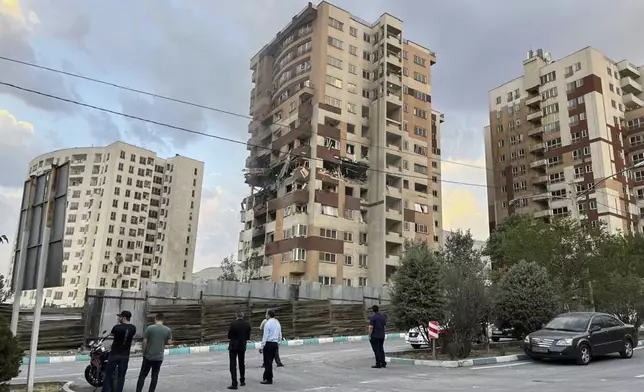
Residents watch a damaged apartment in Tehran, Iran, early Friday, June 13, 2025. Israel attacked Iran's capital early Friday, with explosions booming across Tehran.(AP Photo/Vahid Salemi)
Residents watch a damaged apartment in Tehran, Iran, early Friday, June 13, 2025. Israel attacked Iran's capital early Friday, with explosions booming across Tehran.(AP Photo/Vahid Salemi)

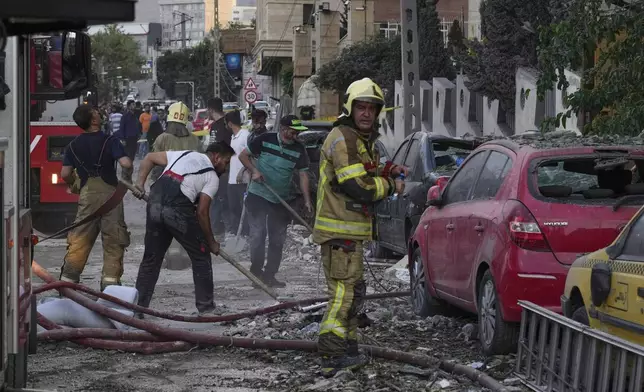
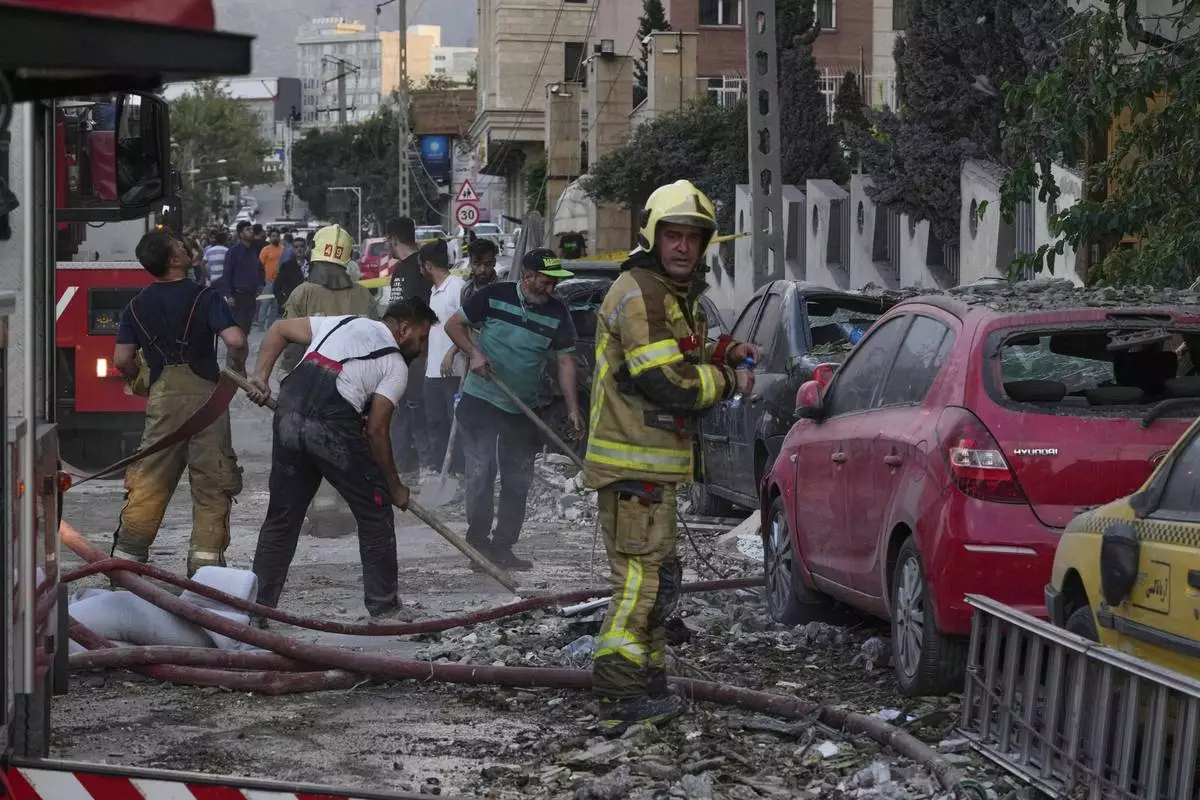
Firefighters and people clean up the scene of an explosion at a residence compound after Israeli attacks in Tehran, Friday, June 13, 2025. (AP Photo/Vahid Salemi)
Firefighters and people clean up the scene of an explosion at a residence compound after Israeli attacks in Tehran, Friday, June 13, 2025. (AP Photo/Vahid Salemi)

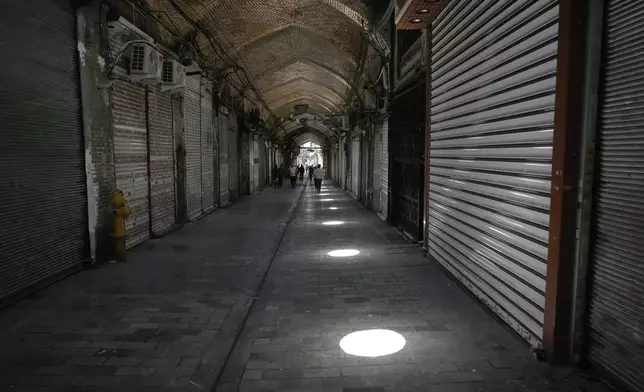
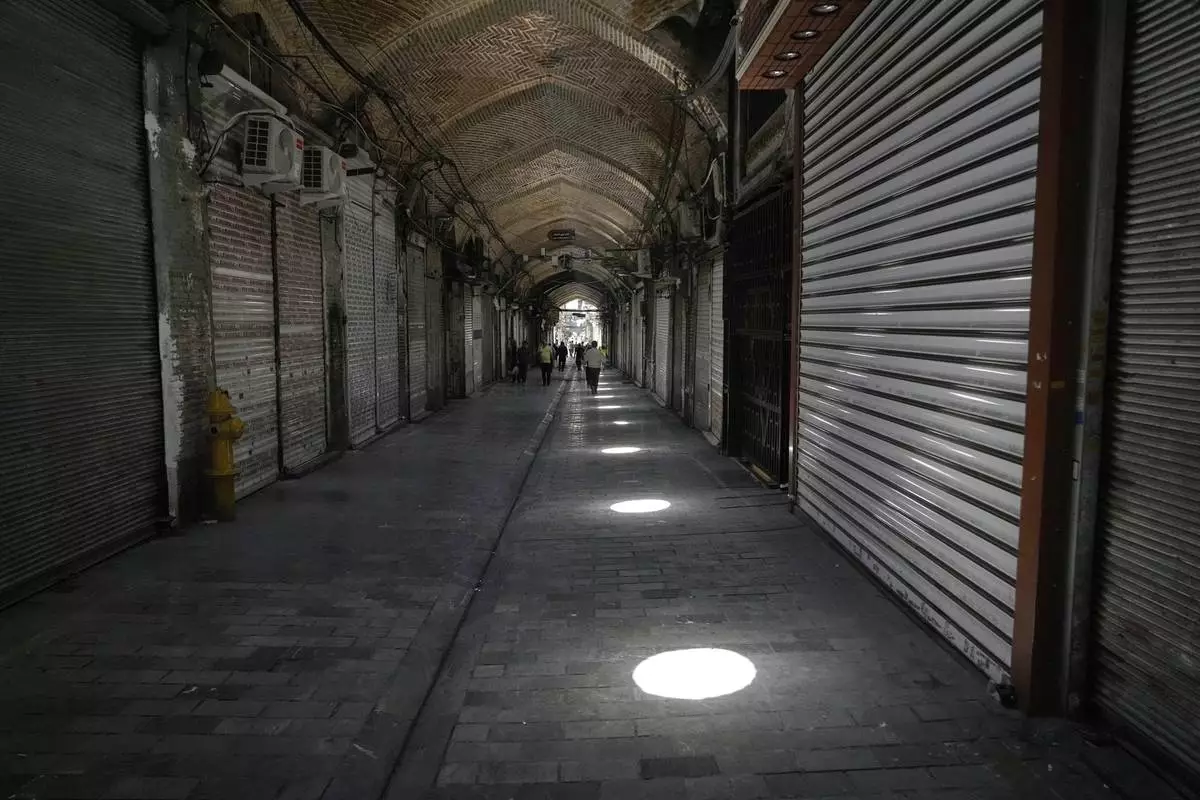
Shops remain shuttered Tehran's historic Grand Bazaar, Monday, June 16, 2025. (AP Photo/Vahid Salemi)
Shops remain shuttered Tehran's historic Grand Bazaar, Monday, June 16, 2025. (AP Photo/Vahid Salemi)

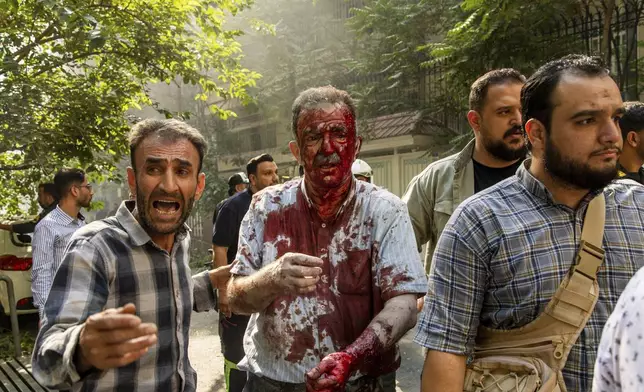
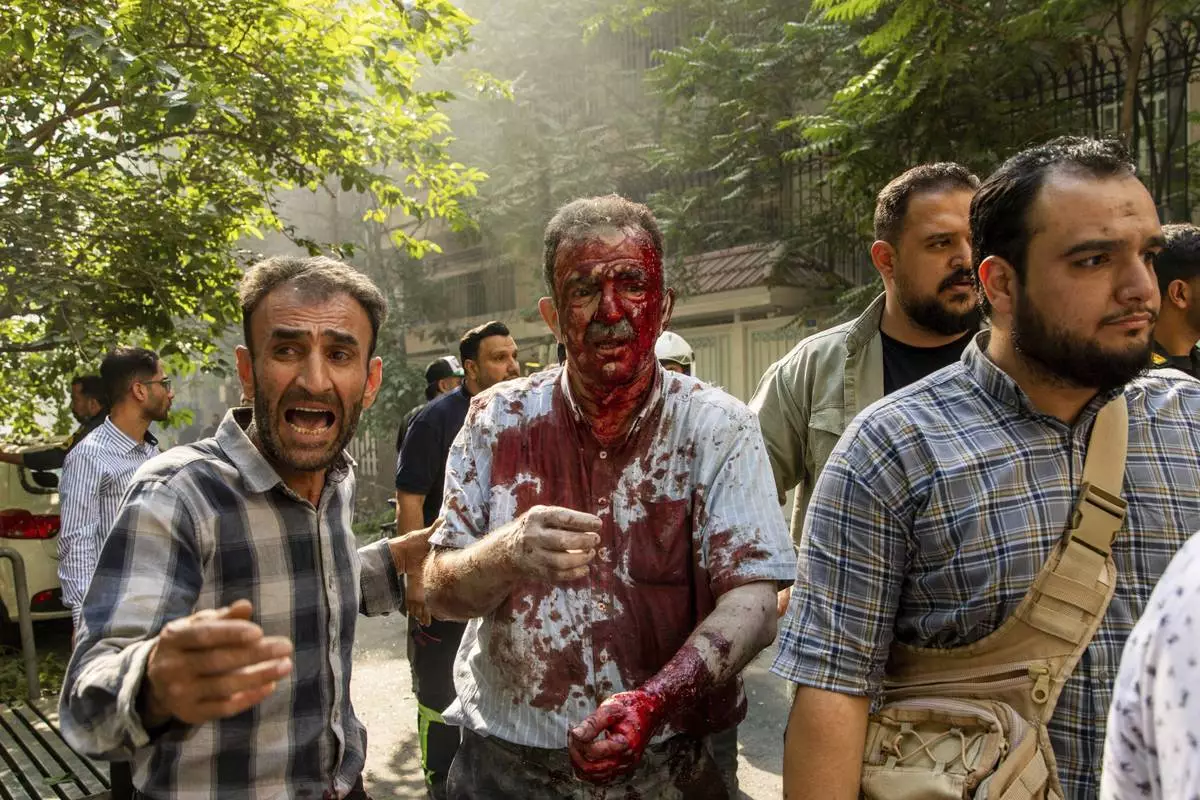
CORRECTS BYLINE.- An injured man is helped to leave the scene after an explosion in downtown Tehran, amid Israel's three-day campaign of strikes against Iran, Sunday, June 15, 2025. (AP Photo/Majid Khahi/ISNA)
CORRECTS BYLINE.- An injured man is helped to leave the scene after an explosion in downtown Tehran, amid Israel's three-day campaign of strikes against Iran, Sunday, June 15, 2025. (AP Photo/Majid Khahi/ISNA)

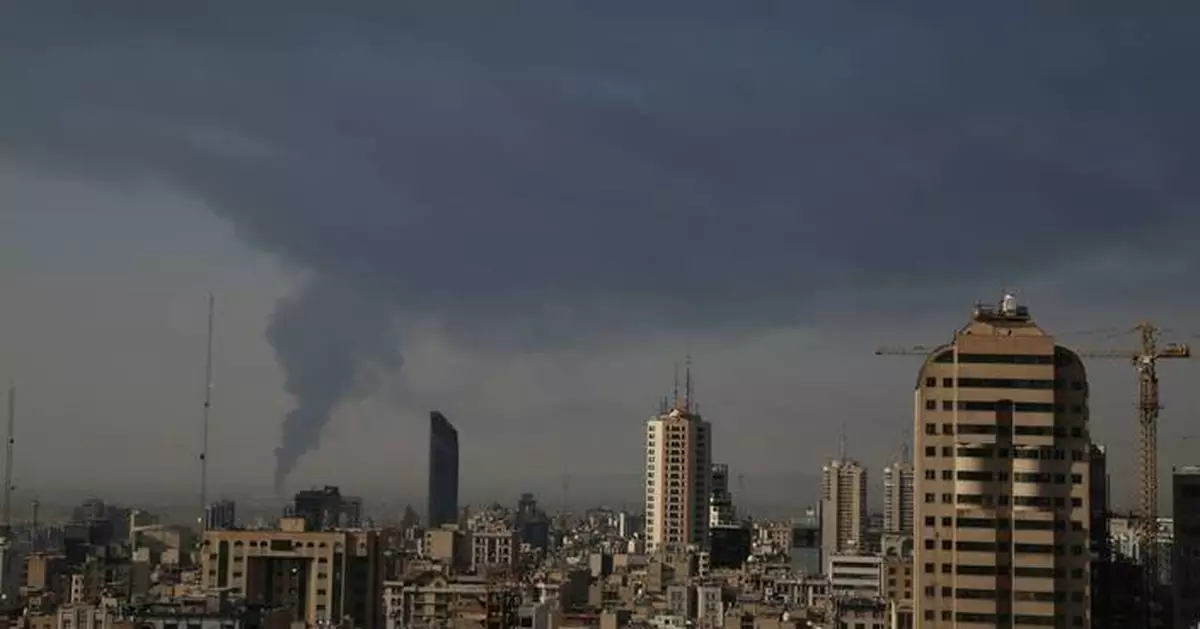
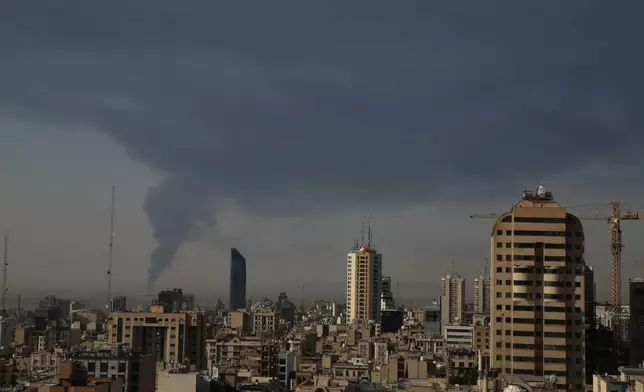
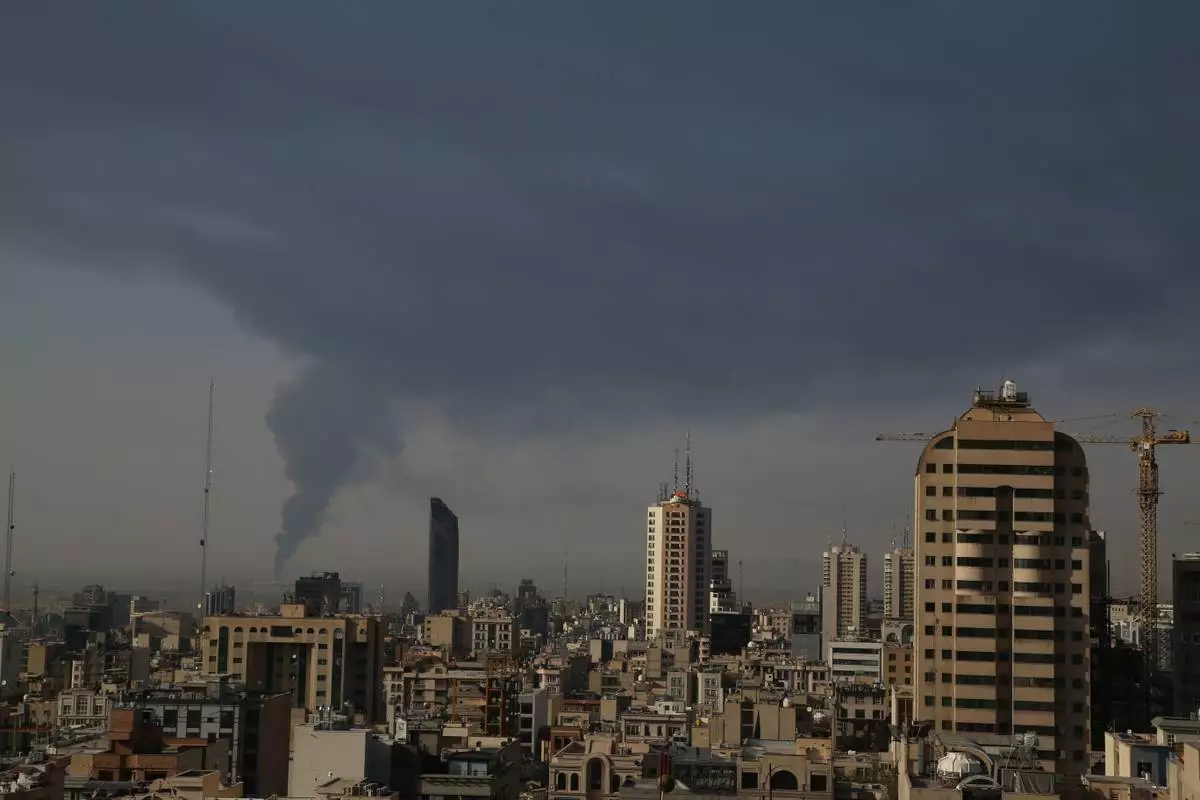
Huge smoke rises up from an oil facility facility after it appeared to have been hit by an Israeli strike Saturday, in southern Tehran, Iran, Sunday, June 15, 2025. (AP Photo)

Huge smoke rises up from an oil facility facility after it appeared to have been hit by an Israeli strike Saturday, in southern Tehran, Iran, Sunday, June 15, 2025. (AP Photo)

Thousands have fled, spending hours in gridlock as they head toward the suburbs, the Caspian Sea, or even Armenia or Turkey. But others — those elderly and infirm — are stuck in high-rise apartment buildings. Their relatives fret: what to do?

Israeli strikes on Iran have killed at least 585 people and wounded over 1,300, a human rights group says. State media, also a target of bombardment, have stopped reporting on the attacks, leaving Iranians in the dark. There are few visible signs of state authority: Police appear largely undercover, air raid sirens are unreliable, and there’s scant information on what to do in case of attack.

Shirin, 49, who lives in the southern part of Tehran, said every call or text to friends and family in recent days has felt like it could be the last.

“We don’t know if tomorrow we will be alive,” she said.

Many Iranians feel conflicted. Some support Israel's targeting of Iranian political and military officials they see as repressive. Others staunchly defend the Islamic Republic and retaliatory strikes on Israel. Then, there are those who oppose Iran’s rulers — but still don't want to see their country bombed.

The Associated Press interviewed five people in Iran and one Iranian American in the U.S. over the phone. All spoke either on the condition of anonymity or only allowed their first names to be used, for fear of retribution from the state against them or their families.

Most of the calls ended abruptly and within minutes, cutting off conversations as people grew nervous — or because the connection dropped. Iran’s government has acknowledged disrupting internet access. It says it's to protect the country, though that has blocked average Iranians from getting information from the outside world.

Iranians in the diaspora wait anxiously for news from relatives. One, an Iranian American human rights researcher in the U.S., said he last heard from relatives when some were trying to flee Tehran earlier in the week. He believes that lack of gas and traffic prevented them from leaving.

The most heartbreaking interaction, he said, was when his older cousins — with whom he grew up in Iran — told him “we don’t know where to go. If we die, we die.”

“Their sense was just despair,” he said.

Some families have made the decision to split up.

A 23-year-old Afghan refugee who has lived in Iran for four years said he stayed behind in Tehran but sent his wife and newborn son out of the city after a strike Monday hit a nearby pharmacy.

“It was a very bad shock for them,” he said.

Some, like Shirin, said fleeing was not an option. The apartment buildings in Tehran are towering and dense. Her father has Alzheimer’s and needs an ambulance to move. Her mother's severe arthritis would make even a short trip extremely painful.

Still, hoping escape might be possible, she spent the last several days trying to gather their medications. Her brother waited at a gas station until 3 a.m., only to be turned away when the fuel ran out. As of Monday, gas was being rationed to under 20 liters (5 gallons) per driver at stations across Iran after an Israeli strike set fire to the world's largest gas field.

Some people, like Arshia, said they are just tired.

“I don’t want to go in traffic for 40 hours, 30 hours, 20 hours, just to get to somewhere that might get bombed eventually,” he said.

The 22-year-old has been staying in the house with his parents since the initial Israeli strike. He said his once-lively neighborhood of Saadat Abad in northwestern Tehran is now a ghost town. Schools are closed. Very few people even step outside to walk their dogs. Most local stores have run out of drinking water and cooking oil. Others closed.

Still, Arshia said the prospect of finding a new place is too daunting.

“We don’t have the resources to leave at the moment,” he said.

No air raid sirens went off as Israeli strikes began pounding Tehran before dawn Friday. For many, it was an early sign civilians would have to go it alone.

During the Iran-Iraq war in the 1980s, Tehran was a low-slung city, many homes had basements to shelter in, and there were air raid drills and sirens. Now the capital is packed with close-built high-rise apartments without shelters.

“It's a kind of failing of the past that they didn’t build shelters,” said a 29-year-old Tehran resident who left the city Monday. “Even though we’ve been under the shadow of a war, as long as I can remember.”

Her friend's boyfriend was killed while going to the store.

“You don’t really expect your boyfriend — or your anyone, really — to leave the house and never return when they just went out for a routine normal shopping trip,” she said.

Those who choose to relocate do so without help from the government. The state has said it is opening mosques, schools and metro stations for use as shelters. Some are closed, others overcrowded.

Hundreds crammed into one Tehran metro station Friday night. Small family groups lay on the floor. One student, a refugee from another country, said she spent 12 hours in the station with her relatives.

“Everyone there was panicking because of the situation,” she said. “Everyone doesn’t know what will happen next, if there is war in the future and what they should do. People think nowhere is safe for them.”

Soon after leaving the station, she saw that Israel had warned a swath of Tehran to evacuate.

“For immigrant communities, this is so hard to live in this kind of situation,” she said, explaining she feels like she has nowhere to escape to — especially not her home country, which she asked not be identified.

For Shirin, the hostilities are bittersweet. Despite being against the theocracy and its treatment of women, the idea that Israel may determine the future does not sit well with her.

“As much as we want the end of this regime, we didn’t want it to come at the hands of a foreign government,” she said. “We would have preferred that if there were to be a change, it would be the result of a people’s movement in Iran.”

Meanwhile, the 29-year-old who left Tehran had an even more basic message for those outside Iran:

“I just want people to remember that whatever is happening here, it’s not routine business for us. People’s lives here — people’s livelihoods — feel as important to them as they feel to anyone in any other place. How would you feel if your city or your country was under bombardment by another country, and people were dying left and right?”

“We are kind of like, this can’t be happening. This can’t be my life.”
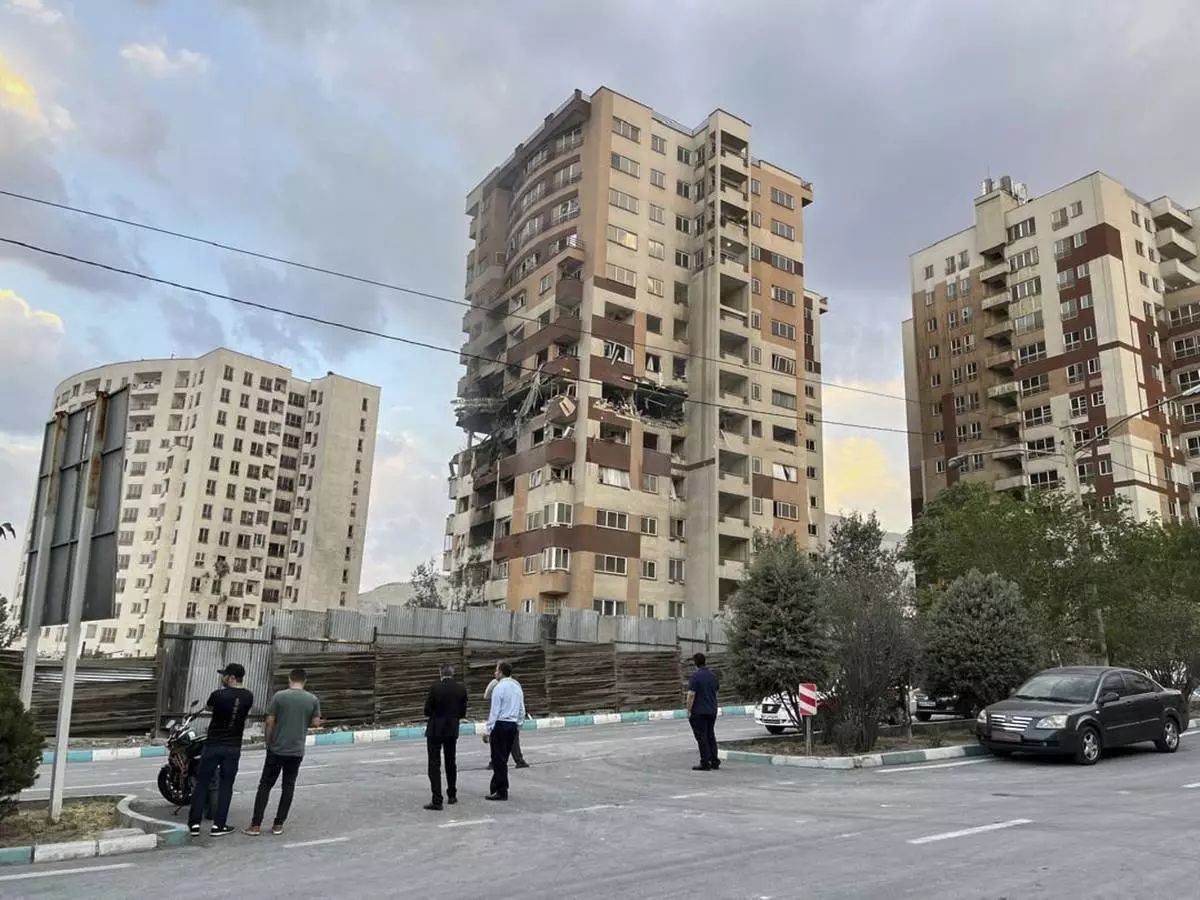
Residents watch a damaged apartment in Tehran, Iran, early Friday, June 13, 2025. Israel attacked Iran's capital early Friday, with explosions booming across Tehran.(AP Photo/Vahid Salemi)
Residents watch a damaged apartment in Tehran, Iran, early Friday, June 13, 2025. Israel attacked Iran's capital early Friday, with explosions booming across Tehran.(AP Photo/Vahid Salemi)

Firefighters and people clean up the scene of an explosion at a residence compound after Israeli attacks in Tehran, Friday, June 13, 2025. (AP Photo/Vahid Salemi)
Firefighters and people clean up the scene of an explosion at a residence compound after Israeli attacks in Tehran, Friday, June 13, 2025. (AP Photo/Vahid Salemi)

Shops remain shuttered Tehran's historic Grand Bazaar, Monday, June 16, 2025. (AP Photo/Vahid Salemi)
Shops remain shuttered Tehran's historic Grand Bazaar, Monday, June 16, 2025. (AP Photo/Vahid Salemi)

CORRECTS BYLINE.- An injured man is helped to leave the scene after an explosion in downtown Tehran, amid Israel's three-day campaign of strikes against Iran, Sunday, June 15, 2025. (AP Photo/Majid Khahi/ISNA)
CORRECTS BYLINE.- An injured man is helped to leave the scene after an explosion in downtown Tehran, amid Israel's three-day campaign of strikes against Iran, Sunday, June 15, 2025. (AP Photo/Majid Khahi/ISNA)

Huge smoke rises up from an oil facility facility after it appeared to have been hit by an Israeli strike Saturday, in southern Tehran, Iran, Sunday, June 15, 2025. (AP Photo)

Huge smoke rises up from an oil facility facility after it appeared to have been hit by an Israeli strike Saturday, in southern Tehran, Iran, Sunday, June 15, 2025. (AP Photo)
NEW YORK (AP) — Reviving a campaign pledge, President Donald Trump wants a one-year, 10% cap on credit card interest rates, a move that could save Americans tens of billions of dollars but drew immediate opposition from an industry that has been in his corner.

Trump was not clear in his social media post Friday night whether a cap might take effect through executive action or legislation, though one Republican senator said he had spoken with the president and would work on a bill with his “full support.” Trump said he hoped it would be in place Jan. 20, one year after he took office.

Strong opposition is certain from Wall Street in addition to the credit card companies, which donated heavily to his 2024 campaign and have supported Trump's second-term agenda. Banks are making the argument that such a plan would most hurt poor people, at a time of economic concern, by curtailing or eliminating credit lines, driving them to high-cost alternatives like payday loans or pawnshops.

“We will no longer let the American Public be ripped off by Credit Card Companies that are charging Interest Rates of 20 to 30%,” Trump wrote on his Truth Social platform.

Researchers who studied Trump’s campaign pledge after it was first announced found that Americans would save roughly $100 billion in interest a year if credit card rates were capped at 10%. The same researchers found that while the credit card industry would take a major hit, it would still be profitable, although credit card rewards and other perks might be scaled back.

About 195 million people in the United States had credit cards in 2024 and were assessed $160 billion in interest charges, the Consumer Financial Protection Bureau says. Americans are now carrying more credit card debt than ever, to the tune of about $1.23 trillion, according to figures from the New York Federal Reserve for the third quarter last year.

Further, Americans are paying, on average, between 19.65% and 21.5% in interest on credit cards according to the Federal Reserve and other industry tracking sources. That has come down in the past year as the central bank lowered benchmark rates, but is near the highs since federal regulators started tracking credit card rates in the mid-1990s. That’s significantly higher than a decade ago, when the average credit card interest rate was roughly 12%.

The Republican administration has proved particularly friendly until now to the credit card industry.

Capital One got little resistance from the White House when it finalized its purchase and merger with Discover Financial in early 2025, a deal that created the nation’s largest credit card company. The Consumer Financial Protection Bureau, which is largely tasked with going after credit card companies for alleged wrongdoing, has been largely nonfunctional since Trump took office.

In a joint statement, the banking industry was opposed to Trump's proposal.

“If enacted, this cap would only drive consumers toward less regulated, more costly alternatives," the American Bankers Association and allied groups said.

Bank lobbyists have long argued that lowering interest rates on their credit card products would require the banks to lend less to high-risk borrowers. When Congress enacted a cap on the fee that stores pay large banks when customers use a debit card, banks responded by removing all rewards and perks from those cards. Debit card rewards only recently have trickled back into consumers' hands. For example, United Airlines now has a debit card that gives miles with purchases.

The U.S. already places interest rate caps on some financial products and for some demographics. The Military Lending Act makes it illegal to charge active-duty service members more than 36% for any financial product. The national regulator for credit unions has capped interest rates on credit union credit cards at 18%.

Credit card companies earn three streams of revenue from their products: fees charged to merchants, fees charged to customers and the interest charged on balances. The argument from some researchers and left-leaning policymakers is that the banks earn enough revenue from merchants to keep them profitable if interest rates were capped.

"A 10% credit card interest cap would save Americans $100 billion a year without causing massive account closures, as banks claim. That’s because the few large banks that dominate the credit card market are making absolutely massive profits on customers at all income levels," said Brian Shearer, director of competition and regulatory policy at the Vanderbilt Policy Accelerator, who wrote the research on the industry's impact of Trump's proposal last year.

There are some historic examples that interest rate caps do cut off the less creditworthy to financial products because banks are not able to price risk correctly. Arkansas has a strictly enforced interest rate cap of 17% and evidence points to the poor and less creditworthy being cut out of consumer credit markets in the state. Shearer's research showed that an interest rate cap of 10% would likely result in banks lending less to those with credit scores below 600.

The White House did not respond to questions about how the president seeks to cap the rate or whether he has spoken with credit card companies about the idea.

Sen. Roger Marshall, R-Kan., who said he talked with Trump on Friday night, said the effort is meant to “lower costs for American families and to reign in greedy credit card companies who have been ripping off hardworking Americans for too long."

Legislation in both the House and the Senate would do what Trump is seeking.

Sens. Bernie Sanders, I-Vt., and Josh Hawley, R-Mo., released a plan in February that would immediately cap interest rates at 10% for five years, hoping to use Trump’s campaign promise to build momentum for their measure.

Hours before Trump's post, Sanders said that the president, rather than working to cap interest rates, had taken steps to deregulate big banks that allowed them to charge much higher credit card fees.

Reps. Alexandria Ocasio-Cortez, D-N.Y., and Anna Paulina Luna, R-Fla., have proposed similar legislation. Ocasio-Cortez is a frequent political target of Trump, while Luna is a close ally of the president.

Seung Min Kim reported from West Palm Beach, Fla.

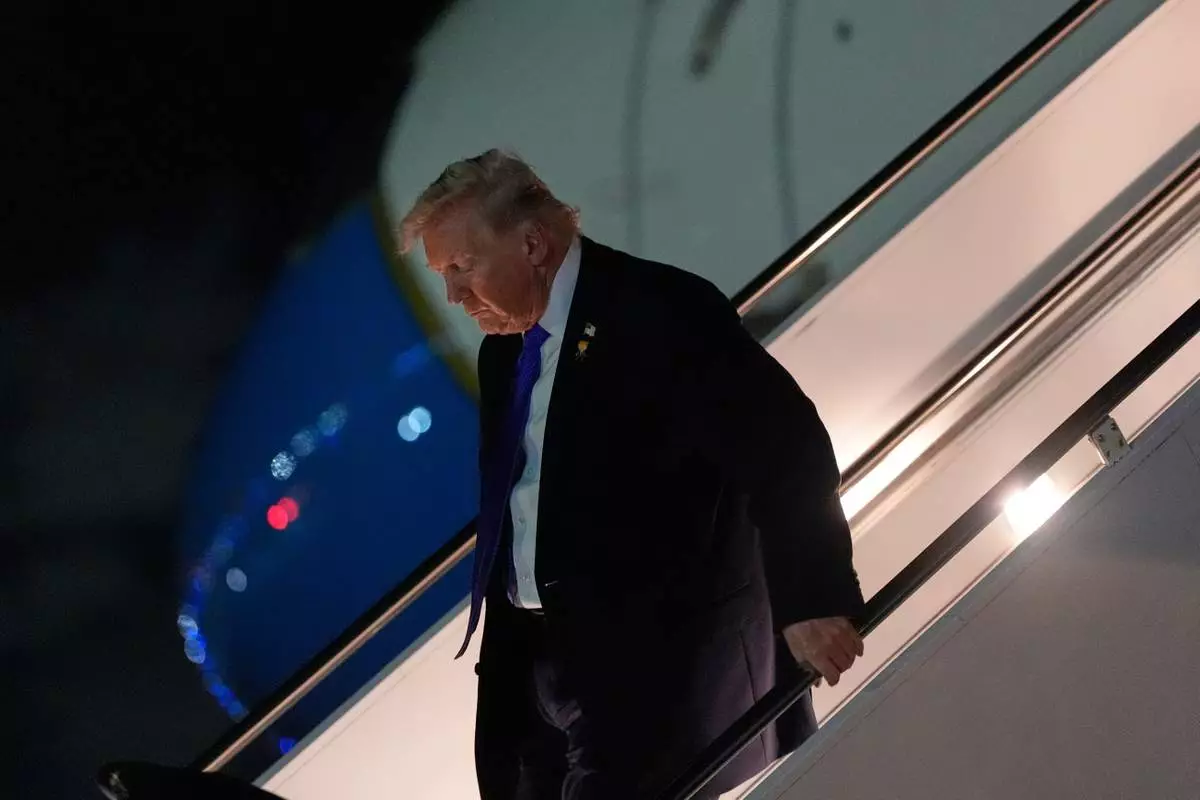
President Donald Trump arrives on Air Force One at Palm Beach International Airport, Friday, Jan. 9, 2025, in West Palm Beach, Fla. (AP Photo/Julia Demaree Nikhinson)

President Donald Trump arrives on Air Force One at Palm Beach International Airport, Friday, Jan. 9, 2025, in West Palm Beach, Fla. (AP Photo/Julia Demaree Nikhinson)

FILE - Visa and Mastercard credit cards are shown in Buffalo Grove, Ill., Feb. 8, 2024. (AP Photo/Nam Y. Huh, File)

FILE - Visa and Mastercard credit cards are shown in Buffalo Grove, Ill., Feb. 8, 2024. (AP Photo/Nam Y. Huh, File)

Recommended Articles